

P2701 on 2018-2025 Lincoln Navigator: Transmission Clutch 'B' Apply Time Fault Guide
P2701 indicates a serious problem within the 10-speed 10R80 automatic transmission, specifically with the 'B' clutch's engagement time. This is often due to internal mechanical failure like a damaged one-way clutch, a faulty valve body, or issues with the C-D-F drum, a known weak point. These are complex, expensive repairs that require professional service and often a transmission teardown.
- P2701 on a 2018-2025 Navigator is a serious code indicating an internal transmission failure, not a simple sensor issue.
- Do not drive the vehicle. You risk catastrophic transmission damage and could be stranded.
- The cause is very likely a mechanical part like a one-way clutch or the valve body, as documented in multiple Lincoln/Ford TSBs.
- This repair is not suitable for DIY. It requires a transmission specialist.
- Repair costs are high, ranging from over a thousand dollars for a valve body replacement to several thousand for a transmission rebuild or replacement.
What's Unique About the 2018-2025 Lincoln NAVIGATOR
The 2018-2025 Lincoln Navigator uses the Ford-GM 10R80 10-speed automatic transmission. While designed for efficiency, this transmission has been the subject of numerous owner complaints and Technical Service Bulletins (TSBs) related to harsh and erratic shifting. A particularly common failure point is the C-D-F (Clutch 'D', 'E', 'F') drum, where an internal bushing can move out of position, causing widespread hydraulic pressure loss that can manifest as a P2701 code, even though it's for the 'B' clutch. Code P2701 is frequently listed in TSBs alongside many other transmission codes, indicating it's a known symptom of broader platform-wide issues that can range from valve body problems to internal clutch and drum failures.
Diagnostic Flowchart
Tap your situation to follow the diagnostic path that matches what you're seeing on this vehicle.
Symptoms You May Notice
- No upshift past second gear. [TSB 26-2112]
- Unable to achieve third gear. [TSB 26-2112]
- Harsh, delayed, or erratic shifts, sometimes feeling like being rear-ended. [4, 7, 25, TSB 25-2023, TSB 24-2254]
- Delayed forward or reverse engagement. [TSB 25-2023, TSB 24-2254]
- Illuminated Malfunction Indicator Lamp (MIL) or Check Engine Light.
- Wrench icon appearing on the dashboard.
- Vehicle enters 'limp mode', staying in a single gear.
- Sensation of transmission slipping (engine RPMs rise without an increase in speed).
- Engine may stall when coming to a stop if the overdrive clutch sticks.
- Simply changing the transmission fluid and filter without diagnosing the root cause. If there is a mechanical failure like a bad clutch, CDF drum, or valve body, a fluid change will not fix the problem.
- Replacing only the 'B' clutch solenoid without checking for the more common underlying issues like a faulty valve body or CDF drum, leading to a repeat failure.
Most Likely Causes
- Faulty Transmission Valve Body or Solenoids 🔴 High Probability → Shop Transmission Valve Body The 10R80 transmission is known for issues related to its valve body, which can cause cross-leaks and solenoid failures. Multiple TSBs address symptoms caused by valve body issues, sometimes recommending a complete replacement for sticking valves.
How to confirm: A technician can use an advanced scan tool to command solenoids and monitor hydraulic pressure. 🎬 See the diagnostic process for fixing harsh 10-speed shifts. Visual inspection of the valve body for cracks or sticking valves is also necessary. TSBs often guide this diagnosis.
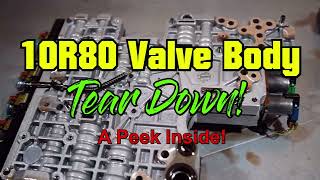
Typical fix: Replacement of the faulty solenoid or the entire main control valve body assembly. 🎬 Take a peek inside the 10R80 valve body assembly. Ford has released updated part numbers to address these issues.
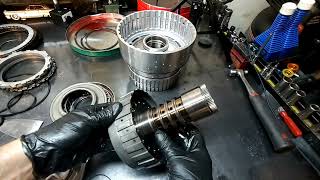
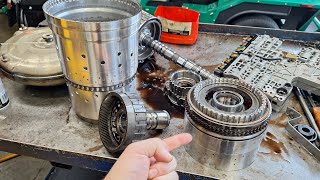
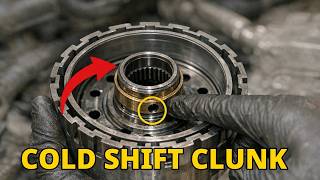
Est. part cost: $400-$1200 - Damaged C-D-F Clutch Drum Assembly 🔴 High Probability → Shop Automatic Transmission Clutch Drum A widely documented failure on the 10R80 is the sleeve/bushing inside the CDF drum walking out of position. This exposes fluid passages, causing a major loss of hydraulic pressure that affects multiple clutch packs and can trigger various codes, including P2701. Ford later updated the drum with a machined lip to prevent this.
How to confirm: This can only be confirmed by disassembling the transmission and inspecting the CDF drum for a dropped sleeve.
Typical fix: Replacement of the CDF drum with the updated part, along with any clutches that were damaged from slipping due to the pressure loss. This is a major transmission repair.
Est. part cost: $250-$400 for the drum itself, but labor is extensive. - Damaged One-Way Clutch (OWC) 🟡 Medium Probability This is specifically identified as a cause for P2701 in manufacturer Technical Service Bulletin #TSB 26-2112 for related vehicles, particularly when the transmission will not shift past second gear.
How to confirm: Requires internal inspection of the transmission by a qualified technician.
Typical fix: Replacement of the one-way clutch (also called an overrunning clutch) and any other components damaged by its failure. This is part of a transmission overhaul.
Est. part cost: $60-$300 for the part, but labor is extensive. - Worn or Damaged 'B' Clutch Pack 🟡 Medium Probability Internal wear and tear can cause the friction materials on the clutch plates to degrade, preventing them from engaging properly within the specified time. This can be a primary failure or a secondary result of hydraulic issues from the valve body or CDF drum.
How to confirm: This can only be confirmed by disassembling the transmission and inspecting the clutch pack for burnt or worn friction plates.
Typical fix: Replacing the clutch pack (steels and frictions) as part of a complete transmission rebuild.
Est. part cost: $500-$1000 for a full rebuild kit. - Low or Degraded Transmission Fluid ⚪ Low Probability → Shop Transmission Assembly While low fluid is a common cause for many transmission issues, for P2701 it's more likely a symptom of a leak caused by a larger problem, rather than the root cause itself. The 10R80 requires a specific Mercon ULV fluid, and using the wrong type can cause damage.
How to confirm: Check the transmission fluid level and condition per the manufacturer's procedure. The fluid should be red and not have a burnt smell. Any glitter indicates mechanical wear.
Typical fix: Correcting the fluid level and inspecting for leaks. If the fluid is burnt or dirty, a fluid and filter change is needed, but the underlying cause of the P2701 code must still be diagnosed.
Est. part cost: $150-$300 for a fluid and filter service.
Rare But Worth Checking
- Faulty Transmission Control Module (TCM): → Shop Transmission Assembly A software glitch or internal failure of the TCM can cause it to incorrectly flag a P2701 code. TSBs sometimes call for a PCM/TCM reflash as a first step. This should only be considered after all mechanical and hydraulic possibilities have been thoroughly ruled out.
Diagnosis Steps
- Verify the code with a professional OBD-II scanner that can read transmission-specific codes and freeze frame data.
- Check the transmission fluid level and condition. Note any signs of burning, contamination, or metallic particles ('glitter').
- Use an advanced scan tool (like Ford's IDS or FORScan) to monitor live data, specifically the commanded versus actual apply times for friction element 'B' and solenoid performance.
- Perform a full system scan to check for other related transmission codes that can provide more diagnostic clues.
- Check for and review any applicable Technical Service Bulletins (TSBs) for the vehicle's VIN. Many TSBs for the 10R80 provide a specific diagnostic path.
- Inspect the transmission wiring harness and connectors for any visible damage, corrosion, or loose connections.
- Follow the specific diagnostic procedures outlined in the factory service manual or relevant TSBs, which may include hydraulic pressure tests and solenoid cycling with a scan tool.
- If external checks and valve body inspection do not reveal the cause, internal transmission inspection is required to examine the CDF drum, one-way clutch, and clutch packs.
Parts You'll Likely Need
- Transmission Valve Body Assembly
(OEM #JL1Z-7A100-A (for 2018-2021 Navigator with electronic shift))— A common point of failure in the 10R80 transmission leading to a wide range of shift codes, including P2701. TSBs often recommend replacement.
Trusted brands: Motorcraft
OEM price range: $400-$1200
Aftermarket price range: $600-$900 - C-D-F Drum Assembly (Updated) — The original CDF drum has a high failure rate due to a walking bushing/sleeve. An updated part with a machined lip prevents this failure.
Trusted brands: Motorcraft
OEM price range: $250-$400
Aftermarket price range: $200-$350 - One-Way Clutch (OWC) / Overrunning Clutch — Specifically cited in TSB 26-2112 as a cause for P2701 when the transmission fails to shift past second gear.
Related Codes That Often Appear With This One
- P0757 — Stands for 'Shift Solenoid 'B' Stuck On'. This code is specifically mentioned alongside P2701 in TSB 26-2112, indicating a related fault in the same hydraulic circuit or with a shared component like the one-way clutch.
- P0741 / P1744 — These codes relate to the Torque Converter Clutch (TCC) circuit and are often caused by a sticking valve in the main control valve body, a common issue in early 10R80s.
- P0751, P0752, P2700, P2702, etc. — These are all transmission-related codes. The provided TSBs (26-2046, 25-2023, 24-2254, 22-2428) list P2701 with a large group of other codes, suggesting a widespread failure within the valve body or a systemic hydraulic issue (like from the CDF drum) that affects multiple clutch and solenoid circuits.
Technical Service Bulletins (TSBs) & Recalls
- TSB 26-2112
- TSB 26-2046
- TSB 25-2023
- TSB 24-2254
- TSB 22-2428
Platform-Specific Known Issues
- TSB 26-2112: For some vehicles, this bulletin directly links DTCs P0757 and P2701 to a damaged one-way clutch (OWC), which can prevent the transmission from shifting past second gear.
- TSBs 23-2250, 26-2046, 25-2023, etc.: These bulletins list P2701 among a large group of codes associated with delayed engagements, harsh shifts, and other drivability concerns on the 10R80 transmission, often pointing towards issues with the main valve body or requiring software updates.
- CDF Drum Failure: A well-documented issue where a sleeve within the C-D-F clutch drum migrates, causing a massive hydraulic leak and erratic shifting. Ford issued an updated part to correct this. This is a common cause for major 10R80 failures.
- Class Action Lawsuit: A class action lawsuit has been filed concerning the 10R80 transmission in Lincoln Navigators and other Ford models, alleging the transmissions are defective and can exhibit harsh shifting, jerking, and hesitation.
Mechanic-Grade Diagnostic Values
- Shift Solenoid Resistance — expected: 5.0 - 5.4 ohms at 68°F (20°C) for all shift solenoids (A-F).. Failure: A reading outside of this range indicates a faulty solenoid coil.
- Live Data PID: Friction Element 'B' Apply Time — expected: Typically 30-70 milliseconds (ms) during a commanded shift.. Failure: A time consistently outside this specified range confirms a performance fault.
Hidden / Shadow Codes Worth Checking
- P163E: Transmission Control Module (TCM) Solenoid Strategy Not Programmed. This code can appear after replacing the main control valve body if the new solenoid strategy file is incompatible or not correctly programmed into the PCM/TCM. (see via A professional scan tool like Ford's IDS or FORScan is required to read this TCM-specific code.)
- P163F: Transmission ID (TID) Corrupt or Not Programmed. This code can set if the transmission solenoid information gets corrupted during a tune flash or is missing. It indicates the solenoid ID needs to be reprogrammed into the TCM. (see via Visible with professional scan tools like FORScan or Ford's IDS.)
Scan Tool Commands That Help
- FORScan / Ford IDS: Clear Transmission Adaptive Tables — This service function erases the learned shift adaptations. It is a mandatory first step before performing the adaptive learning drive cycle after a fluid change, valve body replacement, or transmission rebuild.
- FORScan / Ford IDS: Transmission Characterization Update / Solenoid Strategy Programming — This is required when the valve body or the entire transmission is replaced. The unique 13-digit solenoid body strategy number from the new valve body must be programmed into the TCM for proper operation. Failure to do so will result in poor shifting and may set codes like P163E or P163F.
- FORScan: Halt Transmission Adaptive Learning — Some owners and tuners use this function to disable the adaptive learning process, reporting more consistent shift quality. This is an advanced/off-label use and should be done with caution as it prevents the transmission from adjusting to wear over time.
- Ford IDS: PCM - Transmission Accelerated Main Control Break In — This is a dealer-level function mentioned in TSBs for new vehicles with harsh shifting. It runs a specific routine to help break in sticking valves in the main control valve body.
Wiring & Ground Locations
- Solenoid Strategy ID Sticker — On the driver's side of the transmission case, there is a white sticker containing the 12-digit Solenoid Body ID and the 13-digit Solenoid Body Strategy number.. The 13-digit strategy number is absolutely required for programming a replacement valve body. Entering the wrong number or failing to program it will cause severe shifting issues and related trouble codes.
- Powertrain Control Module (PCM) Run/Start Feed — In the engine compartment fuse box, fuse position F52 provides a run/start power feed to the PCM.. An intermittent power supply from this fuse could cause erratic behavior from the PCM/TCM, potentially leading to incorrect fault codes.
Real Owner Repair Stories
- F150Forum.com user (2018 Ford F-150) — Harsh shifting, error code from Ford servers when trying to program a new valve body.
❌ Tried (didn't work) Inputting the new solenoid strategy using FORScan., Inputting the new solenoid strategy using Ford's official FJDS software.
✅ What actually fixed it The user reported that the issue was on Ford's server-side. After contacting Ford tech support, the issue was resolved, and the new solenoid strategy was accepted, implying a database update was needed on Ford's end to recognize the new part.
OEM Part Supersession History
HL3Z-7H351-A, JL3Z-7H351-A→JL3Z-7H351-B, L1MZ-7H351-B— The original CDF drum assembly was prone to failure from an internal bushing 'walking' out of position and blocking hydraulic passages. The updated part includes a machined lip that acts as a hard stop, preventing the bushing from migrating.
Model Year Variations Within This Range
- 2018 - Mid-2022: Vehicles manufactured before approximately August 16, 2022, were built with the original, failure-prone CDF drum design. Vehicles built after this date are expected to have the updated CDF drum from the factory, reducing the likelihood of this specific failure.
- 2018-2020: Early production 10R80 transmissions were subject to more aggressive software calibrations that could contribute to harsh shifting complaints. Numerous TSBs were released to update the PCM/TCM software to refine shift logic and improve drivability.
Helpful Videos


The information in this article is provided for general reference and educational purposes only. Vehicle specifications, procedures, and part compatibility can vary by production date, trim level, and region. Always consult your vehicle's factory service manual and verify part numbers before purchasing or performing repairs. Safety-critical components such as airbags, seat belts, and braking systems should be installed by a qualified professional.
- Lincoln NAVIGATOR:
- 🧭 Diagnostic Flowchart
- 🎬 Helpful Videos
- What's Unique About the 2018-2025 Lincoln NAVIGATOR
- Symptoms You May Notice
- Most Likely Causes
- Rare But Worth Checking
- Diagnosis Steps
- Parts You'll Likely Need
- Related Codes That Often Appear With This One
- Technical Service Bulletins (TSBs) & Recalls
- Platform-Specific Known Issues
- Mechanic-Grade Diagnostic Values
- Hidden / Shadow Codes Worth Checking
- Scan Tool Commands That Help
- Wiring & Ground Locations
- Real Owner Repair Stories
- OEM Part Supersession History
- Model Year Variations Within This Range
- 🎟️ Get 5% Off