

P2702 on 2018-2023 Ford Expedition: Transmission Clutch 'C' Performance Guide
P2702 on a 2018-2023 Ford Expedition indicates a problem with the 10R80 transmission's 'C' clutch application time. This is a known issue, often causing harsh or delayed shifts, particularly in lower gears. The most common fix, outlined in multiple Ford Technical Service Bulletins, is an overhaul of the transmission's main control valve body, and in some cases, replacement of the 'CDF' drum assembly.
- P2702 on a 2018-2023 Expedition is a serious transmission code indicating a clutch timing problem, not a simple sensor failure.
- This code is part of a widely recognized issue with the Ford 10R80 10-speed transmission, addressed by multiple Ford Technical Service Bulletins.
- The most common and manufacturer-recommended repair is an overhaul of the transmission's main control (valve body), a job best left to a professional technician.
- Driving with these symptoms can lead to further, more severe transmission damage.
- Always ensure the correct Motorcraft MERCON ULV fluid is used for any service on this transmission.
What's Unique About the 2018-2023 Ford EXPEDITION
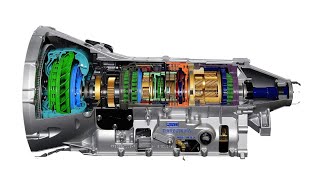
The 2018-2023 Expedition uses the Ford 10R80 10-speed automatic transmission, which was co-developed with GM. 🎬 Watch: Overview of common 10R80 transmission failures and problems. This transmission is known for experiencing harsh and delayed shifting issues across multiple Ford and Lincoln platforms. Ford has released numerous Technical Service Bulletins (TSBs) that directly address P2702 and a host of other related codes. These bulletins point to two primary root causes: issues within the main control valve body (sticking valves, cross-leaks) and a mechanical flaw in the 'CDF' clutch drum where an internal sleeve can move, causing hydraulic leaks. These issues prevent the transmission's adaptive learning strategy from compensating for normal hardware break-in over time.
Diagnostic Flowchart
Tap your situation to follow the diagnostic path that matches what you're seeing on this vehicle.
Symptoms You May Notice
- Harsh, jerky, or delayed gear shifts, often described as a 'clunk' or feeling like being rear-ended.
- Noticeable shudder or vibration during shifts, especially under light to moderate acceleration.
- Slipping or flaring RPMs between gears, particularly on the 3-4 or 3-5 shift.
- Transmission slipping between gears.
- Illuminated Malfunction Indicator Lamp (Check Engine Light) or a wrench icon on the dashboard.
- Transmission may enter a protective 'limp mode', refusing to shift.
- Delayed or harsh engagement when shifting from Park into Drive or Reverse.
- Replacing only the transmission fluid when the valve body is the root cause. While fresh fluid may temporarily improve symptoms, the problem will likely return if the underlying mechanical or calibration issue in the valve body isn't addressed.
- Replacing a single shift solenoid when the entire valve body assembly or the CDF drum is faulty. The issue is often hydraulic pressure loss affecting multiple components, not just one solenoid.
- Attributing all harsh shifts to the 'adaptive learning' process. While the transmission does learn, persistent, harsh shifts accompanied by a DTC like P2702 indicate a mechanical or hydraulic fault.
Most Likely Causes
- Main Control (Valve Body) Malfunction 🔴 High Probability This is a well-documented issue for the 10R80 transmission. Ford TSBs 23-2123 and 21-2357 state that the adaptive calibration cannot compensate for hardware break-in, and sticking valves or cross-leaks within the valve body cause hydraulic pressure loss to the clutch packs. This is the most common cause cited by Ford for these shift quality issues.
How to confirm: A technician will use a high-level scan tool (like Ford's FDRS) to check for TSBs related to the vehicle's VIN and review live transmission data. The presence of multiple related shift codes (P2700-P2708, P073x, etc.) alongside P2702 strongly suggests this cause, as outlined in the TSBs.
Typical fix: Overhaul the main control valve body as per the procedure outlined in the relevant Ford TSB. This involves replacing certain valves, seals, and clips within the valve body, followed by reprogramming the PCM/TCM and performing a transmission adaptive learning drive cycle.
Est. part cost: $500-$1200 for a valve body assembly or overhaul kit. - Low or Contaminated Transmission Fluid (ATF) 🟡 Medium Probability → Shop Transmission Assembly While not specific to this platform, low or degraded fluid is a common cause of hydraulic pressure issues in any automatic transmission. If the fluid is low, it can cause clutches to slip. If it is contaminated with metallic debris, it may be a symptom of a more severe internal failure like the CDF drum.
How to confirm: Check the transmission fluid level and condition. The 10R80 transmission has a specific, complex procedure for checking the fluid that must be followed precisely. The fluid should be clean, red, and free of burnt smells or excessive metallic particles (a small amount of fine metal dust on the pan magnet is considered normal by Ford).
Typical fix: If low, top off with the correct Motorcraft MERCON ULV ATF. If dirty or burnt, perform a fluid and filter change. Note that if the fluid is very contaminated, this is often a symptom of a larger internal failure and a fluid change alone will not be a permanent fix.
Est. part cost: $150-$300 for fluid and filter. - Failed Shift Solenoid ⚪ Low Probability → Shop Transmission Valve Body A specific solenoid responsible for actuating the 'C' clutch can fail electrically or mechanically (sticking). However, on the 10R80, this is less common than the valve body or CDF drum issues, which affect the hydraulic circuits supplying the solenoids.
How to confirm: A diagnostic scan tool can command the specific solenoid on and off to test its response. A technician can also test the solenoid's electrical resistance with a multimeter.
Typical fix: Replace the faulty solenoid. This is often done during a valve body service, as the solenoids are housed within the valve body assembly.
Est. part cost: $50-$150 per solenoid.
Rare But Worth Checking
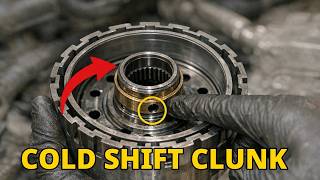
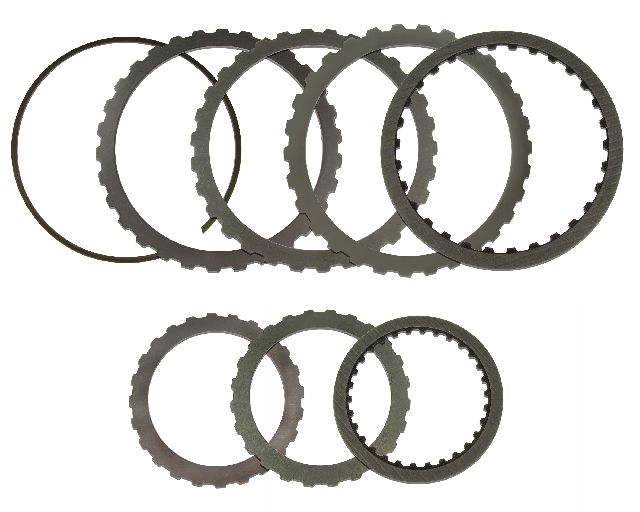
- CDF Clutch Drum Failure: → Shop Transmission Clutch Pressure Plate A known weak point in the 10R80 is the C-D-F (Clutch D/F) drum assembly. An internal sleeve can slide out of position, uncovering hydraulic passages and causing a significant pressure leak. This leads to severe shifting problems, including slipping, flares, and setting clutch performance codes like P2702. Ford has released updated part numbers for the CDF drum with a machined lip to prevent the sleeve from moving. 🎬 Watch: Detailed teardown showing the CDF drum bushing failure. This is a major repair requiring transmission disassembly.
- Worn Internal Clutch Pack: If the vehicle has high mileage or has been driven with low fluid for an extended period, the friction material on the 'C' clutch pack itself may be worn out, causing slippage that the TCM detects as a timing error. This would require a full transmission rebuild or replacement.
- Faulty Transmission Control Module (TCM): → Shop Transmission Assembly In rare cases, the TCM itself can fail, causing it to misinterpret sensor data or send incorrect commands. This is usually diagnosed only after all other mechanical and hydraulic causes have been ruled out.
Diagnosis Steps
- Verify the code with a professional OBD-II scanner capable of reading transmission codes and live data.
- Check for any applicable Technical Service Bulletins (TSBs) for your vehicle's VIN using a system like Ford's FDRS. TSBs 23-2123, 22-2428, and 21-2357 are highly relevant.
- Follow the TSB diagnostic flow: If DTCs like P2702 are present, the TSB often directs the technician to skip software updates and proceed directly to overhauling the valve body.
- Check the transmission fluid level and condition according to the specific Ford procedure. The engine must be at operating temperature, and the vehicle must be cycled through gears before checking.
- Use a scan tool to monitor live data, specifically the commanded vs. actual apply times for the various clutch packs and the solenoid duty cycles.
- Inspect the transmission wiring harness and connectors for any visible damage, corrosion, or loose connections.
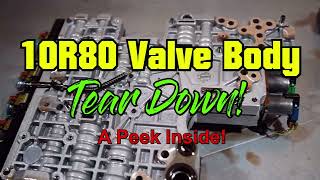
- If TSBs point to the valve body, follow the manufacturer's procedure to overhaul the main control unit. 🎬 See this walkthrough of a 10R80 valve body teardown.
- If symptoms persist after a valve body overhaul, further diagnosis for a failed CDF drum is necessary, which may involve a transmission pressure test.
- After any repair, perform the 'Transmission Adaptive Pressure Learning' drive cycle to allow the TCM to relearn the new components' characteristics.
Parts You'll Likely Need
- Transmission Main Control Valve Body Assembly
(OEM #JL3Z-7A100-C (or superseding part number))— This is the most common fix recommended by Ford's own TSBs to resolve the underlying cause of the harsh shifting and clutch performance codes. - CDF Drum Assembly (Updated Design)
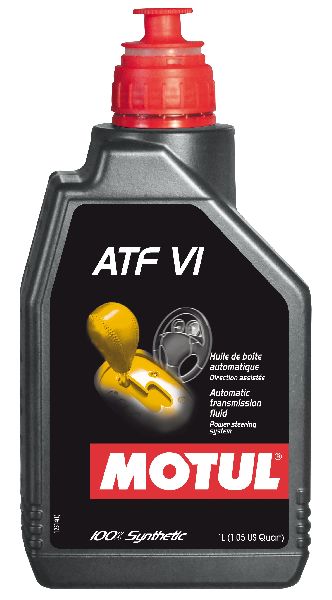
(OEM #JL3Z-7H351-B)— If the valve body overhaul does not fix the issue, the next most likely cause is a failure of the CDF drum, which requires a revised part with a machined lip to prevent a known bushing slippage issue. - Motorcraft MERCON ULV Automatic Transmission Fluid
(OEM #XT-12-QULV)— This specific fluid is required for any service involving draining the transmission, such as a valve body or CDF drum replacement. - Transmission Fluid Filter
(OEM #L1MZ-7A098-A)— The filter should always be replaced when the transmission pan is removed for service. - Transmission Pan Gasket
(OEM #HL3Z-7A191-B)— The pan gasket is a one-time use part and must be replaced to ensure a proper seal after service.
Related Codes That Often Appear With This One
- P2700 — Relates to Friction Element 'A', indicating a wider transmission control problem.
- P2701 — Relates to Friction Element 'B', often appearing with other friction element codes.
- P2703, P2704, P2705 — Codes for clutches 'D', 'E', and 'F'. The presence of multiple clutch codes strongly points to a systemic issue like the valve body or CDF drum.
- P0751, P0756, P0761, etc. — These are codes for specific shift solenoids ('A', 'B', 'C', etc.). Ford TSBs list a large group of these codes, including P2702, as being related to the same valve body issue.
- P0731, P0732, P0733, etc. — These codes indicate incorrect gear ratios for gears 1, 2, 3, etc. They often accompany clutch performance codes as a direct symptom of the clutch not engaging correctly to achieve the proper gear ratio.
- P07F7 — Relates to Friction Element 'F' Apply Time. This code appearing with P2702 strongly points to the known CDF drum issue, as both C and F clutches are part of that assembly.
Technical Service Bulletins (TSBs) & Recalls
- TSB 23-2123: Supersedes previous versions to update vehicle model years. Recommends valve body overhaul for DTCs including P2702.
- TSB 22-2428: Also addresses harsh shifts and DTCs. Points to software, valve body, and/or axial movement of the CDF clutch cylinder sleeve as potential causes.
- TSB 21-2357: An earlier TSB for the same issue, recommending a valve body overhaul and adaptive learning drive cycle.
Platform-Specific Known Issues
- TSB Progression and Valve Body Overhaul: → Shop Transmission Valve Body Multiple Ford TSBs (including 21-2357, 22-2428, and 23-2123) have been issued for the 10R80 transmission concerning harsh/delayed shifts and a long list of DTCs, including P2702. The TSBs instruct technicians that if certain DTCs are present, they should proceed directly to overhauling the main control valve body rather than just reprogramming the software. This indicates a known mechanical/hydraulic issue.
- Owner Repair Experiences: Owners on forums frequently report dealers performing the valve body overhaul under warranty to fix this code and related symptoms. One owner on F150Forum.com noted their dealer retrieved P2702 and P07F7, identified a failed CDF drum bushing, and recommended a full transmission replacement. Another on ExpeditionForum.com confirmed their dealer was performing a valve body replacement per the TSB for delayed/harsh shifts.
- Class Action Lawsuit: The widespread nature of the 10R80 transmission problems, including harsh shifting and hesitation, has led to at least one class-action lawsuit against Ford. The suit alleges the transmissions are defective and dangerous, citing numerous owner complaints of lunging, clunking, and loss of power.
Mechanic-Grade Diagnostic Values
- Shift Solenoid (A-F) Resistance — expected: 5.0 - 5.4 Ohms at 68°F (20°C). Failure: A reading outside of this range indicates a faulty solenoid coil.
Hidden / Shadow Codes Worth Checking
- Mode 6, TID/CID: Mode 6 data can reveal that a component's self-test is failing or near the failure threshold before a full-blown DTC like P2702 is set. For transmissions, this could include monitoring clutch apply times or solenoid performance. A technician can use a vehicle-specific chart to interpret the Test IDs (TID) and Component IDs (CID) to see how close a clutch is to failing its timing test. (see via A professional scan tool with Mode 6 capabilities is required. The raw data is often in hexadecimal and needs a 'cheat sheet' or software that translates it into plain language.)
Scan Tool Commands That Help
- Ford IDS/FDRS: Datalogger — To monitor and record live transmission PIDs (Parameter IDs), such as commanded vs. actual gear, solenoid duty cycles, and clutch apply times. This helps visualize the discrepancy that is causing the P2702 code.
- Ford IDS/FDRS: Module Programming / PMI — Used after replacing a valve body or entire transmission to load the correct calibration and solenoid body strategy data into the TCM.
- Ford IDS/FDRS: Reset Transmission Adaptive Tables / Clear TCM KAM — This function is used after a repair to clear the old learned shift adaptations. The TCM will then begin a new learning process based on the new components and driver habits.
Wiring & Ground Locations
- 10R80 Case Connector — The main electrical connector on the outside of the transmission case.. This is the primary interface between the TCM and all internal transmission electronics, including the shift solenoids. A pinout diagram shows that Pin 16 controls 'Solenoid Pressure Control 3 (PC3)', which could be related to clutch 'C'. A poor connection or corrosion at this connector can cause erratic solenoid behavior and trigger performance codes.
- Ground - Frame Middle Right — A ground point on the right side of the vehicle's frame.. Pin 17 of the 10R80 case connector is a ground. A loose or corroded ground connection at this point can cause electrical noise and voltage issues for the transmission's sensors and solenoids, leading to incorrect operation and fault codes.
Real Owner Repair Stories
- Ford F150 Forum (2018 Expedition Max) — Rough shifting, erratic up/down shifts, jerking, hesitation, and slipped gears. Eventually, the wrench light appeared and the vehicle got stuck in gear.
❌ Tried (didn't work) Resetting the shift tables (KAM reset) provided no lasting improvement.
✅ What actually fixed it The dealer retrieved DTCs P2702 (C clutch) and P07F7 (F clutch). The technician identified the cause as a failed CDF drum bushing. Due to the potential for further internal damage and the comparative cost, the final recommended fix was a complete transmission replacement with a remanufactured unit from Ford, which came with a 3-year unlimited mileage warranty. - Reddit r/fordexpedition (2020 Ford Expedition with ~60,000 miles) — Harsh shifts, a 'thunk' when shifting from Park, and a delay when shifting between Drive, Reverse, and Park.
❌ Tried (didn't work) Multiple software updates and computer resets over 60,000 miles did not help.
✅ What actually fixed it The dealer performed a valve body rebuild according to a TSB. This eliminated the 'thunk' from Park and the D-R-P delay. While some minor funky upshifting remained, the major symptoms were resolved. The service was covered under the original powertrain warranty.
OEM Part Supersession History
HL3Z-7H351-A, JL3Z-7H351-A→JL3Z-7H351-B— The original CDF drum design had an internal bushing that could walk out of position, blocking hydraulic passages. The updated part (JL3Z-7H351-B) has a machined lip on the drum to physically prevent the bushing from moving, providing a permanent fix.
Heads up: Vehicles built on or after August 16, 2022, should have the updated CDF drum from the factory.
Model Year Variations Within This Range
- 2017 - Mid-2022: Vehicles in this range were built with the original CDF drum design that is prone to bushing failure. TSBs direct technicians to replace this with the updated part if clutch codes like P2702 are present and a valve body repair is unsuccessful.
- Mid-2022 - 2023: Vehicles built on or after August 16, 2022, are equipped with the improved CDF drum from the factory, making the drum failure less likely, though not impossible. For these vehicles, a P2702 code is more likely to be isolated to the valve body or other causes.
Helpful Videos


We Have This Part in Stock


The information in this article is provided for general reference and educational purposes only. Vehicle specifications, procedures, and part compatibility can vary by production date, trim level, and region. Always consult your vehicle's factory service manual and verify part numbers before purchasing or performing repairs. Safety-critical components such as airbags, seat belts, and braking systems should be installed by a qualified professional.
- Ford EXPEDITION:
- 🧭 Diagnostic Flowchart
- 🎬 Helpful Videos
- 🛍️ Shop This Part
- What's Unique About the 2018-2023 Ford EXPEDITION
- Symptoms You May Notice
- Most Likely Causes
- Rare But Worth Checking
- Diagnosis Steps
- Parts You'll Likely Need
- Related Codes That Often Appear With This One
- Technical Service Bulletins (TSBs) & Recalls
- Platform-Specific Known Issues
- Mechanic-Grade Diagnostic Values
- Hidden / Shadow Codes Worth Checking
- Scan Tool Commands That Help
- Wiring & Ground Locations
- Real Owner Repair Stories
- OEM Part Supersession History
- Model Year Variations Within This Range
- 🎟️ Get 5% Off