

P2703 on 2020-2023 Ford Transit: Transmission Shift Problem Causes and Fixes
P2703 on a 2020-2023 Ford Transit almost always points to a known issue with the 10R80 transmission's main control valve body. The fix typically involves replacing the valve body, which is a significant repair best left to professionals. In some cases, a software update can resolve the issue, but often the hardware has failed.
- P2703 on a 2020-2023 Transit is a serious code that points to a known problem with the 10-speed transmission.
- The most likely cause is a faulty main control valve body, as documented by Ford in multiple TSBs.
- The first steps in diagnosis should be checking the transmission fluid and checking for software updates at a dealership.
- This is not a DIY-friendly repair. It requires professional diagnosis and specialized tools.
- Do not ignore this code, as it can lead to more severe and expensive transmission damage if left unaddressed.
What's Unique About the 2020-2023 Ford TRANSIT
The 2020-2023 Ford Transit is equipped with the 10-speed 10R80 automatic transmission, which was co-developed with GM and is known for experiencing harsh and delayed shifting issues across multiple Ford platforms. Ford has released several Technical Service Bulletins (TSBs) acknowledging that these problems, including code P2703, are often caused by sticking valves within the main control valve body or a failure of the CDF clutch drum assembly. While generic causes like fluid issues are possible, this specific code on this van is very frequently linked to these known hardware and software issues within the transmission itself, which have prompted class-action lawsuits for other affected models.
Diagnostic Flowchart
Tap your situation to follow the diagnostic path that matches what you're seeing on this vehicle.
Symptoms You May Notice
- Harsh, clunky, or delayed gear shifts, particularly the 1-3 upshift or when downshifting to a stop.
- Sudden RPM flares between shifts (transmission slipping), especially noted on the 3-4 shift.
- Vehicle entering 'Limp Mode' (stuck in a single gear).
- Illuminated Check Engine Light or Transmission Warning Lamp.
- A feeling of the transmission hesitating or shuddering.
- Violent lurching or jerking when coming to a stop or accelerating from a stop.
- Delayed engagement when shifting from Park into Drive.
- Replacing only the transmission fluid when the valve body is the root cause. A fluid change may temporarily improve symptoms but won't fix sticking valves or a moving CDF drum sleeve.
- Assuming the entire transmission needs to be rebuilt immediately. While possible in severe cases with burnt fluid or metal debris, the issue is often isolated to the valve body or software, which is a less intensive repair.
- Replacing a single solenoid when the entire valve body assembly is required. Often, the issue is debris or cross-leaks within the valve body casting itself, not just one solenoid.
Most Likely Causes
- Sticking Valves in the Main Control Valve Body 🔴 High Probability → Shop Transmission Valve Body This is a widely documented issue in Ford's 10R80 transmission, as cited in multiple TSBs (TSB 22-2428, TSB 21-2377, etc.). Debris or wear can cause valves to stick, leading to hydraulic cross-leaks that starve clutches of required pressure.
How to confirm: A technician will typically follow the TSB diagnostic procedure, which may involve a specific break-in routine, software checks, and hydraulic pressure tests before condemning the valve body. The Ford Diagnostic & Repair System (FDRS) is used for this process. A vacuum test can be performed on the valve body bores to check for leaks.
Typical fix: Replacement of the main control valve body assembly and reprogramming the TCM.
Est. part cost: $500-$900 - Outdated Powertrain or Transmission Control Module (PCM/TCM) Software 🟡 Medium Probability → Shop Transmission Assembly Ford has issued numerous software updates to address the shift quality issues related to the 10R80 transmission. The original software may have flawed logic or be overly sensitive to normal wear, causing harsh shifts.
How to confirm: A Ford dealer or a qualified shop with access to Ford's diagnostic system (FDRS) can check for and apply available software updates. TSB 22-2428 specifically calls 🎬 Watch: A breakdown of Ford's harsh shifting TSB and fixes. for a PCM reprogram as a key diagnostic step.
Typical fix: Reprogramming the PCM/TCM to the latest calibration. This may resolve the issue on its own or be required after a valve body replacement.
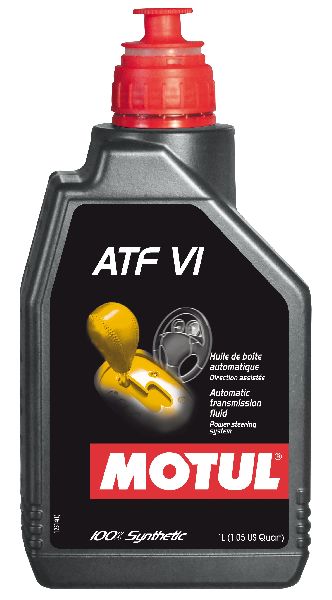
Est. part cost: $0 (if under warranty) - $250 - Low or Contaminated Transmission Fluid 🟡 Medium Probability → Shop Transmission Assembly While not specific to the Transit, low or dirty fluid is a common cause of hydraulic performance issues in any automatic transmission. The 10R80 is particularly sensitive and requires only Motorcraft MERCON ULV fluid; using any other type can cause damage.
How to confirm: Check the transmission fluid level and condition. The fluid should be at the correct level, red in color, and not smell burnt. Metal shavings or a gray sludge indicate internal mechanical wear.
Typical fix: Perform a transmission fluid drain-and-fill or flush using the correct Motorcraft MERCON ULV fluid.
Est. part cost: $150-$250
Rare But Worth Checking
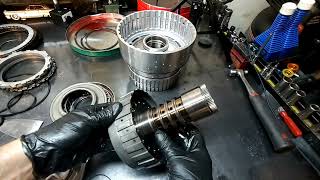
- Internal CDF Clutch Drum/Sleeve Failure: → Shop Transmission Clutch Pressure Plate A known but less common mechanical failure point inside the 10R80 transmission. A sleeve inside the CDF (Clutch-Drum-Forward) assembly can walk out of position due to heat and pressure cycles, blocking fluid passages and destroying seals. This is a major internal repair that requires transmission removal and disassembly. Ford has released updated drum designs with a machined lip to prevent the sleeve from moving. 🎬 Watch: How the CDF drum fails and what to look for.
- Faulty Transmission Solenoid: → Shop Transmission Assembly A specific solenoid responsible for controlling the 'D' clutch could be failing electrically or mechanically. These solenoids are calibrated from the factory with specific band numbers (1-5) that must match upon replacement. This is often part of the valve body assembly.
Diagnosis Steps
- Verify the transmission fluid level is correct and the fluid is clean and red. Top off or replace if necessary. The correct fluid is MERCON ULV.
- Use an advanced scan tool (like Ford's FDRS) to check for other transmission-related DTCs and review live data.
- Check with a Ford dealer or qualified shop for any available PCM/TCM software updates related to TSB 22-2428 or similar bulletins. This is a primary step.
- If software is current and fluid is good, perform a diagnostic drive cycle to confirm the symptoms, paying attention to specific gear shifts (e.g., 1-3, 3-5).
- Following the relevant TSB, a technician may perform a 'transmission accelerated main control break-in routine' using FDRS to attempt to free sticking valves.
- If symptoms persist, the main control valve body is the most likely culprit. On a Transit, this requires lowering the subframe for access. 🎬 See this walkthrough of a 10R80 valve body replacement.
- If a new valve body and software do not resolve the issue, diagnosis would proceed to internal transmission components, specifically inspecting the CDF drum for a migrated sleeve and damaged seals.
Parts You'll Likely Need
- Main Control Valve Body
(OEM #L1MZ-7A100-K)— This is the most common point of failure for this code on the 10R80 transmission, as identified by Ford's own service bulletins. The original part L1MZ-7A100-A has been superseded multiple times, with the -K version being a later revision.
Trusted brands: Motorcraft (OEM)
OEM price range: $600-$900
Aftermarket price range: $450-$700 - Automatic Transmission Fluid (MERCON ULV)
(OEM #XT-12-QULV)— This is the required fluid for the 10R80 transmission. Any valve body service will require draining and refilling the fluid.
Trusted brands: Motorcraft
OEM price range: $15-$25 per quart
Related Codes That Often Appear With This One
- P2700 — Relates to Friction Element 'A' and indicates a broader transmission control problem.
- P2701 — Relates to Friction Element 'B' and indicates a broader transmission control problem.
- P2702 — Relates to Friction Element 'C' and indicates a broader transmission control problem.
- P2704 — Relates to Friction Element 'E' and indicates a broader transmission control problem.
- P0729 — Incorrect 6th gear ratio, often triggered by the same underlying hydraulic control faults.
- P0731 — Incorrect 1st gear ratio, often triggered by the same underlying hydraulic control faults.
- P0766 — Shift Solenoid 'D' Performance/Stuck Off, directly related to the control of the 'D' clutch.
Technical Service Bulletins (TSBs) & Recalls
- TSB 22-2428: Supersedes several previous TSBs. Addresses harsh/delayed shifts and numerous DTCs including P2703. It points to software, the main control valve body, or axial movement of the CDF clutch cylinder sleeve as potential causes.
- TSB 24-2254: Similar to TSB 22-2428, covering harsh/delayed shifts and a list of DTCs including P2703 for the 2020-2023 Transit, specifically pointing to axial movement of the CDF clutch cylinder sleeve.
Platform-Specific Known Issues
- Ford has issued multiple Technical Service Bulletins (TSBs), including TSB 22-2428, TSB 24-2254, TSB 26-2046, and TSB 21-2377, for the 2020-2023 Transit concerning harsh/delayed shifts and a group of DTCs that includes P2703. The primary cause cited is sticking valves in the main control valve body.
- Accessing the transmission for service on the Transit is more difficult than on its platform-mates like the F-150. A Reddit user noted that the subframe must be dropped to access the transmission pan, a task complicated by bolts that are prone to seizing.
Mechanic-Grade Diagnostic Values
- Shift Solenoid Resistance — expected: 5.0 - 5.4 ohms at 68°F (20°C). Failure: Resistance outside of this range indicates a faulty solenoid coil.
- Valve Body Bore Vacuum Test — expected: Typically above 18-20 in-Hg, but varies by specific valve bore.. Failure: Low vacuum reading (e.g., below 15 in-Hg) indicates wear in the valve bore, causing a hydraulic leak.
Hidden / Shadow Codes Worth Checking
- P163E: Transmission Control Module (TCM) Programmable Parameters Internal Error. This code can appear after replacing the main control valve body. (see via This code is stored in the PCM or TCM and can be read by Ford's FDRS/IDS or an advanced aftermarket scan tool. TSB 22-2339 addresses this specific issue, which may be caused by software incompatibility with the new valve body's solenoid strategy file.)
Scan Tool Commands That Help
- Ford FDRS/IDS: PCM - Transmission Accelerated Main Control Break In — This routine is used as a first step, per TSBs like 22-2428, to attempt to free sticking valves in the main control body before replacing it. It cycles the specific clutch solenoids multiple times with the vehicle on a lift.
- Ford FDRS/IDS: Programmable Module Installation (PMI) / Transmission Strategy Download — This is required after replacing the main control valve body. The 13-digit solenoid body strategy number from the new part must be programmed into the PCM/TCM. Failure to do so will result in poor shifting and potential damage.
- Ford FDRS/IDS or advanced aftermarket: Reset All Adaptations / Adaptive Learning Drive Cycle — After any software update or component replacement, the transmission's adaptive learning tables must be cleared. A specific drive cycle procedure must then be followed to allow the TCM to relearn shift pressures and timing.
Wiring & Ground Locations
- Transmission Connector Pin 26 — At the main electrical connector on the transmission case.. Pin 26 (Brown/White wire) is the ground control circuit for Shift Solenoid D. A poor connection or damaged wire at this pin would directly affect the operation of the 'D' clutch and could trigger a P2703 code.
Real Owner Repair Stories
- Reddit user in r/f150 (2018 Ford F-150 EcoBoost with 145k miles) — Crazy shift problems, including floating between gears and then slamming into another. Attempted to shift into 1st gear at 80mph.
❌ Tried (didn't work) Transmission relearn procedure, Valve body replacement
✅ What actually fixed it The user self-diagnosed the issue as a failed CDF drum after the other fixes failed, citing TSB 22-2428. The sleeve/bushing in the original drum had moved, causing a seal to fail. - Ford F150 Forum user (2018 Ford F-150) — Error code 'Solenoid Not Found' when trying to program a new valve body.
❌ Tried (didn't work) Using FORScan to program the new solenoid strategy., Using Ford's official FJDS software, which also failed to find the strategy on Ford's servers.
✅ What actually fixed it The dealership technician had to manually write the new parameters into the PCM using FJDS because the automated download was not available for that specific new valve body. After the manual write, a relearn procedure was successful.
OEM Part Supersession History
L1MZ-7A100-A→L1MZ-7A100-E, then L1MZ-7A100-K— Revisions to address valve sticking and other performance issues inherent in the 10R80 valve body.
Heads up: Each new valve body comes with a unique 13-digit solenoid strategy number that MUST be programmed into the vehicle's TCM/PCM. Failure to program the new strategy will cause severe shifting issues.Original CDF Clutch Drum→Updated CDF Clutch Drum (at least two revisions)— The original design allowed an internal sleeve to migrate, causing seal failure and hydraulic leaks. The newest design includes a machined lip to physically prevent the sleeve from moving.
Model Year Variations Within This Range
- Vehicles built on or before August 15, 2022: These vehicles are specifically called out in TSBs like 22-2428 and 24-2254 as being prone to the CDF clutch cylinder sleeve movement. Later models may have the updated drum from the factory.
Helpful Videos

We Have This Part in Stock


The information in this article is provided for general reference and educational purposes only. Vehicle specifications, procedures, and part compatibility can vary by production date, trim level, and region. Always consult your vehicle's factory service manual and verify part numbers before purchasing or performing repairs. Safety-critical components such as airbags, seat belts, and braking systems should be installed by a qualified professional.
- Ford TRANSIT:
- 🧭 Diagnostic Flowchart
- 🎬 Helpful Videos
- 🛍️ Shop This Part
- What's Unique About the 2020-2023 Ford TRANSIT
- Symptoms You May Notice
- Most Likely Causes
- Rare But Worth Checking
- Diagnosis Steps
- Parts You'll Likely Need
- Related Codes That Often Appear With This One
- Technical Service Bulletins (TSBs) & Recalls
- Platform-Specific Known Issues
- Mechanic-Grade Diagnostic Values
- Hidden / Shadow Codes Worth Checking
- Scan Tool Commands That Help
- Wiring & Ground Locations
- Real Owner Repair Stories
- OEM Part Supersession History
- Model Year Variations Within This Range
- 🎟️ Get 5% Off