

P2704 on 2017-2023 Ford F-150: Transmission Friction Element 'E' Failure Explained
P2704 on a 2017-2023 F-150 with the 10R80 transmission indicates a serious internal problem, often related to a failed CDF clutch drum or valve body. This is not a DIY fix and typically requires a transmission rebuild or replacement, costing several thousand dollars. The CDF drum issue is a known design flaw that Ford has since addressed with updated parts.
- P2704 on a 2017-2023 F-150 is a serious code that almost always points to a major internal transmission failure.
- The most likely cause is a well-known design flaw in the 10R80 transmission's CDF clutch drum.
- This is not a DIY repair. The transmission must be removed and rebuilt by a professional, which is a costly procedure.
- Do not waste money on a simple fluid flush; it will not fix the mechanical problem.
- Ensure any repair includes the updated CDF drum from Ford to prevent the issue from recurring.
What's Unique About the 2017-2023 Ford F-150

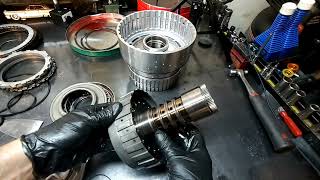
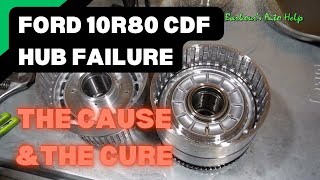
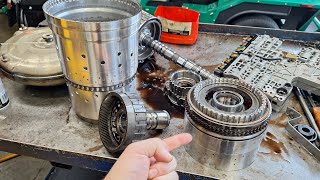
The 2017-2023 Ford F-150 primarily uses the 10R80 10-speed automatic transmission, which was co-developed with General Motors. This transmission is known for specific mechanical weaknesses that directly lead to this code. A very common point of failure is the 'CDF drum,' where an internal sleeve can walk out of position, uncovering hydraulic passages 🎬 See how the CDF drum failure happens inside the unit. and causing a major pressure loss. This is a well-documented design flaw in earlier 10R80 transmissions. Ford has issued multiple Technical Service Bulletins (TSBs) acknowledging shifting problems and has released updated CDF drum designs to address this widespread issue. 🎬 Watch: A Ford technician explains common 10-speed transmission issues. One Ford technician noted the CDF drum issue is so prevalent it should be a recall, not just a TSB.
Diagnostic Flowchart

Tap your situation to follow the diagnostic path that matches what you're seeing on this vehicle.
Generation note: This issue affects both the 13th generation (2017-2020) and 14th generation (2021-2023) Ford F-150, as both are equipped with the 10R80 transmission where this fault is common. Ford reportedly began using an updated CDF drum from the factory in vehicles produced after August 2022, which may reduce the failure rate in later models.
Symptoms You May Notice
- Harsh or delayed shifts, particularly into 5th gear.
- Slipping between gears, where the engine RPMs rise without an increase in vehicle speed.
- Vehicle entering 'limp mode,' with reduced power and limited gear availability.
- Illuminated Malfunction Indicator Lamp (Check Engine Light).
- Delayed engagement when shifting from Park into Drive.
- Clunking noises during shifts.
- Sudden neutralization or loss of movement while driving.
- Harsh shifting between 3rd, 4th, and 5th gears is a frequently reported symptom.
- Replacing only the shift solenoids. While a solenoid can fail, the issue with the 10R80 is more often a systemic hydraulic pressure loss from the valve body or CDF drum, which a new solenoid won't fix.
- Performing a transmission fluid flush. A flush will not repair a worn-out clutch, a failed CDF drum, or a sticking valve body. It is a waste of money if significant mechanical damage is already present.
- Assuming the transmission is the cause without checking engine codes. As one detailed case study showed, engine misfires can manifest as isolated transmission slip codes like P2704, leading to an unnecessary and expensive transmission teardown.
Most Likely Causes

- CDF Clutch Drum Failure 🔴 High Probability → Shop Transmission Clutch Pressure Plate The sleeve inside the original equipment CDF drum can slide out of position due to heat cycles, uncovering hydraulic fluid passages and causing a significant pressure loss. This is a well-documented design flaw in the 10R80 transmission. An owner complaint for a 2018 F-150 specifically cited a failed CDS (a typo for CDF) drum and clutch as the cause for this code. [ODI #11722323] TSB 24-2254 directly links axial movement of the CDF clutch cylinder sleeve to hydraulic leaks and a host of trouble codes, including P2704.
How to confirm: A transmission specialist must disassemble the transmission to visually inspect the CDF drum for a dropped sleeve or excessive wear. The damaged seal resulting from the moved bushing is often visible upon inspection.
Typical fix: The transmission must be removed and disassembled. The original CDF drum is replaced with a revised, updated part from Ford (Part # JL3Z-7H351-B) that has a machined lip or step to prevent the sleeve from moving. Aftermarket solutions, like the Sonnax CDF Drum Saver Kit (129910-01K), also exist to repair the original drum by installing a new, more secure sleeve with a locking set screw.
Est. part cost: $200-$470 for the updated OEM drum assembly. - Main Control Valve Body Failure 🟡 Medium Probability → Shop Transmission Valve Body The valve body contains solenoids and valves that direct hydraulic fluid. These valves can stick or the aluminum body itself can warp, leading to incorrect pressure and erratic clutch application. Multiple TSBs from Ford list sticking valves as a primary cause for a host of shift-related trouble codes, including P2704. [TSB 26-2046, TSB 25-2018, TSB 25-2302] TSB 20-2226 for the 2020 Transit specifically calls out replacing the main control valve body for P2704 due to sticking valves.
How to confirm: A technician can perform a hydraulic pressure test and use a high-level scan tool to command solenoids and check for response. Often, diagnosis is confirmed by eliminating other causes or by finding metal debris in the pan during a service.
Typical fix: Replacement of the entire main control valve body assembly. This is often done as part of a larger transmission rebuild. A Mustang owner with codes P0772 and P2704 confirmed that replacing the valve body resolved their issue.
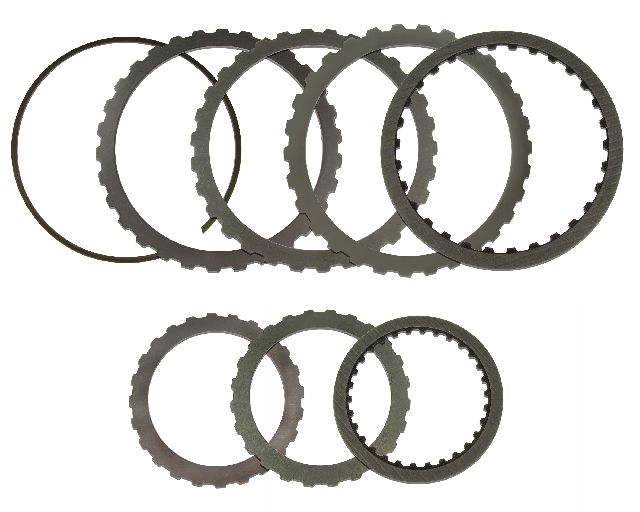
Est. part cost: $800-$1500 for a new valve body. The OEM part number L1MZ-7A100-A is cited in TSBs. General replacement costs can range from $400 to $3,500 depending on the vehicle and labor. - Worn or Damaged 'E' Clutch Pack 🟡 Medium Probability The 'E' clutch is one of the friction elements that can fail. Chronic loss of hydraulic pressure from a failing CDF drum or valve body can starve the clutch of fluid, accelerating wear on the friction material itself and causing it to burn out and slip.
How to confirm: During a transmission teardown, the clutch pack will show visible signs of burning, glazing, or excessive wear. The thickness of the clutch plates can be measured against specifications.
Typical fix: Replacement of the 'E' clutch pack (friction plates and steels) during a transmission rebuild.
Est. part cost: $100-$250 for the clutch pack - Low or Contaminated Transmission Fluid ⚪ Low Probability → Shop Transmission Assembly While less likely to be the root cause on this platform, extremely low or degraded fluid (Mercon ULV) can cause hydraulic pressure issues that trigger this code. However, it's more often a symptom of a larger mechanical failure (like a leak from the CDF drum) than the primary problem. Metal shavings in the fluid are a strong indicator of internal damage.
How to confirm: Check the transmission fluid level and condition. Fluid that is dark, burnt-smelling, or contains metal shavings indicates a severe internal problem.
Typical fix: If the fluid is simply low, a top-off and fixing the leak may help temporarily. If contaminated, a full transmission rebuild is necessary; a simple fluid flush will not fix the underlying mechanical damage.
Est. part cost: $150-$300 for fluid and filter
Rare But Worth Checking
- Engine Misfire: In a documented case from Gears Magazine, severe engine misfires on a 2019 F-150 caused the computer to misinterpret data, leading to P2704 and slipping symptoms that mimicked a transmission failure. After a full transmission rebuild failed to fix the issue, the actual fix was replacing the spark plugs. Always check for engine-related codes first.
- Faulty Powertrain Control Module (PCM): While rare, the PCM itself can fail and incorrectly command the transmission solenoids or misinterpret sensor data. This should only be considered after all mechanical and hydraulic causes have been ruled out.
Diagnosis Steps
- Check for other DTCs, especially engine misfire codes, before focusing on the transmission.
- Using a professional scan tool, check the transmission fluid level and condition. Note any burnt smell or discoloration, and look for glitter-like metal particles in the fluid.
- Review live data from the TCM to monitor commanded vs. actual gear states and solenoid performance. An advanced scanner can perform an apply-time test for friction element 'E'.
- If possible, perform a hydraulic pressure test to check for low line pressure, which would indicate a major internal leak or pump issue.
- Review relevant TSBs (like 24-2254) which outline procedures for verifying hydraulic circuit leakage related to the CDF drum. [1
Parts You'll Likely Need

- Updated CDF Clutch Drum Assembly
(OEM #JL3Z-7H351-B)— This is the most common point of failure on the 10R80 transmission leading to P2704. The updated Ford part has a revised design with an integrated retention lip to prevent the internal sleeve from slipping, which is a permanent fix for the issue.
Trusted brands: Motorcraft
OEM price range: $200-$470
Aftermarket price range: $150-$300 (for repair kits like Sonnax) - Main Control Valve Body
(OEM #L1MZ-7A100-A)— Sticking valves or warping in the original valve body cause hydraulic pressure loss and erratic shifting. Replacement is often necessary if a CDF drum issue is not the root cause. TSBs specifically call for its replacement under certain conditions.
Trusted brands: Motorcraft
OEM price range: $800-$1500
Aftermarket price range: $600-$1200 - Transmission Overhaul Gasket & Seal Kit — Required for any transmission rebuild. Includes all necessary gaskets, O-rings, and seals that must be replaced when the transmission is disassembled.
Trusted brands: Motorcraft, Mahle
OEM price range: $200-$400
Aftermarket price range: $150-$300 - Mercon ULV Automatic Transmission Fluid
(OEM #XT-12-QULV)— The 10R80 requires this specific ultra-low viscosity fluid. A full rebuild will require a complete fluid replacement.
Trusted brands: Motorcraft
OEM price range: $10-$15 per quart
Related Codes That Often Appear With This One
- P0735 — Gear 5 Incorrect Ratio. This code often appears with P2704 because the 'E' clutch is critical for 5th gear. When it fails to apply correctly, the gear ratio is compromised. A case study in Gears Magazine detailed a 2019 F-150 with both codes.
- P0772 — Shift Solenoid 'E' Stuck On. This code was noted alongside P2704 in an owner complaint and a Ford TSB, indicating a related control circuit or mechanical problem with the 'E' clutch system. [15, ODI #11614433] A Mustang owner on the Mustang6G forums also reported both codes together, with the ultimate fix being a new valve body.
- P0751, P0756, P0761, etc. — These are all codes for other shift solenoids (A, B, C, etc.). Ford TSBs group P2704 with a long list of other solenoid and gear ratio codes, as a single failure in the valve body or CDF drum can affect multiple hydraulic circuits. [TSB 26-2046, TSB 25-2018, TSB 25-2302, TSB 24-2254]
- P07F7 — Unable to Engage Gear 10. An owner on f150forum.com reported this code appearing after experiencing hard shifts and skipping gears, which was ultimately diagnosed as a failed CDF drum bushing.
Technical Service Bulletins (TSBs) & Recalls

- TSB 26-2046
- TSB 25-2018
- TSB 25-2302
- TSB 24-2254: This TSB specifically addresses harsh/delayed shifts and numerous DTCs, including P2704, due to axial movement of the CDF clutch cylinder sleeve causing hydraulic leaks. The prescribed action is to verify the leak and replace the CDF clutch cylinder if necessary.
- TSB 22-2139: This bulletin supersedes a previous one and addresses harsh/delayed shifts and a list of DTCs including P2704 on F-150s, Rangers, Mustangs, and Expeditions. It suggests the cause may be adaptive calibration incompatibility and the fix involves overhauling the main control valve body and/or performing an adaptive learning drive cycle.
- TSB 20-2226: While for the Ford Transit, this TSB is relevant as it also uses the 10R80. It addresses harsh engagement with codes P0772 and P2704, attributing the cause to sticking valves in the main control valve body and recommending its replacement.
Platform-Specific Known Issues
- Owner Experience: CDF Drum Failure at 88,000 Miles: A 2018 F-150 Lariat owner experienced hard shifts into 3rd and 5th, with the transmission skipping 2nd and 4th gears, eventually throwing a P07F7 code. A Ford dealer diagnosed the problem as a shifted bushing inside the CDF drum which damaged a seal. The transmission required a rebuild at a cost of $4,400, which was not covered by warranty. The owner noted the mechanic confirmed Ford had since redesigned the part, indicating awareness of the flaw.
- Owner Experience: Misdiagnosis Leads to Unnecessary Rebuild: A detailed report from Gears Magazine on a 2019 F-150 with P2704 and P0735 (Gear 5 Incorrect Ratio) highlights a significant diagnostic pitfall. The shop performed a complete transmission teardown, replaced the valve body and CDF drum, but the 5th gear slip remained. The root cause was eventually found to be engine misfires from fouled spark plugs, which the PCM misinterpreted as a transmission fault. This serves as a critical reminder to always rule out engine issues first.
- Owner Experience: Valve Body Fixes P2704 on High-Horsepower Mustang: → Shop Transmission Valve Body The owner of a modified 2020 Mustang GT (808 whp) with a rebuilt 10R80 transmission suddenly experienced a no-move condition accompanied by codes P0772 and P2704. After attempting a battery disconnect and tune reflash, the problem was ultimately solved by replacing the transmission valve body.
Mechanic-Grade Diagnostic Values
- Shift Solenoid (A-F) Resistance — expected: 5.0 - 5.4 Ohms at 20°C (68°F). Failure: A reading outside this range indicates a faulty solenoid coil.
- Torque Converter Clutch (TCC) Solenoid Current — expected: Proportional operation. Low pressure at ~50 mA, high pressure at ~850 mA.. Failure: Current readings that do not correspond with commanded TCC operation suggest a solenoid or wiring issue.
- Line Pressure Control (LPC) Solenoid Current — expected: Inversely proportional operation. Full pressure at ~50 mA, low pressure at ~850 mA.. Failure: Incorrect line pressure readings relative to the commanded current point to a faulty LPC solenoid or circuit.
Hidden / Shadow Codes Worth Checking
- Mode $06 Misfire Counts: The PCM tracks misfire events per cylinder even before they are frequent enough to set a P030x trouble code. These pending counts can be a crucial clue that an engine performance issue is masquerading as a transmission problem. (see via A professional scan tool capable of reading Emission Mode $06 data. A case study showed this was key to diagnosing a P2704 caused by bad spark plugs.)
Scan Tool Commands That Help
- FORSCAN: Clear Transmission Adaptive Tables & Stop Use of Transmission Adaptive — Used by owners to resolve harsh shifting issues. Clearing the tables forces the TCM to relearn shift points. Some users stop adaptive learning entirely to maintain smooth shifts, though this may have other long-term impacts.
- Ford IDS (or equivalent): Transmission Characterization/Solenoid IDN — This is a mandatory procedure after replacing the main control valve body. The technician must enter the 13-digit solenoid body strategy number from the new part into the PCM/TCM to ensure correct solenoid operation.
- Ford IDS (or equivalent): Adaptive Learning Drive Cycle — Required after clearing adaptive tables or replacing major transmission components like the valve body or the entire transmission. It involves a specific sequence of acceleration, braking, and shifting to teach the TCM the hydraulic characteristics of the hardware.
- Ford IDS (or equivalent): PCM - Transmission Accelerated Main Control Break In — This is a dealer-level service routine mentioned in TSBs for correcting harsh or delayed shifts, often due to sticking valves in a new or existing main control body.
Wiring & Ground Locations
- PCM Connector C175T, Pin 11 — At the Powertrain Control Module (PCM).. This is the specific control circuit pin for Shift Solenoid 'E' (SSE). The wire color is typically Violet/Gray (VT-GY). Testing for voltage and continuity at this pin is essential for diagnosing an electrical fault in the 'E' clutch circuit.
- Body-to-Frame Ground — Commonly found on the passenger side frame rail, sometimes near where an external Transmission Control Module (TCM) is mounted.. These grounds on F-150s are notoriously prone to corrosion and failure, causing a wide range of intermittent electrical and communication issues, including erratic transmission behavior. Cleaning and securing this ground is a critical and low-cost diagnostic step.
- G102 — Right front side of the engine compartment.. This is a major engine compartment ground point. A loose or corroded connection here can disrupt power to various systems, including the transmission controls.
Real Owner Repair Stories
- Gears Magazine (2019 Ford F-150, 3.5L engine) — Transmission slipping in 5th gear, codes P0735 and P2704 stored.
❌ Tried (didn't work) Complete transmission teardown and inspection (found no issues)., Re-assembly with a new main control valve body and an updated CDF drum., A second complete transmission teardown by a different builder (also found no issues).
✅ What actually fixed it Replacing the spark plugs. Mode $06 data revealed misfire counts on two cylinders that were not yet high enough to set a misfire DTC. The engine misfire was causing the computer to misinterpret the transmission's performance. - Ford F150 Forum (2021 F-150 Powerboost) — Transmission failure.
❌ Tried (didn't work) Initial diagnostics before warranty repair.
✅ What actually fixed it The dealer overhauled the transmission using updated parts available as of 2023. The user reported the truck has been fine since the repair. - Reddit r/Mustang (2018-2019 Ford Mustang with 10R80 (same transmission)) — Rough, clunky, lurching shifts in gears 1-5, particularly in Sport mode.
❌ Tried (didn't work) Accepting it as 'normal' aggressive shift tuning.
✅ What actually fixed it Using a FORSCAN adapter to perform the 'Clear Transmission Adaptive Tables' and 'Stop Use of Transmission Adaptive' service functions. The user reported a 'night and day' difference in shift quality.
"I Checked Everything" — The Actual Cause
- The diagnostic equivalent for this transmission code is a full teardown that reveals no mechanical faults. In a well-documented case from Gears Magazine, a 2019 F-150 with P2704 had its transmission rebuilt twice with no issues found inside. The actual root cause was subtle engine misfires from fouled spark plugs, which were only identified by checking Mode $06 data. This highlights the critical need to rule out engine performance issues before condemning the transmission.
OEM Part Supersession History
HL3Z-7H351-A, JL3Z-7H351-A→JL3Z-7H351-B— The original CDF clutch drum design allowed an internal bushing to 'walk' out of position, blocking hydraulic fluid passages. The updated JL3Z-7H351-B part features a machined lip that acts as a hard stop, permanently preventing the bushing from migrating.
Model Year Variations Within This Range
- 2017 - Mid-2022: Vehicles built on or before mid-August 2022 are more likely to have the original CDF clutch drum design that is prone to bushing failure. Vehicles built after this date are more likely to have the updated drum (PN JL3Z-7H351-B) from the factory, reducing the probability of this specific failure, though valve body and software issues can still occur.
Helpful Videos

We Have This Part in Stock


The information in this article is provided for general reference and educational purposes only. Vehicle specifications, procedures, and part compatibility can vary by production date, trim level, and region. Always consult your vehicle's factory service manual and verify part numbers before purchasing or performing repairs. Safety-critical components such as airbags, seat belts, and braking systems should be installed by a qualified professional.
- Ford F-150:
- 🧭 Diagnostic Flowchart
- 🎬 Helpful Videos
- 🛍️ Shop This Part
- What's Unique About the 2017-2023 Ford F-150
- Symptoms You May Notice
- Most Likely Causes
- Rare But Worth Checking
- Diagnosis Steps
- Parts You'll Likely Need
- Related Codes That Often Appear With This One
- Technical Service Bulletins (TSBs) & Recalls
- Platform-Specific Known Issues
- Mechanic-Grade Diagnostic Values
- Hidden / Shadow Codes Worth Checking
- Scan Tool Commands That Help
- Wiring & Ground Locations
- Real Owner Repair Stories
- "I Checked Everything" — The Actual Cause
- OEM Part Supersession History
- Model Year Variations Within This Range
- 🎟️ Get 5% Off