

P2704 on 2020-2023 Lincoln Aviator: Transmission Clutch Performance Explained
This code on a 2020-2023 Aviator points to a problem within the 10-speed automatic transmission (10R60), specifically with the 'E' clutch pack. The most common cause, documented in multiple Ford/Lincoln TSBs, is sticking valves in the main control valve body. This is not a DIY fix and requires replacing the valve body assembly. Other potential, though less common, causes for this family of transmissions include issues with the CDF drum.
- P2704 on a 2020-2023 Aviator is a serious transmission code, almost always pointing to an issue with the main control valve body.
- This is a known issue acknowledged by Lincoln through multiple Technical Service Bulletins.
- Symptoms include harsh shifting, slipping, and hesitation. Do not ignore them, as continued driving can cause more severe damage.
- This is not a DIY-friendly repair. It requires professional diagnosis and service.
- The most common fix is the replacement of the entire main control valve body assembly, along with new transmission fluid and filter.
What's Unique About the 2020-2023 Lincoln AVIATOR
The 2020-2023 Lincoln Aviator uses a sophisticated 10-speed automatic transmission, specifically the 10R60 model. This transmission, along with its higher-torque cousin the 10R80 used in many Ford trucks and SUVs, is known for having issues related to its main control valve body. Ford and Lincoln have issued numerous Technical Service Bulletins (TSBs) acknowledging that sticking valves can cause a wide range of shifting problems and trigger codes like P2704. This makes the valve body a primary suspect on this platform. Another known issue in this transmission family is the failure of the CDF drum's internal sleeve, which can also cause erratic shifting, though P2704 is more directly tied to the valve body by TSBs.
Diagnostic Flowchart
Tap your situation to follow the diagnostic path that matches what you're seeing on this vehicle.
Symptoms You May Notice
- Harsh or delayed gear shifts, especially the 4-5 shift
- Slipping between gears, where engine RPMs flare up without an increase in speed
- Vehicle jerking, lunging, or hesitating during shifts
- Transmission warning light or Check Engine Light illuminated
- Feeling of reduced acceleration or sluggish performance
- Vehicle may enter 'limp mode,' sometimes getting stuck in a single gear
- Clunking or metallic sounds during shifting
- Replacing individual shift solenoids when the issue is with the valve body casting or other valves.
- Assuming a full transmission rebuild is necessary before properly diagnosing the valve body.
- Blaming the transmission entirely when a subtle engine performance issue is the root cause.
Most Likely Causes
- Sticking Valves in Main Control Valve Body 🔴 High Probability → Shop Transmission Valve Body This is a well-documented issue for the Ford/Lincoln 10-speed (10R60/10R80) transmissions, as cited in multiple manufacturer TSBs (e.g., TSB 21-2434, TSB 22-2102, TSB 22-2428). Debris or design tolerances can cause valves to stick within their bores, leading to incorrect hydraulic pressure and timing for clutch application.
How to confirm: A professional technician would use a diagnostic scan tool (like Ford's FDRS) to monitor transmission data 🎬 See a technician's diagnostic process for harsh shifting issues and may perform a 'Transmission Accelerated Main Control Break In' routine as described in TSBs. If the issue persists, especially on vehicles with over 5,000 miles, the valve body is typically condemned.
Typical fix: Replacement of the main control valve body assembly with an updated part.
Est. part cost: $400-$1500 - Low or Dirty Transmission Fluid (ATF) 🟡 Medium Probability → Shop Transmission Assembly While not a design flaw, the complexity of the 10-speed's hydraulics makes it sensitive to fluid condition and level. Burnt or degraded fluid loses its hydraulic properties, and low fluid can starve the pump, causing pressure issues.
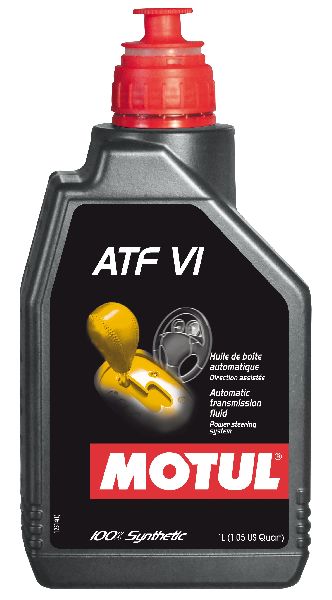
How to confirm: Check the transmission fluid level and condition. The fluid should be at the correct level, pinkish-red, and not smell burnt. The correct fluid is Motorcraft MERCON ULV. 🎬 Watch: How to check your Aviator's transmission fluid level A fluid change is often attempted first but rarely solves a persistent valve body issue.
Typical fix: Perform a transmission fluid and filter change using the manufacturer-specified fluid (Motorcraft MERCON ULV, spec WSS-M2C949-A). A full dry fill is around 13 quarts for the 10R60.
Est. part cost: $150-$300 - Failed Transmission Control Module (TCM) or Software Issue ⚪ Low Probability → Shop Transmission Assembly Ford has issued TSBs that involve reprogramming the PCM/TCM for various shift quality complaints. Sometimes a software update is the first step before hardware replacement is authorized.
How to confirm: This is usually diagnosed after other possibilities are ruled out. A technician would check for software updates using a factory scan tool. In a case study of an F-150 with P2704, the PCM was suspected after a valve body replacement did not fix the issue, but the ultimate cause was an engine misfire.
Typical fix: Reprogramming the TCM/PCM with the latest software. In rare cases, the TCM itself may need replacement.
Est. part cost: $100-$1000
Rare But Worth Checking
- Internal Transmission Mechanical Failure (CDF Drum): → Shop Transmission Assembly While the valve body is the most common culprit for this code, it's possible for other internal components to fail. A widely known issue on the 10RXX family is the sleeve inside the 'CDF' clutch drum migrating out of position, causing hydraulic leaks and erratic shifts. Ford introduced an updated drum with a lip to prevent this. This is a major 🎬 Watch: Understanding how the CDF drum fails internally repair requiring transmission removal.
- Wiring or Connector Issues: Damage to the wiring harness leading to the transmission can cause communication errors or incorrect solenoid commands. This should be inspected for any signs of corrosion, chafing, or loose connections.
- Engine Misfire Under Load: In a documented case for a Ford F-150 with P2704, an intermittent engine misfire that only occurred under specific loads was misinterpreted by the TCM as a transmission slip in 5th gear, leading to a misdiagnosis of the transmission itself.
Diagnosis Steps
- Verify the code with a professional-grade OBD-II scanner capable of reading transmission codes.
- Check the transmission fluid level and condition. Ensure it is clean, at the correct level, and does not smell burnt. The correct fluid is Motorcraft MERCON ULV.
- Check for any available Technical Service Bulletins (TSBs) related to the transmission. The Aviator has several relevant TSBs for this issue.
- Using an advanced scan tool, monitor live transmission data, including solenoid commands, clutch apply times, and look for gear ratio errors.
- A technician may perform a 'Transmission Accelerated Main Control Break In' routine as specified in TSBs to see if the condition improves.
- Inspect the transmission wiring harness and connectors for any visible damage or corrosion.
- If symptoms persist, especially on a vehicle with more than 5,000 miles, the evidence strongly points to a faulty main control valve body, which will likely need replacement.
- If a new valve body does not solve the issue, deeper investigation into the CDF drum or even subtle engine performance problems may be required.
Parts You'll Likely Need
- Main Control Valve Body Assembly
(OEM #L1MZ-7A100-C)— This is the most common point of failure for this code on the 10-speed transmission, as documented by multiple manufacturer TSBs. It is sold as a complete assembly including solenoids.
Trusted brands: Motorcraft
OEM price range: $800-$1500
Aftermarket price range: $500-$1000 - Automatic Transmission Fluid
(OEM #XT-12-QULV)— The fluid must be drained to replace the valve body and should be replaced with new, specified fluid (Motorcraft MERCON ULV). A pan drop and fill will require multiple quarts.
Trusted brands: Motorcraft
OEM price range: $10-$15 per quart
Aftermarket price range: $8-$12 per quart - Transmission Pan Gasket and Filter
(OEM #ML3Z-7A191-A (Gasket), L1MZ-7A098-B (Filter))— These should be replaced any time the transmission pan is removed for service.
Trusted brands: Motorcraft
OEM price range: $50-$100
Aftermarket price range: $30-$70
Related Codes That Often Appear With This One
- P0735 (Gear 5 Incorrect Ratio) — This code is very commonly seen with P2704. Since the 'E' clutch is critical for 5th gear, a slip or apply time issue with clutch 'E' directly causes the gear ratio to be incorrect, triggering P0735.
- P0729, P0731-P0736 — These are gear ratio error codes that often accompany clutch performance codes, as the slipping or delayed clutch engagement prevents the correct gear ratio from being achieved.
- P2700, P2701, P2702, P2703, P2705 — These codes relate to the performance of other friction elements (A, B, C, D, F). It is common for multiple clutch pack codes to appear together when the root cause is the main valve body or a systemic hydraulic pressure issue.
Technical Service Bulletins (TSBs) & Recalls
- TSB 22-2428: Supersedes previous TSBs, covering 2020-2023 Aviators. It addresses harsh/delayed shifts and codes like P2704, pointing to PCM/TCM software, sticking valves in the main control body, and axial movement of the CDF clutch cylinder sleeve as potential causes.
- TSB 22-2102: Specifically for 2020 Aviators/Explorers, this TSB identifies sticking valves in the main control valve body as the cause for harsh shifts and a list of DTCs including P2704.
- TSB 21-2434: An earlier version of the above TSBs, also linking P2704 and other codes to a faulty main control valve body.
- TSB 20-2403: Details the diagnostic procedure for harsh/delayed shifts, including performing a 'break-in' routine and replacing the valve body if it fails.
Platform-Specific Known Issues
- Multiple TSBs (TSB 22-2428, TSB 21-2434, TSB 22-2102) have been issued by Ford/Lincoln for the 10R60/10R80 transmission used in the Aviator. They all list P2704 as a potential code resulting from sticking valves in the main control valve body.
- A class-action lawsuit has been filed regarding the 10R80 transmission, alleging defects that cause harsh and erratic shifting, lunging, and sudd
Scan Tool Commands That Help
- Ford IDS / FORScan: PCM - Transmission Accelerated Main Control Break In — This is a dealer-level function specified in TSBs to attempt to free sticking valves in the main control valve body before replacement. It cycles the solenoids to wear in the valves. If this procedure fails to resolve the issue, valve body replacement is the next step.
- Ford IDS / FORScan / Capable Aftermarket Scanners: Clear Transmission Adaptive Tables — This command erases the transmission's learned shift strategy. It is required after replacing the valve body or performing any major transmission repair. It must be followed by the Adaptive Learning Drive Cycle for the TCM to relearn clutch fill times and pressures with the new components.
- N/A - Manual Procedure: Adaptive Learning Drive Cycle — After clearing the adaptive tables, this specific driving procedure must be performed to allow the TCM to relearn shift characteristics. It involves a series of gentle accelerations and specific shifting patterns to ensure smooth operation and prevent future shift quality issues.
Wiring & Ground Locations
- Main Transmission Connector (C1691B) — On the passenger side of the transmission case, where the main vehicle harness connects to the transmission's internal harness and solenoids.. This is the primary electrical interface for all transmission solenoids, including the one controlling the 'E' clutch. Any corrosion, pin damage, or looseness at this connector can interrupt the command signal from the TCM, causing apply time faults like P2704.
- Powertrain Grounds — Key grounds are typically located on the engine block, firewall, and chassis near the transmission. A common location is a strap from the back of the engine block to the vehicle body.. The TCM and transmission solenoids rely on solid ground connections to function correctly. A poor or corroded ground can cause erratic voltage and unpredictable solenoid operation, leading to performance codes.
Real Owner Repair Stories
- Mustang6G.com user 'Velocity10gear' (2020 Mustang GT with a rebuilt 10R80 transmission (Suncoast Stage 2 kit), 808whp.) — Car would not move when gas was pressed. After a restart, it would jump between 7th and 10th gear while stationary. Only Park and Neutral would engage. Codes P0772 and P2704 were present.
❌ Tried (didn't work) Disconnecting the battery, Reflashing the engine/transmission tune
✅ What actually fixed it Replacement of the main control valve body resolved all symptoms and codes. - Ford Expedition Forum user (2019 Ford Expedition Max/Limited 2WD with a freshly rebuilt 10R80 transmission.) — After rebuild, transmission got stuck in 7th gear, then bucked and went to 3rd. Rear tires locked up during a 1-2 upshift. Reverse would engage but not move. Codes P0771, P2704, P2705, P2708 were present.
❌ Tried (didn't work) A complete transmission rebuild with an updated CDF drum and a new Ford valve body and torque converter., Resetting TCM learned codes and updating shift strategy.
✅ What actually fixed it The user suspected an issue with the new valve body not seating correctly or being faulty from the factory. The problem was still present after re-installing the original, cleaned valve body, suggesting the issue was likely a mistake during the complex internal rebuild process, not the valve body itself. The story highlights the difficulty of these rebuilds.
When the Usual Fixes Don't Work
- In a well-documented case on a 2019 F-150 with a 10R80 transmission, the vehicle presented with classic P2704 and P0735 codes, indicating a slip in 5th gear. The shop performed a standard repair, disassembling the transmission and replacing the valve body and CDF drum, but the slip remained. Further diagnosis revealed the root cause was not the transmission at all, but intermittent engine misfires on two cylinders caused by fouled spark plugs. The engine misfire under load was being misinterpreted by the TCM as a transmission slip. Replacing the spark plugs completely resolved the transmission codes and symptoms. This serves as a critical reminder to not rule out engine performance issues when diagnosing transmission-specific codes.
OEM Part Supersession History
Unknown, multiple early versions→L1MZ-7H351-B (also seen as JL3Z-7H351-B for F-150)— The original CDF clutch drum design allowed an internal bushing/sleeve to 'walk' or migrate out of position, blocking hydraulic fluid passages. The updated part has a machined lip that acts as a hard stop, preventing the sleeve from moving.L1MZ-7A100-B (10R60)→L1MZ-7A100-C— Part revisions to address sticking valve issues and improve shift quality. TSBs often specify using the latest available part number.
Heads up: Valve bodies can be specific to year ranges and features like start/stop or electronic shifters. It is critical to verify the correct service part number for the vehicle's specific VIN and build date.
Model Year Variations Within This Range
- 2020-2022: Vehicles built before late 2022 are more likely to have the original CDF drum design without the retaining lip, making them more susceptible to the internal bushing walkout issue.
- 2022-2023: A recall (23V-085) was issued for a small number of 2022-2023 Aviators and other Ford models for a loose bolt inside the transmission that could prevent the park pawl from engaging. This was related to a specific repair process at the assembly plant.
Helpful Videos


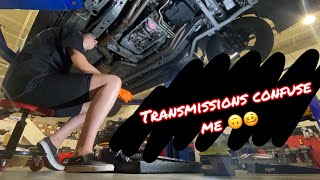
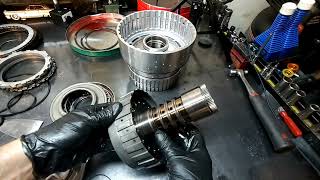
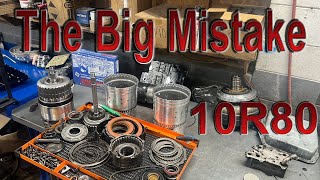

We Have This Part in Stock


The information in this article is provided for general reference and educational purposes only. Vehicle specifications, procedures, and part compatibility can vary by production date, trim level, and region. Always consult your vehicle's factory service manual and verify part numbers before purchasing or performing repairs. Safety-critical components such as airbags, seat belts, and braking systems should be installed by a qualified professional.
- Lincoln AVIATOR:
- 🧭 Diagnostic Flowchart
- 🎬 Helpful Videos
- 🛍️ Shop This Part
- What's Unique About the 2020-2023 Lincoln AVIATOR
- Symptoms You May Notice
- Most Likely Causes
- Rare But Worth Checking
- Diagnosis Steps
- Parts You'll Likely Need
- Related Codes That Often Appear With This One
- Technical Service Bulletins (TSBs) & Recalls
- Platform-Specific Known Issues
- Scan Tool Commands That Help
- Wiring & Ground Locations
- Real Owner Repair Stories
- When the Usual Fixes Don't Work
- OEM Part Supersession History
- Model Year Variations Within This Range
- 🎟️ Get 5% Off