

P2704 on 2018-2023 Lincoln Navigator: Transmission Clutch 'E' Fault Causes & Fixes
P2704 on a Lincoln Navigator indicates a serious internal problem with the 10-speed (10R80) automatic transmission, often related to the valve body or a known faulty CDF clutch drum. This is a complex and expensive repair, typically costing between $3,000 and $7,000, and should only be performed by a qualified technician. The issue is widespread enough to be part of a class-action lawsuit concerning the 10R80 transmission.
- P2704 on a 2018-2023 Navigator is a serious code indicating an internal transmission fault, not a simple sensor issue.
- The most common culprits are a faulty main control valve body or a failed CDF clutch drum, both of which are known issues with the 10R80 transmission.
- This is not a DIY repair. It requires a professional diagnosis and significant labor, with costs often exceeding $3,000.
- Always check for Technical Service Bulletins (TSBs) before approving any repair, as Ford has issued specific guidance for this problem.
- Do not delay repairs. Driving with this condition can cause further, more catastrophic transmission damage.
What's Unique About the 2018-2023 Lincoln NAVIGATOR
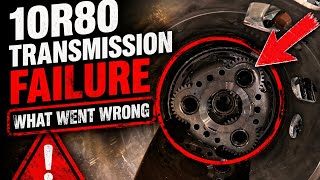
The 2018-2023 Lincoln Navigator uses the Ford-developed 10R80 10-speed automatic transmission, which it shares with high-volume platforms like the Ford F-150 and Expedition. This transmission is known for issues related to harsh shifting and internal component failures, which have been the subject of multiple Technical Service Bulletins (TSBs) and a class-action lawsuit alleging the defect is a 'potentially life-threatening safety issue'. The P2704 code is frequently linked to two well-documented pattern failures: sticking valves in the main control valve body and a design flaw in the Clutch-D-F (CDF) drum where a bushing can 'walk' out of position, causing a loss of hydraulic pressure.
Diagnostic Flowchart
Tap your situation to follow the diagnostic path that matches what you're seeing on this vehicle.
Symptoms You May Notice
- Harsh, clunky, or delayed shifts, particularly the 1-2, 3-4, or 3-5 shifts.
- Vehicle hesitates or jerks during gear changes, sometimes feeling like being rear-ended.
- Transmission slipping (engine RPMs rise without an increase in speed).
- Illuminated Check Engine Light or transmission warning lamp.
- Vehicle enters 'limp mode,' limiting available gears and speed.
- A noticeable delay of 2-3 seconds when shifting from Park to Drive or Reverse.
- Replacing only the transmission fluid and filter when there is a known mechanical issue like a faulty valve body or CDF drum.
- Replacing the entire transmission when only the valve body or CDF drum needs to be replaced.
- Blaming the PCM/TCM before thoroughly investigating the common mechanical and hydraulic failure points.
- Performing a PCM reflash or adaptive learning reset without addressing the underlying mechanical cause, leading to the symptoms returning.
Most Likely Causes
- Faulty Main Control Valve Body 🔴 High Probability → Shop Transmission Valve Body The 10R80 transmission is known for having sticking valves within the main control assembly, as noted in Ford's own TSBs. Debris or normal wear can cause valves to hang up in their bores, preventing correct hydraulic pressure from being routed to the clutch packs.
How to confirm: A technician can use a high-level scan tool to monitor solenoid commands and hydraulic pressures. TSB 22-2428 and its successors directly point to inspecting and potentially replacing the valve body for these issues. Often, a valve body replacement is attempted after a software reflash fails to solve the problem.
Typical fix: Replacement of the entire main control valve body assembly. In some cases, a technician may use an aftermarket kit from a company like Sonnax to ream worn valve bores and install oversized valves.
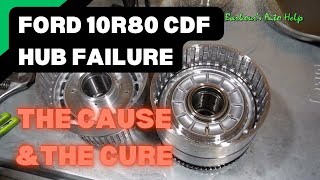
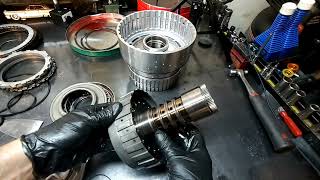
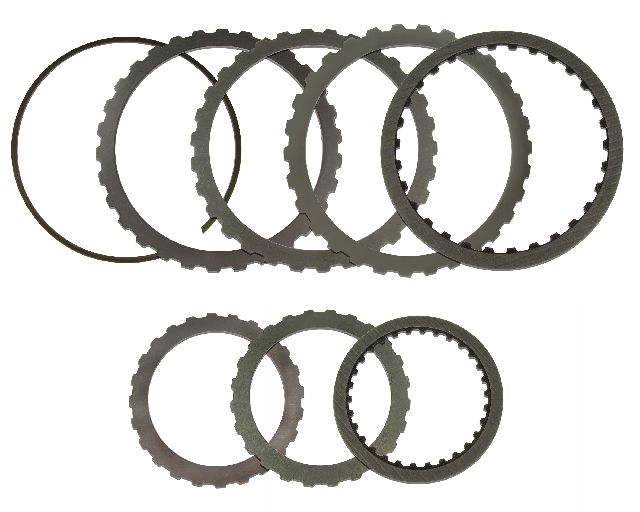
Est. part cost: $600-$1,200 - Internal Failure of the CDF Clutch Drum 🔴 High Probability → Shop Transmission Clutch Pressure Plate Early versions of the 10R80 transmission used a CDF drum with a bushing that could walk out of position, uncovering oil passages and causing a critical loss of hydraulic pressure. This is a well-documented pattern failure for this transmission across all vehicle platforms.
How to confirm: This requires transmission removal and disassembly for visual inspection. Debris in the transmission pan is a strong indicator. The bushing will be visibly out of place compared to the updated part.
Typical fix: The transmission must be removed and disassembled to replace the CDF drum with an updated part (Ford part number JL3Z-7H351-B). This updated part features a machined lip that prevents the bushing from walking out. This is effectively a partial transmission rebuild.
Est. part cost: $150-$500 - Low or Degraded Transmission Fluid 🟡 Medium Probability → Shop Transmission Assembly
How to confirm: Check the transmission fluid level and condition. The fluid should be at the correct level, red in color, and not have a burnt smell. Dark, burnt, or fluid with excessive metallic 'glitter' indicates internal wear, often from the failing CDF drum or clutches.
Typical fix: Perform a transmission fluid and filter change using only the specified Motorcraft MERCON ULV fluid. This is often a first diagnostic step but is unlikely to solve an underlying mechanical issue like the CDF drum or valve body failure.
Est. part cost: $100-$200 - Faulty Clutch Solenoid ⚪ Low Probability
How to confirm: A scan tool can test individual solenoid function. However, solenoids are integrated into the valve body on the 10R80, so a solenoid failure usually necessitates replacing the entire valve body assembly.
Typical fix: Replace the main control valve body assembly.
Est. part cost: $600-$1,200
Rare But Worth Checking
- Powertrain Control Module (PCM) or Transmission Control Module (TCM) Failure: → Shop Transmission Assembly While possible, control module failure is rare. All other potential causes, especially the known mechanical and hydraulic issues with the 10R80, should be exhaustively ruled out before condemning the PCM/TCM. TSBs often recommend a PCM/TCM software update as a first step before mechanical repairs.
- Engine Misfire: In some cases, an engine misfire that is not severe enough to set a misfire code (P030x) can be misinterpreted by the transmission control logic, leading to erroneous transmission slip codes like P2704. One documented case on an F-150 with a 10R80 showed that codes P0735 and P2704 were ultimately resolved by replacing fouled spark plugs that were causing low-level misfires detectable only in Mode $06 data.
Diagnosis Steps
- Verify the code with a professional-grade OBD-II scanner capable of reading transmission control module data.
- Check for any accompanying codes to understand the full scope of the issue.
- Check the transmission fluid level and condition. Note any signs of burning or metal particles.
- Consult all relevant Technical Service Bulletins (TSBs) for the 2018-2023 Lincoln Navigator. TSB 22-2428 (and its superseding versions) is the primary document for these symptoms and codes.
- Using a Ford diagnostic scan tool (IDS) or equivalent (like FORScan), check for and perform any available PCM/TCM software updates as recommended by the TSBs.
- Perform the transmission adaptive learning reset procedure. Note that this may temporarily mask the issue if the root cause is mechanical, and symptoms may return.
- If symptoms persist, diagnosis will proceed to dropping the transmission pan to inspect the valve body and check for debris.
- If a faulty CDF drum is suspected based on TSBs and symptoms (especially harsh 1-2 and 3-4 shifts), the transmission will need to be removed for inspection and repair.
Parts You'll Likely Need
- Main Control Valve Body Assembly
(OEM #JL3Z-7A100-C)— This is a primary failure point for the 10R80 transmission, causing a wide range of shifting issues including P2704. Replacement is often mandated by TSBs after a software update fails to resolve the issue.
Trusted brands: Motorcraft
OEM price range: $800-$1,200
Aftermarket price range: $550-$800 - CDF Triple Drum Hub Assembly
(OEM #JL3Z-7H351-B)— The original drum had a design flaw causing the bushing to fail, leading to pressure loss and clutch slip. This updated part, which supersedes HL3Z-7H351-A and JL3Z-7H351-A, corrects the issue with a new retaining lip.
Trusted brands: Motorcraft, SunCoast Performance, Sonnax
OEM price range: $150-$250
Aftermarket price range: $100-$550 - Automatic Transmission Fluid
(OEM #XT-12-QULV)— Any internal transmission repair requires draining and refilling the transmission with the correct fluid. Using the specified Motorcraft MERCON ULV is critical for the proper function of the 10R80's hydraulic systems.
Related Codes That Often Appear With This One
- P0735 — Gear 5 Incorrect Ratio. This code often appears with P2704 because the 'E' clutch is involved in the 5th gear shift, and a failure to apply correctly results in a gear ratio error.
- P0772 — Shift Solenoid 'E' Stuck On. This code is also directly related to the 'E' clutch circuit and is mentioned alongside P2704 in Ford TSBs regarding harsh engagement.
- P2700, P2701, P2702, P2703, P2705 — These codes relate to other friction elements (A, B, C, D, F). Seeing multiple codes from this family strongly suggests a systemic problem like a faulty valve body, widespread clutch failure, or severe fluid contamination affecting the entire transmission. TSB 22-2428 and its successors list all of these codes together as being caused by the same set of potential failures (valve body, CDF drum, software).
Technical Service Bulletins (TSBs) & Recalls
- TSB 22-2428: Superseded TSB that details the diagnosis and repair for harsh/delayed shifts. It points to PCM/TCM software, sticking valves in the main control body, and/or axial movement of the CDF clutch cylinder sleeve as primary causes.
- TSB 23-2250: Supersedes TSB 22-2428, updating the procedure and parts list for the same set of issues across multiple Ford/Lincoln vehicles with the 10R80.
- TSB 26-2046, 25-2023, 24-2254: Earlier TSBs also listing a wide range of transmission codes, including P2704, related to harsh shifting, indicating a long history of Ford addressing this issue.
Platform-Specific Known Issues
- The 10R80 transmission in 2018-2023 Navigators is subject to multiple TSBs (including TSB 22-2428 and its successors like 23-2250) for harsh shifting, delayed engagement, and a host of trouble codes including P2704.
- A class-action lawsuit has been filed against Ford covering the Navigator and other models with the 10R80, alleging the transmissions are defective and can shift erratically, causing vehicles to 'jerk, lunge, clunk, and hesitate'.
- Owner experiences frequently cite that a software update or adaptive learning reset provides only a temporary fix, with the harsh shifting returning, eventually requiring mechanical repair of the valve body or CDF drum.
Mechanic-Grade Diagnostic Values
- Shift Solenoid Resistance — expected: 5.0 - 5.4 Ohms at 68°F (20°C). Failure: A resistance reading outside of this range indicates a faulty solenoid coil.
Hidden / Shadow Codes Worth Checking
- Mode $06 Misfire Counts: The ECU tracks misfires on each cylinder even if they aren't frequent enough to set a P030x trouble code. In at least one documented case, these hidden misfire counts were the key to diagnosing the root cause of a P2704 code. (see via A professional scan tool capable of viewing Mode $06 data is required. The misfire counts for each cylinder can be monitored.)
Scan Tool Commands That Help
- FORScan / Ford IDS: Clear Transmission Adaptive Tables — This service function is used to erase the learned hydraulic values stored in the TCM's Keep Alive Memory (KAM). It is a required first step before performing the adaptive learning drive cycle after a software update or mechanical repair.
- Ford IDS: Transmission Accelerated Main Control Break-in Routine — Mentioned in TSB 20-2226 for harsh engagement issues, this is a dealer-level procedure to help seat and break-in the valves in a new or problematic main control valve body.
- FORScan / Ford IDS: Adaptive Learning Drive Cycle — After clearing the adaptive tables, a specific, multi-step drive cycle must be performed to allow the TCM to relearn the unique parameters of the transmission for optimal shift quality. Failure to perform this procedure can result in the return of harsh shifting symptoms.
Real Owner Repair Stories
- Gears Magazine (2019 Ford F-150 3.5L (shared 10R80 transmission)) — Check engine light with codes P0735 (Gear Ratio Error in 5th) and P2704. Transmission slipped in 5th gear, particularly when hot.
❌ Tried (didn't work) A complete transmission teardown and inspection, which found no visible internal faults.
✅ What actually fixed it The technician discovered low-level engine misfires on cylinders #1 and #5 using Mode $06 data. Replacing the spark plugs eliminated the misfires, which in turn resolved the transmission slipping and cleared the P2704 and P0735 codes. - Mustang6G.com forum user (2019 Ford Mustang GT (shared 10R80 transmission) with ~40,000 miles) — Severe 4-5 shift flare (slipping) after a hard acceleration, setting codes P0771 and P2704.
❌ Tried (didn't work) Clearing the codes initially made the problem disappear, but the underlying concern remained.
✅ What actually fixed it A transmission fluid drain and refill was performed. The fluid was dark and contained metallic 'glitter', indicating internal wear. While the fluid change resolved the immediate flare issue, the presence of metal suggests the ultimate fix will be a future transmission rebuild, likely focusing on the 'E' and 'F' clutch packs.
OEM Part Supersession History
HL3Z-7H351-A, JL3Z-7H351-A→JL3Z-7H351-B— The original CDF drum assembly had a design flaw where a bushing could 'walk' out of position. The updated JL3Z-7H351-B part features a machined lip to physically prevent the bushing from moving, providing a permanent fix.JL3Z-7A100-A→JL3Z-7A100-C— The valve body assembly has been updated to address issues with sticking valves that cause harsh and delayed shifts.
Model Year Variations Within This Range
- 2018 - Mid-2022: Vehicles built on or before August 15, 2022, are susceptible to the CDF clutch drum bushing failure. Vehicles manufactured after this date should have the updated drum (part JL3Z-7H351-B) from the factory, which has a machined lip to prevent the bushing from walking.
Helpful Videos

We Have This Part in Stock


The information in this article is provided for general reference and educational purposes only. Vehicle specifications, procedures, and part compatibility can vary by production date, trim level, and region. Always consult your vehicle's factory service manual and verify part numbers before purchasing or performing repairs. Safety-critical components such as airbags, seat belts, and braking systems should be installed by a qualified professional.
- Lincoln NAVIGATOR:
- 🧭 Diagnostic Flowchart
- 🎬 Helpful Videos
- 🛍️ Shop This Part
- What's Unique About the 2018-2023 Lincoln NAVIGATOR
- Symptoms You May Notice
- Most Likely Causes
- Rare But Worth Checking
- Diagnosis Steps
- Parts You'll Likely Need
- Related Codes That Often Appear With This One
- Technical Service Bulletins (TSBs) & Recalls
- Platform-Specific Known Issues
- Mechanic-Grade Diagnostic Values
- Hidden / Shadow Codes Worth Checking
- Scan Tool Commands That Help
- Real Owner Repair Stories
- OEM Part Supersession History
- Model Year Variations Within This Range
- 🎟️ Get 5% Off