

OBD-II Code P2705: Transmission Friction Element 'F' Apply Time/Performance
What P2705 means, why it triggers, and how to fix it
- Code P2705 indicates the 'F' clutch inside your transmission takes more than the specified milliseconds to engage, causing harsh or slipping shifts.
- On 2017 to 2023 Ford F-150s and Mustangs, this code almost always points to a failed CDF clutch drum requiring a $5,500 to $8,500 transmission rebuild.
- Check your transmission fluid level at the exact operating temperature (206°F - 215°F for Ford 10R80) before replacing any electronic parts.
- Stop driving immediately; continuing to drive with a slipping 'F' clutch circulates metal debris and destroys the entire transmission within weeks.
What Does P2705 Mean?
The Transmission Control Module (TCM) detected that 'Friction Element F'—a specific clutch pack—takes too long to engage or disengage. The TCM commands a shift, but the hydraulic and mechanical response fails to happen within the required milliseconds, causing poor shift quality and triggering the code.
Technical definition: The official SAE/OBD-II definition is "Transmission Friction Element 'F' Apply Time Range/Performance". The TCM monitors pressure sensors and shaft speeds during a shift. If the 'F' clutch application time exceeds the programmed millisecond threshold, the TCM triggers this code.
Can I Drive With P2705?
No — Do Not Drive. Stop driving immediately. The transmission will shift harshly, slip, or lock into a single gear ('limp mode'), creating a severe safety hazard at highway speeds. Continuing to drive circulates metal debris from the failing clutch, contaminating the valve body and cooler. This turns a targeted repair into a catastrophic $5,000+ transmission replacement.
Common Causes
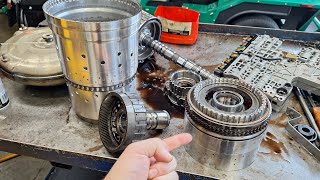
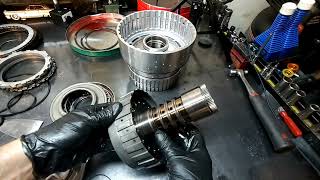
- Internal Mechanical Failure (CDF Drum) (Very Common) — On 2017+ Ford 10R80 transmissions, the CDF clutch drum fails when an internal bushing slides out of place, causing a massive hydraulic leak. This starves the 'F' clutch of pressure. 🎬 Watch: Detailed teardown of the CDF drum bushing failure
- Low or Dirty Transmission Fluid (Very Common) — Low fluid starves the transmission of the hydraulic pressure needed to apply the clutches. Burnt or dirty fluid clogs passages and sticks valves.
- Faulty Main Control Valve Body (Common) — Debris scores the valve body's internal bores, causing valves to stick and seals to leak. This prevents hydraulic pressure from reaching the 'F' clutch on time.
- Faulty Transmission Control Solenoid (Common) — The electro-hydraulic solenoid controlling the 'F' clutch fails electrically or clogs with debris, preventing fluid flow to the clutch pack.
- Corrupted TCM Software or Incomplete Re-learn (Less Common) — Outdated TCM software or failing to perform a transmission adaptive learning procedure after a repair causes the computer to use incorrect apply-time parameters.
- Damaged Wiring or Connectors (Less Common) — Frayed wires or corroded connectors interrupt the voltage signal between the TCM and the transmission solenoids, delaying clutch application.
- Faulty Input/Output Speed Sensors (Rare) — Inaccurate input or output shaft speed sensor readings trick the TCM into calculating an incorrect clutch apply time.
Symptoms
- Harsh, Delayed, or Slipping Shifts — You feel a violent jerk, lag, or the engine revving without the car accelerating during gear changes. This is highly noticeable on the 3-5 upshift in Ford 10-speed transmissions.
- Vehicle Enters 'Limp Mode' — The vehicle locks into a single gear (usually 2nd or 3rd) to prevent further internal damage, severely limiting your speed and acceleration.
- Check Engine or Wrench Light Illuminated — The Malfunction Indicator Lamp (MIL) turns on. Ford vehicles often display a powertrain fault light shaped like a wrench.
- Failure to Engage Gears — Shifting from Park to Drive or Reverse results in a 2-3 second delay, or the transmission fails to engage the gear entirely.
- Abnormal Transmission Noises — You hear whining, clunking, or grinding noises from the transmission tunnel during shifts.
Diagnostic Flowchart
Tap your situation to follow the diagnostic path that matches what you're seeing on this code.
Common Fixes & Costs
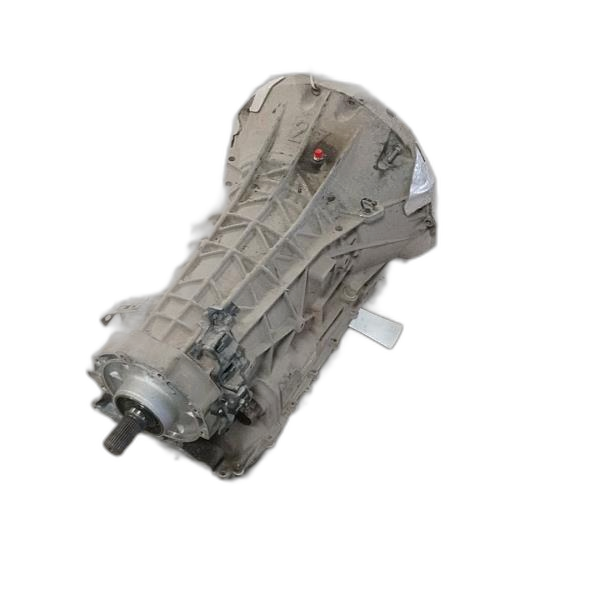
- Rebuild or Replace Transmission — Parts: $2,500-$4,500, Labor: $1,500-$3,500, ~12 hr book time 🎬 Watch: Full 10R80 transmission removal and teardown walkthrough (Professional)
- Replace Valve Body Assembly — Parts: $700-$1,400, Labor: $400-$800, ~4 hr book time (Professional)
- Transmission Fluid and Filter Change — Parts: $80-$150, Labor: $150-$250, ~1.5 hr book time (Intermediate)
- Replace Transmission Shift Solenoid — Parts: $50-$200, Labor: $300-$600, ~3 hr book time (Professional)
- Replace Transmission Control Module (TCM) — Parts: $600-$1,000, Labor: $200-$400, ~2.5 hr book time (Professional)
Used vs. New Parts: Buying Guide
When a used part is worth it: A professionally remanufactured unit is mandatory. A used salvage yard transmission is only viable if the vehicle's value is extremely low and you can verify the donor unit does not have the same factory defect.
Donor-vehicle mileage cap: roughly under 60000 miles for the part to have meaningful remaining life.
Donor quality checklist:
- For Ford 10R80, verify the remanufactured unit contains the updated CDF drum (part JL1Z-7H351-B).
- Ensure the unit clears Ford recall 25SB3 for missing bearings.
Decision logic:
- If The known failure is a specific design flaw (like the 10R80 CDF drum) → Buy a remanufactured unit guaranteed to have the updated parts.
- If The part is a valve body or solenoid pack → Buy a quality remanufactured part; used electronics carry a 50%+ failure rate.
Warranty tradeoff: Salvage yard parts offer 30-day part-only warranties. Remanufactured transmissions offer 1-3 year warranties covering parts and labor.
Worst-case if a used part fails: $2,000 if a used transmission fails, representing repeat labor costs.
What Happens If You Wait — Timeline
- 0-2 months: Intermittent fault. A wrench light appears, possibly with a harsh shift, but clears after a restart. (MPG impact: 0-3%% · Added cost: $0)
- 2-4 months: Consistent fault. Harsh shifts and slips become frequent. Slipping clutches shed material into the fluid. (MPG impact: 3-8%% · Added cost: $100 in wasted fuel.)
- 4-8 months: Systemic contamination. Debris clogs the filter and scores the valve body, causing other valves to stick. (MPG impact: 8-15%% · Added cost: $1,200-$2,200 (Requires valve body replacement).)
- 8+ months: Catastrophic failure. Overheating destroys multiple clutch packs. The vehicle is permanently stuck in limp mode. (MPG impact: 25%% · Added cost: $5,500-$8,500+ (Requires complete transmission replacement).)
Cost of Not Fixing It
- 0-1 month: Harsh shifting, slipping, and unpredictable 'limp mode' engagements. (Added cost: Negligible, but high risk of being stranded.)
- 1-6 months: Worn clutch material circulates, clogging the filter and scoring the valve body. A single-component failure becomes a multi-part failure. (Added cost: $1,200-$2,200 (Cost of a ruined valve body).)
- 6+ months: Catastrophic failure. Overheating destroys multiple clutch packs and the torque converter. The transmission requires complete replacement. (Added cost: $5,500-$8,500+)
Diagnosis Steps
- Scan for All Trouble Codes & Freeze Frame Data
Use an advanced OBD-II scanner to read P2705 and any pending codes. Related solenoid (P07xx) or gear ratio (P073x) codes pinpoint the failure. Analyze freeze frame data to identify the exact speed, temperature, and RPM when the fault occurred.
Tools: Advanced OBD-II Scanner (Beginner) - Check for Technical Service Bulletins (TSBs)
Search your VIN for active TSBs. For Ford 10R80 transmissions, TSB 24-2254 dictates the exact diagnostic procedure for the known CDF drum failure, saving hours of misdiagnosis.
Tools: Internet access, Vehicle VIN (Beginner) - Check Transmission Fluid Level and Condition
Verify the fluid level at the manufacturer-specified temperature (206°F - 215°F for Ford 10R80). Dark, burnt, or metallic-flecked fluid confirms internal clutch damage requiring a rebuild.
Tools: Fluid pump, infrared thermometer, catch pan, safety glasses (Intermediate) - Analyze Live Scan Tool Data
Monitor the 'Friction Element Apply Time' PID. Compare the apply time in milliseconds to the factory specification. A value consistently exceeding the spec confirms a hydraulic leak or mechanical failure, not an electrical glitch.
Tools: Professional Bi-Directional Scanner (Advanced) - Test the 'F' Control Solenoid Circuit
Unplug the transmission connector and measure the resistance of the 'F' control solenoid. A Ford 10R80 solenoid must read 5.0 - 5.4 Ohms at 68°F. Readings outside this range require solenoid replacement.
Tools: Multimeter, vehicle-specific wiring diagram (Advanced) - Perform a Transmission Pressure Test
Connect a gauge to the transmission pressure port. Ford 10R80 line pressure must reach 230-260 psi at wide-open throttle. Low pressure in the 'F' circuit confirms a CDF drum leak or failing pump.
Tools: Transmission pressure gauge set, vehicle-specific adapters (Advanced) - Inspect Wiring and Connectors
Visually inspect the transmission wiring harness for melted insulation, corrosion, or fluid intrusion at the main connector.
Tools: Flashlight, inspection mirror (Intermediate) - Inspect Internal Components
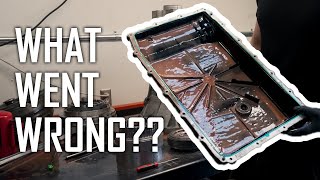
Drop the transmission pan. Excessive metal shavings on the magnet confirm catastrophic failure. If a Ford CDF drum failure is suspected, remove and disassemble the transmission to inspect the bushing.
Tools: Socket set, torque wrench, transmission jack, fluid catch pan (Professional)
When This Code Triggers (Freeze-Frame Conditions)
- Transmission Fluid Temp: 190-215°F (Vehicle at full operating temperature.)
- Engine RPM: 1300-2500 RPM (During a gear shift under light to moderate acceleration.)
- Vehicle Speed: 30-55 mph (Occurs during an upshift at city or highway speeds, like the 3-5 shift in a Ford 10R80.)
Related Codes
- P0730-P0736 — Incorrect Gear Ratio Codes. P2705 causes these codes. The slow 'F' clutch application causes slippage, which the TCM detects as a gear ratio error. Having both guarantees a mechanical or hydraulic failure.
- P2700-P2704 — Other Friction Element Codes. Seeing multiple clutch performance codes simultaneously proves a systemic failure, such as a massive hydraulic leak (Ford CDF drum) or a dead transmission pump.
- P0750-P0774 — Shift Solenoid Electrical Codes. If P2705 appears with a solenoid code, the electrical circuit is the root cause. If P2705 appears alone, the problem is hydraulic or mechanical.
Climate & Environmental Factors
- Extreme Heat: Ambient heat thins transmission fluid, reducing hydraulic pressure and exacerbating internal leaks, triggering apply-time faults faster.
- Extreme Cold: Cold weather thickens fluid, causing harsh shifts on startup until the transmission reaches operating temperature.
How to Talk to a Mechanic About This Code
Say this: "I have a [Year/Make/Model] with a P2705 code and harsh shifting. If it's a Ford 10R80, I want to ensure you follow the diagnostic procedure in TSB 24-2254 to check the CDF drum before quoting a valve body."
Directs the technician to the known failure mode and prevents them from suggesting a common misdiagnosis (replacing the valve body) without proper testing.
Avoid saying:
- 'My transmission is acting weird.'
- 'Just fix whatever's wrong with it.'
Questions to ask before authorizing the repair:
- What specific tests did you perform to rule out the CDF drum leak or other internal hydraulic leaks?
- Does your quoted price include a full transmission adaptive learning procedure?
- What is the warranty on the parts and labor for this specific repair?
Where to Take It: Dealer vs Independent vs Chain
- Dealer:
Highly Recommended for Ford 10R80s. They are best equipped to diagnose the known TSB-related issues correctly.
Best for: Vehicles under powertrain warranty., Ford 10R80 CDF drum failures requiring proprietary diagnostic tools and TSB adherence.
Downsides: Highest labor rates., Defaults to full transmission replacement rather than a targeted rebuild. (Typical cost: +40% vs. baseline) - Independent Shop:
Recommended ONLY if they are a dedicated transmission specialist familiar with P2705 and related TSBs.
Best for: Out-of-warranty vehicles where cost is a major factor., Finding a dedicated transmission rebuilding specialist.
Downsides: General mechanics misdiagnose 10R80 issues, leading to costly and ineffective repairs. (Typical cost: +0% vs. baseline) - Chain Shop:
AVOID. This is a complex internal transmission code unsuitable for a general-purpose chain repair shop.
Downsides: Technicians lack specialization in complex internal transmission work., High risk of misdiagnosis. (Typical cost: -10% vs. baseline)
When to Walk Away From the Repair
If the estimated repair cost exceeds 50% of the car's private-party value, sell the car as-is or trade it in.
- Car worth $30000, fix is $7000: Fix it. The repair cost is high, but well below the 50% threshold.
- Car worth $12000, fix is $6500: Borderline. The cost exceeds 50% of the value. Get a second opinion, then consider trading it in.
- Car worth $5000, fix is $4000: Walk away. The repair cost is 80% of the car's value.
What Scan Tool You Need for This Code
Minimum: A scan tool that reads manufacturer-specific transmission codes and views live Transmission Fluid Temperature (TFT) and clutch apply times.
A $20 code reader cannot access the transmission control module to see crucial data like fluid temperature or solenoid statuses, making diagnosis impossible.
Budget: FORScan with OBDLink EX adapter (for Ford) (~$60) — Provides dealer-level access to read Ford-specific codes, monitor live clutch apply times, and perform the transmission adaptive learning reset.
Mid-range: BlueDriver Pro (~$120) — Reads transmission codes and views live fluid temperature, but lacks the bi-directional control to command solenoids or perform relearns.
Professional: Autel MK808BT (~$450) — Offers full bi-directional control to command solenoids and perform the critical transmission adaptive learning procedure after a repair.
Rent vs buy: Buying a FORScan adapter is mandatory for Ford owners. For other makes, paying a $150 diagnostic fee at a qualified transmission shop is more effective than buying a mid-range scanner.
How to Clear the Code After You Fix It
- Use an OBD-II scan tool to clear DTCs and reset the Transmission Adaptive Tables.
- Perform the manufacturer-specific transmission adaptive learning drive cycle.
- Re-scan to ensure no codes return.
Drive cycle (~30 minutes): Warm the vehicle to operating temperature. Perform a series of light-throttle accelerations from a stop up to 55 mph to allow all upshifts, followed by a gentle stop. Repeat 5-10 times.
Readiness monitors affected: Comprehensive Component Monitor
Before emissions retest: drive at least 50 miles to fully set monitors.
Watch out for:
- Clearing the code without fixing the mechanical leak guarantees the code returns immediately.
- Failing to perform the transmission adaptive learning procedure causes harsh shifting even with brand new parts.
Will This Fail Emissions / State Inspection?
Yes — this code typically fails an OBD-II emissions inspection.
- California: An illuminated Check Engine Light results in an automatic smog check failure.
Most Commonly Affected Vehicles
- Ford F-150 (2017-2023) — The 10R80 transmission suffers a massive design flaw where the CDF clutch drum bushing slips, causing P2705. Reference TSB 24-2254.
- Ford Mustang (2018-2023) — Shares the 10R80 transmission and identical CDF drum failure rates. Vehicles built after August 2022 have the revised part.
- Ford Expedition (2018-2023) — Requires the updated JL1Z-7H351-B CDF drum to resolve P2705 permanently.
- General Motors Silverado / Sierra (2017-2023) — GM's 10L80 transmission, co-developed with Ford, experiences similar internal hydraulic and valve body failures.
- Chrysler/Dodge/Jeep Ram 1500 / Charger (2014-2023) — P2705 typically points to a failed integrated solenoid pack or valve body in their 8-speed transmissions.
- Honda/Acura Accord / Pilot (2016-2023) — Triggered by failing torque converter clutch solenoids or degraded fluid.
- Nissan/Infiniti Titan / Armada (2016-2023) — Points to internal transmission wear or a failing TCM.
Manufacturer-Specific Notes
- Ford: On 2017+ 10R80 transmissions, P2705 is the hallmark of a failed CDF clutch drum bushing. Do not replace the valve body without performing the pressure tests in TSB 24-2254 to confirm the drum's integrity.
- Chrysler/Dodge/Jeep: Shift solenoids are integrated into a single block. A single solenoid failure requires replacing the entire pack.
- General (All Makes): Replacing any transmission component requires a 'Transmission Adaptive Learning' procedure with a scan tool. Skipping this guarantees the code returns.
Real Owner Stories
2019 Ford F-150 with 10R80 at 85,000 miles
Owner experienced a wrench light and lockout of gears 1, 2, and 3. Code P2705 cleared after restarting, but shifting remained clunky.
Outcome: The dealer confirmed the 10R80 CDF drum failure. The slipped bushing caused an intermittent pressure loss. The repair required a $6,500 transmission rebuild to install the updated drum.
Lesson: An intermittent P2705 on a Ford 10R80 is the beginning of a catastrophic failure. Insist the dealer follows TSB 24-2254 immediately.
2019 Ford F-150 with P2704 and P0735
Vehicle arrived at a shop with slipping in 5th gear and codes P2704 and P0735.
Outcome: The root cause was a failing spark plug causing a misfire. The PCM misinterpreted the crankshaft speed fluctuations as transmission slippage. Replacing spark plugs resolved all codes.
Lesson: Never ignore engine misfires. The TCM relies on engine speed data; a misfire tricks the computer into flagging a $6,000 transmission fault.
How to Prevent This Code From Triggering
- Perform proactive transmission fluid changes (Every 30,000-50,000 miles.) — Removes degraded fluid and suspended contaminants, preventing valve body scoring and maintaining hydraulic pressure.
- Install an auxiliary transmission cooler (One-time install for towing vehicles.) — Every 20°F drop in temperature doubles the life of the transmission fluid and internal seals.
- Use the correct drive mode (Daily habit) — On Ford 10R80s, 'Tow/Haul' or 'Sport' modes provide decisive shifts and reduce excessive clutch cycling compared to 'Normal' mode.
Frequently Asked Questions
Can low transmission fluid cause a P2705 code?
Yes. Low fluid prevents the transmission from building the hydraulic pressure required to engage the clutch pack on time. Check the fluid level at the correct operating temperature before replacing parts.
Will a fluid change fix P2705?
Only if the root cause is slightly low or degraded fluid. If the code stems from a mechanical failure like a torn seal or slipped CDF drum bushing, new fluid will not solve the problem.
What is the CDF Drum in a Ford 10R80?
The CDF drum houses clutch packs C, D, and F. In 2017-2023 Fords, a factory bushing frequently slides out of place, creating a massive hydraulic leak that starves the clutches. Fixing this requires a complete transmission teardown to install an updated drum.
How much does it cost to fix P2705?
A simple fluid service costs $150 to $350. However, if the code requires a transmission rebuild to fix a failed CDF drum or valve body, expect to pay between $5,500 and $8,500 at a dealership.
Is P2705 serious?
Yes, it is a critical failure code. Driving with a slipping clutch destroys the transmission internally within weeks and creates a safety hazard if the vehicle suddenly downshifts at highway speeds.
Key Takeaways
- Code P2705 indicates the 'F' clutch inside your transmission takes more than the specified milliseconds to engage, causing harsh or slipping shifts.
- On 2017 to 2023 Ford F-150s and Mustangs, this code almost always points to a failed CDF clutch drum requiring a $5,500 to $8,500 transmission rebuild.
- Check your transmission fluid level at the exact operating temperature (206°F - 215°F for Ford 10R80) before replacing any electronic parts.
- Stop driving immediately; continuing to drive with a slipping 'F' clutch circulates metal debris and destroys the entire transmission within weeks.
Helpful Videos
Shop the Parts Behind P2705
Below are the parts most often responsible for code P2705, ranked by how frequently each one is the actual culprit (per the diagnosis above). Tap any to see what we have for your vehicle.




The information in this article is provided for general reference and educational purposes only. Vehicle specifications, procedures, and part compatibility can vary by production date, trim level, and region. Always consult your vehicle's factory service manual and verify part numbers before purchasing or performing repairs. Safety-critical components such as airbags, seat belts, and braking systems should be installed by a qualified professional.
- 🧭 Diagnostic Flowchart
- 🎬 Helpful Videos
- 🛍️ Shop This Part
- What Does P2705 Mean?
- Can I Drive With P2705?
- Common Causes
- Symptoms
- Common Fixes & Costs
- Used vs. New Parts: Buying Guide
- What Happens If You Wait — Timeline
- Cost of Not Fixing It
- Diagnosis Steps
- When This Code Triggers (Freeze-Frame Conditions)
- Related Codes
- Climate & Environmental Factors
- How to Talk to a Mechanic About This Code
- Where to Take It: Dealer vs Independent vs Chain
- When to Walk Away From the Repair
- What Scan Tool You Need for This Code
- How to Clear the Code After You Fix It
- Will This Fail Emissions / State Inspection?
- Most Commonly Affected Vehicles
- Manufacturer-Specific Notes
- Real Owner Stories
- 2019 Ford F-150 with 10R80 at 85,000 miles
- 2019 Ford F-150 with P2704 and P0735
- How to Prevent This Code From Triggering
- Frequently Asked Questions
- Can low transmission fluid cause a P2705 code?
- Will a fluid change fix P2705?
- What is the CDF Drum in a Ford 10R80?
- How much does it cost to fix P2705?
- Is P2705 serious?
- Key Takeaways
- 🎟️ Get 5% Off