

P2705 on 2019-2023 Ford Ranger: Transmission Friction Element 'F' Causes and Fixes
This code on a 2019-2023 Ford Ranger indicates a problem within the 10-speed (10R80) automatic transmission, specifically that the 'F' clutch pack is taking too long to engage. The most common cause is an internal hydraulic leak related to the CDF clutch drum, a known issue addressed by Ford's technical service bulletins. The fix often requires significant internal transmission repair to replace the drum with an updated part, or in some cases, a full transmission replacement.
- P2705 on a 2019-2023 Ranger is a serious code pointing to an internal transmission problem, not a simple sensor failure.
- The most likely cause is a known defect in the 10R80 transmission's CDF clutch drum, especially on vehicles built before August 16, 2022.
- Reference Ford TSB 25-2134 when speaking with a dealer or technician, as it outlines the specific diagnostic tests required.
- Repair is not DIY-friendly and requires extensive transmission work, often covered under powertrain warranty if applicable.
- Do not ignore this code; prompt diagnosis and repair can prevent catastrophic transmission failure.
What's Unique About the 2019-2023 Ford RANGER
The 2019-2023 Ranger uses the Ford 10R80 10-speed automatic transmission, which has been the subject of numerous owner complaints and technical service bulletins for harsh and delayed shifting. A primary culprit for codes like P2705 is a design flaw with the CDF (Clutch C, D, F) clutch cylinder sleeve, which can move out of position and cause internal hydraulic leaks. This prevents the 'F' clutch from receiving adequate pressure to apply correctly. Ford has issued multiple TSBs to address this specific problem, indicating it's a recognized weak point in transmissions built before mid-August 2022.
Diagnostic Flowchart
Tap your situation to follow the diagnostic path that matches what you're seeing on this vehicle.
Symptoms You May Notice
- Harsh, jerky, or abrupt shifts, sometimes described as a 'clunk' or feeling like being rear-ended.
- Delayed shifts between gears, especially when cold.
- Delayed engagement when shifting from Park to Drive or Reverse, often taking 2-3 seconds.
- Transmission slipping, where engine RPMs increase without acceleration.
- Illuminated Malfunction Indicator Lamp (Check Engine Light).
- Vehicle entering "limp-in" mode.
- Shuddering feeling, similar to driving over rumble strips.
- Replacing only the speed sensors without diagnosing the underlying hydraulic or mechanical issue.
- Assuming the entire transmission needs replacement without performing the specific hydraulic leak tests outlined in Ford's TSBs to confirm the CDF drum failure.
- Replacing the valve body when the root cause is the CDF drum. Many owners have had the valve body replaced only for the problem to persist.
Most Likely Causes
- Internal Hydraulic Leak at CDF Clutch Cylinder 🔴 High Probability → Shop Automatic Transmission Coast Clutch Hub A widely documented design flaw on 10R80 transmissions built before August 16, 2022, where the CDF clutch cylinder sleeve can move axially ('walk out'), uncovering an oil passage and causing a significant pressure loss to the C, D, and F clutch circuits. This is the subject of multiple Ford TSBs.
How to confirm: A technician must perform a specific hydraulic circuit leak test using a Vehicle Communication Measurement Module (VCMM) as outlined in Ford's TSBs (like TSB 22-2428) to confirm the internal leak. A visual inspection of the drum after removal will show the out-of-place bushing.
Typical fix: Requires transmission removal and disassembly to replace the CDF clutch cylinder/drum with an updated part (JL3Z-7H351-B) that has a lip to prevent the sleeve from moving. In some warranty cases, dealers may opt to replace the entire transmission assembly.
Est. part cost: $150-$400 for the drum assembly, but labor is the major cost. - Main Control Valve Body Failure 🟡 Medium Probability → Shop Transmission Valve Body Valves within the valve body can stick due to fine metallic contamination from normal wear or from debris from other failing components. Sticking solenoids or valves lead to incorrect hydraulic pressure control. Some TSBs recommend overhauling or cleaning the valve body to correct shift quality issues.
How to confirm: Diagnosis involves testing solenoid resistance and function with a high-level scan tool (like FORScan), monitoring live data, and potentially inspecting the valve body for sticking valves or contamination. Vacuum testing individual valve bores is a definitive check.
Typical fix: Overhaul or replacement of the main control valve body assembly. Ford has issued TSBs that involve cleaning the valve body as a first step.
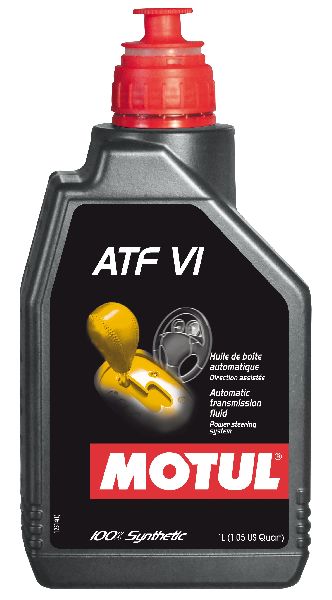
Est. part cost: $500-$1200 - Low or Contaminated Transmission Fluid ⚪ Low Probability → Shop Transmission Assembly While not a design flaw, some vehicles were reportedly underfilled from the factory. The 10R80 is very sensitive to fluid level and condition. The correct fluid is Motorcraft MERCON ULV (XT-12-QULV). Using the wrong fluid can cause damage.
How to confirm: Check the transmission fluid level and condition according to the manufacturer's procedure. The fluid should be clean, red, and at the correct level when at operating temperature. Metal shavings are a sign of severe internal wear.
Typical fix: Perform a transmission fluid and filter change using only Motorcraft MERCON ULV fluid. Address any leaks found. This is often a first step but rarely the final solution for P2705.
Est. part cost: $150-$300 for fluid and filter.
Rare But Worth Checking
- Faulty Transmission Control Module (TCM) or Software: → Shop Transmission Assembly While less common than mechanical failures, outdated or corrupt software can cause shifting issues. Ford has released numerous software updates to improve shift logic and adapt to wear. A PCM/TCM reflash is often a first step in diagnosis.
- Damaged Wiring Harness: Damage to the wiring harness between the TCM and the transmission can cause communication errors or incorrect solenoid operation. A visual inspection for damage is a necessary diagnostic step.
Diagnosis Steps
- Verify the code with a professional OBD-II scanner capable of reading Ford-specific transmission codes.
- Check for any applicable Technical Service Bulletins (TSBs) for your vehicle's VIN. TSB 22-2428 is highly relevant for the CDF drum issue.
- Check the transmission fluid level and condition. Ensure it is full and clean, using only MERCON ULV fluid.
- Inspect the transmission wiring harness and connectors for any visible damage, corrosion, or contamination.
- If TSBs apply, have a qualified technician perform the specified hydraulic pressure tests to check for internal leaks at the CDF clutch circuit. This is the definitive test for the most common cause.
- If no leaks are found, further diagnosis may point to the main control valve body (solenoids and valves) or the TCM software, which may need an update or reset.
- If a significant internal leak or mechanical failure (like a failed CDF drum) is confirmed, the transmission will need to be removed for repair.
Parts You'll Likely Need
- CDF Clutch Cylinder / Drum Assembly
(OEM #JL3Z-7H351-B)— This is the updated OEM part designed to fix the common hydraulic leak caused by a shifting internal bushing. It supersedes older part numbers like HL3Z-7H351-A and JL3Z-7H351-A. The new design features a machined lip that prevents the bushing from 'walking' out of place.
Trusted brands: Motorcraft (OEM)
OEM price range: $140-$400
Aftermarket price range: N/A - Main Control Valve Body Assembly — If diagnosis points to sticking valves or failed solenoids that cannot be serviced individually, the entire valve body may need replacement to restore proper hydraulic control. However, this is often misdiagnosed when the real issue is the CDF drum.
Trusted brands: Motorcraft (OEM)
OEM price range: $700-$1200
Aftermarket price range: $500-$900 - Automatic Transmission Fluid
(OEM #XT-12-QULV)— The correct fluid (Motorcraft MERCON ULV) is required for any transmission service. The system holds over 12 quarts, so a full service requires a significant amount.
Trusted brands: Motorcraft
OEM price range: $10-$15 per quart
Aftermarket price range: N/A
Related Codes That Often Appear With This One
- P0751 — Shift Solenoid 'A' Performance/Stuck Off
- P0756 — Shift Solenoid 'B' Performance/Stuck Off
- P0761 — Shift Solenoid 'C' Performance/Stuck Off
- P2700 — Transmission Friction Element 'A' Apply Time Range/Performance
- P0733 — Incorrect Gear Ratio in 3rd Gear
- P0729-P0736 — Incorrect Gear Ratio codes, often triggered alongside the friction element codes due to slipping.
Technical Service Bulletins (TSBs) & Recalls
- TSB 25-2134: Supersedes previous versions, addresses harsh/delayed shifts and numerous DTCs including P2705 due to a potential hydraulic leak from the CDF clutch cylinder sleeve. It provides a specific hydraulic leak test procedure.
- TSB 22-2428: An earlier, now superseded bulletin, that also pointed to the CDF clutch sleeve movement as a cause for numerous DTCs and shift quality issues.
- TSB 21-2357: Addresses harsh/delayed shifts due to adaptive calibration wear-in, recommending a valve body overhaul or adaptive learning drive cycle. This is an alternative diagnostic path.
Platform-Specific Known Issues
- TSB for CDF Clutch Cylinder: Ford has released multiple TSBs (including 25-2134, 22-2428, and others) that directly address harsh/delayed shifts and a host of transmission codes, including P2705. The cause is identified as axial movement of the CDF clutch cylinder sleeve causing hydraulic leaks. This applies specifically to Rangers built on or before August 15, 2022.
- Class Action Lawsuit: Multiple class-action lawsuits have been filed against Ford concerning the 10R80 transmission in various vehicles (including the F-150, which shares the transmission) for these exact shifting issues.
Mechanic-Grade Diagnostic Values
- Shift Solenoid Resistance (A-F) — expected: 5.0 - 5.4 Ohms at 68°F (20°C). Failure: A reading outside of this range indicates a faulty solenoid coil.
- Line Pressure Control (LPC) Solenoid Current — expected: Inversely proportional; full pressure at low/no current (50 mA), low pressure at high current (850 mA).. Failure: Pressure readings that do not correspond to the commanded current.
- Torque Converter Clutch (TCC) Solenoid Current — expected: Directly proportional; low pressure at low/no current (50 mA), high pressure at high current (850 mA).. Failure: Pressure readings that do not correspond to the commanded current.
Scan Tool Commands That Help
- Ford IDS/FDRS or equivalent: Solenoid Body Strategy Data Download/Upload — This is mandatory when a new main control valve body or a complete transmission assembly is installed. The scan tool is used to write the 12-digit Solenoid Identification and 13-digit Strategy from the new component into the TCM.
- Ford IDS/FDRS or equivalent: Transmission Adaptive Learning Procedure / Reset Adaptive Tables — After any major transmission repair, including valve body or CDF drum replacement, the adaptive learning tables must be reset. This allows the TCM to relearn clutch fill times and shift pressures with the new components.
Wiring & Ground Locations
- Main Transmission Harness Connector — On the passenger side of the transmission case, a large, multi-pin connector that links the internal transmission harness to the main vehicle harness.. This is the primary point for testing wiring continuity and resistance for all internal electronic components, including the shift solenoids, without removing the transmission pan. Any corrosion or damage here can cause a wide range of transmission codes, including P2705.
Real Owner Repair Stories
- Reddit user on r/f150 (2019 F-150 Lariat 2.7L 4x4 (shares 10R80 transmission)) — Delayed engagement from Park to Drive/Reverse (2-3 seconds), harsh downshifts/upshifts.
❌ Tried (didn't work) Initial TCM reflash and replacement of some parts per a TSB only temporarily fixed harsh shifting.
✅ What actually fixed it The delayed engagement was fixed by replacing the CDF drum. However, this was followed by very hard shifts into 3rd gear, which was then resolved by replacing the main valve body assembly. The user notes that even after both repairs, the transmission still has noticeable shifts for the first 10 minutes when cold.
OEM Part Supersession History
HL3Z-7H351-A, JL3Z-7H351-A→JL3Z-7H351-B— The original CDF drum design allowed an internal bushing/sleeve to 'walk' out of position, uncovering oil passages and causing a loss of hydraulic pressure to the C, D, and F clutches. The updated JL3Z-7H351-B part features a machined lip that physically prevents the sleeve from moving, providing a permanent fix.
Model Year Variations Within This Range
- 2019 - Mid-2022: Vehicles built on or before August 15, 2022, were equipped with the original CDF clutch drum design that is prone to the internal sleeve 'walking' out. Vehicles built after this date should have the updated drum (JL3Z-7H351-B) from the factory, making them less susceptible to this specific failure mode.
Helpful Videos
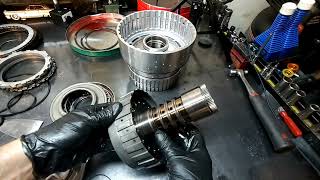
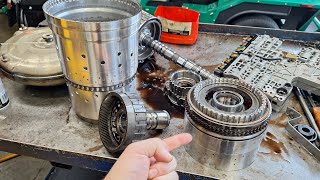
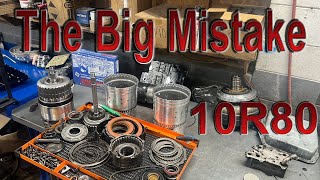
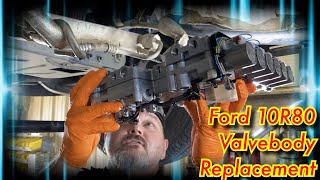
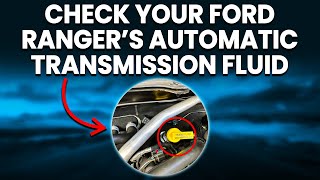
We Have This Part in Stock

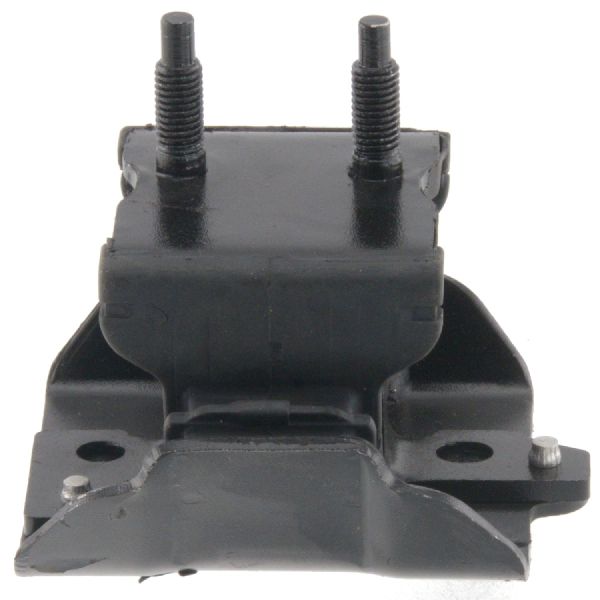

The information in this article is provided for general reference and educational purposes only. Vehicle specifications, procedures, and part compatibility can vary by production date, trim level, and region. Always consult your vehicle's factory service manual and verify part numbers before purchasing or performing repairs. Safety-critical components such as airbags, seat belts, and braking systems should be installed by a qualified professional.
- Ford RANGER:
- 🧭 Diagnostic Flowchart
- 🎬 Helpful Videos
- 🛍️ Shop This Part
- What's Unique About the 2019-2023 Ford RANGER
- Symptoms You May Notice
- Most Likely Causes
- Rare But Worth Checking
- Diagnosis Steps
- Parts You'll Likely Need
- Related Codes That Often Appear With This One
- Technical Service Bulletins (TSBs) & Recalls
- Platform-Specific Known Issues
- Mechanic-Grade Diagnostic Values
- Scan Tool Commands That Help
- Wiring & Ground Locations
- Real Owner Repair Stories
- OEM Part Supersession History
- Model Year Variations Within This Range
- 🎟️ Get 5% Off