

P2707 on 2018-2023 Ford Expedition: Shift Solenoid 'F' Performance Fixes
P2707 on a 2018-2023 Ford Expedition indicates a problem with Shift Solenoid 'F' in the 10R80 transmission. The most common cause is not the solenoid itself, but a known internal transmission issue, often a faulty main valve body or a failed CDF clutch drum sleeve causing hydraulic leaks. These issues require professional diagnosis and repair, and are well-documented in Ford's Technical Service Bulletins (TSBs).
- P2707 on a 2018-2023 Expedition is rarely a simple bad solenoid; it usually points to a more complex mechanical or hydraulic fault within the 10R80 transmission.
- The most likely culprits are a faulty main control valve body or a leaking CDF clutch drum, as identified in multiple Ford Technical Service Bulletins.
- Due to the complexity of the 10R80 transmission, diagnosis and repair should be left to a qualified professional.
- Always check for applicable TSBs, as a software update or a specific internal component replacement may be the prescribed fix.
- Ensure only Motorcraft MERCON ULV fluid is used in this transmission.
What's Unique About the 2018-2023 Ford EXPEDITION
The 2018-2023 Ford Expedition uses the 10R80 10-speed automatic transmission, which was co-developed with General Motors (whose version is the 10L80). While generally robust, this transmission is known for specific mechanical failure points that trigger P2707 and a host of related codes. Ford has issued multiple Technical Service Bulletins (TSBs) pointing to two primary problems: sticking valves in the main control valve body and, more significantly, a design flaw with the CDF clutch cylinder sleeve that allows it to move axially ('walk') and cause internal hydraulic leaks. These platform-specific mechanical faults are often the root cause, rather than a simple electrical failure of the solenoid itself.
Diagnostic Flowchart
Tap your situation to follow the diagnostic path that matches what you're seeing on this vehicle.
Symptoms You May Notice
- Harsh or delayed gear shifts, sometimes described as a 'clunk' or 'bang' into gear.
- Abrupt or clunking gear engagement, particularly from Park to Drive or Reverse.
- Transmission slipping or flaring (engine RPMs rise without acceleration) between gears.
- Vehicle entering "limp mode" (limited gear availability) with a wrench light on the dash.
- Check Engine Light or Malfunction Indicator Lamp (MIL) is on.
- Increased fuel consumption.
- Hesitation or a 1-2 second delay before the gear engages. 🎬 Watch: A professional diagnostic process for harsh shifting issues.
- Inability to engage certain gears.
- Replacing only Shift Solenoid 'F' without addressing the underlying cause, such as a faulty valve body or a leaking CDF drum. The code will likely return because the hydraulic or mechanical problem still exists.
Most Likely Causes
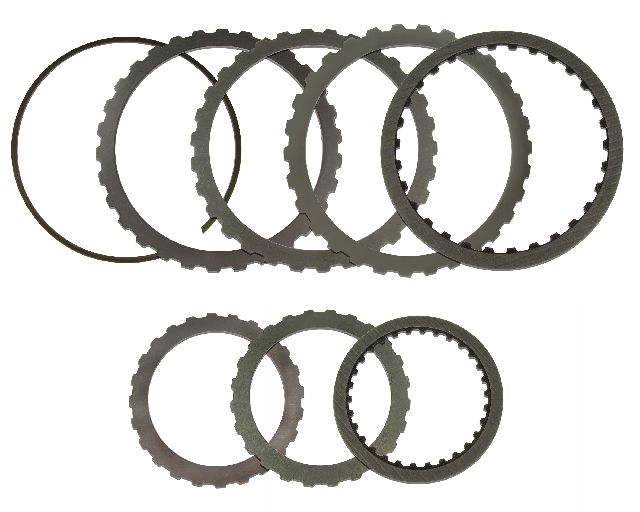
- Internal failure of the CDF clutch cylinder sleeve 🔴 High Probability → Shop Automatic Transmission Coast Clutch Hub Multiple Ford TSBs (including TSB 24-2254 and TSB 22-2428) specifically name 'axial movement of the CDF clutch cylinder sleeve causing hydraulic circuit leaks' as a primary cause for a group of codes including P2707 on the 10R80 transmission. This is a widely acknowledged design flaw where the sleeve 'walks' out of position, uncovering fluid ports and causing a pressure drop.
How to confirm: This requires professional diagnosis as outlined in TSB 24-2254, which involves hydraulic pressure testing of specific circuits to confirm leakage. Visual confirmation requires transmission disassembly, where the moved sleeve and damaged Teflon seals will be evident.
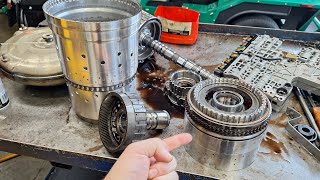
Typical fix: Replacement of the CDF clutch cylinder/drum with an updated part. This is a major internal transmission repair requiring a full teardown. Aftermarket solutions like the Sonnax CDF Drum Saver Kit (129910-01K) exist to prevent the sleeve from moving. 🎬 See how the CDF clutch drum fails and the updated fix.
Est. part cost: $200-$400 for the OEM drum assembly - Sticking valves in the main control valve body 🟡 Medium Probability → Shop Transmission Valve Body Ford TSBs like 22-2428 mention sticking valves as a potential cause for shift quality issues and associated DTCs due to hardware break-in or fluid contamination. The complexity of the 10R80 valve body makes it sensitive to debris.
How to confirm: A technician will drop the transmission pan to access and inspect the valve body. The TSBs recommend overhauling the valve body as a corrective step if certain conditions are met.
Typical fix: Overhaul or replacement of the main control valve body assembly. Ford specifies this repair in several TSBs, which involves replacing certain internal components of the valve body.
Est. part cost: $500-$1200 for a valve body assembly - Low or contaminated transmission fluid ⚪ Low Probability → Shop Transmission Assembly While a universal issue, the complexity of the 10R80 makes it extremely sensitive to fluid level and condition. Incorrect fluid (anything other than Motorcraft MERCON ULV) or low levels can cause pressure drops that mimic solenoid or mechanical failure.
How to confirm: Check the transmission fluid level and condition according to the manufacturer's procedure. The fluid should be at the correct level and have a clean, reddish color without a burnt smell.
Typical fix: Perform a transmission fluid drain-and-fill or a full fluid exchange with the correct Motorcraft ULV fluid. This is often a first step before more invasive repairs.
Est. part cost: $150-$300 for fluid and filter - Failed Shift Solenoid 'F' ⚪ Low Probability → Shop Transmission Valve Body While the code directly names the solenoid, on this platform it's more often a symptom of a larger mechanical or hydraulic issue. However, direct electrical failure of the solenoid can still occur, though it is less common than the CDF drum or valve body issues.
How to confirm: A technician can test the solenoid's resistance and function with a multimeter and a high-level scan tool after accessing the valve body. The expected resistance is 5.0-5.4 Ohms.
Typical fix: Replacement of the individual solenoid or the entire solenoid pack/valve body assembly.
Est. part cost: $50-$150 for a single solenoid
Rare But Worth Checking
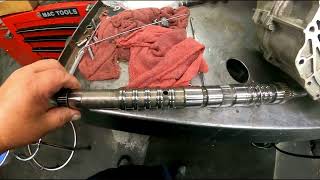
- Missing plug in the input shaft: A YouTube video by a transmission specialist demonstrates a failure where a small press-fit cup plug comes out of a hydraulic passage in the input shaft. Specifically for P2707, the plug for the 'F' clutch circuit can dislodge, causing a major pressure loss. Diagnosis involves checking the passages with a piece of a coat hanger to see if it passes through, which would indicate a missing plug. This is a deep internal failure requiring a full teardown to fix.
- Powertrain Control Module (PCM) software issue: Several TSBs mention that shift quality can be affected by adaptive learning calibration. In some cases, a PCM reflash to the latest software version and performing an adaptive learning drive cycle is the first recommended step, especially on earlier models in this range.
Diagnosis Steps
- Verify the transmission fluid level and condition. Ensure it is clean, at the correct level, and does not smell burnt. Use only MERCON ULV fluid.
- Use a professional scan tool to check for all stored DTCs in the PCM and TCM. Note any other codes present alongside P2707.
- Research any applicable Technical Service Bulletins (TSBs) for the vehicle's VIN. TSBs 24-2254, 23-2250, and 22-2428 are highly relevant.
- If recommended by a TSB for your vehicle's build date, perform a PCM/TCM software update and adaptive learning drive cycle first.
- Perform a visual inspection of the transmission's external wiring harness and connectors for any damage or corrosion.
- If symptoms persist, the next step is to drop the transmission pan to inspect the main control valve body for debris or obvious issues. Consider a valve body overhaul per TSB instructions.
- Follow TSB 24-2254 diagnostic procedures, which involve using a Pressure Vacuum Transducer Kit to perform hydraulic pressure testing to confirm leaks in the CDF clutch drum circuit.
- Based on test results, the repair will involve overhauling/replacing the valve body or performing a complete transmission teardown to replace the CDF clutch drum.
Parts You'll Likely Need
- CDF Clutch Cylinder / Drum Assembly
(OEM #JL3Z-7H351-B (supersedes HL3Z-7H351-A and JL3Z-7H351-A))— This is the updated OEM part to fix the known failure point on the 10R80 transmission where the internal sleeve moves, causing hydraulic leaks that trigger P2707 and other codes.
Trusted brands: Motorcraft
OEM price range: $200-$400
Aftermarket price range: $230+ - Transmission Main Control Valve Body Assembly
(OEM #JL1Z-7A100-A or JL1Z-7A100-B)— Often the source of sticking valves causing hydraulic faults. Ford recommends overhauling or replacing it as a primary fix in several TSBs. Part number may vary by specific vehicle build.
Trusted brands: Motorcraft
OEM price range: $650-$1200
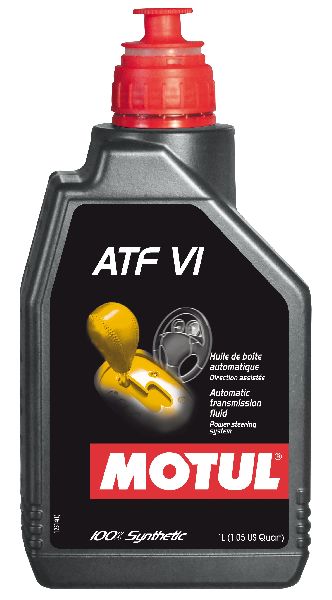
Aftermarket price range: $500-$900 - Motorcraft MERCON ULV Automatic Transmission Fluid
(OEM #XT-12-QULV)— The 10R80 transmission requires this specific ultra-low viscosity fluid. Using any other type can cause shifting problems and internal damage.
Trusted brands: Motorcraft
OEM price range: $15-$25 per quart
Related Codes That Often Appear With This One
- P0751, P0756, P0761, P0766, P2700-P2708, etc. — These are all shift solenoid and gear ratio error codes for the 10R80 transmission. Ford lists them together in numerous TSBs because a single root cause, like a faulty valve body or a leaking CDF drum, can affect multiple hydraulic circuits and trigger a variety of related codes simultaneously.
Technical Service Bulletins (TSBs) & Recalls
- TSB 26-2046: Lists P2707 among many DTCs related to transmission issues.
- TSB 24-2254: Identifies axial movement of the CDF clutch cylinder sleeve as a cause for P2707 and other codes, recommending hydraulic testing and replacement.
- TSB 23-2351: Also points to the CDF clutch cylinder sleeve and sticking valves in the main control as causes for shift issues and DTCs including P2707.
- TSB 22-2428: Mentions P2707 in a list of codes related to shift problems.
- TSB 21-2357: Recommends overhauling the main control valve body to fix shift problems and associated codes.
Platform-Specific Known Issues
- CDF Clutch Drum Sleeve Movement: → Shop Transmission Clutch Pressure Plate As documented in TSB 24-2254 and TSB 23-2351, a sleeve within the CDF clutch drum can move axially ('walk'), creating an internal hydraulic leak. This is a well-known design issue and a primary cause for shift-related DTCs in the 10R80. The sleeve movement blocks fluid passages, starving clutches of pressure and causing codes like P2707. An owner on F150forum.com shared photos of the failure, showing how the moved sleeve damaged the corresponding seals, leading to a $4,400 rebuild. The fix is to replace the drum with an updated OEM part (JL3Z-7H351-B) that has a revised design to prevent this movement.
- Valve Body Sticking/Wear: → Shop Transmission Valve Body TSB 22-2139 and others address harsh shifting and DTCs caused by sticking valves within the main control body. The issue is described as an incompatibility of the adaptive calibration to keep up with hardware break-in over time. The prescribed fix is often a valve body overhaul or replacement, followed by a PCM/TCM software update and an adaptive learning drive cycle.
Mechanic-Grade Diagnostic Values
- Shift Solenoid 'A' through 'F' resistance — expected: 5.0 - 5.4 Ohms at 20°C (68°F). Failure: A reading significantly outside this range, or an open/short circuit, indicates a failed solenoid coil.
- Transmission Fluid Temperature (TFT) Sensor Resistance — expected: 37k-16k Ohms at 69°F-104°F (21°C-40°C); 2.7k-1.5k Ohms at 195°F-230°F (91°C-110°C). Failure: Resistance values that do not correspond to the fluid temperature can lead to incorrect line pressure calculations and shift problems.
Hidden / Shadow Codes Worth Checking
- P163E: Transmission Control Module (TCM) - Solenoid Body ID Strategy Not Programmed. This code appears after replacing the main control valve body if the new solenoid strategy is not programmed correctly. (see via This code will be stored in the PCM or TCM and is visible with a professional scan tool like Ford IDS or ForScan. It often appears after a repair attempt for other transmission codes.)
Scan Tool Commands That Help
- Ford IDS (or ForScan): Clear Transmission Adaptive Tables — This must be performed after any major transmission repair, including valve body or solenoid replacement, to reset the learned shift parameters and begin a new learning cycle.
- Ford IDS: PCM/TCM > Transmission Strategy Download (or Transmission Characterization) — This is required when replacing the valve body or entire transmission. The technician must enter the 13-digit solenoid body strategy number from the tag on the new part into the PCM/TCM. Per TSBs, only the 13-digit strategy should be entered, leaving the 12-digit ID blank, to prevent setting code P163E.
- N/A - Drive Cycle: Adaptive Learning Drive Cycle — This must be performed after clearing adaptive tables or programming a new solenoid strategy. It involves a specific sequence of light-throttle accelerations, stops, and gear engagements (N-D, N-R) to allow the TCM to learn the new components' characteristics.
Wiring & Ground Locations
- C175T — This is one of the main connectors at the Powertrain Control Module (PCM), typically located on the firewall.. The C175T connector contains the circuits that the PCM uses to control the transmission shift solenoids. While publicly available pinouts are often for older models, a fault in this connector or its wiring could interrupt the signal to Shift Solenoid 'F'. A model-year specific factory wiring diagram is needed for the exact pin number.
Real Owner Repair Stories
- Reddit user on r/f150 (2019 F-150 Lariat 2.7L 4x4) — A 2-3 second delay when shifting from Park to Drive or Reverse. Also had previous harsh upshift/downshift issues.
❌ Tried (didn't work) A PCM reflash and swapping some parts per a TSB for the initial harsh shifting.
✅ What actually fixed it The engagement delay was fixed by replacing the CDF drum under warranty. However, this was followed by a new issue of very hard shifts into 3rd gear, which was then resolved by replacing the main valve body assembly.
"I Checked Everything" — The Actual Cause
- A common scenario for P2707 is that the shift solenoid 'F' itself will pass all electrical tests (resistance check, voltage check). A technician may replace the solenoid thinking it's an intermittent electrical fault, but the code returns. The actual cause is often a purely mechanical or hydraulic failure upstream, such as the CDF clutch drum sleeve walking out of position and creating an internal leak. The solenoid is commanded 'on', but the TCM detects no change in the resulting gear ratio because the hydraulic pressure it's supposed to control is being lost at the drum. This is why TSBs now direct technicians to perform hydraulic leak tests before replacing electrical components.
OEM Part Supersession History
HL3Z-7H351-A, JL3Z-7H351-A→JL3Z-7H351-B— The updated CDF Clutch Drum Assembly (JL3Z-7H351-B) features a machined lip on the inner half of the drum. This lip acts as a physical stop, preventing the internal sleeve from moving ('walking') and exposing hydraulic fluid passages, which is the root cause of the failure.
Model Year Variations Within This Range
- 2018-2022: According to Ford TSBs, vehicles built on or before August 15, 2022, are susceptible to the CDF clutch drum sleeve failure. Vehicles built after this date should have the updated drum (part JL3Z-7H351-B or newer) from the factory, making this specific cause of P2707 less likely.
Helpful Videos

We Have This Part in Stock


The information in this article is provided for general reference and educational purposes only. Vehicle specifications, procedures, and part compatibility can vary by production date, trim level, and region. Always consult your vehicle's factory service manual and verify part numbers before purchasing or performing repairs. Safety-critical components such as airbags, seat belts, and braking systems should be installed by a qualified professional.
- Ford EXPEDITION:
- 🧭 Diagnostic Flowchart
- 🎬 Helpful Videos
- 🛍️ Shop This Part
- What's Unique About the 2018-2023 Ford EXPEDITION
- Symptoms You May Notice
- Most Likely Causes
- Rare But Worth Checking
- Diagnosis Steps
- Parts You'll Likely Need
- Related Codes That Often Appear With This One
- Technical Service Bulletins (TSBs) & Recalls
- Platform-Specific Known Issues
- Mechanic-Grade Diagnostic Values
- Hidden / Shadow Codes Worth Checking
- Scan Tool Commands That Help
- Wiring & Ground Locations
- Real Owner Repair Stories
- "I Checked Everything" — The Actual Cause
- OEM Part Supersession History
- Model Year Variations Within This Range
- 🎟️ Get 5% Off