

P2707 on 2017-2023 Ford F-150: Shift Solenoid 'F' Causes and Fixes
On a 2017-2023 F-150 with the 10R80 transmission, code P2707 almost always indicates a major internal failure, not just a bad solenoid. The most common cause is a worn CDF drum bushing that 'walks' out of place, causing a catastrophic loss of hydraulic pressure to the 'F' clutch circuit. This is a complex and expensive repair requiring a transmission rebuild or replacement, often costing over $4,000.
- P2707 on a 2017-2023 F-150 is a serious code that almost always signals a major internal transmission failure.
- The most likely cause is a design flaw in the 10R80 transmission's CDF clutch drum, not a simple faulty solenoid.
- Do not attempt to fix this by only replacing the 'F' solenoid; this will not solve the underlying hydraulic pressure loss.
- This is not a DIY-friendly repair. It requires complete transmission removal and disassembly by a professional.
- Expect a repair bill of several thousand dollars for a transmission rebuild or replacement.
What's Unique About the 2017-2023 Ford F-150
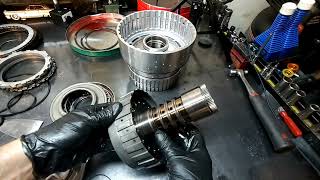
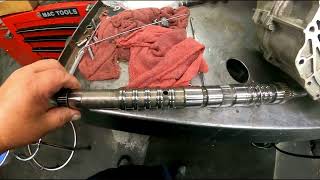
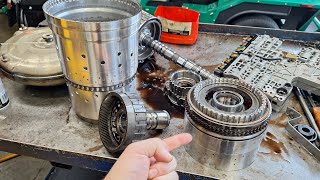
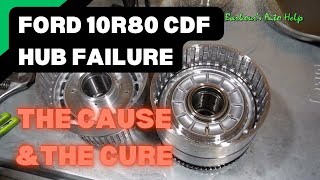
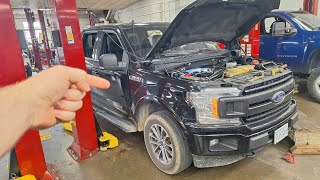
The 2017-2023 Ford F-150 predominantly uses the 10-speed 10R80 automatic transmission, which was co-developed with General Motors. 🎬 Watch: A Ford tech explains common 10-speed transmission issues. This transmission is known for a specific design flaw where a bushing (sleeve) inside the 'CDF' (Clutch Drum F) assembly can move out of place. This movement, or 'walking,' uncovers critical oil passages, causing a severe loss of hydraulic pressure that starves the 'F' clutch and its controlling solenoid of the fluid they need to operate. As a result, the P2707 code is rarely about the solenoid itself but is a direct consequence of this internal mechanical failure. 🎬 See how the P2707 and P2708 codes relate to this failure. Ford TSB 24-2254 explicitly identifies this cause as 'axial movement of the CDF clutch cylinder sleeve causing hydraulic circuit leaks'.
Diagnostic Flowchart
Tap your situation to follow the diagnostic path that matches what you're seeing on this vehicle.
Generation note: This issue affects both the thirteenth generation (2017-2020) and the fourteenth generation (2021-2023) of the Ford F-150, as both commonly use the 10R80 transmission where this fault is prevalent. Ford has issued TSBs covering vehicles across these years.
Symptoms You May Notice
- Harsh or delayed shifts, particularly when cold.
- Slipping between gears or a flare in RPM during shifts.
- Vehicle may feel like it's in neutral when a gear is selected.
- Illuminated Check Engine Light or Wrench Light.
- Transmission may enter a "limp mode," limiting available gears.
- A noticeable clunk or harsh downshift, particularly from 4th to 3rd gear, is a common complaint from owners.
- A feeling of power loss or hesitation during light throttle shifts in lower gears.
- Replacing only the Shift Solenoid 'F'. The code points to the solenoid, but it is almost always a victim of the hydraulic pressure loss from the failing CDF drum. Replacing the solenoid alone will not fix the issue.
Most Likely Causes
- Worn or 'Walked' CDF (Clutch Drum F) Drum Bushing/Sleeve 🔴 High Probability This is a widely documented failure point in the 10R80 transmission. The bushing 'walks' out of its bore, causing axial play in the drum and uncovering hydraulic passages, leading to massive pressure loss specifically in the C, D, and F clutch circuits. TSB 24-2254 directly attributes the group of codes including P2707 to this failure.
How to confirm: Requires transmission disassembly and internal inspection to observe the position of the sleeve. A pan drop revealing excessive brass/bronze shavings from the bushing is a strong indicator.
Typical fix: The transmission must be removed and rebuilt. This involves replacing the CDF drum with an updated OEM part (JL3Z-7H351-B) which has a lip to prevent the sleeve from walking. Alternatively, aftermarket specialists like Sonnax offer a 'CDF Drum Saver Kit' (129910-01K) that installs a new, more secure sleeve with a set screw. The main valve body is often replaced at the same time.
Est. part cost: $150-$400 for the drum, $800-$1500 for the valve body. - Failed Main Control Valve Body (Solenoid Body) 🟡 Medium Probability → Shop Transmission Valve Body Debris from the failing CDF drum often contaminates the valve body, causing solenoids to stick or passages to become blocked. The aluminum body can also warp, causing cross-leaks between hydraulic circuits. It is often considered a mandatory replacement during a CDF drum repair to ensure reliability.
How to confirm: After confirming the CDF drum issue, the valve body should be inspected for scoring, warping, and debris. A technician may perform pressure tests, but visual inspection during a rebuild is most common.
Typical fix: Replacement of the entire main control valve body assembly. This is typically done at the same time as the CDF drum replacement. Some TSBs have focused on overhauling the valve body as a potential fix for shift quality issues.
Est. part cost: $800-$1500 - Low or Contaminated Transmission Fluid (Mercon ULV) ⚪ Low Probability → Shop Transmission Assembly While not the root cause, low fluid can exacerbate shifting problems. Contamination is usually a symptom of the internal parts (like the CDF drum bushing) failing and shedding metallic material. Finding brass-colored 'glitter' in the fluid is a tell-tale sign of bushing failure.
How to confirm: Check the transmission fluid level and condition. The fluid should be red and clear. If it is dark, burnt-smelling, or contains metallic particles ('glitter'), it indicates severe internal wear.
Typical fix: A fluid and filter change is a temporary measure at best and will not solve the underlying mechanical failure. If the fluid is contaminated, a full transmission rebuild is necessary to address the source of the debris.
Est. part cost: $150-$250 for fluid and filter.
Rare But Worth Checking
- Failed Input Shaft Plug: In some cases, a small cup plug inside the input shaft that seals the 'F' clutch hydraulic circuit can fail and pop out, causing a pressure loss identical to a solenoid failure. A technician can test for this by blowing air into the clutch apply holes with the valve body removed; air should not pass through. A common field repair is to weld the C, D, and F circuit plugs shut, then grind the weld flush.
- Faulty Powertrain Control Module (PCM) or software: While software issues can cause poor shift quality, they are unlikely to cause a specific 'stuck off' solenoid code without an underlying mechanical or hydraulic fault. Ford has issued many software updates to improve shift logic, but these will not resolve a P2707 caused by the CDF drum failure.
Diagnosis Steps
- Verify Fluid Level and Condition: Check the transmission fluid (Mercon ULV) with the engine running and warm. Note any signs of burning or, specifically, fine brass/bronze metal particles, which indicate bushing wear.
- Scan for All Codes: Use a professional-grade scanner to read all codes from the TCM. The presence of multiple solenoid and gear ratio codes alongside P2707 strongly suggests the common CDF drum failure.
- Review Technical Service Bulletins (TSBs): Check for TSBs related to the 10R80 transmission for your vehicle's VIN. TSB 24-2254 is particularly relevant as it directly links a large group of codes including P2707 to 'axial movement of the CDF clutch cylinder sleeve causing hydraulic circuit leaks'.
- Perform a Pan Drop Inspection: Removing the transmission pan to inspect for excessive metal shavings is a definitive sign of internal mechanical failure. A layer of bronze-colored material confirms the CDF bushing is the source.
- Professional Internal Inspection: Due to the high probability of the CDF drum failure, the next step is transmission removal and disassembly by a qualified technician to confirm the diagnosis and assess the extent of the damage.
Parts You'll Likely Need
- CDF Clutch Drum Assembly
(OEM #JL3Z-7H351-B)— This is the root cause of the failure. The original bushing walks out, and the entire drum assembly must be replaced with an updated version. Part number JL3Z-7H351-B supersedes HL3Z-7H351-A and JL3Z-7H351-A and includes a revised design with a lip to prevent the bushing from moving.
Trusted brands: Motorcraft
OEM price range: $150-$400
Aftermarket price range: $250-$600 - Main Control Valve Body Assembly
(OEM #L1MZ-7A100-C)— The valve body is often damaged by metal debris from the failing drum or suffers from pressure loss issues itself. It is standard practice to replace it during a rebuild for this issue to ensure a lasting repair.
Trusted brands: Motorcraft
OEM price range: $1000-$1500
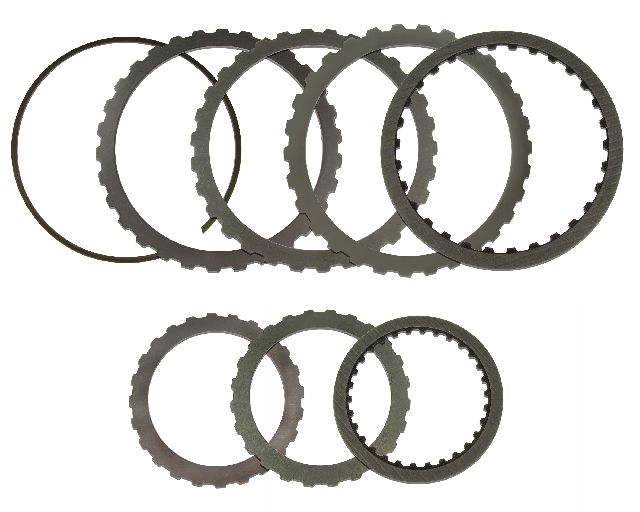
Aftermarket price range: $800-$1200 - Transmission Overhaul Kit — A full rebuild requires new gaskets, seals, and often clutch plates that were damaged from slipping due to low pressure.
Trusted brands: Motorcraft, Sonnax
OEM price range: $400-$600
Aftermarket price range: $300-$500 - Sonnax CDF Drum Saver Kit
(OEM #129910-01K)— An alternative to replacing the entire drum, this aftermarket kit allows a technician to install a new, more robust sleeve into the original drum. It features a locking set screw to prevent rotation and a better press fit, often used by transmission specialists.
Trusted brands: Sonnax
Aftermarket price range: $150-$250
Related Codes That Often Appear With This One
- P0751, P0756, P0761, P2700, P2701, P2702, etc. — The provided NHTSA Technical Service Bulletins (TSB 24-2254, TSB 23-2123, etc.) list P2707 as part of a large group of over 20 related codes. The widespread hydraulic pressure loss from the CDF drum failure affects the C, D, and F clutch packs and their solenoids, triggering numerous related trouble codes simultaneously.
Technical Service Bulletins (TSBs) & Recalls
- TSB 24-2254: Explicitly states that for a long list of codes including P2707, the cause 'may be due to axial movement of the CDF clutch cylinder (7H351) sleeve causing hydraulic circuit leaks.' This is the most direct TSB linking the code to the mechanical failure.
- TSB 23-2123 (supersedes 22-2139): Addresses harsh/delayed shifts and a list of DTCs including P2707. The procedure involves overhauling the main control valve body and/or performing an adaptive learning drive cycle, indicating the valve body is also a key part of the failure pattern.
- TSB 26-2046, TSB 25-2302, TSB 25-2018: These earlier bulletins also group a large number of DTCs, including P2707, together, pointing to a widespread internal fault rather than an isolated solenoid issue.
Platform-Specific Known Issues
- A primary documented issue for the Ford 10R80 transmission is the failure of the CDF drum bushing. It can slide out of position, causing a major hydraulic leak that triggers a cascade of solenoid and gear ratio codes. Ford has issued multiple TSBs (e.g., TSB 24-2254) that group P2707 with many other codes, pointing to this common mechanical failure which is described as being due to 'axial movement'. Owners on forums like f150forum.com often report a 'clunky 4th to 3rd gear shift' for months before the failure escalates.
Mechanic-Grade Diagnostic Values
- Shift Solenoid A-F Resistance — expected: 5.0 - 5.4 ohms at 68°F (20°C). Failure: A reading outside this range indicates a faulty solenoid coil.
- Shift Solenoid Voltage (commanded on) — expected: Approx. 12V. Failure: Readings below 9V can suggest high resistance in the wiring or a problem with the TCM output.
Scan Tool Commands That Help
- Ford IDS (or equivalent high-level scanner): Solenoid Characterization/Identification — Can be used to read the identification numbers of the installed solenoids directly from the TCM without disassembly, which helps in verifying if updated parts are present.
- Ford IDS (or equivalent high-level scanner): Adaptive Learning Reset — This procedure must be performed after a transmission rebuild or valve body replacement to clear the old adaptive shift strategy tables. Failure to do so can result in continued harsh shifting even with new parts as the TCM attempts to use old compensation values.
Wiring & Ground Locations
- Body-to-Frame Ground Strap — Underneath the vehicle, typically on the passenger side, connecting the cab body to the frame.. These trucks are known for corrosion at the body-to-frame ground points. A poor ground can cause a host of electrical issues, including erratic behavior from the externally mounted TCM and incorrect sensor readings, potentially leading to false codes or exacerbating existing transmission problems.
- C175T Connector — This is one of the main connectors at the Powertrain Control Module (PCM).. This connector contains the circuits for the transmission shift solenoids. For example, on some models, pin 37 controls Shift Solenoid B and pin 38 controls Shift Solenoid A. A technician would use this as a primary test point to check for continuity and voltage to and from the TCM and the transmission harness.
Real Owner Repair Stories
- Reddit user in r/f150 (2018 F-150 EcoBoost, 145,000 miles) — Crazy shift problems, including floating between gears and then slamming into the next gear.
❌ Tried (didn't work) Transmission relearn procedure, Valve body replacement
✅ What actually fixed it The user ultimately diagnosed the issue as the CDF drum failure after finding the relevant TSB. The final fix was replacing the CDF drum, which resolved the severe shifting issues.
OEM Part Supersession History
HL3Z-7H351-A, JL3Z-7H351-A→JL3Z-7H351-B— The original designs allowed an internal bushing/sleeve to 'walk' out of position, uncovering oil passages and causing a major hydraulic leak. The updated JL3Z-7H351-B part has a machined lip or wall that physically prevents the sleeve from moving, providing a permanent fix.
Model Year Variations Within This Range
- 2017 - Mid-2022: Vehicles built on or before August 15, 2022 (for most models) or December 23, 2022 (for 10R60) were manufactured with the original CDF drum design prone to failure. Later models are more likely to have the updated part (JL3Z-7H351-B) installed from the factory, reducing the probability of this specific failure.
- 2017-2020 vs 2021+: According to one Ford technician, the transmission tuning software in 2017-2020 models was more prone to aggressive gear skipping for fuel economy, while 2021 and newer models have software that tends to shift more consistently through the gears. While this doesn't change the mechanical cause of P2707, it can affect the daily driving experience and shift feel.
Helpful Videos
We Have This Part in Stock


The information in this article is provided for general reference and educational purposes only. Vehicle specifications, procedures, and part compatibility can vary by production date, trim level, and region. Always consult your vehicle's factory service manual and verify part numbers before purchasing or performing repairs. Safety-critical components such as airbags, seat belts, and braking systems should be installed by a qualified professional.
- Ford F-150:
- 🧭 Diagnostic Flowchart
- 🎬 Helpful Videos
- 🛍️ Shop This Part
- What's Unique About the 2017-2023 Ford F-150
- Symptoms You May Notice
- Most Likely Causes
- Rare But Worth Checking
- Diagnosis Steps
- Parts You'll Likely Need
- Related Codes That Often Appear With This One
- Technical Service Bulletins (TSBs) & Recalls
- Platform-Specific Known Issues
- Mechanic-Grade Diagnostic Values
- Scan Tool Commands That Help
- Wiring & Ground Locations
- Real Owner Repair Stories
- OEM Part Supersession History
- Model Year Variations Within This Range
- 🎟️ Get 5% Off