

P2707 on 2020-2023 Lincoln Aviator: Shift Solenoid 'F' Causes and Fixes
P2707 on a 2020-2023 Lincoln Aviator indicates a 'Shift Solenoid F Performance/Stuck Off' issue. This is a serious transmission code often caused by known issues with the 10R60/10R80 transmission's main control valve body or, more commonly, a faulty CDF clutch drum. It is not just a single bad solenoid. This is not a DIY fix and requires professional service familiar with Ford's evolving TSBs on the matter.
- P2707 on a 2020-2023 Aviator is a serious transmission code that requires professional diagnosis.
- The cause is very likely a known issue with the 10R80 transmission's valve body or CDF clutch drum, not just a simple solenoid failure.
- Referencing the latest Technical Service Bulletins (TSBs) is critical for an accurate diagnosis and effective repair.
- Do not ignore this code; continued driving can lead to catastrophic transmission failure.
- This is not a suitable DIY repair due to the complexity and need for specialized tools.
What's Unique About the 2020-2023 Lincoln AVIATOR
The 2020-2023 Lincoln Aviator uses a Ford 10R60 or 10R80 10-speed automatic transmission, a design shared with GM. This transmission family is known for widespread shifting problems. Ford has issued multiple, superseding Technical Service Bulletins (TSBs) that include code P2707. The diagnostic focus has evolved; early TSBs like 20-2403 pointed to sticking valves in the main control valve body. However, later and more definitive TSBs, such as 22-2428 and 24-2252, identify the primary root cause as axial movement of a sleeve in the CDF clutch cylinder, which causes internal hydraulic leaks starving the solenoids of pressure. This means a simple solenoid replacement is almost never the correct fix.
Diagnostic Flowchart
Tap your situation to follow the diagnostic path that matches what you're seeing on this vehicle.
Symptoms You May Notice
- Harsh or abrupt shifting.
- Delayed gear engagement, especially when shifting into Drive or Reverse.
- Transmission slipping between gears.
- Check Engine Light or Malfunction Indicator Lamp (MIL) is on.
- Vehicle may enter 'limp mode', limiting available gears.
- In some cases, the vehicle may return to Park after being shifted into Drive or Reverse.
- A loud 'thud' or 'bang' from the transmission during acceleration, sometimes accompanied by a momentary loss of power.
- Replacing only Shift Solenoid 'F' without addressing the underlying valve body or CDF clutch drum issue. The code will almost certainly return.
- Replacing the valve body when the actual cause is the CDF clutch drum leak. This is why following the latest TSB diagnostic procedure is critical.
Most Likely Causes
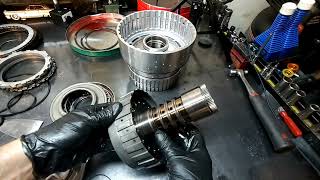
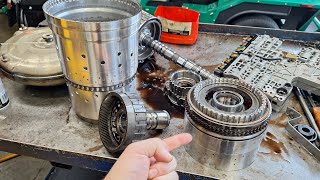
- Internal Hydraulic Leak from CDF Clutch Cylinder 🔴 High Probability → Shop Automatic Transmission Coast Clutch Hub This is a known design flaw where a sleeve on the CDF clutch drum can move or 'walk', exposing hydraulic passages and causing a significant pressure leak. Newer TSBs like 24-2252 and 22-2428 specifically identify this as the primary cause for a host of shift-related DTCs, including P2707. The updated replacement part includes a machined lip to prevent the sleeve from moving again. 🎬 See exactly how the CDF drum sleeve fails and moves.
How to confirm: Specialized diagnostic procedures outlined in recent TSBs involve using a Pressure Vacuum Transducer Kit (Rotunda 164-R9833) to measure hydraulic leakage from the CDF drum circuit. This is a dealer-level diagnostic test.
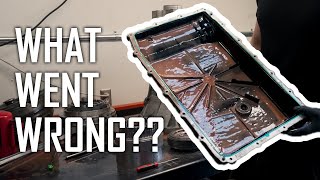
Typical fix: This is a major repair requiring transmission removal and disassembly 🎬 Watch this teardown to see the CDF drum bushing failure. to replace the faulty CDF clutch drum assembly with an updated part.
Est. part cost: $300-$700 - Sticking Valves in Main Control (Valve Body) 🟡 Medium Probability This was the focus of early TSBs (like TSB 20-2403) for the 10R80 transmission. Debris or manufacturing tolerances can cause valves within the sealed valve body to stick, disrupting hydraulic flow. While still a possibility, it is now considered a secondary cause to the CDF drum issue.
How to confirm: A technician will follow TSB procedures, which may involve a specific PCM break-in routine to free the valves, especially on low-mileage vehicles. If that fails, and after ruling out the CDF drum, the valve body is replaced.
Typical fix: In some cases, a PCM break-in procedure can free the valves. More often, the main control valve body assembly needs to be replaced.
Est. part cost: $800-$1500 - Low or Contaminated Transmission Fluid ⚪ Low Probability → Shop Transmission Assembly
How to confirm: Check the transmission fluid level and condition. The 10R80 transmission does not have a user-serviceable dipstick; the check must be performed by a technician. The fluid should be red, not brown or black, and not smell burnt. Metal shavings are a sign of serious internal wear, likely from the CDF drum or other clutches failing.
Typical fix: Perform a transmission fluid drain and fill with the correct Motorcraft MERCON ULV fluid. If the fluid is very dirty or contains debris, it's a strong indicator of a larger internal problem like the CDF drum failure.
Est. part cost: $150-$300 - Failed Shift Solenoid 'F' ⚪ Low Probability → Shop Transmission Valve Body While the solenoid can fail electrically, it's often misdiagnosed. The P2707 code indicates a 'performance' issue, which is more often caused by a lack of hydraulic pressure from an upstream problem (CDF drum or valve body) than the solenoid itself failing. The shift solenoids in the 10R80 are mechanical and do not have fluid passing through them; they actuate valves in the valve body.
How to confirm: A technician can test the solenoid's resistance and command it on/off with a scan tool while monitoring pressure. This is typically done only after confirming the primary known issues (CDF drum, valve body) are not the cause.
Typical fix: Replace the individual shift solenoid. This is done by dropping the transmission pan and valve body.
Est. part cost: $50-$150
Rare But Worth Checking
- Wiring Harness Damage: Damage to the wiring inside or outside the transmission can mimic a solenoid failure. A technician would check for continuity and shorts at the transmission case connector.
- Powertrain Control Module (PCM/TCM) Failure: This is very rare. The PCM/TCM should only be considered after all other possibilities, including all TSBs, have been thoroughly investigated. Some software-related shift issues can be fixed with a PCM reprogram per specific TSBs.
Diagnosis Steps
- Check and verify the transmission fluid level and condition. Look for excessive metal debris.
- Scan the PCM/TCM for all stored trouble codes to see if other transmission codes are present, which is highly likely.
- Consult all relevant Technical Service Bulletins (TSBs) for the 2020-2023 Aviator and 10R60/10R80 transmission. TSB 22-2428 and the later TSB 24-2252 are the most critical starting points.
- Follow the diagnostic path outlined in the latest TSBs. This will prioritize testing for the CDF clutch cylinder hydraulic leak using specialized pressure transducers before inspecting the valve body.
- If the CDF drum leak test fails, the transmission must be removed for internal repair and replacement of the CDF clutch cylinder assembly.
- If the CDF drum test passes, the diagnostic path may lead to inspecting and/or replacing the main control valve body assembly per TSB guidelines.
- Only after ruling out the systemic issues with the CDF drum and valve body should individual solenoid and wiring circuit tests be performed.
Parts You'll Likely Need
- Main Control Valve Body Assembly
(OEM #JL1Z-7A100-A (For floor shift models like Aviator/Explorer). Other vehicle variants use JL3Z-7A100-C. Always verify with VIN.)— This was the primary fix recommended by early TSBs for a wide range of shifting issues, including P2707, due to sticking internal valves. It is still a potential cause if the CDF drum is confirmed to be okay.
Trusted brands: Motorcraft
OEM price range: $800-$1500 - CDF Clutch Cylinder (Drum)
(OEM #JL3Z-7H351-B (updated part). Replaces HL3Z-7H351-A and JL3Z-7H351-A.)— A known design flaw can cause this part to leak internally, leading to pressure loss and setting this code. Later TSBs identify this as the most likely culprit and provide a specific diagnostic test for this failure.
Trusted brands: Motorcraft
OEM price range: $300-$700 - Motorcraft MERCON ULV Automatic Transmission Fluid
(OEM #XT-12-QULV)— This is the required fluid for any service on the 10R60/10R80 transmission. Using any other fluid will cause damage.
Trusted brands: Motorcraft
OEM price range: $15-$25 per quart
Related Codes That Often Appear With This One
- P2708 — This code for 'Shift Solenoid F Stuck On' can be triggered by the same erratic hydraulic pressure issues that cause P2707.
- P0751, P0756, P0761, etc. — A wide range of other shift solenoid and gear ratio codes (P0729, P0731-P0736, etc.) often appear with P2707. A large group of these codes strongly indicates a widespread hydraulic problem within the transmission, pointing directly towards the valve body or CDF drum rather than a single component failure.
Technical Service Bulletins (TSBs) & Recalls
- TSB 20-2403: An early TSB for 2020 models that mentions sticking valves in the main control valve body as a cause for P2707 and other codes.
- TSB 22-2428: A major, comprehensive TSB that covers a wide range of 2017-2023 Ford/Lincoln vehicles. It identifies both the valve body and the CDF clutch cylinder sleeve movement as potential causes for numerous shift codes, including P2707.
- TSB 24-2252: A more recent TSB that supersedes previous ones for certain vehicles and focuses heavily on the diagnostic procedure for confirming hydraulic leaks from the CDF clutch cylinder sleeve as the root cause.
Platform-Specific Known Issues
- Multiple TSBs have been issued by Ford/Lincoln for the 10R60 and 10R80 transmissions used in the Aviator for harsh shifting, delayed shifts, and various DTCs including P2707.
- TSB 20-2403 specifically identified sticking valves in the main control body as a cause for P2707 on 2020 Aviators, recommending a break-in procedure or valve body replacement.
- Later, superseding TSBs like 22-2428 and 24-2252 evolved the diagnosis, pointing to axial movement of the CDF clutch cylinder sleeve as a primary cause of hydraulic leaks that trigger a host of codes, including P2707. This is now considered the most likely root cause.
Hidden / Shadow Codes Worth Checking
- P163E: Transmission Control Module Programming Error. This DTC can be set if the 12-digit solenoid body identification is entered instead of only the 13-digit solenoid body strategy during the Transmission Strategy Download procedure. (see via Ford IDS or other professional scan tool during or after programming procedures.)
Scan Tool Commands That Help
- Ford IDS (Integrated Diagnostic System) or FORScan (with extended license): Transmission Strategy Download / Solenoid Body Strategy Programming — This is required after replacing the transmission or the main control valve body. The 13-digit strategy code from the new part must be programmed into the PCM/TCM for correct operation. Failure to do so will result in poor shifting and potential damage.
- Ford IDS or FORScan: Clear Transmission Adaptive Tables — This procedure should be performed after any major transmission repair, including valve body or CDF drum replacement. It resets the learned values for clutch fill times, forcing the TCM to start a new learning process.
- Ford IDS: Adaptive Learning Drive Cycle — After clearing the adaptive tables, a specific drive cycle must be performed to allow the TCM to relearn the transmission's characteristics. This involves a sequence of gentle accelerations, steady-state driving, and specific shifts. Failure to perform this cycle can result in continued erratic shifting.
Wiring & Ground Locations
- Transmission Main Connector — On the side of the transmission case. A special tool (307-746) may be required to disconnect it from the case.. This is the primary electrical interface for all solenoids and sensors within the transmission. Any diagnostics for electrical faults (shorts, opens, high resistance) in the solenoid 'F' circuit will begin with testing at this connector's pins.
- Ground Points — Specific ground locations (G-points) for the PCM/TCM are detailed in the official vehicle wiring diagram manual.. A poor ground for the Powertrain Control Module or Transmission Control Module can cause a wide range of erratic electronic behaviors and fault codes, including solenoid performance codes.
Real Owner Repair Stories
- Reddit user on r/f150 (2020 Ford F-150 with 2.7L engine (shares 10R80 transmission)) — Randomly rough shifts.
❌ Tried (didn't work) Initially planned for a fluid swap to see if it would help.
✅ What actually fixed it The dealer, under an extended warranty, rebuilt the transmission. The repair included a new CDF drum and other single-use items as prescribed by Ford. The user reported that after the repair, the transmission shifted better than when it was new. - Ford F150 Forum user (2019 F-150 with 88k miles) — Hard shifts, would not shift into reverse, gear icon and service light on.
✅ What actually fixed it Dealer diagnosis confirmed CDF drum failure with codes for incorrect gear ratios. The fix was a complete transmission replacement at a cost of over $10,000 as the vehicle was out of warranty.
When the Usual Fixes Don't Work
- In one owner's account, a complete transmission replacement with a new unit confirmed to have the updated CDF drum still resulted in poor shifting. The owner reported jerky shifts and nauseating downshifts, similar to the original problem. A responding user questioned whether the mandatory post-installation procedures, such as programming the new solenoid strategy and clearing the adaptive learning tables, were performed correctly by the independent shop. This highlights that even with the correct parts, the repair can fail if the required software and calibration steps are missed.
OEM Part Supersession History
HL3Z-7H351-A, JL3Z-7H351-A→JL3Z-7H351-B— The original CDF clutch drum assembly was prone to having its internal sleeve 'walk' out of position, causing hydraulic leaks. The updated part (JL3Z-7H351-B) features an anti-walk bushing or a machined lip to prevent this movement.Varies by production date→JL1Z-7A100-A— This is the main control valve body assembly for floor-shift models like the Aviator. It is often replaced to address sticking valves, which was an early diagnosis for shifting issues before the CDF drum problem became widely understood.
Heads up: When replacing the valve body, the 13-digit solenoid body strategy number from the new part must be programmed into the vehicle's computer using a tool like Ford IDS.
Model Year Variations Within This Range
- 2020 - Mid-2022: Vehicles built on or before August 15, 2022, were likely equipped from the factory with the original CDF clutch drum design that is prone to failure.
- Late-2022 - 2023: Vehicles built after August 15, 2022, should have the updated CDF clutch drum (JL3Z-7H351-B) from the factory, which is designed to prevent the sleeve-walking failure. While this reduces the likelihood of P2707 from this specific cause, other transmission issues can still occur.
Helpful Videos


We Have This Part in Stock


The information in this article is provided for general reference and educational purposes only. Vehicle specifications, procedures, and part compatibility can vary by production date, trim level, and region. Always consult your vehicle's factory service manual and verify part numbers before purchasing or performing repairs. Safety-critical components such as airbags, seat belts, and braking systems should be installed by a qualified professional.
- Lincoln AVIATOR:
- 🧭 Diagnostic Flowchart
- 🎬 Helpful Videos
- 🛍️ Shop This Part
- What's Unique About the 2020-2023 Lincoln AVIATOR
- Symptoms You May Notice
- Most Likely Causes
- Rare But Worth Checking
- Diagnosis Steps
- Parts You'll Likely Need
- Related Codes That Often Appear With This One
- Technical Service Bulletins (TSBs) & Recalls
- Platform-Specific Known Issues
- Hidden / Shadow Codes Worth Checking
- Scan Tool Commands That Help
- Wiring & Ground Locations
- Real Owner Repair Stories
- When the Usual Fixes Don't Work
- OEM Part Supersession History
- Model Year Variations Within This Range
- 🎟️ Get 5% Off