

P2708 on 2019-2023 Ford Ranger: Shift Solenoid 'F' Stuck On Causes and Fixes
P2708 on a 2019-2023 Ford Ranger indicates that Shift Solenoid 'F' inside the 10R80 transmission is stuck on. This is often caused by a faulty solenoid, a sticking valve in the main control body, or contaminated fluid. The fix typically involves replacing the solenoid or the entire valve body assembly, and in some cases, addressing internal transmission components like the CDF clutch cylinder sleeve as outlined in Ford TSBs.
- P2708 on a 2019-2023 Ranger is a serious transmission code indicating Shift Solenoid 'F' is stuck on.
- Common symptoms include harsh shifting, delayed gear engagement, and the truck getting stuck in gear.
- The most likely causes are a faulty solenoid, contaminated fluid, or a sticking valve within the main control valve body, a known issue with the 10R80 transmission.
- Due to the complexity of working on modern automatic transmissions, this repair is not recommended for DIYers and should be handled by a qualified technician.
- If multiple solenoid codes are present, replacing the entire valve body assembly is often the most effective repair.
What's Unique About the 2019-2023 Ford RANGER
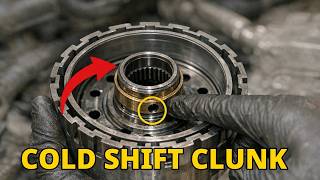
The 2019-2023 Ford Ranger uses 🎬 Watch: Common problems to look for on 5th Gen Rangers the 10R80 10-speed automatic transmission, which is also found in millions of F-150s, Mustangs, and Expeditions. This transmission is known for experiencing harsh or delayed shifting issues, which has led to multiple Technical Service Bulletins (TSBs). While many Rangers operate without issue, problems like sticking valves in the main control valve body and axial movement of the CDF clutch cylinder sleeve 🎬 See how the CDF bushing failure causes harsh shifting are documented causes for shift quality issues and related DTCs in this transmission family, making solenoid performance codes like P2708 a known possibility.
Diagnostic Flowchart
Tap your situation to follow the diagnostic path that matches what you're seeing on this vehicle.
Symptoms You May Notice
- Harsh, clunky, or delayed gear shifts, especially between 3rd, 4th, and 5th gears.
- Vehicle gets stuck in one gear or feels like it's in neutral when trying to accelerate.
- Sudden lurching or jerking when coming to a stop or accelerating.
- Illuminated Check Engine Light or Wrench Light on the dashboard.
- Transmission overheating.
- Inability to select reverse gear until the vehicle is restarted.
- Replacing only the transmission fluid when the root cause is a failing solenoid or sticking valve.
- Assuming the entire transmission needs to be rebuilt without first diagnosing the valve body and solenoids.
- Replacing a single solenoid when the true fault lies within the valve body's hydraulic passages or other sticking valves.
Most Likely Causes
- Sticking Valve in the Main Control Valve Body 🔴 High Probability → Shop Transmission Valve Body Ford has issued TSBs (like #TSB 24-2046) for the 10R80 transmission that specifically mention sticking valves in the main control valve body as a primary cause for harsh/delayed shifts and numerous solenoid codes, including P2708. Debris from clutch material or normal wear can cause these sensitive valves to hang up.
How to confirm: This is difficult to confirm without disassembly and is often diagnosed after a solenoid replacement doesn't fix the issue. If multiple solenoid codes are present, it strongly points to a valve body or systemic pressure issue. A technician may perform vacuum testing on the valve body bores once it's removed.
Typical fix: Replace the entire main control valve body assembly, which includes all new solenoids. This is the most common dealer repair for these symptoms. After replacement, a transmission adaptive learning drive cycle must be performed.
Est. part cost: $500-$1000 - Failed Shift Solenoid 'F' 🟡 Medium Probability → Shop Transmission Valve Body Solenoids can fail electrically (coil burnout) or mechanically (stuck piston) over time due to heat and contamination. While possible, TSBs suggest the valve body is a more frequent culprit for these symptoms on the 10R80.
How to confirm: A technician can command the solenoid on and off with a high-level scan tool. It can also be bench-tested for resistance (typically 10-15 Ω) and actuation by applying 12V power.
Typical fix: Replace the individual shift solenoid. This is done by dropping the transmission pan and accessing the valve body. However, if other solenoids are also setting codes, replacing the entire valve body assembly is more efficient.
Est. part cost: $50-$150 - Low or Contaminated Transmission Fluid 🟡 Medium Probability → Shop Transmission Assembly The 10R80 is sensitive to fluid level and condition. Fluid that is low or contaminated with clutch material or metal shavings can cause solenoids and valves to stick or operate slowly. Ford recommends a fluid and filter change around 60,000 miles, as waiting longer can contribute to issues.
How to confirm: Check the transmission fluid level and condition using the specific Ford procedure, which involves getting the fluid to a precise temperature (typically 206-215°F). If the fluid is dark, burnt, or contains debris, it's a problem.
Typical fix: Perform a transmission fluid and filter change using only Motorcraft MERCON ULV fluid. If the fluid is heavily contaminated, a full flush may be needed, but this can sometimes worsen issues in high-mileage transmissions.
Est. part cost: $150-$300 for fluid and filter - Wiring or Connector Issue ⚪ Low Probability The internal transmission harness or the main external connector can become damaged or corroded, though less common than internal component failure. A forum user with a platform-mate F-150 reported a similar issue was caused by rodent damage to the wiring harness.
How to confirm: Inspect the transmission's external electrical connector for damage. A technician can check for continuity and shorts in the wiring from the TCM to the solenoid connector.
Typical fix: Repair the damaged section of the wiring harness or replace the affected connector.
Est. part cost: $20-$200
Rare But Worth Checking
- Faulty Transmission Control Module (TCM): → Shop Transmission Assembly A software glitch or internal failure in the TCM can incorrectly command the solenoid to stay on. TSBs often recommend reprogramming the PCM/TCM as a first step. This is rare and should only be considered after all other mechanical and electrical causes have been ruled out.
- Internal CDF Clutch Cylinder Sleeve Movement: → Shop Automatic Transmission Coast Clutch Hub TSB 24-2046 explicitly names axial movement of the CDF clutch cylinder sleeve as a potential cause of shifting issues and related codes. This is a major internal repair requiring significant transmission disassembly and is not a DIY-friendly fix.
- Missing Input Shaft End Plug: A highly technical video from a transmission specialist points out that the input shaft has several pressed-in plugs for different hydraulic circuits. If the plug for the 'F' clutch circuit is missing, it will cause a pressure loss and trigger codes like P2707 (Stuck Off) or potentially P2708. This requires transmission removal to inspect and repair.
Diagnosis Steps
- Check and record any and all stored DTCs with an OBD-II scanner capable of reading transmission codes.
- Inspect the transmission fluid level and condition following the specific Ford procedure for the 10R80 transmission (fluid temperature must be between 206-215°F).
- Check for applicable TSBs (like TSB 24-2046) based on the vehicle's VIN and symptoms. The TSB may recommend a PCM/TCM reflash as a first step.
- Inspect the external transmission wiring harness and connectors for any visible damage, corrosion, or loose connections.
- If fluid and wiring are okay, the next step is to drop the transmission pan to access the valve body. This is a difficult job due to the pan design and surrounding components like the exhaust and cooler lines.
- Test the resistance of Shift Solenoid 'F'. Compare the reading to the manufacturer's specification (typically 10-15 Ω).
- If possible, use a scan tool to command the solenoid on and off while listening for an audible click.
- If the solenoid tests bad or is inconclusive, replace it.
- If a new solenoid does not resolve the issue, or if multiple solenoid codes are present, the most likely cause is the main control valve body, which should be replaced as an assembly.
- If symptoms persist, deeper diagnosis as per TSB 24-2046 may be required, pointing towards internal issues like the CDF clutch cylinder.
Parts You'll Likely Need
- Transmission Main Control Valve Body Assembly
(OEM #JL3Z-7A100-D (verify with VIN))— Often the root cause due to sticking valves, as noted in Ford TSBs for the 10R80 transmission. Replacing the entire assembly includes all new solenoids and eliminates guesswork.
Trusted brands: Motorcraft
OEM price range: $700-$1000
Aftermarket price range: $500-$800 - Transmission Shift Solenoid
(OEM #HL3Z-7G136-J / HL3Z-7G136-K (verify specific solenoid and VIN))— If the issue is isolated to a single solenoid failure, replacing just the faulty one is a more targeted repair. Solenoids are often sold in a complete kit.
Trusted brands: Motorcraft
OEM price range: $50-$150
Related Codes That Often Appear With This One
- P0700 — This is a generic code indicating the Transmission Control Module has requested the check engine light to be turned on. It often appears with more specific transmission codes like P2708.
- P0751, P0756, P2700, P2707, etc. — The provided TSBs (#TSB 24-2046, #TSB 23-2250) show that P2708 is often part of a larger group of solenoid performance codes. If multiple solenoid codes are present, it strongly points to a systemic issue like a faulty valve body, low fluid, or a TCM problem rather than a single bad solenoid.
Technical Service Bulletins (TSBs) & Recalls
- TSB 25-2134: Lists P2708 among many other transmission DTCs for various Ford models.
- TSB 25-2024: Also lists P2708 with a large group of transmission codes, indicating a potential common cause.
- TSB 24-2046: This is a key document that supersedes previous TSBs. It addresses harsh/delayed shifts in 2019-2023 Rangers and attributes the cause to the transmission solenoid strategy, sticking valves in the main control valve body, and/or axial movement of the CDF clutch cylinder sleeve.
- TSB 23-2250: An earlier version of the TSB which also lists P2708 and points to sticking valves and the CDF clutch cylinder sleeve as causes.
Platform-Specific Known Issues
- Ford has issued Technical Service Bulletin TSB 24-2046 for 2019-2023 Rangers with the 10R80 transmission that exhibit harsh or delayed shifts, pointing to issues with the main control valve body and CDF clutch cylinder sleeve.
- Owners have filed numerous complaints and a class-action lawsuit (not including the Ranger, but covering the same 10R80 transmission in other models) regarding shifting problems, gear slipping, and violent jerking.
- A real-world owner experience on Ranger5G.com described a 2019 Lariat developing weak acceleration and clunky shifting, which eventually led to a P2708 code and a full transmission replacement at 66k miles.
Mechanic-Grade Diagnostic Values
- Shift Solenoid Resistance — expected: 5.0 - 5.4 Ω at 20°C (68°F). Failure: A reading outside of this range indicates a faulty solenoid coil.
- Shift Solenoid (A-F) Current vs. Pressure — expected: Directly proportional; zero current results in zero pressure, maximum current results in maximum pressure.. Failure: This is a logical test performed with a scan tool. If the solenoid is commanded on (current applied) and the expected gear change or pressure reading doesn't occur, it points to a mechanical (stuck) solenoid or a hydraulic blockage, not necessarily an electrical fault.
Scan Tool Commands That Help
- Ford IDS/FDRS: Transmission Characterization / Solenoid IDN / Solenoid Body Strategy Download — This is mandatory after replacing the main control valve body. The new valve body has a unique 13-digit strategy code that must be programmed into the TCM for the transmission to shift correctly.
- Ford IDS/FDRS: Reprogram TRID strategy for the existing transmission — As per TSB 24-2101, this function is used to refresh the existing solenoid strategy in the TCM as a diagnostic step before replacing hardware.
- Ford IDS/FDRS or equivalent: Clear Transmission Adaptive Tables / Perform Adaptive Learning Drive Cycle — This must be done after any software update or component replacement (valve body, solenoids) to allow the TCM to relearn the transmission's parameters and improve shift quality.
Wiring & Ground Locations
- C175T — The main 52-pin connector at the Powertrain Control Module (PCM).. This connector contains the control circuits for the transmission shift solenoids. While a specific pin for Solenoid 'F' was not identified, related solenoids are located here (e.g., Pin 10 for Solenoid D, Pin 11 for Solenoid E), making it the primary location for checking wiring continuity from the PCM to the transmission.
Real Owner Repair Stories
- Ranger5G.com forum user (2021 Ranger XLT FX4, failure started around 35,000 miles) — Severe rough shifting, transmission dropping into neutral unexpectedly in traffic, hunting for gears, and harsh downshifts.
❌ Tried (didn't work) Initial strategy update and adaptive table reset., A second strategy update and reset at a different dealer., Replacement/repair of the main control valve body, which made the shifting more violent after the relearn period.
✅ What actually fixed it The user's story was ongoing, with the next step being to pursue the final stage of the TSB (CDF clutch cylinder inspection/replacement) at a third dealership. The story highlights that the common valve body fix does not always resolve the issue and can sometimes worsen symptoms, pointing towards the deeper internal problem documented in TSBs.
OEM Part Supersession History
JL3Z-7A100-B→JL3Z-7A100-D— Part revision and update by the manufacturer.
Heads up: JL3Z-7A100-D is the direct replacement for -B. Always verify the correct part number for the specific vehicle's column or electronic shifter configuration via VIN.JL3Z-7A100-C (New)→JL3Z-7A100-CRM (Remanufactured)— Availability of a lower-cost, factory-remanufactured alternative.
Heads up: The remanufactured part is a direct alternative to the new part, offering a potential cost saving.
Model Year Variations Within This Range
- 2019-2023 (per TSB 23-2250): The diagnostic procedure in TSBs varies by build date. For vehicles built on or before Nov 1, 2021, with no DTCs but with shift quality complaints, the first step is to reprogram the solenoid strategy. For vehicles built after that date, the first step is to overhaul the main control valve body.
- Post 12/23/2022: Vehicles produced after December 23, 2022, likely have the revised CDF Drum from the factory, which includes a machined lip to prevent the inner sleeve from moving. This makes the 'CDF clutch cylinder sleeve movement' failure less probable on later models.
- 2021+: A transmission expert noted that 2017-2020 models are tuned to skip-shift more aggressively for fuel economy, while 2021+ models tend to shift more sequentially and consistently. This is a software/tuning difference, not a hard part change.
Helpful Videos

We Have This Part in Stock


The information in this article is provided for general reference and educational purposes only. Vehicle specifications, procedures, and part compatibility can vary by production date, trim level, and region. Always consult your vehicle's factory service manual and verify part numbers before purchasing or performing repairs. Safety-critical components such as airbags, seat belts, and braking systems should be installed by a qualified professional.
- Ford RANGER:
- 🧭 Diagnostic Flowchart
- 🎬 Helpful Videos
- 🛍️ Shop This Part
- What's Unique About the 2019-2023 Ford RANGER
- Symptoms You May Notice
- Most Likely Causes
- Rare But Worth Checking
- Diagnosis Steps
- Parts You'll Likely Need
- Related Codes That Often Appear With This One
- Technical Service Bulletins (TSBs) & Recalls
- Platform-Specific Known Issues
- Mechanic-Grade Diagnostic Values
- Scan Tool Commands That Help
- Wiring & Ground Locations
- Real Owner Repair Stories
- OEM Part Supersession History
- Model Year Variations Within This Range
- 🎟️ Get 5% Off