

P2709 on 2012-2015 Kia RIO: Shift Solenoid 'F' Circuit Fault Causes and Fixes
On a 2012-2015 Kia Rio with the A6GF1 6-speed automatic transmission, code P2709 almost always indicates a failed shift solenoid inside the transmission. This specific solenoid is identified as 'SS-B' in service literature. Kia issued a Technical Service Bulletin (TSBTRA051R1) for this known issue, advising solenoid replacement, not a full transmission replacement. This is a moderately difficult job requiring removal of the transmission pan and valve body.
- P2709 on a 2012-2015 Kia Rio is a very specific code that almost always points to a failed shift solenoid 'F'.
- Kia has a Technical Service Bulletin (TSBTRA051R1) for this exact problem, confirming it's a known issue.
- The correct repair is to replace the faulty solenoid(s) inside the transmission, NOT the entire transmission assembly.
- This repair is complex and best left to a professional or a highly experienced DIY mechanic.
- Always use the correct Kia-specific SP-IV automatic transmission fluid when refilling.
What's Unique About the 2012-2015 Kia RIO
The 2012-2015 Kia Rio uses a 6-speed automatic transmission (model A6GF1) that has a documented history of premature shift solenoid failures across many Kia and Hyundai models like the Elantra, Forte, and Soul. Kia acknowledged this by issuing Technical Service Bulletin #TSBTRA051R1, which specifically lists P2709 as a code fixed by replacing the solenoids. The bulletin importantly advises against the common misdiagnosis of replacing the entire transmission, saving owners significant cost.
Diagnostic Flowchart
Tap your situation to follow the diagnostic path that matches what you're seeing on this vehicle.
Symptoms You May Notice
- Harsh, erratic, or delayed gear shifts
- Transmission getting stuck in a single gear (fail-safe or 'limp' mode)
- Sudden, hard downshifts that feel like a 'bang'
- Check Engine Light is on
- Inability to shift into certain gears, especially 5th gear
- Transmission slipping between gears
- Replacing the entire transmission assembly. The official Kia TSB for this code (#TSBTRA051R1) explicitly advises replacing the individual solenoids, not the whole transaxle.
Most Likely Causes
- Failed Shift Solenoid 'F' (SS-B) 🔴 High Probability → Shop Transmission Valve Body This is a widely known issue for this transmission, as documented in Kia's Technical Service Bulletin #TSBTRA051R1. The internal windings of the solenoid fail electrically over time.
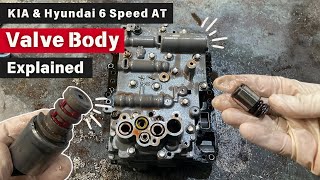
How to confirm: After removing the transmission pan and valve body, the solenoid can be tested with a multimeter. 🎬 See how to clean and test these 6-speed solenoids. The resistance for this on/off solenoid should be between 10-11 Ohms. A reading that is significantly higher (open circuit) or near zero (shorted) confirms failure. A scan tool can also be used to perform an actuation test.
Typical fix: Replace the faulty shift solenoid. It is highly recommended to replace the entire set of eight solenoids as a complete wire harness assembly, as they are a common failure item and have a similar service life.
Est. part cost: $40-$160 - Low or Contaminated Transmission Fluid 🟡 Medium Probability → Shop Transmission Assembly
How to confirm: Check the transmission fluid level and condition. The fluid should be at the correct level, red in color, and not smell burnt. The level must be checked when the transmission fluid temperature is between 122°F and 140°F (50-60°C). Dark, dirty, or burnt-smelling fluid indicates a problem.
Typical fix: Perform a transmission fluid drain-and-fill using the manufacturer-specified fluid (Kia SP-IV). If the fluid is heavily contaminated, a flush may be considered, though this is sometimes debated.
Est. part cost: $50-$150 - Wiring or Connector Issue ⚪ Low Probability
How to confirm: Visually inspect the external wiring harness leading to the transmission for any signs of damage, corrosion, or loose connections, particularly at the main connector on the transmission case. Check for continuity from the TCM connector to the transmission connector with a multimeter.
Typical fix: Repair or replace the damaged section of wiring or the faulty connector.
Est. part cost: $20-$100
Rare But Worth Checking
- Faulty Transmission Control Module (TCM): → Shop Transmission Assembly This is the least likely cause. The TCM should only be considered for replacement after all other possibilities, including solenoids, fluid, and wiring, have been thoroughly tested and ruled out. Misdiagnosing a bad TCM is a costly mistake.
Diagnosis Steps
- Read the trouble codes with an OBD-II scanner and note any other codes present, especially other transmission codes listed in TSB TSBTRA051R1.
- Check the transmission fluid level and condition. Bring the transmission to operating temperature (122-140°F / 50-60°C), then check the level per the manufacturer's procedure. Ensure it is clean, at the proper level, and does not smell burnt.
- Inspect the external transmission wiring harness and connectors for any visible damage, corrosion, or loose pins.
- If available, use an advanced scan tool to monitor live data and perform an 'Actuation Test' to command the solenoid on and off, listening for a click with a stethoscope.
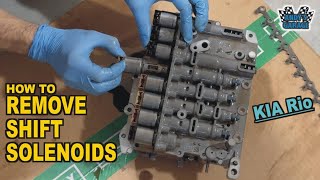
- If the fluid and wiring are okay, the next step is internal inspection. Safely raise the vehicle, drain the transmission fluid, and remove the transmission oil pan. 🎬 Watch: Step-by-step guide on removing the shift solenoids.
- Remove the valve body to access the shift solenoids.
- Identify Shift Solenoid 'F' (also known as SS-B). Test its resistance with a multimeter. The reading must be between 10-11 Ohms. Readings outside this range confirm failure.
- If the solenoid fails the resistance test, it is faulty. It is best practice to replace the entire solenoid wire harness assembly.
- If the solenoid tests good, perform a continuity check on the internal transmission wiring harness between the main connector and the solenoid connector.
- If all components test good, the final and least likely possibility is a fault within the Transmission Control Module (TCM).
Parts You'll Likely Need
- Automatic Transmission Solenoid Wire Harness
(OEM #46313-3B030 / 46313-3B075 / 46313-3B065 (Verify with VIN))— This is the component that most commonly fails, causing the P2709 code, as documented by Kia's TSB. Replacing the entire harness assembly is the recommended practice to prevent other solenoids from failing soon after.
Trusted brands: Kia/Hyundai (OEM), Mando, Rostra
OEM price range: $150-$250
Aftermarket price range: $80-$160 - Automatic Transmission Fluid (ATF)
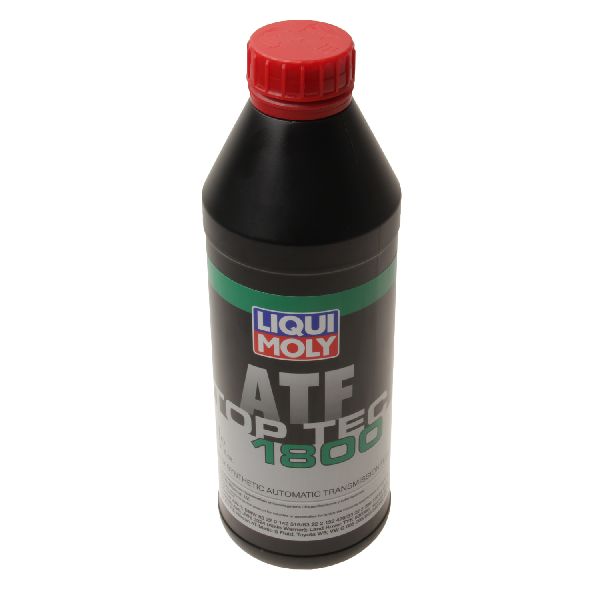
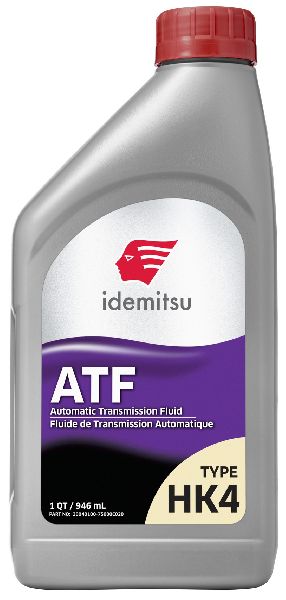
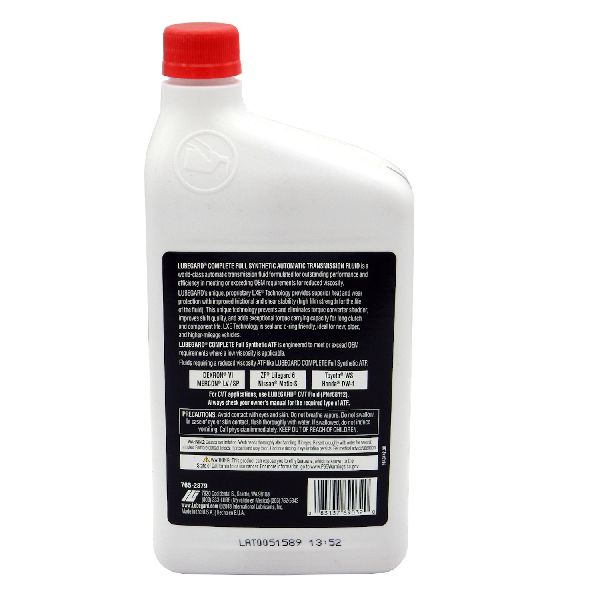
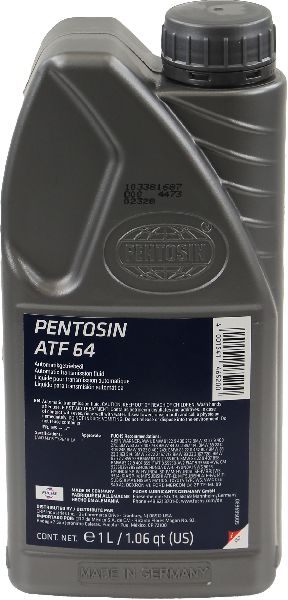
(OEM #SP-IV (OEM Bottle P/N: UM090-CH042))— The transmission fluid must be drained to access the solenoids and must be replaced with the correct type (SP-IV) to ensure proper transmission function. A typical drain and fill requires 4-5 quarts.
Trusted brands: Kia/Hyundai (OEM), Idemitsu (SP-IV equivalent), ENEOS (Import ATF Model H)
OEM price range: $15-$25 per quart
Aftermarket price range: $10-$18 per quart - Transmission Oil Pan Gasket
(OEM #45285-3B810)— The gasket is a one-time-use part and must be replaced anytime the transmission pan is removed to prevent leaks. Some pans may use RTV sealant instead.
Trusted brands: Kia/Hyundai (OEM), Fel-Pro, Mahle
OEM price range: $25-$40
Aftermarket price range: $15-$30
Related Codes That Often Appear With This One
- P0741, P0748, P0753, P0758, P0763, etc. — These are all codes related to other shift solenoids (A, B, C, D, E) and the torque converter clutch solenoid within the same transmission. The TSB TSBTRA051R1 groups P2709 with these codes, indicating that a failure of one solenoid often points to a systemic issue with the solenoid pack.
Technical Service Bulletins (TSBs) & Recalls
- TSBTRA051R1: Recommends the replacement of various shift solenoids on 6-speed automatic transaxles to resolve DTCs including P2709. It identifies the solenoid for P2709 as 'SS-B' and explicitly advises against replacing the entire transaxle.
Platform-Specific Known Issues
- Kia issued Technical Service Bulletin #TSBTRA051R1 which directly addresses DTC P2709. It identifies faulty shift solenoids (specifically calling P2709's solenoid 'SS-B') as the root cause and recommends their replacement instead of a full transaxle replacement.
Mechanic-Grade Diagnostic Values
- Shift Solenoid 'F' (SS-B, on/off type) resistance — expected: 10 - 11 Ohms. Failure: A reading of O.L. (open) or near 0 Ohms (short) indicates a failed solenoid.
- Variable Force Solenoid (VFS) resistance — expected: 5.1 - 5.3 Ohms. Failure: While not the solenoid for P2709, this value is critical when testing the entire solenoid pack, which is best practice.
- Solenoid power supply at transmission connector — expected: Battery voltage for 1-2 seconds after key-on. Failure: If voltage appears briefly then disappears, the TCM is likely cutting power due to an open circuit in the internal harness. If no voltage ever appears, the fault may be in the TCM or external wiring.
- Solenoid current (live data on scan tool) — expected: Approx. 50mA when OFF, approx. 850mA when commanded ON (values from a similar solenoid on the same transmission). Failure: Current that does not change when commanded, or is zero, points to an electrical fault in the circuit or solenoid.
Scan Tool Commands That Help
- Kia GDS (or equivalent advanced scanner): Actuation Test — Found under the Automatic Transaxle menu, this command attempts to cycle the solenoid. A 'Success' message confirms the TCM sent the signal; the mechanic must then listen for an audible click from the solenoid with a stethoscope to verify mechanical operation.
- Kia GDS (or equivalent advanced scanner): Resetting Auto T/A Values / Init of TCU Learning — This is a mandatory step after replacing the solenoids or valve body. Found in 'Vehicle S/W Management' or 'Special Functions', it clears the old learned shift parameters from the TCM.
- Kia GDS (or equivalent advanced scanner): AT Adaptation Mode — After resetting the adaptive values, this function guides the technician through a specific drive cycle to allow the TCM to relearn shift pressures and timing with the new components for optimal shift quality.
Wiring & Ground Locations
- TCM/PCM (Engine & Transmission Control Module) — In the engine bay, located on a bracket directly behind the battery.. This module is the source of the power and control signal for Shift Solenoid 'F'. All wiring tests for the control circuit will originate or terminate at this module's connectors.
- Main Transmission Connector — On the front of the transmission case, located below the battery and air filter box.. This is the primary external test point for the entire internal transmission electrical system. Probing specific pins here can test solenoid resistance and power supply without dropping the pan. For a similar solenoid, the control wire was at Pin 11.
- Chassis Ground Point — A common grounding bolt with multiple wires is located on the chassis, to the right of the instrument panel fuse box (behind the driver's side lower dash).. A poor chassis ground can cause a variety of electrical issues, including erratic behavior from control modules like the TCM. While not a direct cause, it should be checked if multiple, seemingly unrelated electrical faults are present.
Real Owner Repair Stories
- Kia-Forums user statement (Kia with A6GF1/A6MF1 transmission) — P2709 code and a jerky 2-3 shift.
✅ What actually fixed it The owner performed a DIY replacement of the entire solenoid wire harness assembly, which resolved both the code and the shifting issue. - OptimaForums user statement (Kia Optima with same transmission family) — P2709 code and harsh shifting.
✅ What actually fixed it The dealership diagnosed the code and replaced the solenoid pack under warranty, which immediately fixed the harsh shifting.
OEM Part Supersession History
46313-3B072→46313-3B075— Likely an updated design to improve reliability, as solenoid failure is a known issue.
Heads up: The listed part numbers (46313-3B030, 46313-3B075, 46313-3B065) are for the entire harness assembly. While they may look similar, there can be internal differences. Always verify the correct part number with the vehicle's VIN before ordering.
Helpful Videos


We Have This Part in Stock


The information in this article is provided for general reference and educational purposes only. Vehicle specifications, procedures, and part compatibility can vary by production date, trim level, and region. Always consult your vehicle's factory service manual and verify part numbers before purchasing or performing repairs. Safety-critical components such as airbags, seat belts, and braking systems should be installed by a qualified professional.
- Kia RIO:
- 🧭 Diagnostic Flowchart
- 🎬 Helpful Videos
- 🛍️ Shop This Part
- What's Unique About the 2012-2015 Kia RIO
- Symptoms You May Notice
- Most Likely Causes
- Rare But Worth Checking
- Diagnosis Steps
- Parts You'll Likely Need
- Related Codes That Often Appear With This One
- Technical Service Bulletins (TSBs) & Recalls
- Platform-Specific Known Issues
- Mechanic-Grade Diagnostic Values
- Scan Tool Commands That Help
- Wiring & Ground Locations
- Real Owner Repair Stories
- OEM Part Supersession History
- 🎟️ Get 5% Off