

P2714 on 2010-2017 Cadillac Escalade: Transmission Solenoid Causes and Fixes
P2714 on a Cadillac Escalade typically points to a faulty pressure control solenoid ('D') inside the transmission, often due to contaminated fluid or debris clogging the valve body. The fix usually involves replacing the entire TEHCM unit (solenoids, valve body, and TCM) and performing a full fluid exchange, a job best left to a professional.
- P2714 on a 2010-2017 Escalade is a serious transmission code indicating a problem with a pressure control solenoid.
- The most likely cause, supported by a GM TSB, is debris within the transmission valve body, which leads to solenoid malfunction.
- Do not simply replace a single solenoid; the entire valve body should be inspected and cleaned, and a fluid/filter change is mandatory.
- This is not a DIY-friendly repair. It requires specialized tools, a clean workspace, and potentially electronic programming of a new TCM.
- Ignoring this code will lead to poor drivability and can cause severe, costly damage to the rest of the transmission.
What's Unique About the 2010-2017 Cadillac ESCALADE
The 2010-2017 Escalade spans two generations and two main transmissions: the 6-speed 6L80 (2010-2015) and the 8-speed 8L90 (2015.5-2017). Both are known to be sensitive to fluid quality and internal debris. A GM Technical Service Bulletin (PIP4831E) specifically instructs technicians to look for debris in the valve body and check the TCM date code when a P2714 is present on 2010 models, indicating this is a known issue. Another TSB, PIP5819A, notes that for this code the clutch regulator valve may be sticking in the valve body. This suggests that debris-related failure and sticking internal valves are more common causes on these vehicles than on others.
Diagnostic Flowchart
Tap your situation to follow the diagnostic path that matches what you're seeing on this vehicle.
Generation note: This range covers the end of the third generation (2010-2014, GMT900 platform) and the start of the fourth generation (2015-2017, K2XX platform). Third-gen models primarily use the 6L80 6-speed automatic transmission. Fourth-gen models started with the 6L80 and transitioned to the 8-speed 8L90 automatic during the 2015 model year. While the code's meaning is the same, the specific solenoid and valve body part numbers will differ between the 6L80 and 8L90.
Symptoms You May Notice
- Harsh, jerky, or delayed shifts.
- Transmission slipping between gears.
- Vehicle entering 'limp mode', often locking it in a single gear.
- Check Engine Light is on.
- Reduced fuel economy.
- Transmission overheating.
- Vehicle may not move. 🎬 Watch: A mechanic explains common Escalade transmission problems
- Replacing only the single faulty solenoid when debris in the valve body is the root cause. The problem will likely return if the entire valve body isn't cleaned or serviced.
- Condemning the entire transmission when the issue is isolated to the more easily serviced valve body or TEHCM.
- Mistaking a fluid level/condition issue for a hard part failure. Always check the fluid first.
Most Likely Causes
- Debris in Transmission Valve Body 🔴 High Probability → Shop Transmission Valve Body GM TSB #PIP4831E directly points to debris in the valve body as a cause for this code on the 6L80 transmission. Another TSB, PIP5819A, also identifies a sticking clutch regulator valve within the valve body as a potential cause. These transmissions are sensitive to contamination from normal wear, which can clog the small passages and cause solenoids to stick.
How to confirm: The transmission pan and valve body must be removed for visual inspection of the fluid passages, check balls, and solenoid screens. A technician may also notice dark, burnt-smelling fluid or excessive metal shavings in the pan.
Typical fix: Clean the valve body passages and replace the affected solenoids, though replacement of the entire valve body/TEHCM assembly is more common for a lasting repair. A complete transmission fluid and filter change is required.
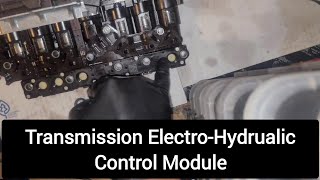
Est. part cost: $50-$150 for fluid, filter, and gaskets. Solenoids or a new valve body are extra. - Failed Pressure Control Solenoid 'D' 🔴 High Probability → Shop Transmission Clutch Pressure Control Solenoid Solenoids are wear items that can fail electrically (coil burnout) or mechanically (sticking plunger). Contaminated fluid accelerates this wear. On the 6L80/90, the solenoids are integrated into the TEHCM (Transmission Electro-Hydraulic Control Module), which lives inside the hot transmission, leading to a higher failure rate.
How to confirm: A technician can command the solenoid with a bi-directional scan tool. The solenoid's resistance can also be tested with a multimeter; a reading outside the typical 3-8 ohm spec for a PWM solenoid indicates failure.
Typical fix: Replace the faulty solenoid. On the 6L80 and 8L90 transmissions, solenoids are part of a pack integrated into the valve body/TCM assembly (TEHCM), requiring replacement as a unit. This part must be programmed to the vehicle's VIN.
Est. part cost: $400-$1200 depending on whether a single solenoid or a full TEHCM assembly is needed. - Low or Contaminated Transmission Fluid 🟡 Medium Probability → Shop Transmission Assembly Many of these transmissions are 'sealed' and lack a dipstick, leading to neglected fluid levels and condition. Contaminated fluid can cause solenoids to stick or passages to clog. TSBs confirm fluid level must be checked at a specific temperature range (140°-176°F) for accuracy.
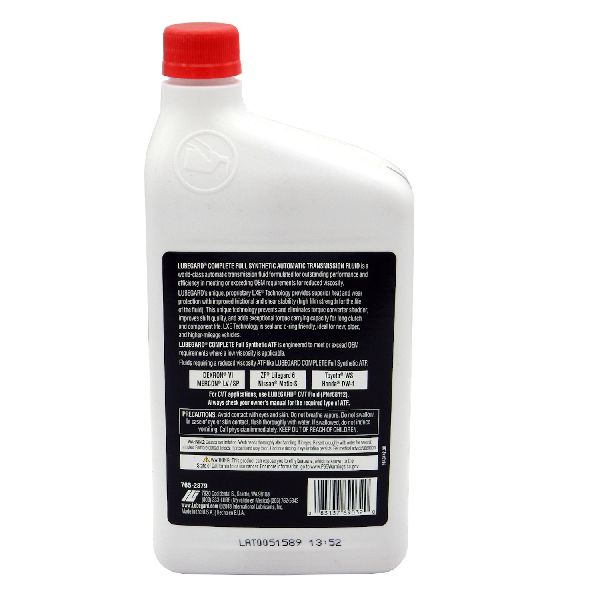
How to confirm: A technician must check the fluid level via the check plug at a specific transmission temperature. The fluid condition (color and smell) should be assessed; healthy fluid is bright red (DEXRON-VI), while dark brown or black fluid with a burnt smell indicates a problem.
Typical fix: Perform a transmission fluid and filter change. If the fluid is heavily contaminated, a full flush may be recommended to clean the cooler and lines.
Est. part cost: $100-$250 for OEM-spec fluid (DEXRON-VI) and a new filter. - Faulty Transmission Control Module (TCM) ⚪ Low Probability → Shop Transmission Assembly On 6L80 transmissions, the TCM is located inside the transmission as part of the TEHCM and is subjected to constant heat and vibration, which can lead to electronic failure over time. TSB #PIP4831E also mentions checking the TCM date code as a diagnostic step. Internal circuit board contamination from fluid is a known failure mode.
How to confirm: This is typically a process of elimination. If the solenoid, wiring, and fluid are all good, the TCM is the likely culprit. A professional scan tool can monitor TCM command signals and check for internal faults. The presence of 🎬 Watch: How to rebuild and test the TEHCM circuits multiple solenoid codes at once strongly suggests TEHCM failure.
Typical fix: Replace the TEHCM (TCM/valve body assembly). This new module will need to be programmed to the vehicle's VIN.
Est. part cost: $600-$1200
Rare But Worth Checking
- Wiring Harness Damage: The wiring harness inside the transmission can become brittle from heat and fluid exposure, leading to shorts or open circuits. This should be inspected any time the pan is off.
- Dislodged Retainer Ring: Though mentioned in a TSB for a much newer model (#PIP6008E), a dislodged internal retainer ring can cause pressure issues and trigger this code. This would represent a significant internal mechanical failure.
- Worn Primary Pulley Bearing Bore: TSB PIP5819A indicates that wear in the primary pulley bearing bore inside the transmission case can cause a pressure leak, leading to a P2714 code. This is a severe internal failure that requires transmission replacement.
Diagnosis Steps
- Check and verify the transmission fluid level and condition. This must be done at the correct operating temperature (140°-176°F).
- Use a professional-grade scan tool to check for other transmission-related trouble codes. Note all codes present.
- Clear the codes and perform a road test to see if the P2714 code returns immediately.
- If the code returns, drop the transmission pan and inspect the fluid and pan for excessive metal shavings or debris.
- Visually inspect the internal wiring harness for any signs of damage, corrosion, or brittleness.
- With the pan off, remove and inspect the valve body and solenoids for debris or clogged screens, as suggested by TSB PIP4831E.
- Test the resistance of the Pressure Control Solenoid 'D' with a multimeter. Compare the reading to the manufacturer's specification (typically 3-8 Ω for a PWM solenoid at ~70°F).
- If available, use a bi-directional scan tool to command the solenoid on and off to check for mechanical response.
- If the solenoid, wiring, and valve body appear clean and test good, the issue may lie within the Transmission Control Module (TCM/TEHCM).
Parts You'll Likely Need
- Transmission Solenoid Kit / Valve Body Assembly (TEHCM)
(OEM #24287422 (6L90, often supersedes 6L80 parts), 24256525 (Common for 6T40/45, verify for 6L80))— This is the most common failure point. On 6L80/6L90 transmissions, the solenoids, valve body, and TCM are often replaced as a single unit called the TEHCM for a lasting repair.
Related Codes That Often Appear With This One
- P0751 — Shift Solenoid 'A' Performance/Stuck Off. TSB #PIP4831E lists this code alongside P2714 as being caused by debris in the valve body.
- P0776 — Pressure Control Solenoid 'B' Performance/Stuck Off. This indicates a similar issue with a different pressure control solenoid, strengthening the diagnosis of widespread contamination or a failing TEHCM.
- P0796 — Pressure Control Solenoid 'C' Performance/Stuck Off. Like the other solenoid codes, its presence points towards a systemic issue rather than a single failed component, and is a classic sign of TEHCM failure.
- P0700 — Transmission Control System Malfunction. This is a general code indicating the TCM has detected a fault and will almost always be present with more specific codes like P2714.
Technical Service Bulletins (TSBs) & Recalls
- PIP4831E: Advises technicians to inspect for debris in the valve body and check the TCM date code for a list of solenoid performance codes including P2714.
- PIP6008E: Mentions a dislodged internal retainer ring as a possible, though rare, cause for P2714.
- PIP5819A / PIP5819B: Discusses P2714 being caused by a sticking clutch regulator valve in the valve body or, more severely, wear in the primary pulley bearing bore within the transmission case, which would require transmission replacement.
Platform-Specific Known Issues
- Per TSB #PIP4831E, 2010 models are known to set P2714 due to debris in the valve body. Technicians are advised to inspect for this debris and check the TCM's date code.
- The 6L80 transmission's design, which places the TCM inside the transmission housing (TEHCM), makes it susceptible to failure from heat and vibration over time.
Mechanic-Grade Diagnostic Values
- Pressure Control Solenoid (PWM) Resistance — expected: 3-8 ohms. Failure: A reading outside this range indicates a failed solenoid coil.
- Shift Solenoid (On/Off) Resistance — expected: 20-40 ohms. Failure: A reading outside this range indicates a failed solenoid coil.
- Pressure Control Solenoid (PWM) Current Draw — expected: 1.5–4.0 amps at 12 volts. Failure: Incorrect amperage suggests a failing solenoid.
- Transmission Line Pressure at Idle — expected: 45-80 psi. Failure: Pressure outside this range indicates a pump, regulator, or solenoid issue.
- Transmission Line Pressure at Wide Open Throttle (WOT) — expected: Up to 300 psi. Failure: Failure to build high pressure under load points to a significant hydraulic issue.
- TEHCM Internal Pressure Switch Resistance (Switch Pressed) — expected: Approx. 10 ohms. Failure: An incorrect or OL reading indicates a faulty pressure switch membrane or circuit within the TEHCM.
Scan Tool Commands That Help
- GM GDS2 / Tech2 or equivalent professional scan tool: Solenoid Cleaning Procedure — After experiencing a performance DTC like P2714, this automated function cycles all solenoids to flush out potential debris. It should be attempted before replacing the TEHCM.
- GM GDS2 / Tech2 or equivalent professional scan tool: Transmission Fast Learn — This procedure is required after replacing the TEHCM or valve body. It allows the TCM to learn the clutch fill volumes and apply pressures, ensuring proper shift quality. The transmission fluid must be between 158-230°F (70-110°C) for the procedure to run.
- GM GDS2 / Tech2 or equivalent professional scan tool: Solenoid Valve Control (Output Control) — For diagnosis, a technician can use this function to command a specific solenoid on or off to verify its electrical and mechanical response. This is often done in conjunction with a pressure test plate.
Wiring & Ground Locations
- Line Pressure Test Port — On the passenger's side of the transmission case, located behind the bell housing.. This is the physical port where a technician connects a pressure gauge to verify if the line pressure matches the commanded pressure from the TCM, which is crucial for diagnosing a P2714.
- TEHCM Main Connector — Inside the transmission, connected directly to the TEHCM/valve body assembly. Early models (pre-2014) often use a black 20-pin connector, while later models use a grey sealed connector.. All power, ground, and CAN bus signals for the solenoids and TCM pass through this single connector. Damage or corrosion on its external pins (where the main vehicle harness connects) can cause this code.
Real Owner Repair Stories
- GM-Trucks.com Forum User (2011 GMC Sierra (uses same 6L80 transmission)) — Hard shifting, check engine light with codes P0751 and P2714.
❌ Tried (didn't work) The user did not report trying other fixes first.
✅ What actually fixed it The user replaced the entire TEHCM (valve body with solenoids and TCM). After replacement and programming, the codes were cleared and did not return, resolving the hard shifting issue.
OEM Part Supersession History
24241350 / 24252114→24256861 / 24256863— Improved solenoids and an updated pressure manifold gasket to address common failures.
Heads up: Early Gen 1 TEHCMs (2006-2009) are known for pressure switch issues. While later parts may physically fit, installing the wrong year/Tag ID TEHCM can cause a no-start or immediate limp mode condition.24256861 / 24256863→24274046 / 24285393— Integrated calibration changes for newer models.
Heads up: TEHCMs from 2014 and newer are not interchangeable with earlier units due to significant software and logic differences. Always match the Tag ID from the sticker on the original part.
Model Year Variations Within This Range
- 2010-2013: These years typically use a Gen 1.5 TEHCM (e.g., part #24256861) which had improved solenoids over the earliest 6L80s but can still suffer from pressure switch failures.
- 2014-2017: These years use a Gen 2 TEHCM (e.g., part #24274046) with different internal logic and calibrations. The 2015+ models may have the 8L90 transmission, which uses a completely different TEHCM and valve body design.
Helpful Videos


We Have This Part in Stock


The information in this article is provided for general reference and educational purposes only. Vehicle specifications, procedures, and part compatibility can vary by production date, trim level, and region. Always consult your vehicle's factory service manual and verify part numbers before purchasing or performing repairs. Safety-critical components such as airbags, seat belts, and braking systems should be installed by a qualified professional.
- Cadillac ESCALADE:
- 🧭 Diagnostic Flowchart
- 🎬 Helpful Videos
- 🛍️ Shop This Part
- What's Unique About the 2010-2017 Cadillac ESCALADE
- Symptoms You May Notice
- Most Likely Causes
- Rare But Worth Checking
- Diagnosis Steps
- Parts You'll Likely Need
- Related Codes That Often Appear With This One
- Technical Service Bulletins (TSBs) & Recalls
- Platform-Specific Known Issues
- Mechanic-Grade Diagnostic Values
- Scan Tool Commands That Help
- Wiring & Ground Locations
- Real Owner Repair Stories
- OEM Part Supersession History
- Model Year Variations Within This Range
- 🎟️ Get 5% Off