

P2714 on 2010-2017 Chevrolet Silverado 1500: Causes and Fixes for Pressure Control Solenoid 'D' Fault
P2714 on a 2010-2017 Silverado most often indicates a faulty pressure control solenoid 'D' (PCS4) within the 6L80 transmission's valve body, which is integrated into the TEHCM (Transmission Electro-Hydraulic Control Module). The fix typically involves dropping the transmission pan to replace the entire TEHCM assembly, which includes all solenoids, followed by a fluid and filter change. This repair requires programming and costs between $800 and $1,500.
- P2714 on a 2010-2017 Silverado is a serious transmission code indicating a problem with the Pressure Control Solenoid 'D'.
- The most likely cause is a failed solenoid, contaminated fluid, or debris in the valve body, as supported by multiple GM Technical Service Bulletins.
- Do not continue to drive with this code. It can lead to severe transmission damage and leave you stranded.
- Diagnosis should start with checking the fluid and reviewing TSBs before condemning expensive components.
- This is not a beginner-friendly DIY repair. Professional service is strongly recommended due to the complexity of internal transmission work.
What's Unique About the 2010-2017 Chevrolet SILVERADO 1500

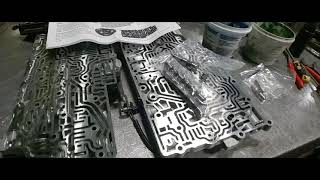
This issue spans two Silverado generations: the GMT900 (2010-2013) and the K2XX (2014-2017), both of which commonly used the 6L80 6-speed automatic transmission. In the 6L80, the TCM and solenoids are integrated into a single, non-serviceable unit called the TEHCM (Transmission Electro-Hydraulic Control Module) mounted to the valve body inside the transmission. This design means an individual solenoid failure, like P2714, often requires replacing the entire TEHCM assembly, which then must be programmed to the vehicle's VIN. The problem is well-documented by GM, with multiple Technical Service Bulletins (TSBs) pointing towards common failure points like 🎬 Watch: The real causes of 6L80 failure and how to address them debris in the valve body, sticking regulator valves, or dislodged internal components.
Diagnostic Flowchart

Tap your situation to follow the diagnostic path that matches what you're seeing on this vehicle.
Generation note: The 2010-2017 range covers the end of the 2nd generation (GMT900, through 2013) and the start of the 3rd generation (K2XX, 2014-2017). Both generations frequently used the 6L80 transmission where this code is common. While the root causes are similar, always verify part numbers for the TEHCM for your specific year and VIN before ordering, as there were hardware and software revisions over the years.
Symptoms You May Notice
- Harsh, jerky, or delayed shifts, particularly involving 2nd or 6th gear
- Transmission slipping between gears
- Vehicle enters 'limp mode,' often stuck in 3rd gear
- Check Engine Light is on
- Loss of reverse gear
- Inability to move from a stop or loss of forward motion
- Reduced fuel economy
- Transmission overheating
- Replacing the entire transmission when only a TEHCM/valve body service is needed. A Reddit user noted a shop quoted $7,000 for a rebuild when a solenoid replacement was the initial, more logical step. Another user shared a $4,400 bill for a full replacement on a 2015 Silverado.
- Replacing an individual solenoid. On a 6L80 transmission, the solenoids are not sold or serviced individually; they are part of the complete TEHCM assembly.
Most Likely Causes

- Faulty Pressure Control Solenoid 'D' (within the TEHCM) 🔴 High Probability → Shop Transmission Clutch Pressure Control Solenoid The solenoids in the 6L80 TEHCM can fail electrically or mechanically due to wear, heat cycles, or contamination from degraded fluid. Since they are integrated, the entire module must be replaced.
How to confirm: A technician can use a bi-directional scan tool to command the solenoid on and off while monitoring transmission line pressure. A resistance test with a multimeter can also check the solenoid's coil. For a 6L80 PWM solenoid like PCS4, the resistance should be between 3-8 ohms. An out-of-spec reading confirms failure within the TEHCM.
Typical fix: Replace the entire Control Solenoid Valve Assembly (TEHCM) and program the new unit to the vehicle. This is the most common and definitive repair.
Est. part cost: $400-$900 for a remanufactured TEHCM assembly. - Low or Contaminated Transmission Fluid 🟡 Medium Probability → Shop Transmission Assembly Fluid breaks down over time, and contaminants (clutch material, metal shavings) can clog the small passages in the valve body and cause solenoids to stick. The 6L80 is sensitive to fluid condition and requires DEXRON-VI fluid.
How to confirm: Check the transmission fluid level and condition. The fluid should be bright red and clear, not dark, burnt-smelling, or containing metallic particles.
Typical fix: Perform a transmission fluid and filter change. If the fluid is heavily contaminated, it may be a sign of a larger internal failure, but a fluid service is a necessary first step.
Est. part cost: $75-$200 - Sticking Valve in the Transmission Valve Body 🟡 Medium Probability → Shop Transmission Valve Body As noted in TSBs, debris can cause regulator valves to stick in their bores. Specifically for P2714, the 2-6 clutch regulator valve in the upper valve body may be sticking. Aftermarket solutions like the Sonnax Actuator Feed Limit Valve Kit are designed to address this common wear point, as bore wear prevents proper regulation of oil pressure supplied to the control solenoids.
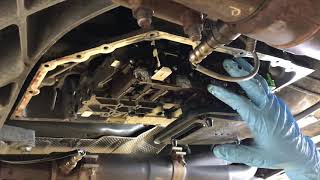
How to confirm: This is found during a physical inspection after the 🎬 See this walkthrough on how to remove the valve body valve body is removed from the transmission. The valve will not move freely in its bore. A vacuum test on the valve bore can also quantify wear; a healthy valve should hold a high vacuum (e.g., 18-22 in-Hg), while a worn bore will show a low or zero reading.
Typical fix: Remove and thoroughly clean the valve body passages. In some cases, an oversized valve and reamed bore (available in kits) are needed to restore hydraulic integrity. If wear is severe, the valve body must be replaced.
Est. part cost: $50 (valve kit) - $800 (valve body) - Wiring or Connector Issues ⚪ Low Probability
How to confirm: Visually inspect the main transmission wiring harness and the twist-lock connector at the case for any signs of damage, corrosion, or loose connections. Test for continuity and proper voltage at the solenoid connector pins.
Typical fix: Repair or replace the damaged section of the external wiring harness or clean the connectors with electrical contact cleaner. Ensure the main round connector is fully seated and locked.
Est. part cost: $20-$100
Rare But Worth Checking
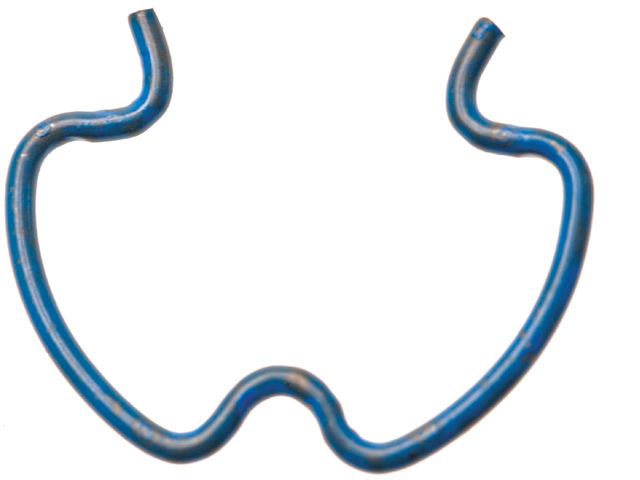
- Dislodged Retainer Ring: TSB #PIP6008E specifically mentions that a dislodged retainer ring can cause DTC P2714 and a loss of reverse. This points to a specific internal mechanical failure that requires transmission disassembly to access and repair.
- Faulty Transmission Control Module (TCM): → Shop Transmission Assembly While rare for the logic side to fail independently, the TCM is integrated into the TEHCM. An internal short or fluid intrusion on the circuit board can cause this code and requires replacement of the entire TEHCM assembly. This should be considered after external wiring and the valve body have been ruled out.
Diagnosis Steps
- Check the transmission fluid level and condition. If low, top it off with DEXRON-VI fluid and check for leaks. If dirty or burnt, a fluid and filter change is a recommended first step.
- Use a professional-grade OBD-II scanner to check for other transmission-related codes. Multiple solenoid codes (e.g., P0796, P2715) strongly suggest a TEHCM failure or widespread hydraulic issue.
- Review any available Technical Service Bulletins (TSBs) for your vehicle's VIN. TSBs like #PIP4831E, #PIE0645, and #PIP6008E provide specific diagnostic direction from GM.
- Inspect the external transmission wiring harness and the main case connector for any visible damage, corrosion, or loose pins.
- Use a scan tool with bi-directional controls to command Pressure Control Solenoid 'D' (PCS4) ON and OFF while monitoring its response and system line pressure. A lack of pressure change indicates a problem.
- Drop the transmission pan and inspect for excessive metal shavings or clutch material. A small amount of fine grey material is normal, but large flakes or chunks indicate a severe internal failure requiring a rebuild or replacement.
- If the pan is dropped, 🎬 Watch: Essential tips for removing the TCM and solenoid pack remove the TEHCM/valve body assembly. Test the resistance of PC Solenoid 4. The expected value for a PWM solenoid in the 6L80 is between 3 and 8 ohms. Some sources state a tighter range of 5 to 6 ohms. An open or shorted reading confirms a failed solenoid within the TEHCM.
- While the valve body is out, inspect the 2-6 clutch regulator valve for sticking or scoring in its bore, as this is a known mechanical cause of P2714. Also inspect the Actuator Feed Limit (AFL) valve bore for wear, which can cause erratic pressure to all solenoids.
Parts You'll Likely Need
- Transmission Control Module (TEHCM / Solenoid Pack)
(OEM #24256861, 24275873 (Verify by VIN))— This assembly contains the TCM and all solenoids, including the failing PC Solenoid 'D'. It is the most common and direct fix for this code on a 6L80 transmission.
Trusted brands: ACDelco (OEM), Dorman (Remanufactured)
Related Codes That Often Appear With This One
- P0700 — This is a general Transmission Control System Malfunction code. It simply means the TCM has detected a fault and has stored a more specific code, like P2714.
- P0796 — Pressure Control Solenoid 'C' Performance. TSB #PIE0645 explicitly links P2714 and P0796, suggesting a common underlying cause like debris in the valve body or a failing TEHCM affecting multiple solenoids.
- P2715 — Pressure Control Solenoid 'D' Stuck On. This is the companion code to P2714 and indicates the solenoid is stuck in the opposite state. Both codes point to a fault with the same solenoid or its circuit.
- P0746 — Pressure Control Solenoid 'A' Performance. An owner complaint (#11723427) listed P2714 with P0746, indicating a widespread pressure regulation problem within the transmission, often pointing to a failing TEHCM or major hydraulic issue.
Technical Service Bulletins (TSBs) & Recalls
- PIP6008E: Mentions a possible dislodged retainer ring causing P2714 and loss of reverse.
- PIE0645: Links P2714 with slipping, improper shifting, and code P0796.
- PIP4831E: Advises checking for debris in the valve body for P2714 and a host of other solenoid codes.
Platform-Specific Known Issues
- TSB #PIP4831E points to debris in the valve body as a common cause for a group of solenoid codes, including P2714.
- TSB #PIE0645 notes that P2714 can be associated with slipping and improper shifting.
- TSB #PIP6008E highlights a potential dislodged retainer ring as a cause for P2714, which may also result in a loss of reverse gear.
- An ATRA bulletin specifies that for code P2714, technicians should inspect the 2-6 clutch regulator valve in the upper valve body for sticking or wear.
Mechanic-Grade Diagnostic Values
- Pressure Control Solenoid (PWM) Resistance — expected: 3-8 ohms. Failure: A reading outside this range (open or shorted) indicates a failed solenoid.
- Shift Solenoid (On/Off) Resistance — expected: 20-40 ohms. Failure: A reading outside this range indicates a failed on/off shift solenoid.
- Solenoid Operational Voltage (from TCM) — expected: 8.3–9.3 volts. Failure: Incorrect voltage can indicate a problem with the TCM output circuits within the TEHCM.
- Actuator Feed Limit (AFL) Valve Vacuum Test — expected: 18+ inches of Mercury (in-Hg). Failure: A low reading (below 18 in-Hg) indicates significant wear in the valve body bore, causing pressure loss to the solenoids.
Scan Tool Commands That Help

- GDS2 / Techline Connect (GM Dealer Tool): SPS (Service Programming System) — This is required after installing a new or remanufactured TEHCM. It downloads the correct VIN-specific calibration from GM's servers and flashes it to the module.
- GDS2 / High-End Bidirectional Scanner: Transmission Service Fast Learn / Reset Adapts — After programming a new TEHCM, this procedure must be performed. It guides the TCM through a series of clutch applications to quickly learn clutch volume indexes for smooth shifting.
- GDS2 / High-End Bidirectional Scanner: Solenoid Cleaning Procedure — If debris is suspected of causing a solenoid to stick, this function cycles all solenoids in a specific sequence to attempt to flush the debris out. This may be attempted before component replacement.
Wiring & Ground Locations
- Main Transmission Connector — On the passenger side of the transmission case, it is a large, round, twist-lock connector.. An improperly seated or corroded main connector can cause a loss of communication or power to the TEHCM, triggering various transmission codes, including P2714. It is a common issue for this connector not to be fully seated, which can be verified by ensuring the locking ring has snapped into place.
- G110 — On the GMT900 platform (2010-2013), this ground is located on the right rear of the engine, typically on the back of the cylinder head.. A loose or corroded G110 ground can cause a wide range of seemingly unrelated electrical issues, including erratic behavior from the TCM and other modules. While not a direct cause of P2714, a poor ground can lead to incorrect voltage readings and module malfunctions that may trigger transmission fault codes.
Real Owner Repair Stories
- chevytrucks.org forum user (2015 Chevrolet Silverado 1500) — Check engine light with codes P2714 and P0796. Transmission was slipping.
❌ Tried (didn't work) The user did not report trying other fixes first.
✅ What actually fixed it The user replaced the TEHCM (valve body with solenoids and TCM) and performed a transmission fluid and filter change. This resolved the codes and the slipping issue.
OEM Part Supersession History
24256861→19435614— Standard part evolution, likely for improved reliability or manufacturing changes.
Heads up: Part number 24256861 was used across many GM vehicles, including Allison transmissions in Duramax trucks, but the internal programming (calibration) is vehicle-specific. A TEHCM from a different vehicle type will not work unless it is completely reflashed with the correct VIN-specific software using GM's SPS2.
Model Year Variations Within This Range
- 2010-2013 vs 2014-2017: The TEHCM hardware and internal logic changed between generations. For example, a TEHCM with part number 24256861 is common for 2010-2013 models, while later models like the 2014-2016 use different part numbers (e.g., 24274046). These units are not interchangeable due to differences in calibration and logic. Always verify the correct part number by VIN.
Helpful Videos
We Have This Part in Stock


The information in this article is provided for general reference and educational purposes only. Vehicle specifications, procedures, and part compatibility can vary by production date, trim level, and region. Always consult your vehicle's factory service manual and verify part numbers before purchasing or performing repairs. Safety-critical components such as airbags, seat belts, and braking systems should be installed by a qualified professional.
- Chevrolet SILVERADO 1500:
- 🧭 Diagnostic Flowchart
- 🎬 Helpful Videos
- 🛍️ Shop This Part
- What's Unique About the 2010-2017 Chevrolet SILVERADO 1500
- Symptoms You May Notice
- Most Likely Causes
- Rare But Worth Checking
- Diagnosis Steps
- Parts You'll Likely Need
- Related Codes That Often Appear With This One
- Technical Service Bulletins (TSBs) & Recalls
- Platform-Specific Known Issues
- Mechanic-Grade Diagnostic Values
- Scan Tool Commands That Help
- Wiring & Ground Locations
- Real Owner Repair Stories
- OEM Part Supersession History
- Model Year Variations Within This Range
- 🎟️ Get 5% Off