

P2714 on 2010-2017 Chevrolet Silverado 3500: Pressure Control Solenoid 'D' Causes and Fixes
On a 2010-2017 Silverado 3500, code P2714 indicates a 'Stuck Off' fault with Pressure Control Solenoid 'D' (specifically PC Solenoid 4) inside the 6L80 or 6L90 transmission. This is a serious issue, often causing harsh shifting, loss of reverse, and can put the truck in limp mode. The fix is rarely simple and typically involves internal transmission work, such as replacing the entire TEHCM (solenoid/TCM assembly), the valve body due to debris or wear, or addressing mechanical failures like a dis
- P2714 on a Silverado 3500 is a serious transmission code that should be addressed immediately to prevent further damage.
- Symptoms are severe and often involve harsh shifting or a complete loss of reverse gear.
- The cause is frequently internal, ranging from a bad solenoid/TEHCM to mechanical failures like debris in the valve body or a dislodged retainer ring, as documented in GM TSBs.
- This is not a DIY-friendly repair. Professional diagnosis is crucial to distinguish between an electronic fault and a mechanical one, saving money on incorrect repairs.
- Always check for relevant TSBs before starting any repair, as they provide critical, vehicle-specific insights.
What's Unique About the 2010-2017 Chevrolet SILVERADO 3500
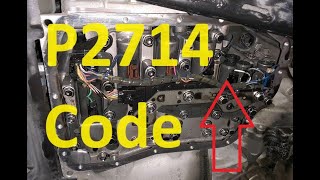
For this generation of Silverado HD trucks, P2714 is a well-documented issue with multiple official GM Technical Service Bulletins (TSBs). The problem is often not just a simple solenoid failure but can be a symptom of deeper mechanical issues. TSBs point to specific problems like debris in the valve body causing a clutch regulator valve to stick, a dislodged internal retainer ring causing a loss of reverse, or even degraded internal seals on certain transmission models. This means diagnosis must go beyond simply testing the solenoid itself and often involves inspecting the entire valve body and related mechanical components. An ATRA (Automatic Transmission Rebuilders Association) bulletin specifies that for code P2714, technicians should inspect the 2-6 clutch regulator valve in the upper valve body 🎬 Watch: Understanding P2714 causes and solenoid performance fixes for sticking or wear.
Diagnostic Flowchart
Tap your situation to follow the diagnostic path that matches what you're seeing on this vehicle.
Generation note: This range covers the end of the GMT900 generation (2010-2014) and the start of the K2XX generation (2015-2017). Both generations used heavy-duty 6-speed automatic transmissions like the 6L90 where this code is prevalent. The underlying causes related to the TEHCM (Transmission Electro-Hydraulic Control Module), valve bodies, and internal mechanical components are common to both generations.
Symptoms You May Notice
- Harsh or delayed shifts, particularly into reverse.
- Complete loss of reverse gear.
- Transmission slipping, where engine RPMs flare up without an increase in speed.
- Vehicle enters 'limp mode,' locking it in a single gear.
- Check Engine Light is illuminated.
- Harsh 3-4 or 5-6 shifts.
- Vehicle won't move under its own power.
- Replacing only the single pressure control solenoid when the root cause is debris in the valve body or a failing TCM.
- Replacing the entire transmission when the issue could be resolved with a valve body or TEHCM replacement.
- Replacing the valve body when the root cause is a mechanical failure like the dislodged retainer ring.
Most Likely Causes
- Failed Pressure Control Solenoid 'D' / TEHCM Assembly 🔴 High Probability → Shop Transmission Clutch Pressure Control Solenoid The solenoids operate under high pressure and temperature and can fail electrically or mechanically. In the 6L80/6L90 transmissions, the solenoids are integrated into the TEHCM (Transmission Electro-Hydraulic Control Module). A single solenoid failure often requires replacing the entire TEHCM assembly, which also contains the TCM.
How to confirm: A professional scan tool can command the solenoid on/off to check for a response. Resistance can also be checked with a multimeter with the transmission pan removed; a reading outside the typical 5-15 ohm range indicates failure. A scan tool may also show an incorrect gear ratio or a flare when the 2-6 clutch is commanded on.
Typical fix: Replace the entire TEHCM assembly inside the transmission pan. The new module must be programmed to the vehicle's VIN.
Est. part cost: $400-$1000 - Debris in the Transmission Valve Body 🟡 Medium Probability → Shop Transmission Valve Body GM TSB #PIP4831E specifically advises technicians to look for debris in the valve body when encountering code P2714. This debris can cause regulator valves, such as the 2-6 clutch regulator valve, to stick in their bores, preventing proper pressure control. Aftermarket kits like the Sonnax Zip Kit (6L45-6L90-ZIP) are designed specifically to address these internal hydraulic leaks caused by bore wear.
How to confirm: Requires dropping the transmission pan and removing the valve body for a thorough visual inspection of its channels and valves for contamination, scoring, or sticking.
Typical fix: Clean the valve body with a specialized solvent. If bores are scored or valves are excessively worn, install an aftermarket valve body repair kit (like Sonnax) or replace the entire valve body assembly.
Est. part cost: $100 (Sonnax Kit) - $1200 (Valve Body) - Dislodged Internal Retainer Ring 🟡 Medium Probability GM TSB #PIP6008E and a related preliminary information document point to a dislodged reverse internal gear retaining ring as a specific cause for P2714, often accompanied by a loss of reverse. This is a known mechanical failure inside the transmission that can occur even on low-mileage vehicles.
How to confirm: This is a difficult diagnosis that requires significant transmission disassembly to visually confirm the dislodged ring in the forward clutch assembly.
Typical fix: Requires transmission removal and teardown to reinstall or replace the retainer ring (and the forward clutch housing if damaged) and any associated damaged parts.
Est. part cost: $100-$500 (plus significant labor) - Low or Contaminated Transmission Fluid ⚪ Low Probability → Shop Transmission Assembly While not a direct cause, fluid that is low or broken down from heat and mileage can't maintain proper hydraulic pressure, leading to performance codes and accelerating wear on internal components like solenoids and valve bodies.
How to confirm: Check the transmission fluid level and condition per the manufacturer's procedure (fluid temperature must be between 185–203°F). The fluid should be red and clear, not brown, black, or smell burnt.
Typical fix: Perform a transmission fluid and filter change using the correct DEXRON-VI fluid. This is often the first step before more invasive repairs.
Est. part cost: $100-$250
Rare But Worth Checking
- Faulty Transmission Control Module (TCM): → Shop Transmission Assembly TSB #PIP4831E suggests reviewing the date code on the TCM, indicating some modules may have issues. On these trucks, the TCM is integrated with the valve body solenoids in the TEHCM, so a TEHCM replacement would also replace the TCM. A software glitch or internal processor fault can also cause the code.
- Damaged Internal Wiring Harness: → Shop Transmission Wiring Harness The wiring harness inside the transmission can become brittle from heat cycles and fluid exposure, leading to intermittent connections or shorts that can trigger solenoid codes. This harness is typically replaced along with the TEHCM.
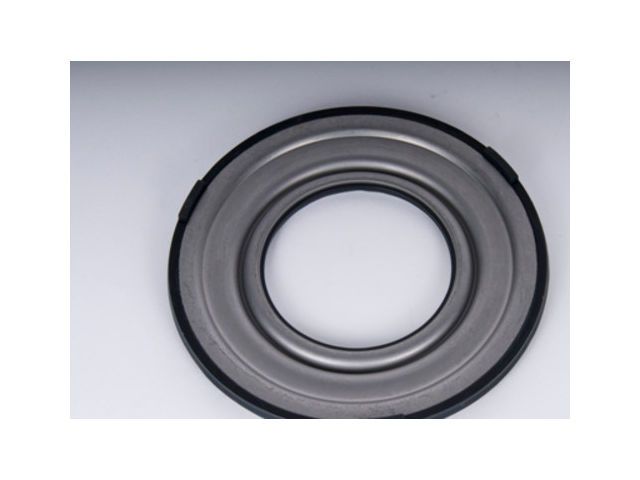
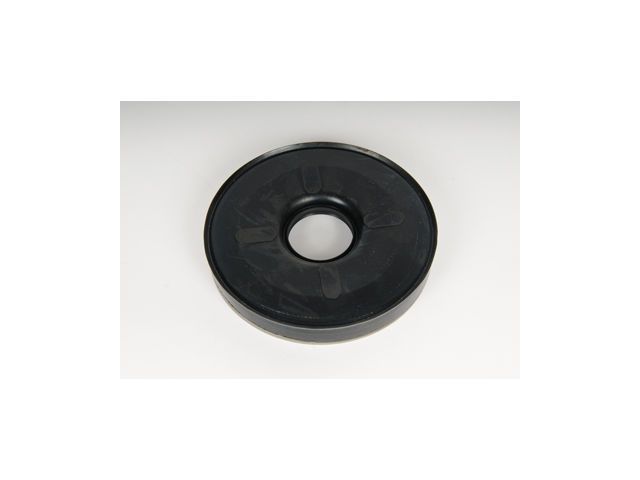
- Degraded C4 Apply Piston Outer Seal (10-Speed Allison): While most 3500s in this range have 6-speeds, later models or swaps could have the 10-speed Allison. TSB #24-NA-148 (for 2024+ models but relevant) links P2714 to premature degradation of the C4 clutch apply piston seal in the 10L1000 transmission, causing slips and no reverse.
Diagnosis Steps
- Check the transmission fluid level and condition at the correct operating temperature (185–203°F). Address any low or burnt fluid first.
- Use a professional-grade scan tool to check for any other transmission-related DTCs and review freeze frame data.
- Review any Technical Service Bulletins (TSBs) for your vehicle's VIN, as GM has issued several related to this code (PIP4831E, PIP6008E, 24-NA-148).
- Using the scan tool, command the Pressure Control Solenoid 'D' on and off to monitor its electrical response and effect on line pressure.
- Drop the transmission oil pan and inspect for excessive metal debris or clutch material, which would indicate a severe mechanical failure.
- Inspect the internal wiring harness for any signs of damage or corrosion.
- Remove the valve body assembly to inspect for stuck valves (especially the 2-6 clutch regulator valve), scored bores, or debris.
- If the solenoid is accessible, test its resistance with a multimeter. A reading outside the 5-15 ohm range suggests failure.
- If a no-move condition exists on a low-mileage truck, transmission removal may be necessary to inspect for the dislodged retainer ring per TSB #PIP6008E.
Parts You'll Likely Need
- Transmission Electro-Hydraulic Control Module (TEHCM)
(OEM #24256861 (Common service number, always verify with VIN))
Related Codes That Often Appear With This One
- P2732 — This code relates to Pressure Control Solenoid 'F'. TSB #24-NA-148 lists P2714 and P2732 together, suggesting a common underlying cause like a failing seal or housing affecting multiple clutch circuits in 10-speed transmissions.
- P0700 — This is a generic code indicating the Transmission Control System has a fault. It acts as a 'master light' to let you know a more specific code, like P2714, is stored in the TCM.
- P0796 — This code is for Pressure Control Solenoid 'C'. TSB #PIP4831E groups this code with P2714, pointing to a possible shared cause like valve body debris or a faulty TCM affecting multiple solenoids.
- P0722 — This code for Output Speed Sensor Circuit No Signal can appear with P2714 when the dislodged reverse internal gear retaining ring is the cause, leading to a no-movement condition.
Technical Service Bulletins (TSBs) & Recalls
- PIP4831E: Advises looking for valve body debris for P2714 and other codes.
- PIP6008E: Points to a dislodged internal retainer ring as a cause for P2714 and loss of reverse.
- 24-NA-148: Links P2714/P2732 to a degraded clutch piston seal in 10-speed transmissions.
- 24-NA-009: Discusses P2714 on CVT transmissions but details diagnostic principles like checking for a sticking clutch regulator valve.
Platform-Specific Known Issues
- TSB #24-NA-148 mentions that on some 2024 models with the 10L1000 transmission, P2714 can be caused by a degraded clutch apply piston seal, leading to various shift and reverse engagement problems.
- TSB #PIP6008E highlights that a dislodged retainer ring can be the direct cause of P2714 and a loss of reverse gear.
- TSB #PIP4831E instructs technicians to inspect for debris in the valve body and to check the TCM date code for a range of solenoid performance codes, including P2714.
Mechanic-Grade Diagnostic Values
- Pressure Control Solenoid (PWM) Resistance — expected: 3-8 Ohms. Failure: A reading outside this range indicates a failed solenoid coil. An infinite reading means an open circuit, while a very low reading indicates a short.
- Shift Solenoid (On/Off) Resistance — expected: 20-40 Ohms. Failure: A reading outside this range indicates a failed on/off solenoid.
- Line Pressure at Idle (in Park/Neutral) — expected: Approximately 45-80 PSI. Failure: Significantly lower or higher pressure can indicate a problem with the pressure regulator valve, pump, or a major leak.
Scan Tool Commands That Help
- GDS2 / Tech2: Solenoid Valve Cleaning Procedure — This automated test cycles all solenoids to flush out minor debris that may be causing a performance code like P2714. It should be attempted before replacing the TEHCM if the issue is intermittent or suspected to be caused by contamination.
- GDS2 / Tech2 with J-47825-1 Test Plate: Control Solenoid Valve Assembly Test — This is a bench test performed with the TEHCM removed from the transmission. It connects the TEHCM to a test plate with air pressure gauges. The scan tool is used to command each solenoid on and off, and the technician verifies the corresponding gauge shows pressure and then exhausts. This definitively confirms if a solenoid is mechanically stuck.
- GDS2 / Tech2: Transmission Adaptation Reset — After replacing the TEHCM or valve body, the learned shift pressure values must be cleared from the TCM's memory. This function resets the adapts to their baseline, allowing the transmission to relearn shift characteristics with the new components.
Wiring & Ground Locations
- TEHCM Main Connector (X100) — The main 16-pin electrical connector on the passenger side of the transmission case.. This is the sole communication and power link between the vehicle's main wiring harness and the internal TEHCM. Corrosion or a poorly seated connector here can cause a loss of power or CAN bus communication, leading to multiple solenoid codes, including P2714. Pins 11 & 12 are CAN bus, while Pin 4 is Battery+ and Pin 5 is Ground.
Real Owner Repair Stories
- gm-trucks.com forum user (2011 Chevrolet Silverado 1500 w/ 6L80) — Harsh 1-2 shift, P2714 code stored.
❌ Tried (didn't work) Initial diagnosis pointed to a single bad solenoid.
✅ What actually fixed it The user replaced the entire TEHCM (Transmission Electro-Hydraulic Control Module), which includes the TCM and all solenoids. After the replacement and subsequent programming, the shifting issues and the P2714 code were resolved.
OEM Part Supersession History
24252363, 24256670, 24257038→24256861— Improved solenoids and an updated pressure manifold gasket to address common failure points in earlier designs.
Heads up: While later part numbers often back-service earlier models, installing an early-generation TEHCM into a later model truck can cause programming conflicts or immediate failure. Always verify the correct part number for the vehicle's VIN.24256861 / 24256863→24274046 / 24285393— Integrated calibration changes for the K2XX platform trucks.
Heads up: TEHCMs from 2014 and later are generally not interchangeable with earlier units due to significant changes in software and hardware logic.
Model Year Variations Within This Range
- 2010 (Pre-June): Models built before June 2010 may have a 1-2-3-4 clutch piston prone to cracking. A failure here can cause debris that leads to various codes, including P2714. The updated piston (P/N 24258159) has 22% more rib area for strength.
- 2012+: Starting in March 2012, GM began phasing in a "UNIGEAR" design that integrated the output ring gear and output shaft into a single assembly. While not a direct cause of P2714, it's a significant internal change to be aware of during any major transmission work.
Helpful Videos
We Have This Part in Stock


The information in this article is provided for general reference and educational purposes only. Vehicle specifications, procedures, and part compatibility can vary by production date, trim level, and region. Always consult your vehicle's factory service manual and verify part numbers before purchasing or performing repairs. Safety-critical components such as airbags, seat belts, and braking systems should be installed by a qualified professional.
- Chevrolet SILVERADO 3500:
- 🧭 Diagnostic Flowchart
- 🎬 Helpful Videos
- 🛍️ Shop This Part
- What's Unique About the 2010-2017 Chevrolet SILVERADO 3500
- Symptoms You May Notice
- Most Likely Causes
- Rare But Worth Checking
- Diagnosis Steps
- Parts You'll Likely Need
- Related Codes That Often Appear With This One
- Technical Service Bulletins (TSBs) & Recalls
- Platform-Specific Known Issues
- Mechanic-Grade Diagnostic Values
- Scan Tool Commands That Help
- Wiring & Ground Locations
- Real Owner Repair Stories
- OEM Part Supersession History
- Model Year Variations Within This Range
- 🎟️ Get 5% Off