

OBD-II Code P2719: Pressure Control Solenoid 'D' Performance/Stuck Off
The Ultimate 2026 Guide: What P2719 means, why it triggers, and how to fix it for good.
- Check your transmission fluid level and condition first, as low or burnt fluid is the leading cause of code P2719.
- Stop driving immediately; operating a vehicle with unregulated hydraulic pressure escalates a $300 solenoid repair into a $5,000 complete transmission rebuild.
- Perform a voltage drop test on the wiring harness before replacing parts, as electrical shorts frequently masquerade as mechanical solenoid failures.
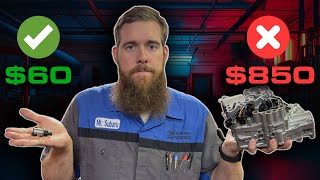
- Expect to replace the entire valve body assembly for $700 to $1,900 if you drive a modern Nissan or Subaru CVT, as individual solenoids are rarely serviceable.
What Does P2719 Mean?
P2719 indicates your vehicle's computer detected a performance issue with Pressure Control Solenoid 'D', an electronic valve managing transmission fluid flow and pressure. When this solenoid fails to operate exactly as commanded, the transmission cannot shift gears smoothly or correctly.
Technical definition: The SAE/OBD-II definition is "Pressure Control Solenoid 'D' Control Circuit Range/Performance". The Powertrain Control Module (PCM) or Transmission Control Module (TCM) detects a mismatch between the electrical command sent to the solenoid and the resulting hydraulic pressure or shift timing.
Can I Drive With P2719?
No — Do Not Drive. Do not drive under any circumstances. The computer cannot regulate hydraulic pressure for shifting, causing violent shifts, delayed engagement, or a complete failure to move. Continuing to drive guarantees catastrophic internal transmission damage, including burnt clutch packs and torque converter failure. This escalates a $300 solenoid repair into a $5,000+ transmission rebuild.
Common Causes
- Low or Dirty Transmission Fluid (Very Common) — Low fluid cannot create necessary hydraulic pressure. Old, burnt, or contaminated fluid clogs the solenoid's microscopic passages and prevents the internal valve from moving.
- Failed Pressure Control Solenoid 'D' (Common) — The solenoid fails electrically (an internal coil short) or mechanically (a stuck valve). This is the primary suspect after ruling out fluid issues.
- Wiring, Connector, or Ground Issues (Common) — Wires inside the hot transmission pan become brittle and fray. External connectors suffer from moisture corrosion, and loose ground straps cause erratic voltage drops that trigger performance codes.
- Internal Transmission Mechanical Failure (Less Common) — Abrasive clutch material and metal shavings circulate in the fluid as the transmission ages. This debris physically damages the solenoid, clogs the valve body, or indicates a failing transmission pump.
- Faulty Transmission Control Module (TCM) (Rare) — The computer controlling the transmission fails. The internal driver circuit sending signals to the solenoid burns out, requiring module replacement and reprogramming.
- Transmission Software/Calibration Fault (Rare) — Outdated TCM software with overly sensitive parameters triggers false codes. A manufacturer technical service bulletin (TSB) dictates a software update before replacing parts.
Symptoms
- Harsh, Delayed, or Erratic Shifting — The vehicle jerks violently into gear, hesitates before shifting, or refuses to shift into certain gears, most noticeably on the 2-3 or 4-5 upshift.
- Vehicle Enters 'Limp Mode' — The transmission locks into a single gear (usually 2nd or 3rd) to prevent further internal damage, severely limiting your speed.
- Transmission Slipping — Engine RPMs flare up during a shift without a corresponding increase in vehicle speed, indicating clutches are slipping due to incorrect hydraulic pressure.
- Check Engine or Transmission Warning Light — The PCM illuminates the Malfunction Indicator Lamp (MIL) or a dedicated transmission gear icon on the dashboard.
- Engine Stalls or Transmission Overheats — The engine stalls when coming to a stop in gear. Slipping clutches generate excessive friction, causing the transmission fluid to overheat rapidly.
Diagnostic Flowchart
Tap your situation to follow the diagnostic path that matches what you're seeing on this code.
Common Fixes & Costs
- Transmission Fluid and Filter Change — Parts: $50-$150, Labor: $150-$300, ~1.5 hr book time (Intermediate)
- Replace Pressure Control Solenoid 'D'
— Parts: $50-$200, Labor: $200-$450, ~2.5 hr book time
(Intermediate)
: OEM ['46313-3B030', '46313-3B600'] (Alt: Rostra 52-0571, ATP Automotive JE-10) - Replace Valve Body Assembly
— Parts: $400-$1200, Labor: $300-$700, ~4 hr book time
(Professional)
: OEM ['HL3Z-7A100-B', 'L1MZ-7A100-C'] (Alt: Tier One: SC-10R80-PVB) - Replace Transmission Control Module (TCM)
— Parts: $400-$1500, Labor: $150-$300, ~1.5 hr book time
(Professional)
: OEM ['24279973', '24276411'] (Alt: ACDelco)
Used vs. New Parts: Buying Guide
When a used part is worth it: Buying a used pressure control solenoid or valve body is never recommended. These are precision electro-hydraulic parts where wear is invisible. The high labor cost makes it a massive gamble.
Donor-vehicle mileage cap: roughly under 50000 miles for the part to have meaningful remaining life.
Donor quality checklist:
- Verify the donor vehicle was not scrapped due to transmission failure.
- Match the part number exactly to avoid compatibility issues.
- Source from a reputable salvage yard offering a 90-day warranty.
Decision logic:
- If The part is a solenoid or electronic component → Buy new OEM or a quality remanufactured part. The risk of a used part failing is too high.
- If Vehicle is over 150,000 miles and budget is extremely tight → A used valve body from a low-mileage, accident-damaged vehicle is an option, but accept the risk of premature failure.
- If The part is a complete transmission assembly → A remanufactured unit with a long warranty is a better value than a used unit with an unknown history.
Warranty tradeoff: Used parts come with a 30-90 day functional warranty covering the part only, not labor. New aftermarket parts offer 1-3 year warranties. Remanufactured valve bodies carry the best warranty, often lasting 3 years.
Worst-case if a used part fails: $500-$1500 if a used part fails after installation, covering repeat labor, new fluid, and another replacement part.
What Happens If You Wait — Timeline
- 0-1 month: Check Engine Light illuminates. Occasional, minor harsh shift or hesitation, most noticeable when cold. May go into 'limp mode' intermittently. (MPG impact: 3-5%% · Added cost: $20-$80 in wasted fuel.)
- 1-3 months: Shifting problems become daily occurrences. The transmission overheats under load, and a faint burnt odor emanates from the fluid. (MPG impact: 5-10%% · Added cost: $500-$1,500 (Incorrect pressure causes premature wear on clutch packs and scores the valve body.))
- 3-6 months: The vehicle frequently enters 'limp mode' and refuses to shift into certain gears. Severe slipping causes engine RPMs to flare. The transmission consistently overheats, rapidly degrading fluid. (MPG impact: 10-20%% · Added cost: $2,000-$4,000 (Clutch material burns away, contaminating the entire hydraulic system and torque converter.))
- 6+ months: Catastrophic transmission failure. The vehicle stops moving. Clutch packs are completely burned out, the valve body is clogged, and the transmission pump fails. (MPG impact: 20%+% · Added cost: $4,000-$8,000+ (Cost of a complete remanufactured transmission assembly and labor.))
Cost of Not Fixing It
- 0-1 month: Noticeable harsh shifting, potential to enter limp mode, and a 5-10% decrease in fuel economy. (Added cost: $50-$150 in wasted fuel.)
- 1-6 months: Continued slipping generates excessive heat, rapidly degrading fluid and causing accelerated wear on clutch packs. The valve body becomes scored or clogged with debris. (Added cost: $800-$2500 for a valve body replacement, on top of the original solenoid repair.)
- 6+ months: Catastrophic transmission failure. Clutch material burns away, the torque converter is damaged, and the vehicle stops moving. (Added cost: $4,000-$8,000+ for a complete transmission rebuild or replacement.)
Diagnosis Steps
- Check Transmission Fluid Level and Condition
With the engine warm and running in Park, check the transmission dipstick. Fluid must be at the 'FULL' mark, bright red, and free of burnt odors. Top off or change the fluid if degraded.
Tools: Rag/paper towel, funnel (Beginner) - Scan for All Diagnostic Trouble Codes (DTCs)
Use an OBD-II scanner to confirm P2719. Check for electrical codes like P2718 (open), P2720 (low), or P2721 (high), which point directly to a wiring fault rather than a mechanical solenoid failure.
Tools: OBD-II Scanner (Beginner) - Inspect Wiring and Connectors
Visually inspect the transmission wiring harness for frayed wires, heat damage, or corrosion. Unplug the main transmission connector and check for bent pins. Inspect ground straps between the transmission and chassis.
Tools: Flashlight, jack, jack stands (Intermediate) - Test Solenoid Resistance
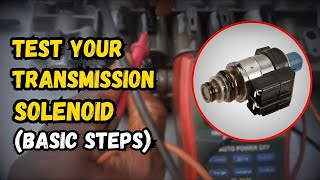
Disconnect the solenoid and use a multimeter to measure resistance across its pins. Compare this to the manufacturer's specification (typically 5-30 ohms). Infinite resistance (OL) confirms an internally broken solenoid.
Tools: Multimeter, service manual (Advanced) - PRO TIP: Perform a Voltage Drop Test
With the ignition on and circuit loaded, connect a multimeter between the TCM output pin and the solenoid connector pin. A reading above 0.3V proves excessive wire resistance, causing performance issues under load.
Tools: Multimeter, wiring diagram (Advanced) - Command Solenoid with Bi-Directional Scanner
Use an advanced scan tool to command solenoid 'D' on and off while monitoring live transmission pressure data. If the solenoid ignores the command, it confirms a fault in the solenoid or valve body.
Tools: Bi-Directional Scan Tool (Advanced) - ADVANCED: Analyze Live Data PIDs
Monitor 'Commanded Pressure Solenoid D' versus 'Actual Line Pressure'. If the TCM commands 80 PSI but the sensor reads 50 PSI, you have a hydraulic leak or a mechanically stuck solenoid.
Tools: Bi-Directional Scan Tool (Advanced) - ADVANCED: Perform a Line Pressure Test
Connect a 300-500 PSI gauge to the transmission's test port. Measure pressure at idle in Drive and Reverse. Low pressure proves a worn pump or major leak; high pressure indicates a stuck regulator valve.
Tools: Transmission Pressure Gauge Kit, Service Manual (Professional) - PRO TIP: Analyze Solenoid Control Signal
Observe the Pulse Width Modulated (PWM) signal from the TCM using an oscilloscope. Glitches or dropouts in the square wave pattern prove a failing TCM driver or wiring fault.
Tools: Automotive Oscilloscope (Professional)
When This Code Triggers (Freeze-Frame Conditions)
- Engine Coolant Temp: 180-200°F (82-93°C) (The code typically sets when the engine and transmission reach full operating temperature.)
- Engine RPM: 1500-2500 RPM (Occurs during a shift event while at a steady cruise or under light to moderate acceleration.)
- Vehicle Speed: 35-55 mph (Often occurs during highway driving, particularly during a 2-3 or 4-5 upshift.)
- Engine Load: 30-60% (The fault is detected under moderate load, such as climbing a slight incline, where precise pressure control is critical.)
Related Codes
- P2718 — Pressure Control Solenoid 'D' Control Circuit Open. A wire is broken, a connector is unplugged, or the solenoid coil is internally broken. Look for infinite resistance (OL).
- P2720 — Pressure Control Solenoid 'D' Control Circuit Low. Indicates a short to ground. The control wire is touching the chassis or another ground wire.
- P2721 — Pressure Control Solenoid 'D' Control Circuit High. Indicates a short to power. The control circuit is receiving unintended voltage from another source.
- P0700 — General transmission fault code. The TCM stored a fault code (like P2719) and requested the main engine computer to illuminate the check engine light.
Climate & Environmental Factors
- High Ambient Temperature: Heat accelerates the breakdown of transmission fluid, reducing lubrication. It increases the electrical resistance of solenoids, pushing an aging coil out of its specified operating range and triggering a P2719 code.
- Cold Weather: Transmission fluid becomes highly viscous in cold climates, straining solenoids. A borderline solenoid fails to respond to TCM commands when fluid is cold, setting a performance code that disappears once warm.
- High Humidity / Water Exposure: Moisture causes corrosion on external wiring harnesses and ground points. Corrosion adds resistance to the circuit, causing a voltage drop that triggers a performance code.
How to Talk to a Mechanic About This Code
Say this: "I have an OBD-II code P2719 for 'Pressure Control Solenoid D Performance' and I'm experiencing harsh shifting. I'd like to schedule a diagnostic to confirm the cause. Can you please check the fluid condition, test the solenoid circuit, and inspect the wiring before recommending a major repair? I would also like a written estimate before any work begins."
This signals you are an informed customer. It directs them toward a logical diagnostic process (fluid, wiring, solenoid) rather than immediately jumping to an expensive rebuild. Requesting a written estimate is a standard consumer protection practice.
Avoid saying:
- My transmission is acting weird, can you fix it?
- Just do whatever it takes to get it running right.
- I think I need a new transmission.
Questions to ask before authorizing the repair:
- What were the results of the electrical tests on the solenoid and its wiring? Was there a voltage drop?
- What did the transmission fluid look and smell like? Was it full?
- Is a single solenoid replacement possible, or does my vehicle require a full valve body?
- What is the warranty on the parts and labor for this specific repair?
- Are you rebuilding the transmission in-house or sending it out?
Where to Take It: Dealer vs Independent vs Chain
- Dealer:
Recommended if your vehicle is under warranty or is a model known for specific TSBs related to this code. Otherwise, a transmission specialist is a better value.
Best for: Vehicles under the original powertrain warranty or an extended warranty., Vehicles with known TSBs or manufacturer-specific issues (like Ford 10R80 or Subaru/Nissan CVTs)., Complex electronic issues requiring proprietary software updates.
Downsides: Highest labor rates., Defaults to replacing larger, more expensive assemblies (like a full valve body) rather than smaller components., Outsources major rebuilds to specialty shops and adds a markup. (Typical cost: +50% vs. baseline) - Independent Shop:
A transmission-focused independent shop is the best choice for most out-of-warranty P2719 repairs. Avoid general independent shops that do not specialize in transmissions.
Best for: Out-of-warranty vehicles where cost is a primary concern., Common transmission models from domestic and Asian manufacturers., Getting a second opinion on a dealership's diagnosis.
Downsides: Quality and expertise vary significantly; look for ASE certification., Lacks access to the latest manufacturer-specific software or tools., General mechanics lack the deep expertise of a transmission specialist. (Typical cost: +0% vs. baseline) - Chain Shop:
AVOID for diagnosing and repairing a P2719 code. The risk of misdiagnosis and being sold unnecessary, expensive repairs is extremely high.
Best for: Basic maintenance like fluid changes, but only if they use the correct OEM-spec fluid.
Downsides: Technician experience with complex internal transmission work is limited., High pressure to upsell unnecessary transmission flushes., Lacks specialized diagnostic tools for deep transmission analysis. (Typical cost: -10% vs. baseline)
When to Walk Away From the Repair
If the estimated repair cost exceeds 50% of your car's private-party value, seriously consider selling the car as-is or trading it in.
- Car worth $5000, fix is $2500: Borderline. This is the 50% threshold. Get a second opinion on the repair cost. If the rest of the car is in excellent shape, fixing it is worthwhile.
- Car worth $15000, fix is $1800: Fix it. The repair cost is well below the 50% threshold and represents a good investment to keep a valuable car running.
- Car worth $3000, fix is $2800: Walk away. The repair cost is nearly the entire value of the car. It is not an economically sound decision to proceed.
What Scan Tool You Need for This Code
Minimum: A scanner that reads manufacturer-specific transmission codes and views live transmission data (solenoid commanded vs. actual states and fluid temperature).
A basic $20 code reader only shows the P2719 code. It cannot access live data from the TCM needed to see *why* the solenoid's performance is failing.
Budget: BlueDriver Pro (~$100) — Connects to your smartphone to read/clear transmission codes, view freeze-frame data, and graph live data from the TCM. Enough for a skilled DIYer to determine if the issue is electrical or hydraulic.
Mid-range: Innova 5610 or Foxwell NT510 Elite (~$300) — Offers bidirectional controls. This allows you to command the 'D' solenoid on and off directly from the tool to see if it responds, isolating a bad solenoid from a wiring or TCM problem.
Professional: Autel MaxiCOM MK808S or XTOOL D7 (~$500-700) — Provides full bidirectional control, access to all vehicle modules, and performs advanced functions like transmission adaptive learning resets required after replacing a solenoid or valve body.
Rent vs buy: Auto parts stores read codes for free, but their tools lack live data or bidirectional control. If you plan to do serious DIY work, buying a mid-range scanner with bidirectional capabilities is a worthwhile investment.
How to Clear the Code After You Fix It
- Use an OBD-II scan tool to clear the diagnostic trouble codes (DTCs).
- Perform a complete transmission drive cycle to allow the system to relearn shift points.
- Check for pending codes after the drive cycle to ensure the fault has not returned.
Drive cycle (~20 minutes): Start the vehicle cold, idle for 3 minutes, followed by mixed city and highway driving. The transmission must shift through all gears under varying loads. Include steady-state cruising at 55 mph for 10 minutes.
Readiness monitors affected: Comprehensive Component Monitor, Transmission
Before emissions retest: drive at least 50 miles to fully set monitors.
Watch out for:
- Disconnecting the battery clears the code but resets all OBD-II readiness monitors to 'Not Ready', causing an automatic emissions test failure.
- If the root cause is not fixed, the code returns immediately when the computer runs its self-test.
- Many vehicles require a specific re-learn procedure using a professional scan tool after replacing a solenoid; a generic drive cycle is insufficient.
Will This Fail Emissions / State Inspection?
Yes — this code typically fails an OBD-II emissions inspection.
- California: An illuminated Check Engine Light results in an automatic failure. After repairs, the vehicle must complete a specific drive cycle to set all readiness monitors before re-testing.
- New York: An active P2719 code and illuminated Check Engine Light automatically fails the emissions portion of the annual state inspection.
- Texas: In the 17 counties requiring emissions testing, an active powertrain DTC causes an OBD-II test failure. Clearing the code is insufficient; readiness monitors must read 'Ready'.
Most Commonly Affected Vehicles
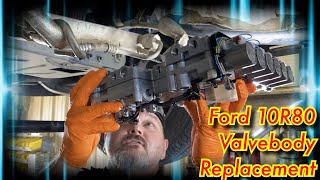
- Ford F-150, Mustang, Expedition, Ranger (2017-2023) — Vehicles with the 10R80 transmission exhibit this code due to main control valve body failures. TSB 23-2123 dictates a valve body overhaul, superseding individual solenoid replacement.
- Chevrolet / GMC Silverado, Sierra, Tahoe, Suburban (2019-2023) — Models with 8-speed (8L90) and 10-speed transmissions experience internal harness failures and TCM burnouts resulting in performance codes.
- Hyundai / Kia Elantra, Sonata, Optima, Sorento (2011-2018) — These 6-speed automatic transmissions (A6MF1/A6LF1) develop brittle internal wiring harnesses from heat cycles, causing intermittent solenoid connections.
- Nissan Altima, Rogue, Murano, Sentra (with CVT) (2013-2019) — On Nissan CVTs, this code points to metallic debris contaminating the valve body. Individual solenoids are not serviced; the entire valve body assembly requires replacement.
- Subaru Outback, Forester, Crosstrek (with CVT) (2012-2018) — Associated with valve body failure on Lineartronic CVTs. Subaru requires replacement of the entire valve body assembly. Check for extended warranty coverage.
- Mitsubishi Outlander, Lancer, Eclipse Cross (with CVT) (2015-2024) — Mitsubishi defines P2719 as an 'overcurrent' condition. TSBs link this to internal hydraulic circuit issues caused by abrasion powder from the belt and pulleys.
Manufacturer-Specific Notes
- Ford: For 10R80 transmissions, Ford TSB 23-2123 notes harsh shifting is caused by main control valve body failures. The fix requires a valve body overhaul or software re-learn, not just a solenoid.
- Mitsubishi: On CVT models, P2719 is defined as an 'overcurrent' condition. TSBs suggest contamination from belt abrasion powder enters the hydraulic circuit, requiring specific M.U.T.-III scan tool diagnosis.
- Nissan: Nissan extended its CVT warranty on many 2012-2017 models to 84 months/84,000 miles. This covers the CVT assembly and valve body. Check your VIN at a dealership before paying for repairs.
- Subaru: Subaru extended its CVT warranty on many 2012-2018 models to 10 years/100,000 miles. This covers the CVT assembly and valve body. This provides longer coverage for P2719-related issues.
Real Owner Stories
2013 Hyundai Elantra at 130,000 miles
The automatic transmission intermittently switched to manual shift mode on its own and refused manual downshifts.
What they tried:
- Owner suspected transmission fluid issues but symptoms pointed toward an electronic issue within the shifter assembly or TCM.
Outcome: The likely cause is a faulty inhibitor switch (neutral safety switch) confusing the TCM about the selected gear. Diagnosis focused on gear position sensor data.
Lesson: Intermittent electronic issues, like switching to manual mode randomly, point to sensors or wiring rather than a purely mechanical failure. Check for related codes.
2018 Ford F-150 with 10R80 Transmission at 67,000 miles
Owner experienced hesitation and hard shifting that progressively worsened. The dealership dismissed it as 'typical'.
What they tried:
- Complained to the dealership multiple times. Tried a fluid/filter change and resetting adaptive learning, which failed to resolve the problem.
Outcome: The transmission failed completely, requiring replacement. This is a well-documented problem with the 10R80 transmission related to a faulty main control valve body.
Lesson: Do not accept 'it's normal' for severe shifting issues. On modern transmissions like the 10R80, a P2719 symptom is an early sign of a widespread mechanical issue requiring a valve body overhaul.
2015 Subaru Forester at ~105,000 miles
The dashboard illuminated with multiple warning lights. The dealership diagnosed a P2719-related fault and quoted $2,500 for a CVT valve body replacement.
What they tried:
- The owner contacted Subaru of America (SOA) regarding a 10-year/100,000-mile extended warranty on the CVT.
Outcome: The owner opened a case with SOA for goodwill assistance, as it was just outside the extended warranty period. Replacing the entire valve body is standard procedure for Subaru solenoid codes.
Lesson: If you have a P2719 code on a Subaru or Nissan CVT, immediately check for extended warranty coverage. These manufacturers issued extensions covering the entire cost of repair.
2016 Mitsubishi Outlander with multiple codes
After a dealership performed a CVT recall software update, the vehicle hesitated. Within two weeks, the transmission failed completely, showing codes P2719, P0776, and P0969.
What they tried:
- Owner returned to the dealer, who denied responsibility. The owner escalated the issue to Mitsubishi corporate.
Outcome: The combination of codes pointed directly to a failure in the valve body or TCM. The software update likely revealed a pre-existing, borderline failure.
Lesson: If a fault appears immediately after a repair or software update, return to the shop immediately. A performance code (P2719) combined with a control code (P0776) strongly indicates a hydraulic issue within the valve body.
How to Prevent This Code From Triggering
- Perform regular transmission fluid and filter changes (Every 30,000 to 60,000 miles) — Contaminated fluid is the #1 cause of solenoid failure. Debris clogs small passages, and old fluid loses lubricating properties, causing overheating. This interval overrides manufacturer 'lifetime fluid' claims.
- Use ONLY the manufacturer-specified transmission fluid (Every fluid change) — Modern transmissions are extremely sensitive to fluid type. Using a 'universal' fluid causes seals to swell or shrink and alters hydraulic properties, leading to solenoid damage.
- Install an auxiliary transmission cooler (Once, especially if you tow or live in a hot climate) — Heat is the ultimate enemy of transmissions. An auxiliary cooler reduces operating temperatures by 20-50°F, dramatically extending the life of fluid, clutches, seals, and solenoids.
- Address engine overheating and low voltage issues immediately (As needed) — An engine that runs hot overheats the transmission. A weak battery or failing alternator provides inconsistent voltage to the TCM and solenoids, causing erratic operation and triggering performance codes.
Frequently Asked Questions
Can I fix P2719 by just adding more transmission fluid?
If low fluid caused the code, topping it off and clearing the code fixes it. However, you must locate and repair the leak. If the fluid was severely low, internal clutch damage has likely already occurred.
My mechanic replaced the solenoid but the P2719 code came back. What now?
This is a common misdiagnosis. If a new OEM solenoid fails to fix the issue, the root cause is elsewhere. Meticulously inspect the wiring harness for intermittent shorts, test the TCM driver circuit, or check for a contaminated valve body.
My mechanic says I need a new valve body, not just a solenoid. Is this right?
Yes, especially for modern vehicles like Nissan and Subaru CVTs. Manufacturers often calibrate solenoids to the valve body at the factory and do not sell them individually. Furthermore, metal debris often contaminates the entire valve body, meaning a new standalone solenoid would quickly fail.
Do I have to use an OEM solenoid or can I use a cheaper aftermarket one?
Always use an OEM or high-quality remanufactured solenoid. Transmission solenoids operate under extremely tight flow and pressure tolerances. Aftermarket solenoids have a significantly higher failure rate, risking a repeat of this labor-intensive job.
Is it safe to keep driving with code P2719?
No. The transmission can enter 'limp mode' at any time, severely limiting your speed and creating a safety hazard. Continuing to drive causes accelerated wear, quickly turning a moderate repair into a $5,000+ transmission rebuild.
Does P2719 mean I need a new transmission?
Not usually. This code typically points to degraded fluid, a single faulty solenoid, or damaged wiring. However, ignoring the problem guarantees you will need a new transmission, as improper pressure control rapidly destroys internal clutches and bands.
How much does it cost to fix P2719?
A simple fluid and filter change costs $200-$450, while replacing a single solenoid ranges from $250 to $650. If the vehicle requires a full valve body replacement, expect to pay $700-$1,900. TCM replacement and programming typically costs $600 to $1,800.
Key Takeaways
- Check your transmission fluid level and condition first, as low or burnt fluid is the leading cause of code P2719.
- Stop driving immediately; operating a vehicle with unregulated hydraulic pressure escalates a $300 solenoid repair into a $5,000 complete transmission rebuild.
- Perform a voltage drop test on the wiring harness before replacing parts, as electrical shorts frequently masquerade as mechanical solenoid failures.
- Expect to replace the entire valve body assembly for $700 to $1,900 if you drive a modern Nissan or Subaru CVT, as individual solenoids are rarely serviceable.
Helpful Videos
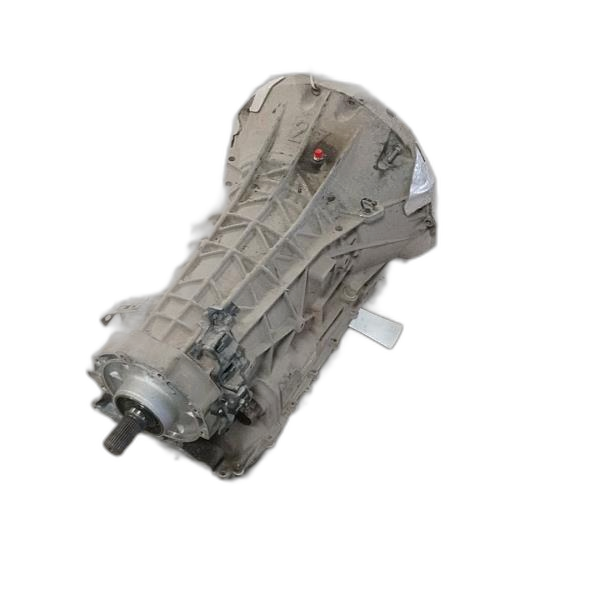
Shop the Parts Behind P2719
Below are the parts most often responsible for code P2719, ranked by how frequently each one is the actual culprit (per the diagnosis above). Tap any to see what we have for your vehicle.



The information in this article is provided for general reference and educational purposes only. Vehicle specifications, procedures, and part compatibility can vary by production date, trim level, and region. Always consult your vehicle's factory service manual and verify part numbers before purchasing or performing repairs. Safety-critical components such as airbags, seat belts, and braking systems should be installed by a qualified professional.
- 🧭 Diagnostic Flowchart
- 🎬 Helpful Videos
- 🛍️ Shop This Part
- What Does P2719 Mean?
- Can I Drive With P2719?
- Common Causes
- Symptoms
- Common Fixes & Costs
- Used vs. New Parts: Buying Guide
- What Happens If You Wait — Timeline
- Cost of Not Fixing It
- Diagnosis Steps
- When This Code Triggers (Freeze-Frame Conditions)
- Related Codes
- Climate & Environmental Factors
- How to Talk to a Mechanic About This Code
- Where to Take It: Dealer vs Independent vs Chain
- When to Walk Away From the Repair
- What Scan Tool You Need for This Code
- How to Clear the Code After You Fix It
- Will This Fail Emissions / State Inspection?
- Most Commonly Affected Vehicles
- Manufacturer-Specific Notes
- Real Owner Stories
- 2013 Hyundai Elantra at 130,000 miles
- 2018 Ford F-150 with 10R80 Transmission at 67,000 miles
- 2015 Subaru Forester at ~105,000 miles
- 2016 Mitsubishi Outlander with multiple codes
- How to Prevent This Code From Triggering
- Frequently Asked Questions
- Can I fix P2719 by just adding more transmission fluid?
- My mechanic replaced the solenoid but the P2719 code came back. What now?
- My mechanic says I need a new valve body, not just a solenoid. Is this right?
- Do I have to use an OEM solenoid or can I use a cheaper aftermarket one?
- Is it safe to keep driving with code P2719?
- Does P2719 mean I need a new transmission?
- How much does it cost to fix P2719?
- Key Takeaways
- 🎟️ Get 5% Off