

OBD-II Code P2721: Pressure Control Solenoid 'D' Control Circuit High
The Ultimate 2026 Guide to Meaning, Diagnosis, and Repair
- P2721 indicates a direct short-to-power in the transmission's Pressure Control Solenoid 'D' circuit, immediately triggering limp mode and harsh shifting.
- Over 80% of P2721 codes stem from a failed $50-$150 solenoid, a chafed wiring harness, or a blown 7.5A fuse (especially in Hondas).
- Never authorize a $3,000+ transmission replacement without first testing the solenoid resistance and verifying the wiring harness integrity.
- Check for manufacturer Technical Service Bulletins (TSBs) immediately, as Subaru and Ford offer extended warranties for the exact valve body and lead frame failures causing this code.
- Driving more than 50 miles with an active P2721 forces maximum line pressure, which burns clutches and turns a $200 electrical repair into a $5,000 mechanical overhaul.
What Does P2721 Mean?
The Powertrain Control Module (PCM) detects the electrical circuit controlling 'Pressure Control Solenoid D' has a voltage higher than the manufacturer's specified range. This solenoid is an electronic valve managing hydraulic fluid flow, which is essential for smooth gear shifts and correct clutch engagement.
Technical definition: Pressure Control Solenoid 'D' Control Circuit High. The PCM or Transmission Control Module (TCM) registers a constant voltage reading from the pressure control solenoid 'D' control circuit above the specified range, indicating a direct short to a power source. The solenoid receives incorrect command signals, forcing incorrect hydraulic pressure.
Can I Drive With P2721?
Yes, But With Caution. You can drive short distances to a repair shop, but the transmission enters a 'limp mode' with limited gears and harsh shifting. To protect the transmission, the computer commands maximum line pressure, causing excessive heat and accelerated wear. Driving more than 50 miles risks turning a $200 electrical repair into a catastrophic $5,000+ transmission failure.
Common Causes
- Damaged Wiring or Connectors (Very Common) — The transmission wiring harness frays, corrodes, or shorts to a power source, sending an abnormally high voltage signal directly to the TCM.
- Failed Pressure Control Solenoid 'D' (Very Common) — The solenoid's internal coil shorts out, causing it to fail and send a high voltage fault signal back to the computer.
- Blown Fuse or Faulty Relay (Common) — A blown solenoid power supply fuse (such as the 7.5A fuse in many Hondas) interrupts normal operation and forces a high voltage reading on the control circuit.
- Internal Valve Body Issue (Common) — Debris clogs hydraulic passages or causes the solenoid to stick. In Subarus and Nissans, the entire valve body frequently fails and requires complete replacement.
- Faulty Transmission Control Module (TCM) (Less Common) — The TCM's internal driver circuit fails, creating a constant high voltage state on the solenoid circuit regardless of the commanded state.
- Low or Dirty Transmission Fluid (Less Common) — Contaminated fluid causes the transmission to overheat, damaging solenoids and triggering pressure-related electrical codes.
- Corrupted Transmission Software (Rare) — Outdated TCM software misinterprets normal voltage readings as too high, falsely triggering P2721 without a physical hardware fault.
Symptoms
- Harsh, Delayed, or Erratic Shifting — The transmission bangs into gear, hesitates before shifting, or shifts at incorrect RPMs.
- Vehicle Enters 'Limp Mode' — The transmission locks into a single gear (usually 2nd or 3rd) to prevent internal damage, severely limiting vehicle speed.
- Check Engine Light / Transmission Warning Light On — The dashboard illuminates a warning light immediately after the fault is detected.
- Transmission Slipping — Engine RPMs increase without a corresponding increase in vehicle speed, or the vehicle refuses to move when put into gear.
- Transmission Overheating (also visible on scanner) — The fault forces maximum line pressure, generating excess friction and heat that triggers a transmission temperature warning light.
Common Fixes & Costs
- Repair Damaged Wiring or Connector — Parts: $10-$50, Labor: $150-$300, ~2.0 hr book time (Intermediate)
- Replace Pressure Control Solenoid 'D'
— Parts: $50-$150, Labor: $200-$400, ~3.0 hr book time
(Advanced)
: OEM 28260-PRP-014, 28500-RT4-003 (Alt: Standard Motor Products TCS215)
: OEM 7G383 (Requires matching band number) (Alt: Rostra, ATP Automotive) - Replace Transmission Valve Body
— Parts: $500-$1200, Labor: $400-$800, ~4.5 hr book time
(Professional)
: OEM 31705AA6309L (Updated Valve Body per TSB 16-149-25R) (Alt: OEM highly recommended for this fix.) - Replace Molded Lead Frame (Ford 6R80)
— Parts: $150-$350, Labor: $300-$600, ~4.0 hr book time
(Professional)
: OEM AL3Z-7G276-D (Alt: Dorman 609-000) - Replace/Reprogram Transmission Control Module (TCM) — Parts: $300-$1000, Labor: $150-$400, ~2.0 hr book time (Professional)
Used vs. New Parts: Buying Guide
When a used part is worth it: Buying a used transmission solenoid, lead frame, or valve body is not recommended due to the high risk of pre-existing wear and high labor costs. A used part only makes sense if the vehicle is very old and the part comes from a low-mileage donor with a clear history.
Donor-vehicle mileage cap: roughly under 60000 miles for the part to have meaningful remaining life.
Donor quality checklist:
- Verify the donor vehicle was not scrapped due to transmission failure.
- Match the part number exactly; electronic transmission parts are VIN-specific.
- Prefer sellers offering a warranty of at least 90 days.
Decision logic:
- If The part is a known high-failure item with a TSB (e.g., Subaru valve body, Ford lead frame) → Buy a new OEM updated part to ensure the permanent fix is applied.
- If A quality remanufactured part with a 1-year or longer warranty is available → This is the best balance of cost and reliability.
- If Vehicle is over 150K miles and repair cost exceeds vehicle value → A tested, low-mileage used part is a justifiable risk to keep the car running.
Warranty tradeoff: Used parts offer a 30-90 day warranty covering the part only. Aftermarket new parts have a 1-3 year warranty. Remanufactured parts offer a 1-year to lifetime warranty. OEM new parts carry a 1-year warranty.
Worst-case if a used part fails: $500-$1200 if a used part fails after installation, requiring you to pay labor a second time.
Cost of Not Fixing It
- 0-1 month: Harsh shifting, limp mode, and a 10-20% drop in fuel economy create unsafe driving conditions. (Added cost: Negligible, but risk is high.)
- 1-3 months: Maximum line pressure overheats the transmission fluid, hardening internal seals and accelerating clutch wear. (Added cost: $200-$400 for a transmission flush and fluid replacement, which will not fix the root cause.)
- 3+ months: Catastrophic internal failure. Excessive heat destroys clutches and contaminates the system with metal debris, requiring a full rebuild. (Added cost: $3,500-$7,000+)
Diagnosis Steps
- Scan for All DTCs and Review Freeze Frame Data
Use an advanced OBD-II scanner to read P2721 and related codes (e.g., P0700, P0974). Analyze the freeze frame data to capture the exact engine load, RPM, and temperature when the fault occurred.
Tools: OBD-II Scanner (Beginner) - Check for Technical Service Bulletins (TSBs)
Search OEM service information for TSBs related to P2721. Manufacturers like Subaru and Ford have extended warranties and specific updated parts (valve bodies and lead frames) to fix this exact code.
Tools: Internet Access, OEM Service Information (Beginner) - Inspect Fuses and Relays
Locate the fuses powering the transmission control module and solenoids. Test for continuity. On Honda CVTs, a blown 7.5A fuse is a primary cause of this code.
Tools: Fuse Puller, Digital Multimeter (Beginner) - Visually Inspect Wiring Harness and Connectors
Inspect the wiring harness from the TCM to the transmission connector. Look for chafing against the engine block, melted insulation, corrosion, or fluid intrusion.
Tools: Flashlight, Inspection Mirror (Intermediate) - Check Transmission Fluid Level and Condition
Verify the fluid is bright red/pink and at the correct level. Dark, burnt-smelling fluid indicates internal clutch wear and severe overheating.
Tools: Rag, Gloves (Beginner) - Monitor Live Data PIDs
Use a scan tool to monitor Solenoid 'D' command status. If the commanded state is 0% but the circuit voltage PID remains stuck at battery voltage, you have confirmed a short to power.
Tools: OBD-II Scanner with Live Data (Advanced) - Test the Solenoid Circuit for a Short to Power
Disconnect the harness from the TCM. With the key on, engine off, measure the voltage on the solenoid 'D' control wire. A reading of 12V+ confirms a short to power in the harness.
Tools: Digital Multimeter, Vehicle-Specific Wiring Diagram (Advanced) - Measure Solenoid Resistance
Access the solenoid connector and measure resistance across its terminals. Compare to OEM specs (e.g., Honda CVTs are 4.6-6.6 ohms, Ford 6R80s are 10-20 ohms). A reading near zero indicates a short; infinite (O.L.) indicates an open circuit.
Tools: Digital Multimeter, OEM Service Manual (Advanced) - Perform a 'Wiggle Test'
With the engine running and scanner connected, manipulate the wiring harness between the TCM and transmission. Erratic voltage spikes pinpoint the exact location of an intermittent short.
Tools: OBD-II Scanner with Live Data (Professional) - Use Bi-Directional Control
Command the 'D' solenoid on and off using a professional scan tool while monitoring circuit voltage. If the tool commands the solenoid but voltage remains high, the TCM driver circuit has failed.
Tools: Professional Bi-Directional Scan Tool, Digital Multimeter (Professional)
When This Code Triggers (Freeze-Frame Conditions)
- Engine Coolant Temp: 180-210°F (Engine at full operating temperature.)
- RPM: 1500-2500 (During steady-state cruising or when a gear shift is commanded.)
- Engine Load: 20-50% (Light to moderate acceleration or maintaining speed.)
- Vehicle Speed: 30-60 mph (City or highway driving speeds where shifting occurs.)
Related Codes
- P2720 — The direct companion code for 'Circuit Low' (short to ground/open). Seeing both intermittently guarantees a damaged wire or loose connector.
- P0700 — A generic code indicating the TCM requested the PCM to turn on the Check Engine Light. It confirms the fault is transmission-related.
- P0974 — Shift Solenoid 'A' Control Circuit High. Seeing this alongside P2721 indicates a shared power supply wire issue or a failing TCM, not multiple bad solenoids.
- P2718 / P2719 — Codes for Solenoid 'D' Range/Performance or Open. They point to the same solenoid but indicate an intermittent signal or complete connection loss.
Climate & Environmental Factors
- High Humidity / Condensation: Moisture seeping into the main transmission harness connector causes a short circuit, a primary cause for P2721 in 2020-2023 Subarus.
- Cold Climates / Road Salt: Road salt accelerates corrosion on the transmission wiring harness and ground points, creating shorts to power that trigger P2721.
How to Clear the Code After You Fix It
- Reconnect battery if disconnected for repair
- Use an OBD-II scan tool to clear the P2721 and related fault codes.
- Perform a transmission relearn procedure if a valve body or TCM was replaced (requires a professional scan tool)
- Conduct a complete drive cycle to allow readiness monitors to set.
Drive cycle (~30 minutes): Start the engine cold and idle for 3 minutes. Drive in stop-and-go city traffic for 15 minutes, ensuring several gear shifts. Drive for 10 minutes at a steady highway speed (55-65 mph). Allow the vehicle to cool down completely to help the TCM relearn shift points.
Readiness monitors affected: Comprehensive Component Monitor, Catalyst Monitor, Evaporative System Monitor
Before emissions retest: drive at least 100 miles to fully set monitors.
Watch out for:
- Disconnecting the battery does not clear the code from the TCM's memory and resets all readiness monitors, guaranteeing an emissions test failure.
- The code returns immediately if the underlying electrical fault is not repaired.
- Failing to perform a manufacturer-specific relearn procedure after replacing a valve body results in continued poor shifting.
Will This Fail Emissions / State Inspection?
Yes — this code typically fails an OBD-II emissions inspection.
- California: An illuminated Check Engine Light guarantees a smog check failure. You must complete a 50-100 mile drive cycle after repairs to set readiness monitors.
- New York: The NYS DMV inspection includes an OBD-II scan; any active P2721 code triggers an automatic failure.
- Texas: Active Check Engine Lights fail the safety/emissions test. Texas allows only one 'Not Ready' monitor, requiring a full drive cycle post-repair.
Most Commonly Affected Vehicles
- Subaru Legacy, Outback, Crosstrek, Forester (2020-2023) — Moisture enters the CVT harness connector, causing a short. Covered by TSB 16-149-25R; requires an updated valve body (P/N: 31705AA6309L) and is often covered under Subaru's 10-year/100,000-mile CVT warranty extension.
- Ford F-150, Explorer, Mustang, Expedition (2011-2018) — The molded lead frame (P/N: AL3Z-7G276-D) cracks, shorting solenoid circuits. Covered under Customer Satisfaction Program 19N01 for certain F-150s.
- Honda Accord, Civic, Fit, HR-V, Pilot (2015-2023) — Almost always an electrical fault. Check under-dash fuse C35 (7.5A) before replacing the solenoid (spec: 4.6-6.6 ohms).
- Chevrolet / GMC Silverado, Sierra, Tahoe, Suburban (2010-2019) — Caused by the transmission wiring harness chafing against the chassis or engine bracket. GM issued multiple service bulletins for harness chafing issues.
- Nissan Altima, Rogue, Sentra, Versa (2013-2020) — Traced to an internal failure of the valve body assembly. Replacement of the entire valve body is required. Check for extended CVT warranties.
Manufacturer-Specific Notes
- Subaru: TSB 16-149-25R addresses condensation shorting the CVT wiring harness. The fix replaces the entire valve body and installs an improved connector cover, often under extended warranty.
- Ford: On 6R80 transmissions, the plastic lead frame sitting on the valve body cracks, causing shorts in solenoid and sensor circuits. Check for Customer Satisfaction Program 19N01.
- Honda: On CVT models, check the 7.5A fuse C35 in the under-dash fuse box before any major disassembly. This fuse is a frequent, overlooked cause.
Frequently Asked Questions
Can I just clear the P2721 code and keep driving?
You can clear the code, but it returns immediately. P2721 indicates a constant 'hard fault' electrical problem. Ignoring it causes poor drivability and expensive, irreversible transmission damage.
What does the 'D' pressure control solenoid do?
The 'D' solenoid controls hydraulic pressure to engage specific clutch packs and gears. Its exact function varies by transmission design. For example, in Ford 6R80 transmissions, it controls the low/reverse clutch.
Is replacing a pressure control solenoid a DIY job?
Advanced DIYers can replace a solenoid, but it requires draining fluid, removing the transmission pan, and working with delicate valve body components. The job demands a perfectly clean environment and precise torque specs. Most owners should leave this to a professional transmission shop.
How can I prevent code P2721?
Follow your vehicle's maintenance schedule and change the transmission fluid every 30,000 to 60,000 miles. Clean fluid keeps internal solenoids cool and prevents debris buildup.
Will a transmission flush fix a P2721 code?
No. A transmission flush cannot fix this code. P2721 is a strict electrical circuit fault requiring wiring, solenoid, or TCM repair.
What are the most common misdiagnosis mistakes for P2721?
The most common mistake is replacing the valve body without performing basic electrical checks. Always rule out a blown fuse, bad ground, or chafed wire before condemning expensive internal parts.
Can a bad battery cause a P2721 code?
Yes. A weak battery provides unstable voltage to the TCM, causing erratic behavior and false codes. Ensure the charging system outputs 13.5-14.5V before diagnosing complex faults.
My mechanic says I need a new transmission. Is that true?
Highly unlikely. P2721 is an electrical control circuit code, not a mechanical failure code. A complete replacement is only necessary if severe internal damage is confirmed by large amounts of metal shavings in the fluid.
Key Takeaways
- P2721 indicates a direct short-to-power in the transmission's Pressure Control Solenoid 'D' circuit, immediately triggering limp mode and harsh shifting.
- Over 80% of P2721 codes stem from a failed $50-$150 solenoid, a chafed wiring harness, or a blown 7.5A fuse (especially in Hondas).
- Never authorize a $3,000+ transmission replacement without first testing the solenoid resistance and verifying the wiring harness integrity.
- Check for manufacturer Technical Service Bulletins (TSBs) immediately, as Subaru and Ford offer extended warranties for the exact valve body and lead frame failures causing this code.
- Driving more than 50 miles with an active P2721 forces maximum line pressure, which burns clutches and turns a $200 electrical repair into a $5,000 mechanical overhaul.
Helpful Videos




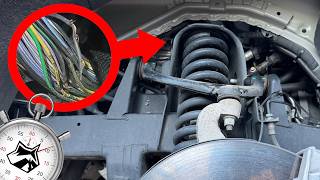
Shop the Parts Behind P2721
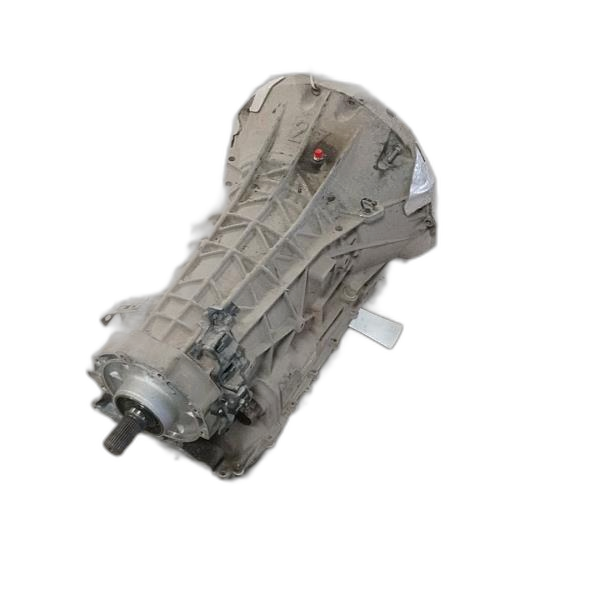
Below are the parts most often responsible for code P2721, ranked by how frequently each one is the actual culprit (per the diagnosis above). Tap any to see what we have for your vehicle.





The information in this article is provided for general reference and educational purposes only. Vehicle specifications, procedures, and part compatibility can vary by production date, trim level, and region. Always consult your vehicle's factory service manual and verify part numbers before purchasing or performing repairs. Safety-critical components such as airbags, seat belts, and braking systems should be installed by a qualified professional.
- 🎬 Helpful Videos
- 🛍️ Shop This Part
- What Does P2721 Mean?
- Can I Drive With P2721?
- Common Causes
- Symptoms
- Common Fixes & Costs
- Used vs. New Parts: Buying Guide
- Cost of Not Fixing It
- Diagnosis Steps
- When This Code Triggers (Freeze-Frame Conditions)
- Related Codes
- Climate & Environmental Factors
- How to Clear the Code After You Fix It
- Will This Fail Emissions / State Inspection?
- Most Commonly Affected Vehicles
- Manufacturer-Specific Notes
- Frequently Asked Questions
- Can I just clear the P2721 code and keep driving?
- What does the 'D' pressure control solenoid do?
- Is replacing a pressure control solenoid a DIY job?
- How can I prevent code P2721?
- Will a transmission flush fix a P2721 code?
- What are the most common misdiagnosis mistakes for P2721?
- Can a bad battery cause a P2721 code?
- My mechanic says I need a new transmission. Is that true?
- Key Takeaways
- 🎟️ Get 5% Off