

OBD-II Code P2723: Pressure Control Solenoid 'E' Performance/Stuck Off
What P2723 means, why it triggers, and how to fix it
- Code P2723 indicates a critical transmission fault that locks the vehicle in limp mode or causes sudden gear loss, requiring immediate repair to prevent a $3,000+ transmission rebuild.
- Low or heavily contaminated transmission fluid causes 40% of P2723 codes, making a fluid level and condition check the mandatory first diagnostic step.
- On 2006+ GM trucks with 6L80/6L90 transmissions, P2723 frequently stems from a failed $800 TEHCM unit or debris clogging the valve body, rather than a single bad solenoid.
- Never replace the solenoid without testing its electrical resistance first; a reading outside the typical 20-30 Ohm range confirms failure, while a normal reading points to a hydraulic blockage or wiring fault.
What Does P2723 Mean?
Your car's computer detects a failure in 'Pressure Control Solenoid E', an electronic valve inside the automatic transmission. This solenoid manages the hydraulic fluid pressure required to shift gears, but the computer reads it as stuck in the 'off' position. Consequently, the transmission cannot control the pressure needed for gear changes, causing severe drivability issues.
Technical definition: The SAE/OBD-II definition is "Pressure Control Solenoid 'E' Performance/Stuck Off". The Transmission Control Module (TCM) logs this code when the commanded action for solenoid 'E' fails to produce the expected change in hydraulic pressure or gear ratio, concluding the valve is mechanically or electrically stuck closed.
Can I Drive With P2723?
No — Do Not Drive. Driving is not recommended. This code indicates a critical transmission fault causing sudden, harsh shifting, a complete loss of movement, or locking the car in 'limp mode'. Continuing to drive risks unpredictable vehicle behavior and guarantees catastrophic transmission damage requiring a $3,000+ replacement.
Common Causes
- Low, Dirty, or Incorrect Transmission Fluid (Very Common) — Insufficient, contaminated, or incorrect fluid cannot create the hydraulic pressure the solenoids need to operate. Sludge and debris physically jam the solenoid plunger, while low fluid starves the pump.
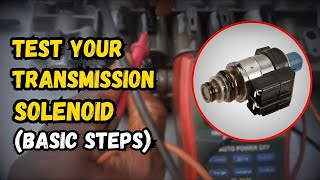
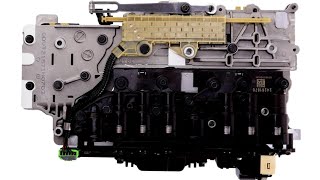
- Faulty Pressure Control Solenoid 'E' or TEHCM (Very Common) — The solenoid fails mechanically (stuck plunger) or electrically (shorted/broken internal coil). On many modern vehicles, this solenoid is integrated into a larger Transmission Electro-Hydraulic Control Module (TEHCM) 🎬 See this walkthrough on replacing the lead frame assembly that fails as a single unit.
- Debris in Valve Body / Worn Check Balls (Common) — Worn check balls or debris within the valve body separator plate block hydraulic circuits. When these components wear or clog, they cause pressure leaks the TCM misinterprets as a solenoid failure.
- Wiring or Connector Issues (Common) — The electrical harness leading to the transmission or internal solenoids becomes damaged, corroded, or frayed. This severs the TCM signal, forcing the solenoid into a default 'off' state.
- Internal Mechanical Failure (Rare) — A cracked clutch housing, broken wave plate, or blown internal seal causes a massive pressure leak. The computer commands the solenoid to increase pressure, but the leak prevents it, triggering the code.
- Faulty Transmission Control Module (TCM) (Rare) — The TCM itself suffers a hardware failure or software glitch, sending incorrect voltage to the solenoid. Rule out all hydraulic and wiring faults before replacing the TCM.
Symptoms
- Vehicle Enters 'Limp Mode' — The TCM intentionally limits engine power and locks the transmission into a single gear (usually 2nd or 3rd) to prevent further internal destruction.
- Harsh, Erratic, or Delayed Shifting — The transmission slams violently into gear, hesitates for several seconds before shifting, or shifts at incorrect RPMs.
- Engine Stalling When Stopped — The transmission fails to disengage the torque converter clutch when coming to a stop, stalling the engine like a manual car forgetting to use the clutch.
- Check Engine Light On (also visible on scanner) — The Malfunction Indicator Lamp (MIL) illuminates immediately. A dedicated transmission warning message (e.g., 'Service Transmission') often accompanies it.
- Transmission Slipping (also visible on scanner) — Engine RPMs flare up between shifts without the vehicle accelerating, indicating the clutch packs are not fully engaging due to low pressure.
- Failure to Shift or Move — The transmission refuses to engage Drive or Reverse, leaving the vehicle completely immobilized.
Diagnostic Flowchart
Tap your situation to follow the diagnostic path that matches what you're seeing on this code.
Common Fixes & Costs
- Change Transmission Fluid and Filter — Parts: $75-$150, Labor: $100-$200, ~1.5 hr book time (Intermediate)
- Replace Solenoid Pack / TEHCM — Parts: $450-$800, Labor: $300-$500, ~3.0 hr book time (Professional)
- Replace Individual Pressure Control Solenoid 'E' — Parts: $30-$150, Labor: $150-$350, ~2.0 hr book time (Advanced)
- Service or Replace Valve Body — Parts: $300-$900, Labor: $250-$500, ~4.0 hr book time (Professional)
Used vs. New Parts: Buying Guide
When a used part is worth it: Only for a simple, individual solenoid on a vehicle with over 150,000 miles where budget is the absolute priority. Never buy a used TEHCM, as it is likely locked to the donor vehicle's VIN.
Donor-vehicle mileage cap: roughly under 80000 miles for the part to have meaningful remaining life.
Donor quality checklist:
- Verify the donor vehicle was rear-ended, not scrapped due to transmission failure.
- Ensure the part numbers match exactly.
- Demand a minimum 30-day functional warranty.
Decision logic:
- If The part is an integrated, programmable module (TEHCM) → Buy new or professionally remanufactured. Used modules cannot be reprogrammed to your VIN.
- If The vehicle is under 100,000 miles and you plan to keep it → Buy a new OEM part. Aftermarket electronics have a high failure rate in transmissions.
Warranty tradeoff: Used parts offer 30 days at best. Remanufactured TEHCMs offer 1-3 years. OEM parts carry a 1-2 year warranty, covering labor if installed by a dealer.
Worst-case if a used part fails: $500-$800 to pay for labor twice if the used part fails immediately.
What Happens If You Wait — Timeline
- 0-1 month: Code P2723 triggers. Intermittent harsh shifts occur. Vehicle occasionally enters limp mode. (MPG impact: 5%% · Added cost: $0)
- 1-3 months: Transmission begins slipping between gears. Slipping generates massive heat, rapidly degrading the fluid and accelerating clutch wear. (MPG impact: 10%% · Added cost: $100 in wasted fuel and initial clutch damage.)
- 3-6 months: Burnt fluid loses lubricity. Sludge clogs the valve body and damages remaining solenoids. Torque converter damage becomes likely. (MPG impact: 15%% · Added cost: $800-$1,500 (Valve body or torque converter replacement required).)
- 6+ months: Catastrophic failure. Burnt clutch material destroys internal seals and the pump. The vehicle loses all gears and stops moving. (MPG impact: 25%% · Added cost: $3,000-$6,000+ (Complete transmission rebuild required).)
Cost of Not Fixing It
- 0-1 month: Harsh shifting and slipping cause accelerated wear on internal clutch packs. The vehicle is unreliable and unsafe for highway merging. (Added cost: $0-$50 in wasted fuel due to limp mode.)
- 1-3 months: Slipping clutches generate extreme heat, burning the transmission fluid. Burnt fluid loses lubricity, causing widespread sludge buildup that destroys the valve body and remaining solenoids. (Added cost: $800-$1,500 (Valve body replacement required in addition to the original solenoid fix).)
- 3+ months: Catastrophic internal failure. Burnt clutch material circulates through the transmission, destroying seals, bands, and the pump. The vehicle loses all forward and reverse gears. (Added cost: $3,000-$6,000+ (Complete transmission rebuild or replacement required).)
Diagnosis Steps
- Check Transmission Fluid Level and Condition
With the vehicle on level ground, check the transmission fluid dipstick or level plug. Fluid must be pinkish-red and clear. Black, gritty, or burnt-smelling fluid indicates severe internal clutch damage requiring a rebuild, not just a solenoid replacement.
Tools: Gloves, Rag, Owner's Manual (Beginner) - Scan for Codes and Review Freeze Frame Data
Use an OBD-II scanner to pull all codes. P0700 is a generic companion code. If P2724 (Electrical) is present, the issue is strictly wiring or the solenoid coil. Review freeze frame data to identify the exact RPM and speed when the fault occurred.
Tools: OBD-II Scanner (Beginner) - Inspect External Wiring and Connectors
Visually inspect the main transmission wiring harness. Look for melted insulation, frayed wires, or corrosion at the main connector plug. Disconnect it, spray with contact cleaner, and ensure pins are straight.
Tools: Flashlight, Gloves, Electrical Contact Cleaner (Intermediate) - Analyze Live Data with a Scan Tool
Monitor transmission PIDs using a bi-directional scanner. Compare 'Commanded Pressure' for solenoid E against 'Actual Pressure'. If commanded pressure changes but actual pressure remains flat, you have a stuck solenoid or hydraulic leak.
Tools: Advanced Bi-Directional Scan Tool (Advanced) - Perform On-Car Solenoid Resistance Test
Disconnect the main transmission connector. Use a multimeter to measure resistance across the specific pins for solenoid 'E' (check service manual for pinout). A reading of 0 ohms (short) or infinity (open) confirms a dead solenoid coil.
Tools: Digital Multimeter, Service Manual (for pinout diagram) (Advanced) - Drop the Transmission Pan and Inspect
Drain the fluid and remove the pan. Inspect the magnet for excessive metal shavings. A fine grey paste is normal wear; large metal chunks or brass flakes indicate catastrophic mechanical failure requiring a full rebuild.
Tools: Socket Set, Drain Pan, Gasket Scraper, Gloves (Advanced) - Test Solenoid Actuation Directly
With the pan off, locate solenoid 'E'. Apply 12V power and ground directly to the solenoid terminals using jumper wires. You must hear a sharp, audible click. No click confirms the valve is mechanically seized.
Tools: Jumper Wires with Alligator Clips, 12V Power Source (Advanced) - Inspect the Valve Body
Remove the valve body. Inspect the separator plate for clogged screens and verify the check balls are perfectly round, not shrunk or stuck in their passages. This is a critical failure point on GM 6L80/6L90 transmissions.
Tools: Socket Set, Torque Wrench, Service Manual (Professional)
When This Code Triggers (Freeze-Frame Conditions)
- Engine Coolant Temp: 170-210°F (Fully warmed up, when fluid is thinnest.)
- RPM: 1500-2500 (During or immediately following a commanded gear shift.)
- Engine Load: 25-55% (Moderate acceleration or steady highway cruise.)
- Vehicle Speed: 30-60 mph (Speeds requiring 3rd gear or higher.)
Related Codes
- P0700 — A generic informational code indicating the TCM has requested the Check Engine Light to turn on. It always accompanies specific transmission codes like P2723. Ignore P0700 and diagnose P2723.
- P2722, P2724, P2725 — Sister codes for Solenoid 'E'. P2722 means it is stuck open. P2724 indicates a strict electrical circuit failure (short/open). P2725 means the fault is intermittent. Seeing P2724 alongside P2723 guarantees an electrical failure, ruling out fluid issues.
- P0877 / P0872 — Fluid Pressure Switch codes. If these appear with P2723 on a GM vehicle, TSB #PIP4972C states the root cause is debris clogging the valve body separator plate, not a failed solenoid.
- P0796 — Pressure Control Solenoid 'C' Stuck Off. When multiple solenoid codes appear simultaneously, the solenoids are likely fine; the actual failure is a massive internal hydraulic leak or a dead TEHCM module.
Climate & Environmental Factors
- Extreme Cold Weather: Sub-zero temperatures thicken transmission fluid, increasing hydraulic resistance. Hardened rubber seals contract, causing temporary pressure drops the TCM flags as a stuck solenoid.
- Heavy Towing / Extreme Heat: Towing beyond capacity spikes fluid temperatures above 220°F, rapidly degrading the fluid into varnish. This sticky residue coats the solenoid plunger, causing it to physically jam.
How to Talk to a Mechanic About This Code
Say this: "My check engine light is on with code P2723 for Pressure Control Solenoid 'E', and the transmission is shifting harshly. I'd like to schedule a diagnostic. Please check the fluid condition, inspect the wiring harness, and check for any TSBs before quoting a TEHCM or solenoid replacement."
This proves you are an informed customer. It directs the shop to perform a proper diagnostic sequence (fluid, wiring, TSBs) rather than immediately upselling a $1,000 TEHCM replacement.
Avoid saying:
- 'My transmission is acting weird.' (Too vague, invites expensive guesswork).
- 'Just replace the P2723 solenoid.' (You are dictating a repair that might not fix the root cause, and you will still have to pay for it).
- 'Fix whatever is cheapest.' (Invites a temporary patch that will cost thousands when the transmission fully fails).
Questions to ask before authorizing the repair:
- Was the transmission fluid burnt or full of metal shavings?
- Did you test the electrical resistance of the solenoid to confirm it is actually dead?
- Are there any Technical Service Bulletins (TSBs) for my vehicle related to this code?
- Does this repair require programming a new module, and is that included in the quote?
Where to Take It: Dealer vs Independent vs Chain
- Dealer:
Necessary if your vehicle requires TEHCM programming and you don't have a highly equipped independent shop nearby.
Best for: Vehicles under powertrain warranty., Repairs requiring a new TEHCM that must be programmed with OEM software.
Downsides: Highest labor rates ($150-$250/hr)., Often default to replacing the entire $1,500 valve body/TEHCM assembly rather than cleaning a clogged separator plate. (Typical cost: +40% vs. baseline) - Independent Shop:
The best option. A dedicated transmission shop will properly diagnose hydraulic vs. electrical failures better than a general mechanic.
Best for: Out-of-warranty vehicles., Independent transmission specialists who rebuild units daily.
Downsides: May lack the $5,000+ J2534 pass-thru tools required to program modern GM/Ford transmission modules. (Typical cost: +0% vs. baseline) - Chain Shop:
AVOID. They are not equipped for the in-depth electrical and hydraulic diagnostics required to fix P2723 permanently.
Best for: Basic fluid and filter changes.
Downsides: Lack specialized diagnostic tools and transmission expertise., High risk of misdiagnosis on complex hydraulic codes like P2723. (Typical cost: -10% vs. baseline)
When to Walk Away From the Repair
If the repair quote exceeds 50% of the vehicle's private-party value, or if the transmission requires a full rebuild on a car older than 15 years, sell the vehicle.
- Car worth $4000, fix is $3500: Walk away. The cost of a transmission rebuild is nearly the value of the car. Sell it as a 'mechanic's special'.
- Car worth $18000, fix is $1100: Fix it. A $1,100 TEHCM replacement is well worth it to keep an $18,000 vehicle on the road.
- Car worth $7000, fix is $3200: Borderline. Get a second opinion. If the rest of the car is pristine, it may be worth fixing. Otherwise, use that $3,200 as a down payment on a newer vehicle.
What Scan Tool You Need for This Code
Minimum: A scanner capable of reading manufacturer-specific transmission codes and displaying live transmission data PIDs.
A $20 code reader only shows 'P2723'. It cannot display live transmission fluid temperature, commanded solenoid pressure, or perform the mandatory adaptive relearn procedure after the repair.
Budget: BlueDriver Pro Scan Tool (~$100) — Reads and clears transmission codes and views freeze frame data. Excellent for initial diagnosis, but cannot perform transmission relearns.
Mid-range: Autel MaxiCOM MK808 / Foxwell NT510 Elite (~$250-400) — Views extensive live hydraulic data and performs the critical 'transmission adaptive relearn' required after replacing a solenoid or valve body.
Professional: Autel MK906BT / Launch X431 Series (~$600-1200) — Offers full bi-directional control to manually click the solenoid on/off for testing. Includes advanced coding functions to program a new TEHCM to the vehicle's VIN.
Rent vs buy: Rent a basic scanner from an auto parts store to confirm the code. If you are DIYing the repair, buy a mid-range scanner to perform the mandatory adaptive relearn afterward.
How to Clear the Code After You Fix It
- Use an OBD-II scan tool to clear the DTCs.
- Use a bi-directional scanner to reset the transmission adaptive learning tables. This is mandatory after replacing a solenoid or valve body.
- Perform the manufacturer-specific transmission relearn drive cycle.
Drive cycle (~30 minutes): Cold start and idle for 3 minutes. Accelerate smoothly at 25% throttle to 55 mph, allowing all gears to engage. Coast down to a complete stop without braking hard. Repeat this acceleration/deceleration cycle 5-10 times to allow the TCM to learn the new solenoid pressures.
Readiness monitors affected: Comprehensive Component Monitor (CCM)
Before emissions retest: drive at least 50 miles to fully set monitors.
Watch out for:
- Failing to reset the transmission adaptive tables will cause the new solenoid to shift harshly, making you think the repair failed.
- Disconnecting the battery clears the code but resets all emissions monitors, guaranteeing a failed state inspection.
- The code will return within 10 miles if the mechanical blockage or electrical short was not physically repaired.
Will This Fail Emissions / State Inspection?
Yes — this code typically fails an OBD-II emissions inspection.
- California: An illuminated Check Engine Light is an automatic failure. All readiness monitors must be 'Ready' before re-testing.
- Texas: In emissions counties, an active P2723 fails the OBD-II scan. You must drive 50-100 miles after repair to reset monitors before re-testing.
- New York: NYS DMV inspections include a strict OBD-II scan. P2723 results in an automatic failure.
Most Commonly Affected Vehicles
- Chevrolet / GMC Silverado / Sierra (1500, 2500, 3500) (2006-2018) — Extremely common on 6L80/6L90 and Allison 1000 transmissions. GM TSBs frequently point to failed TEHCMs, debris clogging the valve body separator plate, or cracked clutch housings.
- Ford F-150, Explorer, Mustang (2009-2017) — Prevalent on 6R80 transmissions. Often caused by a cracked molded lead frame that interrupts the electrical connection to the solenoid, rather than a failed solenoid itself.
- Honda Accord, Odyssey, Pilot (2003-2013) — Frequently related to a failed external clutch pressure control solenoid, which is easily accessible and replaceable without dropping the main transmission pan.
- Chevrolet Equinox, Traverse, Malibu (2011-2017) — Common on 6T40/6T45 transmissions. GM TSB PI1131 notes a 'No First Gear' condition with P2723 is usually caused by a dead solenoid within the TEHCM.
- Dodge / Ram Ram 1500/2500, Charger (2007-2018) — Occurs on 68RFE transmissions. The root cause is almost always a faulty solenoid pack assembly, which requires complete replacement.
- Nissan Sentra, Altima, Maxima (2007-2018) — While CVTs use different terminology, equivalent pressure control solenoid failures inside the CVT valve body trigger similar performance codes and require valve body replacement.
Manufacturer-Specific Notes
- General Motors (6L80/6L90 Transmissions): TSB #PIP4972C warns that P2723 is frequently caused by debris from cheap aftermarket transmission filters clogging the valve body. Replacing the $800 TEHCM will not fix the car if the valve body isn't thoroughly cleaned first.
- Ford (6R80 Transmissions): The molded lead frame connecting the solenoids to the TCM is notoriously fragile. It cracks and severs the electrical connection, triggering P2723. Ford issued extended warranty programs (19N01) for lead frame failures on certain models.
- General Motors (6T40/6T45/6T70 Transmissions): GM has issued multiple Special Coverage programs (e.g., 14404, N242454441) extending warranties up to 15 years/150,000 miles for internal transmission failures on FWD vehicles. Always check your VIN with a dealer before paying out of pocket.
Real Owner Stories
2011 GMC Sierra w/ 6L80 at 150K miles
Vehicle suddenly wouldn't move in Drive or Reverse. Check Engine Light showed P2723.
What they tried:
- Shop quoted $1,200 to replace the TEHCM.
- Owner researched GM TSB #PIP5100A regarding a 'no-move' condition.
Outcome: The shop dropped the pan and found debris from a cheap aftermarket filter clogging the valve body separator plate. They cleaned the valve body, installed an OEM filter, and refilled the fluid. The $300 service completely fixed the truck.
Lesson: Always check TSBs. A 'no move' symptom with P2723 on a GM truck is often a physical blockage, not a dead $800 computer module.
2006 GMC Sierra w/ Allison 1000 at 210K miles
Harsh shifting and P2723 code. Fluid was clean and full.
What they tried:
- Owner dropped the pan and used a multimeter to test the resistance of Solenoid 'E'.
Outcome: The solenoid measured infinite resistance (open circuit), failing the 20-30 Ohm specification. The owner replaced the single $40 solenoid, changed the fluid, and cleared the code, permanently fixing the issue.
Lesson: A simple 5-minute multimeter test definitively proves if a solenoid is electrically dead, preventing expensive guesswork.
2012 Chevy Equinox at 135K miles
Transmission slipping heavily, P2723 active. Fluid was pitch black and smelled like burnt toast.
What they tried:
- Owner attempted a fluid and filter change hoping for a cheap fix.
Outcome: The new fluid caused the transmission to slip worse. The burnt fluid indicated the internal clutch packs were already destroyed. The vehicle required a $3,500 transmission rebuild.
Lesson: If your fluid is black and smells burnt, the mechanical damage is already done. A fluid change or new solenoid will not fix destroyed clutches.
How to Prevent This Code From Triggering
- Perform regular transmission fluid and filter changes. (Every 30,000-60,000 miles. Reduce to 30,000 miles if towing frequently.) — Clean fluid maintains hydraulic pressure, while a fresh filter prevents debris from jamming the microscopic screens inside the solenoids.
- Use only OEM-specified transmission fluid. (Every fluid change.) — OEM fluids contain exact friction modifiers required by your transmission. Generic 'universal' fluids alter hydraulic pressure and cause solenoids to stick.
- Install an auxiliary transmission cooler. (One-time upgrade for towing vehicles.) — Keeps fluid temperatures below 200°F. Heat is the #1 killer of transmissions, rapidly degrading fluid into varnish that destroys solenoids.
Frequently Asked Questions
Can I just clear the P2723 code and keep driving?
No. Clearing the code only turns the light off temporarily; the transmission will remain in limp mode or continue shifting harshly. Ignoring this code guarantees catastrophic transmission failure.
Is replacing a pressure control solenoid a DIY job?
Generally, no. While older cars allow individual solenoid swaps, most modern vehicles integrate the solenoid into a TEHCM module. Replacing a TEHCM requires dealer-level software to program the new unit to your VIN.
What is the most common misdiagnosis for a P2723 code?
Immediately replacing the solenoid or TEHCM without checking the fluid or valve body. Technicians often overlook simple causes like low fluid, or complex causes like debris clogging the separator plate, leading to wasted money on parts.
I replaced the solenoid/TEHCM, but the P2723 code came back. What now?
If the code returns, the issue lies elsewhere. The most likely culprits are debris blocking the valve body, a damaged wiring harness, or an improperly programmed TEHCM. A full hydraulic pressure test and detailed valve body inspection are required.
How can I prevent code P2723?
Change your transmission fluid and filter every 30,000 to 60,000 miles using only OEM-specified fluid. Avoid cheap aftermarket spin-on filters, which are known to shed debris into the valve body.
What does 'Pressure Control Solenoid E' actually do?
It is a computer-controlled valve that regulates high-pressure fluid to a specific clutch pack. By varying this pressure, it allows the transmission to engage gears smoothly. When stuck 'off', it starves the clutch of pressure, preventing the shift.
Why is the repair so expensive if the solenoid part is cheap?
Labor and integration drive the cost. The technician must drain fluid, drop the pan, and often remove the valve body. Furthermore, modern solenoids are permanently built into $600+ TEHCM modules that require expensive software programming.
My car has P2723 and won't move. Is the transmission destroyed?
Not necessarily. A 'no move' condition is a specific symptom of debris completely blocking a critical fluid passage in the valve body. A thorough cleaning of the valve body and fresh fluid often restores function without a rebuild.
Key Takeaways
- Code P2723 indicates a critical transmission fault that locks the vehicle in limp mode or causes sudden gear loss, requiring immediate repair to prevent a $3,000+ transmission rebuild.
- Low or heavily contaminated transmission fluid causes 40% of P2723 codes, making a fluid level and condition check the mandatory first diagnostic step.
- On 2006+ GM trucks with 6L80/6L90 transmissions, P2723 frequently stems from a failed $800 TEHCM unit or debris clogging the valve body, rather than a single bad solenoid.
- Never replace the solenoid without testing its electrical resistance first; a reading outside the typical 20-30 Ohm range confirms failure, while a normal reading points to a hydraulic blockage or wiring fault.
Helpful Videos

Shop the Parts Behind P2723
Below are the parts most often responsible for code P2723, ranked by how frequently each one is the actual culprit (per the diagnosis above). Tap any to see what we have for your vehicle.





The information in this article is provided for general reference and educational purposes only. Vehicle specifications, procedures, and part compatibility can vary by production date, trim level, and region. Always consult your vehicle's factory service manual and verify part numbers before purchasing or performing repairs. Safety-critical components such as airbags, seat belts, and braking systems should be installed by a qualified professional.
- 🧭 Diagnostic Flowchart
- 🎬 Helpful Videos
- 🛍️ Shop This Part
- What Does P2723 Mean?
- Can I Drive With P2723?
- Common Causes
- Symptoms
- Common Fixes & Costs
- Used vs. New Parts: Buying Guide
- What Happens If You Wait — Timeline
- Cost of Not Fixing It
- Diagnosis Steps
- When This Code Triggers (Freeze-Frame Conditions)
- Related Codes
- Climate & Environmental Factors
- How to Talk to a Mechanic About This Code
- Where to Take It: Dealer vs Independent vs Chain
- When to Walk Away From the Repair
- What Scan Tool You Need for This Code
- How to Clear the Code After You Fix It
- Will This Fail Emissions / State Inspection?
- Most Commonly Affected Vehicles
- Manufacturer-Specific Notes
- Real Owner Stories
- 2011 GMC Sierra w/ 6L80 at 150K miles
- 2006 GMC Sierra w/ Allison 1000 at 210K miles
- 2012 Chevy Equinox at 135K miles
- How to Prevent This Code From Triggering
- Frequently Asked Questions
- Can I just clear the P2723 code and keep driving?
- Is replacing a pressure control solenoid a DIY job?
- What is the most common misdiagnosis for a P2723 code?
- I replaced the solenoid/TEHCM, but the P2723 code came back. What now?
- How can I prevent code P2723?
- What does 'Pressure Control Solenoid E' actually do?
- Why is the repair so expensive if the solenoid part is cheap?
- My car has P2723 and won't move. Is the transmission destroyed?
- Key Takeaways
- 🎟️ Get 5% Off