

P2723 on 2001-2005 Chevrolet Silverado: Pressure Control Solenoid 'E' Fixes
P2723 on a 2001-2005 Silverado indicates a problem with the Electronic Pressure Control (EPC) Solenoid circuit in the transmission. This solenoid regulates the main hydraulic pressure. While the solenoid can fail, GM TSBs point to debris in the valve body as a frequent underlying cause. Diagnosis involves checking fluid, testing the EPC solenoid's resistance (3.5-8 ohms), and inspecting the valve body before replacing parts.
- P2723 is a serious transmission code on a 2001-2005 Silverado that can cause the vehicle to not move.
- Per GM Service Bulletin #PIP4972C, a top cause is debris blocking passages in the transmission valve body, not necessarily a failed solenoid.
- Diagnosis must begin with checking transmission fluid level and condition before proceeding to internal inspection.
- Due to the complexity of internal transmission work, professional service is highly recommended.
- Do not immediately assume the solenoid is bad; a thorough inspection of the valve body is critical to avoid misdiagnosis.
What's Unique About the 2001-2005 Chevrolet SILVERADO
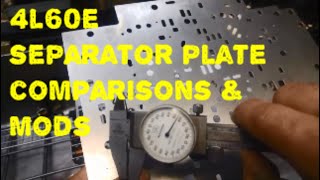
On this generation of Silverado (GMT800), the P2723 code has a well-documented history. For the 4L60E/4L65E and 4L80E transmissions used in these trucks, this code specifically points to the Electronic Pressure Control (EPC) solenoid circuit. General Motors issued Technical Service Bulletins (TSBs) advising technicians that this code, along with a no-move condition, is often caused by debris clogging orifices in the valve body separator plate. 🎬 Watch: How to inspect and modify the separator plate for better flow. [Bulletin #PIP4972C] This means the EPC solenoid itself may be functional, but debris is preventing it from controlling fluid pressure correctly, making a valve body inspection a critical diagnostic step before replacing the solenoid.
Diagnostic Flowchart
Tap your situation to follow the diagnostic path that matches what you're seeing on this vehicle.
Symptoms You May Notice
- Vehicle will not move in forward or reverse [Bulletin #PIP4972C]
- Harsh, delayed, or erratic shifting
- Transmission slipping (engine RPMs rise without an increase in speed)
- Check Engine Light or transmission warning light is on
- Vehicle enters 'limp mode' with limited gear availability (often stuck in 2nd or 3rd gear)
- Transmission may feel like it binds or shudders during shifts
- Increased fuel consumption
- Replacing the EPC Solenoid without first inspecting the valve body for debris, which is a known issue on these trucks per TSB #PIP4972C.
- Condemning the entire transmission for replacement when the issue is a relatively inexpensive solenoid, wiring, or valve body problem.
- Replacing the 1-2 or 3-4 shift solenoids (e.g., GM Part #24230298) instead of the Electronic Pressure Control (EPC) solenoid. The 'E' in P2723 is a diagnostic identifier and does not correspond to a lettered solenoid on the valve body.
Most Likely Causes
- Debris in Transmission Valve Body 🔴 High Probability → Shop Transmission Valve Body A GM Technical Service Bulletin (#PIP4972C) specifically calls out inspecting the valve body separator plate orifices for debris as a primary diagnostic step for this code, especially when a no-move condition is present.
How to confirm: Drop the transmission pan and remove the valve body for a visual inspection of its passages and the separator plate. Check for clogged check ball seats or blocked fluid orifices.
Typical fix: Clean the valve body and separator plate thoroughly. If the plate is damaged or scored, replace it with an OEM or an upgraded aftermarket version (e.g., from Sonnax or TransGo).
Est. part cost: $50-$400 - Faulty Electronic Pressure Control (EPC) Solenoid 🔴 High Probability → Shop Automatic Transmission Control Solenoid The EPC solenoid is a high-wear, constantly modulating component. Its internal coil can fail electrically, or the plunger can get stuck from contaminated fluid.
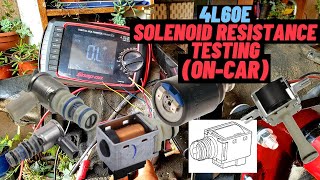
How to confirm: Test the solenoid's resistance with a multimeter. The expected range for a 4L60E EPC solenoid is approximately 3.5 to 8 ohms. A reading of 0 ohms indicates a short, and a very high or infinite reading indicates an open circuit. This test can be done with the pan off, or from the main case connector without dropping the pan.
Typical fix: Replace the faulty EPC solenoid. The solenoid is located on the valve body and is accessible after dropping the transmission pan.
Est. part cost: $40-$100 - Low or Contaminated Transmission Fluid 🟡 Medium Probability → Shop Transmission Assembly Heavy use, such as towing, can accelerate fluid breakdown, leading to sludge and debris that clogs the EPC solenoid's screen and passages within the valve body.
How to confirm: Check the transmission fluid level and condition using the dipstick. The fluid should be red/pink and not smell burnt. Dark, brown, or metallic fluid indicates a problem.
Typical fix: Perform a transmission fluid and filter change. Use the correct fluid type (DEXRON-VI is the backward-compatible replacement for the original DEXRON-III).
Est. part cost: $75-$150 - Damaged Internal Wiring Harness ⚪ Low Probability → Shop Transmission Wiring Harness
How to confirm: With the transmission pan removed, visually inspect the wiring harness that connects to the solenoids for any signs of chafing, broken wires, or corroded pins at the connectors. Pay close attention to the EPC solenoid connector.
Typical fix: Repair the damaged wire or replace the internal transmission wiring harness.
Est. part cost: $50-$120
Rare But Worth Checking
- Faulty Transmission Control Module (TCM): → Shop Transmission Assembly The TCM is the computer that controls the transmission. While it can fail, it is uncommon and should only be considered after all other possibilities (solenoid, wiring, fluid, valve body) have been ruled out. A failure in the solenoid's driver circuit within the TCM can mimic a failed solenoid.
- Failed Internal Transmission Pump: → Shop Transmission Assembly A failing pump will cause low line pressure throughout the transmission, which can trigger various solenoid performance codes. This usually presents with other symptoms like whining noises from the front of the transmission.
Diagnosis Steps
- Check the transmission fluid level and condition. If low, top it off and check for leaks. If dark, burnt, or contains debris, a fluid and filter change is a necessary first step.
- Scan the TCM for any other trouble codes. If codes like P0700 or P0877 are present, address them according to the TSBs. [Bulletin #PIP4379K, #PIP4972C]
- Perform an on-car resistance check of the EPC solenoid. Disconnect the main round 20-pin connector on the side of the transmission. Using a multimeter, measure the resistance between the pins for the EPC solenoid (Pin E and Pin F for 2003+ models). The reading should be between 3.5 and 8 ohms. An out-of-spec reading strongly suggests a failed solenoid or internal wiring.
- If the electrical test passes, drop the transmission oil pan and inspect for metal shavings or other debris. Significant debris may indicate a severe internal failure.
- Visually inspect the internal wiring harness for any signs of damage, chafing, or corrosion at the solenoid connectors.
- Following TSB #PIP4972C, remove and inspect the valve body and its separator plate for clogged orifices, stuck check balls, or scoring.
- If the solenoid, wiring, and valve body are all confirmed to be good, the issue may lie with the TCM or a larger internal mechanical fault.
Parts You'll Likely Need
- Electronic Pressure Control (EPC) Solenoid (Force Motor)
(OEM #ACDelco 24227792 (For 2003+ 4L60E/4L65E) or ACDelco 24220158 (For pre-2003 4L60E))— This is the solenoid directly implicated by code P2723. It is the most likely electronic component to have failed. Note the design changed in 2003.
Trusted brands: ACDelco, BorgWarner
OEM price range: $50-$90
Aftermarket price range: $30-$60 - Transmission Filter and Pan Gasket Kit
(OEM #ACDelco TF289 (for shallow pan))— Required for any job that involves dropping the transmission pan. A new filter is critical for transmission health.
Trusted brands: ACDelco, Wix, ATP
OEM price range: $40-$70
Aftermarket price range: $20-$40 - Valve Body Separator Plate — TSB #PIP4972C points to issues with this plate. It can become damaged by debris or may need replacement during a valve body service. Aftermarket versions often provide durability improvements.
Trusted brands: ACDelco (GM Genuine), Sonnax, TransGo
OEM price range: $40-$80
Aftermarket price range: $30-$60 - DEXRON-VI Automatic Transmission Fluid
(OEM #ACDelco 10-9395 (quart) or 10-9396 (gallon))— The correct fluid is required when refilling the transmission after service. DEXRON-VI is fully backward-compatible with DEXRON-III used in earlier models.
Trusted brands: ACDelco, Valvoline, Castrol
OEM price range: $25-$40 (gallon)
Aftermarket price range: $20-$35 (gallon)
Related Codes That Often Appear With This One
- P0700 — This is a general Transmission Control System Malfunction code. It simply means the TCM has stored a specific code (like P2723) and has requested the Check Engine Light be turned on.
- P0877 — This code for the Transmission Fluid Pressure Sensor/Switch 'D' Circuit Low is mentioned alongside P2723 in TSB #PIP4972C, indicating they are often triggered by the same root cause of valve body debris.
- P0751, P0756, P0776 — These are performance codes for other shift solenoids ('A', 'B', and 'E' Pressure Control). Their presence with P2723 can point to a widespread hydraulic issue, like contaminated fluid or a failing pump. [Bulletin #PIP4379K]
Technical Service Bulletins (TSBs) & Recalls
- PIP4972C
- PIP4379K
Platform-Specific Known Issues
- TSB #PIP4972C: Specifically notes that for a 'no move' condition with code P2723 or P0877, technicians should inspect the valve body separator plate orifices for debris.
- TSB #PIP4379K: Lists P2723 among a large group of transmission codes that may set together, and advises diagnosing code P0701 first if it is present.
Mechanic-Grade Diagnostic Values
- EPC Solenoid Resistance (Pre-2003 models) — expected: 3.5 - 8.0 Ohms at 68°F (20°C). Failure: Reading of 0 Ohms (short) or infinite/very high Ohms (open circuit).
- EPC Solenoid Resistance (2003+ models) — expected: 3.5 - 4.6 Ohms at 68°F (20°C). Failure: A reading outside of this narrower specification indicates a likely faulty solenoid.
- EPC Solenoid Commanded Pressure vs. Actual Pressure — expected: Actual pressure should closely track commanded pressure on a scan tool live data graph. At idle in Park/Neutral, commanded current is high (~1.1A) resulting in low line pressure. During acceleration, commanded current drops (~0.1A) to increase line pressure.. Failure: A significant lag or deviation between commanded and actual pressure points to a hydraulic or mechanical issue (stuck valve, leak, bad solenoid) rather than an electrical one.
- EPC Solenoid Frequency — expected: Later models, including the 2001-2005 Silverado, operate the EPC solenoid at a fixed frequency of 585 Hz. The PCM varies the duty cycle to control current.. Failure: This is a fixed parameter and not typically measured, but it's critical for understanding how the system works and for anyone attempting advanced diagnostics or custom controls.
Scan Tool Commands That Help
- Tech2 / GDS2: Output Controls > EPC Solenoid — This function allows a technician to directly command the EPC solenoid to specific duty cycles (or current levels) while monitoring the transmission's line pressure sensor. This is the definitive test to determine if the solenoid is mechanically responding to electrical commands. For example, commanding high current should result in low line pressure, and commanding low current should result in high line pressure. A failure to respond indicates a bad solenoid or a hydraulic blockage.
Wiring & Ground Locations
- Transmission Case Connector (20-pin) — On the passenger side of the 4L60E transmission case.. This is the main electrical interface. For pre-2003 models, the EPC solenoid is tested at Pins C & D. For 2003+ models, it's typically Pins E & F. Corrosion or bent pins here can cause the P2723 code.
- G104 (Ground) — Located on the left rear of the engine block.. This is a primary engine-to-chassis ground. A poor connection here can cause voltage drops and erratic behavior in various electronic components, including the PCM/TCM which controls the transmission. Intermittent electrical issues are often traced back to faulty grounds.
- G102 (Ground) — On the left side of the engine block (for V8s).. Another critical engine ground point. Ensuring this and other main grounds are clean and tight is a crucial, often overlooked, step in diagnosing any electronic fault code.
- Battery to Frame/Chassis Ground — Typically found on the frame rail near the battery, under the radiator support area.. This is the main ground path for the entire vehicle's electrical system. Corrosion or damage to this cable can cause widespread, hard-to-diagnose electrical gremlins, including transmission control problems.
Real Owner Repair Stories
- GMTNation Forum User (2002 Chevrolet Silverado with 150k miles) — Transmission was hunting between 3rd and 4th gear, sloppy shifts.
❌ Tried (didn't work) Initially diagnosed as low fluid, but the problem persisted.
✅ What actually fixed it The user replaced the worn stock separator plate with a Transgo shift kit and new plate. The original plate showed significant wear where the check balls seat. The fix resulted in 'nice smooth, fast shifts' and eliminated the gear hunting.
OEM Part Supersession History
ACDelco 24220158 / BorgWarner 50193 (Pre-2003)→ACDelco 24227792 / BorgWarner 50194 (2003+)— In 2003, GM changed the design of the EPC solenoid for the 4L60E/4L65E. The later design has a different resistance range and connector style.
Heads up: The pre-2003 (black plastic connector) and 2003+ (two-prong plastic connector) solenoids are not directly interchangeable due to different resistance specifications and control strategies, though some builders report using them interchangeably without immediate codes. It is critical to order the correct part for the specific model year of the transmission to ensure proper line pressure control.
Model Year Variations Within This Range
- 2001-2002: These years use the early style EPC solenoid (e.g., ACDelco 24220158) with a resistance of approximately 3.5-8.0 ohms. The internal wiring harness and case connector pinout (Pins C & D) are specific to this solenoid.
- 2003-2005: These years use the later style EPC solenoid (e.g., ACDelco 24227792) with a tighter resistance specification of 3.5-4.6 ohms. The internal harness and case connector pinout (Pins E & F) were changed to accommodate this updated component.
Helpful Videos

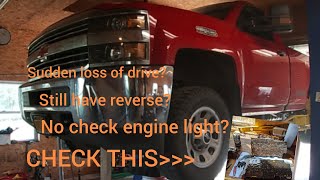
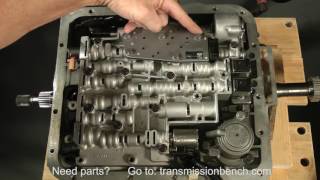
We Have This Part in Stock
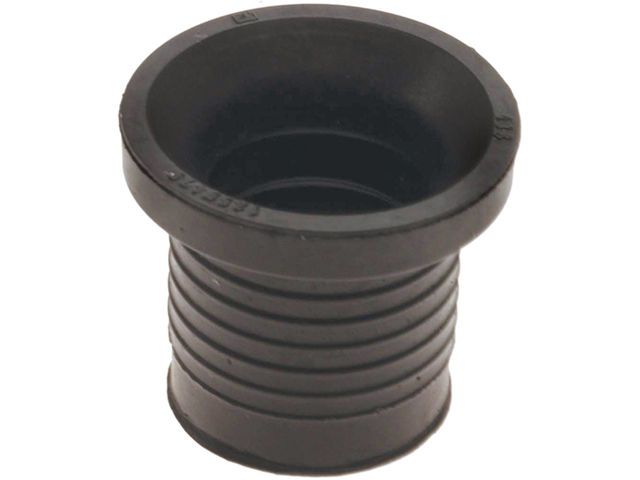

The information in this article is provided for general reference and educational purposes only. Vehicle specifications, procedures, and part compatibility can vary by production date, trim level, and region. Always consult your vehicle's factory service manual and verify part numbers before purchasing or performing repairs. Safety-critical components such as airbags, seat belts, and braking systems should be installed by a qualified professional.
- Chevrolet SILVERADO:
- 🧭 Diagnostic Flowchart
- 🎬 Helpful Videos
- 🛍️ Shop This Part
- What's Unique About the 2001-2005 Chevrolet SILVERADO
- Symptoms You May Notice
- Most Likely Causes
- Rare But Worth Checking
- Diagnosis Steps
- Parts You'll Likely Need
- Related Codes That Often Appear With This One
- Technical Service Bulletins (TSBs) & Recalls
- Platform-Specific Known Issues
- Mechanic-Grade Diagnostic Values
- Scan Tool Commands That Help
- Wiring & Ground Locations
- Real Owner Repair Stories
- OEM Part Supersession History
- Model Year Variations Within This Range
- 🎟️ Get 5% Off