

P2723 on 2001-2008 Chevrolet Silverado 2500: Pressure Control Solenoid 'E' Fixes
P2723 on a Silverado 2500 usually points to a faulty Pressure Control Solenoid 'E' inside the transmission, often due to old fluid or a failed solenoid. For Allison 1000 transmissions, this is the 'E' shift valve solenoid. The most common fix is to replace the solenoid and perform a transmission fluid and filter service, costing around $150-$400 in parts.
- P2723 is a serious transmission code indicating a problem with Pressure Control Solenoid 'E', which controls gear shifting.
- The first and most important diagnostic step is to check the transmission fluid level and condition. Low or dirty fluid is a very common cause.
- The most likely failed part is the solenoid itself, which is located inside the transmission oil pan on the valve body.
- Driving with this code can lead to unsafe shifting behavior and may cause permanent, costly damage to your transmission.
- This repair is complex and best left to a professional or a highly experienced DIY mechanic due to the risk of damaging other transmission components.
What's Unique About the 2001-2008 Chevrolet SILVERADO 2500

For the 2001-2008 Silverado 2500 HD, this code is often associated with the robust Allison 1000 transmission, but can also appear on models with the 4L80-E or 6L90. On the Allison, P2723 specifically points to an issue with the 'E' shift solenoid (also called PC Solenoid 5), which controls the C5 clutch. A failure can cause a timing issue between clutches engaging and disengaging, a condition known as a "tie-up," which can feel like a harsh bind or slip. The problem is frequently traced back to the individual solenoid within the transmission valve body. Given the heavy-duty use of these trucks, transmission fluid breakdown can accelerate wear on these critical components, leading to clogged solenoid screens or internal failure.
Diagnostic Flowchart

Tap your situation to follow the diagnostic path that matches what you're seeing on this vehicle.
Generation note: This range covers two Silverado generations: the GMT800 (2001-2007 'Classic') and the GMT900 (2007.5-2008). The primary difference regarding this code is the specific automatic transmission your truck has (e.g., 4L80-E, Allison 1000, 6L90). While the code's meaning is the same, the exact location of Solenoid 'E' and the part numbers will vary. For the Allison 1000 (common with Duramax engines), it's an individual solenoid on the valve body. For the 6L90 (found in some later models), it's integrated into the TEHCM (TCM/solenoid assembly). The diagnostic process, however, remains consistent.
Symptoms You May Notice
- Harsh, erratic, or delayed shifting.
- Transmission slipping between gears.
- Vehicle enters 'limp mode,' often stuck in a single gear (like 3rd or 5th).
- Check Engine Light and/or Transmission Warning Light is on.
- Increased fuel consumption.
- Transmission overheating or burning smell.
- Inability to shift into a specific gear, including reverse.
- Engine stalls when stopping.
- Shuddering or jerking during acceleration.
- Replacing the entire transmission when only a single solenoid or the valve body was at fault.
- Assuming the solenoid is bad without first checking the transmission fluid level and condition, which is a simpler and cheaper fix.
- Replacing the solenoid without inspecting the internal wiring harness for chafing or damage, leading to a quick return of the code.
Most Likely Causes

- Low or Dirty Transmission Fluid 🔴 High Probability → Shop Transmission Assembly Heavy-duty use, such as towing, can cause transmission fluid to degrade or burn faster than in lighter vehicles, leading to sludge that can clog solenoid screens and passages.
How to confirm: Check the transmission fluid level and condition via the dipstick (if equipped). The fluid should be at the correct level, pink/red in color, and not smell burnt. Dark, brown, or burnt-smelling fluid with metal particles indicates a problem and potential internal wear.
Typical fix: Perform a transmission fluid and filter change. If the fluid is severely contaminated, a full flush may be considered, but this can sometimes dislodge debris and cause more issues. Ensure the correct fluid is used (e.g., TES-295 spec for Allison, DEXRON-VI for 6L90).
Est. part cost: $75-$175 - Faulty Pressure Control Solenoid 'E' 🔴 High Probability → Shop Transmission Clutch Pressure Control Solenoid Solenoids are electro-mechanical parts that wear out over time. The coil can burn out or the internal valve can become stuck from debris in the fluid, a common issue in hard-working trucks.
How to confirm: After dropping the transmission pan, the solenoid can be tested. Check the resistance of the solenoid's coil with a multimeter and compare it to the manufacturer's specification (typically 20-30 ohms for an Allison solenoid). A reading that is out of range (open or shorted) indicates a failed solenoid. A scan tool can also be used to command the solenoid on/off to check for mechanical response.
Typical fix: Replace the faulty solenoid. 🎬 Watch: Step-by-step Allison shift solenoid replacement guide On the Allison 1000, this is an individual component. On the 6L80/6L90, it is part of the entire valve body/TCM assembly (TEHCM).
Est. part cost: $40-$250 - Damaged Wiring or Corroded Connector 🟡 Medium Probability The internal transmission wiring harness is bathed in hot fluid and subject to vibration, which can cause wires to become brittle, chafe on the valve body casting, or cause pins to lose connection at the solenoid.
How to confirm: Visually inspect the external transmission wiring harness and main connector for damage. After removing the transmission pan, inspect the internal harness for chafing, broken wires, or loose pins at the solenoid connector. Check for continuity and shorts using a multimeter.
Typical fix: Repair the damaged section of wire or replace the affected wiring harness (internal or external). Clean any corrosion from connectors.
Est. part cost: $20-$200 - Faulty Transmission Valve Body ⚪ Low Probability → Shop Transmission Valve Body Debris from normal wear or a component failure can score the bores within the aluminum valve body, causing hydraulic pressure to leak past seals or causing valves to stick. This is more common in high-mileage or severely used trucks.
How to confirm: This is difficult to confirm without specialized tools and is often diagnosed after replacing the solenoid doesn't resolve the code. A professional may use pressure gauges to check for internal leaks or inspect the bores for scoring during disassembly.
Typical fix: Replace the entire valve body assembly or have it rebuilt by a specialist. 🎬 See how to remove and install the Allison valve body
Est. part cost: $300-$800
Rare But Worth Checking
- Failing Transmission Control Module (TCM): → Shop Transmission Assembly A faulty TCM is rare but possible. It should only be considered after all other possibilities (fluid, solenoid, wiring, valve body) have been thoroughly ruled out. A programming error or internal failure can prevent the TCM from correctly commanding the solenoid. For 6L80/6L90 transmissions, the TCM is integrated with the valve body solenoids, so they are replaced as one unit.
- Internal Mechanical Failure: In some cases, the P2723 code can be a symptom of a deeper mechanical problem, such as a failing clutch pack or a blown piston, which prevents the transmission from holding pressure even if the solenoid is working correctly. A user on DuramaxDiesels.com reported finding a blown piston was the ultimate cause after chasing the P2723 code.
Diagnosis Steps

- Check and record any other stored DTCs. Address general transmission codes like P0700 or P0701 first, as per TSB guidance.
- Check the transmission fluid level and condition. If low, top it off and check for leaks. If dirty or burnt, a fluid and filter change is the first step.
- Inspect the external transmission wiring harness and main connector for any visible damage, corrosion, or loose connections.
- If the fluid and external wiring are okay, drop the transmission oil pan to access the internal components.
- Visually inspect the internal wiring harness for chafing against the valve body or case. Inspect the solenoid 'E' connector for loose pins or corrosion.
- Using a multimeter, test the resistance of the solenoid. Compare the reading to your vehicle's service manual specifications (e.g., 20-30 ohms for Allison solenoids). An open (infinite resistance) or shorted (near-zero resistance) solenoid needs to be replaced. 🎬 Watch: How to locate and test shift solenoid E
- If the solenoid tests good, check for 12V power at the solenoid connector with the key on to verify the integrity of the wiring from the TCM.
- If the solenoid and wiring test good, the problem may lie in the valve body (clogged passages, stuck valve) or the TCM itself.
- A professional technician may use a scan tool to command the solenoid on and off while monitoring transmission pressures to confirm if the solenoid is mechanically sticking.
Parts You'll Likely Need

- Transmission Pressure Control Solenoid ('E' or Shift Solenoid E)
(OEM #29536833 (For Allison 1000, fits C/D/E/G positions))— This is the component directly identified by the trouble code and is a common failure point due to electrical burnout or mechanical sticking.
Trusted brands: ACDelco, Allison Transmission, Rostra - Transmission Pan Gasket — Required to be replaced anytime the transmission pan is removed to prevent leaks.
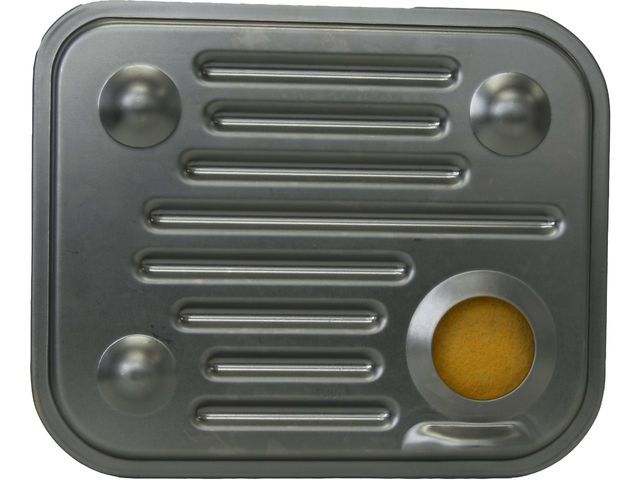
Trusted brands: Fel-Pro, ACDelco, Mahle - Transmission Filter
(OEM #29539579 (Allison Spin-On))— Should always be replaced when performing a fluid service or dropping the pan for repairs.
Trusted brands: ACDelco, Allison Transmission, Wix - Transmission Fluid — Required to refill the transmission after dropping the pan. The correct specification (e.g., TES-295, DEXRON-VI) is critical.
Trusted brands: ACDelco, Castrol, Valvoline
Related Codes That Often Appear With This One
- P0700 — This is a general transmission fault code that simply indicates the TCM has stored a specific trouble code (like P2723). It often appears as a precursor.
- P0701 — As noted in TSB #PIP4379N, this code indicates a general transmission system performance issue and often accompanies more specific solenoid codes, sometimes due to low fluid levels after a service.
- P2722, P2724, P2725, P2726 — These are all related codes for the same Pressure Control Solenoid 'E', indicating different failure modes like 'Stuck On', 'Electrical', or range/performance issues.
Technical Service Bulletins (TSBs) & Recalls
- TSB #PIP4379N: Addresses multiple transmission codes including P2723, often after a fluid service. It advises checking the fluid level with the transmission hot (175°F) and inspecting the internal suction filter for cracks or a stuck lube regulator valve in the pump cover.
Mechanic-Grade Diagnostic Values
- Allison 1000 Shift Solenoid 'E' Resistance — expected: 20 - 30 Ω (Ohms). Failure: A reading significantly outside this range, such as near zero (short circuit) or infinite (open circuit), indicates a failed solenoid coil.
- Allison 1000 TCC Solenoid 'F' Resistance — expected: 8 - 15 Ω (Ohms). Failure: A reading outside this range indicates a failure of the Torque Converter Clutch solenoid.
- Allison 1000 EPC Solenoid 'G' Resistance — expected: 5.5 - 8.0 Ω (Ohms). Failure: A reading outside this range indicates a failure of the Electronic Pressure Control solenoid.
Scan Tool Commands That Help
- GM Tech2 / GDS2 or equivalent professional scan tool: Line Pressure Control — After connecting a physical pressure gauge, a technician can use the scan tool to command specific line pressures (e.g., in 15 PSI increments). Comparing the commanded pressure on the scan tool to the actual pressure on the gauge helps determine if the hydraulic circuit is responding correctly or if there's a leak or blockage.
- GM Tech2 / GDS2 or equivalent professional scan tool: Solenoid State Control — This function allows a technician to manually command a specific solenoid (like Solenoid 'E') on and off while the vehicle is stationary. Listening for an audible 'click' from the transmission pan can confirm the solenoid is mechanically actuating. This helps differentiate between a stuck solenoid and an electrical wiring issue.
Wiring & Ground Locations
- Transmission Pass-Through Connector — The main electrical connector on the outside of the transmission case where the internal harness connects to the main vehicle harness.. The seal on this connector can fail, allowing Automatic Transmission Fluid (ATF) to seep into the electrical pins. This contamination can cause intermittent shorts, opens, or poor connections for the solenoid control circuits, leading to codes like P2723 even if the solenoid and internal wiring are good.
- G203 — Behind the left side of the dashboard.. This is a major interior ground point. While not directly on the transmission, a poor ground here can affect the Body Control Module or other interior modules that communicate with the TCM, potentially causing communication errors or erratic behavior.
- G103 / G104 — On the rear of the engine block (left or right side depending on configuration).. These are primary engine block grounds. The Powertrain Control Module (PCM) and Transmission Control Module (TCM) rely on clean ground connections for accurate sensor readings and proper solenoid actuation. A corroded or loose ground here can cause a host of powertrain issues, including erratic solenoid performance.
Real Owner Repair Stories
- Reddit user on r/Duramax (Duramax with Allison Transmission) — User was diagnosing an issue and checking continuity on the transmission harness.
❌ Tried (didn't work) The user was in the process of diagnosis, not replacing parts yet.
✅ What actually fixed it The user discovered Automatic Transmission Fluid (ATF) inside the main sealed harness connector where the vehicle harness plugs into the transmission. Other users confirmed this is a known, though uncommon, failure point that can cause a surprising number of electrical issues. The accepted fix was to replace the internal transmission harness to get a new, properly sealed pass-through connector.
OEM Part Supersession History
29536833→29536833— This part number has remained stable for many years.
Heads up: The Allison Shift Solenoid for positions C, D, E, and G has been consistently identified by part number 29536833 for the entire 2001-2018 model year range, indicating no significant supersessions or compatibility issues within the 2001-2008 vehicle range.
Model Year Variations Within This Range
- 2001-2005: Trucks in this range equipped with the Duramax engine used a 5-speed Allison 1000 transmission. This was part of the 'Gen 3' and early 'Gen 4' Allison electronics families.
- 2006-2008: Starting in 2006 with the LBZ engine, the Allison 1000 was upgraded to a 6-speed transmission, offering a double-overdrive for better highway fuel economy. These are considered 'Gen 4' transmissions with more advanced diagnostics. While the P2723 code applies to both, the TCM software and some valve body specifics differ between the 5-speed and 6-speed units.
Helpful Videos
We Have This Part in Stock

The information in this article is provided for general reference and educational purposes only. Vehicle specifications, procedures, and part compatibility can vary by production date, trim level, and region. Always consult your vehicle's factory service manual and verify part numbers before purchasing or performing repairs. Safety-critical components such as airbags, seat belts, and braking systems should be installed by a qualified professional.
- Chevrolet SILVERADO 2500:
- 🧭 Diagnostic Flowchart
- 🎬 Helpful Videos
- 🛍️ Shop This Part
- What's Unique About the 2001-2008 Chevrolet SILVERADO 2500
- Symptoms You May Notice
- Most Likely Causes
- Rare But Worth Checking
- Diagnosis Steps
- Parts You'll Likely Need
- Related Codes That Often Appear With This One
- Technical Service Bulletins (TSBs) & Recalls
- Mechanic-Grade Diagnostic Values
- Scan Tool Commands That Help
- Wiring & Ground Locations
- Real Owner Repair Stories
- OEM Part Supersession History
- Model Year Variations Within This Range
- 🎟️ Get 5% Off