

P2723 on 2006-2010 GMC Sierra: Pressure Control Solenoid 'E' Causes and Fixes
This code indicates the Pressure Control Solenoid 'E' inside the transmission is stuck off. On these Sierras, this is often caused by debris in the valve body or a cracked clutch housing, as noted in GM Technical Service Bulletins. The fix typically requires removing the transmission pan and valve body for inspection and repair. In many cases, the entire TEHCM (solenoid and control module assembly) is replaced.
- P2723 on a 2006-2010 Sierra is a serious transmission code indicating a problem with Pressure Control Solenoid 'E'.
- Do not drive the vehicle, as a complete loss of movement is a possible and documented symptom.
- The most likely causes are internal to the transmission, specifically debris in the valve body or a cracked clutch housing, as identified in GM service bulletins.
- Repair is not a simple DIY job and requires dropping the transmission pan and valve body for proper diagnosis.
- Always check for TSBs related to your specific vehicle, as they provide critical, model-specific diagnostic direction that can save time and money.
What's Unique About the 2006-2010 Gmc SIERRA
The 2006-2010 GMC Sierra spans two generations, primarily using the 4-speed 4L60-E and the newer 6-speed 6L80 automatic transmissions. This code is particularly well-documented for the 6L80 transmission (RPO code MYC). General Motors has issued multiple Technical Service Bulletins (TSBs) for this issue, pointing to specific internal transmission problems. One TSB highlights that debris can block orifices in the valve body separator plate, while another points to a potentially cracked 1-2-3-4 / 3-5-R clutch housing as a root cause for this code on 6L80-equipped trucks. For the 6L80, the TCM and solenoids are integrated into a single unit called the TEHCM (Transmission Electro-Hydraulic Control Module), which is located inside the oil pan, making component replacement a more involved process.
Diagnostic Flowchart
Tap your situation to follow the diagnostic path that matches what you're seeing on this vehicle.
Generation note: This range covers the end of the first generation Sierra (GMT800, through 2006/2007 'Classic') and the beginning of the second generation (GMT900, 2007-2013). The GMT800s often used 4-speed transmissions like the 4L60-E, while the GMT900s introduced the 6-speed 6L80, which is specifically mentioned in TSBs related to P2723. The diagnosis and specific parts will differ significantly between these transmissions, with the 6L80 being the most common culprit for this code.
Symptoms You May Notice
- Vehicle will not move in forward or reverse [Bulletin #PIP4972C]
- No reverse, or delayed engagement into reverse.
- Delayed or harsh shifting, particularly the 2-3 shift.
- Transmission slipping, where engine RPMs rise without an increase in speed.
- Check Engine Light and/or Transmission Warning Light is on.
- Transmission overheating.
- Vehicle enters 'limp mode', often stuck in 2nd or 3rd gear.
- Engine may stall when coming to a stop in gear.
- Replacing the entire transmission without first inspecting the valve body, separator plate, or clutch housings, which are common and less expensive failure points.
- Replacing only an individual solenoid when the issue is a cracked clutch housing or debris in the valve body.
- Replacing the TEHCM when the actual fault is in the external wiring or a mechanical failure within the transmission.
Most Likely Causes
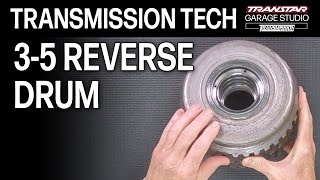
- Cracked 1-2-3-4 / 3-5-R Clutch Housing 🔴 High Probability A known issue documented in GM TSB #09-07-30-004J for the 6L80 transmission, which can cause slips, delayed engagement, and set code P2723. The weld on the housing is a common failure point.
How to confirm: The transmission must be partially disassembled to remove the housing. A pressure test can be performed by applying soap solution to the weld area and using compressed air in the 3-5R clutch feed hole to check for bubbles, which indicate a crack.
Typical fix: Replacement of the cracked clutch housing assembly. 🎬 Watch: How to inspect the 3-5/Reverse drum for cracks. GM now offers complete, pre-assembled housings for many applications.
Est. part cost: $150-$300 - Debris in Valve Body Separator Plate 🔴 High Probability → Shop Transmission Valve Body GM TSB #PIP4972C directly links P2723 to debris blocking orifices in the valve body separator plate, leading to a no-move condition. [NHTSA] Contaminated fluid is a primary contributor.
How to confirm: Requires dropping the transmission pan and removing the valve body to visually inspect the separator plate and its small fluid passages for blockages.
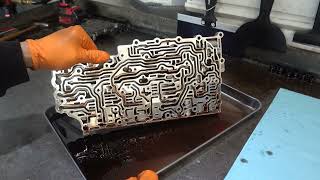
Typical fix: Cleaning the valve body and separator plate thoroughly. If the plate is damaged, warped, or an early design, it should be replaced. Sonnax offers upgraded plates, 🎬 See this walkthrough on disassembling the early 6L80 valve body. but care must be taken to match the correct plate to the valve body generation.
Est. part cost: $50-$100 for a new plate - Failed Pressure Control Solenoid 'E' / TEHCM Assembly 🟡 Medium Probability → Shop Transmission Clutch Pressure Control Solenoid The solenoid itself can fail electrically (burnt coil) or mechanically (sticking plunger). On the 6L80, the solenoids are integrated into the TEHCM, which is a common replacement item.
How to confirm: After accessing the valve body, a technician can test the solenoid's resistance with a multimeter (compare to spec) or command it on/off with a high-end scan tool (like a Tech2) to check for an audible click and pressure response.
Typical fix: Replacement of the entire TEHCM (valve body, solenoids, and TCM). The new unit must be programmed to the vehicle's VIN.
Est. part cost: $250-$500 for a remanufactured TEHCM assembly - Low or Contaminated Transmission Fluid 🟡 Medium Probability → Shop Transmission Assembly Low fluid levels can cause pressure issues, while old, burnt, or contaminated fluid can cause solenoids to stick and passages to clog. This is often the root cause of other component failures.
How to confirm: Check the transmission fluid level and condition via the dipstick (if equipped) or check plug. Fluid should be bright red and not smell burnt. Dark or metallic fluid indicates a serious problem.
Typical fix: Perform a transmission fluid and filter change. If the fluid is heavily contaminated with metal, a transmission rebuild may be necessary.
Est. part cost: $75-$150 for fluid and filter
Rare But Worth Checking
- Faulty Transmission Control Module (TCM): → Shop Transmission Assembly The TCM is the computer that controls the transmission. On 6L80 transmissions, it is integrated with the valve body and solenoids (TEHCM). While it can fail, it's often replaced as a complete assembly with the solenoids. A failure of the module itself should be considered after wiring and mechanical issues are ruled out.
- Wiring Harness Damage: The wiring going to the transmission or inside the pan can become damaged, corroded, or shorted, mimicking a solenoid failure. This should be inspected before replacing hard parts.
- Worn 1-2-3-4 and 3-5-R Clutch Fluid Seal Rings: TSB #09-07-30-004J also notes that leaking seal rings on the transmission fluid pump cover can cause harsh 2-3 shifts and other pressure-related codes. Early 1-piece seal designs were prone to leakage and were later updated to a 2-piece design.
Diagnosis Steps
- Check the transmission fluid level and condition. Low, dark, or burnt-smelling fluid indicates a problem.
- Scan the TCM for all stored trouble codes. Note any other codes that appear with P2723 and check freeze-frame data.
- Using a professional scan tool (like a GM Tech2), monitor the commanded state vs. the actual state of Pressure Control Solenoid 'E' (PC Solenoid 5).
- Drop the transmission oil pan and inspect for excessive metal debris or clutch material, which would indicate a severe internal failure.
- Inspect the internal wiring harness for any signs of damage or corrosion.
- Remove the transmission valve body (TEHCM). Inspect the separator plate for blockages, warping, or damage, as noted in TSB #PIP4972C.
- While the valve body is out, test the resistance of Solenoid 'E' with a multimeter and compare it to the manufacturer's specifications. A reading far outside the expected range indicates failure.
- If the TEHCM and separator plate appear serviceable, the next step is to inspect the 1-2-3-4 / 3-5-R clutch housing for cracks, as specified in TSB #09-07-30-004J. This requires further transmission disassembly.
Parts You'll Likely Need
- Transmission Valve Body Separator Plate
(OEM #24245720 (For early 6L80, verify application))— A known failure point according to GM TSB #PIP4972C, where debris clogs fluid passages causing pressure issues. Early plates may need to be updated.
Trusted brands: ACDelco, Sonnax
OEM price range: $70-$120
Aftermarket price range: $50-$100
Related Codes That Often Appear With This One
- P0700 — This is a generic code indicating the TCM has requested the Check Engine Light to be turned on. It almost always appears with more specific transmission codes like P2723.
- P0877 — This code for 'Transmission Fluid Pressure Sensor/Switch D Circuit Low' is mentioned alongside P2723 in TSB #PIP4972C as being related to debris in the valve body. [NHTSA]
- P0776 — This code for 'Pressure Control Solenoid B Performance' is listed with P2723 in TSB #09-07-30-004J, indicating a related internal hydraulic circuit problem, often stemming from the cracked clutch housing.
- P2715 — This code for 'Pressure Control Solenoid 'D' Performance/Stuck Off' is also listed in TSB #09-07-30-004J, pointing towards the same common cause of a cracked 3-5-R clutch housing.
Technical Service Bulletins (TSBs) & Recalls
- 09-07-30-004J: Details diagnosis for slips in reverse, delayed engagement, and codes P0776, P2715, and P2723. Points to a cracked 1-2-3-4 / 3-5-R clutch housing or leaking pump cover seals as the cause.
- PIP4972C: Addresses a no-move condition in forward or reverse, potentially with codes P0877 or P2723, caused by debris in the valve body separator plate orifices. [NHTSA]
- PIP4379K: A general diagnostic TSB that lists P2723 among many other transmission codes and advises following standard diagnostic procedures, starting with checking the fluid level. [NHTSA]
Platform-Specific Known Issues
- A no-move condition in forward or reverse, often linked to a clogged separator plate per TSB PIP4972C.
- Loss of reverse gear specifically, which strongly points to a failure in the 3-5-R clutch circuit, either from the cracked housing (TSB 09-07-30-004J) or the PC Solenoid 5 itself.
- On early 6L80s (approx. 2006-2009), leaking 1-piece pump cover seal rings can cause harsh 2-3 shifts that may accompany pressure codes.
Mechanic-Grade Diagnostic Values
- Pressure Control Solenoid (PWM) Resistance — expected: 3.0 to 8.0 Ohms. More specifically, 3.0-5.5 Ohms at 70°F (21°C) or 5-6 Ohms are commonly cited values.. Failure: A reading outside of this range (open circuit or short) indicates a failed solenoid coil.
- Shift Solenoid (On/Off) Resistance — expected: 20 to 40 Ohms.. Failure: A reading outside this range indicates a failed solenoid.
- Pressure Control Solenoid (PWM) Current Draw — expected: 1.5 to 4.0 Amps at 12V.. Failure: Incorrect amperage draw suggests a failing solenoid.
- Solenoid Operational Voltage (from TCM) — expected: 8.3 to 9.3 Volts.. Failure: Incorrect voltage from the TCM could indicate a module or wiring issue.
Scan Tool Commands That Help
- GM Tech2 / GDS2: Solenoid Cleaning Procedure — This function can be used if a solenoid performance DTC is set. The tool commands the TCM to cycle all solenoids, which can flush debris from the solenoids and their hydraulic circuits, potentially resolving a temporary blockage.
- GM Tech2 / GDS2 / J2534 Pass-Thru: TEHCM Programming / Service Programming System (SPS) — This is mandatory after replacing the TEHCM. The new module must be programmed with the correct calibration file for the vehicle's VIN to ensure it communicates correctly with the ECM and other modules.
- GM Tech2 / GDS2: Fast Learn / Adaptive Relearn — This must be performed after programming a new TEHCM or after major transmission repairs. It runs the transmission through a specific procedure to learn the hydraulic characteristics (clutch volume indexes) of the specific unit, ensuring smooth shifts.
Wiring & Ground Locations
- Main Transmission Connector — External, on the passenger side of the transmission case. It is a round, 16-pin connector.. This is the primary electrical interface between the vehicle's main harness and the internal TEHCM. Corrosion or damage here can interrupt power and signals to all solenoids, causing various codes including P2723. Early models often have a black connector, while later models use an updated grey sealed connector.
- TEHCM Internal Connector — Inside the transmission oil pan, connecting the main pass-through connector to the TEHCM.. This green connector with a gray locking tab is a critical connection point. Fluid contamination or improper seating during service can cause intermittent electrical faults that mimic a failed TEHCM.
Real Owner Repair Stories
- Tahoe Yukon Forum (2011 Chevrolet Tahoe 5.3L with 6L80) — High engine RPMs with no engagement from a stop, followed by limp mode and codes P2723 and P0700.
❌ Tried (didn't work) Fluid and filter change., Clearing codes manually.
✅ What actually fixed it The owner performed multimeter tests on the TEHCM and found all pressure control solenoids had a resistance of 5.3 ohms, which is within spec. A transmission expert on the forum advised that when electrical tests pass, the P2723 code is often caused by a mechanical/hydraulic issue that the TCM cannot distinguish from an electrical one. The likely causes were identified as worn check balls in the valve body, sticking clutch select valves, or bore wear in the valve body, not a failed TEHCM.
"I Checked Everything" — The Actual Cause
- A common scenario for P2723 is when the pressure control solenoid 'E' passes electrical resistance tests with a multimeter, leading a technician to believe it's good. However, the code persists because the root cause is not electrical but mechanical/hydraulic. The TCM sets the 'Stuck Off' code because it commands the solenoid to activate but sees no resulting pressure change, which can be caused by a sticking valve in the valve body, a leak in the clutch circuit (like a cracked drum), or severe contamination blocking a fluid passage. The TCM incorrectly blames the solenoid when the hydraulic circuit is the real culprit.
OEM Part Supersession History
24246916→24245720— Design update for the 6L80 separator plate.
Heads up: The original '1st design' plate (24246916) is incompatible with some aftermarket valve body repair kits (like Sonnax clutch select valve springs). If this plate is found during a repair, it MUST be upgraded to the '2nd design' plate (24245720) to prevent other codes and clutch failure.N/A (Individual clutch housing components)→Assembled 1-2-3-4 / 3-5-R Clutch Housing Assembly— To simplify repairs for the known cracked housing issue.
Heads up: According to TSB 09-07-30-004J, complete housing assemblies became available to replace the original design that was prone to cracking. This saves significant labor and reduces the chance of assembly error compared to rebuilding the drum with individual parts.
Model Year Variations Within This Range
- 2006-2009: These models use the 'Type 1' valve body and separator plate design, which has seven checkballs and specific fluid passages. They are more prone to issues with the 1st design separator plate (PN 24246916).
- 2010: The 2010 model year introduced the 'Type 2' separator plate, which looks physically different from the Type 1. This change also altered some hydraulic circuits within the valve body.
- 2006-2010: Early TEHCM units used in this range are particularly noted for failures of the TCC apply solenoid and pressure switch membranes cracking due to heat and age.
Helpful Videos
We Have This Part in Stock


The information in this article is provided for general reference and educational purposes only. Vehicle specifications, procedures, and part compatibility can vary by production date, trim level, and region. Always consult your vehicle's factory service manual and verify part numbers before purchasing or performing repairs. Safety-critical components such as airbags, seat belts, and braking systems should be installed by a qualified professional.
- Gmc SIERRA:
- 🧭 Diagnostic Flowchart
- 🎬 Helpful Videos
- 🛍️ Shop This Part
- What's Unique About the 2006-2010 Gmc SIERRA
- Symptoms You May Notice
- Most Likely Causes
- Rare But Worth Checking
- Diagnosis Steps
- Parts You'll Likely Need
- Related Codes That Often Appear With This One
- Technical Service Bulletins (TSBs) & Recalls
- Platform-Specific Known Issues
- Mechanic-Grade Diagnostic Values
- Scan Tool Commands That Help
- Wiring & Ground Locations
- Real Owner Repair Stories
- "I Checked Everything" — The Actual Cause
- OEM Part Supersession History
- Model Year Variations Within This Range
- 🎟️ Get 5% Off