

P2723 on 2001-2008 GMC Sierra 2500: Pressure Control Solenoid 'E' Causes and Fixes
On a 2001-2008 GMC Sierra 2500, P2723 usually means the Pressure Control Solenoid 'E' inside the Allison 1000 transmission has failed. This is often due to dirty fluid or simple wear. The most common fix is to replace the specific solenoid (GM Part #29536833) inside the transmission oil pan, along with a fluid and filter change.
- P2723 is a serious transmission code indicating a failure of the Pressure Control Solenoid 'E'.
- Do not continue to drive with this code, as it can lead to severe and expensive transmission damage.
- The most likely cause on a Sierra 2500 is a faulty solenoid, followed by low or dirty transmission fluid.
- Diagnosis should always begin with checking the transmission fluid level and condition.
- The repair involves dropping the transmission oil pan, so a fluid and filter change should be performed at the same time.
What's Unique About the 2001-2008 Gmc SIERRA 2500
🎬 Watch: A quick breakdown of P2723 error code causes.For the 2001-2008 GMC Sierra 2500 HD, this code is frequently associated with the heavy-duty Allison 1000 transmission, especially when paired with the Duramax diesel engine. While the code's meaning is consistent, the repair can differ based on the specific transmission. On the Allison 1000, Solenoid 'E' is an individual, replaceable part on the valve body. On other GM transmissions like the 6L90 (found in some later models), the solenoids are integrated into a single, more complex unit called the TEHCM (Transmission Electro-Hydraulic Control Module), which is replaced as a whole assembly.
Diagnostic Flowchart
Tap your situation to follow the diagnostic path that matches what you're seeing on this vehicle.
Generation note: This range covers the first generation GMT800 (2001-2007 'Classic') and the second generation GMT900 (2007.5-2008). The primary difference regarding this code is the specific transmission installed (e.g., Allison 1000, 4L80-E, 6L90). The Allison 1000, common in HD models, has an individual 'E' solenoid, whereas some later models may have the solenoid integrated into the TEHCM. The Allison 1000 itself had generation changes, becoming a 6-speed in 2006, but the 'E' solenoid remains a common, individual component.
Symptoms You May Notice
- Harsh, erratic, or delayed shifts
- Transmission slipping (engine RPMs rise without an increase in speed)
- Vehicle enters 'limp mode' (stuck in one gear)
- Check Engine Light or Transmission Warning Light is on
- Inability to shift into certain gears or move at all
- A feeling of a 'bind' or 'tie-up' during shifts
- Transmission overheating
- Increased fuel consumption
- Replacing the Transmission Control Module (TCM) when the actual fault is a much cheaper solenoid or wiring issue.
Most Likely Causes
- Failed Pressure Control Solenoid 'E' 🔴 High Probability → Shop Transmission Clutch Pressure Control Solenoid Over time, the electronic coil in the solenoid can fail, or the internal plunger can become stuck due to contamination or wear. Heavy-duty use of these trucks for towing and hauling accelerates fluid breakdown and component wear.
How to confirm: After dropping the transmission pan, the solenoid can be tested with a multimeter. For the Allison 1000, the 'E' shift solenoid should have a resistance of 22-24.5 Ohms. A reading of infinity (open circuit) or near zero (short circuit) indicates failure. A professional may use a scan tool to command the solenoid and watch for a response.
Typical fix: Replace the individual Pressure Control Solenoid 'E'. This is typically done along with a transmission fluid and filter change. The same solenoid is often used for the C, D, and E positions.
Est. part cost: $50-$150 - Low, Dirty, or Burnt Transmission Fluid 🟡 Medium Probability → Shop Transmission Assembly These trucks are often used for towing and hauling, which generates more heat and breaks down the fluid faster. Degraded fluid can clog the fine mesh screens on the solenoids, causing them to stick. Contaminated fluid can also cause internal valve body passages to become blocked.
How to confirm: Check the transmission fluid level and condition via the dipstick. The fluid should be at the correct level, reddish in color, and not smell burnt. Dark, brown, or metallic-flecked fluid indicates a problem and potential internal damage.
Typical fix: Perform a transmission fluid and filter change using a fluid that meets Allison TES 295 or TES 389 specifications. If the fluid is heavily contaminated, this may be a symptom of a larger internal failure.
Est. part cost: $75-$200 - Wiring or Connector Issue ⚪ Low Probability The internal transmission wiring harness is submerged in hot fluid, which can make insulation brittle and prone to chafing against the valve body casting over time. External connectors are exposed to road debris and moisture, and poor engine/chassis grounds can cause erratic electrical behavior.
How to confirm: Inspect the external transmission connector for corrosion or pushed-out pins. The internal harness can be visually inspected for damage once the oil pan is removed. Check for continuity and shorts from the TCM connector to the solenoid connector using a multimeter. Also, inspect and clean main engine and chassis grounds, particularly G103 on the passenger side cylinder head.
Typical fix: Repair the damaged section of wiring or replace the internal/external wiring harness. Clean any corrosion from connectors. Clean or replace corroded main ground straps.
Est. part cost: $50-$250
Rare But Worth Checking
- Faulty Transmission Control Module (TCM): → Shop Transmission Assembly The TCM is the computer that controls the transmission. While it can fail, it's more common for the issue to be with the solenoid or wiring. Misdiagnosis is common, so this should be the last item to check.
- Internal Mechanical Failure: In some instances, the code can be triggered by a deeper issue like a failing clutch pack, a cracked valve body, a blown piston, or a bad transmission pump. This is usually accompanied by other symptoms like metal shavings in the fluid and a complete loss of movement.
Diagnosis Steps
- Check for other stored trouble codes. Address general codes like P0700 or P0701 first.
- Check the transmission fluid level and condition. If low, top it off and check for leaks. If dirty or burnt, a fluid and filter change is a necessary first step. Ensure the correct fluid type is used (e.g., Allison TES 295/389).
- Inspect the external transmission wiring harness and main connector for any signs of damage, corrosion, or loose pins. Inspect and clean critical engine-to-chassis ground connections, such as G103 and G104.
- If the fluid and external wiring are good, drop the transmission oil pan to access the internal components.
- Visually inspect the fluid in the pan for excessive metal shavings or clutch material, which would indicate a more severe mechanical failure.
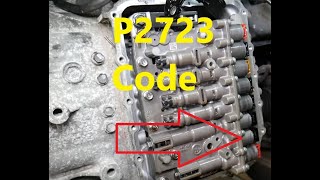
- Locate Pressure Control Solenoid 'E' (SSE) on the valve body. In the Allison 1000, it is one of three identical, normally-closed shift solenoids. Inspect its connector and wiring for chafing or damage.
- Test the solenoid's resistance with a multimeter. It should be between 22 and 24.5 ohms for a 2001-2009 Allison 1000. Some sources state a wider acceptable range of 20-30 ohms. A reading outside this range indicates a failed solenoid.
- If the solenoid tests good, the problem may lie in the internal wiring harness, the valve body (e.g., a stuck valve or blocked passage), the TCM, or an internal mechanical issue, which requires more advanced diagnostics.
Parts You'll Likely Need
- Pressure Control Solenoid 'E'
(OEM #29536833)— This is the component directly identified by the trouble code. It is a common failure point and is the same part used for solenoids C, D, and G in the Allison 1000.
Trusted brands: ACDelco (GM), Rostra, Sonnax
OEM price range: $80-$150
Aftermarket price range: $40-$90 - Transmission Filter and Gasket Kit — This is required for any repair that involves dropping the transmission pan. It's essential to replace the filter and fluid at the same time.
Trusted brands: ACDelco, Wix, Allison
OEM price range: $40-$80
Aftermarket price range: $25-$50 - Automatic Transmission Fluid — The correct type and amount of fluid is critical. For the Allison 1000, a fluid meeting TES 295, TES 389, or the newer TES 668 specification is required. DEXRON-VI is generally used for the 6L90 transmission.
Trusted brands: Allison TranSynd, ACDelco, Valvoline
OEM price range: $12-$25 per quart
Aftermarket price range: $10-$18 per quart
Related Codes That Often Appear With This One
- P0700 — P0700 is a general transmission fault code. It means the TCM has detected a problem and has requested the main engine computer (PCM) to turn on the Check Engine Light. It will almost always be present with any specific transmission code like P2723.
- P0701 — As noted in TSB #PIP4379N, this code relates to transmission control system performance and diagnostics for it should be followed first when seen with P2723.
- P0872 / P0873 — These codes relate to the Transmission Fluid Pressure Switch 'E' circuit being stuck closed or high, respectively. They can be logged alongside P2723 as they monitor the hydraulic result of the solenoid's action.
Technical Service Bulletins (TSBs) & Recalls
- PIP4379N: Mentions that P2723 can be set along with a host of other transmission codes and advises technicians to diagnose P0701 first if it is present.
Platform-Specific Known Issues
- Sudden Failure Leading to No Movement: In a forum thread, a Chevrolet Silverado 2500HD owner reported the truck shifting hard, then suddenly being unable to move forward or backward after throwing codes P2723 and P0700. This indicates that a solenoid failure can sometimes be abrupt and completely disable the vehicle.
- Internal Piston Failure: A user on DuramaxDiesels.com with a P2723 code went through extensive diagnostics, replacing the valve body, solenoids, and wiring harness with no success. A full transmission teardown revealed the actual cause was a blown internal piston that was failing to hold pressure.
Mechanic-Grade Diagnostic Values
- Shift Solenoid 'E' (SSE) Resistance — expected: 22 - 24.5 Ohms (some sources allow 20 - 30 Ohms). Failure: A reading of infinity (open circuit) or near-zero (short circuit)
- Trim Solenoid A/B Resistance — expected: 5.5 - 6.5 Ohms. Failure: Reading outside of specified range
- TCC Solenoid 'F' Resistance — expected: 10.5 - 11.5 Ohms. Failure: Reading outside of specified range
- Speed Sensor AC Voltage Output — expected: 150mV - 15V (Varies with RPM). Failure: No signal or erratic signal, which may not set a code but can cause issues
Hidden / Shadow Codes Worth Checking
- P0872: Transmission Fluid Pressure Switch 'E' Circuit Stuck Closed. This indicates the pressure switch is not reading correctly, which is directly related to the function of Solenoid E. (see via Standard OBD-II scanner, often appears with P2723.)
- P0873: Transmission Fluid Pressure Switch 'E' Circuit High. This indicates the pressure switch circuit is reading high voltage, pointing to a potential wiring or switch issue related to Solenoid E. (see via Standard OBD-II scanner, often appears with P2723.)
Scan Tool Commands That Help
- GM Tech2 / GDS2: Solenoid Actuation Test — To command the 'E' solenoid on and off with the engine running (pan on) or off (pan removed) to audibly or physically verify its mechanical operation.
- GM Tech2: TCM Cleaning and Performance Test — This is a guided diagnostic procedure within the factory scan tool used to cycle solenoids and perform checks after a potential issue is detected. It may be required after component replacement.
- GM Tech2 / GDS2: Transmission Adapt Reset / Fast Learn — After replacing a solenoid, valve body, or TEHCM, a relearn procedure is required to reset the adaptive shift strategy to prevent harsh shifting or damage.
Wiring & Ground Locations
- Main Transmission Connector — The large, round twist-lock connector on the passenger side of the Allison transmission case.. This is the primary connection point for all electronic signals between the TCM and the transmission's internal components, including Solenoid E. It is a common spot for corrosion and pin damage.
- G103 — On the front of the right (passenger side) cylinder head.. This is a primary ground for the Engine Control Module (ECM) and other critical engine electronics. A poor connection here can cause erratic voltage and unpredictable behavior in computer-controlled systems, including the transmission.
- G104 — On the rear of the left (driver side) cylinder head.. This is another major engine ground point. On some models, a braided strap runs from here to the firewall. A bad connection can lead to a host of electrical issues.
Real Owner Repair Stories
- DuramaxDiesels.com forum member (GMC Sierra with 6-speed Allison 1000) — Code P2723, slipping between 2-3, would sometimes shift fine then go into limp mode on downshift. No reverse.
❌ Tried (didn't work) Cleaned original valve body, Replaced valve body with a different unit, Replaced internal wiring harness and solenoids, Replaced speed sensor
✅ What actually fixed it A complete transmission teardown revealed a blown internal piston which was preventing the circuit from holding pressure. All electronic components and the valve body were actually fine.
When the Usual Fixes Don't Work
- In one documented case, a vehicle owner with P2723 replaced all common electronic parts, including the solenoids, wiring, and even the entire valve body, without resolving the issue. The ultimate cause was discovered only after a full transmission teardown: a blown internal piston in a clutch pack. This highlights that while P2723 is an electronic code, it can be triggered by a purely mechanical failure that prevents the hydraulic circuit from operating as the TCM expects, even with a perfectly functional solenoid.
OEM Part Supersession History
29539517→29536833— Standard part revision by the manufacturer.
Heads up: The parts are interchangeable; 29536833 is the current replacement for the older number.
Model Year Variations Within This Range
- 2001-2005 vs 2006-2008: The Allison 1000 transitioned from a 5-speed to a 6-speed in 2006. While the 'E' solenoid part number remained the same, the 6-speed valve body has an additional tube, and the TCC and pressure control solenoids (PCS) are different parts from the 5-speed version.
- 2001-2003 vs 2004-2005: The 2004-2005 5-speed models have seven solenoids on the valve body, adding a 'G' solenoid not present on 2001-2003 models which only have six.
- 2007+: The Engine Speed Sensor, which reads protrusions on the torque converter, was eliminated starting in the 2007 model year.
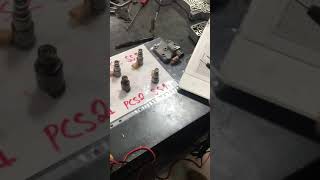
Helpful Videos
We Have This Part in Stock

The information in this article is provided for general reference and educational purposes only. Vehicle specifications, procedures, and part compatibility can vary by production date, trim level, and region. Always consult your vehicle's factory service manual and verify part numbers before purchasing or performing repairs. Safety-critical components such as airbags, seat belts, and braking systems should be installed by a qualified professional.
- Gmc SIERRA 2500:
- 🧭 Diagnostic Flowchart
- 🎬 Helpful Videos
- 🛍️ Shop This Part
- What's Unique About the 2001-2008 Gmc SIERRA 2500
- Symptoms You May Notice
- Most Likely Causes
- Rare But Worth Checking
- Diagnosis Steps
- Parts You'll Likely Need
- Related Codes That Often Appear With This One
- Technical Service Bulletins (TSBs) & Recalls
- Platform-Specific Known Issues
- Mechanic-Grade Diagnostic Values
- Hidden / Shadow Codes Worth Checking
- Scan Tool Commands That Help
- Wiring & Ground Locations
- Real Owner Repair Stories
- When the Usual Fixes Don't Work
- OEM Part Supersession History
- Model Year Variations Within This Range
- 🎟️ Get 5% Off