

P2723 on 2008-2012 GMC Sierra Denali: Transmission Solenoid Causes and Fixes
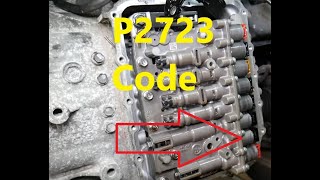
This code indicates the transmission's Pressure Control Solenoid 'E' is stuck off, often causing severe shifting problems or a no-move condition. On this truck with the 6L80/6L90 transmission, a primary suspect is debris from a faulty aftermarket spin-on filter clogging the transmission valve body separator plate. The fix usually involves dropping the transmission pan to inspect and clean the valve body, and potentially replacing the separator plate or the entire solenoid/TCM assembly (TEHCM).
- P2723 on a 2008-2012 Sierra Denali is a critical transmission code indicating a failure of Pressure Control Solenoid 5.
- Before replacing expensive parts, inspect the transmission valve body separator plate for blockages, a known issue cited in GM Technical Service Bulletins.
- Avoid using non-OEM spec aftermarket spin-on transmission filters, as they have been identified as a source of debris that causes this problem.
- This is not a simple DIY fix. Repair involves internal transmission work and may require programming a new control module, making professional service highly recommended.
- Do not continue to drive the vehicle, as you risk catastrophic transmission failure.
What's Unique About the 2008-2012 Gmc SIERRA DENALI
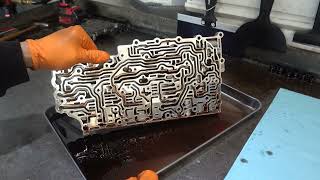
For this generation of GMC Sierra with the 6L80/6L90 transmission, the P2723 code is specifically addressed in manufacturer bulletins. These TSBs highlight a unique vulnerability: fibrous debris from aftermarket spin-on transmission filters can break down and travel into the transmission, blocking small orifices in the valve body separator plate. This blockage starves the solenoid and the 1-2-3-4 clutch pack of fluid, triggering the code and often causing a no-move condition. This makes checking for internal debris a critical first step, even before condemning the expensive TEHCM (solenoid/TCM) assembly.
Diagnostic Flowchart
Tap your situation to follow the diagnostic path that matches what you're seeing on this vehicle.
Symptoms You May Notice
- Vehicle will not move in forward or reverse (as noted in TSB #PIP5100A and #PIP5100).
- Harsh or delayed shifting, particularly on up-shifts.
- Transmission slipping (engine RPMs rise without an increase in speed).
- Vehicle enters "limp mode," often stuck in a single gear like 4th or 5th.
- Illuminated Check Engine Light.
- Transmission overheating due to slipping clutches and incorrect pressures.
- Noticeable loss of power, especially when accelerating from a stop.
- Immediately replacing the TEHCM (solenoid/TCM pack) without first inspecting the valve body separator plate for blockages, which is a known issue on these trucks per TSBs.
- Condemning the entire transmission for a rebuild when the issue is simply debris in the valve body or a failed TEHCM, which are serviceable with the transmission in the vehicle.
Most Likely Causes
- Blocked Valve Body Separator Plate Orifices 🔴 High Probability → Shop Transmission Valve Body As cited in TSBs #PIP5100A and #PIP5100, debris, especially fibrous material from aftermarket spin-on filters, is a known issue that clogs hydraulic passages within the valve body. Forum users have confirmed finding this debris blocking the specific orifices for the affected clutch pack.
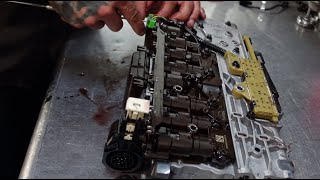
How to confirm: Drop the transmission pan and remove the valve body to visually inspect the separator plate and orifices for blockage. The debris is often described as black, fibrous material. The check balls in the valve body should also be inspected for wear or being out of place, which can also cause this code.
Typical fix: Clean the valve body and separator plate thoroughly. If debris is from a faulty filter, replace the filter with an OEM-spec part. Replace the separator plate if it is damaged or warped. Sonnax makes popular replacement plates.
Est. part cost: $50-$150 for a separator plate and filter kit. - Faulty Pressure Control Solenoid / TEHCM Assembly 🟡 Medium Probability → Shop Transmission Clutch Pressure Control Solenoid The solenoids are integrated into the control valve solenoid and TCM assembly (known as the TEHCM). Internal failure of the solenoid coil or a mechanical fault (stuck plunger) can occur. However, this is often misdiagnosed when the root cause is a blockage.
How to confirm: Requires a diagnostic scan tool (like a Tech2) to perform a solenoid actuation test. A multimeter can be used to check solenoid resistance (should be around 5.3 ohms for PC solenoids), but this only checks the electrical side and must be done with the pan off.
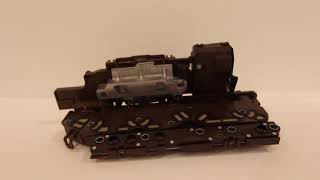
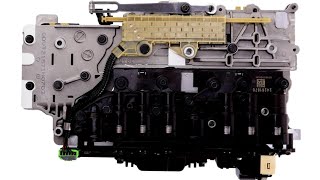
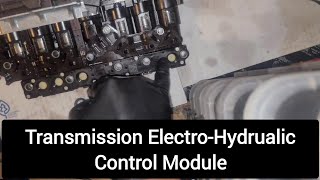
Typical fix: Replacement of the entire Control Valve Solenoid & TCM assembly (TEHCM). This part must be programmed to the vehicle's VIN.
Est. part cost: $400-$800 for a new OEM TEHCM assembly. - Low or Dirty Transmission Fluid 🟡 Medium Probability → Shop Transmission Assembly Low fluid levels prevent the transmission pump from creating the necessary pressure for solenoids to operate. Dirty or degraded fluid can clog the small passages and screens within the solenoids themselves, leading to performance codes.
How to confirm: Check the transmission fluid level and condition. The fluid should be at the correct level, red in color, and not smell burnt. Dark or grey fluid indicates clutch material contamination.
Typical fix: Top off or perform a complete fluid and filter change using the correct specification fluid (ACDelco DEXRON-VI).
Est. part cost: $75-$150 for fluid and a filter.
Rare But Worth Checking
- Internal Wiring Issues: The wiring harness inside the transmission can become damaged or connectors can loosen, causing an intermittent connection to the solenoid. This should be inspected when the pan is off.
- Failing Transmission Pump: → Shop Transmission Assembly A weak pump can't generate enough line pressure for the entire system, which can manifest as a pressure-related code like P2723. This is a major internal failure often accompanied by other codes.
- Cracked 1-2-3-4 / 3-5-R Drum: A known failure point in the 6L80 is a crack in the weld of the 1-2-3-4 / 3-5-R clutch drum, which can cause pressure loss and lead to codes like P2723. This requires a full transmission rebuild to fix.
Diagnosis Steps
- Check and verify the transmission fluid level and condition. Ensure it is full and does not appear burnt or contaminated.
- Scan the TCM for all stored trouble codes. If P0700 is present, this confirms a transmission-specific fault like P2723 is the root cause.
- Review the TSBs (#PIP5100A, #PIP5100, #PIP4379M) related to this code for your specific vehicle.
- Drop the transmission pan and inspect for excessive metal debris or clutch material. A small amount of fine grey material on the magnet is normal; large flakes are not.
- Inspect the transmission filter. If it is an aftermarket spin-on type, check for signs of degradation or fibrous material breaking off.
- Remove the transmission valve body and inspect the separator plate orifices for blockage or debris, as highlighted in the TSBs. Also check the 7 checkballs for wear or being out of place.
- If the separator plate is clear, inspect the wiring harness to the TEHCM for any damage.
- If no physical blockages or wiring faults are found, the TEHCM (which contains the solenoids) is the likely culprit and may require testing with a specialized scan tool or replacement and subsequent programming.
Parts You'll Likely Need
- Transmission Valve Body Separator Plate
(OEM #24245720 (Note: Verify correct plate for your specific valve body type))— A primary cause of P2723 on these trucks is debris clogging the orifices in this plate, as documented in TSBs #PIP5100 and #PIP5100A. Using the wrong plate can cause a no-forward or no-reverse condition.
Trusted brands: ACDelco, Sonnax
OEM price range: $60-$100
Aftermarket price range: $40-$80 - Transmission Control Module (TEHCM)
(OEM #24256861 (Supersedes multiple older numbers, verify by VIN))— This unit contains the pressure control solenoids. If a solenoid has failed electrically or is mechanically stuck, the entire unit must be replaced and programmed.
Trusted brands: ACDelco
OEM price range: $400-$800
Aftermarket price range: $300-$600 - Transmission Filter and Gasket Kit
(OEM #24236933 (ACDelco Kit))— Required whenever the transmission pan is dropped for service. A clogged filter can cause low pressure, and TSB #PIP5100A specifically warns against faulty aftermarket filters causing this issue.
Trusted brands: ACDelco
OEM price range: $40-$70
Aftermarket price range: $20-$50 - Automatic Transmission Fluid (DEXRON-VI)
(OEM #10-9395 (ACDelco DEXRON-VI))— The system must be refilled with approximately 6-8 quarts of the correct fluid after dropping the pan for valve body or TEHCM service.
Trusted brands: ACDelco, Valvoline, Mobil 1
OEM price range: $8-$12 per quart
Aftermarket price range: $7-$10 per quart
Related Codes That Often Appear With This One
- P0700 — This is a general Transmission Control System Malfunction code that simply indicates the TCM has stored a fault. It will almost always be present with P2723.
- P0751 — This code relates to Shift Solenoid 'A' being stuck off. It's common to see multiple solenoid or gear ratio codes together when there is a systemic hydraulic issue, as mentioned in TSBs #PIP4379M and #PIP5100.
- P0877 — This code indicates a fault in the Transmission Fluid Pressure Sensor/Switch 'D' Circuit. TSBs #PIP5100A and #PIP4379M list it alongside P2723, pointing to a widespread pressure problem within the valve body.
- P0796 — Relates to Pressure Control Solenoid 'C' Stuck Off. Finding multiple PC solenoid codes together strongly suggests a hydraulic blockage, fluid contamination, or valve body issue rather than multiple individual solenoid failures.
Technical Service Bulletins (TSBs) & Recalls
- PIP4379M: Mentions P2723 as part of a large group of transmission codes and advises diagnosing P0701 first.
- PIP5100A: Links P2723 and other codes to a no-move condition caused by valve body separator plate blockage from aftermarket spin-on filter debris.
- PIP5100: The predecessor to PIP5100A, also pointing to separator plate debris as the cause for a no-move condition and various DTCs including P2723.
Platform-Specific Known Issues
- Technical Service Bulletin #PIP5100A explicitly links P2723 to blockages in the valve body separator plate caused by debris from aftermarket spin-on transmission filters.
- TSB #PIP4379M and #PIP5100 also list P2723 in a group of codes that can be caused by hydraulic circuit issues or debris within the valve body.
Mechanic-Grade Diagnostic Values
- Pressure Control (PC) Solenoid Resistance — expected: 3.0 - 8.0 ohms at ~70°F.. Failure: A reading outside this range (open circuit or short) indicates a failed solenoid coil.
- Shift Solenoid (On/Off type) Resistance — expected: 20 - 40 ohms.. Failure: A reading outside this range indicates a failed solenoid coil.
- Solenoid Feed Voltage (from TEHCM) — expected: 8.3 - 9.3 volts.. Failure: Incorrect voltage suggests a fault within the TEHCM's internal power regulation.
- Pressure Control (PC) Solenoid Current Draw — expected: 1.5 - 4.0 amps at 12 volts (when bench testing).. Failure: Amperage outside this range indicates a faulty solenoid.
Scan Tool Commands That Help
- GM Tech2 / GDS2: Solenoid Automated Cleaning Process — Before replacing a TEHCM for a performance code like P2723, this function cycles all solenoids to dislodge and flush minor debris that may be causing it to stick.
- GM Tech2 / GDS2 / high-end aftermarket: Service Fast Learn Adapts — This is mandatory after replacing the TEHCM, valve body, or performing any major internal transmission repair. It resets and relearns the clutch volume indexes (CVI) and adaptive pressures to prevent harsh shifting and damage.
- GM Tech2 / GDS2: Solenoid Actuation Test (with DT 47825 test plate) — During a bench test with the valve body removed, this command cycles a specific solenoid while air pressure is applied, allowing a technician to verify mechanically if the solenoid is opening and closing correctly.
Wiring & Ground Locations
- G110 / G114 — Typically located on the rear of the passenger side cylinder head.. The TEHCM and other critical engine sensors share these grounds. A loose or corroded ground at this location can cause erratic behavior, communication faults, and incorrect sensor readings, potentially leading to false transmission codes.
- Main Transmission Connector (16-way) — On the passenger side of the transmission case.. This is the sole communication and power link to the TEHCM. Any corrosion, moisture intrusion, or pushed-back pins in this connector will directly impact solenoid function and can trigger P2723.
- Chassis to Engine Block Ground Strap — A braided strap often running from the firewall or frame rail to the engine block.. This is a primary ground path for the entire powertrain. These straps are known to corrode and break, causing a host of electrical issues, including intermittent transmission faults.
Real Owner Repair Stories
- Tahoe Yukon Forum (2011 Chevy Tahoe with 6L80 transmission) — High RPMs with no engagement from a stop, followed by P2723 and P0700 codes, eventually entering limp mode.
❌ Tried (didn't work) Changing transmission fluid and filter., Manually clearing codes.
✅ What actually fixed it The owner performed DVOM resistance tests on the TEHCM solenoids and pressure switches, and all values were within spec. An expert on the forum advised that P2723 is frequently caused by a hydraulic issue in the valve body (like a stuck valve or blockage) rather than an electrical failure of the TEHCM, but the computer sets the solenoid code because it cannot directly monitor the valve body's mechanical state. The resolution pointed toward inspecting/servicing the valve body instead of replacing the TEHCM that tested good.
"I Checked Everything" — The Actual Cause
- A common scenario for P2723 is when a technician performs electrical checks on the TEHCM and finds all solenoid resistance values are normal. As detailed in a real-world repair story, the code persisted because the root cause was not electrical but hydraulic—likely a stuck valve or debris in a passage within the valve body itself. The TEHCM sets the solenoid code because it only sees the end result (incorrect pressure/timing), not the underlying mechanical cause, leading to a misdiagnosis if only electrical tests are performed.
OEM Part Supersession History
24252114 / 24241350 (and others)→24256861— Hardware and software updates to improve solenoid and pressure switch reliability.
Heads up: The TEHCM part number 24256861 has also been superseded by GM part number 19435614. Always verify the correct part number by VIN, as installing the wrong hardware generation can result in a no-start or immediate limp mode.24246916 (Early 1st design separator plate)→24245720 (Early 2nd design separator plate)— Design change to prevent clutch issues and code P0751.
Heads up: If the original 24246916 plate is found during service, it is highly recommended by Sonnax to replace it with the 24245720 plate to prevent future shift problems and clutch slippage.
Model Year Variations Within This Range
- 2008-2009: These early models are equipped with a 'Gen 1' TEHCM which is known to be more susceptible to pressure switch membrane failures and TCC solenoid issues compared to later revisions.
- 2010-2012: Starting in 2010, GM introduced a 'Type 2' valve body separator plate which had different orifice sizing compared to the 'Type 1' plate used from 2006-2009. The valve body castings also changed, eliminating exhaust ports found on earlier designs. Using the wrong plate for the valve body can cause severe hydraulic leaks and shifting problems.
Helpful Videos


We Have This Part in Stock


The information in this article is provided for general reference and educational purposes only. Vehicle specifications, procedures, and part compatibility can vary by production date, trim level, and region. Always consult your vehicle's factory service manual and verify part numbers before purchasing or performing repairs. Safety-critical components such as airbags, seat belts, and braking systems should be installed by a qualified professional.
- Gmc SIERRA DENALI:
- 🧭 Diagnostic Flowchart
- 🎬 Helpful Videos
- 🛍️ Shop This Part
- What's Unique About the 2008-2012 Gmc SIERRA DENALI
- Symptoms You May Notice
- Most Likely Causes
- Rare But Worth Checking
- Diagnosis Steps
- Parts You'll Likely Need
- Related Codes That Often Appear With This One
- Technical Service Bulletins (TSBs) & Recalls
- Platform-Specific Known Issues
- Mechanic-Grade Diagnostic Values
- Scan Tool Commands That Help
- Wiring & Ground Locations
- Real Owner Repair Stories
- "I Checked Everything" — The Actual Cause
- OEM Part Supersession History
- Model Year Variations Within This Range
- 🎟️ Get 5% Off