

P2723 on 2013-2015 GMC Sierra Denali: Pressure Control Solenoid 'E' Causes and Fixes
On a 2013-2015 GMC Sierra Denali, code P2723 typically points to debris clogging the transmission valve body, a known issue cited in GM Technical Service Bulletins. The fix often requires cleaning or replacing the valve body separator plate and a full transmission fluid exchange, rather than just replacing the solenoid. In some cases, a cracked internal clutch housing can also be the cause.
- P2723 on a 2013-2015 Sierra Denali is a serious transmission code that can leave you stranded.
- The most likely cause is not the solenoid itself, but debris clogging the transmission valve body separator plate, a known issue documented by GM.
- Before replacing expensive parts like the TEHCM (solenoid pack/TCM), the valve body must be inspected for contamination.
- Using non-OEM aftermarket spin-on transmission filters has been specifically linked to this problem in a Technical Service Bulletin.
- This is not a DIY-friendly repair; it requires specialized knowledge of automatic transmissions and should be handled by a professional.
What's Unique About the 2013-2015 Gmc SIERRA DENALI
For this generation of Sierra, equipped with the 6L80 6-speed automatic transmission, this code is very specific. Manufacturer TSBs #PIP5100A and #PIP5100 directly link P2723 to debris blocking small orifices in the valve body separator plate. This debris can come from normal wear, a failing torque converter, or even shrink-wrap from aftermarket spin-on filters. Furthermore, forum experts note that mechanical wear inside the valve body, such as worn check balls or worn valve bores, can cause hydraulic leaks that the TCM misinterprets as a solenoid failure, even if the solenoid tests perfectly fine electrically. Another documented, though less common, cause is a cracked 1-2-3-4 / 3-5-R clutch housing, as noted in TSB #09-07-30-004J.
Diagnostic Flowchart
Tap your situation to follow the diagnostic path that matches what you're seeing on this vehicle.
Generation note: The 2013 model year is the last of the second generation (GMT900), while 2014-2015 models are the first of the third generation (K2XX). Both generations commonly used the 6L80 transmission, making this fault and its causes applicable across this year range.
Symptoms You May Notice
- Vehicle will not move in forward or reverse. [PIP5100, PIP5100A, 10]
- Harsh or delayed shifts.
- Transmission slipping, where engine RPMs rise without an increase in vehicle speed.
- Vehicle enters "limp mode," getting stuck in a single gear.
- Illuminated Check Engine Light or Transmission Warning Lamp.
- Transmission overheating, with temperatures rising significantly under load.
- Replacing the pressure control solenoid (or the entire TEHCM) without addressing the root cause of debris. If a failing torque converter or other internal wear is creating contamination, the new parts will soon fail as well.
- Assuming the TEHCM is bad when electrical tests pass. The problem is often a mechanical/hydraulic issue within the valve body that the computer cannot directly detect.
Most Likely Causes
- Debris in Valve Body Separator Plate Orifices 🔴 High Probability → Shop Transmission Valve Body This is a well-documented issue in GM TSBs #PIP5100 and #PIP5100A for this transmission. Debris from the torque converter clutch, normal wear, or even foreign material from aftermarket filter packaging can easily clog the small passages, leading to a pressure loss that the TCM interprets as a failed solenoid.
How to confirm: Drop the transmission pan and valve body. Visually inspect the separator plate and valve body passages for blockage or debris. TSB #PIP5100A specifically shows pictures of plastic shrink-wrap blocking orifices.
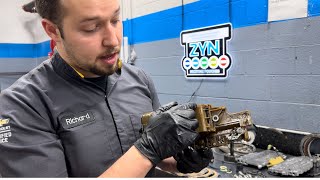
Typical fix: Thoroughly clean the valve body and separator plate. 🎬 Watch: Step-by-step guide to cleaning and reassembling the 6L80 valve body. Replace the separator plate if it is damaged or excessively worn. A complete transmission fluid and filter change is required.
Est. part cost: $30-$100 for a separator plate and gasket kit. - Failed Pressure Control Solenoid 'E' / TEHCM Assembly 🟡 Medium Probability → Shop Transmission Clutch Pressure Control Solenoid On the 6L80 transmission, the solenoids are part of the Transmission Electro-Hydraulic Control Module (TEHCM), which also contains the TCM. While the solenoid itself can fail electrically or mechanically, it's often misdiagnosed when the root cause is hydraulic. Heat and vibration can cause the solenoid coil to fail.
How to confirm: A bi-directional scan tool can perform a solenoid actuation test. The solenoid's resistance can also be checked with a multimeter; for pressure control solenoids in the 6L80, the reading should be between 5-6 ohms. A reading outside this range indicates an electrical failure.
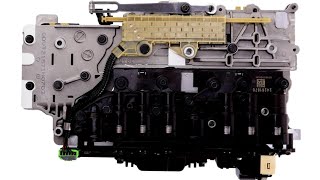
Typical fix: Replace the entire TEHCM assembly, which includes all solenoids and the TCM. The new module will require programming to the vehicle's VIN. It is critical to match the part number from the old TEHCM. 🎬 See a mechanic's advice on choosing the right TEHCM replacement.
Est. part cost: $400-$800 for a new TEHCM assembly. - Low or Contaminated Transmission Fluid 🟡 Medium Probability → Shop Transmission Assembly Incorrect fluid level affects hydraulic pressure, while old, broken-down fluid (dark, smelly) can cause solenoids to stick and contributes to the debris that clogs passages.
How to confirm: Check the transmission fluid level and condition. These vehicles do not have a dipstick, so the check must be performed via a fill plug on the transmission with the vehicle level and at a specific temperature (typically 86°F to 122°F). Fluid should be red (DEXRON-VI) and not smell burnt.
Typical fix: Perform a complete transmission fluid exchange with DEXRON-VI certified fluid and replace the filter.
Est. part cost: $100-$200 for fluid and a filter kit. - Cracked 1-2-3-4 / 3-5-R Clutch Housing ⚪ Low Probability A known issue documented in GM TSB #09-07-30-004J for the 6L80 transmission can cause slips, harsh shifts, and set code P2723. A cracked weld on the housing leads to internal pressure loss.
How to confirm: This requires significant transmission disassembly. The TSB outlines a procedure to apply compressed air to the 3-5R clutch feed hole while applying a soap solution to the weld seam and checking for bubbles to confirm a crack.
Typical fix: Replacement of the cracked clutch housing, which is a major transmission repair.
Est. part cost: $150-$300 for the housing itself, but labor costs will be very high.
Rare But Worth Checking
- Damaged Wiring Harness: The internal wiring harness connecting the TEHCM can become brittle from heat cycles, leading to broken wires or intermittent connections that mimic a solenoid failure. Also check the main external 16-pin transmission connector for corrosion or damage.
- Worn Valve Body Components: → Shop Transmission Valve Body Even if the separator plate is clean, wear in the valve body itself, such as worn check balls or worn bores for regulator valves, can cause internal hydraulic leaks. The TCM cannot distinguish this from a solenoid fault and will set P2723. This is often the root cause when electrical tests on the TEHCM pass.
Diagnosis Steps
- Check and record any and all stored DTCs. Note if P0700 is present, which confirms a transmission-specific fault is stored.
- Inspect the transmission fluid level and condition. This must be done at the correct operating temperature (86-122°F). Note any burnt smell, dark coloration, or metallic particles.
- Drop the transmission pan and inspect for excessive metal shavings or clutch material, which would indicate a more serious internal failure (e.g., torque converter, clutch pack).
- Remove the valve body and inspect the separator plate orifices for debris or blockage, as recommended by TSBs #PIP5100 and #PIP5100A. Look carefully for foreign material like plastic.
- If no debris is found, test the Pressure Control Solenoid 'E' circuit. Using a multimeter, check the resistance between the appropriate pins on the TEHCM connector. It should be 5-6 ohms.
- If the circuit tests good electrically, the issue is likely hydraulic/mechanical. Inspect the valve body for worn check balls and scoring in the valve bores.
- If the solenoid is determined to be faulty (out-of-spec resistance), the entire TEHCM assembly must be replaced and programmed to the vehicle's VIN.
Parts You'll Likely Need
- Transmission Valve Body Separator Plate
(OEM #24243102)— This part is frequently the site of blockages from debris, as cited in GM TSBs. Replacing it is often part of a thorough cleaning of the valve body.
Trusted brands: ACDelco, GM Genuine Parts
OEM price range: $50-$90
Aftermarket price range: $30-$60 - Transmission Control Module (TEHCM)
(OEM #Multiple revisions exist (e.g., 24256523). Must be verified by VIN.)— Contains the pressure control solenoids and the TCM. If the solenoid has failed electrically or the TCM driver is bad, the entire unit must be replaced and programmed. This is a very common failure point for the 6L80.
Trusted brands: ACDelco, GM Genuine Parts
OEM price range: $500-$800
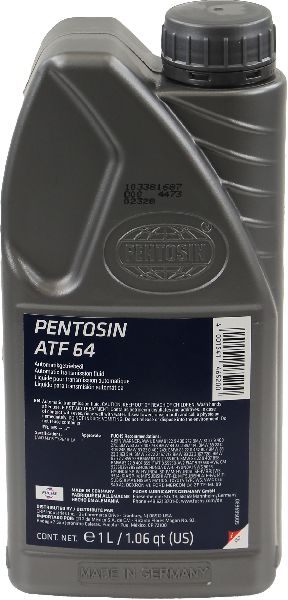
Aftermarket price range: $400-$600 - Automatic Transmission Fluid and Filter Kit — Any repair involving dropping the pan requires a fluid and filter change. Contaminated fluid is a primary cause of solenoid and valve body issues. Only DEXRON-VI fluid should be used.
Trusted brands: ACDelco, Valvoline, Castrol
OEM price range: $120-$200
Aftermarket price range: $80-$150
Related Codes That Often Appear With This One
- P0700 — This is a general Transmission Control System Malfunction code that is often set alongside more specific codes like P2723 to indicate a fault has been stored by the TCM. It is an informational code telling the main ECU to turn on the check engine light.
- P0751 — This code for Shift Solenoid 'A' Stuck Off can appear with P2723, as both can be caused by the same hydraulic circuit contamination or electrical issues within the TEHCM. [PIP4379M]
- P0877 — This code for 'Transmission Fluid Pressure Sensor/Switch D Circuit Low' is mentioned alongside P2723 in TSBs, indicating they can be set together by the same root cause of debris in the valve body. [PIP5100A, 10]
Technical Service Bulletins (TSBs) & Recalls
- PIP5100A: Warns that debris from aftermarket spin-on filter packaging can enter the transmission and block valve body orifices, causing a no-move condition and setting codes like P2723.
- PIP5100: The predecessor to PIP5100A, also pointing to debris in the valve body separator plate orifices as a cause for no-move conditions and various DTCs including P2723.
- PIP4379M: A general diagnostic TSB that lists P2723 among many other transmission codes and advises technicians to diagnose a general P0701 code first if it is present.
- 09-07-30-004J: Identifies a cracked 1-2-3-4 / 3-5-R clutch housing as a potential cause for slips, delayed engagement, and DTC P2723 in vehicles with the 6L80 transmission.
Platform-Specific Known Issues
- TSB #PIP5100A / #PIP5100: Explicitly state that for a no-move condition with code P2723, technicians should inspect the valve body separator plate orifices for blockage, which may be caused by debris from an aftermarket spin-on filter.
- TSB #PIP4379M: Lists P2723 among a large group of transmission codes and advises diagnosing the general transmission fault code P0701 first if it is also present.
Mechanic-Grade Diagnostic Values
- Pressure Control Solenoid 'E' (PC5) Resistance — expected: 5.0 - 6.0 ohms at ~70°F. Failure: A reading outside this range (open circuit or short) indicates a failed solenoid coil.
- Solenoid Operational Voltage (from TCM) — expected: 8.3 - 9.3 volts. Failure: Voltage outside this range could indicate a problem with the TEHCM's internal power supply or wiring.
- Transmission Line Pressure at Idle (in gear) — expected: Approximately 45 - 80 PSI. Failure: Significantly lower pressure can indicate a weak pump, major internal leaks, or low fluid level.
Scan Tool Commands That Help
- GM GDS2 / Tech2: Service Fast Learn Adapts — This procedure is mandatory after replacing the TEHCM, valve body, or transmission assembly. It allows the TCM to learn the hydraulic characteristics of the individual clutches to ensure proper shift quality and prevent damage.
- GM GDS2 / Tech2 (or other professional bidirectional scanner): Solenoid Control / Actuation Test — To functionally test a specific solenoid. The technician can command the solenoid ON and OFF to check for an audible click and a corresponding change in hydraulic pressure (if a gauge is connected), helping to isolate an electrical from a mechanical/hydraulic fault.
- GM GDS2 / Tech2: Reset Transmission Adapts — Used to clear the learned shift adaptation values. This is often done as part of the 'Service Fast Learn' procedure or when trying to resolve a shift quality issue after a fluid change.
Wiring & Ground Locations
- G110 — On the K2XX platform (2014-2015), this ground is located on the left front lower side of the engine block. GM has issued bulletins for newer models regarding loose connections at this specific ground, highlighting its importance.. This is a major ground point for the engine and transmission control systems. A loose or corroded connection here can cause erratic voltage, leading to incorrect sensor readings and unpredictable behavior from the TEHCM, potentially setting false codes.
- X216 (16-Pin Transmission Connector) — The main round electrical connector on the passenger side of the transmission case.. This is the sole electrical interface between the vehicle's main wiring harness and the internal TEHCM. Corrosion from moisture intrusion or damaged pins can interrupt power, ground, or CAN bus signals, directly causing solenoid performance codes like P2723.
- G102 / G103 — G102 is on the driver's side of the engine block, above the pan rail. G103 is on the front of the passenger side cylinder head.. These are primary engine control grounds. While not directly on the transmission, a poor connection can affect the ECM's stability, which communicates with the TCM via the CAN bus. Electrical noise from a bad ground can disrupt this communication.
Real Owner Repair Stories
- Automotive forum expert response (GM Truck with 6L80 Transmission) — P2723 code present.
❌ Tried (didn't work) Fluid and filter change., Resistance tests performed on all solenoids within the TEHCM, all of which were found to be within specification.
✅ What actually fixed it The diagnosis concluded that the TEHCM was likely not the fault. The root cause was identified as mechanical wear in the valve body, specifically worn check balls or scored valve bores. This internal hydraulic leakage prevents pressure from building correctly when the solenoid is commanded, which the TCM misinterprets as a solenoid 'Stuck Off' fault. The fix required valve body repair or replacement.
"I Checked Everything" — The Actual Cause
- In the context of code P2723, the equivalent of a 'smoke test clean' scenario is when the TEHCM and all its solenoids pass electrical tests (resistance checks, continuity). In these cases, the actual cause is often a purely mechanical or hydraulic issue that the TCM cannot directly sense. A documented example is when the solenoid resistance is perfect (5-6 ohms), but worn check balls or scored bores within the valve body are leaking pressure, causing the TCM to incorrectly flag the solenoid as faulty.
OEM Part Supersession History
24256861 / 24256863 (and others)→24274046 / 24285393 (and others)— Internal logic, calibration, and hardware improvements.
Heads up: TEHCMs are NOT interchangeable between year groups (e.g., 2010-2013 vs. 2014-2016). Installing a TEHCM from the wrong year range will cause immediate limp mode and shifting failures, even if it physically fits. The module must be matched to the vehicle's VIN and model year.
Model Year Variations Within This Range
- 2013 vs 2014-2015: The 2013 model is the last of the GMT900 generation, while 2014-2015 models are the K2XX generation. While both use the 6L80 transmission, the TEHCMs are different. The 2014+ models use a TEHCM with different internal calibrations (e.g., part #24274046) that is not backward-compatible with the TEHCM used in 2013 models (e.g., part #24256861). Using the wrong module will result in failure.
Helpful Videos

We Have This Part in Stock

The information in this article is provided for general reference and educational purposes only. Vehicle specifications, procedures, and part compatibility can vary by production date, trim level, and region. Always consult your vehicle's factory service manual and verify part numbers before purchasing or performing repairs. Safety-critical components such as airbags, seat belts, and braking systems should be installed by a qualified professional.
- Gmc SIERRA DENALI:
- 🧭 Diagnostic Flowchart
- 🎬 Helpful Videos
- 🛍️ Shop This Part
- What's Unique About the 2013-2015 Gmc SIERRA DENALI
- Symptoms You May Notice
- Most Likely Causes
- Rare But Worth Checking
- Diagnosis Steps
- Parts You'll Likely Need
- Related Codes That Often Appear With This One
- Technical Service Bulletins (TSBs) & Recalls
- Platform-Specific Known Issues
- Mechanic-Grade Diagnostic Values
- Scan Tool Commands That Help
- Wiring & Ground Locations
- Real Owner Repair Stories
- "I Checked Everything" — The Actual Cause
- OEM Part Supersession History
- Model Year Variations Within This Range
- 🎟️ Get 5% Off