

OBD-II Code P2725: Pressure Control Solenoid 'E' Electrical — Comprehensive Guide
The ultimate expert guide to diagnosing and fixing P2725. What it means, why it triggers, and how to fix it for good.
- Code P2725 indicates an electrical failure in Pressure Control Solenoid 'E', immediately triggering a protective 'limp mode' that limits the vehicle to 2nd or 3rd gear.
- Always check the transmission fluid first; fluid that is low or burnt causes solenoids to overheat and fail electrically, requiring a $150-$300 fluid and filter service.
- Do not replace the solenoid without testing the wiring; use a multimeter to verify 12V power and ground at the solenoid connector to rule out a $150 wiring repair.
- For 2011-2018 Ford F-150s and 2007-2015 GM trucks, P2725 frequently requires replacing the entire $1,200-$1,800 internal control module (Lead Frame or TEHCM) rather than a single $50 solenoid.
What Does P2725 Mean?
Your car's Transmission Control Module (TCM) detected a critical electrical problem with 'Pressure Control Solenoid E'. This small, electronically controlled valve precisely manages transmission fluid pressure to ensure smooth gear shifts. Code P2725 means the electrical circuit for this solenoid has a fault—such as a broken wire, a short circuit, or an internal solenoid failure—preventing the TCM from controlling it.
Technical definition: The official SAE/OBD-II definition is "Pressure Control Solenoid 'E' Electrical". This indicates the Transmission Control Module (TCM) detected a general electrical malfunction in the control circuit for pressure control solenoid 'E'. This fault is typically an open circuit, a short to ground, or a short to voltage, preventing the TCM from modulating fluid pressure.
Can I Drive With P2725?
Yes, But With Caution. You can drive, but it is strongly discouraged. Continued driving with an electrical fault in the pressure control circuit causes catastrophic transmission damage. The transmission will shift harshly, slip, or enter 'limp mode' with limited gears. Ignoring the issue causes overheating and internal failure of clutch packs, turning a $300-$800 repair into a $3,500+ transmission replacement.
Common Causes
- Faulty Pressure Control Solenoid 'E' (Very Common) — The electronic coil winding inside the solenoid shorts out or breaks (open circuit), preventing it from moving the valve that controls fluid pressure. This internal electrical failure directly triggers P2725.
- Failed TEHCM, Lead Frame, or TCM (Very Common) — On modern Ford (6R80) and GM (6L80) transmissions, the internal plastic lead frame or TEHCM module cracks or fails electrically. This disrupts the circuit to the solenoid, requiring replacement of the entire control assembly.
- Wiring or Connector Issues (Common) — Wires leading to the transmission melt against the exhaust, chafe on the chassis, or corrode at the connector pins. This creates an open circuit or high resistance.
- Low or Dirty Transmission Fluid (Common) — Low fluid starves the solenoids of pressure. Dirty, metal-contaminated fluid clogs the solenoid's internal passages, causing it to overheat and fail electrically.
- Internal Transmission Hydraulic Blockage (Rare) — Severe blockages inside the transmission's valve body prevent fluid from reaching the solenoid. The TCM sometimes misinterprets this extreme pressure deviation as an electrical fault.
- Failed Internal Transmission Pump (Rare) — A failing transmission pump causes widespread low pressure. While this typically triggers performance codes, it occasionally causes erratic solenoid behavior flagged as an electrical fault.
Symptoms
- Vehicle Enters 'Limp Mode' — The computer locks the transmission into a single gear (usually 2nd or 3rd) and limits top speed to 30-45 mph to prevent further internal damage.
- Harsh, Jerky Shifting — The car bangs violently into gear, or exhibits a severe delay when shifting from Park into Drive or Reverse.
- Transmission Slipping — Engine RPMs flare up without a corresponding increase in vehicle speed, indicating a total loss of hydraulic pressure to the clutch packs.
- Check Engine Light Illuminated — The MIL (Malfunction Indicator Lamp) or a specific transmission warning light (like a wrench icon) appears on the dashboard.
Diagnostic Flowchart
Tap your situation to follow the diagnostic path that matches what you're seeing on this code.
Common Fixes & Costs
- Replace Pressure Control Solenoid 'E'
— Parts: $50-$150, Labor: $200-$500, ~3 hr book time
(Advanced)
: OEM - Replace Transmission Valve Body / TEHCM / Lead Frame
— Parts: $500-$900, Labor: $400-$800, ~4.5 hr book time
(Professional)
: OEM
: OEM - Repair Damaged Wiring or Connectors — Parts: $20-$50, Labor: $150-$300, ~2.5 hr book time (Intermediate)
- Transmission Fluid and Filter Change — Parts: $75-$150, Labor: $120-$250, ~1.5 hr book time (Intermediate)
- Diagnostic Check by Professional — Parts: $0, Labor: $150-$200, ~1.5 hr book time (Professional)
Used vs. New Parts: Buying Guide
When a used part is worth it: Never buy used electronic transmission components. Solenoids, valve bodies, and TEHCMs fail due to internal wear; a salvage yard part carries the exact same risk.
Donor quality checklist:
- Avoid used electronic modules entirely.
- If buying a used hard part (like a pan), ensure it is free of rust and warping.
Decision logic:
- If The failed part is a solenoid, valve body, or TEHCM. → Buy new OEM or a quality remanufactured unit from a reputable supplier.
- If The part requires VIN programming. → Always buy new or remanufactured. Used modules are often locked to their original VIN and cannot be reprogrammed.
Warranty tradeoff: Used parts offer 30-day warranties that do not cover labor. New/remanufactured parts offer 1-year to lifetime warranties.
Worst-case if a used part fails: $1,000. If a used internal part fails, you pay labor twice to remove and replace it again.
What Happens If You Wait — Timeline
- 0-1 month: Check Engine Light illuminates. Shifting feels harsh when cold. Vehicle intermittently enters limp mode. (MPG impact: 0-5%% · Added cost: $0)
- 1-3 months: Harsh shifting becomes constant. Transmission slips between gears, causing engine RPMs to flare. Incorrect fluid pressure accelerates wear on internal clutch packs. (MPG impact: 5-10%% · Added cost: $50-$150 in wasted fuel.)
- 3-6 months: Slipping clutches generate extreme heat, burning the transmission fluid. Metal shavings contaminate the valve body and destroy other solenoids. (MPG impact: 10-15%% · Added cost: $800 - $1,800 for valve body and clutch pack replacement.)
- 6+ months: Catastrophic failure. Clutch packs are completely destroyed. The transmission fails to engage any gear, rendering the vehicle undrivable. (MPG impact: 15-25%+% · Added cost: $3,500 - $7,000+ for a complete transmission rebuild or replacement.)
Cost of Not Fixing It
- 0-1 Month: Harsh shifting and unpredictable limp mode activation create a severe safety hazard in traffic. (Added cost: $0, but drivability is ruined.)
- 1-6 Months: Incorrect line pressure destroys internal clutch packs. Metal shavings contaminate the entire transmission. (Added cost: $1,500. The repair escalates from a simple solenoid to a full valve body and clutch replacement.)
- 6+ Months: Catastrophic transmission failure. The torque converter and oil pump are destroyed by debris. (Added cost: $4,500+. A complete transmission replacement is the only option.)
Diagnosis Steps
- Scan for All Trouble Codes & Review Freeze Frame Data
Use an OBD-II scanner to read all codes from the ECU and TCM. Note the freeze frame data to see engine load and temperature when the fault occurred. Ignore P0700; focus entirely on P2725 and any accompanying performance codes (P2723/P2724).
Tools: OBD-II Scanner (Beginner) - Check Transmission Fluid Level and Condition
Follow the manufacturer's procedure to check the dipstick. Fluid must be at the 'FULL' mark and appear bright red. Black, brown, or burnt-smelling fluid indicates severe internal clutch damage requiring immediate service.
Tools: Rag or paper towel (Beginner) - Inspect Wiring and Connectors
Visually inspect the wiring harness from the TCM to the transmission. Look for chafing, melted insulation, or corroded connector pins. Disconnect the main transmission plug and check for moisture intrusion or bent pins.
Tools: Flashlight, mirror (Intermediate) - Test Solenoid Resistance
Access the solenoid (often requiring oil pan removal). Disconnect it and use a multimeter set to Ohms (Ω) across its terminals. Compare the reading to OEM specs (typically 15-40 ohms). Infinite resistance (open) or near-zero (short) confirms a dead solenoid.
Tools: Socket set, drain pan, multimeter, service manual (Advanced) - Check for Power and Ground at the Solenoid Connector
Turn the key ON (engine off). Use a multimeter to verify battery voltage (12V) on the power wire at the solenoid harness connector. The ground is usually pulse-width modulated (PWM) by the TCM.
Tools: Multimeter, vehicle-specific wiring diagram (Advanced) - Perform a Voltage Drop Test
Check for hidden resistance under load. Connect the multimeter from the battery positive to the solenoid power pin. A reading above 0.5 volts indicates a failing wire or corroded connection in the harness.
Tools: Multimeter with long leads, wiring diagram (Professional) - Analyze the TCM Command Signal with an Oscilloscope
Connect an oscilloscope to the solenoid's control wire. Command a shift using a bidirectional scan tool. A missing or erratic square wave (PWM) pattern confirms a failed driver circuit inside the TCM.
Tools: Oscilloscope, bidirectional scan tool, wiring diagram (Professional)
When This Code Triggers (Freeze-Frame Conditions)
- Engine Coolant Temp: 180-210°F (Vehicle at full operating temperature.)
- Engine RPM: 1500-2500 RPM (During a commanded gear shift.)
- Vehicle Speed: 30-60 mph (City or highway driving when the TCM attempts to modulate pressure.)
Related Codes
- P2723 — Pressure Control Solenoid E Performance. The electrical circuit is fine, but the solenoid is mechanically stuck or fluid passages are blocked.
- P2724 — Pressure Control Solenoid E Stuck On. Indicates a mechanically stuck open valve or a severe short-to-power keeping it energized.
- P2726 — Pressure Control Solenoid E Intermittent. Points directly to a loose connector, chafed wire, or failing internal coil that only acts up over bumps or when hot.
- P0700 — A generic messenger code telling the engine computer that the transmission computer has a fault. Always ignore P0700 and diagnose the specific P2725 code.
Climate & Environmental Factors
- High Humidity / Moisture: Moisture ingress at the main transmission connector causes short circuits and pin corrosion, directly triggering electrical codes.
- Road Salt: Salt spray severely corrodes external wiring harnesses and grounding points, leading to open circuits.
How to Talk to a Mechanic About This Code
Say this: "I have a [Year/Make/Model] with a P2725 'Pressure Control Solenoid E Electrical' code. I need a full electrical diagnosis of the circuit. Please test the solenoid resistance and verify power/ground at the connector before recommending a major component replacement."
This directs the shop to perform a proper diagnosis instead of blindly replacing the solenoid, preventing expensive misdiagnosis.
Avoid saying:
- 'My transmission is acting weird, can you fix it?'
- 'Just replace the solenoid, I read online that's the fix.'
Questions to ask before authorizing the repair:
- Did you test the solenoid's resistance and check for power and ground at the connector?
- Have you inspected the wiring harness for damage?
- If recommending a valve body or TEHCM, why won't replacing just the solenoid work?
- Does this repair require module programming, and is that included in the quote?
Where to Take It: Dealer vs Independent vs Chain
- Dealer:
Recommended only if the vehicle requires complex module programming (TEHCM) or is under warranty.
Best for: Vehicles under warranty., GM or Nissan vehicles requiring proprietary module programming.
Downsides: Highest labor rates and part costs., Tendency to replace entire assemblies rather than repair wiring. (Typical cost: +40% vs. baseline) - Independent Shop:
Best overall choice. A dedicated transmission shop accurately diagnoses electrical faults without dealer markups.
Best for: Out-of-warranty vehicles., Dedicated transmission specialty shops.
Downsides: May lack OEM programming tools for newer vehicles. (Typical cost: +0% vs. baseline) - Chain Shop:
Avoid. They are not equipped for the detailed electrical diagnostics this code requires.
Best for: Basic fluid changes.
Downsides: Lack specialized transmission diagnostic equipment., High risk of misdiagnosis. (Typical cost: -10% vs. baseline)
When to Walk Away From the Repair
If the estimated transmission repair exceeds 50% of the car's private-party value, sell the vehicle.
- Car worth $4000, fix is $2500: Walk away. A $2,500 repair on a $4,000 car is a poor investment.
- Car worth $15000, fix is $1800: Fix it. The repair is only 12% of the vehicle's value.
What Scan Tool You Need for This Code
Minimum: A scanner that reads OEM transmission codes and displays live data (PIDs) for solenoid commanded state.
A $20 code reader only shows the generic P0700 code and cannot view the live data required to verify TCM commands.
Budget: BlueDriver Pro (~$100) — Reads specific transmission codes and views live data. Lacks bidirectional control.
Mid-range: Foxwell NT809BT / XTOOL D7 (~$250-400) — Offers bidirectional control to manually command the 'E' solenoid on and off, drastically speeding up electrical diagnosis.
Professional: Autel MaxiCOM MK808 (~$450-800) — Provides full bidirectional control and performs TCM relearns required after replacing a valve body or TEHCM.
Rent vs buy: Buy a mid-range tool. Loaner tools from parts stores are basic code readers insufficient for diagnosing P2725.
How to Clear the Code After You Fix It
- Use an OBD-II scan tool to clear DTCs from the TCM and ECU.
- Perform the manufacturer-specific transmission relearn procedure (mandatory after replacing a valve body or TEHCM).
- Complete a full drive cycle to allow readiness monitors to run.
Drive cycle (~30 minutes): Start cold. Idle for 3 minutes. Drive in stop-and-go traffic for 15 minutes, ensuring shifts through all gears. Drive at a steady 55 mph for 10 minutes. Cool down completely.
Readiness monitors affected: Comprehensive Component Monitor (CCM)
Before emissions retest: drive at least 50 miles to fully set monitors.
Watch out for:
- Disconnecting the battery clears the code but resets all readiness monitors, guaranteeing an emissions test failure.
- Skipping the TCM relearn procedure after a parts replacement causes harsh shifting and immediate return of the code.
Will This Fail Emissions / State Inspection?
Yes — this code typically fails an OBD-II emissions inspection.
- California: An illuminated Check Engine Light is an automatic failure. A complete drive cycle must set all monitors to 'Ready' before re-testing.
- Texas: Clearing the code in the parking lot before the test results in an automatic failure due to 'Not Ready' status.
Most Commonly Affected Vehicles
- Ford F-150, Explorer, Mustang (2011-2018) — Extremely common on 6R80 transmissions due to a cracked internal molded lead frame. Ford issued Customer Satisfaction Program 19N01 for this exact failure.
- Chevrolet / GMC Silverado, Sierra, Tahoe (2007-2015) — 6L80/6L90 transmissions suffer frequent TEHCM failures. The entire module must be replaced and programmed.
- Honda Accord, Odyssey, Pilot (2005-2013) — Failures often occur in the externally mounted dual linear solenoid packs. These are easily accessible for DIY replacement.
- Nissan Altima, Maxima, Rogue (2007-2017) — Jatco CVT valve bodies fail frequently. Replacement requires specialized calibration software (NERS).
Manufacturer-Specific Notes
- General Motors (GM): Solenoids are permanently integrated into the TEHCM inside the pan. You cannot buy or replace just the 'E' solenoid; you must replace and program the entire $1,200 module.
- Ford: The plastic molded lead frame connecting the TCM to the solenoids cracks, causing open circuits. Replacing the solenoid does nothing; the lead frame must be replaced.
- Honda: Uses external linear solenoid packs. You can often fix this code in 30 minutes in your driveway without dropping the transmission pan.
Real Owner Stories
2012 Ford F-150 with 6R80 Transmission at 115K miles
Check engine light and wrench light illuminated. Transmission shifted harshly from 3rd to 5th gear and downshifted abruptly on the highway.
What they tried:
- A general mechanic scanned code P2725 and replaced the 'E' solenoid for $750.
- The problem returned within 50 miles.
Outcome: A transmission specialist recognized the symptoms as a failed internal molded lead frame, a known Ford 6R80 failure point. The specialist replaced the lead frame (Ford Part AL3Z-7A100-B), pan gasket, and fluid for $1,100. The truck has shifted perfectly for over a year.
Lesson: For Ford 6R80 transmissions, P2725 is almost always caused by the molded lead frame, not the individual solenoid. General mechanics frequently misdiagnose this.
2011 Chevy Silverado 1500 with 6L80 Transmission at 130K miles
Vehicle suddenly entered 'Limp Mode', stuck in 3rd gear. Codes P0700 and P2725 were present.
What they tried:
- Owner checked the transmission fluid; it was full but dark.
- A shop quoted $900 to replace the individual solenoid.
Outcome: The owner researched and suspected the entire TEHCM (Transmission Electro-Hydraulic Control Module) was faulty. A reputable shop replaced and programmed a new TEHCM unit for $1,600, resolving all shifting issues.
Lesson: On modern GM trucks, solenoids are integrated into a single TEHCM unit. Replacing an individual solenoid is impossible; the entire unit must be replaced and VIN-programmed.
2008 Honda Accord at 145K miles
Transmission jerked when shifting into Drive. The 'D' indicator light flashed, and code P2725 was stored.
What they tried:
- Owner performed three consecutive 'drain and fills' with genuine Honda ATF-DW1 fluid.
- Harsh shifting improved, but the code and flashing light remained.
Outcome: The owner tested the resistance of the external dual linear solenoid assembly and found it out of spec. Replacing the external solenoid pack with an OEM part for $250 completely fixed the problem.
Lesson: Many Honda vehicles use externally-mounted solenoid packs. This makes testing and replacement a highly approachable DIY repair compared to internal transmission work.
How to Prevent This Code From Triggering
- Change Transmission Fluid and Filter Regularly (Every 30,000 to 60,000 miles.) — Clean fluid lubricates moving parts and dissipates heat. Contaminated fluid clogs solenoids and causes them to overheat and fail electrically.
- Use Only Manufacturer-Specified Transmission Fluid (Every fluid change.) — Using the wrong fluid viscosity damages seals, causes clutch slippage, and leads to rapid solenoid malfunction.
- Install an Auxiliary Transmission Cooler (One-time installation for towing vehicles.) — Heat destroys automatic transmissions. An auxiliary cooler keeps fluid temperatures stable, protecting sensitive electronic solenoids from heat-related failure.
- Inspect External Wiring and Connectors (During every oil change.) — Road debris and heat damage the transmission wiring harness. Catching corroded connectors early prevents intermittent electrical faults.
Frequently Asked Questions
Is it safe to drive with code P2725?
It is not recommended. Driving in 'limp mode' risks severe damage to the transmission's internal clutches due to uncontrolled fluid pressure. A tow is the safest option.
How much does it cost to fix P2725?
A professional diagnosis typically costs $150-$200. Replacing an accessible solenoid ranges from $300 to $800. If the solenoid is part of a larger assembly like a TEHCM, expect costs between $1,200 and $2,500.
Can I fix P2725 myself?
Checking the transmission fluid is an easy DIY step. However, most repairs involve working inside the transmission, requiring specific tools and intermediate skills. Incorrectly torquing internal components causes leaks or further transmission damage.
Will changing the transmission fluid fix a P2725 code?
It is a critical first step, but rarely the sole fix. If dirty fluid caused a sticking solenoid, a fluid change resolves it. However, P2725 is an electrical code, usually indicating a hard part or wiring failure.
What is a common misdiagnosis for P2725?
A common mistake is replacing the pressure control solenoid without testing the circuit. The fault frequently lies in the wiring or connector between the TCM and the solenoid. Always verify power and ground before replacing parts.
What's the difference between an 'Electrical' and a 'Performance' solenoid code?
An 'Electrical' code (P2725) means the computer detected a circuit problem, like a broken wire or short. A 'Performance' code (P2723) means the electrical circuit is fine, but the mechanical result is wrong. Performance codes suggest a hydraulic blockage or physically stuck part.
What does the 'E' in Pressure Control Solenoid 'E' mean?
The letter 'E' identifies a specific solenoid and its corresponding circuit within the transmission. Transmissions use multiple solenoids (A, B, C, etc.) to control pressure for different clutch packs. The exact function of solenoid 'E' depends on your specific vehicle's transmission design.
Key Takeaways
- Code P2725 indicates an electrical failure in Pressure Control Solenoid 'E', immediately triggering a protective 'limp mode' that limits the vehicle to 2nd or 3rd gear.
- Always check the transmission fluid first; fluid that is low or burnt causes solenoids to overheat and fail electrically, requiring a $150-$300 fluid and filter service.
- Do not replace the solenoid without testing the wiring; use a multimeter to verify 12V power and ground at the solenoid connector to rule out a $150 wiring repair.
- For 2011-2018 Ford F-150s and 2007-2015 GM trucks, P2725 frequently requires replacing the entire $1,200-$1,800 internal control module (Lead Frame or TEHCM) rather than a single $50 solenoid.
Helpful Videos

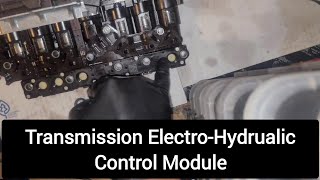

![What is P2725 Engine Code [Quick Guide]](https://img.youtube.com/vi/lOv6Su0YrYU/mqdefault.jpg)
Shop the Parts Behind P2725
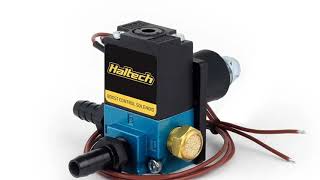
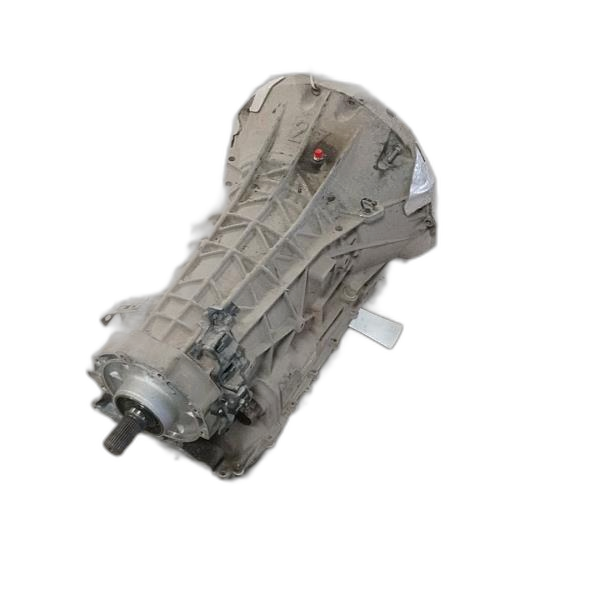
Below are the parts most often responsible for code P2725, ranked by how frequently each one is the actual culprit (per the diagnosis above). Tap any to see what we have for your vehicle.



The information in this article is provided for general reference and educational purposes only. Vehicle specifications, procedures, and part compatibility can vary by production date, trim level, and region. Always consult your vehicle's factory service manual and verify part numbers before purchasing or performing repairs. Safety-critical components such as airbags, seat belts, and braking systems should be installed by a qualified professional.
- 🧭 Diagnostic Flowchart
- 🎬 Helpful Videos
- 🛍️ Shop This Part
- What Does P2725 Mean?
- Can I Drive With P2725?
- Common Causes
- Symptoms
- Common Fixes & Costs
- Used vs. New Parts: Buying Guide
- What Happens If You Wait — Timeline
- Cost of Not Fixing It
- Diagnosis Steps
- When This Code Triggers (Freeze-Frame Conditions)
- Related Codes
- Climate & Environmental Factors
- How to Talk to a Mechanic About This Code
- Where to Take It: Dealer vs Independent vs Chain
- When to Walk Away From the Repair
- What Scan Tool You Need for This Code
- How to Clear the Code After You Fix It
- Will This Fail Emissions / State Inspection?
- Most Commonly Affected Vehicles
- Manufacturer-Specific Notes
- Real Owner Stories
- 2012 Ford F-150 with 6R80 Transmission at 115K miles
- 2011 Chevy Silverado 1500 with 6L80 Transmission at 130K miles
- 2008 Honda Accord at 145K miles
- How to Prevent This Code From Triggering
- Frequently Asked Questions
- Is it safe to drive with code P2725?
- How much does it cost to fix P2725?
- Can I fix P2725 myself?
- Will changing the transmission fluid fix a P2725 code?
- What is a common misdiagnosis for P2725?
- What's the difference between an 'Electrical' and a 'Performance' solenoid code?
- What does the 'E' in Pressure Control Solenoid 'E' mean?
- Key Takeaways
- 🎟️ Get 5% Off