

P2727 on 2019-2020 GMC Sierra 1500: Causes, Symptoms, and Fixes
On a 2019-2020 GMC Sierra 1500, code P2727 is most often caused by an internal failure of the Transmission Control Module (TCM). A GM Technical Service Bulletin (23-NA-018) identifies this issue, which can cause the rear wheels to lock up at low speeds after the engine is hot. The definitive fix is to replace the TCM with part number 24043411, a repair that requires professional installation and programming.
- P2727 on a 2019-2020 Sierra is a critical code that should be addressed immediately.
- The most likely cause is a faulty Transmission Control Module (TCM), as documented by GM in a TSB, which can lead to dangerous rear-wheel lock-ups.
- Do not drive the vehicle if you experience any symptoms, especially wheel lock-ups. Have it towed to a professional.
- The repair almost always requires a new TCM, which must be programmed by a dealer or qualified shop.
- Before replacing any parts, ensure the TCM electrical connector is fully seated, as this can also cause the code.
What's Unique About the 2019-2020 Gmc SIERRA 1500
For the 2019-2020 GMC Sierra 1500 and its platform mate, the Chevrolet Silverado 1500, this code is strongly linked to a known defect within the Transmission Control Module (TCM) itself, not just the solenoid. General Motors issued Technical Service Bulletin 23-NA-018 (which replaced PIP5646D) detailing a specific and alarming symptom where an internal TCM failure causes the rear wheels to lock up. This typically happens at low speeds after the vehicle has been parked for a period following a drive (a 'hot soak') or after idling for 30 minutes to 4 hours. This makes the diagnosis for this specific truck different from a generic P2727 fault, where the solenoid itself would be the primary suspect. The bulletin notes this can happen even if no DTC is set.
Diagnostic Flowchart
Tap your situation to follow the diagnostic path that matches what you're seeing on this vehicle.
Symptoms You May Notice
- Rear wheels locking up at low speeds, as if the brakes were suddenly applied or the truck was shifted into Park.
- The lock-up condition occurs after the vehicle has been parked and allowed to 'hot soak' or after idling for an extended period (30+ minutes).
- Inability to move forward after the lock-up event, which may persist for several key cycles.
- Possible loss of reverse gear during the event.
- Harsh or delayed shifting.
- Transmission slipping or hesitating between gears.
- Vehicle entering 'limp mode,' limiting available gears.
- Check Engine Light or Transmission Warning Light illuminated (though the lock-up can occur without any warning lights).
- Replacing the pressure control solenoid or the entire valve body when the actual fault lies within the Transmission Control Module (TCM), as explicitly stated in GM's TSB 23-NA-018.
Most Likely Causes
- Internal Failure of the Transmission Control Module (TCM) 🔴 High Probability → Shop Transmission Assembly A specific GM Technical Service Bulletin (23-NA-018) identifies an internal TCM failure as the direct cause for this code and the associated wheel lock-up symptom on 2019-2020 Sierra and Silverado 1500s with the 8-speed (MQE) transmission. 🎬 See a breakdown of common GM 8-speed transmission issues. GM also initiated Customer Satisfaction Program N192272400 for these models, citing an intermittent short circuit within the TCM caused by wire bonds moving under thermal load.
How to confirm: Diagnosis is confirmed by following TSB 23-NA-018. If the vehicle exhibits the specific symptoms (wheel lock-up after a hot soak or long idle), the TCM is the confirmed cause. The TSB advises against clearing DTCs before replacement.
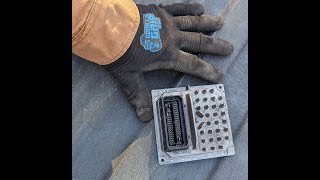
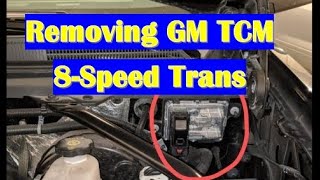
Typical fix: Replace the Transmission Control Module. The new module must be programmed by a GM dealer or a qualified independent shop using GM-specific software. The specified part is GM Part #24043411. 🎬 Watch: Find and replace the hidden TCM on your Sierra.
Est. part cost: $300-$500 - Faulty Pressure Control Solenoid 'E' ⚪ Low Probability → Shop Transmission Clutch Pressure Control Solenoid While the TCM is the known primary issue for these symptoms, the code directly names the solenoid. On a vehicle not exhibiting the specific TSB symptoms, the solenoid could fail electrically or mechanically. However, this is an unlikely root cause on these specific models given the known TCM defect.
How to confirm: A technician can use a high-end scan tool to command the solenoid on and off. If it doesn't respond, and the wiring is confirmed to be good, the solenoid itself is faulty. This involves dropping the transmission pan and testing resistance across the solenoid terminals. For the 8L90 transmission, the expected resistance for pressure control solenoids is 4.5-5.5 ohms.
Typical fix: Replace the pressure control solenoid. This part is located inside the transmission oil pan and is part of the valve body assembly. For the 10L80, this may involve replacing the entire valve body with solenoids (e.g., part #24049465).
Est. part cost: $150-$400 - Wiring Harness or Connector Issue ⚪ Low Probability Another TSB (19-NA-228) notes that a wide variety of transmission codes, including P2727, can be caused by an improperly seated TCM connector. This can cause a poor connection on one or more pins, leading to erratic behavior. Additionally, GM has noted potential issues with loose ground connections at points G110 and/or G114 on these trucks, which can cause various electrical faults.
How to confirm: Visually inspect the main wiring harness connector at the TCM for being loose, crooked, or having backed-out pins. The TSB notes the connector may be high on one side. Check for continuity and shorts in the wiring between the TCM and the transmission. Inspect grounds G110 and G114 for tightness and corrosion.
Typical fix: Reseat the connector properly. TSB 19-NA-228 describes the procedure for ensuring the lever locks are correctly engaged. Clean and tighten any loose ground connections. No parts are typically required for this fix.
Est. part cost: $0-$100 - Low or Dirty Transmission Fluid ⚪ Low Probability → Shop Transmission Assembly Low fluid can cause pressure drops, while dirty or degraded fluid can cause solenoids to stick. While not a primary cause for this specific code and its unique symptoms, it's a basic check for any transmission fault. Some 8-speed transmissions were also subject to TSBs for fluid flush procedures to correct shudder issues (e.g., TSB 18-NA-355), indicating fluid sensitivity.
How to confirm: Check the transmission fluid level and condition according to the manufacturer's procedure. This is a sealed transmission, so it must be checked by a technician.
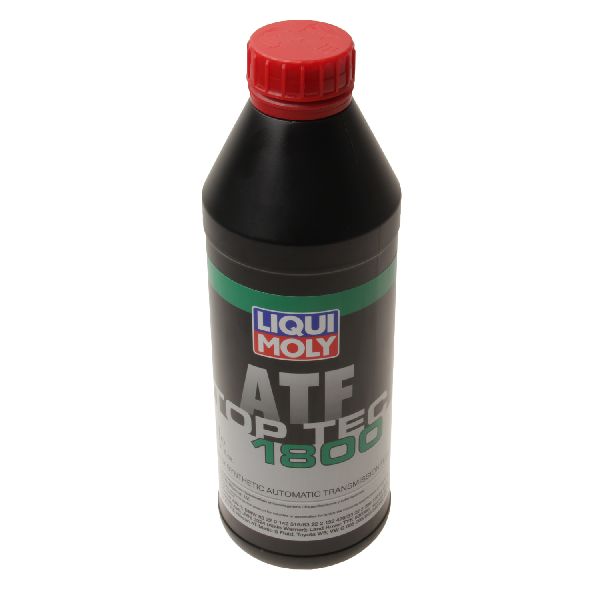
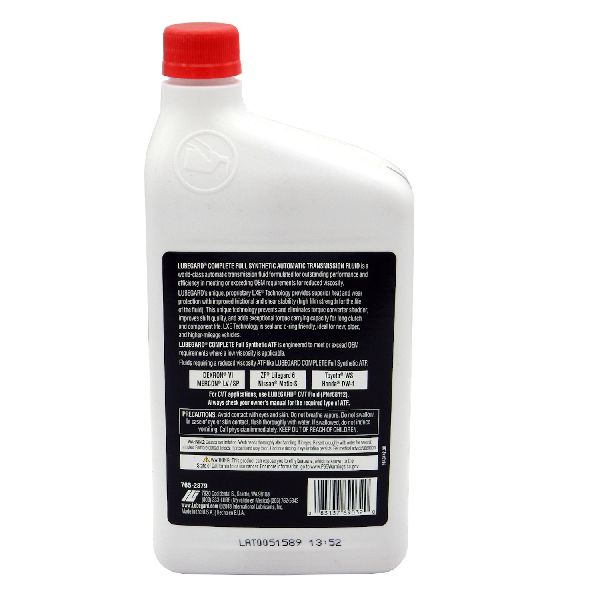
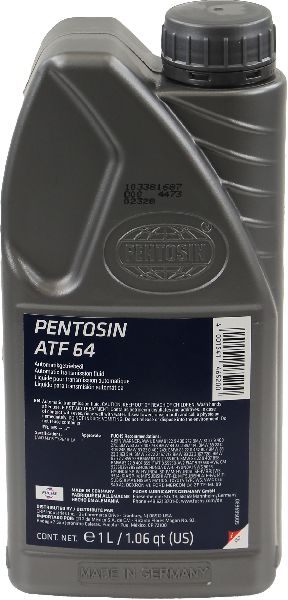
Typical fix: Perform a transmission fluid and filter change using the manufacturer-specified fluid (e.g., Mobil 1 LV ATF HP).
Est. part cost: $100-$250
Diagnosis Steps
- Scan the TCM for P2727 and any other related codes like P2724 or P2729.
- Review TSB #23-NA-018. Carefully question the driver or replicate the two specific conditions described: 1) Driving after a hot soak, or 2) Driving after a long idle (30 min - 4 hours).
- If the symptoms match the TSB (rear wheel lock-up on a vehicle with an 8-speed transmission), the TCM is the confirmed cause. Proceed with TCM replacement as per the bulletin. Do not clear DTCs.
- If symptoms do NOT match the TSB, proceed with standard diagnosis.
- Inspect the TCM wiring harness connector to ensure it is fully seated and latched, per TSB #19-NA-228. Check for a crooked or partially unlatched connector.
- Inspect main chassis ground points, specifically G110 and G114, for looseness or corrosion.
- Check the transmission fluid level and condition. Ensure it is clean and at the correct level.
- Use a professional scan tool (like GM GDS2) to perform bi-directional control tests on Pressure Control Solenoid 'E', commanding it on and off to test its function.
- If the solenoid does not respond, test the wiring between the TCM and the transmission for continuity and shorts.
- If wiring is good, test the resistance of the solenoid itself. For the 8L90 transmission, the expected resistance is 4.5-5.5 Ohms. An out-of-spec reading indicates a failed solenoid. This requires accessing the valve body. 🎬 Watch: How to remove the TCM on GM trucks.
- If the solenoid and wiring test good, and the TSB symptoms are not present, the fault may still be an intermittent issue within the TCM that is not causing the lock-up condition.
Parts You'll Likely Need
- Transmission Control Module (TCM)
(OEM #24043411 (Superseded by 24070762))— This is the most common cause identified by GM in TSB 23-NA-018 for this specific code and the wheel lock-up symptom on the 2019-2020 Sierra/Silverado with the 8-speed transmission.
Trusted brands: ACDelco (OEM)
OEM price range: $300-$500
Aftermarket price range: N/A - Pressure Control Solenoid 'E' / Valve Body Assembly
(OEM #24049465 (10L80 Valve Body w/ Solenoids))— If the TCM is not the cause, the solenoid itself may have failed. It is often sold as part of the complete valve body assembly. This is an unlikely failure for this specific platform and symptom set.
Trusted brands: ACDelco
OEM price range: $250-$500 (for valve body assembly)
Aftermarket price range: $150-$400 (for valve body assembly)
Related Codes That Often Appear With This One
- P2724 — This code for 'Pressure Control Solenoid 'E' Stuck On' is cited in the same TSB (23-NA-018) and can be triggered by the same faulty TCM.
- P2729 — This code for 'Pressure Control Solenoid 'E' Control Circuit Low' is also mentioned in TSB 23-NA-018 as being related to the same internal TCM failure.
Technical Service Bulletins (TSBs) & Recalls
- 23-NA-018 (Supersedes PIP5646D): Documents the rear wheel lock-up condition caused by an internal TCM failure, setting codes P2727, P2724, or P2729, and advises replacing the TCM with part #24043411. Details the specific 'hot soak' and 'long idle' conditions that trigger the event.
- 19-NA-228: Mentions that P2727 can be one of many codes set due to an improperly seated TCM electrical connector, causing poor terminal contact.
- N192272400: A Customer Satisfaction Program specifically for the 8-speed transmission models, identifying an internal TCM short circuit as the cause of wheel lock-up and prescribing TCM replacement.
Platform-Specific Known Issues
- TCM-Induced Wheel Lock-Up (8-Speed Transmission): A known defect in the Transmission Control Module (TCM) on models with the 8-speed (MQE) automatic transmission can cause the rear wheels to lock up at low speeds after a hot soak or long idle, setting codes P2727, P2724, or P2729. The official fix, per TSB 23-NA-018, is to replace the TCM. This can occur even without any codes being stored.
- Customer Satisfaction Program N192272400: GM issued this program for certain 2019-2020 Sierra/Silverado trucks with the 8-Speed (MQE) transmission for the same wheel lock-up condition. It identifies the cause as an intermittent short circuit within the TCM due to wire bonds moving under thermal load, and the fix is to replace the TCM at no charge until June 30, 2022.
Mechanic-Grade Diagnostic Values
- Pressure Control Solenoid Resistance (8L90/8L45 Transmission) — expected: 4.5 - 5.5 Ohms. Failure: A reading outside of this range indicates a faulty solenoid coil.
- On/Off Solenoid Resistance (8L90/8L45 Transmission) — expected: 11 - 13 Ohms. Failure: A reading outside this range indicates a faulty solenoid. Note: P2727 refers to a pressure control (variable force) solenoid, not an on/off solenoid.
Scan Tool Commands That Help
- GM GDS2, Autel, Snap-on, or other high-end scan tools: Transmission Service Fast Learn (or Service Fast Learn Adapts) — This is a mandatory stationary procedure after replacing the TCM, valve body, or performing any internal transmission repair. It allows the new TCM to learn the hydraulic characteristics and clutch apply pressures of the specific transmission to ensure proper shift quality. Failure to perform this can result in poor shifting even after the repair.
- GM GDS2: Bi-Directional Controls / Output Controls — Used during diagnosis to manually command a specific solenoid (like Pressure Control Solenoid 'E') on and off. This helps verify if the solenoid is mechanically stuck or if the wiring and driver circuit are capable of activating it, isolating the fault between the TCM, wiring, and solenoid.
Wiring & Ground Locations
- Transmission Control Module (TCM) — Located in the driver's side front wheel well, mounted to a bracket behind the Engine Control Module (ECM). Access requires removing the wheel and wheel well liner.. This is the physical location of the component most often responsible for code P2727 and the wheel lock-up symptom. Visual inspection for connector security and physical damage is a key step.
- G110 / G114 — Chassis ground connections. A GM Engineering Information document (PIE0548) highlights these as potential points for loose connections on 2019-2020 Sierra/Silverado trucks.. A loose or corroded ground can cause a wide range of intermittent and difficult-to-diagnose electronic faults, including erratic behavior from control modules like the TCM. Checking these grounds is a valuable step when electrical issues are suspected.
OEM Part Supersession History
24043411→24070762— Component revision/update. The original part number is specified in the TSB and Customer Satisfaction Program related to the wheel lock-up issue. The new part number is the current service replacement.
Heads up: Part number 24070762 also replaces numerous other TCM part numbers, including 24042698, 24043413, 24046678, 24049790, 24289415, and 24296206.
Model Year Variations Within This Range
- 2019-2020: The known wheel lock-up issue described in TSB 23-NA-018 and Customer Satisfaction Program N192272400 is specific to models equipped with the 8-speed (RPO: MQE) automatic transmission. While the 8-speed was common with the 5.3L V8 in 2019, the 10-speed automatic became more widely available for the 5.3L V8 on 4WD models in 2020. It is critical to identify which transmission is in the vehicle, as the specific TCM failure and wheel lock-up symptom are primarily documented for the 8-speed.
Helpful Videos
We Have This Part in Stock


The information in this article is provided for general reference and educational purposes only. Vehicle specifications, procedures, and part compatibility can vary by production date, trim level, and region. Always consult your vehicle's factory service manual and verify part numbers before purchasing or performing repairs. Safety-critical components such as airbags, seat belts, and braking systems should be installed by a qualified professional.
- Gmc SIERRA 1500:
- 🧭 Diagnostic Flowchart
- 🎬 Helpful Videos
- 🛍️ Shop This Part
- What's Unique About the 2019-2020 Gmc SIERRA 1500
- Symptoms You May Notice
- Most Likely Causes
- Diagnosis Steps
- Parts You'll Likely Need
- Related Codes That Often Appear With This One
- Technical Service Bulletins (TSBs) & Recalls
- Platform-Specific Known Issues
- Mechanic-Grade Diagnostic Values
- Scan Tool Commands That Help
- Wiring & Ground Locations
- OEM Part Supersession History
- Model Year Variations Within This Range
- 🎟️ Get 5% Off