

OBD-II Code P2728: Pressure Control Solenoid 'E' Circuit Problem
The Ultimate 2026 Guide: What P2728 means, why it triggers, and how to fix it for good
- Code P2728 flags a direct electrical failure in the Pressure Control Solenoid 'E' circuit, disabling the transmission's ability to regulate hydraulic pressure.
- Driving with an active P2728 code destroys internal clutch packs within 100 miles, turning a $200 wiring fix into a $4,000+ transmission rebuild.
- Always test the external wiring harness and main transmission connector for 12V power and ground before spending $500+ replacing the internal solenoid.
- Check Technical Service Bulletins (TSBs) first; vehicles like the 2018+ Ford F-150 and 2014 Chevy Cruze have known valve body or TCM defects requiring specific dealer programming.
What Does P2728 Mean?
Code P2728 indicates the Transmission Control Module (TCM) detected an electrical fault in the control circuit for Pressure Control Solenoid 'E'. This solenoid is a computer-controlled valve inside the automatic transmission that regulates hydraulic fluid pressure for smooth gear shifts. When the TCM reads voltage or resistance outside the manufacturer's specified range on this circuit, it triggers P2728, forcing the transmission into a protective state and disabling normal gear changes.
Technical definition: Pressure Control Solenoid 'E' Control Circuit Range/Performance.
Can I Drive With P2728?
No — Do Not Drive. Do not drive. The transmission shifts harshly, slips, gets stuck in 2nd or 3rd gear ('limp mode'), or locks the wheels at low speeds. Continuing to drive quickly turns a manageable $200-$500 electrical repair into a catastrophic internal transmission failure requiring a $3,500-$8,000 rebuild. Tow the vehicle to a qualified repair shop.
Common Causes
- Wiring or Connector Issues (Very Common) — Damaged, corroded, or shorted wiring between the TCM and the transmission. Wires chafe against the chassis, and connectors suffer from moisture and road salt intrusion, causing high electrical resistance.
- Faulty Pressure Control Solenoid 'E' (Very Common) — The solenoid itself failed due to an internal short circuit, an open coil winding, or mechanical binding.
- Low, Dirty, or Blocked Transmission Fluid (Common) — Old, degraded fluid fails to provide correct hydraulic pressure. Suspended debris clogs the transmission filter or internal valve body passages, starving the solenoids.
- Faulty Transmission Control Module (TCM) (Common) — The TCM fails and sends an incorrect voltage signal, no signal, or shorts internally due to aging components, software glitches, or water damage.
- Bad Ground or Power Supply (Less Common) — A corroded ground wire for the transmission or TCM causes erratic voltage readings and false trouble codes.
- Internal Transmission Mechanical Failure (Rare) — A failing transmission pump, cracked valve body, or worn clutch pack prevents the system from maintaining pressure even if the electrical circuit functions perfectly.
Symptoms
- Harsh, Delayed, or Erratic Shifting — The car jerks, clunks, or hesitates when shifting, especially from Park into Drive, or flares in RPM between gears.
- Vehicle Enters 'Limp Mode' — The transmission locks into a single gear (usually 2nd or 3rd) to prevent further damage, severely limiting speed.
- Transmission Slipping — Engine RPMs increase, but the vehicle fails to accelerate, acting as if momentarily in neutral.
- Engine Stalling — The engine stalls when coming to a stop or exhibits misfire-like symptoms if the torque converter clutch is affected.
- Check Engine Light On (also visible on scanner) — The dashboard warning light illuminates immediately upon the TCM detecting the fault.
- Transmission Overheating (also visible on scanner) — Poor shifting and slipping generate excess friction, spiking transmission fluid temperatures and triggering secondary warnings.
Diagnostic Flowchart
Tap your situation to follow the diagnostic path that matches what you're seeing on this code.
Common Fixes & Costs
- Repair or Replace Damaged Wiring/Connectors — Parts: $20-$150, Labor: $150-$500, ~2.5 hr book time (Intermediate)
- Replace Pressure Control Solenoid 'E' — Parts: $50-$300, Labor: $300-$700, ~3.5 hr book time (Professional)
- Change Transmission Fluid and Filter — Parts: $50-$120, Labor: $125-$250, ~1.5 hr book time (Intermediate)
- Replace Valve Body or Mechatronic Unit — Parts: $500-$1,500, Labor: $400-$800, ~4.5 hr book time (Professional)
- Replace the Transmission Control Module (TCM) — Parts: $600-$1,200, Labor: $200-$400, ~3 hr book time (Professional)
DIY vs Professional
- Change Transmission Fluid and Filter 🟢 Beginner
Tools: Socket set, drain pan, funnel, torque wrench, new fluid and filter/gasket. - Repair or Replace Damaged Wiring/Connectors 🟢 Beginner
Tools: Multimeter, wire strippers, crimpers, heat shrink tubing, soldering iron (optional), electrical contact cleaner, vehicle wiring diagram. - Replace Pressure Control Solenoid 'E' 🟢 Beginner
Tools: Full socket set, torque wrench, drain pan, service manual. May require snap-ring pliers or specialized tools for valve body removal. - Replace Valve Body or TCM 🟢 Beginner
Tools: Extensive toolset plus a dealer-level scan tool or J2534 pass-thru device for programming the new module to the vehicle's VIN.
Used vs. New Parts: Buying Guide
When a used part is worth it: For simple, externally accessible solenoids on high-mileage vehicles, a used part from a low-mileage wreck is a cost-effective gamble. It makes no sense for internal components like valve bodies or TCMs, where the labor to install is high and the risk of a faulty used part is significant.
Donor-vehicle mileage cap: roughly under 80000 miles for the part to have meaningful remaining life.
Donor quality checklist:
- Verify the donor vehicle was scrapped due to an accident, not transmission failure.
- Match part numbers exactly; electronic components are highly specific.
- Avoid valve bodies from transmissions with burnt fluid, as internal passages are likely worn or clogged.
Decision logic:
- If The part is a complex electronic assembly like a TCM or Mechatronic unit. → Buy new or professionally remanufactured. Used units carry a high risk of failure and have programming/compatibility issues.
- If The vehicle is over 150,000 miles and the budget is very tight. → A used solenoid or solenoid pack is a reasonable risk, but be prepared for the possibility of it failing, requiring you to pay for labor a second time.
- If The labor to access the part is 3+ hours (e.g., internal solenoid, valve body). → Buy a new or remanufactured part. The potential savings on a used part are not worth the risk of repeating the expensive labor.
Warranty tradeoff: Used parts from salvage yards typically offer a 30-90 day warranty on the part only, not labor. New aftermarket parts often carry a 1-year to limited lifetime warranty. OEM parts installed by a dealer come with a 12-month/12,000-mile warranty on parts and labor.
Worst-case if a used part fails: $500-$1500 if a used internal part (solenoid, valve body) fails after installation, as you must pay for repeat labor and a second replacement part.
What Happens If You Wait — Timeline
- 0-1 month: Check Engine Light is on with code P2728. Shifting feels slightly off, with occasional hesitation or a slightly harder-than-normal shift from Park to Drive. (MPG impact: 0-5%% · Added cost: $0-$50 in wasted fuel.)
- 1-3 months: Shifting becomes noticeably harsh, with regular clunks or jerks between gears. Transmission begins to slip (RPMs flare up without acceleration). The fluid overheats, accelerating its breakdown. (MPG impact: 5-10%% · Added cost: $200-$500 (Accelerated wear on clutch packs and bands begins).)
- 3-6 months: Vehicle frequently enters 'limp mode,' getting stuck in one gear. The transmission fluid is dark and has a burnt smell, indicating it lost its lubricating properties. Damage occurs to other solenoids and the valve body from debris and heat. (MPG impact: 10-20%% · Added cost: $1,200-$2,500 (The original solenoid/wiring issue causes valve body damage or worn clutch packs, escalating the repair cost significantly).)
- 6+ months: Catastrophic internal failure. Worn clutch material clogs the filter and hydraulic passages, starving the transmission of pressure. Gears, drums, and the torque converter are destroyed. The transmission fails to move the vehicle. (MPG impact: 20%+% · Added cost: $3,500-$8,000 (The transmission is beyond a simple repair and requires a complete rebuild or replacement).)
Cost of Not Fixing It
- 0-1 Month: Harsh shifting accelerates clutch wear; fuel economy drops 5-15%. (Added cost: $50-$150 in wasted fuel.)
- 1-6 Months: Slipping overheats fluid, destroying its lubricating properties and damaging the valve body. The initial problem escalates from a single solenoid to a complex hydraulic issue. (Added cost: $800-$2,000 for a potential valve body replacement on top of the original repair.)
- 6+ Months: Catastrophic failure. Burnt fluid and clutch debris destroy gears and the torque converter, requiring a full rebuild. (Added cost: $3,500-$8,000 for a transmission rebuild or replacement, turning a manageable repair into a total loss for many older vehicles.)
Diagnosis Steps
- Read Codes & Check TSBs
Use an OBD-II scanner to confirm P2728. Check for related codes (like P0700 or gear ratio faults). Immediately check for Technical Service Bulletins (TSBs) for your specific VIN, as manufacturers frequently issue software updates or extended warranties for solenoid faults.
Tools: OBD-II Scanner, Internet Access (Beginner) - Check Transmission Fluid Level and Condition
With the engine running in Park, check the fluid. Bright red is healthy; dark brown or black indicates burnt clutches. Gritty particles confirm severe internal mechanical damage requiring a rebuild.
Tools: Rag, Gloves (Beginner) - Inspect Wiring Harness and Connectors
Visually inspect the harness from the TCM to the transmission. Look for chafed wires or melted insulation. Disconnect the main transmission connector, inspect for green/white corrosion on the pins, and clean with electrical contact cleaner.
Tools: Flashlight, Electrical Contact Cleaner (Intermediate) - Analyze Live Scan Tool Data
Using an advanced scanner, monitor 'Commanded Pressure' vs. 'Actual Pressure' for Solenoid E. A significant discrepancy while driving points to a stuck solenoid or hydraulic blockage rather than a purely electrical wire break.
Tools: Advanced Bi-Directional Scan Tool (Professional) - Check Solenoid Resistance
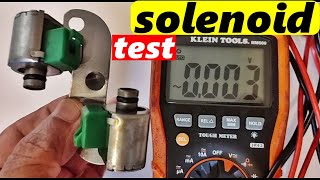
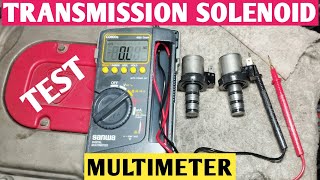
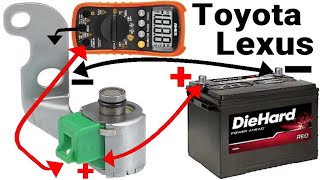
Disconnect the transmission connector. Measure resistance across the Solenoid 'E' pins. Compare to OEM specs (e.g., GM 6L series PWM solenoids read 3-8 ohms; Honda linear solenoids read 12-25 ohms). Infinite resistance (OL) means an open circuit; near zero means a short.
Tools: Digital Multimeter, Wiring Diagram (Advanced) - Test Circuit for Shorts
Set multimeter to resistance. Test for continuity between the solenoid's power wire pin and a known good chassis ground. A reading other than infinite (OL) confirms a short to ground in the harness. Repeat against the battery positive terminal to check for a short to power.
Tools: Digital Multimeter (Advanced) - Test Solenoid Circuit Voltage
Back-probe the solenoid 'E' control wire at the TCM connector. With the ignition on, verify the baseline voltage (often 9-12V). Have a helper shift gears while applying the brake; voltage must pulse or change. No change indicates a dead TCM driver or broken wire.
Tools: Digital Multimeter, Back-Probes (Advanced) - Analyze Solenoid Waveform
Use an oscilloscope to view the PWM electrical signature. The waveform must show a clean square wave (typically 30-600 Hz). A messy signal or voltage drops confirm a failing TCM driver circuit.
Tools: Automotive Oscilloscope (Professional)
When This Code Triggers (Freeze-Frame Conditions)
- Engine Coolant Temp: 180-210°F (82-99°C) (Faults often appear at full operating temperature when electrical resistance peaks.)
- RPM: 1500-2500 RPM (Code sets during gear shift commands under moderate acceleration.)
- Vehicle Speed: 35-55 mph (56-88 km/h) (Commonly occurs during 3rd to 4th gear transitions.)
- Transmission Fluid Temperature: 170-220°F (77-104°C) (Hot fluid exposes intermittent electrical shorts in the solenoid coil.)
Related Codes
- P0700 — General Transmission Fault. This is an informational code. It means the TCM stored a specific fault code (like P2728) and requested the main engine computer (ECM) to turn on the check engine light.
- P0730-P0736 — Incorrect Gear Ratio. These codes appear with P2728. Because the solenoid fails to control pressure correctly, the transmission clutches slip, causing a mismatch between engine speed and transmission speed for the commanded gear.
- P2729, P2730, etc. — Circuit codes for other solenoids (e.g., 'F' circuit low, 'G' circuit high). If multiple solenoid circuit codes are present alongside P2728, it points towards a common problem.
- P0720-P0723 — Output/Input Speed Sensor Circuit Malfunction. The TCM uses these sensors to verify gear changes occurred correctly. If a solenoid failure causes a harsh shift or slip, the speed sensors report erratic data, triggering these codes.
Climate & Environmental Factors
- Road Salt (Winter Climates): Salt spray penetrates wiring looms and connectors on the lower chassis. This saline moisture acts as an electrolyte, accelerating corrosion on copper wires and triggering open circuit codes.
- High Humidity / Coastal Areas: Constant exposure to humid, salt-laden air in coastal regions compromises connector seals, leading to high resistance in the solenoid circuit.
How to Talk to a Mechanic About This Code
Say this: "I have a P2728 code. Please test the entire pressure control solenoid 'E' circuit, including the wiring harness and main connector, before assuming the solenoid needs replacement."
This signals that you understand P2728 is a circuit code, not just a bad part. It directs the technician to perform a complete electrical diagnosis, preventing the common misdiagnosis of replacing a good solenoid when the true fault is in the wiring.
Avoid saying:
- 'My transmission is acting weird.'
- 'My check engine light is on, can you just fix it?'
- 'I think I need a new solenoid, can you give me a price?'
Questions to ask before authorizing the repair:
- What was the ohm reading from the solenoid resistance test?
- Did you find any damage, corrosion, or loose pins at the transmission harness connector?
- If the wiring and solenoid test good, what is the next step to test the Transmission Control Module (TCM)?
- Does the repair estimate include a new pan gasket and the correct type of transmission fluid?
- What is the warranty on this specific repair, and does it cover both parts and labor?
Where to Take It: Dealer vs Independent vs Chain
- Dealer:
Best for: Vehicles still under a powertrain warranty., Complex repairs requiring TCM replacement and manufacturer-specific programming., Cases where a known Technical Service Bulletin (TSB) applies to the issue.
Downsides: Significantly higher labor rates and parts costs., Prefers replacing an entire assembly (e.g., valve body) rather than performing a detailed component or wiring repair. (Typical cost: +50% vs. baseline) - Independent Shop:
Highly Recommended, but ONLY a reputable transmission specialty shop. A general mechanic lacks the specific expertise for this repair. A transmission specialist performs an accurate circuit diagnosis and saves you from unnecessary parts replacement.
Best for: Out-of-warranty vehicles where cost is a major factor., Getting a second opinion on a high-cost dealer quote.
Downsides: Quality and expertise vary dramatically. Must find a shop that specializes in transmissions., Lacks the expensive, specialized equipment to program a new TCM for all makes and models. - Chain Shop:
Not Recommended. The complexity of a P2728 circuit fault is beyond the scope of most chain shops. The likelihood of an incorrect and expensive repair recommendation is very high.
Best for: Simple maintenance like fluid changes, but only if you are certain that is the only issue.
Downsides: High risk of misdiagnosis due to technician inexperience with complex electronic transmission faults., Incentivized to sell a complete transmission rebuild or replacement, regardless of the root cause. (Typical cost: -10% vs. baseline)
When to Walk Away From the Repair
If the estimated repair cost exceeds 40-50% of your car's private-party value (e.g., from Kelley Blue Book), seriously consider selling or trading in the vehicle instead of repairing it.
- Car worth $3000, fix is $3500: Walk away. The repair costs more than the car is worth. Sell as a 'mechanic's special' or scrap it.
- Car worth $15000, fix is $1200: Fix it. The repair cost is a small fraction of the vehicle's value.
- Car worth $8000, fix is $4000: Borderline. This is a 50% cost-to-value ratio. Before proceeding, get a second opinion and consider the car's overall condition (engine, tires, brakes, rust).
What Scan Tool You Need for This Code
Minimum: A scanner that reads manufacturer-specific transmission codes and views live transmission data streams (PIDs).
A basic $20 code reader only shows the P2728 code. It cannot show the live data needed for diagnosis, such as commanded vs. actual solenoid pressure, making it impossible to distinguish between a wiring, solenoid, or TCM fault.
Budget: BlueDriver Pro Bluetooth Scanner (~$100) — Reads enhanced trouble codes from the TCM and graphs live transmission data on your smartphone, which is the first critical step in diagnosing the fault.
Mid-range: Foxwell NT510 Elite or Innova 5610 (~$180-250) — Adds bi-directional control to manually command the pressure control solenoid on and off directly from the scan tool, providing definitive proof of whether the solenoid and its wiring are working correctly.
Professional: Autel MaxiCOM MK808 (~$500-800) — Provides full bi-directional control for all vehicle systems, advanced data graphing, and special functions like TCM relearns and adaptations required after a repair.
Rent vs buy: Renting basic readers from auto parts stores is insufficient for this code. If you plan on doing your own diagnostics regularly, buying a mid-range scanner with bi-directional control is a worthwhile investment.
How to Clear the Code After You Fix It
- Perform the physical repair (e.g., replace solenoid).
- Reconnect any disconnected harnesses and the vehicle battery.
- Use an OBD-II scan tool to clear the P2728 and any related fault codes from the TCM/ECM.
- Perform a transmission drive cycle to allow the readiness monitors to complete.
Drive cycle (~30 minutes): Cold start, idle, 15 mins mixed city driving (0-40 mph), 10 mins steady highway (55-60 mph), complete cool down. This process allows the TCM to relearn shift points and verify the repair.
Readiness monitors affected: Comprehensive Component Monitor, Transmission Control Monitor
Before emissions retest: drive at least 100 miles to fully set monitors.
Watch out for:
- Disconnecting the battery resets all monitors causing an automatic emissions failure.
- The code returns immediately if the underlying electrical or mechanical fault is not properly fixed.
- Failure to perform a complete drive cycle leaves readiness monitors incomplete, preventing the vehicle from passing a smog check.
Will This Fail Emissions / State Inspection?
Yes — this code typically fails an OBD-II emissions inspection.
- California: An active Check Engine Light for code P2728 is an automatic smog test failure. After repair, all readiness monitors must be 'Ready', which requires driving 100+ miles before a re-test.
- New York: A vehicle with an illuminated Check Engine Light automatically fails the OBD-II portion of the NYS vehicle inspection. For 2001 and newer vehicles, only one readiness monitor is allowed to be 'Not Ready' to pass.
- Texas: In counties requiring emissions testing (like Harris, Dallas, Tarrant), an active P2728 code causes an automatic failure. After clearing the code, you must drive 50-100 miles to reset the readiness monitors before re-inspection.
Most Commonly Affected Vehicles
- Ford F-150, Focus, Fusion (2008-2020) — On many Fords, this code is frequently caused by wiring harness damage or corrosion at the main transmission connector. For 10-speed transmissions (10R80), some 2018+ F-150s have seen solenoid issues requiring valve body replacement (Part #HL3Z-7A100-B). A crushed O2 sensor wire during a previous repair can also short out the circuit, as it shares a fuse on some models.
- Chevrolet / GMC Silverado, Cruze, Sierra, Equinox (2010-2020) — GM has issued TSBs (e.g., 23-NA-018 for 2019-2020 trucks) where an internal TCM failure causes codes like P2729 and wheel lock-up, with P2728 being a related fault. On the Cruze with the 6T40/6T45 transmission, PWM pressure solenoids must have a resistance of 3-8 ohms.
- Honda Accord, Civic, CR-V (2008-2015) — Often caused by a faulty dual linear shift solenoid. Part number 28250-R90-003 is a common replacement for this era. Resistance for these solenoids must be between 12-25 Ohms. Failure is common enough that many aftermarket options are available.
- Mitsubishi Lancer, Outlander (with TC-SST) (2008-2015) — Mitsubishi defines P2728 as a solenoid 'overcurrent' condition. The official repair procedure requires diagnosing the CAN bus system first, as a communication error sets a false code. A common mechanical failure is the shift fork magnet falling off, generating various transmission codes.
- Hyundai Elantra, Sonata (A6GF1/A6MF1/2 Transmissions) (2011-2016) — Hyundai TSB 14-AT-003 specifically addresses solenoid codes. It provides a detailed diagnostic flowchart prioritizing checking the wiring harness between the PCM and transmission for damage before condemning the solenoid or transmission itself.
- BMW 3-Series (E90), 5-Series (E60), X3 (E83) (2006-2013) — On BMWs with ZF 6HP transmissions, this code points to the Mechatronic unit, which houses the TCM and solenoids. A common failure is the Mechatronic 'bridge seal' adapter, which hardens and leaks pressure, causing shift flares and codes. Replacing the solenoids and seals as a kit is a common repair.
- Nissan Altima, Maxima, Rogue (with CVT) (2007-2018) — While P2728 is a generic code, on Nissan CVTs it points to issues within the valve body. Proactive fluid changes every 30,000 miles are critical for CVT longevity.
- MINI Countryman (2016-2023) — Owner reports and available parts indicate that solenoid pack failure is a known issue on these models, requiring replacement of the entire solenoid assembly inside the transmission.
Manufacturer-Specific Notes
- Mitsubishi: For its TC-SST dual-clutch transmissions, P2728 is defined as a solenoid 'overcurrent' fault. The official diagnostic procedure mandates checking the CAN bus communication system before troubleshooting the solenoid itself, as network errors trigger a false code.
- Hyundai/Kia: Technical Service Bulletin (TSB) 14-AT-003 provides a specific diagnostic flowchart for solenoid codes. It strongly emphasizes a thorough inspection of the wiring harness between the PCM and transmission for damage *before* replacing any major components, as this is a known failure point.
- BMW: On models with ZF automatic transmissions, solenoid codes are caused by hydraulic pressure loss within the Mechatronic unit, not just an electrical fault. A hardened rubber 'bridge seal' between the valve body and transmission case is a frequent culprit, causing shift flares and setting codes. Replacing the seal, sleeves, and solenoids is a common fix.
- Honda: Honda issued several transmission-related warranty extensions for certain models and years, such as for the CVT belt or torque converter. While no specific program targets code P2728, if the root cause is a covered component, the repair falls under these extensions. Check with a dealer using your VIN.
- General (Ford, GM, etc.): On most modern vehicles, replacing the Transmission Control Module (TCM) or valve body/solenoid pack is not a simple swap. The new module must be programmed with the vehicle's specific VIN and the latest software calibration. This requires dealer-level scan tools or specialized J2534 programming equipment.
Real Owner Stories
2012 Ford Focus at 110K miles
Check engine light came on with harsh shifting, especially when cold. The car jerked into gear from Park. Code P2728 was present.
What they tried:
- Initially suspected a bad solenoid and got a quote for over $900.
- Decided to inspect the wiring first based on forum advice.
- Found a corroded and frayed wire at the main harness connector going into the transmission, likely from road salt exposure.
Outcome: Spliced in a new section of wire and sealed the connector with dielectric grease. Total cost was under $20 for wire and supplies. The code cleared and shifting returned to normal.
Lesson: Always inspect the wiring harness thoroughly before condemning an expensive internal component. A $20 wiring repair saves you from a $1,000+ solenoid replacement.
2014 Chevy Cruze at 85K miles
Transmission suddenly went into 'limp mode' on the highway. Codes P2728 and P0700 were stored. The car was stuck in 3rd gear.
What they tried:
- A local shop replaced the 'E' solenoid, but the code returned almost immediately.
- The shop then suggested a full transmission rebuild for $4,000.
- Owner took it to a dealership for a second opinion. The dealer checked for Technical Service Bulletins (TSBs).
Outcome: The dealer found a TSB for a known internal TCM failure on the 6T40 transmission. They replaced the TCM (part #24286712) and programmed it for a total of $1,150. This solved the problem permanently.
Lesson: Misdiagnosis is common. If a single solenoid replacement fails to work, suspect a wider issue like the TCM. Always check for TSBs before agreeing to a major repair like a rebuild.
2010 Honda Accord at 130K miles
Car experienced intermittent harsh downshifts and RPM flares between gears, along with code P2728.
What they tried:
- A mechanic changed the transmission fluid, which did not solve the issue.
- The mechanic then tested the resistance of the solenoid pack and found the 'E' solenoid circuit was out of spec (reading 32 ohms when it should be 12-25 ohms).
Outcome: Replaced the dual linear shift solenoid assembly (Honda part #28250-R90-003). The repair cost around $700 ($250 for an aftermarket part, $450 for labor). The car's shifting behavior returned to normal.
Lesson: For many Hondas of this era, the solenoid pack itself is a very common point of failure. A simple resistance test confirms the diagnosis and prevents unnecessary repairs.
2008 BMW 328i (E90) at 95K miles
Experienced a 'transmission malfunction' warning, harsh 2-3 shifts, and code P2728. Symptoms were worse when the car was warm.
What they tried:
- An independent BMW shop immediately suspected a Mechatronic unit issue, common on the ZF 6HP transmission.
- They dropped the transmission pan to inspect the valve body and seals.
Outcome: The mechanic found a hardened and leaking Mechatronic bridge seal and four shrunken sleeve seals. Instead of replacing the whole $1500+ unit, they installed a seal and solenoid rebuild kit for about $400 in parts. Total repair with fluid and labor was around $1,200. This fixed the pressure loss and cleared the code.
Lesson: On many European cars (BMW, Audi), solenoid codes are symptoms of a hydraulic leak within the valve body (Mechatronic) unit. Replacing seals and sleeves is a common, cost-effective fix compared to replacing the entire assembly.
How to Prevent This Code From Triggering
- Change transmission fluid and filter regularly. (Every 30,000-60,000 miles for normal driving; 30,000 miles for severe conditions (towing, heavy city traffic).) — Clean fluid prevents debris from clogging solenoid passages and causing them to stick or fail.
- Use only the manufacturer-specified transmission fluid. (Every fluid change.) — Incorrect fluid viscosity degrades seals and hydraulic pressure control, leading to solenoid damage.
- Inspect and protect external wiring connectors. (Annually, especially in winter climates.) — Applying dielectric grease to the main transmission connector creates a moisture barrier, preventing the corrosion from road salt and water that causes most circuit faults.
- Install an auxiliary transmission cooler. (One-time install for vehicles used for towing or in hot climates.) — Overheating is a primary cause of solenoid failure and fluid breakdown. An auxiliary cooler keeps the transmission operating temperature stable (around 175°F), dramatically extending the life of all internal components.
- Avoid aggressive driving habits. (Daily habit.) — Hard acceleration and abrupt stops place extreme stress on the transmission's hydraulic system, leading to faster wear on solenoids, clutches, and bands.
Frequently Asked Questions
What is a pressure control solenoid?
It is a computer-controlled electro-hydraulic valve inside the transmission. The TCM sends an electrical signal to open or close it, regulating fluid pressure. This precise control allows the car to shift gears smoothly.
Is it safe to drive with code P2728?
Do not drive the vehicle. The transmission will shift harshly, slip, or lock into limp mode. Continuing to drive destroys internal clutches, turning a minor repair into a $4,000+ transmission replacement.
What are the most common misdiagnosis mistakes for P2728?
The biggest mistake is immediately replacing the solenoid without testing the circuit. P2728 is a circuit code, meaning the root cause is frequently a broken wire, corroded connector, or bad ground. Always test harness continuity and resistance first.
Can I fix P2728 myself?
DIYers can check fluid levels, inspect external wiring, and clean connectors. However, replacing a solenoid or TCM requires dropping the transmission pan, handling fluid, and performing dealer-level software programming. Leave internal component replacement to professionals.
Why is the repair so expensive?
Solenoids are located deep inside the transmission, requiring significant labor to drain fluid, remove the pan, and extract the valve body. If the TCM fails, the module itself costs $600-$1,200, plus mandatory programming fees.
Does the TCM need to be programmed after replacement?
Yes. A new TCM must be flashed with the vehicle's specific VIN and operational software to communicate with the engine computer. This requires specialized J2534 pass-thru equipment or a dealer scan tool.
What is the difference between a transmission rebuild and a replacement?
A rebuild involves disassembling your current transmission and replacing only the failed internal components like clutches and seals. A replacement swaps the entire unit for a factory-remanufactured transmission, which costs more upfront but usually carries a better warranty.
Key Takeaways
- Code P2728 flags a direct electrical failure in the Pressure Control Solenoid 'E' circuit, disabling the transmission's ability to regulate hydraulic pressure.
- Driving with an active P2728 code destroys internal clutch packs within 100 miles, turning a $200 wiring fix into a $4,000+ transmission rebuild.
- Always test the external wiring harness and main transmission connector for 12V power and ground before spending $500+ replacing the internal solenoid.
- Check Technical Service Bulletins (TSBs) first; vehicles like the 2018+ Ford F-150 and 2014 Chevy Cruze have known valve body or TCM defects requiring specific dealer programming.
Helpful Videos


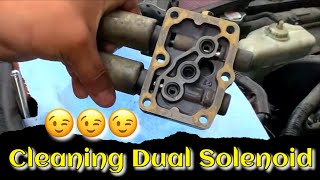
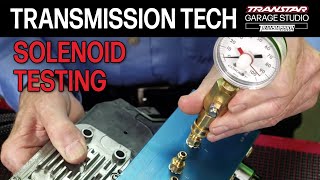
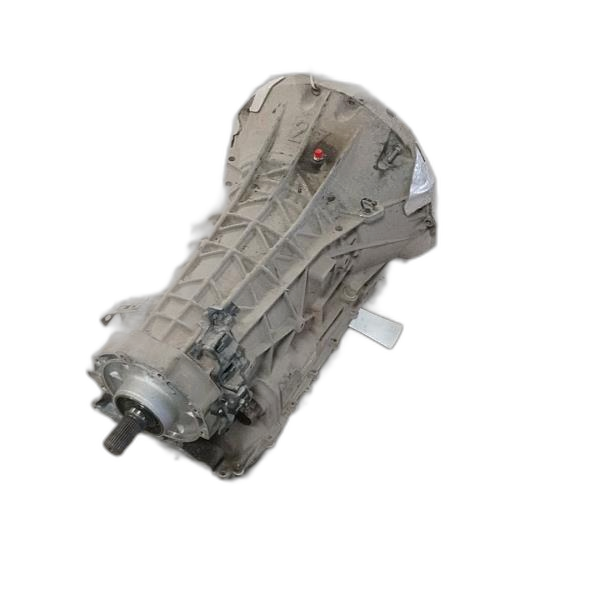
Shop the Parts Behind P2728
Below are the parts most often responsible for code P2728, ranked by how frequently each one is the actual culprit (per the diagnosis above). Tap any to see what we have for your vehicle.



The information in this article is provided for general reference and educational purposes only. Vehicle specifications, procedures, and part compatibility can vary by production date, trim level, and region. Always consult your vehicle's factory service manual and verify part numbers before purchasing or performing repairs. Safety-critical components such as airbags, seat belts, and braking systems should be installed by a qualified professional.
- 🧭 Diagnostic Flowchart
- 🎬 Helpful Videos
- 🛍️ Shop This Part
- What Does P2728 Mean?
- Can I Drive With P2728?
- Common Causes
- Symptoms
- Common Fixes & Costs
- DIY vs Professional
- Used vs. New Parts: Buying Guide
- What Happens If You Wait — Timeline
- Cost of Not Fixing It
- Diagnosis Steps
- When This Code Triggers (Freeze-Frame Conditions)
- Related Codes
- Climate & Environmental Factors
- How to Talk to a Mechanic About This Code
- Where to Take It: Dealer vs Independent vs Chain
- When to Walk Away From the Repair
- What Scan Tool You Need for This Code
- How to Clear the Code After You Fix It
- Will This Fail Emissions / State Inspection?
- Most Commonly Affected Vehicles
- Manufacturer-Specific Notes
- Real Owner Stories
- 2012 Ford Focus at 110K miles
- 2014 Chevy Cruze at 85K miles
- 2010 Honda Accord at 130K miles
- 2008 BMW 328i (E90) at 95K miles
- How to Prevent This Code From Triggering
- Frequently Asked Questions
- What is a pressure control solenoid?
- Is it safe to drive with code P2728?
- What are the most common misdiagnosis mistakes for P2728?
- Can I fix P2728 myself?
- Why is the repair so expensive?
- Does the TCM need to be programmed after replacement?
- What is the difference between a transmission rebuild and a replacement?
- Key Takeaways
- 🎟️ Get 5% Off