

OBD-II Code P2732: Pressure Control Solenoid 'F' Performance/Stuck Off
The Ultimate Guide to What P2732 Means, Why It Triggers, and How to Fix It for Good
- Code P2732 indicates the 'F' pressure control solenoid is stuck off, immediately causing harsh shifts, limp mode, or a complete loss of reverse gear.
- On 2021-2025 GM and Ford 10-speed transmissions, a worn valve body check ball or spacer plate causes 90% of P2732 codes, rendering solenoid replacement useless.
- Stop driving immediately; operating a vehicle with P2732 destroys clutch packs within 100 miles and turns a $900 valve body repair into a $5,000 transmission rebuild.
- Always check Technical Service Bulletins (TSBs) like GM #24-NA-181 before buying parts, as the official fix requires a specific $200 valve body overhaul kit rather than a new solenoid.
What Does P2732 Mean?
The Transmission Control Module (TCM) detects a critical failure in the 'F' pressure control solenoid circuit. This solenoid manages the hydraulic pressure required to engage specific gears. Because the TCM registers it as 'stuck off,' the transmission cannot build the correct fluid pressure to shift smoothly, engage forward gears, or engage reverse.
Technical definition: The SAE/OBD-II definition is "Pressure Control Solenoid 'F' Performance/Stuck Off." The TCM commands the 'F' solenoid to activate but detects via input/output shaft speed sensors that the corresponding clutch did not apply and the expected gear ratio change failed to occur.
Can I Drive With P2732?
No — Do Not Drive. Do not drive the vehicle. The transmission will fail to shift, lock into a single gear (limp mode), or completely lose reverse, creating an unpredictable safety hazard. On some GM models, the vehicle rolls briefly after being put in Park. Continued operation destroys internal clutch packs within 100 miles, turning a $900 valve body repair into a $5,000 full transmission replacement.
Common Causes
- Mechanical Failure in Valve Body (Worn Check Ball/Spacer Plate) (Very Common) — On 2021+ GM and Ford 10-speed transmissions, a rough surface on the valve body spacer plate prematurely destroys a small steel check ball. This causes a massive internal hydraulic leak, triggering P2732 and a complete loss of reverse gear. This is documented in GM TSB #24-NA-181. 🎬 Watch: A breakdown of GM's new TSB for 10-speed issues.
- Low or Burnt Transmission Fluid (Very Common) — Low fluid starves the transmission pump, preventing it from generating the pressure required to operate the solenoids. Burnt, debris-filled fluid clogs the narrow hydraulic passages inside the valve body, causing the 'F' solenoid to stick.
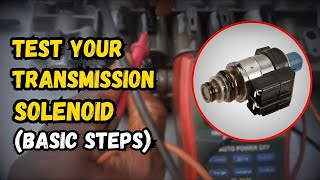
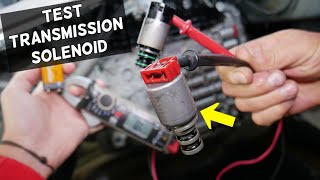
- Faulty Pressure Control Solenoid 'F' (Common) — The solenoid itself fails electrically (an internal short or open circuit) or mechanically binds due to internal wear, preventing it from opening or closing 🎬 See how to perform basic transmission solenoid testing. when commanded by the TCM.
- Wiring Harness or Connector Damage (Common) — Corroded pins at the main transmission connector, or a brittle, heat-damaged internal wiring harness, block the electrical signal from the TCM from reaching the solenoid.
- Torn Screen on Valve Body Spacer Plate (Extreme Cold) (Less Common) — Per GM TSB #22-NA-258, exposure to temperatures below -13°F (-25°C) causes the spacer plate screen to tear. The resulting debris jams the valves, triggering P2732 months after the cold weather event.
- Failed Transmission Control Module (TCM) (Rare) — Internal circuit board failure or software corruption prevents the TCM from sending the correct ground signal to activate the solenoid.
- Defective Transmission Pump (Rare) — A failing pump cannot generate baseline line pressure. While this usually triggers multiple codes, it occasionally isolates as a P2732 if the 'F' circuit is the first to lose pressure.
- Damaged Solenoid Retaining Clip (Rare) — The plastic clip securing the solenoid inside the valve body breaks, allowing the solenoid to shift out of alignment and leak hydraulic pressure.
Symptoms
- Complete Loss of Reverse Gear — The vehicle refuses to move backward. This is the hallmark symptom of the GM 10-speed valve body check ball failure.
- Transmission Stuck in 'Limp Mode' — The TCM locks the transmission into a single forward gear (usually 3rd) to prevent catastrophic internal damage, limiting top speed to roughly 30 MPH.
- Harsh, Jerky, or Delayed Shifts — The vehicle violently bangs into gear, or hesitates for several seconds before engaging Drive.
- Check Engine Light Illuminated — The dashboard MIL illuminates immediately when the TCM detects the pressure discrepancy.
- Engine Stalls When Stopping — Incorrect hydraulic pressure keeps the torque converter clutch partially engaged, stalling the engine when the vehicle comes to a halt.
- Transmission Overheating — Slipping clutches generate extreme friction, triggering a 'Transmission Hot' warning message on the dashboard.
Diagnostic Flowchart
Tap your situation to follow the diagnostic path that matches what you're seeing on this code.
Common Fixes & Costs
- Overhaul Valve Body (Replace Spacer Plate & Check Balls) — Parts: $150-$300, Labor: $400-$800, ~4 hr book time (Professional)
- Replace Transmission Valve Body Assembly — Parts: $500-$1800, Labor: $300-$1000, ~3.5 hr book time (Professional)
- Transmission Fluid and Filter Change — Parts: $75-$200, Labor: $150-$250, ~1.5 hr book time (DIY)
- Replace Pressure Control Solenoid 'F' — Parts: $30-$120, Labor: $250-$450, ~3 hr book time (Intermediate)
- Repair or Replace External Wiring Harness — Parts: $15-$50, Labor: $150-$400, ~2 hr book time (Intermediate)
- Replace Transmission Control Module (TCM) — Parts: $400-$1500, Labor: $270-$550, ~2 hr book time (Professional)
Used vs. New Parts: Buying Guide
When a used part is worth it: Never buy a used valve body for this code. The root cause is almost always a design flaw or wear issue that the used part will also have. Always purchase a professionally remanufactured unit or a new OEM part with updated components.
Donor quality checklist:
- For remanufactured units, demand proof that the rebuilder reamed the valve bores and installed oversized valves.
- Verify the OEM part number exactly; manufacturers frequently supersede valve body part numbers to address known defects.
- Ensure the remanufactured unit includes new, OEM-quality solenoids.
Decision logic:
- If The vehicle is under the 5-year/60,000-mile powertrain warranty → Take it to the dealer immediately for a free OEM replacement.
- If A Technical Service Bulletin (TSB) exists for your specific year/model → Purchase the exact updated OEM parts listed in the TSB to ensure the factory defect is resolved.
- If The vehicle is out of warranty and budget is tight → Buy a high-quality remanufactured valve body from a reputable transmission supplier like Sonnax or RevMax.
Warranty tradeoff: Used parts offer 30-day warranties and zero labor coverage. Remanufactured units typically offer 1-to-3-year warranties, and new OEM parts installed by a dealer carry a 12-month/12,000-mile parts and labor warranty.
Worst-case if a used part fails: $1,200 if a cheap used valve body fails, forcing you to pay for the labor and fluid twice.
What Happens If You Wait — Timeline
- 0-1 week: Code P2732 sets. The Check Engine Light illuminates. The driver experiences harsh shifts or a complete loss of reverse gear. (MPG impact: 0-5%% · Added cost: $0)
- 1 week - 1 month: The transmission locks into limp mode. Slipping clutches generate extreme heat, rapidly darkening the transmission fluid. (MPG impact: 10-20%% · Added cost: $100 in wasted fuel.)
- 1 - 3 months: Permanent damage occurs. Clutch friction material burns away, and rubber seals harden. Metal shavings circulate through the valve body. (MPG impact: 15-25%% · Added cost: $1,500 - $3,500. A partial transmission rebuild is now required.)
- 3+ months: Catastrophic failure. The transmission fails to engage any gear. Debris destroys the torque converter and pump. (MPG impact: N/A% · Added cost: $4,000 - $8,000+. Complete transmission replacement is mandatory.)
Cost of Not Fixing It
- Immediate (0-1 month): Unpredictable shifting, loss of reverse, and limp mode create a severe safety hazard. Slipping clutches generate extreme friction, rapidly burning the transmission fluid. (Added cost: 0)
- Short Term (1-3 months): Excessive heat glazes the clutch friction plates and hardens internal rubber seals. The damage spreads beyond the valve body, requiring a partial transmission rebuild. (Added cost: $1,500 - $3,500)
- Long Term (3+ months): Catastrophic transmission failure. Metal debris from destroyed clutches contaminates the torque converter, transmission cooler, and pump. A complete transmission replacement is mandatory. (Added cost: $4,000 - $8,000+)
Diagnosis Steps
- Scan for Codes and Review Freeze Frame Data
Connect an OBD-II scanner capable of reading TCM codes. Confirm P2732 is active. Check for related codes like P0776 or P18A1, which indicate a widespread valve body failure rather than a single bad solenoid.
Tools: OBD-II Scanner with TCM support (Beginner) - Consult Technical Service Bulletins (TSBs)
Before touching a wrench, search the NHTSA database or a repair manual for TSBs. If diagnosing a 2021+ GM 10-speed, TSB #24-NA-181 dictates the exact repair path (valve body overhaul), saving hours of wasted diagnostic time.
Tools: Online TSB Database Access (Beginner) - Check Transmission Fluid Level and Condition
Verify the fluid is at the correct level and is bright red. Dark brown, black, or burnt-smelling fluid indicates internal clutch damage, meaning a simple solenoid replacement will not fix the vehicle.
Tools: Rag, vehicle-specific fluid check tools (dipstick or fluid pump) (Beginner) - Inspect Wiring and Connectors
Disconnect the main transmission wiring harness. Inspect the pins for green corrosion, bent terminals, or transmission fluid intrusion (capillary action). Clean with contact cleaner and apply dielectric grease.
Tools: Flashlight, contact cleaner, dielectric grease (Intermediate) - PRO TIP: Analyze Solenoid Command Data with a Scan Tool
Using a bi-directional scanner, monitor 'Pressure Control Solenoid F Commanded State' and 'Actual State'. Command the solenoid ON. If you hear a click but the transmission input/output speeds show no gear ratio change, the failure is hydraulic/mechanical, not electrical.
Tools: Bi-directional scan tool (Advanced) - PRO TIP: Test Solenoid Resistance at the Connector
Identify the pins for Solenoid 'F' at the main transmission connector using a wiring diagram. Measure the resistance. A healthy GM 10L80 PWM solenoid reads 5.0-5.4 Ohms at 68°F (20°C). An 'OL' reading confirms a broken internal wire or dead solenoid.
Tools: Multimeter, vehicle-specific wiring diagram (Advanced) - PRO TIP: Measure Transmission Line Pressure
Connect a pressure gauge to the transmission test port. Compare the idle line pressure to factory specs (typically 70-90 PSI). Low baseline pressure indicates a failing pump, not a bad solenoid.
Tools: Transmission pressure gauge set (Advanced) - Inspect the Valve Body Internals
Drain the fluid and remove the valve body. Inspect the spacer plate for scoring and measure the check balls. A worn check ball will be visibly smaller than a new one, confirming the mechanical failure outlined in the GM TSBs.
Tools: Socket set, torque wrench, drain pan, new fluid and gasket (Professional)
When This Code Triggers (Freeze-Frame Conditions)
- Engine Coolant Temp: 180-210°F (82-99°C) (The fault typically triggers when the transmission fluid reaches full operating temperature, as hot fluid has lower viscosity and exposes internal pressure leaks.)
- Engine RPM: 1200-2500 RPM (The code sets during steady-state driving or light acceleration when the TCM actively commands gear shifts.)
- Vehicle Speed: 30-60 MPH (The TCM monitors for clutch slip in this range. The failure logs when a specific gear change requiring solenoid 'F' fails to execute.)
- Transmission Gear: During shift to/from 4th, 5th, or Reverse (The 'F' solenoid controls the hydraulic circuit for these specific gears; the fault logs when the TCM detects a performance error during these transitions.)
Related Codes
- P0700 — A generic code telling the engine computer to turn on the Check Engine Light because the TCM found a fault. Ignore P0700 and focus entirely on diagnosing P2732.
- P2733 — The exact opposite of P2732. P2733 means the 'F' solenoid is stuck ON, creating constant hydraulic pressure when it should be off.
- P0776 — Indicates Solenoid 'B' is stuck off. If P0776 and P2732 appear together, it confirms a massive mechanical failure in the valve body (like a torn screen) affecting multiple hydraulic circuits.
- P2731 — A general performance code for the 'F' solenoid circuit. Often appears intermittently before a hard 'stuck off' (P2732) fault registers.
- P18A1 — Appears alongside P2732 in the extreme cold weather failure scenario (GM TSB #22-NA-258), confirming debris has jammed multiple valves.
Climate & Environmental Factors
- Extreme Cold Weather: Temperatures below -13°F (-25°C) cause the valve body spacer plate screen to tear on GM 10-speed transmissions (TSB #22-NA-258). The debris jams the valves, triggering P2732 and a loss of reverse.
- High Humidity / Water Intrusion: Driving through deep water or living in high-humidity coastal areas accelerates corrosion inside the external transmission wiring harness, blocking the TCM's electrical signal to the solenoid.
How to Talk to a Mechanic About This Code
Say this: "I have a P2732 code on my [Insert Year/Make/Model]. I suspect it's the known valve body issue described in the TSBs. I'd like to schedule a diagnostic to confirm this. Please check the fluid condition, but focus on the TSB before quoting a simple solenoid replacement."
This proves you are an informed customer. It directs the technician toward the mechanical root cause, preventing them from wasting your money on a misdiagnosed solenoid replacement.
Avoid saying:
- 'My transmission is acting weird.'
- 'The internet said to replace the valve body.'
- 'Just fix the check engine light.'
Questions to ask before authorizing the repair:
- Is this repair covered by the powertrain warranty or Service Update N242483540?
- If you recommend a full valve body replacement, why is the less expensive overhaul kit not an option?
- Does this quote include the required TCM adaptive memory reset and programming?
- What is the warranty on the parts and labor?
Where to Take It: Dealer vs Independent vs Chain
- Dealer:
The best choice for in-warranty vehicles or newer GM trucks. They have direct access to the required TSBs and programming software.
Best for: Vehicles under the 5-year/60,000-mile powertrain warranty., 2021+ GM vehicles where this is a documented TSB issue.
Downsides: Highest labor rates ($150-$250/hr)., Often defaults to a $1,500 full valve body replacement rather than a $700 overhaul. (Typical cost: +40% vs. baseline) - Independent Shop:
Only use a dedicated, reputable transmission specialist. A general mechanic will likely fail to fix this code.
Best for: Out-of-warranty vehicles where cost is a major factor., Installing a high-quality remanufactured valve body.
Downsides: May lack the bi-directional scanners required to program the TCM after repair., General mechanics frequently misdiagnose this as a simple solenoid failure. (Typical cost: +0% vs. baseline) - Chain Shop:
AVOID. This is an advanced diagnostic job far beyond the capability of a quick-lube or chain repair shop.
Best for: Basic fluid changes.
Downsides: Technicians lack the training for complex internal transmission diagnostics., High pressure to upsell to a full transmission replacement. (Typical cost: -10% vs. baseline)
When to Walk Away From the Repair
If the transmission repair estimate exceeds 50% of the vehicle's private-party value, sell the vehicle as-is.
- Car worth $5000, fix is $3000: Walk away. The repair is 60% of the car's value. Sell it to a junkyard or an online car buyer.
- Car worth $35000, fix is $1500: Fix it. The repair is less than 5% of the vehicle's value and restores full functionality.
- Car worth $8000, fix is $4500: Walk away. A $4,500 transmission rebuild on an $8,000 car is a terrible financial investment.
What Scan Tool You Need for This Code
Minimum: A scanner that reads and clears codes from the Transmission Control Module (TCM).
A $20 code reader only pulls generic engine codes (like P0700). You need TCM access to see P2732 and view live transmission data.
Budget: Launch Creader / Foxwell NT301 (~$60) — Reads and clears TCM codes and displays basic live data streams to confirm the fault.
Mid-range: BlueDriver Pro / Autel AP200 (~$120) — Connects via Bluetooth to graph live transmission data and provides repair reports based on millions of verified fixes.
Professional: Autel MaxiCOM MK808BT / Innova 5610 (~$450-800) — Features bi-directional control. Allows you to manually command the 'F' solenoid ON/OFF to instantly verify if it is mechanically stuck.
Rent vs buy: Buy a mid-range scanner. Auto parts stores rent basic scanners, but they lack the TCM access required to diagnose P2732.
How to Clear the Code After You Fix It
- Use an OBD-II scan tool to clear the diagnostic trouble codes (DTCs) from the TCM.
- Perform a transmission adaptive memory reset using a bi-directional scan tool to clear old shift pressure adaptations.
- Complete a full 30-minute drive cycle to allow the TCM to relearn shift patterns and set readiness monitors.
Drive cycle (~30 minutes): Start the engine cold and idle for 3 minutes. Drive in stop-and-go city traffic for 15 minutes, ensuring the transmission shifts through all lower gears. Follow with 15 minutes of steady highway driving at 55-65 MPH to engage overdrive gears.
Readiness monitors affected: Comprehensive Component Monitor
Before emissions retest: drive at least 50 miles to fully set monitors.
Watch out for:
- Clearing the code without fixing the mechanical root cause guarantees the code returns on the next drive cycle.
- Failing to perform a TCM adaptive memory reset after replacing the valve body causes harsh shifting and premature clutch wear.
- Disconnecting the battery erases all emissions readiness monitors, resulting in an automatic smog test failure.
Will This Fail Emissions / State Inspection?
Yes — this code typically fails an OBD-II emissions inspection.
- California: An active P2732 triggers the Check Engine Light, resulting in an automatic smog check failure. All monitors must read 'Ready' before a retest.
- New York: NYS inspections mandate a clean OBD-II scan. The active code and illuminated MIL guarantee a failure.
- Texas: In emissions-testing counties, the Check Engine Light causes an automatic failure. Clearing the code right before the test fails the vehicle for 'Not Ready' monitors.
Most Commonly Affected Vehicles
- Chevrolet / GMC Silverado 1500 / Sierra 1500 (2021-2025) — Extremely common. P2732 accompanied by a loss of reverse is almost always the valve body check ball failure documented in TSB #24-NA-181. Requires valve body overhaul.
- Chevrolet / GMC Tahoe / Suburban / Yukon (2021-2025) — Shares the exact same 10L80 transmission and valve body defect as the Silverado/Sierra trucks.
- Ford F-150 (2021-2025) — Equipped with the 10R80 transmission co-developed with GM. Exhibits identical valve body wear issues leading to P2732.
- Chevrolet Camaro (2021-2024) — V8 models with the 10-speed automatic suffer from the same valve body mechanical failures, triggering P2732 and limp mode.
- Cadillac Escalade / CT4 / CT5 (2021-2025) — Included in the GM TSBs for P2732 related to valve body failures.
- Nissan Rogue, Altima, Sentra (2013-2019) — Jatco CVT transmissions suffer premature valve body wear. Solenoid performance codes usually require a complete remanufactured valve body, not just a solenoid.
- Honda Accord, Odyssey, Pilot (2003-2013) — Solenoid performance codes on these 5-speed automatics are frequently caused by clogged external solenoid filter screens rather than failed solenoids.
Manufacturer-Specific Notes
- General Motors (GM): On 2021+ 10-speed vehicles, P2732 is a mechanical valve body failure (worn check ball), not an electrical solenoid failure. Replacing the solenoid is a waste of money. The fix is a valve body overhaul per TSB #24-NA-181.
- Ford: The 10R80 transmission requires a vacuum test of the valve body bores during diagnosis. Worn bushings cause pressure leaks that the TCM misinterprets as a failed solenoid.
- Nissan (Jatco CVTs): Replacing a single solenoid on a Jatco CVT rarely works. The root cause is flow rate degradation within the aluminum valve body casting, requiring a full remanufactured assembly.
- Honda: Before replacing solenoids on older 5-speed Hondas, remove and clean the small filter screens located in the transmission case beneath the solenoids. They frequently clog with clutch material.
Real Owner Stories
2021 Chevy Silverado 1500 at 45K miles
The Check Engine Light illuminated, and the truck completely lost Reverse. It was stuck in a low forward gear.
What they tried:
- Towed the vehicle directly to the dealership.
Outcome: The dealer diagnosed the known valve body issue per GM TSB #24-NA-181. They replaced the entire control valve body assembly under the powertrain warranty. The repair took two days and resolved all symptoms.
Lesson: On a 2021+ GM truck, P2732 plus no reverse is the known valve body defect. Do not let an independent shop replace just the solenoid; the official fix is a valve body overhaul.
2018 Ford F-150 at 110K miles
The truck experienced harsh shifting and set the P2732 code, hesitating before engaging Drive.
What they tried:
- An independent shop replaced the 'F' solenoid. The code returned the next day.
- Took it to a transmission specialist.
Outcome: The specialist identified a worn valve body casting. They installed a remanufactured valve body assembly for $1,900. This permanently fixed the shifting issues.
Lesson: Replacing only the solenoid on a high-mileage vehicle is a risky misdiagnosis. The root cause is mechanical wear in the valve body that houses the solenoid.
2013 Honda Odyssey at 125K miles
The 'D' indicator light blinked, and a scan revealed a pressure control solenoid code. This happened two days after a transmission fluid change.
What they tried:
- The dealer quoted $4,000 for a new transmission.
- Took it to an independent Honda specialist.
Outcome: The specialist found the new fluid had dislodged debris, clogging the solenoid filter screen. They cleaned the screen for $300, permanently clearing the code.
Lesson: If a code appears immediately after a fluid service, suspect dislodged debris clogging a screen or a disconnected wire before agreeing to a transmission replacement.
How to Prevent This Code From Triggering
- Perform regular transmission fluid and filter changes (Every 30,000-60,000 miles) — Clean fluid lubricates valves and removes abrasive clutch material. Contaminated fluid is the primary cause of sticking solenoids.
- Use only the manufacturer-specified transmission fluid (Every fluid change) — Modern 10-speed transmissions require specific Ultra-Low Viscosity (ULV) fluid. Incorrect fluid destroys seals and causes erratic solenoid operation.
- Come to a complete stop before shifting from Drive to Reverse (Every time you shift direction) — Shifting while rolling forces the transmission to act as a brake, shattering internal hard parts and destroying clutch packs.
- Install an auxiliary transmission cooler (Once, if you tow frequently) — Reduces operating temperatures, preventing the fluid from burning and protecting the valve body from heat-induced warping.
Frequently Asked Questions
Can I just clear the P2732 code and keep driving?
No. Clearing the code does not fix the hard mechanical fault in the transmission's hydraulic system. The code will return immediately, and driving in limp mode destroys the transmission's internal clutches.
My mechanic wants to replace just the solenoid. Is this correct?
The common misdiagnosis blames the 'F' solenoid when the actual root cause is a mechanical failure within the valve body, like a worn check ball. Replacing only the solenoid wastes time and money because the code will persist. An accurate diagnosis requires inspecting the valve body internals per GM's service bulletins.
How much does it cost to fix P2732?
A simple fluid change costs $150-$250. The most common fix, a valve body overhaul, costs $550-$1,100. A full valve body replacement ranges from $800 to $1,800 depending on the vehicle.
Can I test the solenoid myself before buying parts?
An experienced DIYer can test the solenoid's electrical integrity by measuring resistance at the main transmission connector. A healthy PWM solenoid on a GM 10L80 reads 5.0-5.4 ohms at room temperature. However, this only checks the electrical circuit and cannot confirm if the solenoid is mechanically stuck.
Why does the shop say I need a whole new valve body instead of just the solenoid?
Modern transmissions integrate the solenoids directly into the valve body, meaning the OEM does not sell them separately. Furthermore, the root cause is usually a worn check ball or scored casting inside the valve body itself.
Will a P2732 code be covered by my powertrain warranty?
Yes. If your vehicle is within the 5-year/60,000-mile powertrain warranty, this internal transmission repair is fully covered. GM also issued Service Update N242483540 for specific 2024 models to fix this for free.
What's the difference between a P2732 and a P2733 code?
P2732 means the solenoid is stuck OFF, failing to create pressure. P2733 means the solenoid is stuck ON, creating constant, unwanted pressure.
Is there a recall for the P2732 code on my Chevy Silverado?
There is no official NHTSA safety recall. However, GM issued Technical Service Bulletins (TSBs) and a Service Update (N242483540) instructing dealers to perform the repair for free on affected vehicles.
Key Takeaways
- Code P2732 indicates the 'F' pressure control solenoid is stuck off, immediately causing harsh shifts, limp mode, or a complete loss of reverse gear.
- On 2021-2025 GM and Ford 10-speed transmissions, a worn valve body check ball or spacer plate causes 90% of P2732 codes, rendering solenoid replacement useless.
- Stop driving immediately; operating a vehicle with P2732 destroys clutch packs within 100 miles and turns a $900 valve body repair into a $5,000 transmission rebuild.
- Always check Technical Service Bulletins (TSBs) like GM #24-NA-181 before buying parts, as the official fix requires a specific $200 valve body overhaul kit rather than a new solenoid.
Helpful Videos

Shop the Parts Behind P2732
Below are the parts most often responsible for code P2732, ranked by how frequently each one is the actual culprit (per the diagnosis above). Tap any to see what we have for your vehicle.




The information in this article is provided for general reference and educational purposes only. Vehicle specifications, procedures, and part compatibility can vary by production date, trim level, and region. Always consult your vehicle's factory service manual and verify part numbers before purchasing or performing repairs. Safety-critical components such as airbags, seat belts, and braking systems should be installed by a qualified professional.
- 🧭 Diagnostic Flowchart
- 🎬 Helpful Videos
- 🛍️ Shop This Part
- What Does P2732 Mean?
- Can I Drive With P2732?
- Common Causes
- Symptoms
- Common Fixes & Costs
- Used vs. New Parts: Buying Guide
- What Happens If You Wait — Timeline
- Cost of Not Fixing It
- Diagnosis Steps
- When This Code Triggers (Freeze-Frame Conditions)
- Related Codes
- Climate & Environmental Factors
- How to Talk to a Mechanic About This Code
- Where to Take It: Dealer vs Independent vs Chain
- When to Walk Away From the Repair
- What Scan Tool You Need for This Code
- How to Clear the Code After You Fix It
- Will This Fail Emissions / State Inspection?
- Most Commonly Affected Vehicles
- Manufacturer-Specific Notes
- Real Owner Stories
- 2021 Chevy Silverado 1500 at 45K miles
- 2018 Ford F-150 at 110K miles
- 2013 Honda Odyssey at 125K miles
- How to Prevent This Code From Triggering
- Frequently Asked Questions
- Can I just clear the P2732 code and keep driving?
- My mechanic wants to replace just the solenoid. Is this correct?
- How much does it cost to fix P2732?
- Can I test the solenoid myself before buying parts?
- Why does the shop say I need a whole new valve body instead of just the solenoid?
- Will a P2732 code be covered by my powertrain warranty?
- What's the difference between a P2732 and a P2733 code?
- Is there a recall for the P2732 code on my Chevy Silverado?
- Key Takeaways
- 🎟️ Get 5% Off