

OBD-II Code P2733: Pressure Control Solenoid 'F' Stuck On
What P2733 means, why it triggers, and how to fix it
- Dirty transmission fluid and wiring harness short-circuits cause over 80% of P2733 codes.
- Driving with P2733 for even 50 miles escalates a $300 solenoid repair into a $4,000 complete transmission replacement.
- Test the solenoid control wire for a 12V short-to-power before replacing parts; a new solenoid will not fix a wiring short.
- Subaru and Hyundai dealers do not sell individual solenoids, requiring a $1,500 to $2,500 full valve body replacement to resolve this code.
What Does P2733 Mean?
P2733 means the Transmission Control Module (TCM) detects Pressure Control Solenoid 'F' is stuck in the 'on' position. This solenoid regulates the hydraulic fluid pressure needed to engage and disengage clutches. When stuck on, it delivers unregulated, maximum line pressure, causing harsh shifting and rapid transmission wear.
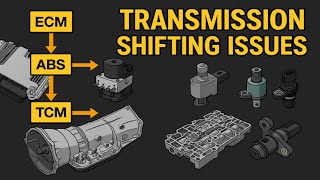
Technical definition: The SAE/OBD-II definition for P2733 is "Pressure Control Solenoid 'F' Stuck On". The TCM commanded the 'F' solenoid to turn off, but diagnostic feedback shows the circuit remains energized. 🎬 Watch: A detailed breakdown of the P2733 error code. This unwanted 'on' state forces maximum hydraulic pressure into specific clutch circuits.
Can I Drive With P2733?
No — Do Not Drive. Do not drive. A stuck-on 'F' solenoid forces the transmission to operate at maximum hydraulic pressure, causing violent shifts and severe internal strain. Continuing to drive quickly turns a $300 solenoid or wiring repair into a $4,000+ transmission replacement. If you must move the vehicle, drive under 30 mph directly to a safe location.
Common Causes
- Wiring or connector short-to-power (Very Common) — A short-to-power in the transmission wiring harness provides constant 12V voltage to the solenoid. This keeps the solenoid electrically energized and physically stuck 'on' regardless of what the TCM commands.
- Low, dirty, or incorrect transmission fluid (Very Common) — Old, contaminated fluid creates sludge and circulates metal debris. This debris physically jams the solenoid's internal mechanical valve in the open position.
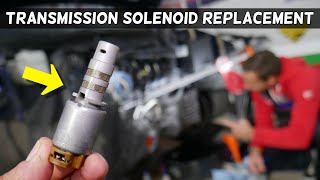
- Failed Pressure Control Solenoid 'F' (Common) — The solenoid itself fails via an internal electrical short in its coil, or its internal plunger mechanically seizes due to wear.
- Faulty Transmission Valve Body (Less Common) — The valve body houses the solenoids. Worn hydraulic channels, sticking internal valves, or severe debris accumulation inside the valve body forces the solenoid to malfunction.
- Faulty Transmission Control Module (TCM) (Rare) — A failed internal driver within the TCM continuously sends an 'on' signal to the solenoid, or fails to correctly interpret the solenoid's circuit status.
Symptoms
- Harsh, slamming shifts — Maximum line pressure causes the transmission to violently slam into gear instead of shifting smoothly.
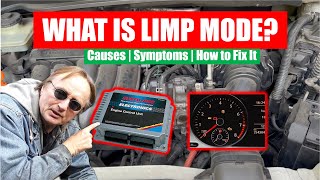
- Vehicle locked in 'Limp Mode' — The TCM locks the transmission into a single gear (usually 2nd or 3rd) to prevent catastrophic damage, limiting top speed to roughly 30 mph. 🎬 See how limp mode works and how to fix it.
- Check Engine Light illuminated — The dashboard warning light activates immediately upon the TCM detecting the stuck-on circuit.
- Transmission slipping or overheating — Incorrect pressure forces clutches to slip. The resulting friction generates extreme heat, triggering transmission over-temp warnings.
- Engine stalls when stopping — Excessive hydraulic pressure prevents the torque converter from disengaging when the vehicle comes to a halt, stalling the engine.
Diagnostic Flowchart
Tap your situation to follow the diagnostic path that matches what you're seeing on this code.
Common Fixes & Costs
- Repair or Replace Wiring Harness — Parts: $50-$200, Labor: $150-$400, ~2.5 hr book time (Advanced)
- Transmission fluid and filter change — Parts: $60-$120, Labor: $100-$200, ~1.5 hr book time (Intermediate)
- Replace Pressure Control Solenoid 'F' — Parts: $50-$150, Labor: $250-$500, ~3.5 hr book time (Professional)
- Replace Valve Body Assembly — Parts: $500-$1,200, Labor: $300-$600, ~4 hr book time (Professional)
- Replace or Reprogram TCM — Parts: $300-$800, Labor: $150-$300, ~2.5 hr book time (Professional)
Used vs. New Parts: Buying Guide
When a used part is worth it: Only when replacing a TCM on a vehicle worth less than $4,000. Never buy a used valve body or solenoid for a CVT.
Donor-vehicle mileage cap: roughly under 60000 miles for the part to have meaningful remaining life.
Donor quality checklist:
- Purchase from a reputable auto recycler with a 90-day warranty.
- Verify exact part number matching.
- Ensure the donor vehicle was not in a flood or fire.
Decision logic:
- If The part is a valve body or internal solenoid → Buy new or professionally remanufactured. Used internal hydraulics carry too much risk of pre-existing contamination.
- If The part is a TCM and the vehicle is over 10 years old → A used TCM is acceptable if it can be reprogrammed to your VIN.
Warranty tradeoff: Used parts offer 30-90 days part-only. New OEM parts offer 12-month/12,000-mile warranties covering parts and labor.
Worst-case if a used part fails: $1,000. If a used valve body fails, you pay for the part and the 4 hours of installation labor twice.
What Happens If You Wait — Timeline
- 0-1 month: Harsh shifting begins. The transmission operates at maximum line pressure, initiating accelerated internal wear. (MPG impact: 0-5%% · Added cost: $0)
- 1-3 months: Violent shifts and frequent limp mode. Constant high pressure destroys clutch pack seals and damages valve body channels. (MPG impact: 5-10%% · Added cost: $1,000-$2,500)
- 3+ months: Catastrophic failure. Burnt clutches circulate abrasive debris, destroying the pump and gears. Vehicle loses all forward momentum. (MPG impact: >15%% · Added cost: $3,500-$8,000)
Cost of Not Fixing It
- 0-1 month: Harsh shifting and limp mode activation. Internal transmission wear begins due to constant maximum hydraulic pressure. (Added cost: $0)
- 1-3 months: Accelerated wear destroys clutch packs and internal seals. The repair escalates from a wiring fix to requiring a new valve body. (Added cost: $1,000-$2,500)
- 3+ months: Catastrophic transmission failure. Burnt clutches and metal debris destroy the entire unit, requiring a full rebuild or replacement. (Added cost: $3,500-$8,000)
Diagnosis Steps
- Check Technical Service Bulletins (TSBs)
Search for TSBs for your specific year, make, and model. Manufacturers frequently issue software updates or extended warranties for known P2733 issues (e.g., Ford DPS6 or Nissan CVTs).
Tools: Internet access (Beginner) - Check Fluid Level and Condition
Inspect the transmission fluid. It must be at the 'FULL' mark and reddish-pink. Dark brown, black, or burnt-smelling fluid confirms internal wear and requires immediate replacement.
Tools: Rag, gloves (Beginner) - Scan and Clear Codes
Read all stored codes. Note freeze frame data, clear the codes, and test drive. If P2733 returns immediately upon shifting, the fault is hard and active.
Tools: OBD-II Scanner (Beginner) - Definitive Test: Check for Short-to-Power
Backprobe the control wire for solenoid 'F' at the transmission connector. With the key on/engine off, command the solenoid 'OFF' with a scan tool. If you read ~12V, the wiring harness has a short-to-power. If voltage drops to 0V but the code persists, the solenoid is mechanically stuck.
Tools: Digital multimeter, wiring diagram, professional scan tool (Advanced) - Active Solenoid Test
Use a bidirectional scan tool to command solenoid 'F' on and off. Listen for a physical 'click' from the transmission pan. No click indicates a dead solenoid or severed wiring.
Tools: Professional scan tool (Advanced) - Inspect External Wiring
Visually inspect the transmission wiring harness. Look for chafed insulation, melted wires, or fluid intrusion inside the main connector causing pins to short together.
Tools: Flashlight (Intermediate) - Solenoid Resistance Test
Unplug the solenoid and measure resistance across its pins. Compare to the service manual (typically 5-40 ohms). Infinite resistance means an open coil; near-zero means an internal short.
Tools: Digital multimeter, repair manual (Advanced) - Live Data Line Pressure Check
Monitor commanded vs. actual line pressure PIDs on a scan tool. With P2733, actual pressure remains pinned high even when the TCM commands a drop.
Tools: Professional scan tool (Advanced) - Internal Valve Body Inspection
Drain the fluid and remove the oil pan. Inspect the internal harness for damage. Remove the solenoid to check for metal debris blocking the valve screen.
Tools: Socket set, torque wrench, drain pan, new gasket (Professional)
When This Code Triggers (Freeze-Frame Conditions)
- Engine Coolant Temp: 170-210°F (77-99°C) (Sets when the engine and transmission fluid reach full operating temperature.)
- Engine RPM: 1200-2800 RPM (Detected during active gear shifts under normal driving loads.)
- Vehicle Speed: 25-60 mph (40-97 km/h) (Flagged during city or highway cruising when the TCM expects precise pressure regulation.)
- Engine Load: 20-70% (Triggered under light to moderate acceleration when the TCM commands a shift.)
Related Codes
- P2732 — Indicates Solenoid 'F' is Stuck Off. Differentiates a short-to-power (P2733) from an open circuit or dead coil (P2732).
- P2734 — Indicates an electrical circuit fault for Solenoid 'F'. If present with P2733, it confirms the issue is a wiring short, not a mechanical jam.
- P0700 — A generic code telling the engine computer to turn on the Check Engine Light because the TCM found a fault. Ignore P0700 and diagnose P2733.
Climate & Environmental Factors
- High Humidity and Road Salt: Accelerates corrosion inside external transmission connectors, bridging pins and creating the short-to-power that triggers P2733.
- Extreme Heat: Degrades transmission fluid rapidly, turning it into varnish that physically glues the solenoid valve in the 'on' position.
How to Talk to a Mechanic About This Code
Say this: "I have a P2733 code with harsh shifting. Before replacing any parts, I need the technician to test the control circuit for solenoid 'F' to rule out a wiring short-to-power."
Directs the shop to perform the critical electrical test, preventing them from needlessly replacing a good solenoid when the actual problem is a chafed wire.
Avoid saying:
- 'Just fix my transmission.'
- 'My check engine light is on, can you look at it?'
- 'Replace the bad solenoid.'
Questions to ask before authorizing the repair:
- Did you test the solenoid control wire for a short-to-power?
- Was there excessive metal debris in the transmission pan?
- If replacing the valve body, is it because individual solenoids aren't sold for my car?
- Does this repair require a TCM software relearn, and is that included in the price?
Where to Take It: Dealer vs Independent vs Chain
- Dealer:
Use only if the repair is covered by warranty.
Best for: Vehicles under a powertrain or extended CVT/TCM warranty., Repairs requiring proprietary software to program a new TCM.
Downsides: Highest labor rates., Will only replace full assemblies (valve bodies) rather than individual solenoids. (Typical cost: +40% vs. baseline) - Independent Shop:
Best Fit. An independent transmission specialist offers the best balance of diagnostic skill and fair pricing.
Best for: Out-of-warranty vehicles., Accurate electrical diagnostics to find wiring shorts.
Downsides: May lack the software to perform post-repair TCM relearns on newer models. (Typical cost: +0% vs. baseline) - Chain Shop:
AVOID. The risk of improper repair for P2733 is too high.
Best for: Routine fluid changes.
Downsides: Lack specialized training for complex internal transmission diagnostics., High risk of misdiagnosis or unnecessary transmission rebuild upsells. (Typical cost: -10% vs. baseline)
When to Walk Away From the Repair
If the repair cost exceeds 40% of the vehicle's private-party value, sell the car.
- Car worth $4000, fix is $2200: Walk away. The repair is over 50% of the car's value.
- Car worth $12000, fix is $1800: Fix it. The cost is reasonable to keep a valuable car on the road.
What Scan Tool You Need for This Code
Minimum: A bidirectional scan tool capable of commanding transmission solenoids on and off.
A $20 code reader only shows the code. You must have bidirectional control to command the solenoid and prove whether the fault is electrical or mechanical.
Budget: Autel MaxiAP AP200 (~$60) — Bluetooth dongle that provides full system diagnostics and basic bidirectional controls via a smartphone app.
Mid-range: Foxwell NT510 Elite (~$180) — Handheld unit with robust bidirectional controls and transmission relearn capabilities.
Professional: Autel MaxiCOM MK808 (~$450) — OEM-level diagnostics, live data graphing, and full module programming functions.
Rent vs buy: Auto parts store loaners cannot perform bidirectional tests. Pay a shop for 1 hour of diagnostic time rather than buying a tool you won't use again.
How to Clear the Code After You Fix It
- Reconnect the battery.
- Clear all diagnostic trouble codes with an OBD-II scanner.
- Perform a transmission relearn procedure if the valve body or TCM was replaced.
- Drive the vehicle to allow readiness monitors to run.
Drive cycle (~30 minutes): Start cold, idle for 3 minutes. Drive at a steady 55 mph for 15 minutes, followed by 15 minutes of stop-and-go city driving.
Readiness monitors affected: Transmission Monitors, Catalyst Monitor, EVAP Monitor
Before emissions retest: drive at least 50 miles to fully set monitors.
Watch out for:
- Clearing the code without fixing the short-to-power guarantees the code returns immediately.
- Failing to perform a TCM relearn after replacing a valve body causes harsh shifting even with new parts.
Will This Fail Emissions / State Inspection?
Yes — this code typically fails an OBD-II emissions inspection.
- California: An active Check Engine Light is an automatic failure. You must repair the issue and complete a full drive cycle before retesting.
- Texas: In emissions-testing counties, P2733 prevents registration renewal until repaired and cleared.
- New York: Fails the OBD-II plug-in test immediately due to the active MIL command.
Most Commonly Affected Vehicles
- Ford Focus, Fiesta (2011-2019) — Highly prone to TCM failures in the DPS6 transmission. Check Ford Customer Satisfaction Program 14M02 for extended warranty coverage.
- Subaru Outback, Forester, Crosstrek (2010-2018) — Valve body failure is standard. Subaru does not sell individual solenoids, requiring a $1,500+ valve body replacement. Check for 10-year/100k-mile CVT warranty extensions.
- Nissan Juke, Rogue, Sentra (2010-2018) — Widespread CVT valve body issues. TSB NTB15-083b advises TCM reprogramming first, but valve body replacement is usually required.
- Mitsubishi Lancer Evolution X, Outlander (2008-2015) — Common in the Getrag SST transmission. A simple fluid and filter change with Dia-Queen SSTF-1 often resolves the code before replacing expensive parts.
- Hyundai Elantra, Sonata (2010-2020) — Requires full valve body replacement as Hyundai does not service individual solenoids on these 6-speed automatics.
- Chevrolet Cruze, Malibu (2011-2019) — Common in 6T40 transmissions. Solenoid replacement is straightforward and costs $300-$600.
- Dodge Dart (2013-2016) — Often related to TCM failures or fluid degradation in the 6-speed automatic or DDCT.
- Honda Accord, Civic (2008-2017) — Usually triggered by severely degraded fluid. Regular drain-and-fills prevent this code.
Manufacturer-Specific Notes
- Subaru & Hyundai: Dealers refuse to replace individual solenoids. A single stuck solenoid forces a $1,500-$2,500 full valve body replacement.
- Ford: P2733 on a Focus or Fiesta is almost always a failing TCM, not the internal transmission solenoids. Ford extended warranties on these modules significantly.
- Mitsubishi: The SST transmission is hyper-sensitive to fluid degradation. Changing the fluid often cures P2733 completely without replacing parts.
Real Owner Stories
Mitsubishi Evo X MR with SST Transmission
Experienced erratic upshifts and P2733. Dealer quoted a $2,000 valve body replacement.
What they tried:
- Ignored the dealer quote and performed a DIY fluid and filter change using OEM Dia-Queen fluid.
Outcome: The fluid change completely resolved the issue. The code did not return.
Lesson: Always try a fluid change first on sensitive dual-clutch transmissions before authorizing expensive valve body replacements.
2018 Subaru Crosstrek at 150,000 miles
Check Engine Light illuminated with P2733 despite regular fluid maintenance.
What they tried:
- Took the vehicle to a Subaru dealership.
Outcome: Dealer confirmed a failed solenoid and replaced the entire valve body for $2,200, per Subaru's standard procedure.
Lesson: Even with perfect maintenance, Subaru valve bodies fail. Be prepared for the full assembly replacement cost, as individual solenoids are not an option at the dealer.
How to Prevent This Code From Triggering
- Change transmission fluid and filter every 30,000-60,000 miles. (Every 30,000-60,000 miles.) — Removes microscopic metal debris and sludge before it can physically jam the solenoid's internal valves.
- Use strictly OEM-specified transmission fluid. (Every fluid change.) — Incorrect fluid alters hydraulic pressure and friction, causing immediate solenoid malfunction and clutch slippage.
- Install an auxiliary transmission cooler. (Once, if towing or driving in heavy traffic.) — Lowers fluid temperature, preventing the thermal breakdown that creates solenoid-clogging varnish.
Frequently Asked Questions
Can I just clear the P2733 code and keep driving?
No. The TCM will re-detect the fault immediately. Ignoring it forces the transmission to run at maximum pressure, leading to severe internal damage.
Is it safe to drive with code P2733?
No. The transmission operates erratically, causing violent shifts and sudden limp mode activation. Driving risks catastrophic transmission failure.
How much does it cost to fix P2733?
Costs range from $150 for a fluid change to $600 for a solenoid replacement. If the valve body requires replacement, expect bills between $1,500 and $2,500.
What is the most common misdiagnosis for P2733?
Replacing the solenoid without testing the wiring. A short-to-power in the harness keeps the solenoid energized, meaning a new solenoid won't fix the problem.
Can I replace the pressure control solenoid myself?
This is an advanced repair requiring internal transmission access and extreme cleanliness. Unless you are experienced with valve bodies, hire a professional.
Will a transmission flush fix P2733?
A standard fluid and filter change is safer and more effective. High-pressure flushes rarely dislodge stuck solenoids and can push debris deeper into the valve body.
Key Takeaways
- Dirty transmission fluid and wiring harness short-circuits cause over 80% of P2733 codes.
- Driving with P2733 for even 50 miles escalates a $300 solenoid repair into a $4,000 complete transmission replacement.
- Test the solenoid control wire for a 12V short-to-power before replacing parts; a new solenoid will not fix a wiring short.
- Subaru and Hyundai dealers do not sell individual solenoids, requiring a $1,500 to $2,500 full valve body replacement to resolve this code.
Helpful Videos



Shop the Parts Behind P2733
Below are the parts most often responsible for code P2733, ranked by how frequently each one is the actual culprit (per the diagnosis above). Tap any to see what we have for your vehicle.


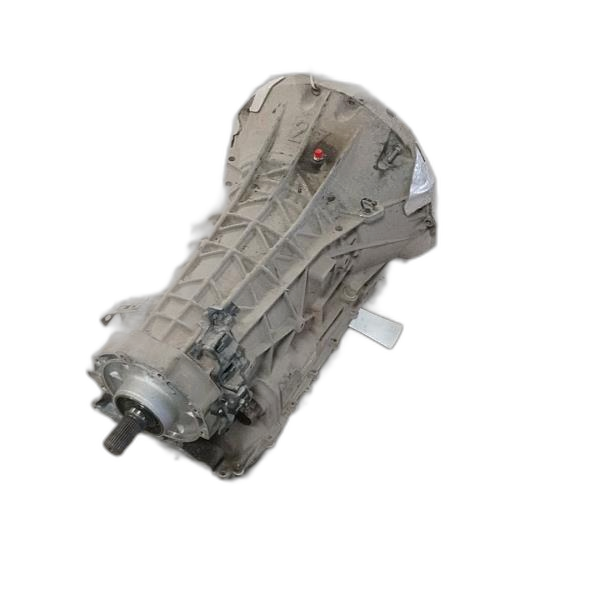

The information in this article is provided for general reference and educational purposes only. Vehicle specifications, procedures, and part compatibility can vary by production date, trim level, and region. Always consult your vehicle's factory service manual and verify part numbers before purchasing or performing repairs. Safety-critical components such as airbags, seat belts, and braking systems should be installed by a qualified professional.
- 🧭 Diagnostic Flowchart
- 🎬 Helpful Videos
- 🛍️ Shop This Part
- What Does P2733 Mean?
- Can I Drive With P2733?
- Common Causes
- Symptoms
- Common Fixes & Costs
- Used vs. New Parts: Buying Guide
- What Happens If You Wait — Timeline
- Cost of Not Fixing It
- Diagnosis Steps
- When This Code Triggers (Freeze-Frame Conditions)
- Related Codes
- Climate & Environmental Factors
- How to Talk to a Mechanic About This Code
- Where to Take It: Dealer vs Independent vs Chain
- When to Walk Away From the Repair
- What Scan Tool You Need for This Code
- How to Clear the Code After You Fix It
- Will This Fail Emissions / State Inspection?
- Most Commonly Affected Vehicles
- Manufacturer-Specific Notes
- Real Owner Stories
- Mitsubishi Evo X MR with SST Transmission
- 2018 Subaru Crosstrek at 150,000 miles
- How to Prevent This Code From Triggering
- Frequently Asked Questions
- Can I just clear the P2733 code and keep driving?
- Is it safe to drive with code P2733?
- How much does it cost to fix P2733?
- What is the most common misdiagnosis for P2733?
- Can I replace the pressure control solenoid myself?
- Will a transmission flush fix P2733?
- Key Takeaways
- 🎟️ Get 5% Off