

OBD-II Code P2735: Pressure Control Solenoid 'F' Performance/Stuck Off
A Comprehensive Guide to Diagnosing and Fixing P2735
- Low or dirty transmission fluid causes over 50% of P2735 codes, making a fluid check the mandatory first diagnostic step.
- Driving with P2735 risks sudden transmission lockup or limp mode, requiring an immediate tow to prevent catastrophic clutch damage.
- P2735 is a performance code indicating a mechanical stick or hydraulic clog, meaning electrical resistance tests will often pass despite a failed solenoid.
- Subaru and Nissan vehicles typically require a complete $1,500+ valve body replacement rather than a single solenoid swap due to factory flow-rate calibrations.
- Subaru and Nissan have extended CVT warranties up to 10 years or 100,000 miles, potentially covering the entire cost of a P2735 valve body repair.
What Does P2735 Mean?
The Transmission Control Module (TCM) detected a performance problem with Pressure Control Solenoid 'F'. This electronic valve fails to correctly manage the hydraulic fluid pressure required for smooth gear changes. The code signifies an intermittent mechanical or hydraulic issue—the solenoid sticks or responds incorrectly to commands, causing unpredictable transmission behavior rather than a constant electrical failure.
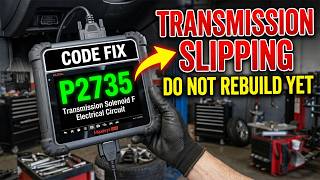
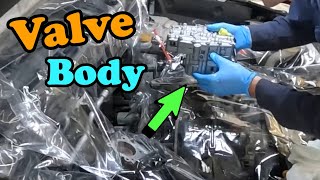
Technical definition: The SAE/OBD-II definition is "Pressure Control Solenoid 'F' Performance/Stuck Off". 🎬 Watch: A quick guide to understanding the P2735 code. The TCM detects that solenoid 'F' is not responding to commands, creating improper hydraulic pressure. 🎬 See how to identify and fix transmission solenoid F issues. The TCM actively monitors operation by comparing the commanded state to the resulting gear ratio or line pressure. Code P2735 sets when this comparison fails intermittently, proving a mechanical or hydraulic fault rather than a pure electrical open or short circuit.
Can I Drive With P2735?
No — Do Not Drive. Driving is not recommended. This code indicates a serious transmission problem that causes sudden shifting issues, stalling, or a complete loss of movement, creating a significant safety risk. Continuing to drive turns a several-hundred-dollar solenoid repair into a multi-thousand-dollar transmission rebuild by destroying internal clutches and the valve body.
Common Causes
- Low or Dirty Transmission Fluid (Very Common) — This is the most frequent cause. Low fluid prevents the pump from creating adequate pressure. Old, dirty fluid becomes an abrasive sludge filled with clutch material that clogs the solenoid's fine internal passages or jams its plunger.
- Faulty Pressure Control Solenoid 'F' (Common) — The solenoid itself fails mechanically. The internal coil develops hot spots, or the mechanical plunger becomes physically stuck from debris and wear, preventing fluid regulation.
- Wiring or Connector Issues (Common) — The transmission wiring harness is exposed to extreme heat and vibration. Chafed wires, broken connections, or corroded pins create intermittent opens or shorts that disrupt solenoid operation.
- Faulty Transmission Valve Body (Less Common) — The valve body is the transmission's hydraulic brain. Its complex passages become blocked by debris, or it develops internal cracks and warped bores, causing pressure drops even with a functional solenoid.
- Internal Hydraulic Leakage (Less Common) — Internal transmission seals fail or clutch pack pistons tear. This prevents proper pressure from reaching the clutches, which the TCM misinterprets as a solenoid performance issue.
- Incorrect Voltage or Poor Grounding (Less Common) — A failing battery or alternator provides unstable power, causing erratic TCM behavior. A corroded ground strap also triggers intermittent performance codes.
- Failed Transmission Pump (Rare) — A weak transmission pump cannot generate the baseline pressure required for the solenoids to regulate, triggering performance codes across multiple solenoids simultaneously.
- Defective Transmission Control Module (TCM) (Rare) — The TCM itself fails, sending faulty signals or misinterpreting data. Rule out all wiring and mechanical faults before condemning the TCM.
Symptoms
- Harsh, Delayed, or Slipping Shifts — The vehicle slams into gear, hesitates noticeably before shifting, or the engine RPM flares up between shifts, indicating transmission slip.
- Transmission Stuck in Gear ('Limp Mode') — To prevent further damage, the TCM locks the transmission in a single gear (often 2nd or 3rd). This results in poor acceleration and high RPMs at cruising speed.
- Check Engine Light is On — The Malfunction Indicator Lamp (MIL) illuminates on the dashboard to alert the driver of a stored TCM fault.
- Transmission Overheating — Incorrect line pressure and slipping clutches generate excessive friction. This causes the transmission to overheat, triggering a warning light and a distinct burning smell.
- Engine Stalling or Misfire-Like Symptoms — Erratic transmission behavior, especially during torque converter lock-up, puts an unexpected load on the engine, causing it to stall or feel like a misfire.
- Vehicle Won't Move When in Gear — If the solenoid sticks in a position that prevents pressure from reaching the clutches, the vehicle fails to move when placed in 'Drive' or 'Reverse'.
Diagnostic Flowchart
Tap your situation to follow the diagnostic path that matches what you're seeing on this code.
Common Fixes & Costs
- Transmission Fluid and Filter Change — Parts: $75-$200, Labor: $150-$350, ~1.5 hr book time (Intermediate)
- Replace Pressure Control Solenoid 'F' — Parts: $50-$250, Labor: $300-$600, ~3.5 hr book time (Advanced)
- Replace Solenoid Pack/Assembly — Parts: $300-$800, Labor: $300-$600, ~4 hr book time (Professional)
- Replace Transmission Valve Body
— Parts: $500-$1,800, Labor: $400-$1,000, ~4.5 hr book time
(Professional)
: OEM 31825AA052, 31825AA055 (supersedes older part) (Alt: Remanufactured units widely available from various suppliers.)
: OEM 31705-1XF1A, 31705-3TX0C (Part numbers are year/model specific) (Alt: Dorman, Rostra, ATP Automotive.)
: OEM Often serviced as a remanufactured assembly. (Alt: Sonnax (offers upgrade kits), ATP Automotive, World Wide Specialty Parts.) - Complete Transmission Rebuild or Replacement
— Parts: $3,500-$8,000+, Labor: Included in total, ~10.5 hr book time
(Professional)
: OEM N/A (Individual components) (Alt: N/A)
: OEM N/A (Individual components) (Alt: N/A)
: OEM 19418431 (replaces 24274483 for 6L80) (Alt: Jasper, Transtar.)
DIY vs Professional
- Transmission Fluid and Filter Change — Beginner: Yes
Tools: Socket set, drain pan, funnel, new fluid, new filter/gasket. - Replace Pressure Control Solenoid 'F' / Solenoid Pack — Beginner: No
Tools: Socket set, torque wrench, drain pan, multimeter, service manual, potentially snap-ring pliers. - Replace Transmission Valve Body — Beginner: No
Tools: Extensive socket/wrench set, torque wrench, service manual, drain pan, scan tool for reprogramming.
Used vs. New Parts: Buying Guide
When a used part is worth it: For a valve body, a used part from a low-mileage vehicle (under 80k miles) scrapped for non-transmission reasons (e.g., collision) is a cost-effective option for older vehicles where a new part is prohibitively expensive.
Donor-vehicle mileage cap: roughly under 80000 miles for the part to have meaningful remaining life.
Donor quality checklist:
- Verify the donor vehicle's reason for salvage; avoid those with transmission failure or high mileage.
- Match the part number exactly. For many vehicles (Subaru, GM), valve bodies are specific to the model and year and do not interchange.
- Purchase from a reputable salvage yard offering a warranty (typically 30-90 days).
Decision logic:
- If Vehicle is a Subaru or Nissan with a known CVT valve body issue → Strongly favor a new or remanufactured OEM part with the latest updates to permanently fix the design flaw.
- If Vehicle is older (>10 years) and budget is the primary concern → A tested, low-mileage used valve body is a reasonable gamble, but accept the risk of a shorter lifespan.
- If The part requires programming to the vehicle (common on GM, Subaru) → Buy new or remanufactured. A used part is often not reprogrammable, making it useless.
Warranty tradeoff: Used parts typically offer a 30-90 day part-only warranty. Remanufactured units come with a 1-3 year warranty that covers labor. New OEM parts carry the manufacturer's 1-year warranty.
Worst-case if a used part fails: $500-$1200 if a used valve body fails after installation, as you pay for the labor a second time plus the cost of another part.
What Happens If You Wait — Timeline
- 0-2 weeks: Check Engine Light illuminates with code P2735. You notice slightly harsher shifts or a brief hesitation. (MPG impact: 0-5%% · Added cost: $0)
- 2 weeks - 3 months: Shifting becomes noticeably more erratic and harsh. The transmission slips, causing RPMs to flare between gears. The vehicle enters 'limp mode' intermittently. (MPG impact: 5-15%% · Added cost: $50-$200 in wasted fuel. Minor scoring on clutch surfaces begins.)
- 3-6 months: Slipping clutches generate extreme heat, causing the transmission fluid to burn and break down. This overheated, abrasive fluid damages seals and clogs the valve body. A distinct burning smell is present after driving. (MPG impact: 10-20%% · Added cost: $1,500-$3,000. The original solenoid/valve body repair is no longer sufficient. Clutch packs and seals are damaged, requiring a more extensive rebuild.)
- 6+ months: Catastrophic failure. Widespread internal damage from heat and debris. The valve body is scored beyond repair, clutch packs are destroyed, and the transmission pump is damaged. The vehicle fails to move at all. (MPG impact: 20%+% · Added cost: $3,500-$8,000+. A complete transmission rebuild or replacement is now the only option.)
Cost of Not Fixing It
- 0-1 month: Noticeable drop in fuel economy (5-15%), increasingly harsh shifts, and risk of entering 'limp mode' at any time. (Added cost: Negligible, but safety is compromised.)
- 1-6 months: Slipping clutches generate extreme heat, burning the transmission fluid and causing permanent damage to clutch packs and seals. The valve body becomes scored or clogged with debris. (Added cost: $1,500-$3,500 for a valve body replacement and potential clutch pack replacement, on top of the original solenoid issue.)
- 6+ months: Catastrophic transmission failure. Widespread damage from debris and heat requires a complete transmission rebuild or replacement. The vehicle becomes completely undrivable. (Added cost: $3,500-$8,000+ for a replacement or rebuilt transmission.)
Diagnosis Steps
- Check Transmission Fluid Level and Condition
Verify the transmission fluid level and condition. Fluid must be bright red and smell sweet. Dark brown fluid with a burnt odor or metal particles indicates severe internal wear requiring a rebuild, not just a solenoid.
Tools: Rag, Owner's Manual (Beginner) - Scan for Other Codes
Read all stored codes. P0700 almost always accompanies P2735. Codes for other solenoids or the torque converter indicate a systemic hydraulic failure rather than a single bad part.
Tools: OBD-II Scanner (Beginner) - Research Technical Service Bulletins (TSBs)
Check manufacturer TSBs for your VIN. Manufacturers frequently release updated diagnostic procedures or extended warranties for this specific code, saving hours of misdiagnosis.
Tools: Online TSB Database, Vehicle Information (Beginner) - Inspect External Wiring and Connectors
Visually inspect the transmission wiring harness for chafed or melted wires. Unplug the main connector and check for corroded pins. Perform a 'wiggle test' on the harness with the engine running to expose intermittent faults.
Tools: Flashlight, Electrical Contact Cleaner (Intermediate) - Check Battery Voltage and Grounds
Confirm the battery holds at least 12.4V (engine off) and the alternator produces 13.5-14.5V (running). Clean all main ground straps to ensure resistance to chassis ground is under 0.1 Ω.
Tools: Digital Multimeter, Wire Brush (Intermediate) - Test the Solenoid Circuit Resistance
Disconnect the harness and measure the solenoid coil's resistance using a multimeter. Compare to factory specs (typically 6-40 Ohms). Infinite resistance (OL) means an open circuit; near zero means a short.
Tools: Digital Multimeter, Vehicle-Specific Wiring Diagram (Advanced) - Analyze Live Data & PWM Signal
Monitor live data PIDs for Solenoid 'F' with an advanced scan tool. Compare the TCM's commanded state to the actual line pressure. Back-probe the control wire with an oscilloscope to verify a clean Pulse-Width Modulated (PWM) square wave.
Tools: Advanced Scan Tool, Oscilloscope/Graphing Multimeter (Professional) - Test the Solenoid Directly
Remove the transmission pan. Apply a fused 12V power source directly to the solenoid terminals. A sharp 'click' indicates normal mechanical operation. A weak, buzzing, or absent click confirms a stuck or failed solenoid.
Tools: Socket Set, Drain Pan, Fused 12V Power Source (Advanced) - Perform a Transmission Line Pressure Test
Connect a transmission pressure gauge to the test port. Run the engine and check pressure at idle in all gears against factory specs. Low or erratic pressure confirms a hydraulic circuit failure (solenoid, valve body, or pump).
Tools: Transmission Pressure Gauge Set, Service Manual (Advanced) - Inspect the Valve Body
Visually inspect the removed valve body for heavy sludge, scored bores, or metal debris. Debris confirms catastrophic internal transmission damage requiring a full rebuild.
Tools: Flashlight, Torque Wrench (Advanced) - Perform Valve Body Vacuum Test (Pro Tip)
Remove the valve body and test it on a vacuum stand (crucial for GM 6L/8L transmissions). This identifies wear in the accumulator piston and regulator valve bores, proving the valve body requires replacement.
Tools: Valve Body Vacuum Test Kit, Manufacturer Specifications (Professional)
When This Code Triggers (Freeze-Frame Conditions)
- Engine Coolant Temp: 180-210°F (The fault typically registers when the vehicle is fully warmed up, as fluid viscosity thins with temperature, exposing pressure leaks.)
- Engine RPM: 1500-3000 RPM (The code sets during steady-state cruising or light acceleration when the transmission expects a smooth shift.)
- Vehicle Speed: 35-60 mph (Highway or arterial road speeds where the TCM commands upshifts and downshifts based on engine load.)
- Engine Load: 25-70% (Moderate engine load requires precise transmission line pressure control, exposing the solenoid's performance lag.)
Related Codes
- P2732 — Indicates Pressure Control Solenoid 'F' is Stuck Off. This is a 'hard' fault, meaning the solenoid consistently fails. P2735 is the intermittent version of this fault.
- P2733 — Means Pressure Control Solenoid 'F' is Stuck On, allowing pressure when it shouldn't. This is a constant failure, whereas P2735 is an intermittent or performance-based fault.
- P2734 — A purely electrical fault code for Solenoid 'F', pointing to an open or short in the wiring or internal coil. P2735 is a performance code where the electrical circuit tests fine, but the issue is mechanical or hydraulic.
- P0700 — A generic Transmission Control System Malfunction code. It is an informational code set by the ECM to indicate that a specific fault, like P2735, is stored within the TCM.
Climate & Environmental Factors
- Extreme Cold: Cold temperatures thicken transmission fluid. Increased viscosity makes it harder for the pump to generate pressure and flow through small orifices, causing delayed shifts or triggering performance codes on startup.
- Extreme Heat: High ambient temperatures, especially in stop-and-go traffic, accelerate fluid breakdown. Thinned, overheated fluid loses lubricating properties, leading to increased wear, clutch slippage, and solenoid failure.
- High Humidity and Moisture: Moisture enters the transmission through seals or vents, leading to internal rust and corrosion on metallic parts like solenoid plungers and valve body bores. Salty air in coastal regions significantly accelerates this corrosion.
How to Talk to a Mechanic About This Code
Say this: "I have an OBD-II code P2735 for the Pressure Control Solenoid 'F' and I'm experiencing [mention specific symptoms like 'harsh shifting' or 'hesitation']. I'd like to schedule a diagnostic that starts by checking the transmission fluid condition and level, and inspecting the external wiring harness, before moving to more invasive internal diagnostics."
This signals you understand the most common, cheapest-to-fix causes. It directs the technician to follow a logical diagnostic path instead of immediately quoting a costly repair like a valve body or transmission replacement.
Avoid saying:
- 'Just fix whatever's wrong'
- 'My check engine light is on, can you look at it?' (too vague — invites upsell)
- 'Whatever you recommend'
Questions to ask before authorizing the repair:
- What was the condition and level of the transmission fluid? Were there any metal shavings in the pan?
- Did you check for any Technical Service Bulletins (TSBs) or warranty extensions for my vehicle's VIN?
- If you recommend a valve body replacement, why is replacing just the solenoid not the correct repair for this specific vehicle?
- Did the solenoid's electrical circuit test okay? What was the resistance reading?
- What is the warranty on the parts and labor for this repair?
Where to Take It: Dealer vs Independent vs Chain
- Dealer:
Recommended for in-warranty vehicles or specific makes (Subaru, Nissan, GM) known for complex, TSB-driven repairs and programming requirements.
Best for: Vehicles under powertrain warranty or a known warranty extension (common for Subaru and Nissan CVTs)., Vehicles requiring a valve body replacement that needs to be programmed to the car (common on GM, Subaru).
Downsides: Highest labor rates., Defaults to replacing a large assembly (valve body) when a smaller repair suffices on less complex vehicles. (Typical cost: +50% vs. baseline) - Independent Shop:
Best overall fit IF you find a reputable, well-reviewed *transmission specialty shop*. A general independent mechanic is a gamble.
Best for: Out-of-warranty vehicles where cost is a major factor., Finding a shop that specializes in transmission repair to provide dealer-level expertise at a lower cost.
Downsides: Quality and expertise vary widely. A general mechanic lacks the specific tools or knowledge for complex transmission diagnostics., Lacks access to the latest manufacturer TSBs or programming software. (Typical cost: +0% vs. baseline) - Chain Shop:
AVOID for diagnosing P2735. The risk of misdiagnosis or an improper repair is very high.
Best for: Simple fluid and filter changes if you are certain that is the only issue.
Downsides: Technician skill is highly variable., Lacks the advanced diagnostic tools and specific expertise for internal transmission codes., Business model encourages upselling unnecessary services like flushes that harm older transmissions. (Typical cost: -10% vs. baseline)
When to Walk Away From the Repair
If the estimated repair cost exceeds 40-50% of the car's private-party value, seriously consider selling the car as-is or trading it in.
- Car worth $8000, fix is $1800: Fix it. The repair cost is well below the 40% threshold and restores the vehicle's value.
- Car worth $5000, fix is $2200: Borderline. This is right at the 40-50% mark. Get a second opinion and weigh the car's overall condition before proceeding.
- Car worth $4000, fix is $3500: Walk away. The repair cost is nearly the entire value of the car. It is not economically sensible to fix it.
What Scan Tool You Need for This Code
Minimum: A scanner that reads manufacturer-specific transmission codes and views live transmission data PIDs, such as fluid temperature and solenoid commanded vs. actual states.
A basic $20 code reader only shows the P2735 code. It cannot show the live data needed to determine if the fault is electrical, mechanical, or hydraulic. You must see what the TCM commands the solenoid to do in real-time.
Budget: BlueDriver Pro (~$100) — Connects to your smartphone and displays live data, including manufacturer-specific transmission PIDs like fluid temperature. It is a great starting point for confirming symptoms before going to a shop.
Mid-range: Foxwell NT510 Elite / Autel MaxiCOM MK808 Series (~$150-350) — Offers bidirectional control to actively command the 'F' solenoid on and off to listen for a 'click', confirming if the solenoid is mechanically stuck. Provides deep access to OEM-specific transmission data.
Professional: Autel MaxiSys Series / Launch X431 Series (~$900-2000+) — Provides full, dealership-level functionality necessary for repairs requiring programming, such as replacing a valve body on GM, Subaru, or Nissan vehicles. Performs transmission adaptation resets and programs solenoid flow-rate data.
Rent vs buy: For P2735, where live data and bidirectional tests are key, renting a basic scanner from an auto parts store will not suffice. Buying a mid-range scanner is a good investment for any serious DIYer.
How to Clear the Code After You Fix It
- Perform repair with battery disconnected.
- Reconnect battery and use an OBD-II scan tool to clear any stored fault codes.
- Perform a complete OBD-II drive cycle to allow readiness monitors to run.
Drive cycle (~20 minutes): A complete drive cycle includes: a cold start, warm-up at idle, a period of city driving (stop-and-go), and a period of steady highway-speed driving (e.g., 10 minutes at 55 mph). The goal is to meet the enabling criteria for all OBD-II readiness monitors.
Readiness monitors affected: Comprehensive Component Monitor, Transmission
Before emissions retest: drive at least 50 miles to fully set monitors.
Watch out for:
- Clearing the code without performing a drive cycle leaves readiness monitors 'Not Ready', causing an automatic emissions test failure.
- The code returns quickly if the underlying mechanical or hydraulic issue (like dirty fluid or a sticking valve) was not properly fixed.
- Not having enough fuel (typically requires between 15% and 85% full tank) prevents some monitors, like the EVAP monitor, from running.
Will This Fail Emissions / State Inspection?
Yes — this code typically fails an OBD-II emissions inspection.
- California: An illuminated Check Engine Light is an automatic failure. All required readiness monitors must be 'Complete'. After a repair, a comprehensive drive cycle is necessary before re-testing.
- New York: The NYS inspection includes an OBD-II scan. An active P2735 code causes the vehicle to fail the emissions portion of the inspection.
- Texas: In counties requiring emissions testing, an active Check Engine Light results in an automatic failure. Clearing the code resets readiness monitors, and the vehicle fails if too many are 'Not Ready'.
Most Commonly Affected Vehicles
- Subaru Outback, Forester, Impreza, Crosstrek (2010-2019) — Extremely common on models with the TR580 CVT. Subaru issued TSB 16-102-16R with a detailed diagnostic flow chart. The ultimate fix is replacing the entire valve body (P/N 31825AA055) as individual solenoids are calibrated to the unit.
- Nissan Altima, Murano, Maxima, Rogue, Sentra (2010-2018) — Nissan CVTs are known for valve body failures. TSBs like NTB18-077C instruct technicians to replace the entire valve body assembly for solenoid performance codes. The ROM from the old valve body must often be transferred to the new one.
- Chevrolet / GMC Silverado, Sierra, Tahoe, Suburban (2014-2019) — Models with 6-speed (6L80) and 8-speed (8L90) transmissions are highly susceptible. The underlying cause is often a failing torque converter that sheds debris, contaminating the fluid and destroying the valve body and solenoids.
- Ford F-150, Explorer, Mustang (2018-2022) — On vehicles with the 10R80 10-speed transmission, a persistent engine misfire is misinterpreted by the TCM as a transmission slip, falsely triggering solenoid performance codes.
- Honda Accord, CR-V, Pilot, Odyssey (2013-2019) — Honda transmissions are very sensitive to fluid type and condition. Using non-genuine Honda ATF causes shifting issues. These vehicles also set random transmission codes due to low battery voltage during startup.
- Dodge / Ram Ram 1500/2500, Charger, Challenger (2008-2017) — Solenoid performance codes are common due to a failing solenoid pack or issues with the internal transmission wiring harness, which becomes brittle from heat and age.
- Hyundai / Kia Sonata, Elantra, Optima, Forte (2011-2018) — Models with 6-speed automatics experience solenoid failures and internal harness issues. The plastic harness connector becomes brittle and fails, leading to intermittent connections and performance codes.
- Toyota Corolla, Camry, RAV4 (2014-2020) — Certain models with CVT transmissions log solenoid performance codes. The issue often lies within the valve body assembly, which Toyota typically services as a complete unit.
Manufacturer-Specific Notes
- Subaru: Subaru extended the CVT warranty for many vehicles to 10 years/100,000 miles. Because solenoids are calibrated to the valve body as a matched set, the official repair for most solenoid codes is replacing the entire valve body assembly per TSB 16-102-16R.
- Nissan: Class-action lawsuits regarding defective CVTs resulted in warranty extensions to 84 months/84,000 miles for models like the Altima, Sentra, and Rogue. The common repair for solenoid codes is replacing the entire valve body assembly.
- General Motors: On 8L90 transmissions, solenoids are flow-matched to the valve body. They cannot be replaced individually without using a scan tool to program the new solenoid's unique flow rate data (PUN/TUN numbers) into the TCM.
- Ford: On trucks with the 10R80 transmission, an underlying engine misfire causes a shudder that the TCM misinterprets as a transmission slip, leading it to incorrectly set a solenoid or gear ratio performance code.
Real Owner Stories
2015 Subaru Outback 2.5i at 110K miles
Check engine light came on, along with flashing 'AT OIL TEMP' light. Transmission exhibited harsh downshifts and occasional hesitation from a stop.
What they tried:
- Initial thought was low fluid, but level was fine. A local shop scanned the P2735 code.
- The shop recommended a transmission fluid drain and fill. The issue persisted and the code returned within 50 miles.
Outcome: After researching Subaru TSB 16-102-16R, the owner took the vehicle to a dealer. The dealer confirmed the common valve body failure. The entire CVT valve body was replaced with the updated part. Total cost was ~$1,800. The car shifts smoothly for over a year since the repair.
Lesson: On many modern CVTs, a solenoid performance code is a strong indicator of a known valve body issue. A simple fluid change is unlikely to be a permanent fix, and the manufacturer-recommended repair is a full valve body replacement.
2014 Nissan Altima at 160K miles
Car experienced a significant delay when shifting from Park into Drive or Reverse, accompanied by P2735 and other solenoid-related codes.
What they tried:
- Owner attempted a DIY replacement of the valve body with a refurbished unit purchased online to save money.
Outcome: The valve body replacement fixed the shifting delay. However, after the repair, the owner discovered the CVT belt was slipping, an issue masked by the initial valve body problem. The car was sold for parts as a full transmission replacement was not cost-effective.
Lesson: Misdiagnosis is costly. While the solenoid code pointed to the valve body, it was a symptom of a larger transmission failure. Before attempting a major component replacement, a thorough inspection for other signs of wear (like metal in the pan) is crucial.
2016 Chevy Silverado 1500 (6L80) at 95K miles
Truck developed a shudder at highway speeds and harsh 2-3 shifts, eventually setting a P2735 code along with a torque converter clutch code.
What they tried:
- A transmission shop initially suggested replacing just the solenoid pack to fix the P2735 code.
- Owner, after reading forums, was concerned about the torque converter and insisted on a more thorough diagnosis.
Outcome: Inspection of the transmission fluid revealed significant metal shavings ('glitter'). This confirmed the torque converter was failing and sending debris throughout the transmission. The final repair involved replacing the torque converter, the contaminated valve body, and a full transmission flush. The cost was ~$3,500, but it addressed the root cause.
Lesson: On platforms like the GM 6L80, solenoid codes are often a symptom, not the disease. A failing torque converter is a common root cause that contaminates the entire system. Replacing the solenoid without addressing the debris-generating torque converter leads to repeat failure.
How to Prevent This Code From Triggering
- Perform transmission fluid and filter changes at recommended intervals. (Every 30,000 to 60,000 miles, or more frequently for severe use (towing, mountains).) — Removes contaminants, metal shavings, and sludge that clog solenoid screens and valve body passages, which is the leading cause of solenoid performance issues.
- Use ONLY the manufacturer-specified transmission fluid. (Every time fluid is added or changed.) — Modern transmissions are highly sensitive to fluid viscosity and additive packages. Using a 'universal' fluid leads to improper hydraulic pressure, seal damage, and solenoid malfunction.
- Install an auxiliary transmission cooler. (One-time installation, especially for vehicles that tow or operate in hot climates.) — Heat is the #1 enemy of transmissions. An external cooler reduces fluid temperatures by 50-100°F, dramatically slowing fluid breakdown and preventing overheating damage to clutches and solenoids.
- Address engine overheating issues immediately. (As needed.) — Many vehicles cool the transmission fluid through a heat exchanger in the engine's radiator. An overheating engine quickly overheats the transmission fluid, leading to rapid degradation and component failure.
Frequently Asked Questions
Can I just change the transmission fluid to fix P2735?
Sometimes, yes. If dirty or low fluid causes the problem, a fluid and filter change resolves the issue by removing debris. It is the most logical first step, but it is not a guaranteed fix if the solenoid or valve body is already damaged.
Can a bad battery cause a P2735 code?
Yes. A weak battery causes a significant voltage drop during engine start, leading to electronic glitches in sensitive modules like the TCM. This triggers various random codes, including transmission performance faults.
Why do mechanics replace the whole valve body for one bad solenoid?
On many modern transmissions (like Subaru CVTs), solenoids are factory-calibrated and sold as a matched set with the valve body. On others (like the GM 8L90), each solenoid has a unique flow rate requiring computer programming. Replacing the entire assembly ensures proper calibration and saves labor time.
What is a TSB and why is it important for P2735?
A TSB (Technical Service Bulletin) is a manufacturer document detailing a known problem and providing a specific diagnostic procedure. For P2735, a TSB often points to a known root cause, like a faulty valve body design, saving hours of misdiagnosis.
Is a pressure control solenoid the same as a shift solenoid?
They are similar but perform different jobs. Shift solenoids are simple on/off valves that direct fluid to engage a specific gear. Pressure control solenoids use pulse-width modulation (PWM) to precisely regulate hydraulic pressure for smooth clutch application based on engine load.
Why is the repair cost so high if the solenoid part is cheap?
The solenoid mounts to the valve body inside the transmission pan. The bulk of the cost comes from the labor required to drain the fluid, remove the pan, service the valve body, and reassemble everything with new gaskets and fluid.
What happens if I ignore code P2735?
Ignoring this code leads to severe and expensive transmission damage. Continuous slipping burns the clutch packs, overheats the fluid, and sends metal debris throughout the system. This results in complete transmission failure requiring a multi-thousand-dollar rebuild.
My scanner says the problem is 'intermittent'. Does that mean it's not serious?
'Intermittent' means the fault is not present 100% of the time, but it remains extremely serious. The unpredictable nature of the problem causes the transmission to slip or fail to shift at any moment, creating a major safety hazard in traffic.
Key Takeaways
- Low or dirty transmission fluid causes over 50% of P2735 codes, making a fluid check the mandatory first diagnostic step.
- Driving with P2735 risks sudden transmission lockup or limp mode, requiring an immediate tow to prevent catastrophic clutch damage.
- P2735 is a performance code indicating a mechanical stick or hydraulic clog, meaning electrical resistance tests will often pass despite a failed solenoid.
- Subaru and Nissan vehicles typically require a complete $1,500+ valve body replacement rather than a single solenoid swap due to factory flow-rate calibrations.
- Subaru and Nissan have extended CVT warranties up to 10 years or 100,000 miles, potentially covering the entire cost of a P2735 valve body repair.
Helpful Videos
![What is P2735 Engine Code [Quick Guide]](https://img.youtube.com/vi/BuJjbC1gEqQ/mqdefault.jpg)
Shop the Parts Behind P2735
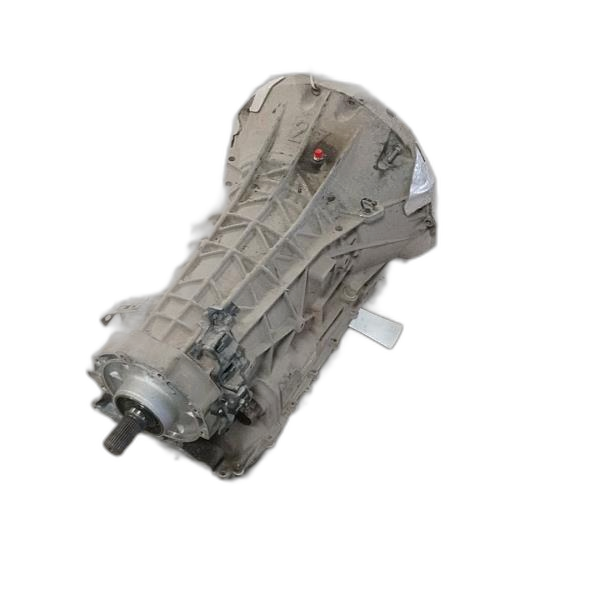
Below are the parts most often responsible for code P2735, ranked by how frequently each one is the actual culprit (per the diagnosis above). Tap any to see what we have for your vehicle.



The information in this article is provided for general reference and educational purposes only. Vehicle specifications, procedures, and part compatibility can vary by production date, trim level, and region. Always consult your vehicle's factory service manual and verify part numbers before purchasing or performing repairs. Safety-critical components such as airbags, seat belts, and braking systems should be installed by a qualified professional.
- 🧭 Diagnostic Flowchart
- 🎬 Helpful Videos
- 🛍️ Shop This Part
- What Does P2735 Mean?
- Can I Drive With P2735?
- Common Causes
- Symptoms
- Common Fixes & Costs
- DIY vs Professional
- Used vs. New Parts: Buying Guide
- What Happens If You Wait — Timeline
- Cost of Not Fixing It
- Diagnosis Steps
- When This Code Triggers (Freeze-Frame Conditions)
- Related Codes
- Climate & Environmental Factors
- How to Talk to a Mechanic About This Code
- Where to Take It: Dealer vs Independent vs Chain
- When to Walk Away From the Repair
- What Scan Tool You Need for This Code
- How to Clear the Code After You Fix It
- Will This Fail Emissions / State Inspection?
- Most Commonly Affected Vehicles
- Manufacturer-Specific Notes
- Real Owner Stories
- 2015 Subaru Outback 2.5i at 110K miles
- 2014 Nissan Altima at 160K miles
- 2016 Chevy Silverado 1500 (6L80) at 95K miles
- How to Prevent This Code From Triggering
- Frequently Asked Questions
- Can I just change the transmission fluid to fix P2735?
- Can a bad battery cause a P2735 code?
- Why do mechanics replace the whole valve body for one bad solenoid?
- What is a TSB and why is it important for P2735?
- Is a pressure control solenoid the same as a shift solenoid?
- Why is the repair cost so high if the solenoid part is cheap?
- What happens if I ignore code P2735?
- My scanner says the problem is 'intermittent'. Does that mean it's not serious?
- Key Takeaways
- 🎟️ Get 5% Off