

OBD-II Code P2738: Pressure Control Solenoid 'F' Control Circuit Low
The Ultimate Guide to What P2738 Means, Why It Triggers, and How to Fix It for Good
- P2738 indicates the Transmission Control Module (TCM) detects under 9 volts on the control circuit for pressure control solenoid 'F'.
- Over 70% of P2738 codes stem from damaged external wiring, corroded ground straps, or degraded transmission fluid rather than a failed solenoid.
- Driving with P2738 triggers limp mode, locking the transmission in 2nd or 3rd gear and reducing fuel economy by up to 25%.
- Ignoring this code for more than 100 miles risks overheating the transmission fluid, escalating a $300 solenoid repair into a $4,000 transmission rebuild.
What Does P2738 Mean?
The Transmission Control Module (TCM) detects an electrical fault with Pressure Control Solenoid 'F'. This solenoid receives a voltage signal lower than the manufacturer's specified range, directly disabling the transmission's ability to shift gears smoothly.
Technical definition: SAE/OBD-II defines P2738 as "Pressure Control Solenoid 'F' Control Circuit Low". The TCM detects voltage on the 'F' solenoid control circuit below the expected threshold. This points to a short to ground, an internal open in the solenoid coil, a damaged wire, or a failed TCM driver circuit.
Can I Drive With P2738?
Yes, But With Caution. You can drive, but it is strongly advised against for any distance over 50 miles. The transmission will shift harshly, get stuck in limp mode, or slip. Continuing to drive overheats the transmission fluid, escalating a $300 solenoid repair into a $4,000 transmission rebuild.
Common Causes
- Low or Dirty Transmission Fluid (Very Common) — Low fluid starves the pump, preventing solenoids from managing pressure. Dirty fluid clogs the tiny passages in the solenoid and valve body, causing it to stick.
- Damaged Wiring or Corroded Connectors (Very Common) — Exposed wiring harnesses fray, pinch, or break. Connectors corrode from moisture and road salt, creating high resistance and a low voltage signal.
- Poor Electrical Grounds or Low System Voltage (Common) — A corroded ground strap for the transmission or engine is the primary cause of 'circuit low' faults. A weak battery or failing alternator also drops system voltage enough to trigger this code.
- Failed Pressure Control Solenoid 'F' (Common) — The solenoid's internal electronic coil develops an open circuit, a short to ground, or high resistance, preventing function even with perfect wiring.
- Internal Transmission Wiring Harness Failure (Less Common) — The internal wiring harness connecting solenoids to the external connector becomes brittle from hot fluid, cracking and creating an open or short circuit.
- Faulty Transmission Control Module (TCM) (Less Common) — The TCM's internal transistor that sends voltage to the solenoid burns out. This is a known defect on specific models like the Ford DPS6.
- Failing Transmission Pump (Rare) — A worn pump fails to generate necessary line pressure. While this usually triggers P0868, it contributes to pressure control faults under heavy load.
Symptoms
- Harsh, Delayed, or Slipping Shifts — The car jerks when shifting, takes too long to engage a gear, or the engine RPMs flare up between shifts, indicating a slip.
- Vehicle Stuck in Limp Mode — The TCM commands a 'fail-safe' mode, forcing the transmission into a single gear (usually 2nd or 3rd) to prevent further damage.
- Check Engine Light Illuminated — The vehicle's computer illuminates the Malfunction Indicator Lamp (MIL) or a dedicated transmission warning light.
- Transmission Overheating — Improper pressure control causes clutches to slip, generating excessive friction and heat that quickly degrades the transmission fluid.
- Reduced Fuel Economy — When the transmission slips or is stuck in a lower gear, the engine works harder, leading to a noticeable decrease in gas mileage.
- Engine Stalling When Stopping — The transmission fails to disengage a clutch properly when coming to a stop, causing the engine to lug or stall entirely.
Diagnostic Flowchart
Tap your situation to follow the diagnostic path that matches what you're seeing on this code.
Common Fixes & Costs
- Change Transmission Fluid and Filter — Parts: $50-$150, Labor: $150-$300, ~1.5 hr book time (DIY)
- Repair Damaged Wiring or Clean Connectors — Parts: $10-$50, Labor: $150-$400, ~2.0 hr book time (Intermediate)
- Replace the Pressure Control Solenoid
— Parts: $50-$300, Labor: $250-$600, ~2.5 hr book time
(Advanced)
: OEM
: OEM - Replace Internal Transmission Wiring Harness
— Parts: $75-$200, Labor: $300-$600, ~4.0 hr book time
(Professional)
: OEM - Replace the Transmission Valve Body
— Parts: $400-$1,200, Labor: $300-$600, ~3.5 hr book time
(Professional)
: OEM - Replace or Reprogram the TCM
— Parts: $500-$1,000, Labor: $200-$400, ~2.0 hr book time
(Professional)
: OEM
Used vs. New Parts: Buying Guide
When a used part is worth it: A used valve body or solenoid pack from a low-mileage, accident-damaged vehicle is a cost-effective option for older, high-mileage cars where the repair cost exceeds the vehicle's value.
Donor-vehicle mileage cap: roughly under 60000 miles for the part to have meaningful remaining life.
Donor quality checklist:
- Verify the donor vehicle was not scrapped due to transmission failure.
- Ensure the part number matches exactly; electronic solenoids are not always interchangeable.
- Avoid parts with external corrosion or from vehicles in rust-belt states.
Decision logic:
- If The part is a single, externally accessible solenoid → Buy new OEM or a quality aftermarket part. The savings on a used part are minimal and not worth the labor risk.
- If The part is a complete valve body or internal solenoid pack → A remanufactured unit with a warranty is the best value. A used part is a high-risk gamble, as you inherit its wear and unknown history.
- If Vehicle is less than 10 years old and the budget allows → Always favor new OEM or remanufactured parts over used for reliability and warranty coverage.
Warranty tradeoff: Used parts typically have a 30-90 day warranty covering the part only. New aftermarket and remanufactured parts come with a 1-3 year warranty.
Worst-case if a used part fails: 500-1000 if a used valve body or solenoid pack fails after installation, requiring repeat labor costs.
What Happens If You Wait — Timeline
- 0-1 month: Code sets, Check Engine Light is on. Driver notices occasional harsh shifts or slight hesitation. The transmission enters limp mode unpredictably. (MPG impact: 0-5%% · Added cost: $0-$50 in wasted fuel)
- 1-3 months: Shifting becomes consistently harsh, delayed, or erratic. Slipping between gears becomes frequent, causing RPMs to flare. Transmission overheating begins. (MPG impact: 5-15%% · Added cost: $50-$200 in wasted fuel and accelerated fluid degradation)
- 3-6 months: Sustained slipping generates extreme heat, burning the transmission fluid and causing clutch packs to glaze over. The vehicle stalls when coming to a stop. (MPG impact: 15-25%% · Added cost: $1,500-$3,000 for a transmission rebuild due to clutch and seal damage)
- 6+ months: Catastrophic failure. Widespread damage from heat and debris destroys the torque converter, valve body, and pump. The transmission fails to engage any gear. (MPG impact: 25%+% · Added cost: $3,500-$6,000+ for a complete transmission replacement or overhaul)
Cost of Not Fixing It
- 0-1 month: Noticeable decrease in fuel economy (5-15%), harsh shifting, and potential to be stranded if the transmission enters limp mode. (Added cost: 50-150 in wasted fuel)
- 1-6 months: Continued slipping from incorrect pressure generates extreme heat, rapidly degrading transmission fluid and causing permanent damage to clutch packs and seals. (Added cost: 1800-3500 for a transmission rebuild)
- 6+ months: Catastrophic transmission failure. The torque converter is damaged, and metal debris from failed clutches circulates, destroying the valve body and pump. (Added cost: 3500-6000 for a replacement transmission)
Diagnosis Steps
- Check Fluid and Scan for Codes/TSBs
Check the transmission fluid level and condition; it must be at the correct level and not smell burnt. Use an OBD-II scanner to confirm P2738 and look for any other codes. Check for Technical Service Bulletins (TSBs) for your specific vehicle.
Tools: Rag, OBD-II Scanner, Transmission fluid dipstick (Beginner) - Inspect Fuses and System Voltage
Check the fuse panel for any blown fuses related to the TCM or transmission circuits. With the engine running, use a multimeter to verify the battery/alternator provides 13.2V - 14.5V.
Tools: Multimeter, Fuse puller (Beginner) - Inspect External Wiring and Grounds
Perform a visual inspection of the transmission wiring harness and connectors for chafing, melting, or corrosion. Clean and tighten the main ground straps from the engine/transmission to the chassis.
Tools: Flashlight, Socket set, Wire brush (Intermediate) - Command Solenoid & Check Live Data
Using a bi-directional scan tool, monitor the 'Solenoid F Circuit Voltage' PID while commanding the solenoid ON and OFF. If the TCM commands the solenoid ON but the circuit voltage remains near 0V, it confirms the 'circuit low' fault condition.
Tools: Advanced Bi-Directional Scan Tool (Advanced) - Test the Solenoid Control Circuit
Disconnect the transmission connector. With the key on, check for the correct reference voltage being supplied to the solenoid circuit from the TCM. A reading below 9V indicates a wiring or TCM issue.
Tools: Multimeter, Vehicle-specific wiring diagram (Advanced) - Perform a Voltage Drop Test
Connect one lead of your multimeter to the battery's negative post and the other to the ground pin at the solenoid connector. Command the circuit 'on'. A reading over 0.3V indicates excessive resistance in the ground path.
Tools: Multimeter with long leads (Professional) - Test the Solenoid's Internal Resistance
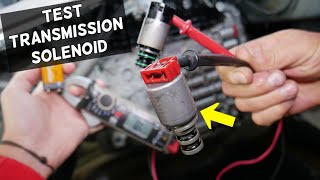
Remove the transmission oil pan to access the solenoid. Disconnect its connector and measure the resistance across the solenoid's two pins. A reading of zero (short) or OL/infinity (open) indicates a failed solenoid.
Tools: Multimeter, Socket set, Drain pan, Gasket scraper (Advanced) - Test the TCM Driver
If the wiring and solenoid are good, connect a noid light to the solenoid's harness connector. It must flash when the solenoid is commanded on. An oscilloscope provides a more precise waveform to reveal a weak signal.
Tools: Noid Light Kit, Digital Storage Oscilloscope (Professional) - Perform a Line Pressure Test
Connect a pressure gauge to the transmission's line pressure test port. Check pressures at idle in Park, Reverse, and Drive, and compare them to manufacturer specifications to isolate internal hydraulic leaks.
Tools: 300+ PSI fluid pressure gauge, Service manual (Advanced)
When This Code Triggers (Freeze-Frame Conditions)
- Engine Coolant Temp: 175-210°F (The fault is most often detected when the vehicle is at full operating temperature.)
- RPM: 1200-2500 (The code sets during a gear shift under light to moderate acceleration.)
- Vehicle Speed: 25-55 mph (Occurs during city or highway driving when the transmission is actively shifting.)
- Transmission Fluid Temperature: 150-200°F (The TCM actively monitors solenoid circuits once the transmission fluid is warm.)
Related Codes
- P2739 — This is the direct counterpart to P2738. It means 'Pressure Control Solenoid 'F' Control Circuit High', indicating the TCM sees a voltage that is too high, usually due to a short to power.
- P2731, P2732, P2733 — These codes are specific to Pressure Control Solenoid 'F'. P2738 is an electrical 'Circuit Low' fault. P2731 is a 'Performance' fault, while P2732 and P2733 point to a mechanical stuck valve issue.
- P0750 - P0774 (Shift Solenoids) — These refer to faults in different solenoids. Seeing multiple solenoid circuit codes alongside P2738 strongly suggests a systemic problem like a bad ground, failing TCM, or low system voltage.
- P0868 — This means 'Transmission Fluid Pressure Low'. P2738 causes P0868 because the faulty solenoid cannot regulate pressure. If you only have P0868, the cause is a failing pump or major leak.
Climate & Environmental Factors
- High Humidity: High humidity accelerates corrosion on electrical connectors, wiring, and ground points. Moisture penetrates weather seals and causes intermittent short circuits or high resistance, leading to 'circuit low' codes.
- Extreme Cold: In very cold weather, transmission fluid becomes thicker, straining the transmission pump and causing pressure regulation issues on startup. Wiring insulation becomes brittle and cracks.
- Road Salt: Road salt dramatically increases the failure rate of wiring harnesses, connectors, and chassis ground straps, which are a primary cause of electrical circuit faults.
How to Talk to a Mechanic About This Code
Say this: "I have a P2738 code and I'm experiencing harsh shifting. I'd like to schedule a diagnostic, but please do not replace any parts without my authorization. Start by checking the wiring harness, connectors, and ground points for the transmission before testing the solenoid itself."
This signals that you understand the code is electrical and that the most common causes are wiring-related. It prevents a shop from immediately quoting a costly solenoid or valve body replacement without performing the necessary electrical checks first.
Avoid saying:
- 'My transmission is acting weird, can you fix it?'
- 'My check engine light is on, just do whatever it takes.'
- 'I got a P2738, just replace solenoid F.'
Questions to ask before authorizing the repair:
- Did you test the solenoid's resistance and did it measure within the manufacturer's spec?
- Did you perform a voltage drop test on the solenoid's power and ground circuits?
- Can you show me the damaged wire or corroded connector you found?
- If you are recommending a solenoid or TCM replacement, how did you rule out a wiring issue?
- What is the warranty on the parts and labor for this repair?
Where to Take It: Dealer vs Independent vs Chain
- Dealer:
Recommended if the vehicle is under warranty or if a known TSB requires a TCM software flash. For out-of-warranty repairs, they are a reliable but expensive option.
Best for: Vehicles under warranty, Vehicles with known TSBs or recalls for this issue, Complex repairs requiring TCM programming
Downsides: Highest labor rates, Defaults to replacing larger, more expensive assemblies (like a full valve body) instead of smaller components. (Typical cost: +50% vs. baseline) - Independent Shop:
Excellent choice, but only if they are a reputable shop that specializes in transmission diagnostics. Ask if they are comfortable with electrical diagnostics like voltage drop tests.
Best for: Out-of-warranty vehicles, Diagnosing and repairing common wiring and solenoid issues, Finding a trusted, long-term mechanic
Downsides: Quality and expertise vary greatly. A general mechanic lacks deep transmission experience., Lacks expensive, manufacturer-specific programming tools. (Typical cost: +0% vs. baseline) - Chain Shop:
AVOID for diagnosis. P2738 requires careful electrical diagnosis that is beyond the scope of a general-purpose chain shop. They misdiagnose electrical faults, leading to costly and ineffective repairs.
Best for: Simple fluid and filter changes.
Downsides: Technician skill and experience are highly inconsistent., Incentivized to sell parts and services, leading to misdiagnosis and unnecessary repairs., Franchises have mixed reviews; the quality of one location does not guarantee the quality of another. (Typical cost: -10% vs. baseline)
When to Walk Away From the Repair
If the total estimated repair cost for the transmission issue exceeds 50% of your car's private-party market value, seriously consider selling the vehicle as-is or trading it in.
- Car worth $5000, fix is $700: Fix it. This is a standard repair cost for a solenoid replacement and is well below the threshold.
- Car worth $8000, fix is $4500: Walk away. The shop diagnosed a catastrophic failure requiring a full transmission rebuild or replacement. This cost is over 50% of the car's value.
- Car worth $3000, fix is $1800: Borderline. The repair cost is over 50% of the car's value. If the rest of the car is in excellent condition, it might be worth it, but getting a second opinion is essential.
What Scan Tool You Need for This Code
Minimum: A code reader that reads manufacturer-specific transmission codes and views live data for the transmission system.
A basic $20 scanner only shows the P2738 code. It cannot show critical live data, such as commanded solenoid state vs. actual circuit voltage, which is essential for diagnosing whether the problem is the solenoid, wiring, or TCM.
Budget: BlueDriver Pro (~$100) — Pairs with your smartphone and reads generic and manufacturer-specific codes for the transmission. Crucially, it displays live data PIDs for transmission parameters, allowing you to monitor what the TCM is commanding.
Mid-range: Foxwell NT510 Elite (~$180) — This is a powerful handheld tool offering full system diagnostics. For P2738, its key feature is bi-directional control, allowing you to command the solenoid on and off to test its function and the integrity of the circuit directly.
Professional: Autel MaxiCOM MK808 / MK808BT (~$500-650) — Offers comprehensive OE-level diagnostics, full bi-directional control for all vehicle systems, and advanced service functions. It commands the solenoid, graphs live data, and accesses deep levels of the TCM's functions.
Rent vs buy: AutoZone's Loan-A-Tool program allows you to borrow a professional-grade scanner for free after paying a refundable deposit. If this is a one-time repair, this is the most cost-effective option. Buy a scanner only if you plan to perform your own diagnostics regularly.
How to Clear the Code After You Fix It
- Use an OBD-II scan tool to clear the diagnostic trouble codes (DTCs).
- Do not disconnect the battery, as it clears all readiness monitors without properly resetting the TCM.
- Perform a complete drive cycle to allow the TCM to re-learn and verify the repair.
Drive cycle (~20 minutes): Start with a cold engine. Idle for 3 minutes. Drive in stop-and-go traffic with light accelerations. Accelerate to 55 mph and hold a steady speed for 5 minutes. Decelerate to 20 mph without using the brakes, then stop. Park the vehicle and turn off the engine.
Readiness monitors affected: Comprehensive Component Monitor, Transmission
Before emissions retest: drive at least 50 miles to fully set monitors.
Watch out for:
- Clearing the code does not fix the problem; the code returns immediately if the underlying electrical fault is not repaired.
- Failing to complete a full drive cycle leaves readiness monitors 'Not Ready', causing an automatic emissions test failure.
Will This Fail Emissions / State Inspection?
Yes — this code typically fails an OBD-II emissions inspection.
- California: An illuminated Check Engine Light results in an automatic smog check failure. All readiness monitors must be 'Ready'. Clearing the code resets monitors to 'Not Ready', requiring a drive cycle before re-testing.
- New York: The NYS DMV inspection includes an OBD-II scan. Any powertrain-related trouble code like P2738 is an automatic failure.
- Texas: In counties requiring emissions testing, an active Check Engine Light is an automatic failure. After a repair, you can have at most one readiness monitor 'Not Ready' to pass.
Most Commonly Affected Vehicles
- Nissan Altima, Rogue, Sentra, Maxima (2007-2019) — Vehicles with Jatco CVT transmissions are highly susceptible. Solenoid failure within the valve body is extremely common. A TSB recommends valve body replacement and TCM reprogramming.
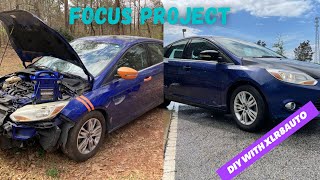
- Ford Focus, Fiesta (2011-2019) — Models with the DPS6 PowerShift dual-clutch transmission are notorious for TCM failures and poor grounding. A common cause is a corroded ground point located under the battery tray.
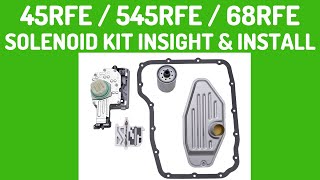
- Dodge / Ram Ram 1500/2500/3500 (2007-2018) — Trucks with the 68RFE and 65RFE transmissions experience issues with the solenoid pack. It is standard practice to replace the entire solenoid pack, not just one solenoid.
- Chevrolet / GMC Silverado, Sierra, Tahoe, Yukon (2007-2020) — Vehicles equipped with the 6L80 or 6L90 transmission suffer from internal wiring harness failure (cracked wires) and solenoid failure. TSBs exist for harness replacement.
- Hyundai / Kia Elantra, Forte, Optima, Sorento, Accent (2011-2016) — Models with the A6MF1/A6GF1 6-speed automatic have a known issue with solenoid failure. TSBs 14-AT-003 and TSBTRA051R1 address this, recommending replacement of specific solenoids.
- Volkswagen Jetta, Golf, Beetle, Passat (2005-2014) — Models with the 09G 6-speed automatic transmission are known for valve body and solenoid issues causing harsh shifts and codes. Earlier 01M transmissions had internal harness failures.
- Toyota Camry, RAV4, Highlander (2007-2017) — Models with the U660E/U760E 6-speed automatic develop solenoid or valve body issues. The 2007-2011 Camry had a specific warranty extension for harsh shifting related to the TCM.
- Honda Accord, CR-V, Odyssey (2013-2019) — Honda vehicles equipped with CVT transmissions experience solenoid-related codes caused by fluid contamination or failure of a solenoid within the valve body assembly.
Manufacturer-Specific Notes
- Nissan: On many Nissan vehicles with a CVT, replacing the valve body requires reprogramming the TCM with calibration data from the new part. Failure to perform this step causes shifting problems and sets new codes.
- Ford: On Focus and Fiesta models with the DPS6 transmission, a poor factory ground connection is a very common cause for multiple transmission codes. Cleaning the G101 ground point under the battery tray resolves intermittent electrical issues.
- Dodge / Ram: For the 68RFE transmission, solenoid issues are almost always caused by the entire solenoid pack, not just one individual solenoid. The recommended professional repair is to replace the entire pack with the latest revised part number.
- Hyundai / Kia: Due to a known issue with solenoid failures in the A6MF1/A6GF1 6-speed automatic, Kia and Hyundai issued TSBs detailing the diagnostic and replacement procedure. The repair involves replacing specific solenoids rather than the entire assembly.
Real Owner Stories
2014 Ford Focus with DPS6 at 110K miles
Check engine light on, with intermittent shuddering, harsh shifting, and occasional failure to go into reverse.
What they tried:
- Took it to a dealership who diagnosed a bad clutch and quoted $4,000 for a repair.
- Owner found a video about cleaning ground connections for the TCM.
Outcome: Owner cleaned the main battery ground and two smaller grounds under the airbox. The shifting issues were resolved, and the car drove perfectly. The fix cost nothing but time and dielectric grease.
Lesson: On Ford Focus/Fiesta with DPS6 transmissions, always clean the main ground points under the battery tray before assuming a major component like the clutch or TCM has failed. It is a free fix that solves many electrical codes.
2015 Dodge Ram 2500 with 68RFE at 150K miles
Truck went into limp mode and was throwing code P2738. Shifting was erratic.
What they tried:
- Owner suspected a solenoid issue based on forum research.
- Instead of replacing just one solenoid, they replaced the entire Mopar solenoid pack (part # 68376695AA).
Outcome: Replacing the entire solenoid pack, along with a fluid and filter change, resolved the issue completely. The truck returned to normal shifting.
Lesson: For Dodge 68RFE transmissions, it is standard professional practice to replace the entire solenoid pack, not just an individual solenoid. Debris from one failure contaminates the entire pack.
2013 Nissan Altima with CVT at 85K miles
Vehicle experienced shuddering and hesitation, with P2738 and other CVT-related codes appearing.
What they tried:
- Initially checked fluid, which was dark but at the correct level.
- A local shop recommended a full valve body replacement due to the high rate of solenoid failure in Jatco CVTs.
Outcome: The valve body was replaced and the TCM was reprogrammed with the new part's calibration data. This fixed the shifting problems and cleared the codes.
Lesson: On many modern transmissions, especially CVTs, individual solenoids are not the recommended repair. The entire valve body assembly is replaced, and a subsequent TCM reprogram is mandatory.
2018 Chevrolet Silverado with 6L80 at 70K miles
Check engine light came on with code P2738, but no noticeable driving symptoms initially.
What they tried:
- Owner cleared the code, but it returned within a day.
- A visual inspection of the external wiring harness showed no obvious damage.
Outcome: A mechanic diagnosed a failing internal transmission wiring harness. The harness had become brittle from heat cycles and developed a short. Replacing the internal harness solved the problem.
Lesson: If the solenoid and external wiring test good, do not rule out the internal harness, especially on GM 6L80/6L90 transmissions. This part degrades over time, causing intermittent electrical faults.
How to Prevent This Code From Triggering
- Change transmission fluid and filter at recommended intervals (Every 30,000-60,000 miles, or as specified in your owner's manual.) — Clean fluid lubricates and cools effectively. Old, broken-down fluid contains debris that clogs solenoid passages and causes them to stick or fail.
- Use only manufacturer-specified transmission fluid (Every fluid change) — Using the wrong type of fluid causes seals to swell or shrink and has incorrect frictional properties, leading to solenoid and clutch damage.
- Inspect and clean battery terminals and chassis grounds (Every 1-2 years, especially in wet or salty climates) — Corroded grounds and poor connections cause voltage drops. The TCM interprets this low voltage as a solenoid circuit fault, triggering code P2738.
- Maintain the engine's cooling system (Ongoing) — The transmission fluid cooler is often part of the engine's radiator. An overheating engine causes the transmission to overheat, which is the #1 cause of fluid breakdown.
- Avoid aggressive driving habits (Daily habit) — Hard accelerations, abrupt stops, and frequent heavy towing put immense strain and heat on the transmission, accelerating wear on all components.
Frequently Asked Questions
Can I fix P2738 myself?
If the cause is a blown fuse, low fluid, or a dirty external ground, a DIYer can perform the fix. Most repairs involve complex wiring diagnostics or dropping the transmission pan. Stop DIYing and go to a shop if you need to test internal TCM circuits.
I replaced the solenoid, but the code came back. What now?
If a new solenoid didn't fix it, the fault is in the wiring, the TCM, or a poor ground connection. Re-check your wiring for intermittent opens or shorts. Perform a voltage drop test on the ground circuit to isolate the issue.
What is the very first thing I should check for P2738?
Always start with the transmission fluid. Check the level and condition on a level surface at the correct temperature. Low, dirty, or burnt fluid is a primary cause of solenoid problems and is the easiest to verify.
Can a bad battery cause a P2738 code?
Yes. A weak battery or failing alternator drops system voltage across the entire vehicle. The TCM interprets this low voltage as a specific circuit fault, triggering a 'Circuit Low' code like P2738.
What is a pressure control solenoid?
It is a small, computer-controlled valve that manages the flow and pressure of transmission fluid. The TCM uses these solenoids to apply hydraulic pressure to different clutch packs. This precise pressure control is how an automatic transmission changes gears.
Will clearing the code fix the problem?
No. Clearing the code only erases the fault record and turns off the check engine light temporarily. The TCM runs its self-test as soon as you drive, and the code returns immediately if the electrical fault persists.
Is Solenoid 'F' the same in every car?
No. The letter 'F' is a generic OBD-II designation. Its specific function and physical location within the transmission's valve body vary entirely based on the manufacturer and transmission design.
How much does it cost to fix pressure control solenoid 'F'?
A simple wiring repair costs $160-$450. Replacing the solenoid itself costs between $300 and $900, including parts, labor, and new fluid. If the TCM requires replacement, the total bill often exceeds $1,200.
Key Takeaways
- P2738 indicates the Transmission Control Module (TCM) detects under 9 volts on the control circuit for pressure control solenoid 'F'.
- Over 70% of P2738 codes stem from damaged external wiring, corroded ground straps, or degraded transmission fluid rather than a failed solenoid.
- Driving with P2738 triggers limp mode, locking the transmission in 2nd or 3rd gear and reducing fuel economy by up to 25%.
- Ignoring this code for more than 100 miles risks overheating the transmission fluid, escalating a $300 solenoid repair into a $4,000 transmission rebuild.
Helpful Videos
Shop the Parts Behind P2738
Below are the parts most often responsible for code P2738, ranked by how frequently each one is the actual culprit (per the diagnosis above). Tap any to see what we have for your vehicle.



The information in this article is provided for general reference and educational purposes only. Vehicle specifications, procedures, and part compatibility can vary by production date, trim level, and region. Always consult your vehicle's factory service manual and verify part numbers before purchasing or performing repairs. Safety-critical components such as airbags, seat belts, and braking systems should be installed by a qualified professional.
- 🧭 Diagnostic Flowchart
- 🎬 Helpful Videos
- 🛍️ Shop This Part
- What Does P2738 Mean?
- Can I Drive With P2738?
- Common Causes
- Symptoms
- Common Fixes & Costs
- Used vs. New Parts: Buying Guide
- What Happens If You Wait — Timeline
- Cost of Not Fixing It
- Diagnosis Steps
- When This Code Triggers (Freeze-Frame Conditions)
- Related Codes
- Climate & Environmental Factors
- How to Talk to a Mechanic About This Code
- Where to Take It: Dealer vs Independent vs Chain
- When to Walk Away From the Repair
- What Scan Tool You Need for This Code
- How to Clear the Code After You Fix It
- Will This Fail Emissions / State Inspection?
- Most Commonly Affected Vehicles
- Manufacturer-Specific Notes
- Real Owner Stories
- 2014 Ford Focus with DPS6 at 110K miles
- 2015 Dodge Ram 2500 with 68RFE at 150K miles
- 2013 Nissan Altima with CVT at 85K miles
- 2018 Chevrolet Silverado with 6L80 at 70K miles
- How to Prevent This Code From Triggering
- Frequently Asked Questions
- Can I fix P2738 myself?
- I replaced the solenoid, but the code came back. What now?
- What is the very first thing I should check for P2738?
- Can a bad battery cause a P2738 code?
- What is a pressure control solenoid?
- Will clearing the code fix the problem?
- Is Solenoid 'F' the same in every car?
- How much does it cost to fix pressure control solenoid 'F'?
- Key Takeaways
- 🎟️ Get 5% Off