

OBD-II Code P2757: Torque Converter Clutch Pressure Control Solenoid - Performance or Stuck Off
What P2757 means, why it triggers, and how to fix it
- A faulty torque converter clutch (TCC) solenoid causes over 60% of P2757 codes, usually requiring a $300-$650 replacement.
- Driving with an unlocked torque converter spikes transmission temperatures above 220°F, turning a minor repair into a $3,000+ complete rebuild within months.
- Expect a 2-5 MPG drop in fuel economy, engine RPM flares, and a distinct 'rumble strip' shudder when cruising between 40-60 mph.
- Always check for Technical Service Bulletins (TSBs) before repairing; Toyota and Subaru have issued specific valve body replacement mandates and 100,000-mile warranty extensions for this exact code.
What Does P2757 Mean?

Your car's computer (TCM/PCM) detected a problem with the electronic valve (solenoid) controlling the torque converter clutch. This clutch locks up at cruising speeds to create a 1:1 mechanical connection between the engine and transmission, improving fuel economy and reducing heat. Code P2757 means the computer commanded the clutch to lock, but the solenoid's control circuit failed or the clutch did not engage, leaving it 'stuck off'.
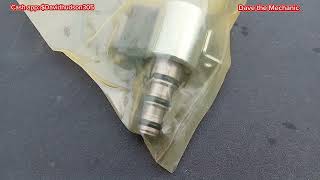
Technical definition: The SAE/OBD-II definition is "Torque Converter Clutch (TCC) Pressure Control Solenoid Control Circuit Performance or Stuck Off". The Powertrain or Transmission Control Module (PCM/TCM) detects the torque converter clutch is not engaging when commanded by monitoring the difference between engine RPM and transmission input shaft RPM. Significant slip during commanded lock-up sets the code. 🎬 Watch: A quick test to see if your solenoid is failing. The issue is either electrical (circuit performance) or mechanical/hydraulic (stuck solenoid).
Can I Drive With P2757?
Yes, But With Caution. You can drive short distances, but doing so risks catastrophic transmission failure. Driving with an unlocked torque converter causes constant slipping, which generates extreme heat. This heat destroys the fluid's lubricating properties, warps internal seals, and burns clutches. A $300 solenoid repair quickly escalates into a $3,000-$7,000 transmission rebuild. Limit driving and inspect the vehicle immediately.
Common Causes

- Faulty Torque Converter Clutch (TCC) Solenoid (Very Common) — This is the most frequent cause. The solenoid, a small electro-hydraulic valve, fails electrically (open or shorted coil), gets clogged with metallic debris, or its internal plunger physically sticks.
- Contaminated or Low Transmission Fluid (Common) — Dark, burnt fluid full of clutch material clogs microscopic passages in the solenoid and valve body, causing it to stick. Low fluid levels result in insufficient hydraulic pressure for the TCC to engage.
- Faulty Transmission Valve Body (Common) — The valve body is the hydraulic brain of the transmission. The bore where the TCC solenoid operates wears out over time, causing critical pressure leaks that prevent lock-up.
- Failing Torque Converter (Less Common) — The clutch lining inside the torque converter wears out, glazes, or completely fails. Even if the solenoid and hydraulics function perfectly, a mechanically failed clutch cannot lock.
- Wiring or Connector Issues (Less Common) — Wires chafe and short to ground, pins in the main transmission connector corrode, or the internal harness becomes brittle and breaks from hot fluid exposure.
- Incorrect Transmission Fluid Type (Less Common) — Using generic transmission fluid instead of the OEM-specified fluid (e.g., Toyota ATF WS) alters friction properties, leading to TCC shudder or failure to engage.
- Transmission Control Module (TCM) or Software Issue (Rare) — The transmission's computer suffers a software glitch needing a manufacturer update, a calibration error, or a hardware failure within the TCM's solenoid driver circuit.
Symptoms

- Transmission Shudder or Vibration — A distinct vibration, feeling like driving over rumble strips, occurs at steady cruising speeds (30-60 mph) when the TCC attempts to engage.
- Higher RPMs at Highway Speeds — The engine revs noticeably higher than usual when cruising (e.g., 2,800 RPM instead of 2,200 RPM) because the torque converter fails to create a direct 1:1 drive ratio.
- Reduced Fuel Economy — Constant slippage in the torque converter forces the engine to work harder, dropping fuel efficiency by 2-5 MPG.
- Transmission Overheating — Increased friction from the slipping converter generates substantial heat, triggering a transmission temperature warning light and causing a burning smell.
- Harsh, Delayed, or Slipping Shifts — The transmission hunts for gears, shifts with a noticeable slam, or engine RPMs flare up between shifts.
- Transmission Enters Limp Mode — To prevent catastrophic overheating damage, the TCM forces the transmission into a failsafe mode, locking it in a single gear (like 3rd) and limiting engine power.
- Check Engine Light or Transmission Warning Light is On (also visible on scanner) — The computer illuminates the Malfunction Indicator Lamp (MIL) or a dedicated transmission warning light after detecting the fault during two consecutive drive cycles.
Diagnostic Flowchart
Tap your situation to follow the diagnostic path that matches what you're seeing on this code.
Common Fixes & Costs

- Replace Torque Converter Clutch (TCC) Solenoid — Parts: $50-$150, Labor: $250-$500, ~2.5 hr book time (Intermediate)
- Transmission Fluid and Filter Change — Parts: $70-$150, Labor: $120-$200, ~1.0 hr book time (DIY)
- Replace Transmission Valve Body — Parts: $300-$1300, Labor: $400-$1100, ~4.0 hr book time (Professional)
- Replace Torque Converter — Parts: $300-$800, Labor: $800-$1500, ~8.0 hr book time (Professional)
- Repair Wiring or Replace Connector — Parts: $20-$100, Labor: $150-$400, ~1.5 hr book time (Intermediate)
- Replace or Reprogram Transmission Control Module (TCM) — Parts: $500-$1200, Labor: $150-$300, ~1.5 hr book time (Professional)
DIY vs Professional
- Transmission Fluid and Filter Change — Beginner: Yes
Tools: Socket set, drain pan, funnel, torque wrench. - External TCC Solenoid Replacement (e.g., Honda) — Beginner: Yes
Tools: Socket set, torque wrench, rags. - Internal TCC Solenoid Replacement (Pan Removal) — Beginner: No
Tools: Socket set, torque wrench, drain pan, gasket scraper, multimeter, inch-pound torque wrench. - Valve Body Replacement — Beginner: No
Tools: Extensive socket/tool set, multiple torque wrenches, service manual, scan tool for relearn procedures. - Torque Converter or TCM Replacement — Beginner: No
Tools: Engine hoist, transmission jack, full professional toolset, scan tool for programming.
Used vs. New Parts: Buying Guide
When a used part is worth it: Buying a used TCC solenoid is never recommended due to its low cost new. A used valve body or complete transmission from a low-mileage, accident-damaged vehicle is a cost-effective option for older vehicles with lower overall value.
Donor-vehicle mileage cap: roughly under 80000 miles for the part to have meaningful remaining life.
Donor quality checklist:
- Verify the donor vehicle's mileage and reason for salvage (collision damage is better than mechanical failure).
- Match part numbers exactly, including specific markings on the solenoid or valve body.
- For a complete transmission, verify the fluid was clean and red, not black or glittery.
Decision logic:
- If The fix is a single, accessible solenoid → Always buy new. The part is inexpensive ($50-$150) and labor is the main cost. Do not risk a used part failing.
- If The fix is a complete valve body on a vehicle >10 years old → A used part from a reputable salvage yard with a warranty saves money, but a remanufactured unit is safer.
- If The vehicle is a known problem model (e.g., Subaru CVT, Toyota Corolla CVT) with a TSB → Favor a new OEM or updated aftermarket part that addresses the known flaw. A used part likely has the same defect.
Warranty tradeoff: Used parts typically come with a 30-90 day warranty covering only the part, not the labor. New aftermarket or remanufactured parts usually offer a 1-3 year warranty.
Worst-case if a used part fails: $400-1500. If a used valve body or transmission fails, you pay for labor a second time plus another replacement part.
What Happens If You Wait — Timeline
- 0-1 month: Code P2757 is set, MIL is on. Driver notices a 2-3 MPG drop in fuel economy and slightly higher RPMs on the highway. A faint shudder occurs. (MPG impact: 5-10%% · Added cost: $0-$50 in wasted fuel. The problem is likely still contained to a single solenoid or fluid contamination.)
- 1-3 months: Constant slipping generates significant heat. Fluid temperature regularly exceeds 220°F, accelerating fluid breakdown. The 'rumble strip' shudder becomes more pronounced. Transmission seals begin to harden. (MPG impact: 10-15%% · Added cost: $250-$500. A simple solenoid fix is possible, but a full fluid flush is mandatory. The risk of underlying damage increases.)
- 3-6 months: Fluid is dark brown or black and smells burnt. Worn TCC clutch material circulates like sandpaper, scoring the valve body and contaminating other solenoids. Harsh shifts and gear slipping occur. (MPG impact: 15-25%% · Added cost: $1,500-$2,500. The original problem cascaded. A solenoid replacement is no longer enough. The torque converter and valve body require replacement.)
- 6+ months: Catastrophic failure. Prolonged extreme heat (>260°F) destroys seals, warps clutch plates, and damages the transmission pump. The vehicle enters limp mode or stops moving altogether. (MPG impact: >25% (or vehicle is undrivable)% · Added cost: $3,000-$7,000+. The transmission is beyond repair and requires a complete rebuild or replacement.)
Cost of Not Fixing It
- 0-1 Month: Noticeable drop in fuel economy (2-5 MPG). Transmission fluid begins to overheat during highway driving, accelerating fluid breakdown. Shuddering worsens. (Added cost: Negligible, aside from extra fuel costs.)
- 1-6 Months: Prolonged overheating from constant slippage damages internal transmission seals and clutch packs. Metal debris from the slipping converter clutch circulates in the fluid, contaminating solenoids and the valve body. (Added cost: $1,200 - $2,500. A simple solenoid fix is no longer sufficient. Requires a valve body replacement and potentially a new torque converter.)
- 6+ Months: Catastrophic transmission failure. Extreme heat destroys the fluid's lubricating properties, burns up multiple clutch packs, and warps seals. The transmission slips severely in all gears or locks in limp mode. (Added cost: $3,000 - $7,000+. The transmission requires a complete rebuild or replacement with a remanufactured unit.)
Diagnosis Steps

- Scan for Codes and Review Live Data
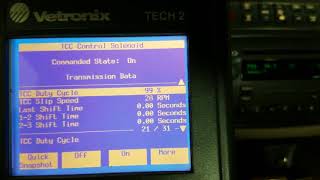
Use an OBD-II scanner to confirm P2757 and note any other codes. Use a bidirectional scanner to monitor live data PIDs: TCC Slip Speed, TCC Solenoid Duty Cycle (%), and Transmission Fluid Temperature.
Tools: Advanced OBD-II Scanner (Beginner) - Check Transmission Fluid Level and Condition
With the vehicle at operating temperature on a level surface, check the fluid. It must be at the correct level and bright red/pink. Dark brown/black fluid smelling burnt or containing metal flakes confirms severe internal wear.
Tools: Gloves, Rag, Level Surface (Beginner) - Check for Technical Service Bulletins (TSBs)
Search for manufacturer TSBs for your specific vehicle. For example, Toyota T-SB-0150-16 Rev1 for the 2014-2019 Corolla explicitly states P2757 requires a full valve body replacement.
Tools: Internet access, Vehicle VIN (Beginner) - Live Data Analysis (TCC Slip Speed)
During a test drive at steady cruising speed (>45 mph), monitor the 'TCC Slip Speed' PID. When the TCM commands lock-up, this value must drop to near zero (<50 RPM). If slip speed remains high, the clutch is not locking.
Tools: Advanced OBD-II Scanner (Intermediate) - Advanced Scan Tool Analysis (Commanded Test)
Use a bidirectional scan tool to manually command the TCC solenoid ON and OFF above 45 mph. If slip speed drops to zero when commanded ON, the mechanicals work, pointing to a TCM/electrical issue. If it doesn't change, the fault is hydraulic or mechanical.
Tools: Advanced Bidirectional Scan Tool (Advanced) - Solenoid Circuit Electrical Testing
Disconnect the transmission harness. Measure resistance across the TCC solenoid pins with a multimeter. Compare to OEM specs (e.g., Toyota U760E: 5.0-5.6 Ohms). Next, check for reference voltage at the power supply pin and continuity to ground. Infinity (OL) indicates an open circuit; near-zero indicates a short.
Tools: Multimeter, Vehicle-specific wiring diagram (Advanced) - Transmission Line Pressure Test
Connect a pressure gauge to the transmission's line pressure test port. Measure pressures at idle and stall speed in all gears, comparing them to manufacturer specifications. Low pressure prevents the TCC from engaging.
Tools: Transmission pressure gauge set, Service manual (Advanced) - Inspect Internal Components (Valve Body and Solenoid)
Drain the fluid, remove the transmission pan, and inspect the valve body. Check for scored valve bores, stuck valves, and debris in the solenoid screens. Remove the solenoid and bench-test it by applying 12V to verify it clicks.
Tools: Socket set, Torque wrench, Drain pan, Gasket scraper, 12V power source (Advanced) - Solenoid Waveform Analysis (Pro Tip)
Connect an oscilloscope to the TCC solenoid's control wire. Observe the pulse-width modulated (PWM) signal from the TCM while driving. A missing or distorted square wave pattern points directly to a failing TCM driver or a wiring short.
Tools: Oscilloscope, Wiring Diagram (Professional)
When This Code Triggers (Freeze-Frame Conditions)
- Engine Coolant Temp: 180-210°F (82-99°C) (The engine must be at full operating temperature; lock-up is inhibited when the engine is cold.)
- Vehicle Speed: 40-55 mph (64-88 km/h) (Lock-up occurs at steady, light-throttle cruising speeds.)
- Engine RPM: 1500-2500 RPM (The engine operates in an efficient range under light to moderate load, not during heavy acceleration.)
- Engine Load: 20-50% (The command for lock-up happens under steady-state driving, not during acceleration, deceleration, or hill climbing.)
Related Codes
- P0741 — Indicates a mechanical slip is detected when lock-up is commanded. P2757 points to the solenoid's control circuit as the likely cause of that slip. Having both strongly suggests starting diagnosis at the TCC solenoid.
- P0740 — A purely electrical code indicating a complete open or short in the TCC solenoid circuit. An electrical fault (P0740) prevents the solenoid from working, causing the performance fault (P2757). Diagnose P0740 first.
- P2756 — Indicates 'TCC Solenoid Control Circuit Low', meaning the circuit is shorted to ground. This specific electrical problem is a direct cause for the P2757 performance code.
- P2758 — Indicates 'TCC Solenoid Control Circuit High', meaning the circuit is shorted to power. This is the underlying electrical reason triggering the P2757 performance code.
Climate & Environmental Factors
- High Ambient Temperature & Heavy Loads: High ambient temperatures, mountain driving, or towing increase the transmission's operating temperature. The TCC locks up to reduce heat-generating slip. A pre-existing weakness in the TCC solenoid is pushed to the point of failure under these high-heat conditions, triggering P2757.
- Cold Weather: Very cold temperatures cause transmission fluid to thicken significantly, leading to delayed engagement until the vehicle reaches operating temperature. This causes erratic pressure readings and triggers performance codes, though the issue resolves once the fluid warms up.
How to Talk to a Mechanic About This Code
Say this: "I have a P2757 code and I'm experiencing transmission shudder at highway speeds. I'd like to schedule a diagnostic. Please check for any relevant TSBs, inspect the fluid condition, and I'd like to see the live data for TCC slip speed when lock-up is commanded."
This signals you understand the key diagnostic points. It directs the technician to perform a logical diagnosis (fluid, TSBs, live data) rather than guessing, and requests specific evidence (slip speed data) to justify a repair.
Avoid saying:
- 'My transmission is acting weird.'
- 'My check engine light is on, can you fix it?'
- 'Just do whatever it takes to fix it.'
Questions to ask before authorizing the repair:
- What was the condition of the transmission fluid? Was it dark or did it contain debris?
- Did you check the TCC solenoid's resistance, and what was the reading?
- What was the TCC slip speed in RPMs when you commanded lock-up with the scan tool?
- Is there a Technical Service Bulletin for this issue on my vehicle?
- What is the warranty on this specific repair, covering both parts and labor?
Where to Take It: Dealer vs Independent vs Chain
- Dealer:
Recommended only if a warranty or specific TSB applies. Otherwise, it is the most expensive option.
Best for: Vehicles under powertrain/CVT warranty (e.g., Subaru's 10yr/100k mile extension)., Vehicles with a known TSB for P2757 (e.g., 2014-2019 Toyota Corolla)., Complex software-related issues requiring proprietary tools.
Downsides: Highest labor rates., Often only offer expensive, wholesale fixes (e.g., full valve body replacement) when a cheaper component fix is possible. (Typical cost: +50% vs. baseline) - Independent Shop:
Best fit for most P2757 repairs. A reputable transmission specialist is more likely to perform component-level repairs (like a single solenoid) rather than replacing an entire assembly.
Best for: Out-of-warranty vehicles where cost is a major factor., Diagnosing and replacing common failure parts like solenoids or wiring., A transmission specialty shop is the ideal choice for this code.
Downsides: Quality and diagnostic capability vary widely; vet shops carefully., May lack access to the latest manufacturer software updates. (Typical cost: +0% vs. baseline) - Chain Shop:
AVOID for P2757 diagnosis and repair. This code requires specialized knowledge beyond the scope of most chain shops.
Best for: Basic fluid and filter changes, but only if you are certain that is the only service needed.
Downsides: Technicians lack specialized training for in-depth transmission diagnostics., High pressure to upsell services; likely to misdiagnose complex issues. (Typical cost: -10% vs. baseline)
When to Walk Away From the Repair
If the estimated repair cost exceeds 40-50% of the car's private-party value, seriously consider selling or trading it in instead of repairing it.
- Car worth $5000, fix is $450: Fix it. A solenoid replacement is well below the threshold.
- Car worth $6000, fix is $2800: Borderline. The repair is almost 50% of the car's value. Get a second opinion from a transmission specialist before authorizing.
- Car worth $3500, fix is $4000: Walk away. The repair costs more than the car is worth. A full transmission rebuild is not economical here.
What Scan Tool You Need for This Code
Minimum: A scanner that reads manufacturer-specific transmission codes and displays live data PIDs, specifically 'TCC Slip Speed' and 'Transmission Fluid Temperature'.
A basic $20 code reader only shows the P2757 code but cannot display the critical live data needed to diagnose why it is happening. You must see if the torque converter is actually slipping to distinguish a mechanical fault from a sensor issue.
Budget: BlueDriver Pro (~$99) — Reads and clears transmission codes, and displays live data for TCC slip speed and fluid temperature on compatible vehicles.
Mid-range: Foxwell NT510 Elite (~$180) — Includes live data and adds bidirectional control. This allows you to manually command the TCC solenoid ON and OFF during a test drive to isolate a faulty solenoid.
Professional: Autel MaxiCOM MK808S/MK808Z (~$450) — Offers full bidirectional control, performs transmission adaptive values resets after a repair, and provides OE-level diagnostics for deep-diving into TCM data.
Rent vs buy: Auto parts stores lend basic scanners for free, but they cannot read live transmission data. For a one-time complex repair, paying the diagnostic fee at a trusted independent shop is more cost-effective than buying a high-end tool.
How to Clear the Code After You Fix It
- Use an OBD-II scan tool to clear the P2757 code and any other related codes.
- Perform a transmission adaptive values reset with a capable scan tool, if applicable for the vehicle.
- Perform a complete drive cycle to allow the readiness monitors to run and confirm the fix.
Drive cycle (~30 minutes): A typical drive cycle includes a cold start, a few minutes of idle, a period of city driving (stop-and-go), and at least 10-15 minutes of steady highway driving (above 45 mph) to allow the torque converter to lock up. The vehicle should then be allowed to cool completely.
Readiness monitors affected: Comprehensive Component Monitor, Catalyst Monitor, Evaporative System Monitor
Before emissions retest: drive at least 100 miles to fully set monitors.
Watch out for:
- Disconnecting the battery clears the code but erases all readiness monitors, causing an immediate emissions test failure.
- If the underlying fault is not fixed, the code returns as soon as lock-up conditions are met during the drive cycle.
- Forgetting to reset transmission adaptive values leads to harsh shifting even after replacing the faulty part.
Will This Fail Emissions / State Inspection?
Yes — this code typically fails an OBD-II emissions inspection.
- California: An illuminated Check Engine Light is an automatic failure. After repairs, the vehicle must complete a specific drive cycle to set all OBD-II readiness monitors before re-testing.
- New York: The NYS vehicle inspection includes an OBD-II scan. An active P2757 code causes an automatic emissions failure.
- Texas: In the 17 counties requiring emissions testing, an active P2757 code results in a 'Not Ready' status for the Comprehensive Component Monitor, leading to a test failure.
Most Commonly Affected Vehicles
- Toyota Corolla (2014-2019) — Extremely common on models with the K313 CVT. Toyota issued TSB T-SB-0150-16 Rev1, specifying the fix is to replace the entire valve body assembly (Part 35410-12871). Covered under powertrain (60k miles) or CA emissions warranty (70k miles).
- Toyota Camry, RAV4, Highlander (2009-2017) — Models with the U660E/U760E 6-speed automatic are highly prone to this code due to a failed TCC (lock-up/SLU) solenoid. Toyota released updated solenoid parts to address the issue.
- Lexus IS250, ES350, GS350, RX350 (2006-2015) — Shares transmissions with Toyota (A960E, U660E, A760E). The failure is often the TCC lock-up (SLU) solenoid, which can be replaced independently. Lexus updated part numbers for the solenoid to include better filtering.
- Subaru Outback, Crosstrek, Forester, Impreza (2010-2018) — Common on TR580/TR690 CVTs, often appearing with code P0700. The cause is typically a failed lock-up duty solenoid. Dealers quote full valve body replacements ($1500+), but the aftermarket solenoid is a cheaper fix. Subaru extended the CVT warranty to 10 years/100,000 miles for many models.
- Chevrolet / GM Silverado, Tahoe, Suburban, Malibu (2007-2017) — Common on 6-speed (6L80) and 8-speed transmissions. Causes include a worn torque converter, a worn valve body bore causing pressure loss, or a failed TCC solenoid within the TEHCM assembly.
- Honda Accord, CR-V, Odyssey, Pilot (2005-2016) — Honda vehicles set this code due to a failing TCC solenoid. The solenoid assembly is bolted to the exterior of the transmission case, making it one of the easiest to access and replace without removing the pan.
- Nissan Altima, Sentra, Maxima (2006-2014) — On models with conventional automatic transmissions (not CVTs), P2757 occurs due to solenoid or valve body issues.
- Ford Focus, Fiesta (2011-2016) — These models log solenoid performance codes due to widespread issues with the Transmission Control Module (TCM), which suffers from bad solder joints and circuit failures.
- Mazda 3, 6, CX-7 (2006-2014) — Known for TCM failures triggering transmission codes. The TCM is mounted directly on the transmission, exposing it to heat and vibration that lead to premature failure.
Manufacturer-Specific Notes
- Toyota/Lexus: For the 2014-2019 Corolla with the K313 CVT, Toyota's official repair for P2757 is a full valve body replacement per TSB T-SB-0150-16 Rev1. On Camry/RAV4 models, torque converter shudder was subject to Warranty Enhancement Program ZH1, extending coverage to 8 years/150,000 miles.
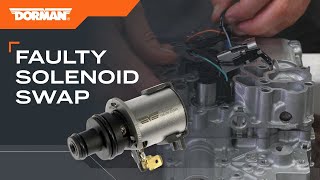
- Subaru: On TR580/TR690 CVTs, dealerships only offer a complete valve body replacement for P2757. However, the aftermarket offers the lock-up duty solenoid as a standalone part (Dorman 926-408) for a cheaper repair. Subaru extended the CVT warranty for many 2010-2018 models to 10 years/100,000 miles.
- Honda/Acura: On many Honda models, the TCC solenoid is located on the exterior of the transmission case. This makes it significantly easier to replace than on most other vehicles, requiring no fluid pan removal.
- General Motors (GM): On trucks with 6L80/6L90 transmissions, P2757 is often a symptom of a failing torque converter. The internal TCC clutch sheds material, contaminating the fluid and damaging the solenoid. Replacing only the solenoid without addressing the failing converter results in the code returning.
Real Owner Stories
2013 Lexus IS250 at 160k miles - The Misdiagnosis Runaround
Check engine light and VSC light came on. Code P2757 was present. The owner took it to a dealer for diagnosis.
What they tried:
- A dealer recommended a transmission fluid service with a 'shudder additive' for $420.
- The code returned 100 miles later.
- The dealer then quoted a $2,000+ valve body or torque converter replacement.
Outcome: The initial, cheaper attempt failed, leading to a much more expensive quote. The owner was left frustrated, having spent money on a 'fix' that didn't work.
Lesson: Be wary of 'Hail Mary' fixes like fluid additives for a specific performance code. A proper diagnosis should pinpoint the solenoid or converter first.
2015 Subaru Outback at 85k miles - The Easy(ish) DIY Fix
P2757 code appeared along with P0700. The car exhibited a noticeable shudder at highway speeds.
What they tried:
- The dealership quoted over $1,500 for a full valve body replacement, stating the solenoid was not sold separately.
- Owner researched online forums and found the TCC lock-up solenoid was available as an aftermarket part (Dorman 926-408).
Outcome: The owner purchased the aftermarket solenoid for $70 and had an independent mechanic install it for 2 hours of labor. Total cost was under $400, saving over $1,100.
Lesson: For common failures on specific models, the aftermarket often provides a solution that dealers won't offer. Always check for TSBs and warranty extensions.
2014 Chevy Silverado at 110k miles - The Deeper Problem
P2757 code appeared, with symptoms of shuddering and RPM fluctuations at cruising speed. Fluid was dark and smelled burnt.
What they tried:
- A local shop replaced the TCC solenoid and performed a fluid/filter change.
- The code returned within 500 miles.
Outcome: Further diagnosis revealed the root cause was a failing torque converter. The internal clutch material was shedding, contaminating the new fluid and solenoid almost immediately. The fix required removing the transmission to replace the torque converter, costing an additional $1,800.
Lesson: On GM trucks (6L80/6L90), P2757 is often a symptom of a failing torque converter. If the fluid is dark or contains debris, replacing only the solenoid is a temporary fix.
How to Prevent This Code From Triggering
- Perform regular transmission fluid and filter changes (Every 30,000-60,000 miles, or per owner's manual. Halve the interval if you tow or drive in heavy traffic.) — Clean fluid maintains correct hydraulic pressure for solenoid operation and prevents abrasive particles from clogging the solenoid's internal plunger.
- Use only OEM-specified transmission fluid (Every fluid change) — OEM fluids have specific friction modifiers engineered for the TCC material. Using the wrong fluid causes shudder or prevents proper lock-up, directly leading to P2757.
- Install an auxiliary transmission cooler (Once, especially for trucks, vehicles that tow, or those in hot climates) — Heat is the #1 killer of transmissions. An auxiliary cooler lowers operating temperatures by 20-50°F, dramatically slowing fluid breakdown and extending the life of seals, clutches, and solenoids.
- Avoid aggressive driving and excessive heat buildup (Daily habit) — Hard acceleration, constant stop-and-go traffic, and towing put immense strain and heat on the transmission. Driving smoothly allows the TCC to lock up and cool the transmission as designed.
Frequently Asked Questions
Can I just clear the P2757 code and keep driving?
You can clear the code, but it returns as soon as the car attempts highway lock-up. Clearing the code ignores the underlying fault and allows excessive heat to destroy your transmission. Fix the root cause immediately to avoid a multi-thousand dollar rebuild.
What is the most common misdiagnosis for P2757?
Many shops immediately condemn the entire transmission without proper diagnosis. Always rule out cheaper causes like low fluid, a faulty TCC solenoid, or a broken wire first. Additionally, failing to check for manufacturer TSBs (like Toyota's valve body mandate) wastes time and money.
Will a transmission flush fix a P2757 code?
No, a high-pressure flush is unlikely to fix P2757 and often worsens the problem on high-mileage vehicles. Flushes dislodge sludge that blocks narrow valve body passages, causing further solenoid failure. A standard fluid drain and fill is the safest first step.
How do I know if it's the solenoid or the whole torque converter that's bad?
A technician uses a bidirectional scan tool to monitor TCC slip RPM while manually commanding the solenoid on. If slip remains high, they test the solenoid's electrical resistance with a multimeter. If resistance is normal (e.g., 5.0-5.6 ohms), the fault lies in the valve body or the torque converter clutch itself.
Is replacing the TCC solenoid a DIY job?
This depends entirely on the vehicle model. External solenoids (common on Hondas) are easy, bolt-on DIY repairs. Internal solenoids require dropping the transmission pan and valve body, making it an intermediate-to-advanced job best left to professionals.
Will a P2757 code cause my car to fail an emissions test?
Yes. Any active code that illuminates the Check Engine Light causes an automatic failure during an OBD-II emissions test. You must repair the fault and complete a full drive cycle to pass.
Can a bad battery or alternator cause a P2757 code?
Yes, transmission solenoids require stable voltage to operate correctly. A failing battery or alternator causes erratic solenoid function and triggers performance codes. Always verify your charging system is healthy before starting complex transmission diagnostics.
What does the 'rumble strip' feeling mean?
The 'rumble strip' shudder occurs when the torque converter clutch rapidly engages and disengages instead of locking smoothly. Unstable hydraulic pressure from a sticking solenoid, worn valve body, or degraded fluid causes this. It is the most definitive physical symptom of TCC failure.
Key Takeaways
- A faulty torque converter clutch (TCC) solenoid causes over 60% of P2757 codes, usually requiring a $300-$650 replacement.
- Driving with an unlocked torque converter spikes transmission temperatures above 220°F, turning a minor repair into a $3,000+ complete rebuild within months.
- Expect a 2-5 MPG drop in fuel economy, engine RPM flares, and a distinct 'rumble strip' shudder when cruising between 40-60 mph.
- Always check for Technical Service Bulletins (TSBs) before repairing; Toyota and Subaru have issued specific valve body replacement mandates and 100,000-mile warranty extensions for this exact code.
Helpful Videos


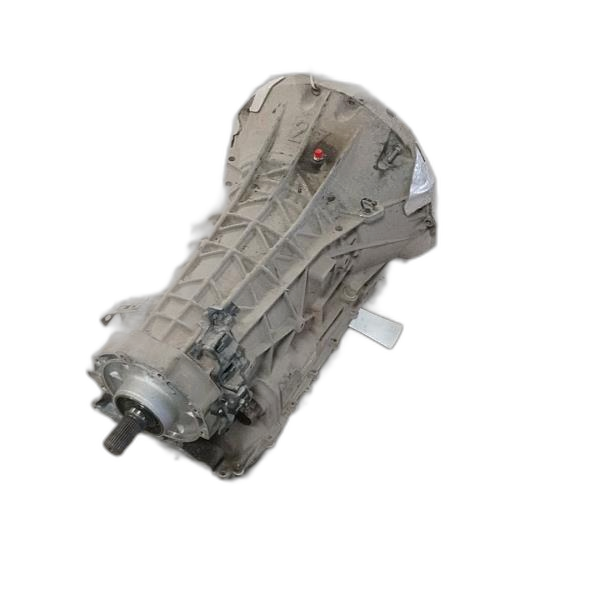
Shop the Parts Behind P2757
Below are the parts most often responsible for code P2757, ranked by how frequently each one is the actual culprit (per the diagnosis above). Tap any to see what we have for your vehicle.




The information in this article is provided for general reference and educational purposes only. Vehicle specifications, procedures, and part compatibility can vary by production date, trim level, and region. Always consult your vehicle's factory service manual and verify part numbers before purchasing or performing repairs. Safety-critical components such as airbags, seat belts, and braking systems should be installed by a qualified professional.
- 🧭 Diagnostic Flowchart
- 🎬 Helpful Videos
- 🛍️ Shop This Part
- What Does P2757 Mean?
- Can I Drive With P2757?
- Common Causes
- Symptoms
- Common Fixes & Costs
- DIY vs Professional
- Used vs. New Parts: Buying Guide
- What Happens If You Wait — Timeline
- Cost of Not Fixing It
- Diagnosis Steps
- When This Code Triggers (Freeze-Frame Conditions)
- Related Codes
- Climate & Environmental Factors
- How to Talk to a Mechanic About This Code
- Where to Take It: Dealer vs Independent vs Chain
- When to Walk Away From the Repair
- What Scan Tool You Need for This Code
- How to Clear the Code After You Fix It
- Will This Fail Emissions / State Inspection?
- Most Commonly Affected Vehicles
- Manufacturer-Specific Notes
- Real Owner Stories
- 2013 Lexus IS250 at 160k miles - The Misdiagnosis Runaround
- 2015 Subaru Outback at 85k miles - The Easy(ish) DIY Fix
- 2014 Chevy Silverado at 110k miles - The Deeper Problem
- How to Prevent This Code From Triggering
- Frequently Asked Questions
- Can I just clear the P2757 code and keep driving?
- What is the most common misdiagnosis for P2757?
- Will a transmission flush fix a P2757 code?
- How do I know if it's the solenoid or the whole torque converter that's bad?
- Is replacing the TCC solenoid a DIY job?
- Will a P2757 code cause my car to fail an emissions test?
- Can a bad battery or alternator cause a P2757 code?
- What does the 'rumble strip' feeling mean?
- Key Takeaways
- 🎟️ Get 5% Off