

OBD-II Code P2762: Torque Converter Clutch Solenoid Circuit Performance
What P2762 means, why it triggers, and how to fix it
- P2762 indicates an electrical fault in the Torque Converter Clutch (TCC) solenoid circuit, most frequently caused by a failed solenoid coil or degraded transmission fluid.
- The most distinct symptom of a P2762 code is the engine stalling when coming to a complete stop, which happens because the torque converter fails to mechanically unlock.
- Subaru and Nissan CVT owners face repair bills exceeding $1,500 because dealers replace the entire valve body, though independent shops can often install a $50 aftermarket solenoid instead.
- Always test the solenoid circuit's resistance (typically 10-25 ohms) directly from the Transmission Control Module (TCM) connector before authorizing a costly internal transmission repair.
- Stop driving the vehicle immediately if you experience shuddering or stalling; continuing to drive overheats the transmission fluid and turns a $300 solenoid repair into a $4,000 transmission replacement.
What Does P2762 Mean?
The Powertrain or Transmission Control Module (PCM/TCM) detected an electrical fault in the torque converter lock-up solenoid circuit. This solenoid creates a direct mechanical link between the engine and transmission at cruising speeds. When it fails, the vehicle suffers poor fuel economy, erratic shifting, and stalling at stops.
Technical definition: The PCM/TCM detected the voltage, resistance, or signal pattern in the torque converter clutch solenoid control circuit is outside the expected range. This is a performance-related electrical issue, often caused by the Pulse Width Modulated (PWM) signal experiencing intermittent dropouts or incorrect resistance when the transmission fluid is hot.
Can I Drive With P2762?
Yes, But With Caution. You can drive short distances, but it is highly discouraged. The primary risks are unexpected engine stalling in traffic and accelerated transmission wear. Driving with a slipping torque converter generates excessive heat, degrading the fluid and causing catastrophic internal damage that turns a $300 solenoid repair into a $4,000 transmission replacement.
Common Causes
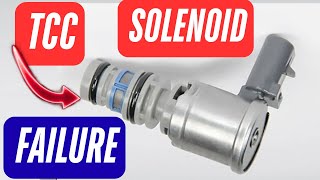
- Failed Torque Converter Clutch (TCC) Solenoid (Very Common) — The solenoid is an electromagnet that actuates a valve. Its internal coil develops high resistance, shorts out, or fails when hot, preventing it from controlling fluid pressure correctly. This is the most frequent root cause.
- Low, Dirty, or Incorrect Transmission Fluid (Very Common) — Fluid is the lifeblood of the transmission. Low fluid cannot create necessary hydraulic pressure, while dirty or burnt fluid contains debris that causes the solenoid valve to stick. Using the wrong fluid type also triggers performance issues.
- Damaged Wiring, Connectors, or Grounds (Common) — Wires leading to the solenoid fray, melt from exhaust heat, or corrode. This includes the internal transmission harness bathed in hot fluid. Additionally, a corroded or loose transmission ground strap causes erratic voltage readings that trigger P2762.
- Clogged Passages in the Valve Body (Less Common) — The valve body is the hydraulic brain of the transmission. Tiny passages become clogged with metallic debris and clutch material, restricting fluid flow to and from the TCC solenoid even if the solenoid itself functions perfectly.
- Internal Torque Converter Failure (Less Common) — The torque converter's internal lock-up clutch mechanically fails, shedding debris that contaminates the fluid and clogs the valve body and solenoid. Symptoms include severe shuddering or rattling noises.
- Faulty Transmission Control Module (TCM) (Rare) — The internal driver circuit inside the TCM that sends the signal to the solenoid burns out or malfunctions, sending an incorrect signal and triggering the code despite a perfect circuit and solenoid.
Symptoms
- Engine Stalls When Coming to a Stop — The engine shuts off as you brake to a stop because the torque converter fails to disengage, keeping the engine mechanically locked to the stopped wheels.
- Transmission Shudder or Jerking — The vehicle shudders, vibrates, or jerks during light acceleration or shifting, feeling exactly like driving over highway rumble strips.
- Check Engine Light & Flashing Warning Lights — The Malfunction Indicator Lamp (MIL) illuminates. Often, a transmission-specific warning light (like 'AT OIL TEMP' on Subarus) flashes simultaneously.
- Delayed or Harsh Shifts — Shifts feel delayed, sluggish, or slam violently into gear, particularly when the transmission is fully warmed up.
- Decreased Fuel Economy — Because the torque converter fails to lock up at highway speeds, the engine runs at a higher RPM, wasting significant fuel.
- Transmission Overheating — A constantly slipping torque converter generates massive heat, quickly degrading the transmission fluid and triggering a dashboard temperature warning.
- TCC Slip RPM High on Scan Tool (scan-tool only — no driver-felt sign) — When viewing live data, the Torque Converter Clutch Slip RPM remains high even when the TCM commands lockup. A healthy system shows slip RPM drop to near zero.
Common Fixes & Costs
- Transmission Fluid and Filter Change — Parts: $70-$150, Labor: $100-$250, ~1.5 hr book time (DIY)
- Replace TCC Solenoid (if sold separately)
— Parts: $30-$150, Labor: $250-$600, ~3.5 hr book time
(Intermediate)
: OEM 31825AA050, 31825AA051, 31825AA052 (Alt: Dorman 926-408, Rostra 52-0543)
: OEM 31941-1XJ0A (for JF011E CVT) (Alt: Duralast TCS00500, various)
: OEM Varies by model (e.g., 28250-PLX-003 for older Civics) (Alt: Duralast, NTK, various) - Repair Damaged Wiring or Ground Strap — Parts: $20-$60, Labor: $150-$500, ~2.5 hr book time (Intermediate)
- Replace Transmission Valve Body
— Parts: $800-$1,500, Labor: $400-$800, ~4 hr book time
(Professional)
: OEM 31706AA033 (example part number, VIN specific) (Alt: Not typically sold as a complete assembly; repair involves replacing the individual solenoid.) - Replace Torque Converter
— Parts: $300-$800, Labor: $600-$1,300, ~8 hr book time
(Professional)
: OEM 31100-3VX0A (example for Altima w/ QR25) (Alt: Commonly available from brands like TC Remanufacturing.)
DIY vs Professional
- Transmission Fluid and Filter Change 🟢 Beginner
Tools: Socket set, drain pan, funnel, torque wrench. - Replace TCC Solenoid 🟢 Beginner
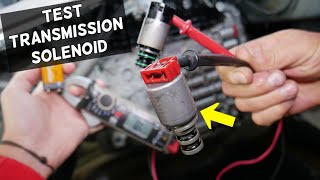
Tools: Socket set, torque wrench, drain pan, gasket scraper, multimeter, bi-directional scan tool for relearn procedure. 🎬 See how to test an automatic transmission solenoid with a multimeter. - Repair Damaged Wiring or Ground Strap 🟢 Beginner
Tools: Multimeter, soldering iron or quality crimpers, heat shrink tubing, wire strippers. - Replace Transmission Valve Body 🟢 Beginner
Tools: Professional level tools including scan tool, torque wrenches, and potentially transmission-specific fixtures.
Used vs. New Parts: Buying Guide
When a used part is worth it: For a TCC solenoid or valve body, a used part from a low-mileage vehicle (under 80k miles) scrapped due to an accident (not transmission failure) is a cost-effective option. This is especially true for older vehicles where a new part is a large percentage of the car's value.
Donor-vehicle mileage cap: roughly under 80000 miles for the part to have meaningful remaining life.
Donor quality checklist:
- Verify the donor vehicle's reason for being salvaged. Avoid parts from flood or high-mileage vehicles.
- Match the part number exactly. Even within the same model year, there are variations.
- Purchase from a reputable salvage yard that offers at least a 30-90 day warranty.
Decision logic:
- If The part is a simple, externally-mounted solenoid on a high-mileage vehicle. → A used part is a reasonable gamble to save money.
- If The part is an entire valve body for a Subaru or Nissan CVT. → Favor a new or professionally remanufactured part. The labor to install it is too high to risk a faulty used component. 🎬 Watch: Why you should be careful when buying Nissan valve bodies.
- If The vehicle is less than 10 years old and you plan to keep it long-term. → Buy a new OEM or high-quality aftermarket part for peace of mind and a longer warranty.
Warranty tradeoff: Used parts typically come with a 30-90 day warranty covering the part only, not the labor for installation. New aftermarket parts often have a 1-year to limited lifetime warranty, while new OEM parts carry a 1-2 year warranty.
Worst-case if a used part fails: $500-$1500 if a used valve body or solenoid fails after installation, as you pay for the labor a second time plus the cost of another part.
Cost of Not Fixing It
- 0-1 month: Noticeable decrease in fuel economy (5-15%) due to the torque converter not locking up. Increased risk of stalling at stops. (Added cost: $20-$60 per month in extra fuel costs.)
- 1-6 months: Constant slipping of the torque converter generates excessive heat, leading to premature breakdown of the transmission fluid. This causes transmission overheating and accelerated wear on clutches and seals. (Added cost: $250-$500 for a transmission flush and fill, which will not solve the underlying issue.)
- 6+ months: Catastrophic transmission failure. The overheated, debris-filled fluid destroys the valve body, torque converter, and internal clutch packs, requiring a complete transmission rebuild or replacement. (Added cost: $2,500-$7,000+ for a replacement or rebuilt transmission.)
Diagnosis Steps
- Scan for All Codes
Use an OBD-II scanner to read all codes from the Engine (ECU) and Transmission (TCM) modules. P2762 is often accompanied by P0700 (a general transmission fault request) and specific circuit codes like P2763 (High) or P2764 (Low).
Tools: OBD-II Scanner (Beginner) - Check Transmission Fluid Level & Condition
With the engine running and transmission warm, check the fluid. Low, dark, burnt, or sweet-smelling fluid indicates a severe problem. Fine metallic dust on the dipstick confirms internal mechanical damage.
Tools: Rag, Transmission Dipstick (if equipped) (Beginner) - Inspect External Wiring and Grounds
Visually inspect the wiring harness going to the transmission for chafing, melting, or corrosion. Locate and verify the main transmission-to-chassis ground strap is clean, tight, and free of rust.
Tools: Flashlight, Socket Set, Wire Brush (Intermediate) - Analyze Live Scan Tool Data
While driving, monitor key data PIDs. When the TCM commands lock-up (rising TCC Duty Cycle %), the 'TCC Slip Speed' must drop to near 0 RPM. If the TCM commands lock-up but slip RPM remains high, it confirms a hydraulic or mechanical failure.
Tools: Advanced Scan Tool (Advanced) - Command the Solenoid with a Bi-Directional Scanner
Command the TCC solenoid on and off while monitoring live data. If the scanner commands the solenoid to lock and the slip RPM does not change, it isolates the failure to the solenoid, hydraulics, or the torque converter itself.
Tools: Bi-Directional Scan Tool (Advanced) - PRO TIP: Test Solenoid Circuit Resistance from the TCM Connector
Disconnect the TCM connector. Using a wiring diagram, identify the two pins for the TCC solenoid circuit. Measure resistance between them. A typical reading is 10-25 ohms. Infinite resistance (open) or near zero ohms (short) proves a wiring or solenoid failure.
Tools: Digital Multimeter, Vehicle Wiring Diagram (Advanced) - PRO TIP: Check for Short to Ground/Power
With the TCM disconnected, measure resistance from each TCC solenoid pin to a clean chassis ground. It must read 'OL' (open circuit). Any continuity proves a short to ground. Turn the key 'ON' (engine off) and check for voltage at the pins; any voltage proves a short to power.
Tools: Digital Multimeter, Vehicle Wiring Diagram (Advanced) - Inspect Internal Components & Test Solenoid Directly
Drain the fluid and remove the transmission pan. Inspect the internal harness for brittle wires. Remove the TCC solenoid and test its resistance directly. Heat it with a heat gun; if resistance goes to 'OL' when hot, the solenoid is bad. Common specs: Subaru (10-13.5 Ohms), Honda (12-25 Ohms), Nissan (3-9 Ohms).
Tools: Socket Set, Torque Wrench, Drain Pan, Multimeter, Heat Gun (Advanced) - Perform a Hydraulic Pressure Test
If the electrical circuit is perfect, connect a transmission pressure gauge to the line pressure port. A bouncing needle while driving indicates a valve body blockage or failing fluid pump. For Subaru CVTs, stall test pressure must reach 652 - 870 PSI.
Tools: Transmission Pressure Gauge Kit (Professional)
When This Code Triggers (Freeze-Frame Conditions)
- Engine Coolant Temp: 170-210°F (The fault typically sets when the engine is fully warmed up.)
- RPM: 1200-2500 RPM (During light to moderate acceleration or when attempting to maintain a steady cruise.)
- Vehicle Speed: 35-60 mph (The TCM commands torque converter lock-up at highway or cruising speeds.)
- Engine Load: 20-50% (The code is set under steady-state driving, not usually during heavy acceleration or deceleration.)
Related Codes
- P0700 — This is a generic 'request' code from the Transmission Control Module (TCM). It tells the main engine computer (ECU) to turn on the Check Engine Light. It is purely informational and is always present with a specific transmission code like P2762.
- P0741 — 'Torque Converter Clutch Circuit Performance or Stuck Off'. This code indicates a mechanical/hydraulic problem. The TCM commands lock-up, but sees no corresponding drop in engine vs. transmission speed. P2762 points to an electrical circuit problem, while P0741 points to the mechanical result.
- P2763 — 'Torque Converter Clutch Pressure Control Solenoid Control Circuit High'. This indicates the circuit voltage is consistently too high, often due to an open circuit, a bad ground, or a failed solenoid. It is a more specific electrical fault than the general 'performance' issue of P2762.
- P2764 — 'Torque Converter Clutch Pressure Control Solenoid Control Circuit Low'. This indicates the circuit voltage is consistently too low, often due to a short to ground in the wiring or a shorted solenoid. It frequently appears alongside P2762 on Subaru models.
Climate & Environmental Factors
- High Ambient Temperature / Heat Soak: Heat is a primary contributor to solenoid failure. The internal coil windings develop high resistance or an open circuit only when hot. A solenoid tests perfectly fine when cold but fails after the vehicle runs for 20-30 minutes, triggering the code.
- Cold Weather & Road Salt (Rust Belt Regions): In regions where road salt is used, corrosion is a major cause of electrical circuit failures. Salt spray compromises the main transmission harness connector or chassis ground points, leading to erratic voltage and performance codes like P2762.
How to Clear the Code After You Fix It
- Use an OBD-II scan tool to clear the diagnostic trouble codes (DTCs).
- Perform a full drive cycle to allow the vehicle's readiness monitors to run.
- Rescan the vehicle to ensure the P2762 code has not returned as a pending or active fault.
Drive cycle (~30 minutes): A general drive cycle involves a cold start (sitting overnight), a 5-minute idle period, followed by 15-20 minutes of mixed city and highway driving. This includes steady cruising at 55-60 mph for at least 5 minutes and several instances of coasting down without using the brakes.
Readiness monitors affected: Comprehensive Component Monitor, Catalyst Monitor, Oxygen Sensor Monitor
Before emissions retest: drive at least 100 miles to fully set monitors.
Watch out for:
- Simply disconnecting the battery clears the code, but it also resets all readiness monitors, causing an automatic emissions test failure.
- The code returns immediately if the underlying electrical or mechanical fault has not been properly repaired.
- Some vehicles, particularly Subarus, require a specific 'relearn' procedure with a scan tool after a valve body or solenoid replacement.
Will This Fail Emissions / State Inspection?
Yes — this code typically fails an OBD-II emissions inspection.
- California: An active P2762 code is an automatic smog check failure. After repair, all readiness monitors must be set (except for EVAP in some cases), which requires driving 100-200 miles over several trips.
- New York: A lit Check Engine Light from code P2762 causes an automatic failure of the NYS vehicle inspection. The code must be cleared and the drive cycle completed before a re-test.
- Texas: In the 17 counties requiring emissions testing, an active P2762 code results in a failed OBD-II test. The vehicle cannot be registered until the repair is made and the system passes a re-test.
Most Commonly Affected Vehicles
- Subaru Outback, Legacy, Forester, Impreza, Crosstrek (2010-2015) — Extremely common. The TCC solenoid is integrated into the CVT valve body, requiring full replacement at dealers. Subaru issued warranty extension TSB 16-107-17R (10yr/100k miles). Aftermarket solenoids (Dorman 926-408) offer a cheaper independent repair.
- Nissan Altima, Rogue, Murano, Sentra, Versa (2007-2017) — These models use Jatco CVTs known for valve body and solenoid failures. Symptoms include shuddering and loss of power. Nissan extended warranties on many of these transmissions. Regular fluid changes every 30,000 miles are critical.
- Honda Accord, Odyssey, Pilot (2005-2013) — Often prone to TCC solenoid failure. On many models, the solenoid is external or easily accessible after removing the transmission pan, making it a much more affordable DIY or independent shop repair compared to Subaru/Nissan.
- Chevrolet Cruze, Malibu, Equinox (2010-2017) — Commonly associated with the 6-speed automatic transmissions (6T30/6T40/6T45). The cause is often a faulty solenoid, but frequently involves a damaged internal wiring harness or a cracked plastic connector on the TCM.
- Ford Focus, Fiesta (2011-2018) — On models with the problematic DPS6 PowerShift dual-clutch transmission, this code relates to the complex clutch actuation system controlled by the TCM. Failures involve the clutch forks or the TCM itself, leading to shuddering and harsh engagement.
- Hyundai / Kia Veracruz, Santa Fe, Sonata, Sorento (2010-2022) — Some 2021-2022 models with 8-speed dual-clutch transmissions were recalled (Recall 236) for transmission oil pump malfunctions that lead to total loss of drive, sometimes preceded by related fault codes.
- Toyota Corolla, RAV4, Camry, Scion iM (2014-2018) — Some models with CVTs were subject to Special Service Campaign JSD. An improper ECU program caused abnormal wear in the transmission, leading to codes and speed reduction. The fix involved a software update and sometimes valve body replacement.
- Jeep Grand Cherokee, Patriot, Compass (2008-2017) — Electrical issues related to the Totally Integrated Power Module (TIPM) cause erratic voltage to transmission components, triggering performance codes like P2762.
Manufacturer-Specific Notes
- Subaru: On many 2010-2015 CVTs, the TCC solenoid is part of the valve body and not sold separately by dealers, leading to expensive repairs. Subaru extended the warranty (TSB 16-107-17R) to 10 years / 100,000 miles due to the high failure rate. Aftermarket solenoids are now a viable, cheaper fix.
- Nissan: As part of a class-action lawsuit settlement, Nissan extended the warranty on the CVT assembly (including valve body and torque converter) for 2015-2018 Murano and 2016-2018 Maxima models to 84 months (7 years) or 84,000 miles. These transmissions are highly sensitive to fluid condition, and failing to perform fluid changes every 30,000 miles drastically increases the risk of valve body failure.
- Toyota: For certain CVT models, Toyota issued Special Service Campaign JSD to fix a software bug that caused premature component wear. The fix was a software reflash, but if the campaign was not performed in time, it requires valve body or full transmission replacement.
- Ford: For Focus (2012-2016) and Fiesta (2011-2015) models with the DPS6 transmission, Ford extended warranty coverage. The clutch assembly is covered for 7 years / 100,000 miles, and the Transmission Control Module (TCM) is covered for 10 years / 150,000 miles. Shuddering and related codes are caused by faulty clutch actuator motors or leaking input shaft seals, not a traditional TCC solenoid issue.
Frequently Asked Questions
Can I just change the transmission fluid to fix P2762?
It is possible, but only if the cause is low or extremely dirty fluid. It is an inexpensive first step, but it will not fix a failed solenoid, broken wire, or faulty computer.
What are the most common misdiagnoses for P2762?
The most common mistake is replacing the expensive valve body ($1,500+) without first thoroughly testing the wiring harness, connectors, and ground connections. A $20 ground strap or a corroded pin mimics a complete valve body failure.
Do I need to perform a 'relearn' procedure after the repair?
Yes, in most cases. After replacing a valve body, TCM, or transmission, a relearn procedure with a bi-directional scan tool is required for the TCM to adapt to the new components. This ensures smooth shifting and prevents immediate damage.
Why is the P2762 repair so expensive on my Subaru?
On many 2010-2015 models, Subaru dealers only replace the entire valve body assembly because they do not sell the faulty solenoid separately, leading to quotes of $2,200-$3,200. Independent shops can install an aftermarket solenoid for a significantly lower total cost.
What does the 'Range/Performance' part of the P2762 code mean?
It means the signal the computer sees from the solenoid's circuit is illogical or erratic for the current driving condition. The signal is intermittent, has incorrect resistance, or is otherwise out of its expected performance range.
Will a transmission additive or 'flush in a can' fix this code?
No. Chemical additives cannot repair an electrical fault like a shorted coil, a broken wire, or a failed computer driver, which are the root causes of a P2762 circuit code.
Can a bad battery cause code P2762?
Yes, indirectly. A failing battery causes low system voltage, leading to unpredictable behavior from electronic modules like the TCM. Ensuring the battery and charging system are healthy is a mandatory preliminary diagnostic step.
What is the difference between P2762 and P0741?
P2762 is an electrical circuit code indicating a problem with the wiring, solenoid coil, or TCM driver. P0741 is a mechanical performance code indicating the computer commanded lockup, the circuit worked, but the mechanical lockup failed. You can have one without the other.
Key Takeaways
- P2762 indicates an electrical fault in the Torque Converter Clutch (TCC) solenoid circuit, most frequently caused by a failed solenoid coil or degraded transmission fluid.
- The most distinct symptom of a P2762 code is the engine stalling when coming to a complete stop, which happens because the torque converter fails to mechanically unlock.
- Subaru and Nissan CVT owners face repair bills exceeding $1,500 because dealers replace the entire valve body, though independent shops can often install a $50 aftermarket solenoid instead.
- Always test the solenoid circuit's resistance (typically 10-25 ohms) directly from the Transmission Control Module (TCM) connector before authorizing a costly internal transmission repair.
- Stop driving the vehicle immediately if you experience shuddering or stalling; continuing to drive overheats the transmission fluid and turns a $300 solenoid repair into a $4,000 transmission replacement.
Helpful Videos
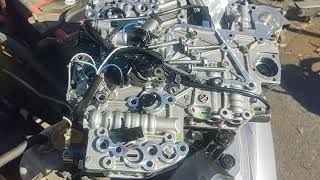
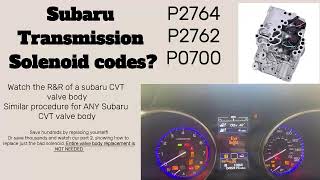
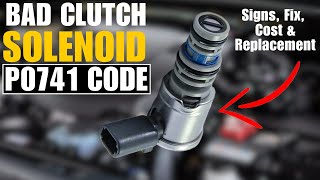

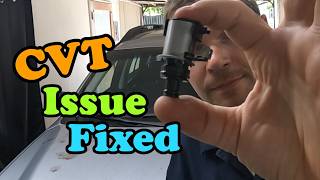
Shop the Parts Behind P2762
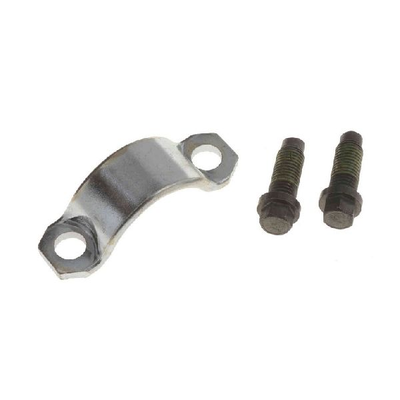
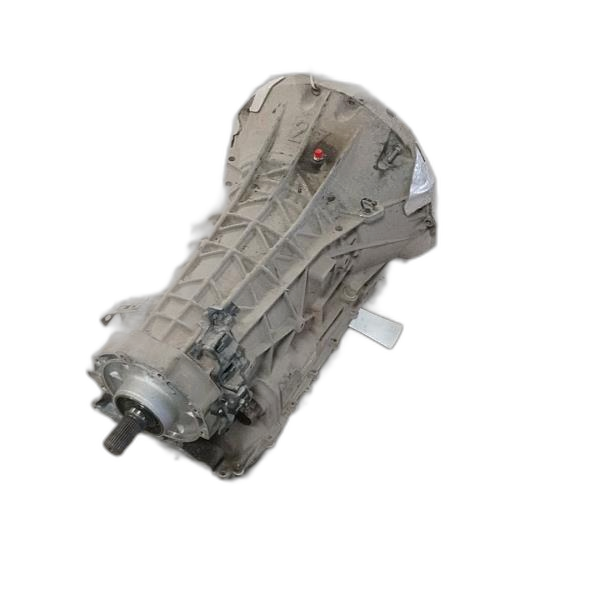
Below are the parts most often responsible for code P2762, ranked by how frequently each one is the actual culprit (per the diagnosis above). Tap any to see what we have for your vehicle.



The information in this article is provided for general reference and educational purposes only. Vehicle specifications, procedures, and part compatibility can vary by production date, trim level, and region. Always consult your vehicle's factory service manual and verify part numbers before purchasing or performing repairs. Safety-critical components such as airbags, seat belts, and braking systems should be installed by a qualified professional.
- 🎬 Helpful Videos
- 🛍️ Shop This Part
- What Does P2762 Mean?
- Can I Drive With P2762?
- Common Causes
- Symptoms
- Common Fixes & Costs
- DIY vs Professional
- Used vs. New Parts: Buying Guide
- Cost of Not Fixing It
- Diagnosis Steps
- When This Code Triggers (Freeze-Frame Conditions)
- Related Codes
- Climate & Environmental Factors
- How to Clear the Code After You Fix It
- Will This Fail Emissions / State Inspection?
- Most Commonly Affected Vehicles
- Manufacturer-Specific Notes
- Frequently Asked Questions
- Can I just change the transmission fluid to fix P2762?
- What are the most common misdiagnoses for P2762?
- Do I need to perform a 'relearn' procedure after the repair?
- Why is the P2762 repair so expensive on my Subaru?
- What does the 'Range/Performance' part of the P2762 code mean?
- Will a transmission additive or 'flush in a can' fix this code?
- Can a bad battery cause code P2762?
- What is the difference between P2762 and P0741?
- Key Takeaways
- 🎟️ Get 5% Off