

P2764 on 2013-2020 Chrysler 300: TCC Solenoid and Torque Converter Guide
On a 2013-2020 Chrysler 300, code P2764 usually means a problem with the torque converter clutch solenoid or the torque converter itself. Symptoms include shuddering, slipping, and possible stalling. A manufacturer TSB advises that if the solenoid tests okay, the torque converter is the likely culprit, making this a potentially expensive repair. For models with the NAG1 (W5A580) transmission, this often involves the conductor plate which houses the solenoids.
- P2764 on a Chrysler 300 indicates a serious transmission issue that should be addressed promptly.
- The most likely causes are a faulty TCC solenoid or a failed torque converter.
- A key Chrysler TSB (#9004009) provides a clear diagnostic path: if the solenoid is good, the torque converter is bad.
- Due to the complexity and high cost of potential misdiagnosis, professional service is strongly recommended.
- Do not ignore symptoms like shuddering or stalling, as continued driving can lead to complete transmission failure.
What's Unique About the 2013-2020 Chrysler 300
The 2013-2020 Chrysler 300 primarily uses two types of transmissions: the older Mercedes-designed 5-speed W5A580 (also called NAG1), common in earlier V8 models (approx. 2013-2014), and the newer ZF-designed 8-speed automatics (like the 845RE or 8HP70) in V6 and later V8 models. For the NAG1 transmission, the TCC solenoid is part of the conductor plate, a common failure item that houses all the transmission solenoids and speed sensors. A faulty conductor plate is a very frequent cause for this code on NAG1-equipped vehicles. For the ZF 8-speed, the solenoids are part of the more complex and expensive mechatronics unit. While the TSB #9004009 mentioned in pass 1 applies to the 62TE transmission (not used in the 300), its diagnostic logic—suspecting the torque converter if the solenoid is good—is a widely accepted practice across Chrysler platforms for this code.
Diagnostic Flowchart
Tap your situation to follow the diagnostic path that matches what you're seeing on this vehicle.
Symptoms You May Notice
- Shuddering or vibration, sometimes described as driving over a rumble strip, especially during light to moderate acceleration.
- Transmission slipping, where engine RPMs rise without a corresponding increase in speed.
- Engine stalling when coming to a stop or when shifting into Drive.
- Harsh, erratic, or delayed shifting.
- Check Engine Light or Transmission Warning Light is illuminated.
- Decreased fuel economy because the torque converter clutch fails to lock up.
- Transmission may enter "Limp Mode," limiting available gears.
- Replacing the entire transmission without first diagnosing the TCC solenoid/conductor plate and torque converter specifically.
- Replacing the TCC solenoid/conductor plate when the actual fault lies within the torque converter itself, as warned by TSBs.
- Condemning the TCM before thoroughly checking for wiring faults or a leaking connector plug.
Most Likely Causes
- Failed Conductor Plate / TCC Solenoid 🔴 High Probability → Shop Transmission Valve Body On the W5A580/NAG1 transmission, the conductor plate is a well-known failure point. It contains the TCC solenoid and speed sensors, and internal cracks or failed solder joints are common, leading to electrical circuit codes like P2764. On ZF 8-speeds, the individual solenoid within the mechatronics unit can fail electrically or become clogged.
How to confirm: A technician can test the solenoid's resistance from the transmission connector to ground. A healthy solenoid has a specific resistance value (e.g., approx. 5.5 ohms for ZF 8-speed solenoids). If the resistance is out of spec or shows an open/short, the conductor plate (NAG1) or solenoid (ZF) is faulty. This requires dropping the transmission pan and valve body to access.
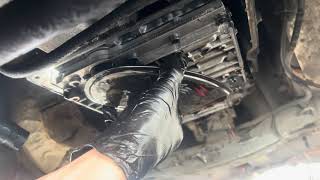
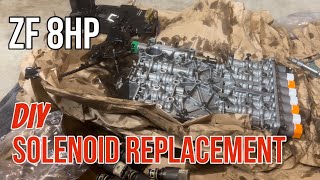
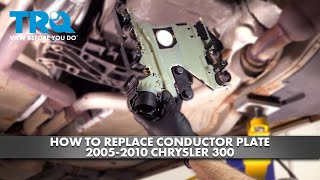
Typical fix: For NAG1 transmissions, replace the entire conductor plate. 🎬 Watch: Step-by-step guide to replacing the NAG1 conductor plate. For ZF 8-speed transmissions, the specific solenoid can sometimes be replaced, but often the entire mechatronics unit is serviced or replaced. 🎬 See how to replace solenoids on the ZF 8-speed transmission.
Est. part cost: $150-$600 - Failed Torque Converter 🟡 Medium Probability → Shop Automatic Transmission Torque Converter A Chrysler TSB directly states that if the TCC solenoid is functioning correctly, the P2764 code indicates a torque converter failure. The internal lock-up clutch inside the converter can wear out, causing shudder and sending debris through the transmission, which can also damage the solenoids.
How to confirm: This is typically diagnosed by exclusion. If the conductor plate/solenoid, wiring, and fluid are all confirmed to be good, the torque converter is condemned. Analyzing transmission fluid for excessive clutch material (looks like fine black sludge or metal shavings) is another strong indicator.
Typical fix: Replace the torque converter. This is a major repair that requires removing the entire transmission.
Est. part cost: $400-$1200 - Low or Contaminated Transmission Fluid 🟡 Medium Probability → Shop Transmission Assembly Low fluid level reduces hydraulic pressure needed to operate the TCC. Old, degraded fluid can contain debris that clogs the fine passages in the solenoid and valve body, causing it to stick or respond poorly. These transmissions are sensitive to the correct fluid type and level.
How to confirm: Check the transmission fluid level and condition. Note that neither the NAG1 nor the ZF 8-speed in these cars has a traditional dipstick; it requires a special tool and a specific temperature-based procedure. Fluid should be reddish/brown (depending on type/age) and not smell burnt or contain visible debris.
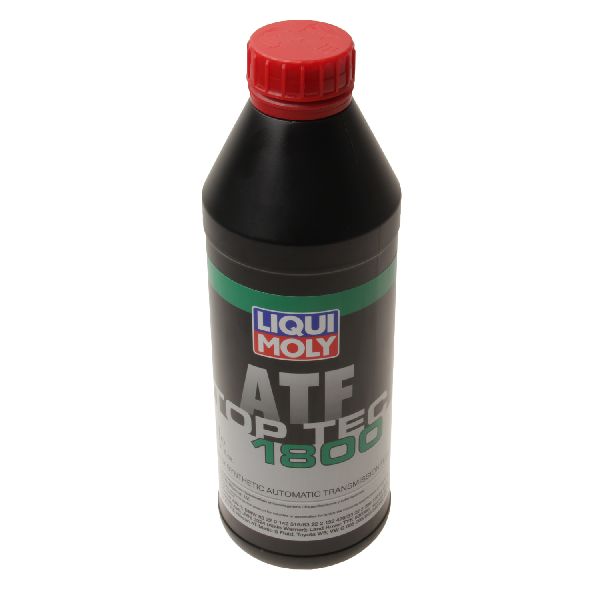
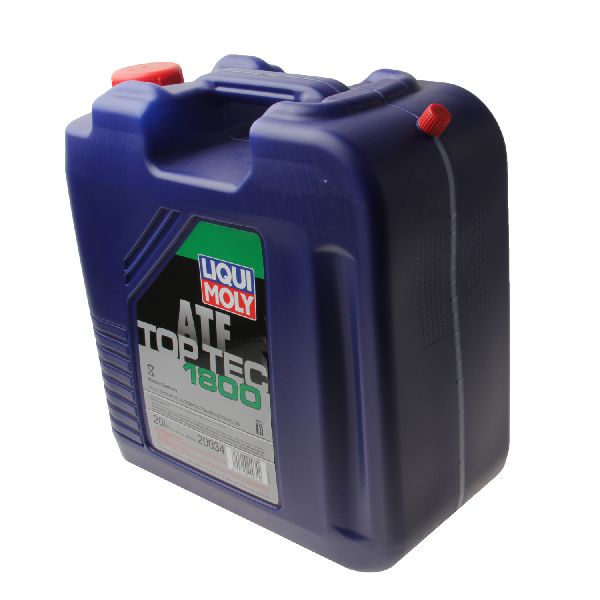
Typical fix: Perform a transmission fluid and filter change using the correct OEM-specified fluid (e.g., Mopar ATF+4 for NAG1, Mopar 8&9 Speed ATF/ZF Lifeguard 8 for the 8-speed).
Est. part cost: $100-$300 - Wiring or Connector Issues ⚪ Low Probability The main transmission harness connector is known to leak fluid through its O-rings, wicking ATF up into the wiring and causing shorts or poor connections. The wiring harness can also be damaged by heat from the exhaust or road debris.
How to confirm: Visually inspect the main round connector at the transmission for fluid leaks. Disconnect it and check for corrosion or bent pins. Perform a continuity and voltage drop test on the TCC solenoid circuit from the TCM to the transmission connector.
Typical fix: Replace the connector sleeve/adapter plug (a common, inexpensive part). Repair or replace the damaged section of the wiring harness.
Est. part cost: $50-$250
Rare But Worth Checking
- Faulty Transmission Control Module (TCM): → Shop Transmission Assembly This is a rare cause. The TCM's internal driver for the solenoid circuit can fail, but this should only be considered after all other possibilities (solenoid/conductor plate, torque converter, wiring, and fluid) have been exhaustively ruled out.
Diagnosis Steps
- Check for and record any other stored diagnostic trouble codes.
- Check the transmission fluid level and condition using the manufacturer's specific procedure and tools. Look for burnt smell or debris.
- Visually inspect the transmission wiring harness and the main round connector for any signs of fluid leaks, damage, or corrosion.
- Using a professional scan tool, monitor the TCC solenoid commanded status and actual slip RPM to observe its operation in real-time.
- Perform electrical tests on the TCC solenoid circuit. Check for proper voltage (approx. 12V) and resistance at the transmission connector. An open circuit or short to ground points to a wiring or solenoid issue.
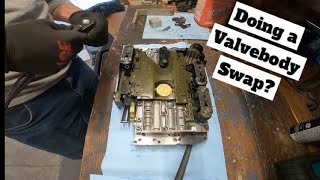
- If circuit tests are inconclusive, remove the transmission pan and valve body to access the conductor plate (NAG1) 🎬 Watch: How to swap the conductor plate and solenoids. or mechatronics unit (ZF 8-speed).
- Directly test or replace the TCC solenoid or conductor plate.
- If the solenoid, conductor plate, and wiring are confirmed to be good, the torque converter is the most likely cause of the problem, as per Chrysler's diagnostic logic.
- If the cause is still not found, a faulty TCM is a remote possibility.
Parts You'll Likely Need
- Transmission Conductor Plate
(OEM #52108308AC, 68021352AA)— For the common W5A580/NAG1 transmission, this is the most frequent failure point. It contains all the solenoids and speed sensors in one unit.
Trusted brands: Mopar, Vaico, APDTY
OEM price range: $200-$350
Aftermarket price range: $100-$200 - Torque Converter — If the solenoid/conductor plate is not at fault, the internal clutches of the torque converter itself have likely failed, a situation specifically highlighted by manufacturer TSBs.
Trusted brands: Mopar, Sachs, Valeo
OEM price range: $600-$1200
Aftermarket price range: $400-$800 - Transmission Fluid and Filter Kit — Any internal transmission repair requires draining the fluid and replacing the filter. Using the correct OEM-spec fluid is critical for both NAG1 and ZF transmissions.
Trusted brands: Mopar, Mahle, Wix
OEM price range: $150-$350
Aftermarket price range: $100-$250
Related Codes That Often Appear With This One
- P0740 — P0740 (Torque Converter Clutch Circuit Malfunction) is a closely related code that often appears with P2764, as both point to issues with the TCC system. The TSB #9004009 explicitly groups these two codes.
- P0741 — P0741 (Torque Converter Clutch Circuit Performance or Stuck Off) also relates to the TCC's inability to engage properly and can be triggered by the same underlying mechanical or hydraulic faults.
- P0717 — On NAG1 transmissions, a failing conductor plate can also cause a P0717 (Input/Turbine Speed Sensor Circuit No Signal) because the speed sensors are integrated into the same plate.
Technical Service Bulletins (TSBs) & Recalls
- Bulletin #9004009: Advises that for codes P0740 or P2764 on 62TE transmissions, if the TCC solenoid operation is normal, the torque converter should be replaced. The logic is widely applied to other Chrysler transmissions.
- TSB #21-013-13: Details the transmission adaptation learn procedure required after replacing components like the valve body or TCM, or clearing memory cells on ZF 8-speed and 9-speed transmissions. This is critical for restoring proper shift quality after a repair.
Platform-Specific Known Issues
- NAG1 Conductor Plate Failure: For 300 models equipped with the 5-speed W5A580 (NAG1) transmission, the conductor plate is the single most common cause of P2764 and other transmission electrical faults. The plate develops microscopic cracks over time, leading to intermittent or total loss of connection to the solenoids and sensors.
- ZF 8-Speed Mechatronics: On models with the 8-speed ZF transmission (845RE/8HP70), the TCC solenoid is integrated into the mechatronics unit, which is the combined valve body and TCM. While more reliable than the NAG1's conductor plate, failure here is more complex and expensive, often requiring replacement of the entire mechatronics assembly and subsequent programming.
- Torque Converter Shudder TSB: → Shop Automatic Transmission Torque Converter Chrysler has issued service bulletins like 21-013-13 for shift quality issues on their 8- and 9-speed transmissions, which can be related to torque converter operation. While not directly for P2764, they address underlying shudder and shift problems that often accompany TCC faults and may involve software updates or adaptation relearn procedures as a first step.
Mechanic-Grade Diagnostic Values
- TCC Solenoid Circuit Voltage (Key On, Engine Off) — expected: Approximately 12V (+/- 0.5V). Failure: A reading below 9V indicates a low-voltage condition that can trigger P2764.
- ZF 8HP Series Variable Force Solenoid Resistance — expected: Approximately 5.5 ohms. Failure: A reading significantly higher (open circuit) or lower (short circuit) indicates a failed solenoid.
- Generic TCC Solenoid Resistance Range — expected: 10 - 30 ohms. Failure: Readings outside this range suggest a faulty solenoid coil.
Scan Tool Commands That Help
- Chrysler wiTECH or equivalent professional scan tool: Quick Learn — This procedure is required after replacing the transmission, valve body, solenoid pack/conductor plate, or TCM. It allows the TCM to relearn the hydraulic and mechanical characteristics of the new components for proper shift quality and pressure control.
- Chrysler wiTECH or equivalent professional scan tool: Solenoid Actuation Test — This bidirectional control allows a technician to command the TCC solenoid on and off manually while monitoring circuit voltage. It helps confirm if the solenoid is electrically responsive, isolating the problem between the solenoid, wiring, and TCM.
- Chrysler wiTECH: Clear VLP Counters — After a transmission repair or PCM flash, the Variable Line Pressure (VLP) counters may need to be cleared from the PCM's miscellaneous functions menu to ensure correct line pressure calculations.
Wiring & Ground Locations
- Transmission Main Connector (NAG1) — The round, 13-pin connector on the passenger side of the W5A580/NAG1 transmission, near the front.. This is the primary external test point for all transmission solenoids and sensors. It is notoriously prone to leaking fluid through its O-rings, which can wick up the harness and cause short circuits or poor connections for the TCC solenoid.
- G102 — Right side of the engine compartment.. This is a major ground point for the powertrain. A loose or corroded connection here can cause various electrical issues, including low voltage faults for transmission components.
- TCM (ZF 8-Speed) — The Transmission Control Module Assembly (TCMA) is integrated into the valve body, inside the transmission oil pan.. On 8-speed models, there is no external TCM. All wiring for the solenoids terminates at the mechatronics unit inside the transmission, making external wiring checks limited to the main harness connector.
Real Owner Repair Stories
- MBWorld.org Forums (2003 SL500 (uses 722.6/NAG1 transmission, same as early Chrysler 300 V8)) — Transmission stuck in one gear, codes stored.
❌ Tried (didn't work) Clearing codes, Disconnecting battery overnight
✅ What actually fixed it The user performed a conductor plate replacement as a preventative/corrective measure for common 722.6 transmission issues. The process involves draining fluid, dropping the pan, removing the valve body, and swapping the plate. - YouTube - Mojo GT (2006 Dodge Charger SRT8 (uses NAG1 transmission)) — Not specified, but part of a high-performance build requiring a robust transmission.
✅ What actually fixed it The video demonstrates swapping the factory conductor plate (PN: 52108308AC) and solenoids onto a new, upgraded valve body. The old conductor plate showed visual signs of heat stress on the electrical traces.
OEM Part Supersession History
52108308AB→52108308AC— Revision of the conductor plate for the W5A580/NAG1 transmission to improve reliability.
Heads up: The newer part number (AC) is a direct replacement for the older one (AB).
Model Year Variations Within This Range
- 2013-2014 (Primarily V8 models): These years were more likely to use the Mercedes-Benz W5A580 (NAG1) 5-speed automatic transmission. For P2764, the primary suspect is the conductor plate (Part No. 52108308AC).
- 2015-2020 (All models) and 2013-2014 V6 models: These vehicles use the ZF 8-speed automatic transmission (845RE or 8HP70). The TCC solenoid is an individual component of the mechatronics unit inside the transmission. Diagnosis is similar, but the parts are different and not interchangeable with the NAG1.
Helpful Videos
We Have This Part in Stock

The information in this article is provided for general reference and educational purposes only. Vehicle specifications, procedures, and part compatibility can vary by production date, trim level, and region. Always consult your vehicle's factory service manual and verify part numbers before purchasing or performing repairs. Safety-critical components such as airbags, seat belts, and braking systems should be installed by a qualified professional.
- Chrysler 300:
- 🧭 Diagnostic Flowchart
- 🎬 Helpful Videos
- 🛍️ Shop This Part
- What's Unique About the 2013-2020 Chrysler 300
- Symptoms You May Notice
- Most Likely Causes
- Rare But Worth Checking
- Diagnosis Steps
- Parts You'll Likely Need
- Related Codes That Often Appear With This One
- Technical Service Bulletins (TSBs) & Recalls
- Platform-Specific Known Issues
- Mechanic-Grade Diagnostic Values
- Scan Tool Commands That Help
- Wiring & Ground Locations
- Real Owner Repair Stories
- OEM Part Supersession History
- Model Year Variations Within This Range
- 🎟️ Get 5% Off