

P2764 on 2006-2013 Dodge Charger: TCC Solenoid & Torque Converter Guide
On a 2006-2013 Dodge Charger, especially V6 models with the 62TE transmission, code P2764 almost always points to either a failed TCC solenoid (within the solenoid pack) or a failed torque converter. A Dodge TSB confirms that if the solenoid is okay, the torque converter is the cause. This is a complex repair best left to a professional.
- P2764 on a 2006-2013 Dodge Charger with a V6 engine indicates a low voltage issue in the torque converter clutch (TCC) solenoid circuit.
- A crucial Dodge TSB (#9004009) states that the cause is almost certainly either a faulty TCC solenoid (in the solenoid pack) or a failed torque converter.
- Diagnosis should follow the TSB: test the solenoid and its circuit first. If they are good, the torque converter must be replaced.
- Symptoms include engine stalling when stopping, transmission slipping, and harsh shifting.
- This is a serious issue that requires professional diagnosis and repair; it is not recommended for a typical DIY mechanic due to its complexity.
What's Unique About the 2006-2013 Dodge CHARGER
For the Dodge Charger, particularly V6 models equipped with the 6-speed 62TE automatic transmission, this code has a very specific diagnostic path outlined by the manufacturer. A Technical Service Bulletin (TSB #9004009, also cited as 21-015-09) was issued that directly links P2764 to one of two primary failures: the TCC solenoid or the torque converter itself. This bulletin is crucial because it advises technicians that if the solenoid's operation checks out as normal, the code is a direct indicator of torque converter failure, preventing unnecessary diagnostic guesswork. Another bulletin from the Automatic Transmission Rebuilders Association (ATRA #1648) corroborates this, noting that when P2764 is accompanied by the engine stalling when stopping, a defective TCC solenoid is the likely cause.
Diagnostic Flowchart
Tap your situation to follow the diagnostic path that matches what you're seeing on this vehicle.
Generation note: This range covers the late first-generation (LX, 2006-2010) and early second-generation (LD, 2011-2013) Charger. The issue is most prevalent in V6 models equipped with the 62TE automatic transmission, which was used across both generations. The 62TE transmission is known for issues with its torque converter and solenoid pack across many Chrysler, Dodge, and Ram vehicles.
Symptoms You May Notice
- Vehicle jerking or transmission slipping.
- Engine stalling or feeling like it will stall when coming to a stop, especially when shifting from Park/Reverse into Drive.
- Harsh, erratic, or delayed shifting.
- Transmission overheating.
- Decreased fuel economy.
- Check Engine Light is on.
- A 'rumble strip' shudder or vibration during acceleration.
- Replacing the entire transmission when only the torque converter or solenoid pack was needed.
- Replacing the solenoid pack when the actual failure was the torque converter, as warned in TSB #9004009.
- Failing to perform the transmission 'Quick Learn' procedure with a capable scan tool after replacing the solenoid pack or transmission, which can cause continued shifting issues.
Most Likely Causes
- Failed Torque Converter 🔴 High Probability → Shop Automatic Transmission Torque Converter Manufacturer TSB #9004009 explicitly states that if the TCC solenoid is not the cause, this code indicates torque converter failure on 62TE-equipped vehicles. The internal lock-up clutch within the converter is a known weak point that can fail, causing shuddering, debris, and operational issues.
How to confirm: After confirming the TCC solenoid and its wiring are functioning correctly (via resistance and voltage checks), the diagnosis points to the torque converter. This is a process of elimination as outlined by the TSB.
Typical fix: Replace the torque converter. This requires removing the transmission from the vehicle.
Est. part cost: $150-$500 - Failed TCC Solenoid / Solenoid Pack 🔴 High Probability → Shop Transmission Valve Body The solenoid pack in the 62TE transmission is a known failure point. The TCC solenoid is integrated into this pack and can fail electrically (short/open) or mechanically due to contamination or wear. ATRA bulletin #1648 points to a defective TCC solenoid (part #5169313AA) as the direct cause when stalling is the main symptom.
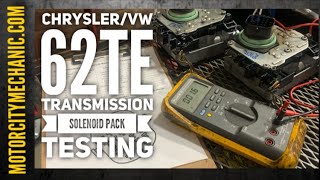
How to confirm: A professional technician can use a scan tool to monitor solenoid operation and command it on/off. The solenoid's resistance can also be tested with a multimeter at the transmission connector. For the 62TE, test between Pin 10 (power) and Pin 3 (TCC VFS control). 🎬 Watch: How to test the 62TE solenoid pack with a multimeter. The expected resistance for the TCC VFS solenoid is around 5.2 Ohms at 70°F. A reading far outside this range, or showing an open/short, indicates failure.
Typical fix: Replace the entire transmission solenoid pack (Mopar P/N 68376696AA or its successor), which is located inside the transmission oil pan and typically requires removing the valve body. 🎬 See this walkthrough for replacing the solenoid pack and valve body.
Est. part cost: $150-$400 - Low or Contaminated Transmission Fluid (ATF) 🟡 Medium Probability → Shop Transmission Assembly Dirty or low fluid is a common cause of solenoid issues. It can cause solenoids to stick, operate incorrectly, and lead to overheating, which damages internal components like the torque converter clutch. It is critical to use only Mopar ATF+4 fluid, as other types can cause shifting problems.
How to confirm: Check the transmission fluid level and condition using the dipstick (if equipped) or via the fill plug procedure. The fluid should be at the correct level, bright red, and not have a burnt smell or contain metallic particles.
Typical fix: Perform a transmission fluid and filter change using the correct Mopar ATF+4 fluid. If the fluid is heavily contaminated, a full flush may be needed, but this can sometimes dislodge debris and cause more issues.
Est. part cost: $75-$150 - Damaged Wiring or Connectors ⚪ Low Probability The wiring harness to the transmission can be damaged by road debris, exhaust heat, or corrosion, leading to a short or open in the TCC solenoid circuit.
How to confirm: Visually inspect the wiring harness leading to the transmission main connector. Test for continuity and proper voltage at the TCC solenoid control circuit (Pin 3 on the 62TE connector). A voltage reading below 9V with the key on can indicate a problem.
Typical fix: Repair or replace the damaged section of the wiring harness or clean/replace the connector.
Est. part cost: $20-$200
Rare But Worth Checking
- Faulty Powertrain Control Module (PCM): This is very rare. The PCM is the last item to suspect after all other possibilities (solenoid, torque converter, wiring, fluid) have been thoroughly ruled out.
Diagnosis Steps
- Check the transmission fluid level and condition. Ensure it is clean, full, does not smell burnt, and is the correct Mopar ATF+4 type.
- Use a professional scan tool to check for any other transmission-related codes, especially P0740.
- Monitor the TCC solenoid operation with the scan tool to see if the PCM is commanding it and if it is responding.
- Inspect the transmission wiring harness and connectors for any signs of damage, corrosion, or loose connections.
- Perform electrical tests on the TCC solenoid circuit. Using a multimeter at the transmission connector, check the resistance between Pin 10 (power) and Pin 3 (TCC VFS control). A reading of approximately 5.2 Ohms at 70°F is expected. An open or shorted reading indicates a bad solenoid.
- If the solenoid and wiring test good, follow the guidance of TSB #9004009, which points to a failed torque converter as the likely cause.
- Replacing the torque converter requires removing the transmission for access. 🎬 Watch: Step-by-step guide to removing the 62TE transmission for repair.
Parts You'll Likely Need
- Torque Converter — Per TSB #9004009, this is the likely point of failure if the solenoid and its circuit are functioning correctly.
Trusted brands: Mopar, LuK, Pro-King, Transtar
OEM price range: $300-$600
Aftermarket price range: $150-$400 - Transmission Solenoid Pack
(OEM #68376696AA)— This is the most common electrical component to fail and cause the P2764 code. The TCC solenoid is integrated into this pack. The part number 68376696AA is an updated version that supersedes older numbers like 05078709AB and has itself been superseded.
Trusted brands: Mopar, Wells, Rostra
OEM price range: $300-$500
Aftermarket price range: $150-$300 - Mopar ATF+4 Automatic Transmission Fluid
(OEM #68218057AC)— The correct fluid is required any time the transmission is serviced to ensure proper operation and longevity. Using non-specified fluid is a known cause of transmission problems.
Related Codes That Often Appear With This One
- P0740 — This code stands for 'Torque Converter Clutch Circuit Malfunction' and is often triggered alongside P2764 because they both relate to the TCC system's performance. TSB #9004009 explicitly mentions both codes together.
- P0700 — This is a generic code indicating the Transmission Control Module (TCM) has stored a fault. It acts as a general alert that a more specific transmission code, like P2764, is present.
- P0868 — This code indicates 'Transmission Fluid Pressure Low'. It can be set with P2764 if a failing solenoid, clogged filter, or internal leak is causing a general loss of hydraulic pressure.
Technical Service Bulletins (TSBs) & Recalls
- Bulletin #9004009 (also referenced as Chrysler TSB 21-015-09): States that for vehicles with a 62TE transmission showing codes P0740 or P2764, if the TCC solenoid operation is normal, the torque converter has failed and requires replacement.
- ATRA Technical Bulletin #1648: Specifically addresses P2764 where the engine dies when stopping. It identifies a defective TCC solenoid (EMCC VFS Solenoid) as the cause.
Platform-Specific Known Issues
- TSB #9004009 provides a clear diagnostic path for vehicles with the 62TE transmission: if the TCC solenoid tests okay, the torque converter is the failure point for code P2764.
- A common symptom pattern for a stuck TCC solenoid on this platform is the engine stalling when shifting into Drive, but running normally in Park and Reverse.
- The 62TE transmission is used in a wide range of Chrysler/Dodge/Ram vehicles, and this P2764 issue is common across all of them, not just the Charger.
Mechanic-Grade Diagnostic Values
- TCC Variable Force Solenoid (VFS) resistance — expected: ~5.2 Ohms at 70°F (21°C). Failure: A reading that is significantly different, open (infinite ohms), or shorted (near zero ohms).
- General Shift Solenoids resistance (e.g., Low/Reverse, Underdrive) — expected: 1.6 - 2.0 Ohms at 70°F (21°C). Failure: A reading significantly outside this range, which would indicate a failure in a different solenoid but is useful for comparison.
- TCC solenoid circuit voltage at connector (Key On, Engine Off) — expected: Approximately 12V (+/- 0.5V). Failure: Voltage below 9V indicates a low-voltage condition in the circuit, pointing to a wiring or TCM issue.
- Solenoid circuit ground path resistance — expected: Below 0.1 Ω. Failure: Values above 0.1 Ω suggest a poor ground connection that needs to be cleaned or repaired.
Scan Tool Commands That Help
- Chrysler wiTECH or equivalent professional scan tool: Quick Learn — This procedure is mandatory after replacing the transmission, valve body, solenoid pack, or TCM. It allows the TCM to learn the hydraulic and electrical characteristics of the new components to ensure proper shift quality.
- Bidirectional Scan Tool (e.g., wiTECH): TCC Solenoid Actuation Test — During diagnosis, this command allows a technician to manually turn the TCC solenoid on and off while monitoring circuit voltage. This directly tests if the solenoid is mechanically stuck or electrically unresponsive.
Wiring & Ground Locations
- Transmission Main Connector (Solenoid Pack Connector) — On the side of the 62TE transmission case, where the main vehicle harness connects.. This is the primary access point for electrical testing without removing the transmission pan. Pin 10 is the main power feed from the transmission control relay, and Pin 3 is the specific control circuit for the TCC VFS solenoid. Testing resistance between these two pins verifies the solenoid's electrical integrity.
- TCM/TCU Fuses (2011-2013 models) — In the main engine bay fuse box (Front Power Distribution Center). Specifically, check fuse F29 (15A) and F37 (10A). An additional fuse, F26 (15A), may be located in the rear fuse box in the trunk.. A blown fuse will cut power to the transmission control circuits, which could potentially cause a low voltage code, though other codes would likely be present as well.
- TCM (Transmission Control Module) Location (2011-2013 models) — Inside the passenger cabin, behind the passenger-side kick panel, near the floor.. In the rare event the TCM is suspected, knowing its location is necessary for inspection of its connectors or for replacement.
Real Owner Repair Stories
- Synthesized from multiple owner and technician reports on platforms with the 62TE transmission. (2011 Dodge Journey (shares 62TE transmission with Charger)) — Vehicle drove fine in town, but after 15-20 minutes of highway driving, the engine would shudder and stall when coming to a stop at a light or stop sign. The issue would not occur on short trips.
❌ Tried (didn't work) Initial diagnosis was uncertain, with some suspecting a vacuum leak or fuel delivery issue due to the stalling symptom.
✅ What actually fixed it The problem was identified as the Torque Converter Clutch (TCC) solenoid being mechanically stuck in the 'on' position due to heat and wear. After highway driving, the solenoid would fail to release the lock-up clutch as the vehicle slowed down, causing the engine to be dragged down and stall, similar to stopping a manual transmission car without pressing the clutch. Replacing the transmission solenoid pack resolved the stalling issue.
OEM Part Supersession History
05078709AB, 68029389AA→68376696AA— Updated design to improve reliability and address common failure modes of the solenoids.68376696AA→68371508AB— Further revision and part number consolidation by Mopar.
Heads up: Always verify the latest part number with a dealer using the vehicle's VIN, as supersession can continue.
Model Year Variations Within This Range
- 2011-2013 (LD Generation): The Transmission Control Module (TCM) on the second-generation (LD) Charger is located inside the vehicle, behind the passenger-side kick panel. On earlier first-generation (LX) models, the control logic was integrated differently. However, the transmission-side components (solenoid pack, connector pinout, torque converter) and the diagnostic procedure for P2764 remain the same as they all use the 62TE transmission.
Helpful Videos
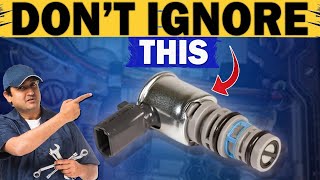
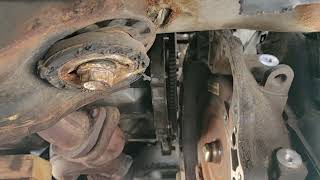
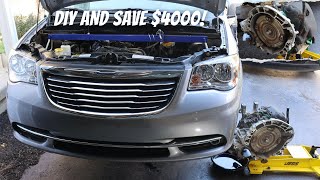
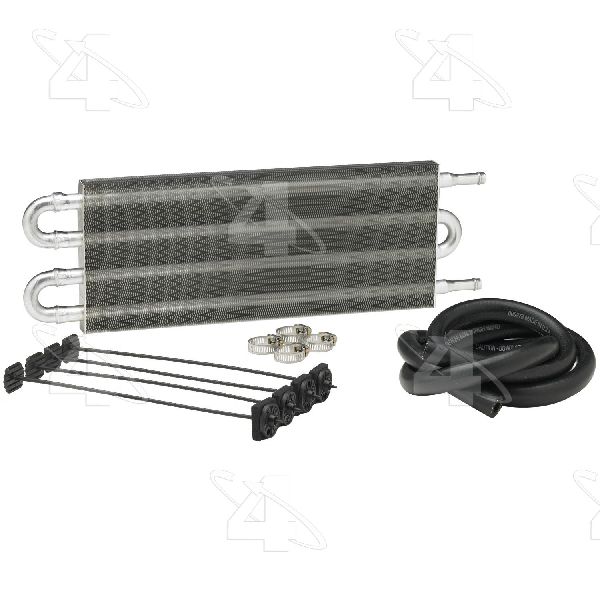
We Have This Part in Stock

The information in this article is provided for general reference and educational purposes only. Vehicle specifications, procedures, and part compatibility can vary by production date, trim level, and region. Always consult your vehicle's factory service manual and verify part numbers before purchasing or performing repairs. Safety-critical components such as airbags, seat belts, and braking systems should be installed by a qualified professional.
- Dodge CHARGER:
- 🧭 Diagnostic Flowchart
- 🎬 Helpful Videos
- 🛍️ Shop This Part
- What's Unique About the 2006-2013 Dodge CHARGER
- Symptoms You May Notice
- Most Likely Causes
- Rare But Worth Checking
- Diagnosis Steps
- Parts You'll Likely Need
- Related Codes That Often Appear With This One
- Technical Service Bulletins (TSBs) & Recalls
- Platform-Specific Known Issues
- Mechanic-Grade Diagnostic Values
- Scan Tool Commands That Help
- Wiring & Ground Locations
- Real Owner Repair Stories
- OEM Part Supersession History
- Model Year Variations Within This Range
- 🎟️ Get 5% Off