

P2764 on 2009-2016 Hyundai Elantra: Torque Converter Solenoid Circuit Low Fixes
This code indicates a low voltage issue in the torque converter clutch (TCC) solenoid circuit. The most common fix is replacing the TCC solenoid, which is located inside the transmission on the valve body. Expect to pay $70-$120 for an aftermarket solenoid and several hours of labor. This is a very common failure on the A6GF1 6-speed automatic transmission used in these vehicles.
- P2764 on a 2009-2016 Elantra almost always points to a problem with the Torque Converter Clutch (TCC) solenoid or its wiring.
- The most common symptom is the engine stalling or feeling like it will stall when you come to a stop, along with shuddering at cruising speeds.
- The repair involves dropping the transmission pan and is moderately difficult for a DIYer, but it is a well-documented procedure.
- Confirm the solenoid's resistance (should be ~13 ohms) before replacing it to rule out a simple wiring short.
- This issue is shared with other Hyundai and Kia models that use the same A6GF1 6-speed automatic transmission.
What's Unique About the 2009-2016 Hyundai Elantra
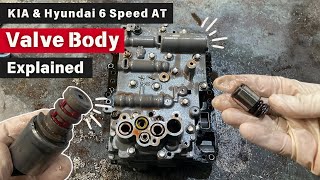
The 2009-2016 Hyundai Elantra uses a 6-speed automatic transmission (A6GF1 family) where the TCC solenoid is a common failure point that can trigger a P2764 code. Unlike some vehicles where this code might point to complex module failures, on this Elantra platform, the issue is very often a direct failure of the solenoid itself or the wiring harness inside the transmission pan. The solenoid is part of the larger valve body assembly 🎬 Watch: Learn how the A6GF1 valve body and solenoids function. but can be replaced individually, making the repair more accessible than a full valve body or transmission replacement.
Generation note: This range covers the end of the fourth generation (HD, 2009-2010) and the entire fifth generation (MD/UD, 2011-2016). Both generations use a similar 6-speed automatic transmission (A6GF1 family), and the causes and repair procedures for a P2764 code are generally consistent between them. Platform mates like the Kia Forte from the same era share this transmission and the associated solenoid failure issue.
Symptoms You May Notice
- Engine stalling when coming to a complete stop.
- Shuddering or vibration at cruising speeds, especially during light acceleration when lock-up should occur.
- Harsh or erratic shifting, sometimes feeling like the transmission is slipping.
- Transmission slipping (engine RPMs rise without a corresponding increase in speed).
- Reduced fuel economy due to the torque converter not locking up.
- Illuminated Check Engine Light or Transmission Warning Light.
- Transmission may enter "limp mode," getting stuck in one gear (often 3rd gear).
- Replacing the entire torque converter when only the control solenoid is faulty.
- Replacing the entire valve body when only a single solenoid has failed.
- Condemning the entire transmission without first testing the individual solenoid and wiring harness.
Most Likely Causes
- Failed Torque Converter Clutch (TCC) Solenoid 🔴 High Probability → Shop Automatic Transmission Torque Converter The solenoid can fail electrically (internal short causing low resistance) or mechanically (sticking) over time due to heat cycles and contaminated fluid. It is a widely documented failure point on Hyundai/Kia 6-speed transmissions.
How to confirm: A mechanic can test the solenoid's resistance with a multimeter to see if it's out of specification (a good solenoid is typically around 5.0-5.6 ohms when cold). They can also command the solenoid on and off 🎬 See how to test and clean these 6-speed transmission solenoids. with a bidirectional scan tool to check its response.
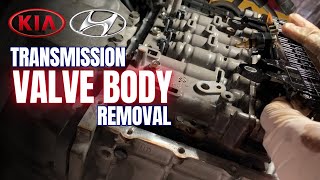
Typical fix: Replace the individual TCC solenoid. This involves dropping the transmission pan and valve body 🎬 Watch: Step-by-step guide to replacing the transmission solenoid. to access the solenoid.
Est. part cost: $70-$120 - Damaged Internal Wiring Harness 🟡 Medium Probability The wiring harness inside the transmission is submerged in hot fluid, which can make the insulation brittle and prone to cracking or shorting to the transmission case (ground) over time.
How to confirm: Visually inspect the wiring harness for signs of damage, brittleness, or corrosion on the connectors after removing the transmission pan. A continuity test from the TCM connector to the solenoid connector can also identify shorts or opens.
Typical fix: Replace the internal transmission wiring harness. This is often done at the same time as a solenoid replacement.
Est. part cost: $100-$200 - Low or Contaminated Transmission Fluid ⚪ Low Probability → Shop Transmission Assembly While Hyundai specifies 'lifetime' fluid, it can still degrade, become contaminated with clutch material or metal shavings, or run low due to leaks. This debris can clog solenoid passages and cause them to stick or fail.
How to confirm: Check the transmission fluid level and condition. If it's dark, has a burnt smell, or contains visible metallic particles on the drain plug magnet, it is contaminated and indicates internal wear.
Typical fix: Perform a transmission fluid drain and fill. If the fluid is heavily contaminated, a full flush may be recommended, though this is sometimes debated. Replacing the fluid is critical after replacing any internal components.
Est. part cost: $80-$150
Rare But Worth Checking
- Faulty Transmission Control Module (TCM): → Shop Transmission Assembly While less common, the TCM itself can fail, causing it to send incorrect signals or falsely report a circuit low error. This is usually considered after all other possibilities (solenoid, wiring) have been ruled out.
- Worn Valve Body: → Shop Transmission Valve Body Debris in the transmission fluid can cause wear in the valve body bores where the solenoids operate, leading to pressure loss and erratic behavior. In some cases, the entire valve body may need replacement, though this is less common than a single solenoid failure for this specific code.
Diagnosis Steps
- Scan the vehicle for all stored trouble codes to see if other transmission-related codes are present, such as P0741 or P0700.
- Check the level and condition of the automatic transmission fluid. Burnt or dirty fluid with metal shavings on the drain plug magnet points to internal wear.
- Using a professional scan tool, monitor the live data for the TCC solenoid command versus the actual state and check for torque converter slip RPM.
- Perform a resistance check on the TCC solenoid. This requires accessing the solenoid connector. The expected resistance should be around 5.0-5.6 ohms when the transmission is cold. A significantly lower reading indicates a shorted solenoid.
- If the solenoid resistance is out of specification, it needs to be replaced.
- If the solenoid tests good, inspect the wiring harness between the TCM and the transmission, including the internal harness, for any shorts to ground, corrosion, or damage. Check for continuity and for shorts between the signal wire and the transmission case.
- If wiring and the solenoid are confirmed to be good, the issue may lie with the Transmission Control Module (TCM) itself, though this is the least likely cause.
Parts You'll Likely Need
- Torque Converter Clutch (TCC) Solenoid
(OEM #46313-3B073 (for plastic pan) or 46313-3B673 (for steel pan))— This is the most frequent failure point for a P2764 code, failing either electrically or mechanically. There are different part numbers depending on the transmission pan material.
Trusted brands: Rostra, Standard Motor Products (TCS205), Duralast, Hyundai Genuine Parts
OEM price range: $50-$90
Aftermarket price range: $70-$120 - Automatic Transmission Filter Kit
(OEM #46321-2F000 (Filter), 45285-2F000 (Pan Gasket))— The filter and pan gasket should always be replaced whenever the transmission pan is removed for service.
Trusted brands: Wix, ATP, Hyundai Genuine Parts
OEM price range: $40-$60
Aftermarket price range: $20-$40 - Hyundai Genuine ATF SP-IV
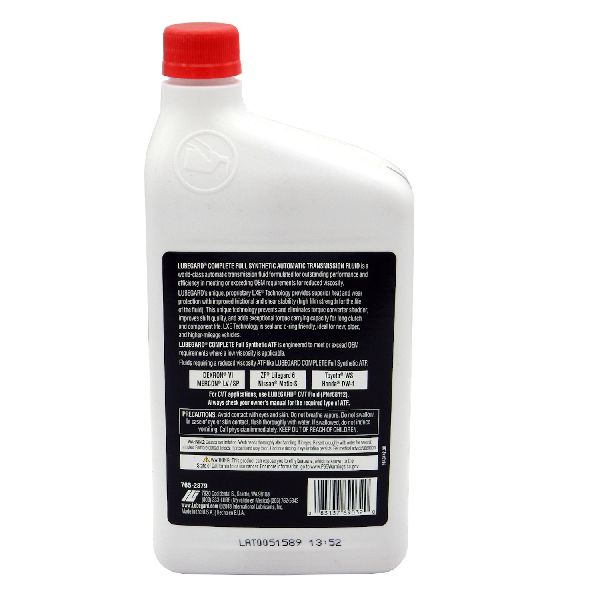
(OEM #00232-19045 (or compatible SP-IV fluid))— The correct type of transmission fluid is required when refilling the transmission after the repair. Using the wrong fluid can cause shifting problems and damage.
Trusted brands: Hyundai/Kia SP-IV, Valvoline MaxLife ATF, Castrol Transmax Full Synthetic Multi-Vehicle
OEM price range: $15-$25 per quart
Aftermarket price range: $10-$18 per quart
Related Codes That Often Appear With This One
- P0741 — P0741 (Torque Converter Clutch Circuit Performance or Stuck Off) often appears with P2764 as they both relate to the TCC's inability to engage properly.
- P0740 — P0740 (Torque Converter Clutch Circuit Malfunction) is a more general TCC circuit fault that can be triggered alongside the specific 'Circuit Low' condition of P2764.
- P0700 — P0700 is a generic Transmission Control System Malfunction code requested by the TCM. It often appears with other, more specific transmission codes like P2764 to indicate a fault has been logged in the transmission module.
Technical Service Bulletins (TSBs) & Recalls
- TSB 17-ST-002-1: Addresses the MDPS (Motor Driven Power Steering) flexible coupling replacement, extending the warranty to 10 years/100,000 miles for a clicking/thud noise when turning.
- TSB 22-01-089H: A service campaign for vehicles in 'Salt Belt' states to apply underbody corrosion preventative coatings to mitigate rust from road salt.
- TSB 17-01-052: An ECM software update for 1.8L SULEV models to revise fuel volume control logic.
Platform-Specific Known Issues
- MDPS Steering Coupler Failure: A very common issue on this platform is the disintegration of the flexible rubber coupler in the Motor Driven Power Steering (MDPS) column. This results in a prominent clicking or clunking noise when turning the steering wheel. It is not a safety issue according to Hyundai, but it is a significant annoyance. The part is cheap, but labor can be a few hours. Hyundai issued a warranty extension (TXX7) to 10 years/100,000 miles for this part.
- Engine Failure (Theta II Engines): While not all Elantras in this range are affected, some models equipped with the 2.0L and 2.4L Theta II GDI engines were part of massive recalls and lawsuits for premature connecting rod bearing wear. This could lead to engine knocking, seizing
Mechanic-Grade Diagnostic Values
- Torque Converter Clutch (TCC) Solenoid Resistance — expected: 5.0 - 5.6 Ω at 68°F (20°C). Failure: A reading significantly lower than 5.0 Ω indicates an internal short, consistent with a P2764 'Circuit Low' code. An open circuit (infinite resistance) would typically set a different code.
- TCC Solenoid Operating Current (Live Data) — expected: Ranges from ~50 mA (unlocked) to ~850 mA (fully locked). Failure: A scan tool showing the TCM commanding current but feedback current remaining near zero suggests an open circuit. If the circuit is shorted, the TCM may detect the low voltage and set the code without attempting to send significant current.
- TCC Solenoid Circuit Voltage at Transmission Connector — expected: Approximately 12V (battery voltage) on the power supply pin (Pin 10) with key on.. Failure: Voltage significantly below battery voltage points to a wiring issue upstream of the transmission. No voltage indicates a potential TCM or fuse issue.
Scan Tool Commands That Help
- Hyundai GDS (Global Diagnostic System): DTC Analysis & Actuation Test — The GDS can command the TCC solenoid on and off while the engine is running to audibly and functionally check its operation. This bidirectional control is the definitive way to test if the solenoid is mechanically stuck or electrically unresponsive to commands, separating a solenoid failure from a wiring or TCM issue.
- Hyundai GDS (Global Diagnostic System): Vehicle S/W Management / Oil-pressure Characteristics Input — After replacing certain solenoids, the GDS tool is used to perform a re-learn or adaptive value reset. This ensures the TCM adjusts its control strategy to the new component's performance characteristics, preventing harsh shifting or future codes.
Wiring & Ground Locations
- Transmission Pass-Through Connector (TCC Circuit) — The main round electrical connector on the outside of the transmission case.. This is the primary test point to isolate the problem. Pin 10 is the power supply for the TCC solenoid, and Pin 2 is the ground-side control wire from the TCM. A technician can test for power, ground, and resistance here to determine if the fault is inside the transmission (solenoid, internal harness) or outside (external harness, TCM).
- Gf01 / Gf07 (Example Ground Points) — General body and chassis grounds are located in various places, such as under the driver's seat (Gf07) or on the B-pillar (Gf01). The main TCM ground is typically located on the chassis near the module itself.. The TCM controls the TCC solenoid by switching the ground path. A poor main ground for the TCM can cause a voltage drop across the entire module, leading to erratic behavior and potentially triggering false circuit codes like P2764. Verifying the TCM has a clean, tight ground connection to the chassis is a crucial step if the solenoid and wiring test good.
Real Owner Repair Stories
- Synthesized from multiple forum and video reports (2012 Hyundai Elantra, ~95,000 miles) — Car would intermittently shudder and then stall when coming to a stop. Check engine light was on with code P2764 and sometimes P0741.
❌ Tried (didn't work) Initially, a transmission fluid drain and fill was performed. The fluid was dark but didn't contain excessive metal. The problem persisted.
✅ What actually fixed it The transmission pan was dropped and the valve body was removed. The TCC solenoid's resistance was tested and found to be 1.2 Ω, far below the 5.0-5.6 Ω specification, indicating an internal short. The single TCC solenoid was replaced with a new OEM part. The internal wiring harness was inspected and found to be in good condition. After reassembly and refilling with SP-IV fluid, the code was cleared and did not return. The stalling symptom was completely resolved.
When the Usual Fixes Don't Work
- In some documented cases, replacing the TCC solenoid does not resolve the P2764 code. The next most likely cause is a failure in the internal transmission wiring harness, which becomes brittle from constant exposure to hot transmission fluid. If both the solenoid and internal harness are confirmed good, the fault may lie in the external wiring or, rarely, the Transmission Control Module (TCM) itself. A voltage drop test on the circuit from the TCM to the transmission connector is essential before condemning the TCM.
OEM Part Supersession History
Varies by pan type→Varies by pan type— This is not a supersession but a critical variation. The correct TCC solenoid part number depends on the material of the transmission oil pan.
Heads up: A6GF/A6MF transmissions with a STEEL oil pan use solenoid P/N 46313-3B673. Transmissions with a PLASTIC oil pan use solenoid P/N 46313-3B073. Using the wrong solenoid can result in improper fitment or function. The Pass 2 P/N 46313-3B770 is listed for other applications and may not be correct for the Elantra.
Model Year Variations Within This Range
- 2011-2016: The transmission oil pan material can be either stamped steel or plastic. There appears to be a changeover from steel to plastic around March 2013. This is the most critical factor in ordering the correct replacement TCC solenoid, as they use different part numbers. Visual inspection of the pan is required before ordering parts.
Diagnostic Flowchart
Other Known Issues on This Vehicle
Issues unrelated to this code that are worth knowing about as an owner of this generation:
- MDPS Steering Coupler Disintegration 🟠 Medium — Extremely common; often occurs between 50,000 and 100,000 miles. Results in a clicking/clunking noise from the steering column. (Ref: TSB 17-ST-002-1 (Warranty Extension TXX7))
- Theta II Engine Bearing Failure 🔴 High — Widespread on specific 2.0L/2.4L GDI engines, leading to recalls. Can cause catastrophic engine failure at various mileages. (Ref: NHTSA Recalls & Class Action Lawsuits (e.g., Recall 15V568000))
- Peeling White Paint 🟡 Low — Common on vehicles with white paint, where the paint can peel in large sheets, particularly on the roof and hood. Not a mechanical issue but affects resale value. (Ref: Warranty Extension Program (e.g., Z05 for some models))
- ABS Module Internal Short 🔴 High — Subject of a recall (e.g., 20V393000). The ABS module can leak brake fluid internally, causing an electrical short that can lead to an engine compartment fire, even when parked. (Ref: NHTSA Recall 20V393000)
- Brake Pedal Stopper Pad Deterioration 🟠 Medium — A small plastic pad on the brake pedal arm can crumble, preventing the brake light switch from deactivating. This can cause the brake lights to stay on and may allow the car to be shifted out of park without pressing the brake. (Ref: NHTSA Recall 16V574000)
Used vs. New Parts: Buying Guide for This Vehicle
When a used part is the smart pick: For this repair, using used parts is strongly discouraged. The primary failure components—the solenoid and internal wiring harness—are wear-and-tear items that degrade with heat cycles and mileage. A used part from a junkyard is likely to have a similar level of wear and could fail soon after installation.
What to inspect on the donor part:
- Not applicable, as used electronic/wear components for this repair are not recommended.
OEM-only on this vehicle (don't cheap out):
- While not strictly 'OEM-only', using a Genuine Hyundai solenoid is the safest option to ensure compatibility and longevity. The cost difference between OEM and quality aftermarket is often minimal.
Aftermarket brands forum-validated for this vehicle:
- Standard Motor Products (SMP)
- Rostra Precision Controls
Brands owners have reported issues with on this vehicle:
- Avoid unbranded, no-name solenoids from online marketplaces. These often have poor quality control, incorrect resistance values, and high failure rates, leading to a repeat of the same repair.
Real Owner Stories
Aggregated from forums and TSBs cited above. Mileages and costs reflect what owners reported in those sources.
2014 Hyundai Elantra
Symptoms: Owner was experiencing a transmission issue that was diagnosed as a failed solenoid and was trying to identify the correct part for a DIY repair.
What fixed it: The implied fix was the replacement of the failed transmission solenoid.
Source hint: https://www.reddit.com/r/MechanicAdvice/comments/y67z6j/2014_hyundai_elantra_transmission_solenoid/
2010 Hyundai Elantra
Symptoms: The owner described experiencing intermittent limp mode and harsh downshifting from the transmission.
What fixed it: The issue was diagnosed as being related to internal transmission electrical problems, as indicated by companion codes P0700 and P0755 which point to solenoid circuit issues.
Source hint: https://www.hyundai-forums.com/threads/another-transmission-problem.113070/
2013 Hyundai Elantra — ~75000 miles
Symptoms: A prominent clicking or clunking noise was heard when turning the steering wheel.
What fixed it: The flexible rubber coupler in the Motor Driven Power Steering (MDPS) column was replaced, as outlined in TSB 17-ST-002-1.
Source hint: Vehicle Specific Issue: MDPS Steering Coupler Failure
Related OBD-II Codes
Frequently Asked Questions
My 2014 Elantra is shuddering and sometimes gets stuck in 3rd gear. Is this related to the P2764 code?
What is the correct resistance for the TCC solenoid on my Elantra if I want to test it?
If the TCC solenoid tests good, what else is a common cause for P2764 on these cars?
I have a 2012 Kia Forte with the same symptoms. Is the problem the same?
Hyundai says the transmission fluid is 'lifetime'. Should I still change it if I have a P2764 code?
I hear a clicking noise when I turn the steering wheel. Is this related to my transmission problem?
Helpful Videos



We Have This Part in Stock


The information in this article is provided for general reference and educational purposes only. Vehicle specifications, procedures, and part compatibility can vary by production date, trim level, and region. Always consult your vehicle's factory service manual and verify part numbers before purchasing or performing repairs. Safety-critical components such as airbags, seat belts, and braking systems should be installed by a qualified professional.
- Hyundai Elantra:
- 🧭 Diagnostic Flowchart
- 🎬 Helpful Videos
- 🛍️ Shop This Part
- What's Unique About the 2009-2016 Hyundai Elantra
- Symptoms You May Notice
- Most Likely Causes
- Rare But Worth Checking
- Diagnosis Steps
- Parts You'll Likely Need
- Related Codes That Often Appear With This One
- Technical Service Bulletins (TSBs) & Recalls
- Platform-Specific Known Issues
- Mechanic-Grade Diagnostic Values
- Scan Tool Commands That Help
- Wiring & Ground Locations
- Real Owner Repair Stories
- When the Usual Fixes Don't Work
- OEM Part Supersession History
- Model Year Variations Within This Range
- Other Known Issues on This Vehicle
- Used vs. New Parts: Buying Guide for This Vehicle
- Real Owner Stories
- 2014 Hyundai Elantra
- 2010 Hyundai Elantra
- 2013 Hyundai Elantra — ~75000 miles
- Related OBD-II Codes
- Frequently Asked Questions
- 🎟️ Get 5% Off