

P2764 on 2007-2014 Toyota Corolla: Torque Converter Solenoid Circuit Low Fixes
P2764 on a Toyota Corolla indicates a 'low voltage' electrical fault in the torque converter clutch (TCC) solenoid circuit. The most common cause is the TCC solenoid itself failing internally. Replacing the solenoid, which is located inside the transmission pan, is the typical fix. This code applies to both the conventional 4-speed automatic and the later CVT transmissions, where the solenoid is often referred to as Shift Solenoid Valve DSU.
- P2764 points to an electrical problem, not a mechanical one. The most likely culprit is the TCC solenoid itself.
- Do not immediately assume you need a new transmission or torque converter; this is often a relatively inexpensive part failure.
- Driving with this code can lead to transmission overheating and reduced fuel economy. It's best to get it repaired promptly.
- The repair involves opening the transmission pan, so it's a good opportunity to also replace the transmission fluid and filter/gasket.
- Always verify the correct solenoid part number for your specific year and transmission type before ordering parts.
What's Unique About the 2007-2014 Toyota Corolla
The 2007-2014 model year range for the Corolla spans three different generations and multiple transmissions. Earlier models (approx. 2007-2013) typically use the U341E 4-speed automatic transmission, while later models (2014) introduced the K313 Continuously Variable Transmission (CVT). Despite the different hardware, the P2764 code's meaning is consistent. In Toyota documentation for the CVT, the lock-up solenoid is referred to as 'Shift Solenoid Valve DSU'. The diagnostic process remains focused on the solenoid and its circuit, regardless of transmission type. The issue is almost always electrical, not a mechanical failure of the torque converter itself.
Generation note: The 2007-2014 range covers the end of the 9th gen (E130, through 2008), the full 10th gen (E140/E150, 2009-2013), and the start of the 11th gen (E170, 2014). The fundamental cause (TCC solenoid circuit) is similar across these generations, but the specific transmission model (U341E 4-speed or K313 CVT) and part numbers for the solenoid will differ. Diagnosis remains consistent.
Symptoms You May Notice
- Check Engine Light is on
- Transmission warning light may be illuminated
- Harsh or erratic shifting
- Engine stalling when coming to a stop
- Noticeable decrease in fuel economy
- Transmission may feel like it's slipping or engine RPMs are higher than usual at cruising speeds
- In some cases, the transmission may enter 'limp mode', limiting available gears
- Vehicle may vibrate or shudder during acceleration
- Replacing the entire torque converter when only the controlling solenoid is bad.
- Replacing the entire valve body when only a single, accessible solenoid has failed (primarily on U341E models).
- Assuming the transmission has failed mechanically without first diagnosing the electrical circuit.
Most Likely Causes
- Faulty Torque Converter Clutch (TCC) Solenoid 🔴 High Probability → Shop Automatic Transmission Torque Converter Solenoids are electro-mechanical parts submerged in hot fluid that wear out over time. An internal short circuit is a common failure mode, causing the 'circuit low' condition. This part is also referred to as Shift Solenoid Valve DSU in CVT models.
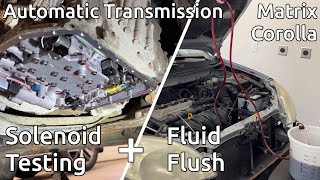
How to confirm: After dropping the transmission pan, the solenoid can be tested with a multimeter for resistance. A reading significantly below the manufacturer's specification (see 'Specific Diagnostic Values 🎬 Watch: How to test solenoids and flush fluid on U341E transmissions.') indicates a shorted solenoid. A technician can also command the solenoid with a scan tool to check its response. 🎬 Watch: How to diagnose P2764 yourself using a scan tool.
Typical fix: Replace the faulty TCC/lock-up solenoid. This involves draining the fluid, removing the transmission pan, unbolting the old solenoid, and installing the new one.
Est. part cost: $50-$150 - Damaged Wiring or Connectors 🟡 Medium Probability The wiring harness leading to the transmission, or the internal wiring inside the pan, can become damaged, corroded, or frayed from heat and vibration, causing a short to ground.
How to confirm: Visually inspect the external wiring harness for any obvious damage. Check for continuity and shorts using a multimeter on the circuit between the TCM/ECM and the transmission connector, and from the connector to the solenoid itself.
Typical fix: Repair or replace the damaged section of the wiring harness. Clean any corroded connectors.
Est. part cost: $10-$100 - Low or Dirty Transmission Fluid ⚪ Low Probability → Shop Transmission Assembly While less likely to directly cause a 'circuit low' code, extremely dirty, burnt, or low fluid can cause solenoids to malfunction, work harder, and overheat, leading to electrical failure.
How to confirm: Check the transmission fluid level and condition using the dipstick (if equipped) or service plug. The fluid should be at the correct level, red/pink in color (for Toyota ATF WS), and not smell burnt.
Typical fix: Perform a transmission fluid drain and fill or a full fluid exchange. This is often done as part of the solenoid replacement.
Est. part cost: $60-$200
Rare But Worth Checking
- Faulty Transmission Control Module (TCM) or Powertrain Control Module (PCM/ECM): → Shop Transmission Assembly This is rare. The module's internal driver circuit for the solenoid can fail, causing the code. This should only be considered after the solenoid and wiring have been thoroughly tested and confirmed to be good.
Diagnosis Steps
- Scan the vehicle for the P2764 code and any other related codes. Note the freeze frame data.
- Check the level and condition of the automatic transmission fluid. Burnt-smelling or very dark fluid can indicate internal transmission problems that may have led to the solenoid failure.
- Inspect the transmission wiring harness and connectors for any visible damage, corrosion, or loose connections.
- Using a multimeter, test the resistance of the TCC solenoid circuit. This can often be done at the ECM connector to test the entire circuit. Compare the reading to the manufacturer's specification. A reading significantly below spec indicates a shorted solenoid or wiring.
- If external testing is inconclusive, drain the transmission fluid and remove the transmission pan to gain access to the solenoid.
- Directly test the resistance of the TCC solenoid. If it fails the test, replace it.
- While the pan is off, inspect the internal wiring for any signs of damage, brittleness, or discoloration from overheating.
- If the solenoid and wiring are good, the problem may lie with the TCM/ECM, which would require more advanced diagnostics or replacement.
Parts You'll Likely Need
- Torque Converter Clutch (TCC) Solenoid
(OEM #35250-12030)— This is the solenoid that directly controls the lock-up function and is the most common point of failure for this code. Note: Part number is for the U341E 4-speed transmission found in many 2007-2013 Corollas. Always verify with VIN, as CVT models use a different part integrated into the valve body.
Trusted brands: Toyota (OEM), Aisin, Rostra
OEM price range: $150-$250
Aftermarket price range: $50-$150 - Automatic Transmission Fluid — The fluid must be drained to access the solenoid and should be replaced with the correct type (e.g., Toyota ATF WS for automatics, Toyota CVT Fluid FE for CVTs).
Trusted brands: Toyota ATF WS, Toyota CVT Fluid FE, Idemitsu, Valvoline MaxLife
OEM price range: $15-$25 per quart
Aftermarket price range: $8-$15 per quart - Transmission Pan Gasket — The gasket should be replaced whenever the transmission pan is removed to prevent leaks.
Trusted brands: Toyota (OEM), Fel-Pro, Mahle
OEM price range: $20-$40
Aftermarket price range: $10-$25
Related Codes That Often Appear With This One
- P0741 — P0741 means 'Torque Converter Clutch Circuit Performance or Stuck Off'. P2764 is a specific electrical fault (low voltage), while P0741 is a performance fault (the computer commanded lock-up but didn't see it happen). A shorted solenoid (P2764) will prevent lock-up, thus also triggering P0741.
- P2763 — P2763 is the opposite fault, 'Torque Converter Clutch Pressure Control Solenoid Control Circuit High', indicating an open circuit or high voltage condition. Seeing them together could point to an intermittent wiring issue or a failing ECM.
Technical Service Bulletins (TSBs) & Recalls
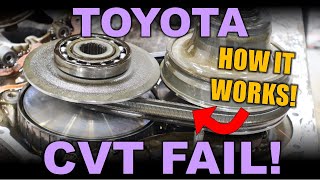
- T-SB-0016-19: While not for P2764 specifically, this TSB addresses a hiss/whine noise in 2014-2018 Corollas with the K313 CVT by replacing the valve body assembly 🎬 See a detailed teardown of the K313 CVT and how it works., which contains the lock-up solenoid.
Platform-Specific Known Issues
- For models with the U341E 4-speed automatic, the lock-up solenoid is a distinct, replaceable component within the valve body.
- For models with the K313 CVT, the lock-up solenoid is often referred to as 'Shift Solenoid Valve DSU' in service literature. Depending on the specific failure, some shops may recommend replacing the entire valve body assembly rather than an individual solenoid.
Mechanic-Grade Diagnostic Values
- Resistance of Shift Solenoid Valve DSU (Lock-up Solenoid) for K313 CVT — expected: 11 to 15 Ω at 20°C (68°F). Failure: A reading significantly lower than 11 Ω indicates a short circuit (P2764). A reading significantly higher (or open circuit) would indicate a P2763 fault.
- Resistance of TCC Solenoid for U341E Automatic — expected: Approximately 13 Ω when cold. Failure: A reading significantly below this value points to an internal short in the solenoid.
- Voltage at TCC solenoid power supply wire (Key On, Engine Off) — expected: Approximately 12 V (+/- 0.5 V). Failure: Voltage below 9 V confirms a low-voltage condition in the circuit, pointing towards a short to ground or high resistance on the power side.
Scan Tool Commands That Help
- Toyota Techstream (GTS): Active Test for Lock-up Solenoid — To command the solenoid on and off while monitoring circuit voltage or listening for a physical click from the solenoid (with the pan off). This helps verify if the solenoid is responsive to commands from the ECM/TCM.
- Toyota Techstream (GTS): Reset Memory / CVT Oil Pressure Calibration — This is a required procedure after replacing the valve body or solenoids on a K313 CVT. Failure to perform the reset and calibration can result in harsh shifting or other performance issues. The procedure involves a 'Reset Memory', followed by 'deceleration sensor zero point calibration', and finally 'CVT oil pressure calibration'.
Wiring & Ground Locations
- ECM Connector B186, Pin 41 (DSU) — On the Engine Control Module (ECM) for vehicles with the K313 CVT.. This is the specific pin for the lock-up solenoid (DSU) control circuit. Testing resistance between this pin and body ground checks the entire circuit, including the wiring and the solenoid itself.
- Transmission Connector B90 — The main electrical connector on the case of the K313 CVT.. This is the junction between the main body harness and the internal transmission wiring. Disconnecting it allows a technician to isolate whether a short is in the main harness (testing from ECM to B90) or internal to the transmission (testing from B90 into the transmission).
- Main Transmission Ground — Typically, a heavy gauge wire from the negative battery terminal bolts directly to a stud on the top of the transmission case.. The solenoid circuit is completed through a ground path. Corrosion or a loose connection at this main ground point can cause intermittent voltage drops and trigger various electrical codes, including P2764.
- Chassis Ground Point — Located on the chassis/frame, often near the driver's side kick panel or under the air intake box in the engine bay.. Multiple circuits share common chassis grounds. Corrosion at these points, especially in salt-belt regions, can create unexpected electrical issues that are difficult to trace.
"I Checked Everything" — The Actual Cause
- This code is electrical, so a smoke test is not applicable. The equivalent scenario is when both the solenoid and the wiring harness test perfectly fine with a multimeter (correct resistance, no short to ground). In these cases, the root cause is almost always a failed driver circuit within the Engine Control Module (ECM) or Transmission Control Module (TCM). The module is capable of detecting the low voltage condition but is itself the cause. This should be the last diagnosis after all other components are proven to be good.
OEM Part Supersession History
35250-12060→35250-12030— Unknown revision or supplier change.
Heads up: Online parts catalogs show conflicting information, with some stating 35250-12030 replaces -12060 and others stating the reverse. This part is for the U341E 4-speed automatic. Always confirm the correct part number with a Toyota dealer using the vehicle's VIN before ordering.
Model Year Variations Within This Range
- 2007-2013 (approx.): These years primarily use the U341E 4-speed automatic transmission. For P2764, the cause is typically the individual lock-up solenoid (PN 35250-12030), which can be replaced separately from the valve body.
- 2014: The 2014 model year marked the introduction of the K313 CVT. On these transmissions, the lock-up solenoid (called Shift Solenoid Valve DSU) is officially considered part of the valve body assembly by Toyota. The OEM repair is to replace the entire valve body, not the individual solenoid, and perform a CVT calibration with a scan tool.
Diagnostic Flowchart
Other Known Issues on This Vehicle
Issues unrelated to this code that are worth knowing about as an owner of this generation:
- Excessive Oil Consumption (2ZR-FE Engine) 🔴 High — Most common on early 2009 models, but can affect others. Caused by faulty piston ring design allowing oil into the combustion chamber. Often becomes noticeable after 60,000-80,000 miles. (Ref: Toyota addressed this with an ECU firmware update in some cases and later redesigned piston rings around 2015.)
- Water Pump Failure/Leak 🟠 Medium — Commonly occurs at higher mileage (over 100,000 miles), but can happen earlier. Symptoms include coolant leaks (pink crust), whining noises, and overheating. (Ref: T-SB-0103-20 (and revisions) was issued to help technicians differentiate between normal seepage and an active leak requiring replacement.)
- Cracked/Melting Dashboard 🟡 Low — Affects 2007-2011 Camry models primarily, but the material issue was widespread in many Toyota products of the era. The dashboard surface becomes sticky, shiny, and can crack due to heat and humidity. (Ref: Toyota initiated a Warranty Enhancement Program (ZE6) to cover replacements, though owners reported long waits for parts.)
- Faulty Alternator Causing Power Steering Issues 🟠 Medium — On models with Electronic Power Steering (EPS), a failing alternator can reduce voltage, causing the power steering to become heavy or inoperative.
- Cracked Engine Control Module (ECM) Circuit Board 🔴 High — A known issue on some 10th generation Corollas that could lead to harsh shifting, engine stalling, or a no-start condition. (Ref: Toyota issued a safety recall in late 2010 to replace the affected ECMs at no cost.)
Used vs. New Parts: Buying Guide for This Vehicle
When a used part is the smart pick: For the K313 CVT, where the OEM repair is an expensive valve body replacement, a used valve body from a low-mileage, warrantied donor vehicle can be a viable, cost-effective alternative. For the U341E, since the individual solenoid is relatively inexpensive, buying new is generally recommended.
Donor-vehicle mileage cap: roughly under 80000 miles for the part to have meaningful remaining life.
What to inspect on the donor part:
- Verify the donor vehicle's mileage and obtain a vehicle history report if possible.
- Inspect the transmission fluid from the donor if possible; it should not be dark black or smell burnt.
- Look for any signs of external damage or overheating on the transmission case.
- Purchase from a reputable salvage yard that offers a warranty (e.g., 30-90 days) on used electronic parts.
OEM-only on this vehicle (don't cheap out):
- Engine Control Module (ECM/TCM) - Due to the need for precise programming and high reliability, a new or professionally remanufactured OEM unit is strongly recommended if the module is found to be faulty.
Aftermarket brands forum-validated for this vehicle:
- Aisin - Aisin is the original equipment manufacturer for many Toyota transmissions and components, making their parts a trusted alternative to dealer-sourced parts.
- Rostra - A well-regarded aftermarket manufacturer of transmission solenoids.
Brands owners have reported issues with on this vehicle:
- Unbranded, generic solenoids from online marketplaces. While inexpensive, they have a higher reported rate of premature failure and inconsistent electrical specifications that can prevent the code from being resolved.
Real Owner Stories
Aggregated from forums and TSBs cited above. Mileages and costs reflect what owners reported in those sources.
2010 Toyota Corolla
Symptoms: The transmission was shifting very harshly and the engine would sometimes stall, triggering the check engine light.
What fixed it: The problem was a cracked Engine Control Module (ECM) circuit board, which was replaced under a Toyota safety recall.
Source hint: Known issue: Cracked Engine Control Module (ECM) Circuit Board
2014 Toyota Corolla with K313 CVT
Symptoms: The check engine light came on for P2764 and the transmission was shifting erratically.
What fixed it: The repair shop recommended and performed a full valve body assembly replacement rather than attempting to replace just the individual 'Shift Solenoid Valve DSU'.
Source hint: Vehicle Specific Issues section regarding K313 CVT models
2014 Toyota Corolla with K313 CVT
Symptoms: Owner reported a persistent hiss or whine noise coming from the transmission area.
What fixed it: The dealership replaced the valve body assembly to resolve the noise, a procedure which also replaces the lock-up solenoid contained within it.
Source hint: TSB T-SB-0016-19
Related OBD-II Codes
Frequently Asked Questions
My 2014 Corolla has a CVT transmission. Is the part for code P2764 called something different?
I have a 10th generation Corolla with harsh shifting. Could it be the ECM instead of the transmission solenoid?
Is it better to replace just the solenoid or the whole valve body on my CVT-equipped Corolla?
Can I test the TCC solenoid myself without dropping the transmission pan?
What type of transmission fluid should I use when replacing the solenoid on my Corolla?
Does the P2764 issue affect other Toyota-related vehicles besides the Corolla?
Helpful Videos


We Have This Part in Stock

The information in this article is provided for general reference and educational purposes only. Vehicle specifications, procedures, and part compatibility can vary by production date, trim level, and region. Always consult your vehicle's factory service manual and verify part numbers before purchasing or performing repairs. Safety-critical components such as airbags, seat belts, and braking systems should be installed by a qualified professional.
- Toyota Corolla:
- 🧭 Diagnostic Flowchart
- 🎬 Helpful Videos
- 🛍️ Shop This Part
- What's Unique About the 2007-2014 Toyota Corolla
- Symptoms You May Notice
- Most Likely Causes
- Rare But Worth Checking
- Diagnosis Steps
- Parts You'll Likely Need
- Related Codes That Often Appear With This One
- Technical Service Bulletins (TSBs) & Recalls
- Platform-Specific Known Issues
- Mechanic-Grade Diagnostic Values
- Scan Tool Commands That Help
- Wiring & Ground Locations
- "I Checked Everything" — The Actual Cause
- OEM Part Supersession History
- Model Year Variations Within This Range
- Other Known Issues on This Vehicle
- Used vs. New Parts: Buying Guide for This Vehicle
- Real Owner Stories
- 2010 Toyota Corolla
- 2014 Toyota Corolla with K313 CVT
- 2014 Toyota Corolla with K313 CVT
- Related OBD-II Codes
- Frequently Asked Questions
- 🎟️ Get 5% Off