

P2764 on 2007-2014 Toyota RAV4: Torque Converter Solenoid Circuit Low Fixes
This code indicates a low voltage problem in the torque converter clutch (TCC) solenoid circuit. Most often, the issue is the TCC solenoid itself, located inside the transmission oil pan. Expect symptoms like harsh shifting, poor fuel economy, and possible stalling when coming to a stop.
- P2764 on a 2007-2014 RAV4 means there's a low voltage electrical fault in the torque converter clutch solenoid circuit.
- The most likely culprit is the TCC solenoid itself, which has failed internally.
- Symptoms directly impact drivability, including harsh shifting, stalling, and poor fuel economy.
- The repair requires dropping the transmission pan to access the solenoid on the valve body, making it a moderately difficult job.
- Always use the correct type of transmission fluid (Toyota ATF WS) when refilling.
What's Unique About the 2007-2014 Toyota RAV4
For this generation of RAV4, which uses several different transmissions (e.g., U151, U250, U660E/F, U760E/F), the P2764 code is a fairly straightforward electrical fault. While Toyota transmissions are generally reliable, solenoid failures are a common wear-and-tear item. The cause is often an internally shorted solenoid rather than external wiring damage. Some later models (2013-2015) with the U760E/F transmission had a known issue with torque converter shudder, addressed by TSB T-SB-0023-15, which involved a new torque converter and an ECM reflash. This is a separate mechanical wear issue from the P2764 electrical fault, but severe shudder can sometimes contribute to premature component stress.
Generation note: The 2007-2014 year range covers the end of the third generation (XA30; 2005-2012) and the beginning of the fourth generation (XA40; 2013-2018) of the RAV4. Several different 4, 5, and 6-speed transmissions were used depending on the engine (4-cyl vs V6) and drivetrain (FWD vs AWD). Common 6-speed transmissions in later models are the U660E (V6) and U760E (4-cyl). While the underlying cause of P2764 is similar, the specific transmission models and part numbers for the solenoid will differ. Always verify parts using your vehicle's VIN.
Symptoms You May Notice
- Check Engine Light is on
- Engine stalling when coming to a stop
- Harsh or erratic shifting
- Transmission slipping or delayed engagement
- Shuddering or vibration, especially during light acceleration
- Decreased fuel economy
- Transmission may enter 'limp mode'
- Transmission overheating
- Replacing the entire torque converter when only the control solenoid is faulty.
- Replacing the Transmission Control Module (TCM) before verifying the solenoid and wiring are good.
- Attributing the code to dirty fluid and performing only a fluid change without addressing the underlying electrical fault.
Most Likely Causes
- Faulty Torque Converter Clutch (TCC) Solenoid 🔴 High Probability → Shop Automatic Transmission Torque Converter Solenoids are electro-mechanical parts that wear out over time. On many Toyotas, an internal short circuit in the solenoid's copper coil is a common failure mode, leading to a 'circuit low' condition.
How to confirm: After dropping the transmission pan, the solenoid can be tested with a multimeter for resistance. A reading significantly lower than the manufacturer's specification (e.g., below 10-15 ohms) or a reading of 0 ohms indicates a short. A professional can also command the solenoid with a bidirectional scan tool to check its function.
Typical fix: Replace the faulty TCC solenoid. This is located on the transmission valve body and requires removing the transmission oil pan to access.
Est. part cost: $150-$300 - Damaged Wiring or Connectors 🟡 Medium Probability Wiring inside the transmission is subject to heat and constant contact with fluid, which can degrade insulation over time. External wiring can be damaged by road debris or improper service, causing a short to ground.
How to confirm: Visually inspect the wiring harness leading to the transmission and the internal harness to the solenoid for any signs of fraying, corrosion, or loose connections. Check for continuity and shorts using a multimeter from the TCM connector to the transmission connector.
Typical fix: Repair or replace the damaged section of the wiring harness. Clean any corroded connectors.
Est. part cost: $20-$100 - Low or Dirty Transmission Fluid ⚪ Low Probability → Shop Transmission Assembly While less likely to cause a 'circuit low' code directly, contaminated fluid with metallic debris can cause solenoids to stick or fail prematurely. However, dirty fluid alone will not cause an electrical fault code; it's a sign of a larger problem.
How to confirm: Check the transmission fluid level and condition. The fluid should be bright red (for Toyota WS fluid) and not have a burnt smell or contain visible metallic debris.
Typical fix: Perform a transmission fluid drain and fill or a full fluid exchange. If the fluid is very dirty, dropping the pan to clean it and replace the filter is recommended. This is usually done in conjunction with solenoid replacement.
Est. part cost: $50-$200
Rare But Worth Checking
- Faulty Transmission Control Module (TCM) or Powertrain Control Module (PCM): → Shop Transmission Assembly This is a rare cause. The TCM/PCM should only be suspected after all other possibilities, including the solenoid and wiring, have been thoroughly ruled out. A failure of the internal driver circuit for the solenoid within the module can cause this code.
- Internal Transmission Failure: → Shop Transmission Assembly A major internal mechanical failure could create excessive metallic debris that damages the solenoid or its wiring, but this would typically be accompanied by more severe symptoms (like no movement) and other trouble codes.
Diagnosis Steps
- Check and document any other stored trouble codes with an OBD-II scanner.
- Check the transmission fluid level and condition. Look for signs of burning or metallic contamination.
- Using a professional scan tool, observe the live data for the TCC solenoid command and status. Attempt to command the solenoid on and off to see if it responds.
- Inspect the external transmission wiring harness and connectors for any visible damage, corrosion, or loose connections.
- If external wiring is okay, the next step is to gain access to the solenoid by dropping the transmission oil pan.
- Visually inspect the internal wiring to the TCC solenoid for burnt or damaged insulation.
- Disconnect the solenoid and test its resistance with a multimeter. Compare the reading to the manufacturer's specification (typically 10-15 Ohms for a healthy solenoid). A reading that is too low (e.g., under 5 Ohms) or shows a direct short (near 0 Ohms) confirms a failed solenoid.
- Test the wiring harness for a short to ground between the TCM and the solenoid connector.
- If the solenoid and wiring test good, the issue may lie with the TCM, but this is rare and should be the last component to be considered.
Parts You'll Likely Need
- Torque Converter Clutch (TCC) Solenoid
(OEM #35280-06020)— This solenoid is the most common point of failure for a P2764 code, typically due to an internal short circuit. Note: Part number varies by specific transmission model (U151/U250/U660/U760). Always verify with VIN.
Trusted brands: Toyota Genuine, Rostra, Dorman, Standard Motor Products
OEM price range: $200-$300
Aftermarket price range: $100-$220 - Automatic Transmission Fluid
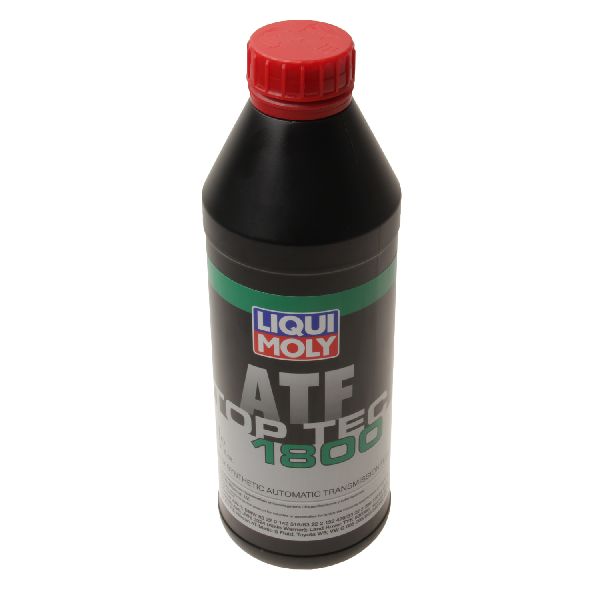
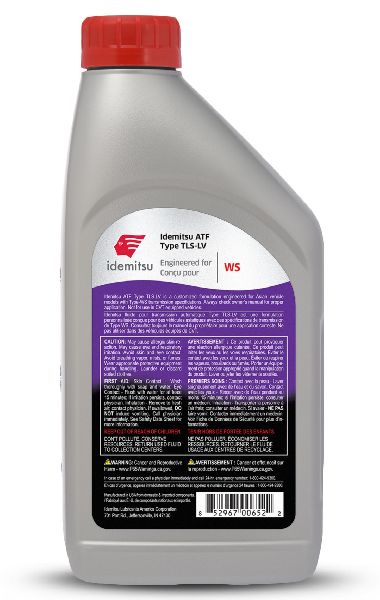
(OEM #00289-ATFWS)— The fluid must be drained to access the solenoid and will need to be replaced. Using the correct Toyota ATF WS (World Standard) fluid is critical for proper transmission function.
Trusted brands: Toyota ATF WS
OEM price range: $10-$15 per quart
Aftermarket price range: $8-$12 per quart - Transmission Pan Gasket — The original gasket should be replaced when the oil pan is removed to prevent leaks. Some models may use FIPG (Form-in-Place Gasket) instead of a pre-formed gasket.
Trusted brands: Toyota Genuine, Fel-Pro
OEM price range: $25-$40
Aftermarket price range: $15-$25
Related Codes That Often Appear With This One
- P0741 — P0741 ('Torque Converter Clutch Circuit Performance or Stuck Off') is a performance code, while P2764 is an electrical code. P0741 can be set when the electrical fault of P2764 prevents the TCC from engaging as commanded by the TCM.
- P2763 — P2763 is for 'Torque Converter Clutch Pressure Control Solenoid Control Circuit High', which indicates an open circuit. It's the opposite fault of P2764 but relates to the same component and wiring.
Technical Service Bulletins (TSBs) & Recalls
- T-SB-0023-15 (Rev2): Addresses torque converter flex lock-up shudder on 2013-2015 RAV4s by replacing the torque converter and reprogramming the ECM.
- Warranty Enhancement Program (ZH1): Extended warranty coverage for the torque converter shudder issue described in T-SB-0023-15.
Platform-Specific Known Issues
- Transmission Model Variance: → Shop Transmission Assembly The 2007-2014 RAV4 used multiple transmissions. 2007-2008 models might have the U151E/F (V6) or U250E (4-cyl). Later models, especially from 2009 onwards, transitioned to the 6-speed U660E (V6) and U760E (4-cyl). The location and part number of the TCC solenoid will be specific to the transmission installed in your vehicle. It is crucial to identify the correct transmission before ordering parts.
- Torque Converter Shudder TSB (2013-2015 Models): → Shop Automatic Transmission Torque Converter Separate from the P2764 electrical code, Toyota issued TSB T-SB-0023-15 for a shudder felt between 25-50 mph on 2013-2015 RAV4s with the U760E/F transmission. The fix involved replacing the torque converter and an ECM reflash. While this TSB addresses a mechanical wear issue, not an electrical fault, severe shudder can create conditions that stress transmission components.
Mechanic-Grade Diagnostic Values
- TCC (Lock-Up) Solenoid 'SL' Resistance (U660E) — expected: 11 - 15 Ohms at 68°F (20°C). Failure: A reading of near 0 Ohms indicates a short. A reading significantly outside the specified range indicates a faulty solenoid.
- TCC (Lock-Up) Solenoid 'SLU' Resistance (U760E) — expected: 5.0 - 5.6 Ohms at 68°F (20°C). Failure: A reading near 0 Ohms indicates a short. A reading outside this range suggests the solenoid is faulty.
- TCC (Lock-Up) Solenoid 'SL' Resistance (U151E/F) — expected: 11 - 13 Ohms at 68°F (20°C). Failure: A reading outside this range indicates a faulty solenoid.
- Solenoid Power Supply Voltage at TCM — expected: Approximately 12V (+/- 0.5V) with key on, engine off.. Failure: Voltage below 9V indicates a low-voltage condition that can trigger P2764.
Scan Tool Commands That Help
- Toyota Techstream: Active Test: 'Control the Lock-Up' — This function allows the technician to command the TCC lock-up solenoid (SLU/SL) on and off while monitoring the circuit's response. It's used to verify if the solenoid is mechanically and electrically responding to commands from the ECM/TCM, helping to isolate the fault between the solenoid, wiring, and control module.
- Toyota Techstream: Utility: 'All Readiness' — After a repair, such as replacing the solenoid, this function is used to check if the DTC judgment has been completed and the system is now normal. It's a necessary step to confirm the fix and ensure the P2764 code does not return.
- Toyota Techstream: Utility: 'A/T Code Reset' — When replacing major components like the valve body or the entire transaxle, the TCM's learned values must be reset. This function clears the adaptive memory, forcing the TCM to relearn shift points and solenoid operation with the new parts.
Wiring & Ground Locations
- TCC Solenoid Pin (U140F Example) — On the main transmission case connector, the TCC/Lock-Up solenoid (labeled DSL) is often on Pin 3.. This is the specific pin to test for voltage and continuity when diagnosing a P2764. A technician would back-probe this pin at the transmission connector or test continuity from the corresponding pin at the TCM to check the wiring integrity.
- ECM/TCM Connector — Typically located in the engine bay, near the firewall or battery. The specific connector and pin number for the TCC solenoid will vary by year and engine.. Testing at the ECM/TCM connector is the best way to determine if the fault is in the wiring harness, the solenoid itself, or the control module. By measuring resistance or voltage here, you are testing the entire circuit.
OEM Part Supersession History
35280-50020→35280-30050— Part revision for improved reliability or manufacturing change.
Heads up: The new part number (35280-30050) is the correct replacement for the original. This part is widely used across many Toyota/Lexus models and transmissions.
Model Year Variations Within This Range
- 2007-2012 (approx.): Earlier models in this range are more likely to use the U151E (V6) or U250E (4-cyl) transmissions. The TCC solenoid (often called 'SL' solenoid) in these has a resistance specification of approximately 11-13 ohms.
- 2009-2014 (approx.): Later models predominantly use the U660E (V6) and U760E (4-cyl) 6-speed transmissions. The TCC solenoid (often called 'SLU' solenoid) has a different resistance specification, around 5.0-5.6 ohms for the U760E and 11-15 ohms for the 'SL' solenoid in the U660E. Using the wrong solenoid will cause shifting problems even if it physically fits.
Diagnostic Flowchart
Other Known Issues on This Vehicle
Issues unrelated to this code that are worth knowing about as an owner of this generation:
- Excessive Oil Consumption (2.4L 2AZ-FE Engine) 🔴 High — Very common on 2007-2009 models with the 2AZ-FE engine, often starting after 60,000-100,000 miles. Caused by defective piston ring design. (Ref: A class-action lawsuit led to an extended warranty program (ZE7), but it has since expired. The only permanent fix is engine teardown to replace pistons and rings.)
- Steering Intermediate Shaft Noise 🟡 Low — Common across many Toyota models of this era, including the RAV4. Presents as a clunk or pop noise from the steering column when turning at low speeds. (Ref: Toyota issued TSBs for other models like the Highlander (T-SB-0034-13) for a redesigned intermediate shaft. The issue is well-documented in owner forums for the RAV4.)
- Water Pump Failure (3.5L 2GR-FE V6) 🟠 Medium — A known weak point on the otherwise reliable 2GR-FE V6 engine. Leaks often develop from the weep hole, typically around 100,000-160,000 miles.
- Torque Converter Shudder (2013-2015 Models) 🟠 Medium → Shop Automatic Transmission Torque Converter — Common on early 4th generation RAV4s with the U760E/F transmission. Causes a vibration or shudder under light load between 25-50 mph. (Ref: T-SB-0023-15 and Warranty Enhancement Program ZH1 were issued to address this by replacing the torque converter and updating software.)
Used vs. New Parts: Buying Guide for This Vehicle
When a used part is the smart pick: For this repair, a used solenoid is generally not recommended. The part is a high-wear item and the labor to access it is significant. A used valve body assembly from a low-mileage donor can be a cost-effective alternative to replacing multiple solenoids, but it carries risk.
Donor-vehicle mileage cap: roughly under 80000 miles for the part to have meaningful remaining life.
What to inspect on the donor part:
- Verify the exact transmission model (U660E, U760E, etc.) of the donor vehicle.
- Ask for the donor vehicle's VIN to check its service history if possible.
- Inspect the fluid from the donor transmission if possible; dark, burnt fluid is a major red flag.
- Check for any visible damage to the connectors and wiring on the valve body.
OEM-only on this vehicle (don't cheap out):
- Transmission Control Module (TCM) - Used TCMs can be problematic due to VIN-locking and software compatibility issues. It's best to use a new part or a reputable remanufacturing service.
Aftermarket brands forum-validated for this vehicle:
- Rostra: Widely cited in forums as a reliable and cost-effective alternative to OEM solenoids.
- Sonnax: Specializes in transmission valve body repair kits and upgraded components, highly regarded by transmission specialists.
Brands owners have reported issues with on this vehicle:
- Unbranded, no-name solenoids from online marketplaces should be avoided. The quality control is often poor, and failure rates are high, leading to a repeat of a labor-intensive job.
Real Owner Stories
Aggregated from forums and TSBs cited above. Mileages and costs reflect what owners reported in those sources.
2014 Toyota RAV4 (U760E Transmission)
Symptoms: A shudder was felt between 25-50 mph during light acceleration.
What fixed it: The fix involved replacing the torque converter and performing an ECM reflash as per the TSB.
Source hint: TSB T-SB-0023-15
Related OBD-II Codes
Frequently Asked Questions
My 2013 RAV4 is shuddering between 25-50 mph. Is this related to the P2764 code?
Is the fix for P2764 the same for a V6 RAV4 as it is for a 4-cylinder?
What is the most likely part I'll need to replace to fix the P2764 code?
My mechanic found dirty transmission fluid. Is that the cause of my P2764 code?
Do I have to replace the entire transmission to fix this code?
My RAV4 is a 2010 V6. What other vehicles share this transmission and problem?
We Have This Part in Stock

The information in this article is provided for general reference and educational purposes only. Vehicle specifications, procedures, and part compatibility can vary by production date, trim level, and region. Always consult your vehicle's factory service manual and verify part numbers before purchasing or performing repairs. Safety-critical components such as airbags, seat belts, and braking systems should be installed by a qualified professional.
- Toyota RAV4:
- 🧭 Diagnostic Flowchart
- 🛍️ Shop This Part
- What's Unique About the 2007-2014 Toyota RAV4
- Symptoms You May Notice
- Most Likely Causes
- Rare But Worth Checking
- Diagnosis Steps
- Parts You'll Likely Need
- Related Codes That Often Appear With This One
- Technical Service Bulletins (TSBs) & Recalls
- Platform-Specific Known Issues
- Mechanic-Grade Diagnostic Values
- Scan Tool Commands That Help
- Wiring & Ground Locations
- OEM Part Supersession History
- Model Year Variations Within This Range
- Other Known Issues on This Vehicle
- Used vs. New Parts: Buying Guide for This Vehicle
- Real Owner Stories
- 2014 Toyota RAV4 (U760E Transmission)
- Related OBD-II Codes
- Frequently Asked Questions
- 🎟️ Get 5% Off