

P2765 on 2010-2014 Audi S4: Input Speed Sensor 'B' Circuit Causes and Fixes
On a 2010-2014 Audi S4, code P2765 almost always indicates a failure of the internal sensor module inside the S-Tronic DL501 transmission's Mechatronics unit. The fix is typically a Mechatronics repair kit, which replaces the faulty printed circuit boards. An independent shop may charge $2,000-$3,000 for this repair, whereas a dealer may quote a full Mechatronics unit or transmission replacement costing upwards of $7,500.
- P2765 on a B8/B8.5 Audi S4 is a very specific code pointing to a known failure inside the transmission's Mechatronics unit.
- Do not replace the entire transmission. The correct and most cost-effective solution is a Mechatronics repair kit (Part # 0B5398048D).
- This is a complex, non-beginner repair. Seek a qualified independent European auto shop that has experience with S-Tronic transmissions.
- Symptoms typically include a 'Gearbox Malfunction' warning on the dash and erratic shifting.
- Budget approximately $2,000 - $3,000 for a professional repair using the correct kit.
What's Unique About the 2010-2014 Audi S4
The 2010-2014 Audi S4 uses a 7-speed S-Tronic Dual-Clutch transmission (model DL501 or 0B5). Unlike many other transmissions, the input speed sensors are not simple, individually replaceable parts. They are integrated into a complex printed circuit board assembly inside the Mechatronics unit—the transmission's electro-hydraulic brain. This design is a well-documented failure point for this specific gearbox, as the internal electronics are prone to failure from heat and vibration over time, making the repair much more involved than a simple sensor swap.
Diagnostic Flowchart
Tap your situation to follow the diagnostic path that matches what you're seeing on this vehicle.
Generation note: This range covers the B8 (2010-2012) and B8.5 (2013-2014) generations. Both use the same 3.0L TFSI engine and DL501 S-Tronic transmission, making the cause, symptoms, and repair for code P2765 identical across these years. The issue is known to affect DL501 transmissions made between 2009 and 2013 most frequently.
Symptoms You May Notice
- "Gearbox Malfunction: You can continue driving" message on the instrument cluster.
- Flashing PRNDS (gear selector) light.
- Vehicle enters limp mode, limiting engine power and available gears (e.g., no gears above 1st, or only odd/even gears available).
- Harsh, jerky, or delayed gear shifts.
- Failure to shift into certain gears, sometimes getting stuck in one gear.
- Inability to select reverse gear.
- Engine stalling when coming to a stop.
- EPC (Electronic Power Control) warning light may illuminate.
- Replacing the entire transmission. Dealers often quote a full transmission replacement for over $10,000 when only the Mechatronics unit's internal circuit board is faulty.
- Replacing the entire Mechatronics unit. While this will fix the problem, it is much more expensive ($1200+ for the part) than using the available repair kit which targets the specific failed components.
Most Likely Causes
- Failed Mechatronics Internal Circuit Board / Sensor Module 🔴 High Probability The printed circuit boards and integrated sensors within the DL501 Mechatronics unit are a known weak point. The internal wiring and sensor components degrade over time from heat and vibration, leading to circuit faults and implausible signals. This is a widely acknowledged design flaw in early DL501 units.
How to confirm: A diagnostic scan with an Audi-specific tool (like VCDS or OBDeleven) will show P2765, often with other related sensor or solenoid codes as listed in TSB 2032211. The diagnosis is confirmed when external wiring is inspected and found to be intact, pointing to an internal fault. The fault codes will often return immediately after being cleared.
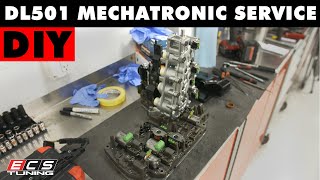
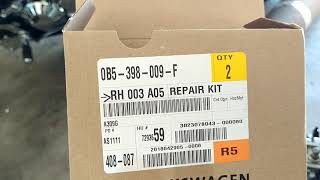
Typical fix: Install a Mechatronics repair kit (e.g., part number 0B5398048D), which replaces the internal circuit boards/sensor modules. This is done by removing the Mechatronics unit from the transmission. 🎬 See how to install the repair kit on the circuit board.
Est. part cost: $400-$800 - Contaminated or Low Transmission Fluid ⚪ Low Probability → Shop Transmission Assembly The DL501 has two separate oil circuits; one for the hydraulic Mechatronics and clutches, and another for the mechanical gearset. Debris from clutch wear can contaminate the Mechatronics fluid and interfere with magnetic speed sensors or clog solenoid valves. While less common as a root cause for a specific circuit fault, poor fluid condition can accelerate wear and cause shifting problems.
How to confirm: Check the transmission fluid (ATF) level and condition during service. If the fluid is dark, burnt-smelling, or contains excessive metallic particles, it indicates a problem. However, this is more often a symptom of wear rather than the direct cause of the P2765 electronic fault.
Typical fix: Perform a transmission fluid and filter service. If this code is already present, a fluid change alone is highly unlikely to fix it, as the electronic components on the circuit board have already failed.
Est. part cost: $200-$350
Rare But Worth Checking
- Damaged External Wiring Harness: While the fault is almost always internal to the Mechatronics unit, the external wiring harness leading to the transmission can be damaged by road debris or improper service. This should be visually inspected before condemning the Mechatronics unit.
- Failed Transmission Control Module (TCM): → Shop Transmission Assembly In very rare cases, the main processing part of the TCM itself can fail. However, the sensor circuit board is far more likely to be the culprit. The repair kit includes the circuit boards, which are technically part of the overall TCM assembly.
Diagnosis Steps
- Read fault codes using an Audi-specific diagnostic tool (like VCDS) to confirm P2765 and check for any other related transmission codes listed in TSB 2032211.
- Check the transmission fluid level and condition. Ensure it is at the correct level and does not appear burnt or heavily contaminated.
- Perform a thorough visual inspection of the transmission's external wiring harness and main connector for any signs of damage, corrosion, or loose connections.
- If external checks pass, the fault is almost certainly internal to the Mechatronics unit.
- The next step is to remove the transmission oil pan to access and remove the Mechatronics unit for repair. This is an advanced procedure.
- Once removed, the internal circuit boards and sometimes solenoids are replaced using a repair kit.
- After reinstallation, the transmission fluid must be refilled to the correct level. A basic settings/adaptation procedure must then be performed with a diagnostic tool. This includes a clutch valve calibration and distance sensor adaptation to ensure proper shifting. 🎬 Watch how to perform the final VCDS adaptation and calibration.
Parts You'll Likely Need
- Mechatronics Repair Kit
(OEM #0B5398048D (supersedes 0B5398048C))— This is the direct fix for the P2765 code, as it contains the new circuit boards with the integrated input speed sensors that have failed. The latest version of the kit should be used.
Trusted brands: Audi Genuine, BorgWarner (OEM supplier), Vemo
OEM price range: $600-$800
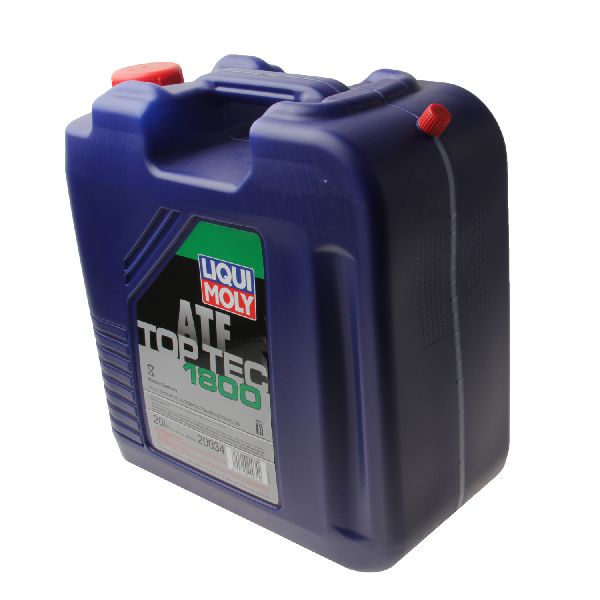
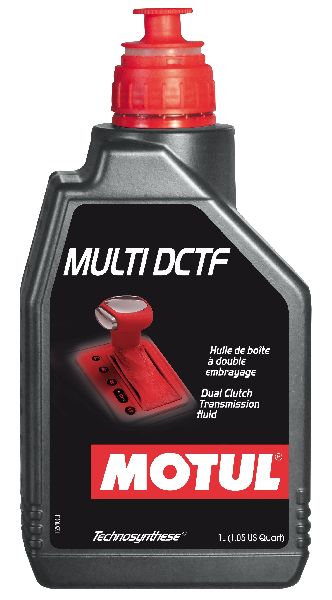
Aftermarket price range: $400-$600 - S-Tronic (DSG) Transmission Fluid and Filter Kit — The transmission fluid must be drained to perform the repair and should be replaced with new fluid and a new filter as part of the service. The DL501 has both an ATF filter and an MTF filter.
Trusted brands: Audi Genuine, Liqui Moly, Motul, FCP Euro Kit
OEM price range: $250-$350
Aftermarket price range: $150-$250
Related Codes That Often Appear With This One
- P0716 — This is for 'Input/Turbine Speed Sensor 'A' Circuit Range/Performance'. Since both sensors 'A' and 'B' are on the same circuit board assembly, they often fail together.
- P179E — This code for 'Drive position sensor electrical error' is also part of the same sensor module and is frequently logged alongside speed sensor faults, as detailed in Audi's TSB.
- P179F — Relates to a 'Drive position sensor malfunction' and points to the same internal Mechatronics sensor board failure.
- P17D8 — Indicates 'Torque Limitation Due To Clutch Temperature'. This can be a symptom of the Mechatronics board failing, as the TCM can no longer properly monitor and control the clutches.
Technical Service Bulletins (TSBs) & Recalls
- A351619 2032211- (and its later revisions like 2032211/4): This TSB is the primary document for this issue. It describes two scenarios of fault codes. Scenario 2 lists a group of codes including P2765 (Input turbine/speed sensor 'B' circuit) that, when present, point to a faulty internal sensor module. The TSB instructs technicians to replace the sensor module and its wiring loom.
Platform-Specific Known Issues
- The failure of the DL501 (0B5) Mechatronics unit's internal sensor module is a widely recognized issue on the B8/B8.5 S4, S5, and other Audis using this transmission. Audi issued Technical Service Bulletin (TSB) 2032211, which has been revised multiple times, that lists P2765 as one of several codes pointing to a failure of the internal sensor module (G676).
- Owner experiences on forums like AudiWorld and Audizine are numerous. A common story involves a dealer quoting a $14,000 transmission replacement, while an independent shop correctly diagnoses the need for the ~$800 Mechatronics repair kit, solving the issue for a fraction of the cost.
Mechanic-Grade Diagnostic Values
- Input Speed Sensor Resistance/Voltage — expected: Not applicable. The sensors are Hall effect types integrated into a circuit board.. Failure: These sensors cannot be tested individually with a multimeter for resistance or voltage. Diagnosis is made based on the presence of fault code P2765 and related codes after confirming external wiring is intact.
- Solenoid Resistance (Mechatronics Unit) — expected: Solenoids of the same type should have matching resistance values. For example, the two large shift fork solenoids should both read around 13.1 Ohms, and the two main pressure solenoids should both read around 4.7 Ohms.. Failure: A significant deviation in resistance between two identical solenoids (e.g., one reads 7 Ohms and the other reads 20 Ohms) indicates a faulty solenoid. However, this is a separate issue from the P2765 sensor circuit fault, which is on the PCB.
Hidden / Shadow Codes Worth Checking
- DFCC 8095, 8104: Diagnostic Fault Code Counters (DFCC) are sub-codes visible on dealer-level scanners that accompany the main DTC. For P2765, the NHTSA TSB specifically calls out DFCC 8095 and 8104 as indicators pointing to the internal sensor module failure. (see via Audi-specific diagnostic tools like ODIS (dealer tool) or advanced modes in VCDS.)
Scan Tool Commands That Help
- VCDS (VAG-COM) or OBDeleven: Basic Settings & Adaptation — This procedure is mandatory after replacing the Mechatronics repair kit to ensure the new components are calibrated. The key steps, performed in the '02 - Auto Trans' controller, include: 1. Erase counter for start and stop processes. 2. Clutch valve calibration. 3. Distance sensor calibration. This is followed by a specific adaptation drive cycle. Failure to perform this can result in harsh shifting, incorrect gear engagement, or persistent fault codes even with new parts.
Wiring & Ground Locations
- T16o Connector — The main 16-pin round electrical connector on the side of the DL501 transmission case.. This is the primary interface between the car's wiring harness and the internal Mechatronics unit. While a visual inspection for corrosion or damage is crucial, you cannot test the input speed sensor 'B' directly from these pins. The sensor is internal to the Mechatronics and communicates with the internal TCM; the T16o connector primarily carries CAN bus communication and power/ground for the entire unit, not individual sensor signals.
Real Owner Repair Stories
- Reddit user in r/AudiS4 (2011 Audi S4, 64k miles) — Standard Mechatronics failure symptoms and codes.
❌ Tried (didn't work) Initial quotes from two independent shops were $7,500, likely for a full Mechatronics unit replacement.
✅ What actually fixed it The owner found a local shop that was willing to disassemble the Mechatronics unit and install the repair kit. The final cost was $2,500, and the car ran perfectly afterward. - Audizine Forum User (2013 Audi S4 (B8.5), 78k miles) — "Gearbox Malfunction" warning, limp mode, and fault codes P2765 and P179F.
❌ Tried (didn't work) A fluid and filter change is often attempted but does not resolve the electronic failure of the circuit board.
✅ What actually fixed it The confirmed fix was the installation of the Mechatronics repair kit (0B5398048D). The owner emphasized the importance of finding a shop that knows about the repair kit to avoid an unnecessary and expensive full Mechatronics unit replacement.
OEM Part Supersession History
0B5398048A / 0B5398048C→0B5398048D— The earlier versions of the repair kit were prone to the same heat and vibration-related failures. The 'D' revision features improved circuit boards and wiring materials for greater durability and longevity.
Heads up: Always use the latest available revision (currently 'D') for the repair. While older kits may fit, they are susceptible to the original design flaw.
Model Year Variations Within This Range
- 2010-2012 (B8) vs. 2013-2014 (B8.5): The B8.5 facelift models (2013+) received software updates for the Mechatronics and some forum users suggest the hardware was incrementally improved, making failure slightly less common than on early B8 models. However, the fundamental design and failure point remain the same, and the P2765 code with the same repair procedure applies to both generations within this range.
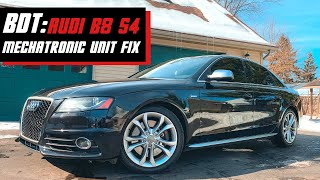
Helpful Videos

We Have This Part in Stock





The information in this article is provided for general reference and educational purposes only. Vehicle specifications, procedures, and part compatibility can vary by production date, trim level, and region. Always consult your vehicle's factory service manual and verify part numbers before purchasing or performing repairs. Safety-critical components such as airbags, seat belts, and braking systems should be installed by a qualified professional.
- Audi S4:
- 🧭 Diagnostic Flowchart
- 🎬 Helpful Videos
- 🛍️ Shop This Part
- What's Unique About the 2010-2014 Audi S4
- Symptoms You May Notice
- Most Likely Causes
- Rare But Worth Checking
- Diagnosis Steps
- Parts You'll Likely Need
- Related Codes That Often Appear With This One
- Technical Service Bulletins (TSBs) & Recalls
- Platform-Specific Known Issues
- Mechanic-Grade Diagnostic Values
- Hidden / Shadow Codes Worth Checking
- Scan Tool Commands That Help
- Wiring & Ground Locations
- Real Owner Repair Stories
- OEM Part Supersession History
- Model Year Variations Within This Range
- 🎟️ Get 5% Off