

OBD-II Code P2767: Input/Turbine Speed Sensor 'B' Circuit No Signal
The Ultimate Guide: What P2767 means, why it triggers, and how to fix it for good
- Code P2767 indicates a complete signal loss from the transmission's Input Speed Sensor 'B', instantly forcing the vehicle into a sluggish, single-gear 'limp mode'.
- On heavily affected brands like Mercedes, Dodge, Subaru, and Nissan, this code almost always requires replacing the internal conductor plate or valve body, costing between $1,200 and $2,500.
- Driving in limp mode forces high engine RPMs that can overheat and destroy your catalytic converter within 1 to 2 months, adding up to $3,000 in secondary repair costs.
- Always test the external wiring harness for a 5.0V reference and ground before buying parts; a $50 corroded wire repair frequently resolves the issue without replacing expensive sensors.
What Does P2767 Mean?

The Powertrain Control Module (PCM) lost the signal from the transmission's Input Speed Sensor 'B'. This sensor tracks the input shaft's rotational speed, dictating smooth gear shifts. Without this data, the computer cannot command shifts and triggers limp mode to prevent catastrophic internal damage.
Technical definition: SAE/OBD-II defines P2767 as "Input/Turbine Speed Sensor 'B' Circuit No Signal." The PCM or Transmission Control Module (TCM) detects zero voltage or a static 0 RPM reading from the secondary input speed sensor while the vehicle is moving. This total signal loss prevents the computer from verifying gear ratios and torque converter lockup.
Can I Drive With P2767?
Yes, But With Caution. You can drive short distances, but it is highly unsafe. The transmission locks into a single gear (limp mode), causing dangerously slow acceleration and high RPMs. Continuing to drive forces the engine to run inefficiently, which overheats the transmission and dumps unburnt fuel into the exhaust, destroying the catalytic converter—a $1,000 to $3,000 secondary repair.
Common Causes

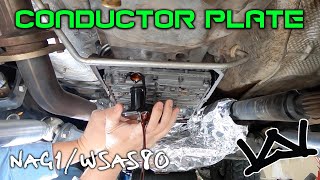
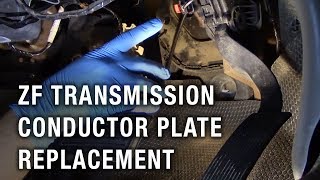
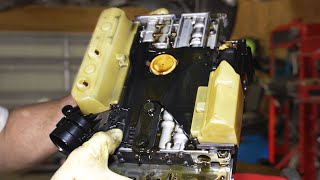
- Failed Transmission Conductor Plate or Valve Body (Very Common) — On Mercedes, Dodge, Subaru, and Nissan vehicles, this sensor is permanently integrated into the internal conductor plate or valve body. A cracked circuit inside this assembly severs the signal, requiring replacement of the entire unit.
- Damaged Wiring or Corroded Connectors (Common) — Exposed wiring harnesses chafe, melt against exhaust pipes, or break internally. Connectors fill with moisture or road salt, creating corrosion that blocks the 5-volt reference signal.
- Faulty External Input Speed Sensor 'B' (Common) — On vehicles with externally mounted sensors, the internal electronics simply burn out over time due to heat and vibration, ceasing to generate a signal.
- Excessive Metal Debris on Sensor Magnet (Less Common) — The sensor uses a magnetic tip. Severe internal transmission wear creates metallic shavings that coat the magnet, physically blocking it from reading the reluctor wheel.
- Poor Electrical Ground (Less Common) — A corroded or loose ground wire at the TCM or transmission case causes a floating voltage, interpreted by the computer as a dead signal.
- Damaged Reluctor Ring (Rare) — The internal toothed ring the sensor reads can warp from extreme heat or suffer broken teeth, leaving the sensor with nothing to measure.
- Faulty Transmission Control Module (TCM) (Rare) — The internal driver circuit inside the TCM that receives and processes the sensor signal burns out, requiring module replacement and reprogramming.
Symptoms

- Harsh or Delayed Shifting — The transmission slams into gear with a violent jolt or hesitates for several seconds before engaging.
- Fails to Engage Drive or Reverse — The vehicle refuses to move from Park, effectively stranding the driver.
- Engine Stalls When Stopping — The torque converter fails to disengage as you slow down, dragging the engine RPM down until it stalls.
- Erratic Speedometer — The speedometer needle bounces or drops to zero intermittently if the system uses input data for cross-referencing.
- Check Engine Light & Limp Mode (also visible on scanner) — The Check Engine Light illuminates and the transmission locks into 2nd or 3rd gear, causing sluggish acceleration and high cruising RPMs.
Diagnostic Flowchart

Tap your situation to follow the diagnostic path that matches what you're seeing on this code.
Common Fixes & Costs
- Replace Transmission Conductor Plate
— Parts: $150-$450, Labor: $400-$1,300, ~5 hr book time
(Professional)
: OEM 1402701161 (Alt: Vemo V30-72-0169, Dorman 917-679)
: OEM 52108308AC (Alt: Dorman 917-678) - Replace Transmission Valve Body Assembly
— Parts: $800-$1,500, Labor: $400-$1,000, ~6 hr book time
(Professional)
: OEM 31825AA050 (Alt: Remanufactured OEM units)
: OEM 31705-1XF0B (Alt: Remanufactured units) - Repair or Replace Damaged Wiring/Connector — Parts: $10-$50, Labor: $80-$200, ~1.5 hr book time (Intermediate)
- Replace External Input/Turbine Speed Sensor 'B' — Parts: $40-$120, Labor: $100-$250, ~1.5 hr book time (Intermediate)
- Replace Transmission Control Module (TCM) — Parts: $600-$1,200, Labor: $200-$400, ~2.5 hr book time (Professional)
Used vs. New Parts: Buying Guide
When a used part is worth it: Used OEM parts are acceptable for external sensors on older vehicles. Never use junkyard internal conductor plates or valve bodies; buy professionally remanufactured units.
Donor-vehicle mileage cap: roughly under 60000 miles for the part to have meaningful remaining life.
Donor quality checklist:
- Verify exact part numbers; internal electronics rarely interchange between years.
- Choose remanufactured suppliers offering robust warranties.
- Avoid parts from flood-damaged vehicles.
Decision logic:
- If The part is an external sensor and the vehicle is over 10 years old → A used OEM sensor is a viable, low-cost option.
- If The part is an internal conductor plate or a valve body → Buy a new OEM or high-quality remanufactured part. Labor costs are too high to risk junkyard parts.
Warranty tradeoff: Used parts offer 30-90 day warranties covering only the part. Remanufactured parts offer 1-3 year warranties that often include limited labor coverage.
Worst-case if a used part fails: 800-1500. The cost of repeating labor-intensive internal repairs if a used part fails.
What Happens If You Wait — Timeline
- Immediate (First Drive): Check Engine Light illuminates. Transmission enters limp mode, locking into a single gear. Acceleration is dangerously slow. (MPG impact: 10-25%% · Added cost: $0)
- 1-2 months of continued driving: Sustained high-RPM driving overheats the exhaust. The catalytic converter substrate melts and clogs from excessive heat and unburnt fuel. (MPG impact: 15-30%% · Added cost: $1,000-$3,000 (Catalytic converter replacement).)
- 2-4 months of continued driving: Harsh shifting destroys clutches and bands. Fluid breaks down completely, losing lubricating properties. Internal seals fail. (MPG impact: 20-40%% · Added cost: $1,500-$4,000 (Internal transmission damage beyond the initial electronic fault).)
- 4+ months of continued driving: Catastrophic transmission failure. Clutches burn out, the valve body warps, and the vehicle refuses to move. A full rebuild is required. (MPG impact: N/A (Vehicle undrivable)% · Added cost: $3,500-$8,000+ (Complete transmission replacement).)
Cost of Not Fixing It
- Immediate: Unsafe driving conditions due to limp mode, poor acceleration, and harsh shifting. MPG drops 10-25%. (Added cost: 0)
- 1-3 months: High-RPM driving in limp mode overheats and destroys the catalytic converter's precious metal substrate. (Added cost: 1000-3000)
- 3-6+ months: Catastrophic transmission damage. Harsh shifting destroys clutch packs, requiring a full transmission replacement. (Added cost: 3500-8000)
Diagnosis Steps
- Read Trouble Codes
Use an OBD-II scanner to confirm P2767. Record codes like P0700, P0717, or P2784, which indicate broader TCM or dual-sensor faults.
Tools: OBD-II Scanner (Beginner) - Analyze Live Scan Tool Data
Monitor the 'Input Speed Sensor B' PID while driving. A reading of 0 RPM confirms the hard 'No Signal' fault.
Tools: Advanced Scan Tool (Intermediate) - Check Transmission Fluid
Verify fluid level and condition. Dark fluid with metal chunks indicates a mechanical failure that destroyed the sensor, requiring a rebuild.
Tools: Rag, Dipstick (if equipped) (Beginner) - Visually Inspect Wiring and Connectors
Trace the harness from the transmission to the TCM. Look for melted wires or unplug the connector to check for green corrosion and pushed-out pins.
Tools: Flashlight (Intermediate) - Test the Sensor's Circuit (Voltage & Ground)
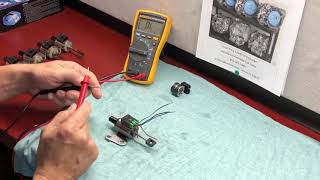
With ignition ON (engine OFF), probe the harness connector. Verify a 5.0V reference signal and a ground reading under 0.5 Ohms. Missing voltage points to a wiring or TCM fault.
Tools: Multimeter (Advanced) - Perform a 'Wiggle Test'
Watch live sensor data while vigorously wiggling the harness. If the RPM reading flickers, locate and repair the intermittent wire break.
Tools: Advanced Scan Tool (Intermediate) - Inspect Sensor for Debris
Remove external sensors and check the magnetic tip for metal shavings. Test internal resistance; infinite resistance (OL) confirms a dead sensor.
Tools: Socket Set, Multimeter, Rags (Advanced) - Analyze Sensor Waveform
Back-probe the signal wire with an oscilloscope. A flat 0V line while wheels turn definitively proves the sensor is dead.
Tools: Oscilloscope, Back-probe Pins (Advanced) - Inspect Valve Body / Conductor Plate
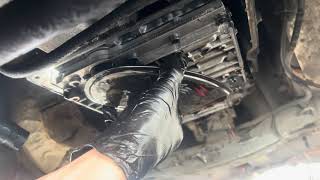
If external wiring tests perfect on a Mercedes, Subaru, or Nissan, drop the transmission pan to replace the internal conductor plate or valve body.
Tools: Socket Set, Drain Pan, Torque Wrench (Professional)
When This Code Triggers (Freeze-Frame Conditions)
- Engine Coolant Temp: 180-210°F (Vehicle is at full operating temperature.)
- Vehicle Speed: 25-55 mph (Vehicle is in motion, in gear, and not in park or neutral.)
- Engine RPM: 1500-3000 RPM (During cruise or light to moderate acceleration.)
- Input Speed Sensor 'B' RPM: 0 RPM (The TCM expects a signal correlated to engine speed but receives none.)
Related Codes
- P0700 — A generic 'messenger' code from the TCM telling the PCM to illuminate the Check Engine Light. Always appears alongside P2767.
- P2765, P2766, P2768 — Relate to the same Sensor 'B' circuit. P2766 means erratic signal. P2768 means intermittent signal. P2767 means total signal loss.
- P0717 — The 'No Signal' code for Input Sensor 'A'. Seeing both P0717 and P2767 suggests a failed TCM or severed wiring harness.
- P2784 — Indicates signals from Sensor 'A' and 'B' do not match. A dead Sensor 'B' (P2767) directly causes this correlation fault.
Climate & Environmental Factors
- Road Salt / Humidity: Heavy road salt and humidity penetrate connector seals, causing green corrosion that blocks the 5-volt sensor signal.
- Extreme Temperatures: Extreme exhaust heat melts wire insulation, causing short circuits. Extreme cold makes wiring brittle, leading to open circuits.
How to Talk to a Mechanic About This Code
Say this: "I have a P2767 code and the car is in limp mode. Based on my vehicle, the issue is likely the sensor, wiring, or an internal component like the conductor plate. Can you tell me your diagnostic fee to pinpoint the electrical fault?"
Signals you understand the code's meaning, focusing the conversation on diagnosis rather than open-ended repair. It prevents shops from immediately quoting a full transmission replacement.
Avoid saying:
- 'My car is shifting funny, can you fix it?' (Invites expensive guesswork).
- 'I got a transmission code, just replace the sensor.' (You haven't confirmed the sensor is the problem).
- 'Just do whatever it takes to fix it.' (A blank check for unnecessary repairs).
Questions to ask before authorizing the repair:
- Did you confirm with a scan tool that Input Speed Sensor 'B' reads zero RPM while driving?
- Did you test the wiring harness for power, ground, and signal continuity?
- If replacing an internal part, what tests ruled out an external wiring issue?
- Will the new part be OEM or remanufactured, and what is the warranty?
- Does this repair require special programming or adaptation relearns?
Where to Take It: Dealer vs Independent vs Chain
- Dealer:
Necessary for programming-heavy repairs or warranty work. Otherwise, use an independent specialist.
Best for: Vehicles under powertrain warranty (Subaru, Ford)., Mercedes-Benz 722.9 transmissions requiring dealer-level programming., Complex CVT repairs requiring factory calibration tools.
Downsides: Highest labor rates., Defaults to replacing entire expensive assemblies rather than targeted repairs. (Typical cost: +50% vs. baseline) - Independent Shop:
Excellent choice for most P2767 scenarios. Get multiple opinions if a full rebuild is suggested.
Best for: Out-of-warranty Dodge/Chrysler NAG1 or Mercedes 722.6 conductor plate replacements., Diagnosing external wiring or sensor issues., Transmission specialists providing dealer-level expertise at lower costs.
Downsides: Quality varies; vet shops carefully., May lack specialized programming tools for the newest models. (Typical cost: +0% vs. baseline) - Chain Shop:
AVOID for P2767 diagnosis and repair. High risk of misdiagnosis.
Best for: Simple maintenance like oil changes or tires.
Downsides: Technicians lack deep diagnostic experience for complex transmission codes., High pressure to upsell ineffective services like transmission flushes. (Typical cost: -10% vs. baseline)
When to Walk Away From the Repair
Walk away if the transmission repair estimate exceeds 50% of the vehicle's current private-party value.
- Car worth $5000, fix is $2800: Walk away. The repair is 56% of the vehicle's value.
- Car worth $15000, fix is $2500: Fix it. The repair is 17% of the car's value.
- Car worth $3000, fix is $1200: Borderline. The repair is 40% of the value. Get a second opinion.
What Scan Tool You Need for This Code
Minimum: A scanner that reads manufacturer-specific transmission codes and displays live sensor data.
A $20 code reader only shows the P0700 'messenger' code. You must see live RPM data from the TCM to confirm the 'no signal' fault.
Budget: BlueDriver Pro (~$119) — Connects via Bluetooth. Reads TCM codes and displays live sensor PIDs to confirm the 0 RPM fault.
Mid-range: Foxwell NT510 Elite (~$150) — Handheld tool offering brand-specific diagnostics. Graphs live data and performs transmission adaptation relearns required after replacing a valve body.
Professional: Autel MaxiCOM MK808S / MK808Z (~$400-500) — Bidirectional tablet scanner. Provides full system diagnostics and performs critical 'quick learn' procedures for Dodge/Chrysler.
Rent vs buy: Auto parts store rentals lack transmission-specific live data. Buying a capable tool like BlueDriver is essential for accurate diagnosis.
How to Clear the Code After You Fix It
- Use an OBD-II scan tool to clear all fault codes.
- Perform a transmission fluid level check and top-off if necessary.
- Perform a complete OBD-II drive cycle to run readiness monitors.
Drive cycle (~30 minutes): Cold start and idle for 3 minutes. Drive 15 minutes in stop-and-go traffic. Drive 10 minutes at a steady 55-60 mph. Coast to under 20 mph without braking. Cool down completely (6-8 hours).
Readiness monitors affected: Comprehensive Component Monitor, Catalyst Monitor, Evaporative System (EVAP) Monitor
Before emissions retest: drive at least 100 miles to fully set monitors.
Watch out for:
- Disconnecting the battery resets monitors to 'Not Ready', guaranteeing an emissions failure.
- The code returns immediately if the electrical break or mechanical fault remains.
- European vehicles require a factory scan tool to clear transmission adaptation values after repair.
Will This Fail Emissions / State Inspection?
Yes — this code typically fails an OBD-II emissions inspection.
- California: An active P2767 code automatically fails the smog check. All readiness monitors must be 'Ready' post-repair.
- New York: NYS inspections include an OBD-II scan. P2767 causes automatic failure, blocking registration renewal.
- Texas: In emissions-testing counties (Harris, Dallas, Travis), an illuminated Check Engine Light guarantees failure.
Most Commonly Affected Vehicles
- Mercedes-Benz E-Class, C-Class, M-Class, S-Class (722.6 & 722.9) (2004-2015) — Sensors are integrated into the conductor plate. 722.6 plates are non-coded. 722.9 plates (VGS) require dealer programming.
- Dodge / Chrysler / Jeep Charger, 300, Grand Cherokee (NAG1/W5A580) (2005-2014) — Uses the Mercedes 722.6 transmission. The cause is almost always a failed internal conductor plate.
- Subaru Outback, Legacy, Forester, Crosstrek (TR580/TR690) (2010-2019) — Points to a faulty torque converter lock-up solenoid inside the valve body. Subaru extended CVT warranties to 10 years/100k miles.
- Nissan Rogue, Altima, Sentra, Versa (2007-2021) — Strong indicator of a failing Jatco CVT valve body, costing thousands to replace.
- Ford F-150, Expedition, Mustang (10R80) (2017-2023) — TSBs 22-2428 and 23-2058 address harsh shifting caused by sticking valves or CDF clutch drum issues, requiring valve body overhaul.
- Audi A4, A6, Q5 (Multitronic CVT / S-Tronic DCT) (2008-2016) — Sensors are integrated into the mechatronics unit, requiring expensive internal module replacement.
- Honda Accord, Odyssey, Pilot (2005-2012) — Honda speed sensor failures typically trigger P0717 (Sensor 'A'), not P2767, causing DIY diagnostic confusion.
- Chevrolet / GM Silverado, Sierra, Tahoe (4L60-E / 4L80-E) (1999-2013) — The input speed sensor is an external, bolt-on component, making repairs straightforward and inexpensive.
Manufacturer-Specific Notes
- Mercedes-Benz: Sensors are integrated into the conductor plate. On 722.9 transmissions, this plate is a theft-relevant part requiring online dealer programming (VGS-NAG2/NAG3).
- Subaru: Subaru issued TSB 16-102-16R and extended CVT warranties to 10 years/100,000 miles for valve body failures causing this code.
- Nissan: Replacing the valve body or CVT requires a 'Calibration Data Write' procedure using a factory scan tool per NTB12-103H.
- Ford: TSBs 22-2428 and 23-2058 address 10R80 transmission codes caused by sticking valves, requiring main control valve body overhauls.
Real Owner Stories
2008 Mercedes E350 4Matic at 175k miles
Car went into limp mode with gear slipping. A diagnostic scan showed code P2767.
What they tried:
- Paid an independent shop $80 for a STAR diagnostic scan, confirming the conductor plate speed sensor failed.
Outcome: The owner DIY-replaced the conductor plate. They verified their 4Matic had the 722.6 transmission, making the plate a non-coded part. They installed a new plate ($140), connector, fluid, and filter.
Lesson: Confirming your exact transmission model (722.6 vs. 722.9) dictates if the replacement part needs expensive dealer programming. A proper diagnostic scan prevents costly guesswork.
2006 Dodge Charger 5.7L Hemi (NAG1) at 81k miles
Vehicle suddenly entered limp mode stuck in first gear. Codes P2784 and P2767 appeared.
What they tried:
- Replaced both rear wheel speed sensors, but symptoms remained.
- Inspected the transmission wiring harness connector and found no damage.
Outcome: The owner replaced the conductor plate inside the NAG1 transmission, which houses the integrated speed sensors, permanently resolving the limp mode.
Lesson: For Dodge/Chrysler vehicles with the NAG1 transmission, P2767 almost always means a failed conductor plate. Do not waste money on external wheel speed sensors.
2015 Subaru Outback with TR580 CVT at 110k miles
Check engine light illuminated, 'AT OIL TEMP' flashed, and the car shifted harshly with code P2767.
What they tried:
- Contacted the Subaru dealership with their VIN after researching forum advice.
Outcome: The dealer confirmed coverage under Subaru's extended CVT warranty (10 years/100,000 miles, with some extensions). They replaced the entire CVT valve body assembly for free.
Lesson: Always check with a dealer about warranty extensions before paying for CVT repairs. Subaru extended warranties on millions of CVTs specifically for valve body failures.
How to Prevent This Code From Triggering
- Change transmission fluid and filter (Every 30,000 to 60,000 miles) — Clean fluid prevents overheating and removes contaminants that destroy sensitive electronics on the conductor plate. Over 90% of transmission failures stem from fluid breakdown.
- Use exact OEM-specified transmission fluid (Every fluid change) — Modern CVTs require precise frictional properties. Generic fluids cause overheating and premature valve body failure.
- Install an auxiliary transmission cooler (Once, if towing or in hot climates) — Reduces fluid temperatures by 20-50°F, dramatically extending the life of internal electronics and seals.
- Protect the wiring harness (During under-hood maintenance) — Securing the loom away from hot exhaust components prevents melted insulation and short circuits.
Frequently Asked Questions
What are the most common mistakes when diagnosing P2767?
The biggest mistake is replacing an external sensor without testing the wiring harness for power and ground. Technicians frequently find that chafed wires or corroded connectors mimic a dead sensor. Ignoring metal debris in the transmission pan is another error, as it indicates a mechanical failure that will destroy the new part.
I found metal shavings in my transmission pan. Is this a serious problem?
A small amount of fine, metallic paste on the magnet is normal wear. However, larger flakes or chunks indicate a severe internal mechanical failure like a dying clutch pack. This debris will destroy new electronics, requiring a full transmission rebuild rather than a simple sensor swap.
Can a bad sensor cause my car not to start?
It rarely causes a no-start condition. P2767 relates to transmission input speed, not engine crankshaft position. The car will start but immediately enter limp mode with severe driving limitations.
Can I just replace the transmission fluid to fix P2767?
No. P2767 indicates a hard electrical fault or complete signal blockage. Fresh fluid cannot repair a dead sensor, a severed wire, or a cracked conductor plate.
Is the Input Speed Sensor the same as the Vehicle Speed Sensor (VSS)?
No. The Input Speed Sensor measures how fast the engine turns the transmission's input shaft. The Vehicle Speed Sensor (Output Speed Sensor) measures the output shaft speed, which dictates your speedometer reading.
Why is the repair so expensive on some cars?
On brands like Mercedes, Subaru, and Nissan, the sensor is permanently integrated into the internal conductor plate or valve body. You cannot replace just the sensor; you must replace the entire expensive assembly. This requires dropping the transmission pan and often performing dealer-level computer programming.
I cleared the code and it went away. Am I fixed?
No. P2767 is a hard fault caused by a physical electrical break or failed component. The computer will detect the 'no signal' condition as soon as the vehicle moves, immediately triggering the code and limp mode again.
What's the difference between Input Speed Sensor 'A' and 'B'?
Modern transmissions use multiple input speed sensors to monitor different internal gearsets for redundancy. A failure in either causes similar symptoms, but the specific code (P0717 for 'A', P2767 for 'B') pinpoints exactly which circuit has the electrical fault.
Key Takeaways
- Code P2767 indicates a complete signal loss from the transmission's Input Speed Sensor 'B', instantly forcing the vehicle into a sluggish, single-gear 'limp mode'.
- On heavily affected brands like Mercedes, Dodge, Subaru, and Nissan, this code almost always requires replacing the internal conductor plate or valve body, costing between $1,200 and $2,500.
- Driving in limp mode forces high engine RPMs that can overheat and destroy your catalytic converter within 1 to 2 months, adding up to $3,000 in secondary repair costs.
- Always test the external wiring harness for a 5.0V reference and ground before buying parts; a $50 corroded wire repair frequently resolves the issue without replacing expensive sensors.
Helpful Videos

![What is P2767 Engine Code [Quick Guide]](https://img.youtube.com/vi/JV2UlZ6tovY/mqdefault.jpg)



Shop the Parts Behind P2767
Below are the parts most often responsible for code P2767, ranked by how frequently each one is the actual culprit (per the diagnosis above). Tap any to see what we have for your vehicle.



The information in this article is provided for general reference and educational purposes only. Vehicle specifications, procedures, and part compatibility can vary by production date, trim level, and region. Always consult your vehicle's factory service manual and verify part numbers before purchasing or performing repairs. Safety-critical components such as airbags, seat belts, and braking systems should be installed by a qualified professional.
- 🧭 Diagnostic Flowchart
- 🎬 Helpful Videos
- 🛍️ Shop This Part
- What Does P2767 Mean?
- Can I Drive With P2767?
- Common Causes
- Symptoms
- Common Fixes & Costs
- Used vs. New Parts: Buying Guide
- What Happens If You Wait — Timeline
- Cost of Not Fixing It
- Diagnosis Steps
- When This Code Triggers (Freeze-Frame Conditions)
- Related Codes
- Climate & Environmental Factors
- How to Talk to a Mechanic About This Code
- Where to Take It: Dealer vs Independent vs Chain
- When to Walk Away From the Repair
- What Scan Tool You Need for This Code
- How to Clear the Code After You Fix It
- Will This Fail Emissions / State Inspection?
- Most Commonly Affected Vehicles
- Manufacturer-Specific Notes
- Real Owner Stories
- 2008 Mercedes E350 4Matic at 175k miles
- 2006 Dodge Charger 5.7L Hemi (NAG1) at 81k miles
- 2015 Subaru Outback with TR580 CVT at 110k miles
- How to Prevent This Code From Triggering
- Frequently Asked Questions
- What are the most common mistakes when diagnosing P2767?
- I found metal shavings in my transmission pan. Is this a serious problem?
- Can a bad sensor cause my car not to start?
- Can I just replace the transmission fluid to fix P2767?
- Is the Input Speed Sensor the same as the Vehicle Speed Sensor (VSS)?
- Why is the repair so expensive on some cars?
- I cleared the code and it went away. Am I fixed?
- What's the difference between Input Speed Sensor 'A' and 'B'?
- Key Takeaways
- 🎟️ Get 5% Off