

OBD-II Code P2781: Downshift Switch Circuit High
What P2781 means, why it triggers, and how to fix it
- P2781 indicates a 'stuck high' voltage signal in the downshift circuit, which disables manual shifting and forces the transmission into a low-power limp mode.
- Spilled drinks in the center console cause a significant percentage of these faults by shorting the shifter assembly wiring.
- Do not replace the $500+ Transmission Control Module (TCM) until you test the downshift switch for continuity and inspect the harness for 12V shorts.
- Driving over 40 mph while the vehicle is in limp mode overheats the transmission fluid, risking a $3,000+ mechanical rebuild.
What Does P2781 Mean?
P2781 means the Transmission Control Module (TCM) detects a voltage signal from the downshift switch stuck in the 'high' position. This indicates a faulty switch or shorted circuit, disrupting manual, sport, or 'tap-to-shift' gear changes.
Technical definition: The SAE/OBD-II definition is 'Downshift Switch Circuit High'. This indicates the Powertrain Control Module (PCM) or TCM registered a voltage reading from the downshift switch circuit above the manufacturer's specified range. This occurs when the circuit shorts to a power source or loses its ground path.
Can I Drive With P2781?
Yes, But With Caution. You can drive short distances, but immediate repair is necessary. The transmission shifts harshly, fails to downshift, or enters 'limp mode' with severely reduced power, making highway speeds unsafe. Continued driving over 35 mph in limp mode overheats the transmission, destroying internal clutches and seals, adding thousands to repair costs.
Common Causes
- Damaged or Shorted Wiring (Very Common) — Center console wiring is highly vulnerable to spilled drinks, heat, and vibration. Frayed or liquid-damaged wires short to a power source, causing a constant high voltage signal.
- Failed Downshift Switch (Common) — The internal microswitch within the gear shifter assembly or paddle shifter fails mechanically or electrically, preventing it from sending the correct on/off signal.
- Corroded Harness Connections (Common) — Electrical connectors at the switch or TCM loosen or accumulate moisture. Corroded pins disrupt the ground path, forcing the circuit voltage high.
- Outdated TCM Software (Less Common) — The TCM's software misinterprets normal voltage fluctuations as a hard fault. Manufacturers release Technical Service Bulletins (TSBs) with software updates to correct this logic.
- Failed Body Control Module (BCM) (Less Common) — If the downshift signal routes through the BCM, an internal module fault corrupts the signal before it reaches the TCM.
- Contaminated Transmission Fluid (Less Common) — Extremely old or low fluid causes erratic shifting and overheating, triggering secondary electrical faults in the TCM.
- Failed Transmission Control Module (TCM) (Rare) — An internal short or damaged input circuit inside the TCM causes it to read a high voltage signal even when the switch and wiring are perfectly fine.
Symptoms
- Manual Shift Mode Disabled — The 'tap-to-shift' or paddle shifter feature is disabled and ignores driver inputs.
- Vehicle Enters 'Limp Mode' — The computer forces the vehicle into a protective mode with severely limited engine power, locking the transmission in a single gear (usually 2nd or 3rd).
- Harsh or Delayed Downshifts — The transmission slams into a lower gear or hesitates before downshifting, creating a jarring sensation.
- Loss of Engine Braking — When releasing the accelerator on a downhill grade, the vehicle fails to slow down because the transmission does not downshift.
- Check Engine Light or Transmission Warning Light On (also visible on scanner) — An illuminated transmission warning light or Check Engine Light on your dashboard is the primary indicator.
Diagnostic Flowchart
Tap your situation to follow the diagnostic path that matches what you're seeing on this code.
Common Fixes & Costs
- Cleaning Connectors and Applying Dielectric Grease — Parts: $5-$15, Labor: $50-$100, ~0.5 hr book time (Beginner)
- Repairing Damaged Wiring or Connectors — Parts: $20-$80, Labor: $120-$240, ~1.5 hr book time (Intermediate)
- Replacing the Downshift Switch or Shifter Assembly — Parts: $150-$500, Labor: $150-$300, ~2 hr book time (DIY)
- Updating the Transmission Control Module (TCM) Software — Parts: $0, Labor: $100-$250, ~1 hr book time (Professional)
- Replacing the Transmission Control Module (TCM) — Parts: $600-$1200, Labor: $200-$300, ~2 hr book time (Professional)
DIY vs Professional
- Cleaning Connectors and Applying Dielectric Grease — Beginner: Yes
Tools: Socket set, trim removal tools, electrical contact cleaner, dielectric grease. - Repairing Damaged Wiring or Connectors — Beginner: No
Tools: Multimeter, wire strippers, crimpers, soldering iron, heat gun, quality connectors. - Replacing the Downshift Switch (Shifter Assembly) — Beginner: Yes, with caution.
Tools: Trim removal tools, socket set, screwdrivers, Torx bit set. - Updating the Transmission Control Module (TCM) Software — Beginner: No
Tools: Manufacturer-specific scan tool and software subscription. - Replacing the Transmission Control Module (TCM) — Beginner: No
Tools: Socket set, professional scan tool for programming.
Used vs. New Parts: Buying Guide
When a used part is worth it: Buying a used electronic shifter assembly is risky. It only makes sense for vehicles over 15 years old on a strict budget, provided the donor vehicle had low mileage.
Donor-vehicle mileage cap: roughly under 60000 miles for the part to have meaningful remaining life.
Donor quality checklist:
- Match the part number exactly.
- Verify the donor car's VIN history.
- Inspect the connector for corrosion or liquid intrusion.
Decision logic:
- If Vehicle is less than 10 years old OR the new part costs less than $500 → Buy new (OEM or reputable aftermarket). Warranty and reliability outweigh small savings.
- If Vehicle is over 10 years old AND the new part is over $500 → A low-mileage used part from a reputable salvage yard with a 90-day warranty is acceptable.
- If The part is a known high-failure item for your model → Buy a new OEM part. Used units will likely fail the same way.
Warranty tradeoff: Used parts offer 30-90 day part-only warranties. New aftermarket parts offer 1-year to lifetime warranties. New OEM parts offer 1-2 year warranties covering labor if dealer-installed.
Worst-case if a used part fails: $300-$600 if a used shifter fails, requiring a new part and repeated labor.
What Happens If You Wait — Timeline
- 0-2 weeks: Code sets, MIL illuminates. Manual 'tap-shift' function is disabled. Automatic shifting feels normal or slightly harsh. (MPG impact: 0-2%% · Added cost: $0)
- 2 weeks - 3 months: Harsh shifting becomes frequent. The car jolts into lower gears. The TCM intermittently triggers 'limp mode', resetting after a restart. (MPG impact: 3-8%% · Added cost: $50-$150 in wasted fuel and stressed mounts.)
- 3-6 months: Limp mode activates consistently, limiting speed to 40 mph. Continued driving generates excessive heat, breaking down fluid and glazing clutch packs. (MPG impact: 10-20%% · Added cost: $500-$1,500)
- 6+ months: Catastrophic failure. The transmission slips, refuses to engage gears, or grinds. The vehicle is undrivable. (MPG impact: 20%+% · Added cost: $2,500-$6,000+)
Cost of Not Fixing It
- 0-1 month: Harsh shifting, disabled manual mode, and limp mode activation. Noticeable decrease in fuel economy. (Added cost: Negligible)
- 1-6 months: Limp mode puts excessive heat and stress on transmission clutches, seals, and solenoids. Fluid burns, accelerating wear. (Added cost: $500-$1500)
- 6+ months: Catastrophic internal transmission failure requiring a complete rebuild or replacement. (Added cost: $2500-$5000+)
Diagnosis Steps
- Read Diagnostic Trouble Codes (DTCs)
Use an OBD-II scanner to confirm P2781. Check for related transmission, communication (U-codes), or BCM codes. Review freeze-frame data for vehicle speed, RPM, and gear position when the fault occurred.
Tools: OBD-II Scanner (Beginner) - Visually Inspect Wiring and Connectors
Locate the downshift switch on the gear selector assembly. Inspect the wiring harness for chafing, burns, or cracked insulation. Check the connector for corrosion, moisture, or bent pins. Look closely for dried liquid spills in the center console.
Tools: Flashlight, Mirror (Beginner) - Test Circuit Voltage and Ground (Pro Tip)
With the ignition on (engine off), back-probe the signal wire at the downshift switch connector. Voltage should be 5V or 12V unpressed, dropping to near 0V when pressed. A constant high voltage indicates a short to power or an open ground. Test the ground wire for continuity to the chassis (less than 0.1 ohms).
Tools: Multimeter (Intermediate) - Perform a 'Wiggle Test'
While monitoring signal wire voltage with a multimeter, gently wiggle the wiring harness and connector. Fluctuating voltage indicates an intermittent connection or a broken wire requiring repair.
Tools: Multimeter (Intermediate) - Test the Downshift Switch
Disconnect the switch and test its internal resistance. Resistance must change from infinite (open circuit) to near zero ohms (<10 Ω) when activated. If it does not, replace the switch.
Tools: Multimeter (Intermediate) - Check for Wiring Continuity
Disconnect the battery, switch connector, and TCM connector. Check for continuity on the signal wire between the two connectors. Test for a short to power by checking continuity between the signal wire and a known 12V power source (must be an open circuit).
Tools: Multimeter (Intermediate) - Live Data PID Monitoring
Use an advanced scan tool to monitor the downshift switch status (e.g., 'Tap Down Switch'). The value must change from 'Off' to 'On' when operating the shifter. A status stuck at 'On' confirms the computer's reading, isolating the fault to the switch or wiring.
Tools: Advanced OBD-II Scanner (Advanced) - Check for TCM Software Updates
Consult a dealership or repair shop database for Technical Service Bulletins (TSBs) or software updates for the TCM. Updates frequently resolve logic errors causing false codes.
Tools: Professional Scan Tool, Access to Manufacturer Bulletins (Professional) - Analyze with an Oscilloscope
Connect an oscilloscope to the signal wire. A functioning switch shows a clean square wave, dropping from reference voltage to 0V instantly when pressed. A faulty circuit shows a signal stuck high.
Tools: Oscilloscope (Professional) - Advanced Voltage Threshold Analysis
Confirm the exact reference voltage using a service manual. A 'Circuit High' fault sets when the TCM sees voltage consistently above the specified maximum threshold (e.g., >4.8V for a 5V circuit). A reading stuck at reference voltage indicates an open ground; a reading above reference indicates a short to power.
Tools: Multimeter, Vehicle-Specific Service Manual (Advanced)
When This Code Triggers (Freeze-Frame Conditions)
- Engine Coolant Temp: 180-210°F (Sets when the engine is fully warmed up and running for several minutes.)
- RPM: 1200-2500 RPM (Occurs during steady-state cruising or light acceleration/deceleration when a downshift is commanded.)
- Engine Load: 20-50% (Triggers under light to moderate engine load, rarely during heavy acceleration.)
- Vehicle Speed: 25-55 mph (Logged at city or highway cruising speeds during active shifting.)
Related Codes
- P2779 — The opposite code, 'Downshift Switch Circuit Low.' P2781 points to a short to power or open ground, while P2779 suggests a short to ground or broken signal wire.
- P2782 — 'Downshift Switch Circuit Intermittent/Erratic.' Appears when a loose wire, poor pin contact, or failing switch causes unpredictable signal jumps.
- P0705 — 'Transmission Range Sensor Circuit Malfunction.' If the car cannot identify the main gear (P, R, N, D), P0705 is the root cause. If only manual downshifting fails, the issue is isolated to P2781.
- U0404 — 'Invalid Data Received From Gear Shift Control Module.' Seeing this alongside P2781 proves the problem is the shifter assembly or network connection, not a simple wiring short.
Climate & Environmental Factors
- High Humidity / Moisture Exposure: Accelerates corrosion on wiring and connector pins, creating unwanted electrical paths that trigger a 'Circuit High' fault.
- Extreme Cold: Wiring insulation and plastic connectors become brittle, increasing the risk of cracking during diagnosis or repair.
How to Talk to a Mechanic About This Code
Say this: "I have a P2781 'Downshift Switch Circuit High' code and the tap-shift is disabled. Please check the shifter wiring for damage, test the switch itself, and check the connector for corrosion before quoting a new shifter assembly or control module."
This signals you know the most common failures are simple wiring or switch issues. It directs the shop to perform a logical, cost-effective diagnosis instead of jumping to the most expensive conclusion.
Avoid saying:
- 'My transmission is acting weird.'
- 'My check engine light is on, can you look at it?'
- 'Just replace the shifter, I read online that's the problem.'
Questions to ask before authorizing the repair:
- Did you find evidence of a liquid spill or corrosion in the center console?
- Did you test the downshift switch with a multimeter? Does it open and close correctly?
- Did you perform a wiggle test on the harness to check for intermittent shorts or opens?
- If you are recommending a shifter assembly or module, can you show me why the old one failed and why a wiring repair isn't possible?
- What is the warranty on this specific repair, including both parts and labor?
Where to Take It: Dealer vs Independent vs Chain
- Dealer:
Necessary if a software update is the confirmed fix. A good, but expensive, choice for complex module replacement. Otherwise, start elsewhere.
Best for: Vehicles under warranty, Repairs requiring a manufacturer-specific software update, Complex diagnostics on German makes (VW, BMW)
Downsides: Highest labor rates and OEM part costs., Defaults to replacing full assemblies rather than component-level repair. (Typical cost: +50% vs. baseline) - Independent Shop:
Best starting point. An experienced independent technician diagnoses and fixes the most common causes for the lowest cost.
Best for: Initial diagnosis and repair of wiring, connectors, or the switch., Out-of-warranty vehicles where cost is a major factor.
Downsides: Quality varies; choose one with good reviews and ASE certifications., Lacks expensive tools for software updates or module programming. (Typical cost: +0% vs. baseline) - Chain Shop:
Avoid for this code. Electrical and transmission diagnostics require specialized skills not found at chain shops.
Best for: Simple jobs like oil changes and tires.
Downsides: Technicians lack specific electrical diagnostic experience., High pressure to upsell unnecessary services. (Typical cost: -10% vs. baseline)
When to Walk Away From the Repair
If the estimated repair cost is more than 50% of your car's private-party value, seriously consider selling or trading it in.
- Car worth $15000, fix is $750: Fix it. The repair cost is only 5% of the vehicle's value.
- Car worth $5000, fix is $1800: Borderline. The repair cost is 36% of the car's value. Get a second opinion to see if a cheaper fix is possible.
- Car worth $3500, fix is $2200: Walk away. The repair cost is nearly 63% of the car's value. It is not economical to repair.
What Scan Tool You Need for This Code
Minimum: A scanner that reads manufacturer-specific transmission codes and views live data PIDs.
A basic $20 code reader only shows the P2781 code. It cannot show the live status of the downshift switch ('On'/'Off'), which is critical for confirming if the computer's reading matches the physical problem.
Budget: BlueDriver Pro (~$100) — Connects to your smartphone to read freeze-frame data and display live data. It is a good first step but may not access all manufacturer-specific transmission PIDs.
Mid-range: Foxwell NT510 Elite / Autel MaxiCOM MK808S (~$150-350) — Offers deep vehicle system access, including OEM-specific transmission data and bidirectional tests. This allows you to command components and verify functionality.
Professional: Autel MaxiSys Series / Launch X431 Series (~$500-1200+) — Provides full, dealer-level diagnostic functions necessary for replacing and programming a new Transmission Control Module (TCM).
How to Clear the Code After You Fix It
- Use an OBD-II scan tool to erase the DTCs.
- Reconnect the battery if disconnected during repair.
- Perform a complete drive cycle to run readiness monitors.
Drive cycle (~30 minutes): Start the engine cold (coolant below 122°F) and idle for 3 minutes. Drive in mixed city traffic with several stops. Accelerate to 55-60 mph and maintain steady speed for 5 minutes. Decelerate without braking. Repeat.
Readiness monitors affected: Comprehensive Component Monitor, Transmission
Before emissions retest: drive at least 50 miles to fully set monitors.
Watch out for:
- Disconnecting the battery clears the code but erases readiness monitors, causing an automatic emissions failure.
- The code returns immediately if the 'Circuit High' electrical fault remains unaddressed.
- Incomplete drive cycles leave monitors 'not ready'.
Will This Fail Emissions / State Inspection?
Yes — this code typically fails an OBD-II emissions inspection.
- California: An active Check Engine Light for a transmission code is an automatic smog check failure. You must complete a drive cycle after repair.
- New York: Any code illuminating the Check Engine Light, including P2781, results in a failed NYS DMV inspection.
- Texas: A transmission-related DTC turning on the MIL causes an automatic failure in the OBD portion of the inspection.
Most Commonly Affected Vehicles
- Ford F-150 (2014-2017) — Subject to TSBs for sudden downshifting and electrical faults requiring PCM software updates or lead frame replacement.
- Dodge Ram 1500 (2014-2018) — Prone to electronic transmission faults. Rotary dial shifter or TCM issues cause circuit voltage codes and limp mode.
- Jeep Grand Cherokee (2014-2015) — Part of a major recall for electronic 'monostable' shifters. Internal failures trigger P2781, requiring a $300+ replacement assembly.
- Chrysler 300 (2012-2014) — Shares the problematic 'monostable' shifter design with the Grand Cherokee, making it susceptible to internal failures.
- Chevrolet Silverado 1500 (2015-2019) — Known for hard shifting linked to electrical faults requiring TCM software updates.
- BMW 3-Series (E46) (1998-2006) — Faulty camshaft position sensors disrupt module communication, triggering false transmission codes.
- Volkswagen Jetta, Golf (2006-2015) — DSG transmissions experience this fault due to mechatronic unit failures or shifter microswitch wiring issues.
- Hyundai Sonata, Elantra (2011-2019) — Transmission wiring harness or internal sensor failures manifest as circuit-related codes including P2781.
Manufacturer-Specific Notes
- Ford: Ford issues PCM software updates (like TSB 18-2273) to prevent false downshift codes and harsh shifting caused by intermittent sensor signals.
- General Motors (Chevrolet/GMC): GM frequently releases TCM software calibrations to address harsh shifting. A software update is the mandatory first step before replacing parts.
- Chrysler/Dodge/Jeep: The 2012-2015 'monostable' shifters are a known failure point subject to safety recalls. The internal switch mechanisms fail frequently, requiring complete shifter replacement.
- Volkswagen/Audi: DSG shifter assemblies contain multiple microswitches. Failure of the Tiptronic downshift microswitch requires replacing the shifter assembly or mechatronic unit.
Real Owner Stories
2016 Jeep Grand Cherokee at 75K miles
Check engine light illuminated, all gear selector lights (P, R, N, D) lit up simultaneously, and manual shift mode disabled.
What they tried:
- Received a $1,000+ shop quote to replace the shifter assembly.
- Attempted a DIY cleaning based on online research.
Outcome: The owner disassembled the Electronic Shift Module (ESM) and found conductive graphite dust shorting the contacts. Cleaning the circuit board with contact cleaner solved the problem for under $10.
Lesson: Before replacing an expensive Jeep/Chrysler shifter assembly, attempt to clean the internal circuit board. Conductive dust or minor spills frequently cause false shorts.
2010 VW Jetta with DSG Transmission
The PRNDS indicator flashed, the car intermittently dropped into neutral, and a 30-amp transmission fuse repeatedly blew.
What they tried:
- Diagnosed with a short to ground inside the transmission.
- Searched for VW Technical Service Bulletins (TSBs).
Outcome: The short was inside the DSG mechatronic unit. Instead of a $2,000 replacement, the owner used an affordable VW repair kit with an external switch to bypass the faulty internal wiring.
Lesson: Always check for TSBs on VW/Audi DSG transmissions. Manufacturers often release inexpensive repair kits for widespread internal wiring faults.
2017 BMW with coffee spilled in console
Spilled coffee on the center console triggered a drivetrain malfunction message and disabled console buttons.
What they tried:
- Took the car to the dealership after error messages appeared.
Outcome: The liquid shorted the center console control module. The dealership replaced the entire module for $2,800, which was not covered by warranty.
Lesson: Liquid spills near center console electronics cause catastrophic module failure. If a spill occurs, do not turn on the ignition until the area is disassembled and thoroughly dried.
How to Prevent This Code From Triggering
- Apply dielectric grease to electrical connectors (Whenever a connector is disconnected for service) — Dielectric grease seals out moisture and dirt, preventing pin corrosion that causes high resistance and circuit faults.
- Use only sealed beverage containers in the car (Daily habit) — Circuit boards are located directly under cupholders. A single spill causes thousands of dollars in module damage.
- Perform a transmission fluid and filter change (Every 30,000-60,000 miles) — Clean fluid prevents overheating, which stresses electronic components and sensors within the transmission.
- Allow the vehicle to warm up for 30-60 seconds before driving in cold weather (On cold start-ups) — Warming the engine allows fluid to circulate, lubricating moving parts and stabilizing sensor temperatures.
- Regularly clean the center console area (Monthly) — Prevents dust and debris from working into the shifter mechanism and interfering with switch contacts.
Frequently Asked Questions
What is a downshift switch?
The downshift switch is a momentary button in your gear shifter or paddle shifter that tells the transmission computer to manually shift to a lower gear.
What are the most common misdiagnosis mistakes for P2781?
The biggest mistake is replacing the entire shifter assembly without testing the circuit for simple wiring damage or liquid spill corrosion. Technicians also frequently overlook the Body Control Module (BCM) as a potential failure point. Always scan for all DTCs, as unrelated engine faults trigger this code on some vehicles.
Can a bad battery cause a P2781 code?
Yes, a failing battery or alternator causes low system voltage that confuses control modules. This leads the TCM to set erroneous circuit codes. Test the battery and charging system first if multiple electrical codes are present.
Can I fix P2781 myself?
Yes, if the issue is an accessible damaged wire or a dirty switch in the center console. However, tracing wires to the TCM or performing software updates requires a professional.
Will clearing the code fix the problem?
No. P2781 indicates a hard electrical fault, so the code returns immediately when the computer runs its self-test.
Why did my car go into 'limp mode'?
Limp mode is a safety feature that limits engine power and gear selection to prevent catastrophic mechanical damage to the transmission.
How much does it cost to diagnose the P2781 code?
Most repair shops charge a standard diagnostic fee between $120 and $180 to scan codes, review data, and perform initial electrical tests.
What does 'Circuit High' actually mean?
'Circuit High' means the control module sees a higher voltage than expected. The module expects near zero volts when the switch is pressed. A 'high' fault means the voltage is stuck at the 5V or 12V reference level, indicating a short to power or an open ground.
Key Takeaways
- P2781 indicates a 'stuck high' voltage signal in the downshift circuit, which disables manual shifting and forces the transmission into a low-power limp mode.
- Spilled drinks in the center console cause a significant percentage of these faults by shorting the shifter assembly wiring.
- Do not replace the $500+ Transmission Control Module (TCM) until you test the downshift switch for continuity and inspect the harness for 12V shorts.
- Driving over 40 mph while the vehicle is in limp mode overheats the transmission fluid, risking a $3,000+ mechanical rebuild.
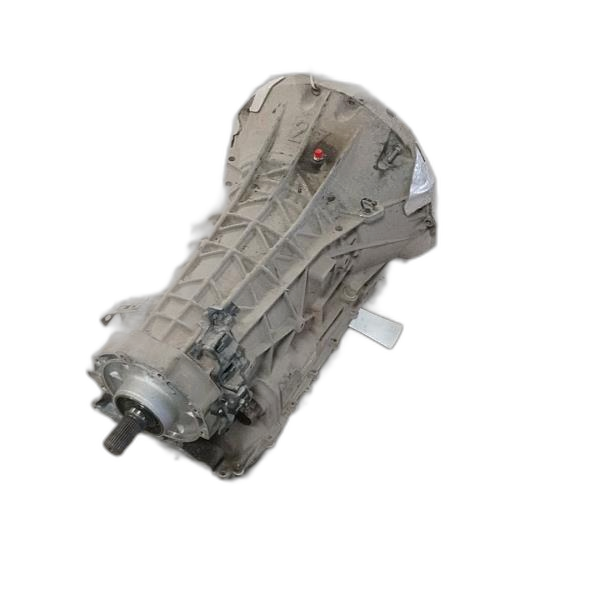
Shop the Parts Behind P2781
Below are the parts most often responsible for code P2781, ranked by how frequently each one is the actual culprit (per the diagnosis above). Tap any to see what we have for your vehicle.


The information in this article is provided for general reference and educational purposes only. Vehicle specifications, procedures, and part compatibility can vary by production date, trim level, and region. Always consult your vehicle's factory service manual and verify part numbers before purchasing or performing repairs. Safety-critical components such as airbags, seat belts, and braking systems should be installed by a qualified professional.
- 🧭 Diagnostic Flowchart
- 🛍️ Shop This Part
- What Does P2781 Mean?
- Can I Drive With P2781?
- Common Causes
- Symptoms
- Common Fixes & Costs
- DIY vs Professional
- Used vs. New Parts: Buying Guide
- What Happens If You Wait — Timeline
- Cost of Not Fixing It
- Diagnosis Steps
- When This Code Triggers (Freeze-Frame Conditions)
- Related Codes
- Climate & Environmental Factors
- How to Talk to a Mechanic About This Code
- Where to Take It: Dealer vs Independent vs Chain
- When to Walk Away From the Repair
- What Scan Tool You Need for This Code
- How to Clear the Code After You Fix It
- Will This Fail Emissions / State Inspection?
- Most Commonly Affected Vehicles
- Manufacturer-Specific Notes
- Real Owner Stories
- 2016 Jeep Grand Cherokee at 75K miles
- 2010 VW Jetta with DSG Transmission
- 2017 BMW with coffee spilled in console
- How to Prevent This Code From Triggering
- Frequently Asked Questions
- What is a downshift switch?
- What are the most common misdiagnosis mistakes for P2781?
- Can a bad battery cause a P2781 code?
- Can I fix P2781 myself?
- Will clearing the code fix the problem?
- Why did my car go into 'limp mode'?
- How much does it cost to diagnose the P2781 code?
- What does 'Circuit High' actually mean?
- Key Takeaways
- 🎟️ Get 5% Off