

OBD-II Code P2796: Auxiliary Transmission Fluid Pump Control Circuit/Open
What P2796 means, why it triggers, and how to fix it
- P2796 indicates an open electrical circuit in the auxiliary transmission fluid pump, which disables the auto start-stop system and causes harsh shifting.
- Inspect the exposed wiring harness and underbody connectors first, as shattered $25 plastic pigtails on Ford Escapes and F-150s are the leading cause of this code.
- Check for manufacturer software updates before replacing hardware; 2022-2024 Ford F-150s frequently trigger false P2796 codes in temperatures below 32°F.
- Do not drive with this code for more than a few days; the lack of hydraulic pressure during gear engagement causes clutch wear that escalates into a $3,000+ transmission rebuild.
What Does P2796 Mean?
The Powertrain Control Module (PCM) or Transmission Control Module (TCM) detects an electrical break in the auxiliary transmission fluid pump circuit. This electric pump stabilizes hydraulic pressure when the engine shuts off in vehicles with auto start-stop. Code P2796 means the computer cannot command the pump on or off due to an open circuit.
Technical definition: The official SAE/OBD-II definition is "Auxiliary Transmission Fluid Pump Control Circuit/Open". This indicates the Transmission Control Module (TCM) or Powertrain Control Module (PCM) detects a loss of electrical continuity (an open circuit) in the wiring that controls the auxiliary transmission fluid pump.
Can I Drive With P2796?
Yes, But With Caution. You can drive, but extended use is strongly discouraged. The auto start-stop feature disables, causing harsh or delayed gear engagement from a stop. This lack of hydraulic pressure strains transmission clutches, accelerating wear. Ignoring this turns a sub-$500 pump repair into a $3,000+ transmission rebuild. Some GM models experience sudden 'Reduced Propulsion Power' messages, creating severe safety risks in traffic.
Common Causes
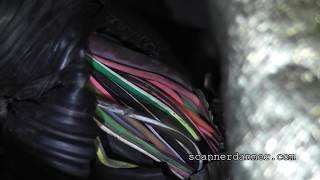
- Damaged Wiring or Connectors (Very Common) — The wiring harness leading to the auxiliary pump is often exposed under the vehicle. Wires fray, break, or corrode, and road debris shatters plastic connectors, interrupting the electrical signal. This is the primary cause on Ford Escapes and F-150s missing their underbody shields.
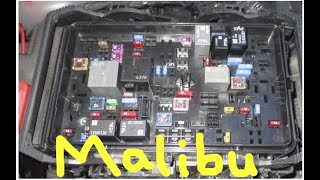
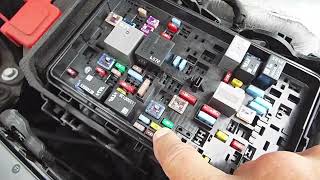
- Blown Fuse or Faulty Relay (Common) — The circuit is protected by a fuse that blows to cut off power during a surge. In some vehicles, a specific relay controls the pump and fails. On Chevy Malibus, a missing 20-amp fuse in an instrument panel slot labeled 'Not Used' is a known cause. 🎬 See this video to locate the Chevy Malibu fuse boxes.
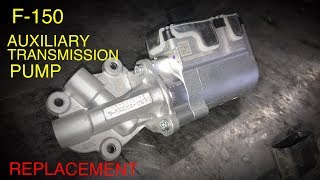
- Faulty Auxiliary Transmission Fluid Pump (Common) — The electric motor inside the pump fails internally from wear or an electrical short. This prevents it from running even when receiving power, causing the computer to report an open circuit. This is the most frequent hardware failure on GM models.
- Corrupted TCM Software (Less Common) — The TCM's software contains glitches that falsely trigger a P2796 code. A software update from the manufacturer resolves this without replacing any parts, particularly on newer Subaru and Ford F-150 models.
- Low System Voltage or Weak Battery (Less Common) — The auxiliary pump requires a stable 12V supply. A weak battery, failing alternator, or compromised ground strap causes system voltage to dip below the activation threshold, prompting the control module to incorrectly flag an open-circuit fault.
- Clogged Auxiliary Pump Filter Screen (Rare) — The pump utilizes a small intake filter screen. If the main transmission fluid is heavily contaminated, this screen clogs. The pump motor strains, overheats, and eventually fails electrically, creating an open circuit.
- Failed Transmission Control Module (TCM) (Rare) — The internal driver circuit within the TCM that sends power to the pump burns out. This is far less common than wiring or pump failure and is only considered after exhausting all other possibilities.
Symptoms
- Check Engine Light On — This is the first warning that a problem exists. On some vehicles, like the Ford F-150, a Powertrain Malfunction (wrench) light illuminates instead.
- Auto Start-Stop System Inoperative — The vehicle's engine no longer shuts off automatically when coming to a stop, as the system disables itself as a primary fail-safe.
- Harsh or Delayed Shifting — When accelerating from a stop after the engine restarts, you feel a noticeable delay, clunk, or jerk as the transmission engages due to a lack of hydraulic pressure.
- 'Service Transmission' Warning Message — A message such as 'Service Transmission' or 'Transmission Temperature' appears on the instrument cluster display.
- Transmission Overheating — A warning light for high transmission temperature appears, as the pump fails to circulate fluid properly during start-stop events or normal EV operation.
Diagnostic Flowchart
Tap your situation to follow the diagnostic path that matches what you're seeing on this code.
Common Fixes & Costs
- Repair Damaged Wiring or Replace Connector — Parts: $10-$50, Labor: $100-$200, ~1.5 hr book time (Intermediate)
- Replace Blown Fuse or Relay — Parts: $5-$30, Labor: $0-$50, ~0.1 hr book time (DIY)
- Update TCM/PCM Software — Parts: $0, Labor: $100-$250, ~1 hr book time (Professional)
- Replace Auxiliary Transmission Fluid Pump — Parts: $250-$550, Labor: $200-$950, ~4 hr book time (Professional)
- Replace Transmission Control Module (TCM) — Parts: $500-$900, Labor: $150-$300, ~2 hr book time (Professional)
Used vs. New Parts: Buying Guide
When a used part is worth it: A used auxiliary pump from a low-mileage vehicle is a cost-effective option for externally mounted pumps where labor is minimal. It makes no sense for internally mounted pumps where high labor costs justify a new part.
Donor-vehicle mileage cap: roughly under 60000 miles for the part to have meaningful remaining life.
Donor quality checklist:
- Verify the donor vehicle's VIN to confirm it wasn't scrapped for transmission issues.
- Thoroughly inspect the electrical connector on the used pump for cracks, corrosion, or bent pins.
- Match the part number exactly. Superseded part numbers indicate design improvements, making a new part preferable.
Decision logic:
- If Pump is mounted externally (e.g., Ford Escape) AND labor is under 2 hours → A low-mileage used part is a reasonable risk to save 50-70% on the part cost.
- If Pump is internal to the transmission (e.g., many GM models, 10-speed F-150s) → Always buy new (OEM or quality aftermarket). The labor to replace it is too high to risk a used part failing prematurely.
- If A known software update or wiring issue exists for your model → Do not buy any pump until you have ruled out these other causes.
Warranty tradeoff: Used parts from a salvage yard typically offer a 30-90 day warranty covering only the part. New aftermarket parts usually have a 1-year to limited lifetime warranty. New OEM parts carry a 1-2 year warranty.
Worst-case if a used part fails: $500 - $1500 if a used part fails after installation, primarily due to the cost of repeating the labor.
What Happens If You Wait — Timeline
- 0-4 weeks: Code P2796 sets, Check Engine Light illuminates, and the auto start-stop system is disabled. The driver notices an occasional, mild 'clunk' when accelerating from a dead stop. (MPG impact: 0%% · Added cost: $0)
- 1-3 months: Harsh or delayed gear engagement from a stop becomes frequent. Each harsh shift causes minor, cumulative wear on the transmission's internal clutch packs due to slipping. (MPG impact: 0-2%% · Added cost: $0 (internal damage is accumulating))
- 3-8 months: Damage to clutch packs accelerates. Transmission fluid degrades from localized heat caused by clutch slippage. The vehicle actively damages its transmission with every start-stop cycle. (MPG impact: 2-5%% · Added cost: $800 - $2,000 (The cost of future clutch pack replacement is now becoming a certainty))
- 8+ months: Catastrophic failure becomes likely. One or more clutch packs are destroyed, leading to severe transmission slipping or failure to move. The initial repair morphs into a necessary transmission rebuild. (MPG impact: 5-15% (or 100% if vehicle is undrivable)% · Added cost: $2,500 - $4,500+)
Cost of Not Fixing It
- Immediate: Auto Start-Stop system is disabled. You experience harsh 'clunks' or delays when accelerating from a stop. (Added cost: $0)
- 1-6 months: Accelerated wear on transmission clutch packs due to repeated harsh engagements and slipping from lack of hydraulic pressure. (Added cost: $0 (internal damage is accumulating))
- 6+ months: Catastrophic failure of one or more clutch packs, leading to severe slipping, inability to shift, or total loss of movement. (Added cost: $2,200 - $4,500 for a complete transmission rebuild.)
Diagnosis Steps
- Read the Trouble Codes & Check Freeze Frame Data
Use an OBD-II scanner to confirm P2796 is active. Check the freeze frame data. On newer F-150s, if the fault occurred below 32°F (0°C), a software update (TSB 26-2010) is the likely fix.
Tools: OBD-II Scanner (Beginner) - Check the Fuses and Relays
Consult the owner's manual to locate the fuse for the auxiliary transmission pump. On GM vehicles, check fuse F12DA in the instrument panel fuse block. On 2015+ F-150s, check fuses 42 and 111 in the under-hood fuse box.
Tools: Owner's Manual, Fuse Puller (Beginner) - Visually Inspect Wiring and Connector
Safely raise the vehicle and locate the auxiliary pump. Meticulously inspect the wiring harness and connector for physical damage, corrosion, or loose pins. A missing underbody shield often leads to a broken connector.
Tools: Jack and Jack Stands, Flashlight (Intermediate) - Test for Power at the Pump Connector
Disconnect the pump connector. With the ignition on (engine off), use a multimeter to check for voltage at the power supply pin in the harness-side connector. A reading of 11.5V or higher is acceptable. No voltage indicates a break in the power wire or a blown fuse.
Tools: Multimeter (Intermediate) - Test the Ground Circuit
Switch the multimeter to resistance (Ohms). Test for continuity between the ground pin on the harness-side connector and a known-good chassis ground. A good ground reads less than 1 ohm. 'OL' (Open Line) indicates a faulty ground wire.
Tools: Multimeter (Intermediate) - Test the Pump Motor Resistance
With the pump disconnected, measure the resistance between the power and ground pins on the pump itself. A reading of 'OL' (infinite resistance) indicates an open circuit inside the pump motor, confirming internal failure.
Tools: Multimeter (Advanced) - Activate the Pump with a Bi-Directional Scan Tool
If wiring is good, use a bi-directional scan tool to directly command the auxiliary pump on. If you hear the pump run, the issue lies with the TCM or software. If it does not run, the pump has failed internally.
Tools: Bi-Directional Scan Tool (Advanced) - Check Live Data for Pump Pressure
With the pump commanded on (engine off), use a scan tool to check transmission line pressure. It should be 145 kPa (21 psi) or greater. If the pump runs but produces no pressure, suspect a damaged inlet seal.
Tools: Bi-Directional Scan Tool with Live Data (Advanced) - Check the Control Signal with an Oscilloscope (Pro Tip)
For intermittent issues, back-probe the control signal wire at the pump connector. Command the pump on with a scan tool. A clear square wave pattern (PWM signal) indicates the TCM is sending the command. A flat line points to a wiring or module issue.
Tools: Oscilloscope, Bi-Directional Scan Tool (Professional)
When This Code Triggers (Freeze-Frame Conditions)
- Engine State: Key On, Engine Off or Running (The fault is detected during a key-on self-test or when the TCM attempts to command the pump during driving.)
- System Voltage: 11.5V - 14.5V (The code sets if voltage is stable, confirming the issue is a circuit break, not low power. However, a weak battery sometimes triggers false codes.)
- Exterior Temperature (Ford F-150): < 32°F (0°C) (For 2022-2024 F-150s, if the freeze frame shows the fault occurred in freezing temperatures, a software glitch (TSB 26-2010) is the most likely cause.)
- Vehicle Speed: 0 mph (The fault logs as the vehicle comes to a stop and the auto start-stop system prepares to engage.)
Related Codes
- P2797 — Indicates 'Auxiliary Transmission Fluid Pump Performance'. P2796 is a direct cause for P2797, as an open electrical circuit prevents the pump from performing. Diagnose and fix P2796 first.
- P0C2C — Indicates 'Auxiliary Transmission Fluid Pump Control Module Feedback Signal'. Often appears with P2796 on Fords. An open control circuit (P2796) causes an unexpected feedback signal, triggering P0C2C.
- P2798 — Indicates 'Auxiliary Transmission Fluid Pump Control Circuit Low'. 'Open' (P2796) means a complete break, while 'Low' (P2798) indicates the circuit is complete but voltage is below specification due to high resistance.
- P0700 — A generic code meaning the TCM stored a fault. It provides no diagnostic information on its own but confirms the issue is transmission-related.
Climate & Environmental Factors
- Cold Weather: Cold temperatures trigger a software-related P2796 fault in 2022-2024 Ford F-150s, addressed by TSB 26-2010. Cold also makes old wiring insulation brittle and prone to cracking.
- Road Salt & Humidity: In regions using road salt, externally-mounted auxiliary pump wiring is highly susceptible to corrosion. Saltwater acts as an electrolyte that accelerates the decay of copper wires, leading to open circuits.
How to Talk to a Mechanic About This Code
Say this: "I have a P2796 code and the auto start-stop has stopped working. Before quoting a full auxiliary pump replacement, I'd like you to please check for any relevant TSBs for a software update, inspect the pump's wiring and connector for damage, and verify the fuse is good. My vehicle is a [Your Year, Make, Model]."
This signals to the shop that you're an informed consumer. It directs them to check the most common and cheapest-to-fix causes first (software, wiring, fuses) before assuming the most expensive part (the pump) has failed. This prevents a quick, costly misdiagnosis.
Avoid saying:
- 'My check engine light is on, can you fix it?'
- 'My transmission is acting weird.'
- 'Just replace the auxiliary pump.'
Questions to ask before authorizing the repair:
- Did you check for Technical Service Bulletins (TSBs) related to this code on my specific model?
- What were the results of the visual inspection of the wiring and connector?
- Did you test for power and ground at the pump connector, and what were the voltage readings?
- If you are recommending a pump replacement, can you confirm it's not an internal transmission component and what the labor time is?
- Is a pump priming procedure required after replacement, and do you have the tool to do it?
Where to Take It: Dealer vs Independent vs Chain
- Dealer:
Best for: Vehicles under warranty., Newer vehicles with known software glitches (e.g., 2022+ Ford F-150, 2023+ Subaru)., Complex diagnoses where manufacturer-specific tools are required.
Downsides: Highest labor rates., May default to replacing parts rather than repairing wiring. (Typical cost: +50% vs. baseline) - Independent Shop:
Excellent choice for most scenarios, especially if it's a well-vetted transmission specialty shop. However, if a known TSB points to a dealer-only software update for your vehicle, go to the dealer first.
Best for: Out-of-warranty vehicles with common, known failures (e.g., Ford Escape broken connector, Chevy Malibu pump failure)., Cost-effective diagnosis and repair of wiring or external pump issues.
Downsides: Quality varies greatly; ensure they are a trusted transmission or electrical specialist., May lack access to dealer-only software updates. (Typical cost: +0% vs. baseline) - Chain Shop:
AVOID for diagnosis and repair. The nuances of this code (software vs. wiring vs. internal/external pump) are beyond the scope of most chain shops.
Best for: Reading the initial code for free.
Downsides: Technician skill varies dramatically., High likelihood of misdiagnosis or recommending unnecessary pump replacement without proper circuit testing., Generally not equipped for in-depth electrical or transmission diagnostics. (Typical cost: -10% vs. baseline)
When to Walk Away From the Repair
If the estimated repair cost exceeds 40-50% of the car's private-party value (check Kelley Blue Book or Edmunds), you should seriously consider selling or trading in the vehicle.
- Car worth $5000, fix is $650: Fix it. This is a wiring or external pump repair, and the cost is well below the threshold.
- Car worth $8000, fix is $1400: Fix it, but get a second opinion. The repair (likely an internal pump) is significant but still less than 20% of the car's value.
- Car worth $3500, fix is $1800: Walk away. The repair cost is over 50% of the car's value. You are better off selling the car 'as-is' or trading it in.
What Scan Tool You Need for This Code
Minimum: Bi-directional control to perform an active test on the pump and to prime it after replacement.
A standard $20 code reader only tells you the P2796 code exists. It cannot command the pump to turn on, which is a critical diagnostic step to determine if the pump is bad or if the problem is in the wiring. It also cannot perform the mandatory priming procedure for a new pump.
Budget: KINGBOLEN Ediag Elite / XTOOL A30M (~$99) — Offers limited but essential bi-directional control, allowing you to command the auxiliary pump on/off to test its function. Connects to a smartphone via Bluetooth.
Mid-range: Autel MaxiCOM MK808S / Foxwell NT510 Elite (~$350) — Provides full bi-directional control for comprehensive testing and pump priming. Offers OE-level diagnostics to read live data and access all vehicle modules.
Professional: Autel MaxiCOM MK906BT / XTOOL D7 (~$400-1200) — Full professional-grade bi-directional control with faster processing, a more stable interface, and wider vehicle compatibility, including advanced functions like ECU coding and module programming.
Rent vs buy: Rent for free code reading only. Auto parts store rental scanners typically lack the bi-directional control necessary for this specific diagnosis. To properly diagnose P2796 yourself, you must buy a scanner with at least basic bi-directional capabilities.
How to Clear the Code After You Fix It
- Use an OBD-II scan tool to clear the P2796 and any related codes.
- Perform the specific pump priming procedure with a bi-directional scanner if the pump was replaced.
- Perform a complete OBD-II drive cycle to allow all system readiness monitors to run.
Drive cycle (~30 minutes): Start the engine from cold and let it idle for 2-3 minutes. Drive in stop-and-go traffic for 15 minutes, including several full stops. Drive at a steady highway speed (45-60 mph) for 10-15 minutes. Allow the vehicle to cool down completely and repeat if monitors are not set.
Readiness monitors affected: Comprehensive Component Monitor, Transmission specific monitors
Before emissions retest: drive at least 50 miles to fully set monitors.
Watch out for:
- Disconnecting the battery clears the code but resets all readiness monitors, guaranteeing an emissions test failure until a full drive cycle is completed.
- The code returns immediately upon the next start-stop event if the underlying electrical fault is not fixed.
Will This Fail Emissions / State Inspection?
Yes — this code typically fails an OBD-II emissions inspection.
- California: An active Check Engine Light for code P2796 is an automatic failure of the smog check's OBD-II test. All readiness monitors must be set to 'Ready' before a retest passes.
- New York: Any powertrain fault code (P-code) that illuminates the Malfunction Indicator Lamp (MIL), such as P2796, results in an emissions test failure.
- Texas: In the 17 counties requiring emissions testing, a vehicle fails the OBD-II inspection if the Check Engine Light is on due to code P2796.
Most Commonly Affected Vehicles
- Chevrolet Malibu (2016-2023) — Very common failure. TSB 19-NA-200 recommends replacing both the pump and wiring harness. TSB PIP5827A points to a missing 20-amp fuse in the instrument panel fuse block (F12DA) on 2020 models.
- Ford F-150 (2015-2024) — Extremely prone to this issue. On 2015-2017 models with the 10R80 transmission, the pump is inside the transmission pan. For 2022-2024 models, TSB 26-2010 addresses a software glitch causing this code in cold weather.
- Ford Escape (2017-2019) — The pump and connector are notoriously susceptible to damage from road debris due to their exposed location, especially if the underbody splash shield is missing.
- Hyundai Sonata, Santa Fe, Veloster N (2020-2022) — Models with 8-speed dual-clutch transmissions (DCT) experience electric oil pump faults. TSB 22-AT-009H provides diagnostic procedures for wiring, pump, or fuse issues.
- Subaru Outback, Legacy (2023-2024) — Associated with related code P2797, the root cause is often a TCM software glitch. TSB 16-145-23R corrects logic that falsely detects a pump failure. The fix is a software update.
- Honda Accord (2017-2023) — Models equipped with a CVT and auto start-stop use an auxiliary fluid pump. An open circuit (P2796) is a primary cause for related performance codes like P2797.
- Chevrolet Equinox (2018-2024) — Shares the start-stop system architecture with the Malibu. TSB 19-NA-200, advising pump and harness replacement, applies to these vehicles.
- Ford Mustang Mach-E (2021-2023) — This pump serves a critical cooling function for the electric drive motor. Failure triggers P2796 and results in a 'Service Vehicle Soon' warning and speed limitation.
Manufacturer-Specific Notes
- General Motors (Chevrolet, GMC, Buick): TSB PIP5827A for the 2020 Chevy Malibu notes P2796 is caused by a missing 20-amp fuse in the instrument panel fuse block (location F12DA), even though the under-hood fuse label says 'Not Used'.
- Ford: Pump location varies significantly. On F-150s with the 10R80 transmission, the pump is inside the transmission pan. On Escapes, it's mounted externally and highly vulnerable to road debris breaking the connector.
- BMW: On many BMW models, code '2796' means 'Throttle Actuator Test Lower Stop'. It is NOT related to the transmission. Mechanics should not diagnose the transmission for this code on BMWs.
- Subaru: For 2023+ Outback and Legacy models, related code P2797 is frequently caused by a TCM software glitch falsely detecting a pump failure. The fix is a software update per TSB 16-145-23R.
Real Owner Stories
2019 Ford Escape at 75K miles - The Easy Fix
Check Engine Light came on, and the auto start-stop feature stopped working. A local parts store scanned code P2796.
Outcome: Found the plastic electrical connector on the externally-mounted auxiliary pump was shattered from road debris. Replaced the connector with a $25 pigtail. Total repair time was under an hour. Code cleared and start-stop function returned.
Lesson: Always perform a visual inspection first. A broken connector is a common, inexpensive fix often misdiagnosed as a failed pump.
2022 Ford F-150 at 20K miles - The Misdiagnosis
Powertrain Malfunction (wrench) light appeared during the first cold snap of winter. The truck drove normally, but auto start-stop was disabled.
Outcome: Owner searched forums and found Ford TSB 26-2010, addressing a software glitch causing false P2796 codes in freezing temperatures. A Ford dealer reprogrammed the modules for a $180 diagnostic fee. The light never returned.
Lesson: Before replacing expensive hardware on a newer vehicle, search for Technical Service Bulletins (TSBs). A software update is often the correct solution.
2020 Chevrolet Malibu at 50K miles - The Unusual Cause
Check Engine Light on, start-stop inoperative. Codes P2796 and P2798 were stored.
Outcome: Found GM TSB PIP5827A revealing the pump is powered by a 20-amp fuse in the instrument panel fuse block in a slot labeled 'Not Used' (F12DA). The owner installed a new fuse, and the system worked perfectly.
Lesson: Manufacturer quirks are real. If a simple diagnosis doesn't make sense, search for TSBs related to your specific model and year.
How to Prevent This Code From Triggering
- Regularly Wash Vehicle Undercarriage (Monthly in winter for salt-belt regions) — Removes corrosive road salt and grime that eats through wiring insulation and seizes electrical connectors, a primary cause of open circuits.
- Ensure Underbody Splash Shields Are Intact (Check during every oil change) — These plastic shields protect externally-mounted pumps and wiring from direct impact by road debris that shatters connectors or severs wires.
- Apply Dielectric Grease to Connectors (When servicing near the component) — Applying dielectric grease to the pump's electrical connector pins seals out moisture and oxygen, preventing corrosion that leads to open circuits.
- Maintain Battery and Charging System Health (Annual battery test) — A weak battery or failing alternator causes voltage drops misinterpreted as a circuit fault, leading to premature failure.
Frequently Asked Questions
Why did my car's auto start-stop feature stop working?
The auto start-stop system relies on the auxiliary fluid pump to keep the transmission pressurized when the engine is off. When the P2796 code sets, the computer disables the start-stop feature to prevent transmission damage or harsh engagement.
What are the most common mistakes when diagnosing P2796?
A frequent misdiagnosis is replacing the entire $500 auxiliary pump when only the exposed $25 electrical connector is broken. Another pitfall occurs in BMWs, where code 2796 relates to a throttle actuator rather than the transmission. Finally, replacing hardware for software-related glitches on newer Subarus and Fords wastes money.
Can I fix code P2796 myself?
You can easily replace a blown fuse or splice a damaged wire if you have basic electrical skills. However, replacing the pump itself is often a professional job, as many GM and Ford models house the pump deep inside the transmission pan. Stop DIY and consult a transmission shop if your vehicle requires internal transmission disassembly.
How much does it cost to fix P2796?
Costs range from $150 for simple wiring repairs to over $1,400 for internal pump replacements. Dealership software updates typically cost $100 to $250. Replacing an externally mounted pump averages $600 for parts and labor.
Will driving with code P2796 damage my transmission?
Yes, prolonged driving causes significant damage. Each time you accelerate from a stop, the lack of hydraulic pressure causes clutches to slip and engage harshly. This eventually requires a full transmission rebuild costing thousands of dollars.
Will replacing the transmission fluid fix P2796?
No. P2796 is an electrical fault code indicating a break in a circuit. Changing the fluid will not repair a broken wire, faulty pump motor, or blown fuse.
Can a bad battery cause code P2796?
Yes. The auxiliary pump and its control module require stable voltage to operate correctly. A weak battery causes voltage drops that the system misinterprets as an open circuit fault, triggering the code.
What is the priming procedure for a new auxiliary pump?
After installing a new pump, it must be primed using a bi-directional scan tool to command the pump to run at a specific duty cycle for 30 seconds. This removes air from the system and prevents immediate damage.
Key Takeaways
- P2796 indicates an open electrical circuit in the auxiliary transmission fluid pump, which disables the auto start-stop system and causes harsh shifting.
- Inspect the exposed wiring harness and underbody connectors first, as shattered $25 plastic pigtails on Ford Escapes and F-150s are the leading cause of this code.
- Check for manufacturer software updates before replacing hardware; 2022-2024 Ford F-150s frequently trigger false P2796 codes in temperatures below 32°F.
- Do not drive with this code for more than a few days; the lack of hydraulic pressure during gear engagement causes clutch wear that escalates into a $3,000+ transmission rebuild.
Helpful Videos
Shop the Parts Behind P2796
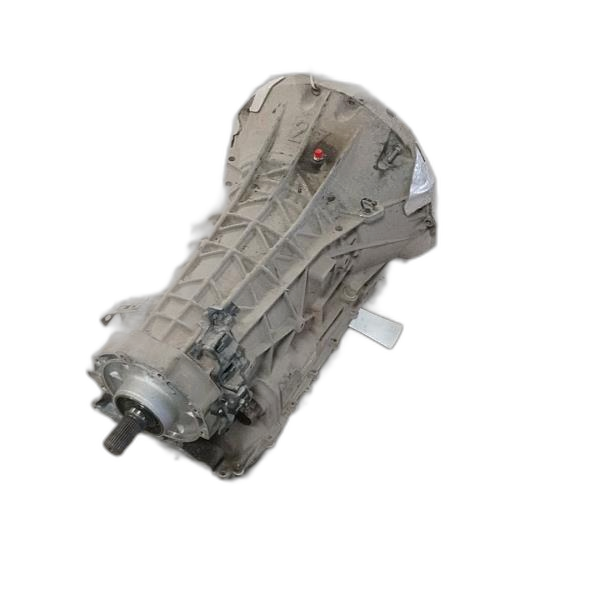
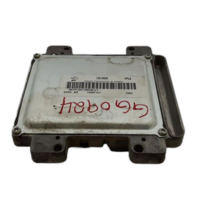
Below are the parts most often responsible for code P2796, ranked by how frequently each one is the actual culprit (per the diagnosis above). Tap any to see what we have for your vehicle.



The information in this article is provided for general reference and educational purposes only. Vehicle specifications, procedures, and part compatibility can vary by production date, trim level, and region. Always consult your vehicle's factory service manual and verify part numbers before purchasing or performing repairs. Safety-critical components such as airbags, seat belts, and braking systems should be installed by a qualified professional.
- 🧭 Diagnostic Flowchart
- 🎬 Helpful Videos
- 🛍️ Shop This Part
- What Does P2796 Mean?
- Can I Drive With P2796?
- Common Causes
- Symptoms
- Common Fixes & Costs
- Used vs. New Parts: Buying Guide
- What Happens If You Wait — Timeline
- Cost of Not Fixing It
- Diagnosis Steps
- When This Code Triggers (Freeze-Frame Conditions)
- Related Codes
- Climate & Environmental Factors
- How to Talk to a Mechanic About This Code
- Where to Take It: Dealer vs Independent vs Chain
- When to Walk Away From the Repair
- What Scan Tool You Need for This Code
- How to Clear the Code After You Fix It
- Will This Fail Emissions / State Inspection?
- Most Commonly Affected Vehicles
- Manufacturer-Specific Notes
- Real Owner Stories
- 2019 Ford Escape at 75K miles - The Easy Fix
- 2022 Ford F-150 at 20K miles - The Misdiagnosis
- 2020 Chevrolet Malibu at 50K miles - The Unusual Cause
- How to Prevent This Code From Triggering
- Frequently Asked Questions
- Why did my car's auto start-stop feature stop working?
- What are the most common mistakes when diagnosing P2796?
- Can I fix code P2796 myself?
- How much does it cost to fix P2796?
- Will driving with code P2796 damage my transmission?
- Will replacing the transmission fluid fix P2796?
- Can a bad battery cause code P2796?
- What is the priming procedure for a new auxiliary pump?
- Key Takeaways
- 🎟️ Get 5% Off