

OBD-II Code P2797: Auxiliary Transmission Fluid Pump Performance
What P2797 means, why it triggers, and how to fix it
- Code P2797 indicates a failure in the auxiliary transmission fluid pump, immediately disabling auto start/stop and hybrid drive functions.
- Always check for Technical Service Bulletins (TSBs) first, as GM, Subaru, and Ford have specific bulletins identifying the root cause as a bad pump, wiring fault, or software glitch.
- Do not drive with an active P2797 code; vehicles like the Chevy Bolt will suddenly drop to under 30 mph, and continued driving causes $3,000+ in permanent transmission clutch damage.
- Proper diagnosis requires a bidirectional scan tool to command the pump on and measure its actual RPM against the commanded speed, preventing a $1,000 misdiagnosis.
What Does P2797 Mean?
The Powertrain Control Module (PCM) or Transmission Control Module (TCM) detected a performance failure in the auxiliary transmission fluid pump. This electric pump maintains fluid pressure when the main engine is off, which is critical for auto start/stop, hybrid, and EV systems.
Technical definition: The SAE/OBD-II definition is "Auxiliary Transmission Fluid Pump 'A' Performance/Stuck Off." The control module sets this code when the difference between the commanded pump speed and the actual pump speed exceeds 500 RPM for several seconds, or if the pump fails to produce the required hydraulic pressure.
Can I Drive With P2797?
No — Do Not Drive. Driving is not recommended. On vehicles like the Chevy Bolt, this code causes a sudden, dangerous power reduction to under 30 mph. For other vehicles, operating without proper hydraulic pressure causes accelerated clutch wear due to overheating and poor lubrication. This quickly turns a $1,000 pump repair into a $5,000 transmission replacement.
Common Causes
- Internal failure of the auxiliary transmission fluid pump (Very Common) — The electric motor fails or the pump mechanism seizes. This is the most frequent cause in GM models (Malibu, Trailblazer, Bolt EV) due to known manufacturing defects.
- Control Module Software Glitch (Common) — A software error falsely detects a pump failure. A dealer software update is the required fix for 2023-2024 Subaru, Ford, and Chrysler models.
- Damaged wiring harness or corroded connectors (Common) — Wires fray, short, or connector pins lose tension and corrode. This is the primary issue on GM hybrid models (Tahoe, Yukon), requiring connector repair under the battery tray.
- Faulty auxiliary transmission fluid pump control module (Less Common) — The separate module controlling the pump fails. This occurs frequently in GM hybrid vehicles where it is the true root cause instead of the pump.
- Blown fuse or faulty relay (Less Common) — A blown fuse or bad relay in the pump's circuit cuts power, preventing operation.
- Low or contaminated transmission fluid (Rare) — Extremely low or dirty fluid causes the pump to overwork, overheat, and cavitate.
- CAN bus communication error (Rare) — Network interference disrupts communication between the TCM and the pump module.
Symptoms
- Check Engine Light or Service Warning Light is on — This is the first and sometimes only indication of a problem.
- Auto Start/Stop system is disabled — The engine will not shut off at stops because the system cannot maintain transmission pressure.
- Reduced power or 'limp mode' — The vehicle suddenly limits speed and displays a 'Propulsion Power is Reduced' message, creating a severe highway safety risk (common on Chevy Bolt).
- Jerking, hesitation, or harsh shifting — You feel a noticeable lull followed by a harsh kick ('hybrid bump') when accelerating from a standstill, or rough shifting during normal driving.
- Vehicle will not move from a stop — The auxiliary pump fails to build initial pressure for gear engagement, leaving the vehicle immobilized.
Diagnostic Flowchart
Tap your situation to follow the diagnostic path that matches what you're seeing on this code.
Common Fixes & Costs
- Reprogram the Transmission or Powertrain Control Module — Parts: $0, Labor: $150-$250, ~1.0 hr book time (Professional)
- Replace the auxiliary transmission fluid pump and wiring harness
— Parts: $150-$450, Labor: $400-$1000, ~4.5 hr book time
(Professional)
Chevrolet Malibu (2016-2025) / Trailblazer (2021-2025): OEM
Chevrolet Bolt EV (2021-2023): OEM - Repair or replace wiring harness and connectors
— Parts: $50-$200, Labor: $150-$500, ~2.5 hr book time
(Intermediate)
Chevrolet Tahoe/GMC Yukon Hybrid (2008-2013): OEM - Replace the auxiliary transmission fluid pump control module
— Parts: $120-$400, Labor: $150-$300, ~1.5 hr book time
(Professional)
Chevrolet Tahoe/GMC Yukon Hybrid (2008-2013): OEM
Used vs. New Parts: Buying Guide
When a used part is worth it: For older, high-mileage vehicles where the cost of a new OEM part is prohibitive, a used pump from a low-mileage donor vehicle is a cost-effective option. It makes no sense for models with known pump defects.
Donor-vehicle mileage cap: roughly under 80000 miles for the part to have meaningful remaining life.
Donor quality checklist:
- Verify the part number exactly, especially if updated parts exist.
- Inspect the electrical connector pins for any signs of corrosion, heat damage, or being bent.
- Obtain the VIN of the donor car to ensure it wasn't scrapped for a transmission-related failure.
Decision logic:
- If The part has a known manufacturing defect (e.g., Chevy Bolt). → Buy new OEM only to get the updated, defect-free part number.
- If The repair requires dropping the transmission. → Buy new OEM to avoid paying $800 in labor twice if a used part fails.
- If The vehicle is over 10 years old and the pump is easily accessible. → A verified used pump saves significant money.
Warranty tradeoff: Used parts from salvage yards typically offer a 30-90 day warranty. New aftermarket parts often come with a 1-year to limited lifetime warranty. New OEM parts carry a 1-2 year warranty.
Worst-case if a used part fails: $800-$1500 if a used pump fails shortly after installation, as you pay the significant labor cost a second time.
What Happens If You Wait — Timeline
- 0-2 weeks: Check Engine Light illuminates. Auto Start/Stop is disabled. Vehicle may enter limp mode. (MPG impact: 0%% · Added cost: $0)
- 1-3 months: Harsh shifting and hesitation from a stop. Clutches begin slipping due to low hydraulic pressure. (MPG impact: 0-2%% · Added cost: $0-$50 in wasted fuel and inconvenience)
- 3-6 months: Permanent damage to clutches and seals. Transmission fluid burns and fills with friction material. (MPG impact: 2-5%% · Added cost: $1,500-$3,000 (Transmission now requires a rebuild in addition to fixing the pump))
- 6+ months: Catastrophic transmission failure. Vehicle loses all forward gears and requires a complete transmission replacement. (MPG impact: 5-15%+% · Added cost: $4,000-$7,000+ (Full transmission replacement cost))
Cost of Not Fixing It
- Immediate: Sudden power reduction ('limp mode'), disabled auto start/stop, and harsh shifting. (Added cost: $0)
- 1-3 months: Accelerated wear on transmission clutches and seals due to insufficient hydraulic pressure and overheating. (Added cost: $1,000-$2,000)
- 6+ months: Catastrophic transmission failure. Worn clutch material contaminates the valve body, requiring a complete rebuild. (Added cost: $4,000-$7,000+)
Diagnosis Steps
- Scan for Codes and Check TSBs
Use a scanner to confirm P2797 and check for related codes (e.g., P0C2B). Immediately check for Technical Service Bulletins (TSBs), as GM, Subaru, and Ford have specific bulletins that dictate the exact repair.
Tools: OBD-II Scanner, Internet Access (Beginner) - Command the Pump On with a Scan Tool
Use a professional scan tool to command the auxiliary pump on. Compare the commanded speed to the actual speed reported by the sensor. A difference exceeding 500 RPM confirms a fault.
Tools: Bidirectional Scan Tool (Advanced) - Test for Power and Ground
With the ignition on, check for 12V ± 0.5V at the pump control module's power supply pin. Verify a solid ground connection by checking for 0 Ω resistance to the chassis.
Tools: Multimeter (Intermediate) - Visual Inspection of Wiring
Inspect the wiring harness and connectors for damage, corrosion, or loose pins. On GM hybrids, scrutinize the connector under the battery tray.
Tools: Flashlight (Beginner) - Check Fuses and Relays
Inspect the fuse and relays associated with the auxiliary transmission pump circuit. A blown fuse cuts all power.
Tools: Multimeter or Test Light (Beginner) - Perform a Voltage Drop Test
With the pump commanded ON, measure voltage from the battery positive to the pump's power wire. A reading over 0.5V indicates excessive circuit resistance. Repeat for the ground side.
Tools: Multimeter, Bidirectional Scan Tool (Advanced) - Check Pump Motor Current Draw
Clamp an ammeter around the pump's power wire while commanding it on. A healthy motor draws under 20 amps on startup. Higher draw indicates a seized pump; 0A indicates an open internal circuit.
Tools: Clamp-on Ammeter, Bidirectional Scan Tool (Advanced) - Check Pump Pressure
If the pump runs but the code persists, check hydraulic pressure output. Low pressure (typically below 150-200 psi) indicates internal pump failure or a hydraulic leak.
Tools: Pressure Gauge, Service Manual (Advanced)
When This Code Triggers (Freeze-Frame Conditions)
- Engine Coolant Temp: 175-210°F (80-99°C) (Vehicle is at full operating temperature.)
- Aux Pump Commanded Speed: 1000-3000 RPM (During or immediately after an auto-stop event, or when commanded by a scan tool.)
- Aux Pump Actual Speed: < Commanded Speed by >500 RPM (The pump is physically spinning much slower than requested, triggering the fault.)
- Vehicle Speed: 0-15 mph (Fault is detected during low-speed operation or transitions from a stop.)
Related Codes
- P0C2B — Auxiliary Transmission Fluid Pump Control Module Feedback Signal. On GM hybrids, this code indicates a wiring or module fault. Do not replace the pump.
- P2796 — Electric/Auxiliary Transmission Fluid Pump 'A' Control Circuit Range/Performance. Points to a hard electrical failure (power, ground, signal) rather than a mechanical performance issue.
- P0AC4 — Hybrid Powertrain Control Module Requested MIL Illumination. A generic code that always accompanies P2797 on hybrid/EV models.
- P0C2D — Auxiliary Transmission Fluid Pump Motor Phase W Low Current. Confirms an internal electrical fault within the pump motor, requiring pump replacement.
Climate & Environmental Factors
- Cold Weather: Temperatures below 0°F (-18°C) trigger false P2797 codes in the Ford F-150 Lightning and Chevy Bolt. Ford TSB 25-2080 addresses this with a software update.
- High Humidity & Road Salt: Road salt acts as an electrolyte, rapidly accelerating corrosion on vulnerable pump and module connectors. This causes high resistance and open circuits.
How to Clear the Code After You Fix It
- Use a compatible OBD-II scan tool to erase the diagnostic trouble codes.
- Perform a complete OBD-II drive cycle to allow all readiness monitors to run their self-tests.
Drive cycle (~30 minutes): Start with a cold-soaked engine. Start and idle for 2-3 minutes. Drive in stop-and-go traffic for 10-15 minutes. Accelerate to highway speed (55-65 mph) and maintain a steady speed for 10 minutes. Safely coast down without aggressive braking. Park and shut off.
Readiness monitors affected: Catalyst Monitor, Evaporative System (EVAP) Monitor, Oxygen (O2) Sensor Monitor
Before emissions retest: drive at least 100 miles to fully set monitors.
Watch out for:
- Clearing the code without repairing the fault guarantees it will return immediately.
- Failing to complete the specific drive cycle leaves readiness monitors incomplete, resulting in an automatic emissions test failure.
- Attempting a drive cycle with less than 1/4 tank of gas prevents the EVAP monitor from running.
Will This Fail Emissions / State Inspection?
Yes — this code typically fails an OBD-II emissions inspection.
- California: An illuminated Check Engine Light results in an automatic smog check failure. After repair, a full drive cycle must be completed to set readiness monitors before a re-test is possible.
- New York: The NYS vehicle safety/emissions inspection includes an OBD-II scan. An active P2797 code causes the vehicle to fail the emissions portion of the inspection.
- Texas: In the 17 Texas counties requiring emissions testing, an active P2797 code results in a failed OBD-II test. Clearing the code requires a drive cycle to be completed before the vehicle passes.
Most Commonly Affected Vehicles
- Chevrolet Bolt EV/EUV (2021-2023) — A manufacturing defect in pump P/N 25207705 causes high failure rates. TSB 21-NA-148 covers the replacement under the 8-year/100k-mile EV warranty.
- Chevrolet Malibu (2016-2025) — High failure rate on VT40 CVT models. TSB 19-NA-200 mandates replacing the pump and wiring harness together.
- Chevrolet Trailblazer (2021-2025) — Shares the CVT pump issue with the Malibu. TSB 19-NA-200 applies.
- Chevrolet Tahoe Hybrid (2008-2013) — Wiring faults are the primary cause. TSB PIP4873A warns against replacing the pump without first checking the harness under the 12V battery.
- GMC Yukon Hybrid (2008-2013) — Identical wiring issues to the Tahoe Hybrid. TSB PIP4873A applies.
- Subaru Legacy / Outback (2023-2024) — Caused by a TCM software glitch during auto start-stop. TSB 16-145-23R provides a dealer software update covered under emissions warranty.
- Ford F-150 Lightning (2022-2025) — Cold weather triggers a software fault in the diagnostic modules. TSB 25-2080 resolves this via a software update.
- Chrysler Pacifica Hybrid (2017-2019) — A software glitch triggers the code. TSBs 08-114-22 and 08-013-21 dictate a module reflash before replacing any hardware.
- Honda Accord (2017-2023) — Typically an electrical circuit issue. Diagnosis requires the Honda Diagnostic System (HDS) to command the pump before condemning parts.
Manufacturer-Specific Notes
- General Motors (Chevrolet, GMC, Cadillac): TSBs dictate the exact repair: Malibu/Trailblazer require a pump and harness (19-NA-200), older hybrids require wiring repair (PIP4873A), and the Bolt requires an updated pump (21-NA-148).
- Subaru: P2797 on 2023-2024 models is a known software glitch. TSB 16-145-23R provides a TCM reflash to fix false detections during auto start-stop.
- Ford: Software issues trigger the code on EVs like the Mach-E and Lightning. TSB 25-2080 fixes cold-weather false triggers with a simple reprogram.
- Chrysler: Pacifica Hybrids frequently set this code due to software errors. Always perform TSB-mandated module reflashes before replacing the pump.
Real Owner Stories
2023 Chevrolet Bolt EUV at 170 miles
Four days after buying the car new, the 'Propulsion Power Reduced' message appeared, limiting speed to ~30 mph.
Outcome: Dealer replaced the auxiliary transmission fluid pump under warranty per TSB 21-NA-148. The repair took nearly three weeks due to parts backorder.
Lesson: On a low-mileage Bolt, P2797 is almost certainly the known defective pump. Go directly to a dealer for the warranty repair, but be prepared for potential delays due to part shortages.
2009 GMC Yukon Hybrid with 'Hybrid Bump'
Vehicle experienced intermittent jerking, hesitation from a stop, and codes P2797 and P0C2B.
Outcome: The owner followed forum advice, locating the pump and module connectors under the 12V battery tray. He found an overheated pin, cleaned the connectors thoroughly, and re-seated them. The problem was resolved for over 15,000 miles.
Lesson: On GM 2-Mode Hybrids, always suspect a wiring/connector issue before replacing parts. TSB PIP4873A specifically warns against replacing the pump when P0C2B is present. A simple connector cleaning saves over $1,000.
2023 Subaru Outback at 8K miles
Check Engine Light came on, and the dealer's initial diagnosis based on the P2797 code was that the entire transmission needed to be replaced.
Outcome: The actual fix was a 20-minute TCM software update (reflash) as detailed in TSB 16-145-23R. The new software has improved logic to prevent a false P2797 detection during auto start-stop cycles. The repair was covered under warranty.
Lesson: For 2023-2024 Subaru models, P2797 is very likely a software glitch. Insist the dealer perform the TSB 16-145-23R software update before authorizing any expensive hardware replacements.
2017 Chrysler Pacifica Hybrid with multiple codes
Check Engine Light appeared with code P2797.
Outcome: The most common fix, identified in multiple Chrysler TSBs (e.g., 08-114-22), is a software update for the Hybrid Control Processor (HCP) or Power Inverter Module (PIM). Owners report the dealer reflash resolves the code.
Lesson: Like with Subaru, a P2797 code on a Pacifica Hybrid is very often a software issue. Always ask the dealer to check for and apply the latest TSB-related software updates before replacing any hardware.
How to Prevent This Code From Triggering
- Follow manufacturer's transmission fluid service intervals (Typically every 60,000 miles, check owner's manual) — Change transmission fluid every 60,000 miles to prevent particulate contamination from destroying the pump's internal bearings.
- Periodically inspect and clean critical electrical connectors (Every 30,000 miles or during other under-hood service) — Clean and apply dielectric grease to the pump and module connectors every 30,000 miles to prevent salt-induced corrosion.
- Ensure the 12V battery is healthy and terminals are clean (Annually, before winter) — Test and replace the 12V battery every 3-4 years to ensure the pump receives stable operating voltage.
- Wash the vehicle's undercarriage after winter storms (Seasonally, especially in the 'Salt Belt') — Wash the vehicle's undercarriage after winter storms to remove highly corrosive road salt and de-icing brines.
Frequently Asked Questions
What is an auxiliary transmission fluid pump?
It is a small electric pump that circulates transmission fluid when the main engine is off. This maintains hydraulic pressure for immediate clutch engagement in auto start/stop, hybrid, and EV systems.
What is the most common mistake when diagnosing P2797?
The biggest mistake is immediately replacing the pump without checking for Technical Service Bulletins (TSBs). On many Subaru, Ford, and Chrysler models, the actual cause is a software glitch fixed by a dealer reprogram. On GM hybrids, the cause is often a broken wire.
What is the 'hybrid bump' I feel in my GM SUV?
The 'hybrid bump' is a harsh jerk felt when accelerating from a stop in GM 2-Mode Hybrids. It occurs because the failing auxiliary pump cannot maintain pressure, causing the transmission to slam into gear.
Can I drive my car with a P2797 code?
No. The vehicle can suddenly enter 'limp mode' with severely reduced power, creating a highway safety hazard. Continued driving also causes thousands of dollars in permanent internal transmission damage.
How much does it cost to fix P2797?
A software update costs $150-$250. Repairing a damaged wire costs $150-$500. Replacing the pump and harness is the most expensive, ranging from $600 to $1,200 depending on labor rates.
Can a bad battery cause a P2797 code?
Yes. The auxiliary pump requires stable voltage to operate correctly. A weak 12V battery causes voltage drops under load, making the pump underperform and triggering the code.
How can I prevent P2797 from happening?
Adhere to the manufacturer's transmission fluid change intervals to prevent internal pump wear. Periodically clean electrical connectors exposed to road salt. Ensure your 12V battery is healthy.
Will clearing the code make it go away?
No. P2797 indicates a persistent hardware or software fault, so the code returns immediately upon the next drive cycle.
Key Takeaways
- Code P2797 indicates a failure in the auxiliary transmission fluid pump, immediately disabling auto start/stop and hybrid drive functions.
- Always check for Technical Service Bulletins (TSBs) first, as GM, Subaru, and Ford have specific bulletins identifying the root cause as a bad pump, wiring fault, or software glitch.
- Do not drive with an active P2797 code; vehicles like the Chevy Bolt will suddenly drop to under 30 mph, and continued driving causes $3,000+ in permanent transmission clutch damage.
- Proper diagnosis requires a bidirectional scan tool to command the pump on and measure its actual RPM against the commanded speed, preventing a $1,000 misdiagnosis.
Shop the Parts Behind P2797
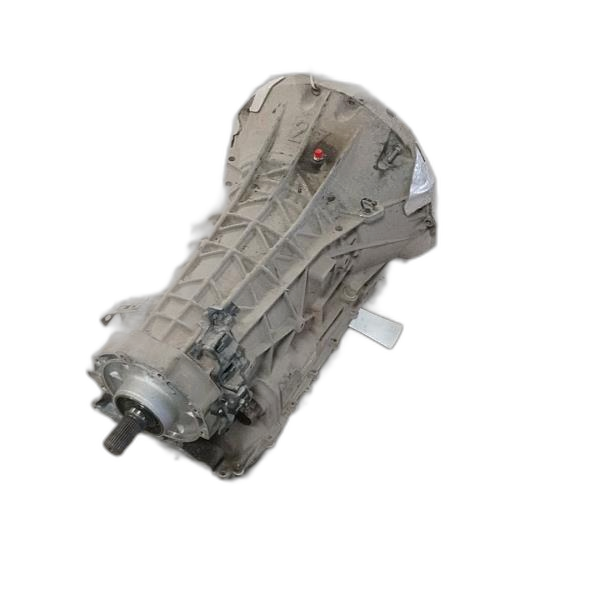
Below are the parts most often responsible for code P2797, ranked by how frequently each one is the actual culprit (per the diagnosis above). Tap any to see what we have for your vehicle.



The information in this article is provided for general reference and educational purposes only. Vehicle specifications, procedures, and part compatibility can vary by production date, trim level, and region. Always consult your vehicle's factory service manual and verify part numbers before purchasing or performing repairs. Safety-critical components such as airbags, seat belts, and braking systems should be installed by a qualified professional.
- 🧭 Diagnostic Flowchart
- 🛍️ Shop This Part
- What Does P2797 Mean?
- Can I Drive With P2797?
- Common Causes
- Symptoms
- Common Fixes & Costs
- Used vs. New Parts: Buying Guide
- What Happens If You Wait — Timeline
- Cost of Not Fixing It
- Diagnosis Steps
- When This Code Triggers (Freeze-Frame Conditions)
- Related Codes
- Climate & Environmental Factors
- How to Clear the Code After You Fix It
- Will This Fail Emissions / State Inspection?
- Most Commonly Affected Vehicles
- Manufacturer-Specific Notes
- Real Owner Stories
- 2023 Chevrolet Bolt EUV at 170 miles
- 2009 GMC Yukon Hybrid with 'Hybrid Bump'
- 2023 Subaru Outback at 8K miles
- 2017 Chrysler Pacifica Hybrid with multiple codes
- How to Prevent This Code From Triggering
- Frequently Asked Questions
- What is an auxiliary transmission fluid pump?
- What is the most common mistake when diagnosing P2797?
- What is the 'hybrid bump' I feel in my GM SUV?
- Can I drive my car with a P2797 code?
- How much does it cost to fix P2797?
- Can a bad battery cause a P2797 code?
- How can I prevent P2797 from happening?
- Will clearing the code make it go away?
- Key Takeaways
- 🎟️ Get 5% Off