

P2797 on 2009-2013 Cadillac Escalade Hybrid: Aux Pump Circuit Causes & Fixes
On a 2009-2013 Escalade Hybrid, code P2797 almost always points to a wiring issue or a failed auxiliary pump control module, not a failed pump. Before buying parts, inspect the wiring harness between the Hybrid Powertrain Control Module (HPCM) and the pump module for damage, as advised by GM Technical Service Bulletin PIP4873A.
- This code applies specifically to 2009-2013 Cadillac Escalade Hybrid models with the 2ML70 transmission.
- The most probable cause is a fault in the wiring harness or connectors, not the pump itself.
- Always follow the diagnostic procedure outlined in TSB PIP4873A, which prioritizes electrical testing over component replacement.
- Do not replace the auxiliary pump or its control module without definitively ruling out a wiring issue, as this is a common and costly misdiagnosis.
- This fault can cause serious drivability issues and potential transmission damage if ignored.
What's Unique About the 2009-2013 Cadillac ESCALADE
This code is exclusive to the Escalade Hybrid and its platform mates equipped with the GM 2ML70 two-mode hybrid transmission. Unlike its non-hybrid counterparts, this complex transmission relies on an auxiliary electric pump to keep hydraulic pressure ready for seamless transitions between electric and gasoline power. Owner and technician experiences, backed by a specific GM Technical Service Bulletin (TSB PIP4873A), show that the wiring for this pump or the pump's control module are the most common failure points, often leading to the incorrect replacement of the pump itself.
Diagnostic Flowchart
Tap your situation to follow the diagnostic path that matches what you're seeing on this vehicle.
Symptoms You May Notice
- Check Engine Light or other service warnings on the dashboard.
- Harsh, jerky, or delayed gear shifts.
- Vehicle may hesitate, lunge, or surge at low speeds, especially during Auto-Stop transitions.
- Transmission may feel like it's slipping (engine RPMs rise without an increase in speed).
- Audible clicking noises or changes in electric motor sounds from the transmission area as the pump stalls.
- In severe cases, the vehicle may refuse to move.
- Auto-Stop feature is disabled.
- Replacing the Auxiliary Transmission Fluid Pump without first inspecting and testing the wiring harness and control module. TSB PIP4873A explicitly warns against this, stating that the pump is not the likely cause when P2797 is set, especially with code P0C2B.
Most Likely Causes
- Damaged Wiring Harness or Connectors 🔴 High Probability The wiring harness between the Hybrid Powertrain Control Module (HPCM) and the auxiliary pump module is a known weak point, as documented in TSB PIP4873A. Chafing, corrosion, or breaks in the wires are common due to vibration and exposure.
How to confirm: Perform a pin-to-pin continuity and resistance test on the harness between the HPCM and the auxiliary pump module. Visually inspect the entire length of the harness for any signs of physical damage, corrosion, or loose connections. Check for good terminal tension at both connectors.
Typical fix: Repair the damaged section of the wiring harness. This may involve soldering broken wires, replacing connectors, or re-routing the harness to prevent future damage. Ensure all connections are clean and secure.
Est. part cost: $10-$50 - Failed Auxiliary Transmission Fluid Pump Control Module 🟡 Medium Probability → Shop Transmission Assembly The control module is an electronic component subject to failure from heat and vibration. TSB PIP4873A points to this as the likely suspect if the wiring is confirmed to be good. Some forum users report this as the direct fix for their issues.
How to confirm: If the wiring harness tests perfectly, the next step is to test the module itself. This requires a bi-directional scan tool (like a GM GDS2) to command the pump on and monitor feedback signals. If the module receives power and ground but does not operate the pump or send a valid signal back, it has likely failed.
Typical fix: Replace the Auxiliary Transmission Fluid Pump Control Module. Per TSB PIP4833F, this part is no longer restricted but may require ordering additional connector harnesses (p/n 24259589 and 24259590) for 2008-2009 models. The module itself may require programming.
Est. part cost: $150-$400 - Failed Auxiliary Transmission Fluid Pump ⚪ Low Probability → Shop Transmission Assembly
How to confirm: This should only be considered after the wiring and control module have been proven to be good. The pump can be tested by supplying direct power and ground (using appropriate specifications) or by using a scan tool to command it on and listening for operation.
Typical fix: Replace the auxiliary transmission fluid pump. This part was also under a GM parts restriction (per TSB PIP4833E), indicating a need for careful diagnosis before replacement. If replacing on an early model with the original control module, an adapter harness (p/n 24259588) may be required.
Est. part cost: $300-$500
Rare But Worth Checking
- Failed Drive Motor Generator Power Inverter Control Module (PIM):
Diagnosis Steps
- Scan the vehicle's control modules and document all Diagnostic Trouble Codes (DTCs). Note if P2797 is present with P0C2B and/or P0AC4.
- Follow the guidance of TSB PIP4873A: DO NOT replace the pump as a first step.
- Perform a thorough visual inspection of the wiring harness between the Hybrid Powertrain Control Module (HPCM/PIM) and the Auxiliary Transmission Fluid Pump Control Module. Look for any signs of chafing, melting, corrosion, or physical damage.
- Using a digital multimeter and wiring diagrams, check for proper voltage (12V ± 0.5V) and ground at the pump control module connector.
- Test the PWM communication lines (Trans. Aux. Oil Pump Control circuit) between the HPCM and the pump control module for shorts or opens.
- If available, use a bi-directional scan tool (like GM's GDS2) to command the auxiliary pump ON (to 50% duty cycle) and monitor the actual pump speed data PID. The actual speed should be within 500 RPM of the commanded speed.
- If all wiring and connections test good, suspect the Auxiliary Transmission Fluid Pump Control Module.
- Only if the wiring and control module are confirmed to be functioning correctly should the auxiliary pump itself be condemned.
Parts You'll Likely Need
- Auxiliary Transmission Fluid Pump Control Module
(OEM #24261817)— If wiring is intact, the control module is the next most likely component to fail, as it processes commands and controls the pump. This is supported by TSBs and forum repair stories. This part number supersedes several previous versions.
Trusted brands: ACDelco, GM Genuine
OEM price range: $150-$250 - Auxiliary Transmission Fluid Pump
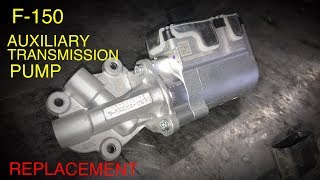
(OEM #19207983)— This is the least likely cause but is the necessary replacement if both the wiring and control module are confirmed to be working properly.
Trusted brands: ACDelco
OEM price range: $300-$500
Aftermarket price range: $250-$400 - Auxiliary Pump Module Connector Harnesses
(OEM #24259589, 24259590)— TSB PIP4833E notes that when replacing the control module on a 2008-2009 model year vehicle, these two connector harnesses are also required to adapt the new module. A forum user confirmed this was part of their successful repair.
Trusted brands: GM Genuine
OEM price range: $20-$40 each
Related Codes That Often Appear With This One
- P0C2B — P0C2B (Auxiliary Transmission Fluid Pump Control Module Feedback Signal) is often set alongside P2797. The TSB PIP4873A directly addresses the diagnosis of P0C2B with or without P2797, indicating they are related to the same fault in the pump's control circuit.
- P0AC4 — P0AC4 (Hybrid Powertrain Control Module Requested MIL) is a general code indicating that the hybrid control module has requested the check engine light. It frequently appears with P2797 🎬 See how P0AC4 and transmission issues affect hybrid performance. and P0C2B as the root cause.
Technical Service Bulletins (TSBs) & Recalls
- PIP4873A: States that DTC P2797 (with or without P0C2B) is not likely caused by the pump itself and directs technicians to inspect wiring first, and if wiring is good, suspect the control module.
- PIP4833E/F: Announced the end of the parts restriction for the pump (19207983) and module (24261817). Crucially, it advises that for 2008-2009 models, replacing the module also requires ordering connector harnesses 24259589 and 24259590.
- PIP4600E: Outlined the restriction process for the entire 2ML70 transmission, requiring TAC authorization for replacement and emphasizing internal repair over replacement, highlighting the unit's complexity.
Platform-Specific Known Issues
- GM issued Technical Service Bulletin PIP4873A specifically to address misdiagnosis of this code. It emphasizes inspecting the wiring between the HPCM and the pump module before replacing any parts.
- GM also issued bulletin PIP4833E (later superseded), which announced the end of a parts restriction on the auxiliary pump and its control module. The restriction was originally put in place to force technicians to verify diagnosis with GM's Technical Assistance Center (TAC) before ordering, highlighting how frequently the issue was misdiagnosed.
- A real-world repair story on TahoeYukonForum.com for the same issue on a platform-mate resulted in a $637 fix at a shop, which involved replacing the auxiliary transmission fluid pump control module and two associated harnesses.
Mechanic-Grade Diagnostic Values
- Auxiliary Pump Commanded vs. Actual Speed — expected: Actual speed should be within 500 RPM of commanded speed.. Failure: A difference greater than 500 RPM for 4.125 seconds will set DTC P2797.
- Auxiliary Pump Control Module Voltage — expected: 12 V ± 0.5 V with ignition ON.. Failure: Voltage below or above this range indicates a supply circuit issue.
- Auxiliary Pump Control Module Temperature — expected: Should be close to ambient/transmission temperature.. Failure: A scan tool reading over 125°C (257°F) when the module case is not physically hot indicates an internal module fault.
- Auxiliary Pump Motor Current — expected: Within normal range for a given motor speed.. Failure: A scan tool reading of more than 20 A during motor start-up indicates a potential pump or motor short.
Scan Tool Commands That Help
- GM GDS2 / Tech2Win: Aux. Trans. Fluid Pump Speed Command — This bidirectional control is used to command the pump to a specific duty cycle (e.g., 50%) to verify its operation. The technician can then compare the commanded speed PID with the actual speed PID to check for performance issues, per the diagnostic procedure.
Wiring & Ground Locations
- G103 — Located at the left rear of the engine compartment on the cowl, above the brake booster.. This is a primary ground for the Body Control Module (BCM) and Instrument Panel Cluster (IPC), which communicate with the hybrid powertrain modules. A poor ground here can cause a wide range of communication errors.
- G101 / G106 — Located at the front of the engine, lower block, and on the front center of the frame cross rail under the crank pulley.. These ground the Engine Control Module (ECM) and Transmission Control Module (TCM). A compromised connection can directly impact transmission and hybrid system function.
- Frame Grounds — Located on the frame behind both front wheels.. These are major chassis grounds that are in a terrible location, highly susceptible to corrosion from wheel splash. Poor connections here can cause intermittent and hard-to-diagnose electrical issues across the vehicle.
Real Owner Repair Stories
- TahoeYukonForum.com user 'ChuckC' (GMC Yukon Hybrid (platform mate)) — Jerking sensation when switching between hybrid and engine modes, pauses in acceleration, sudden accelerations at low speeds. Codes P2797, P0C2B, and P0AC4 were present.
❌ Tried (didn't work) The user did not report trying other fixes first, but went straight for the TSB-recommended repair.
✅ What actually fixed it The shop replaced the auxiliary transmission fluid pump control module (GM P/N 24261817) and two associated harnesses (P/N 24259589 and 24259590). The total cost for parts and labor was $637.
OEM Part Supersession History
29543906, 29546431, 29546469, 29546636, 29547550→24261817— Part has been updated and consolidated by GM over time.
Heads up: When replacing the module on a 2009 model, connector harnesses 24259589 and 24259590 are also required to adapt the new module to the older vehicle harness.
Model Year Variations Within This Range
- 2009: Vehicles from the 2009 model year (and 2008 for platform mates) require two adapter harnesses (p/n 24259589 and 24259590) when replacing the original auxiliary transmission fluid pump control module with the current part (24261817). Later models do not require these adapters.
Helpful Videos
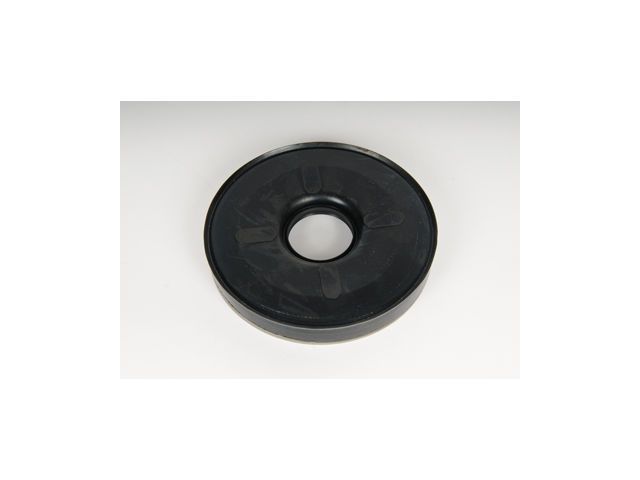
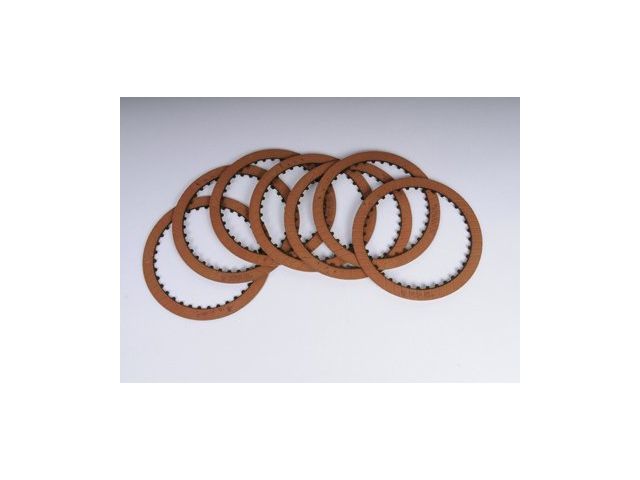
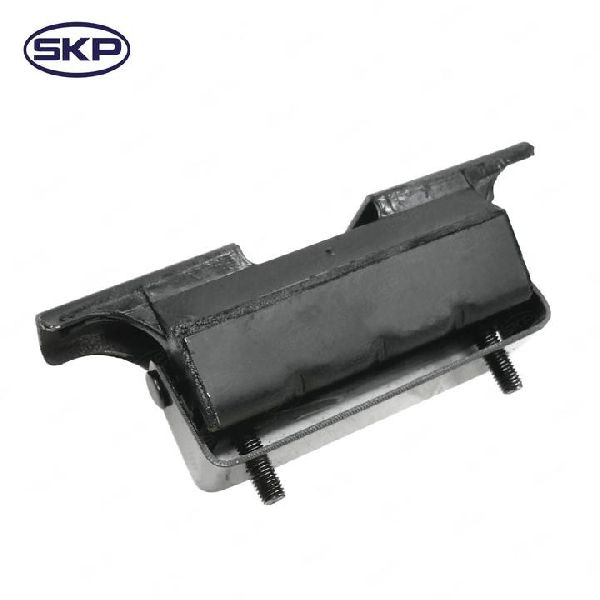
We Have This Part in Stock


The information in this article is provided for general reference and educational purposes only. Vehicle specifications, procedures, and part compatibility can vary by production date, trim level, and region. Always consult your vehicle's factory service manual and verify part numbers before purchasing or performing repairs. Safety-critical components such as airbags, seat belts, and braking systems should be installed by a qualified professional.
- Cadillac ESCALADE:
- 🧭 Diagnostic Flowchart
- 🎬 Helpful Videos
- 🛍️ Shop This Part
- What's Unique About the 2009-2013 Cadillac ESCALADE
- Symptoms You May Notice
- Most Likely Causes
- Rare But Worth Checking
- Diagnosis Steps
- Parts You'll Likely Need
- Related Codes That Often Appear With This One
- Technical Service Bulletins (TSBs) & Recalls
- Platform-Specific Known Issues
- Mechanic-Grade Diagnostic Values
- Scan Tool Commands That Help
- Wiring & Ground Locations
- Real Owner Repair Stories
- OEM Part Supersession History
- Model Year Variations Within This Range
- 🎟️ Get 5% Off