

P2797 on 2009-2013 Chevrolet Silverado 1500: Auxiliary Pump Faults and Fixes
This code on a 2009-2013 Silverado, specifically the Hybrid model with the 2ML70 transmission, points to a problem with the auxiliary transmission fluid pump's performance. Before replacing the pump, it is critical to inspect the wiring between the Hybrid Powertrain Control Module (HPCM) and the pump's control module. TSB PIP4873A highlights that damaged wiring or a faulty control module are more common culprits, especially when code P0C2B is also present.
- P2797 on a Silverado Hybrid indicates a performance issue with the auxiliary transmission pump, which is critical for the Auto Stop/Start system.
- A GM Technical Service Bulletin (PIP4873A) strongly advises against immediately replacing the pump, as faulty wiring is a very common cause.
- This code is almost always seen with P0C2B, which further points to an electrical circuit or control module problem, not a mechanical pump failure.
- Diagnosis requires a scan tool that can read hybrid system data and command the pump to activate.
- Driving with this code active will disable the hybrid Auto Stop feature and may lead to transmission damage over time.
What's Unique About the 2009-2013 Chevrolet SILVERADO 1500
This code is specific to GM vehicles with the 2-Mode Hybrid system and the 2ML70 transmission, which includes the 2009-2013 Silverado Hybrid. Unlike standard Silverados, these trucks use an electric auxiliary pump to keep the transmission's hydraulic system pressurized when the engine is off during Auto Stop mode. A widely documented issue, highlighted in GM Technical Service Bulletin PIP4873A, is that the wiring harness between the control modules can chafe or develop poor connections, perfectly mimicking pump failure. This makes a thorough electrical diagnosis crucial before condemning the expensive pump assembly.
Diagnostic Flowchart
Tap your situation to follow the diagnostic path that matches what you're seeing on this vehicle.
Symptoms You May Notice
- Check Engine Light is on
- Auto Start/Stop system is disabled or inoperative.
- Bumps, jerks, or surges during acceleration or deceleration, especially around Auto Stop events.
- Hesitation or a lull followed by a kick when accelerating from a stop.
- Audible clicking noises or changes in electric motor sounds as the pump tries to operate or stalls.
- Reduced acceleration or a feeling of gear slippage.
- Replacing the auxiliary transmission fluid pump without first thoroughly inspecting the wiring harness and connectors. TSB PIP4873A explicitly states not to replace the pump if code P0C2B is present, as the cause is almost certainly electrical or related to the control module.
Most Likely Causes
- Damaged Wiring or Poor Connections 🔴 High Probability As highlighted in TSB PIP4873A, the wiring harness between the Hybrid Powertrain Control Module (HPCM) and the auxiliary pump control module is a known failure point. Owners and technicians report that high current can overheat pins in the connectors, causing a bad connection over time. Chafing, corrosion, or loose pins can disrupt the command and feedback signals, triggering codes P2797 and P0C2B.
How to confirm: Perform a thorough visual inspection of the wiring harness and connectors for any signs of damage, chafing, or corrosion. The connectors are often located under the battery. Wiggle the harness while monitoring pump data on a scan tool to see if the fault is intermittent. Follow the diagnostic procedure in TSB PIP4873A, which prioritizes checking wiring and terminal tension before replacing any parts.
Typical fix: Repair the damaged section of the wiring harness or clean and secure the connectors. In some cases, replacing the connector pigtail is necessary. For 2008-2009 models, updated connector harnesses were specified when replacing the module or pump.
Est. part cost: $10-$75 - Failed Auxiliary Transmission Fluid Pump Control Module 🟡 Medium Probability → Shop Transmission Assembly The control module, which is a power inverter for the 3-phase pump motor, can fail internally. TSBs and forum discussions frequently point to this module as the cause, especially on earlier 2008-2009 models. If wiring is confirmed to be good, this is the next most likely culprit.
How to confirm: After confirming the wiring is intact, use a scan tool to check for specific fault statuses reported by the module, such as 'Motor CKT Fault' or 'Temp Sen Fault'. If P0C2B is present and wiring/connections are good, the control module is highly suspect.
Typical fix: Replace the auxiliary transmission fluid pump control module. The OEM part number is 24261817, which supersedes several older numbers. This part may require programming upon installation.
Est. part cost: $120-$250 - Failed Auxiliary Transmission Fluid Pump ⚪ Low Probability → Shop Transmission Assembly While the pump itself can fail, it is less common than wiring or module issues. TSB PIP4873A specifically warns against replacing it as a first step when P0C2B is present. However, another bulletin, 19-NA-200, notes that an internal pump failure can be the cause for P2797 on its own.
How to confirm: With a scan tool, command the pump to turn on. If the pump is excessively noisy, stalls, or its actual speed consistently fails to meet the commanded speed (with good wiring and a good module), the pump is likely faulty. Resistance checks across the pump motor terminals can also identify an internal short or open circuit.
Typical fix: Replace the auxiliary transmission fluid pump assembly. The pump is often sold as a cover kit. The OEM part number for the pump assembly has been cited as 19207983 in older bulletins and may be related to cover kit 24248573, though this part also fits non-hybrid 6L80/6L90 transmissions. A newer part number, 24297279, is specified in a 2023 bulletin for some vehicles with P2797.
Est. part cost: $300-$600
Diagnosis Steps
- Connect a professional OBD-II scanner capable of communicating with the HPCM. Check for P2797 and any other codes, paying close attention to P0C2B.
- Diagnose and resolve any other DTCs first, unless they are P2797 or P0C2B.
- Perform a thorough visual inspection of the wiring harness and connectors between the Hybrid Powertrain Control Module (HPCM) and the auxiliary transmission fluid pump control module. A common trouble spot is the connector set located under the battery. Look for chafing, corrosion, or loose/overheated pins.
- Using the scan tool, command the auxiliary pump to turn on and run at 50% speed.
- Observe the 'commanded pump speed' vs. 'actual pump speed' data on the scan tool. A difference greater than 500 RPM for more than 4 seconds indicates a fault.
- If code P0C2B is present, follow the specific diagnostic procedure for that code, which focuses heavily on wiring integrity and the control module, not the pump.
- If wiring and connectors are verified as good, and the pump fails to run or meet commanded speed, the issue is likely the pump's control module or the pump itself. The control module is the more probable failure point.
- If no fault is found in the auxiliary pump system but drivability issues persist, further diagnosis of internal transmission clutches may be required as per service literature.
Parts You'll Likely Need
- Auxiliary Transmission Fluid Pump Control Module
(OEM #24261817)— This module controls the pump motor and is a common point of failure, especially when P0C2B is also present. It has several superseded part numbers, indicating revisions have been made.
Trusted brands: ACDelco, GM Genuine
OEM price range: $120-$190
Aftermarket price range: $100-$180 - Auxiliary Transmission Fluid Pump
(OEM #19207983 (older), 24297279 (newer, application specific))— If the pump motor itself fails, it will need to be replaced. This should only be done after ruling out wiring and control module faults, as it is a less common failure and a more expensive part.
Trusted brands: ACDelco, GM Genuine
OEM price range: $400-$700
Aftermarket price range: $300-$600
Related Codes That Often Appear With This One
- P0C2B — This code, 'Auxiliary Transmission Fluid Pump Control Module Feedback Signal', indicates the HPCM has lost the diagnostic signal from the pump module. It frequently appears with P2797 and strongly points towards a wiring or module issue rather than a pump failure.
- P0AC4 — This code stands for 'Hybrid Powertrain Control Module Requested MIL Illumination'. It is a generic code indicating that the HPCM has requested the check engine light be turned on. It will always be present with other, more specific codes like P2797 that identify the actual fault.
- P079A — This code relates to a slipping clutch within the transmission. It can sometimes accompany P2797 if the lack of auxiliary pump pressure causes drivability issues, like lurches or surges, that the system interprets as clutch slip.
Technical Service Bulletins (TSBs) & Recalls
- PIP4873A: Warns technicians not to replace the auxiliary transmission fluid pump when DTC P0C2B is present (with or without P2797). It directs them to inspect the wiring and connectors between the HPCM and the pump module, suspecting the module itself if wiring is good.
- PIP4751G (Superseded): Discussed drivability concerns like bumps and surges related to the auxiliary pump and noted that P2797 and P0C2B are common accompanying codes. It provided a diagnostic path that prioritized checki
Platform-Specific Known Issues
- This fault is exclusive to the 2009-2013 Silverado 1500 Hybrid models equipped with the 2ML70 two-mode hybrid transmission (RPO M99).
- A known issue on 2009 models involves overheating pins in the pump/module connectors; cleaning the connectors or replacing them with updated parts specified in bulletins can resolve the issue.
Mechanic-Grade Diagnostic Values
- Ignition Voltage (System Voltage) — expected: 8V - 18V. Failure: Voltage outside this range can cause unpredictable module behavior.
- Auxiliary Pump Speed Deviation — expected: Less than 500 RPM difference between commanded and actual speed.. Failure: A difference greater than 500 RPM for approximately 4 seconds will set DTC P2797.
- Auxiliary Pump Control Module Voltage Fault — expected: Greater than 12.6V. Failure: The module will log a 'Low V BATT' fault status if it monitors battery voltage less than 12.6V.
- Auxiliary Pump Motor Current Fault — expected: Less than 20A during startup.. Failure: The module will log a 'Motor OVR CRNT' fault if it sees more than 20A on startup, indicating a possible seized pump.
- Ground Circuit Resistance — expected: 0 Ω. Failure: Any significant resistance indicates a poor ground connection, which is a common cause of electrical faults.
- Pump Motor/Harness Resistance (Guideline) — expected: Less than 2 Ω. Failure: Resistance of 2 ohms or greater suggests an open or high resistance in the circuit between the connector and the pump motor.
Scan Tool Commands That Help
- GDS2 / Tech2: Aux. Trans. Pump Speed Command — Used to command the pump to a specific speed (e.g., 50%) to verify its operation and compare commanded vs. actual speed PIDs.
- GDS2 / Tech2: Aux. Trans. Fluid Pump Fault Status 1 & 2 — These data displays show specific fault types detected by the pump control module itself, such as 'Motor OVR CRNT' or 'Low V BATT', which can pinpoint the failure's nature.
- GDS2 / Tech2: HPCM Output Controls - Auxiliary Transmission Fluid Pump Relay — This command directly tests the control circuit from the HPCM to the pump relay, helping to isolate a control-side from a component-side failure.
Wiring & Ground Locations
- Pump/Module Connectors — In the engine compartment, located just under the battery tray.. This is a known high-failure area. The high current for the pump can overheat pins in the connectors, causing a poor connection that mimics a failed module or pump. This is especially noted on 2009 models.
- G101 — Located at the front of the engine, on the lower block.. This ground point serves the Engine Control Module and Transmission Control Module. A poor connection here can cause a wide range of powertrain communication and control issues.
- HPCM Connector X1, Pin 3 — At the Hybrid Powertrain Control Module (PIM).. This is the specific pin for the 'Trans. Aux. Oil Pump Control' circuit. It can be tested for voltage or stimulated with a signal generator to diagnose the control circuit independently of the HPCM.
Real Owner Repair Stories
- Tahoe Yukon Forum user 'lt1gmc' (2009 GMC Yukon Hybrid (sister vehicle with same 2ML70 powertrain)) — Jerking, hesitation, and codes P2797/P0C2B.
❌ Tried (didn't work) The issue would return intermittently.
✅ What actually fixed it The final fix was unplugging the transmission pump and pump module connectors located under the battery, cleaning them thoroughly, and reconnecting them. The user noted that high current had overheated one of the pins, causing a bad connection. After a good cleaning, the issue did not return for over 15,000 miles. - Tahoe Yukon Forum user 'Apocalypse' (GM 2-Mode Hybrid (year not specified)) — Jerking sensation, pauses in acceleration, sudden accelerations at low speeds, codes P2797, P0C2B, P0AC4.
❌ Tried (didn't work) Initial owner diagnosis.
✅ What actually fixed it A dealer service fixed the issue by following a TSB. The repair involved replacing the auxiliary transmission fluid pump control module (GM Part #24261817) and two associated harnesses (24259589 and 24259590). The total cost was $637.
OEM Part Supersession History
29543906, 29546431, 29546469, 29546636, 29547550→24261817— Part revision and consolidation by the manufacturer.
Heads up: Part 24261817 is the current correct service replacement. It may require programming upon installation.
Model Year Variations Within This Range
- 2008-2009: Earlier models, particularly 2009, are more prone to issues with the connectors for the pump/module overheating. A forum user noted that GM updated the module, pump, and connectors in 2010, which may have addressed this weakness.
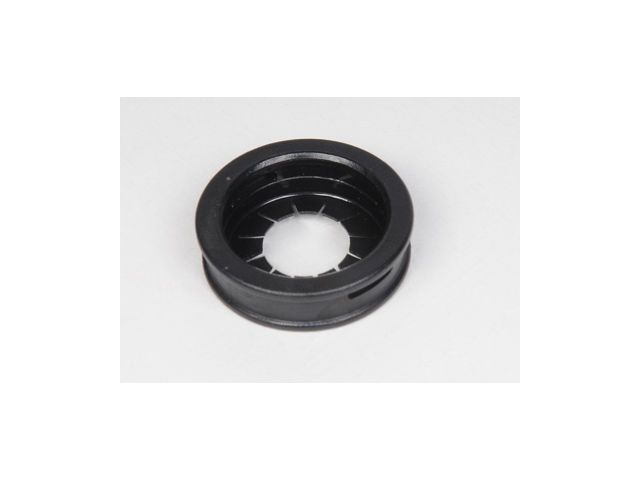
We Have This Part in Stock


The information in this article is provided for general reference and educational purposes only. Vehicle specifications, procedures, and part compatibility can vary by production date, trim level, and region. Always consult your vehicle's factory service manual and verify part numbers before purchasing or performing repairs. Safety-critical components such as airbags, seat belts, and braking systems should be installed by a qualified professional.
- Chevrolet SILVERADO 1500:
- 🧭 Diagnostic Flowchart
- 🛍️ Shop This Part
- What's Unique About the 2009-2013 Chevrolet SILVERADO 1500
- Symptoms You May Notice
- Most Likely Causes
- Diagnosis Steps
- Parts You'll Likely Need
- Related Codes That Often Appear With This One
- Technical Service Bulletins (TSBs) & Recalls
- Platform-Specific Known Issues
- Mechanic-Grade Diagnostic Values
- Scan Tool Commands That Help
- Wiring & Ground Locations
- Real Owner Repair Stories
- OEM Part Supersession History
- Model Year Variations Within This Range
- 🎟️ Get 5% Off