

P2797 on 2009-2013 GMC Sierra Denali Hybrid: Auxiliary Pump Circuit Causes and Fixes
On a 2009-2013 Sierra Denali Hybrid, code P2797 almost always points to a wiring problem between the Hybrid Powertrain Control Module (HPCM) and the auxiliary transmission fluid pump, not a failed pump. Per GM Technical Service Bulletin PIP4873A, inspect the wiring harness for damage, especially connectors under the 12V battery tray, before replacing any parts. This issue is common across all GM trucks and SUVs with the 2-Mode Hybrid system.
- P2797 on a 2009-2013 Sierra Denali Hybrid is almost always a wiring or connector issue, not a failed pump.
- Always follow the guidance of TSB PIP4873A and inspect the connectors under the 12V battery tray before replacing any components.
- If code P0C2B is present, do not replace the pump; focus on wiring and the control module.
- 2009 models may require specific adapter harnesses (24259589, 24259590) when the control module is replaced.
What's Unique About the 2009-2013 Gmc SIERRA DENALI
This code is exclusive to GMC Sierra models equipped with the 2-Mode Hybrid system (2ML70 transmission). The key issue on this platform is the high probability of misdiagnosis. General Motors issued TSB PIP4873A specifically to warn technicians that P2797 is most often caused by a wiring or connector issue, not a failed pump. Owners frequently report a distinct "bump" or "jerk" when the vehicle transitions from a stop, which is a classic symptom of this specific fault. The connectors for the pump module on 2009 models were particularly prone to overheating, and GM used an updated design in 2010 and later models.
Diagnostic Flowchart
Tap your situation to follow the diagnostic path that matches what you're seeing on this vehicle.
Symptoms You May Notice
- Check Engine Light or Service Hybrid System message illuminated.
- Hybrid Auto-Stop feature is disabled or inoperative.
- A noticeable "jerk" or "bump" when accelerating from a stop.
- Harsh, delayed, or hesitant shifting.
- Vehicle may stall when coming to a stop.
- Some owners report using 'Tow/Haul' mode to keep the engine running and prevent drivability issues.
- A pause in acceleration followed by a sudden kick.
- Replacing the auxiliary transmission fluid pump assembly before thoroughly inspecting the wiring harness and connectors. This is a common and expensive mistake explicitly warned against in TSB PIP4873A.
Most Likely Causes
- Damaged or Corroded Wiring Harness 🔴 High Probability As highlighted in TSB PIP4873A, the wiring harness between the HPCM and the auxiliary pump control module is a known failure point. The connectors, especially those located under the 12V battery tray, are susceptible to corrosion and overheating from high current draw, leading to a poor connection. Forum users specifically mention that cleaning these connectors often resolves the issue without parts replacement.
How to confirm: Perform a thorough visual inspection of the wiring harness and connectors for chafing, corrosion, or backed-out pins. The primary location to check is under the 12V battery and battery tray. Unplug the connectors and inspect for discoloration from heat, melted plastic, or green/white corrosion powder. Use a multimeter to test for continuity and shorts on the control, voltage, and ground circuits.
Typical fix: Repair the damaged section of the wiring harness using solder and heat-shrink tubing. In many cases, cleaning the connector pins with electrical contact cleaner and ensuring a tight fit is all that is needed. GM also offers replacement harness sections and updated connector pigtails, especially for 2009 models.
Est. part cost: $10-$100 - Failed Auxiliary Transmission Fluid Pump Control Module 🟡 Medium Probability → Shop Transmission Assembly The control module, which drives the pump, can fail electronically. TSB PIP4873A points to this as a likely cause after wiring issues have been ruled out. Another TSB, PIP4833E, notes that when replacing the module on a 2008-2009 model, updated adapter harnesses are also required.
How to confirm: After confirming the wiring harness is intact and has good power (11-13 volts) and ground, the module itself becomes the primary suspect. A professional scan tool can be used to command the pump on; if the command is sent but the pump doesn't respond and wiring is good, the module is likely faulty.
Typical fix: Replace the auxiliary transmission fluid pump control module. This part is often sold separately from the pump itself. On 2009 models, this may also require replacing two adapter harnesses (P/N 24259589 and 24259590). The module may require programming or a special setup procedure.
Est. part cost: $250-$450
Rare But Worth Checking
- Failed Auxiliary Transmission Fluid Pump: → Shop Transmission Assembly While possible, this is the least likely cause. TSB PIP4873A explicitly warns *against* replacing the pump as a first step, especially if code P0C2B is also present. However, a separate TSB (19-NA-200) does note that if P2797 is the *only* code set, an internal pump failure is possible 🎬 Watch: How the auxiliary pump functions within the transmission. and replacement of the pump (P/N 24299204) and a harness (P/N 24298763) may be required.
Diagnosis Steps
- Scan for codes, noting P2797 and any others like P0C2B.
- Review TSB PIP4873A, which advises against replacing the pump first.
- Disconnect the 12V battery. Remove the battery and its tray to access the pump control module and connectors.
- Perform a detailed visual inspection of the wiring harness between the HPCM and the auxiliary transmission fluid pump control module. Pay close attention to the connectors under the battery tray for corrosion, melted plastic, or damaged pins.
- Using a multimeter, verify the pump control module is receiving 11-13 volts and has a solid ground connection.
- If using a professional scan tool (e.g., GM Tech 2), command the pump speed to 50% and check the pump fault status to directly test the circuit.
- If wiring and connections are good, suspect the auxiliary pump control module.
- If P2797 is the only code present, and wiring/module are confirmed good, diagnose the auxiliary pump itself for internal failure per TSB 19-NA-200.
- After repairs, clear the codes and perform a test drive, ensuring the Auto-Stop function operates correctly.
Parts You'll Likely Need
- Auxiliary Transmission Fluid Pump Control Module
(OEM #24261817)— If the wiring is confirmed to be good, the control module is the next most likely point of failure, as noted in diagnostic procedures and TSBs. This part number has several superseded numbers, including 29547550.
Trusted brands: ACDelco, GM Genuine Parts
OEM price range: $300-$450
Aftermarket price range: $250-$350 - Auxiliary Transmission Fluid Pump
(OEM #24299204)— This is the least common fix and should only be replaced after wiring and the control module have been ruled out, or if P2797 is the only code present per TSB 19-NA-200. An older part number was 19207983.
Trusted brands: ACDelco, GM Genuine Parts
OEM price range: $400-$600
Aftermarket price range: $300-$500 - Adapter Harnesses (for 2009 models)
(OEM #24259589 and 24259590)— When replacing the control module on 2008-2009 models with an updated part, these adapter harnesses are often required to fit the new connectors.
Trusted brands: ACDelco
OEM price range: $20-$50
Aftermarket price range: $15-$40
Related Codes That Often Appear With This One
- P0C2B — This code for the 'Auxiliary Transmission Fluid Pump Control Module Feedback Signal' is often stored with P2797. TSB PIP4873A covers diagnostics for both codes, treating them as a single issue pointing to a wiring or module fault, and explicitly warns *not* to replace the pump if P0C2B is present.
- P0AC4 — This is a generic code indicating the Hybrid Powertrain Control Module has requested the Check Engine Light. It will always be present with a more specific fault code like P2797 that identifies the actual problem.
Technical Service Bulletins (TSBs) & Recalls
- PIP4873A: States that for DTC P2797 with or without P0C2B, technicians should inspect the wiring between the HPCM and the auxiliary pump control module and should not replace the pump as a first step.
- 19-NA-200: This bulletin supersedes PIP5672. It addresses conditions where P2797 is the *only* code set and points to a potential internal failure of the auxiliary pump itself, advising on its replacement along with a wiring harness.
- PIP4833E / PIP4833F: Details the parts restriction program for the pump and module (now ended) and specifies that 2008-2009 models require new adapter harnesses (24259589, 24259590) when replacing the control module.
Platform-Specific Known Issues
- A known issue documented in TSB PIP4873A points to damaged wiring as the primary cause for this code, often leading to the unnecessary replacement of the auxiliary transmission pump.
- The electrical connectors for the pump module on 2009 models were particularly prone to overheating; an updated design was used in later years. TSB PIP4833E notes that replacing the module or pump on a 2009 model requires ordering new adapter harnesses.
Mechanic-Grade Diagnostic Values
- Commanded vs. Actual Auxiliary Transmission Fluid Pump Speed Difference — expected: < 500 RPM. Failure: A difference greater than 500 RPM for approximately 4 seconds.
- Auxiliary Pump Control Circuit Voltage — expected: 11-13 Volts. Failure: Voltage below 11V indicates an open or short to ground in the control circuit.
- Auxiliary Pump Motor Current at Start-up — expected: < 20 Amps. Failure: Current draw exceeding 20A suggests a seized pump motor or a shorted circuit.
- Ground Circuit Resistance — expected: 0 Ω. Failure: Any reading above 0 Ohms points to a poor ground connection.
- Ignition Voltage at ATFP Control Module — expected: 8-18 Volts. Failure: A reading outside this range indicates a foundational electrical system issue that must be addressed first.
Hidden / Shadow Codes Worth Checking
- Aux. Trans. Fluid Pump Fault Status 1 & 2: These are data parameters, not DTCs, that show specific internal fault messages from the pump control module, such as 'Motor CKT Fault', 'Over Current', 'Under Voltage', or 'Internal Fault'. They are crucial for pinpointing the exact failure mode (e.g., wiring vs. internal module failure). (see via Viewable in the Hybrid Powertrain Control Module (HPCM) data list using a GM GDS2 or equivalent professional scan tool.)
Scan Tool Commands That Help
- GDS2 / Tech2: Aux. Trans. Pump Speed Control — During diagnosis, command the pump speed to 50% with the engine off. This allows a technician to verify if the pump runs, listen for audible noise, and compare commanded vs. actual RPM to isolate the fault between the control side and the mechanical pump.
- GDS2 / Tech2: Auxiliary Transmission Fluid Pump Prime — This is a mandatory service function that must be performed immediately after replacing the auxiliary pump assembly. Failure to prime the new pump before allowing Auto-Stop to engage can cause immediate damage to the new component.
Wiring & Ground Locations
- Connectors under 12V Battery Tray — Located in the engine compartment, under the main 12V starting battery and its plastic tray.. This is the most commonly cited failure point. The connectors for the auxiliary pump control module are exposed to the elements and high current, leading to corrosion and overheating, which directly causes P2797.
- G103 — On the front of the passenger side cylinder head.. This is a primary engine ground. A poor connection here can cause a wide range of electrical issues, including erratic module behavior that could indirectly affect the transmission control system.
- G104 — Left front corner of the engine, mounted to the left cylinder head.. Another critical engine ground. Ensuring G103 and G104 are clean and tight is a fundamental step in diagnosing any complex electrical fault.
- HPCM Connector X1, Pin 3 — At the Hybrid Powertrain Control Module (PIM).. This is the specific pin for the 'Trans. Aux. Oil Pump Control' circuit. It can be back-probed to test for voltage or stimulated with a signal generator to diagnose the control circuit independently of the HPCM.
Real Owner Repair Stories
- TahoeYukonForum user (GMC Hybrid Truck (year not specified, within 2009-2013 range)) — A distinct 'bump/jerk' sensation when the vehicle switches between hybrid and engine modes, pauses in acceleration, and sudden accelerations at low speeds.
❌ Tried (didn't work) The user did not report any failed attempts, instead following GM Preliminary Information Post (PIP) guidance.
✅ What actually fixed it The dealer replaced the auxiliary transmission fluid pump control module (P/N 24261817) and two associated adapter harnesses (P/N 24259589 and 24259590). The total repair cost was $637.
OEM Part Supersession History
29547550, 29546636, 29546469, 29546431, 29543906→24261817— GM frequently updates part numbers to reflect design improvements or manufacturing changes.
Heads up: The newest part, 24261817, is the correct service replacement. However, when installing it on a 2008-2009 model, adapter harnesses 24259589 and 24259590 are required.
Model Year Variations Within This Range
- 2009 (and 2008): When replacing the auxiliary transmission fluid pump control module on a 2008-2009 model, TSB PIP4833F specifies that two adapter harnesses (P/N 24259589 and 24259590) must also be ordered to connect the updated module to the original vehicle harness. Later models do not require these adapters.
Helpful Videos
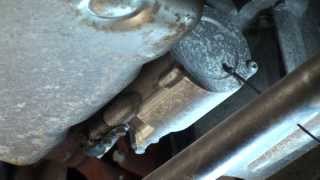
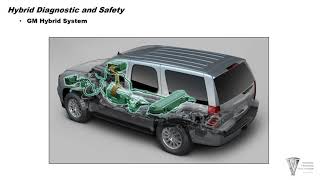
We Have This Part in Stock
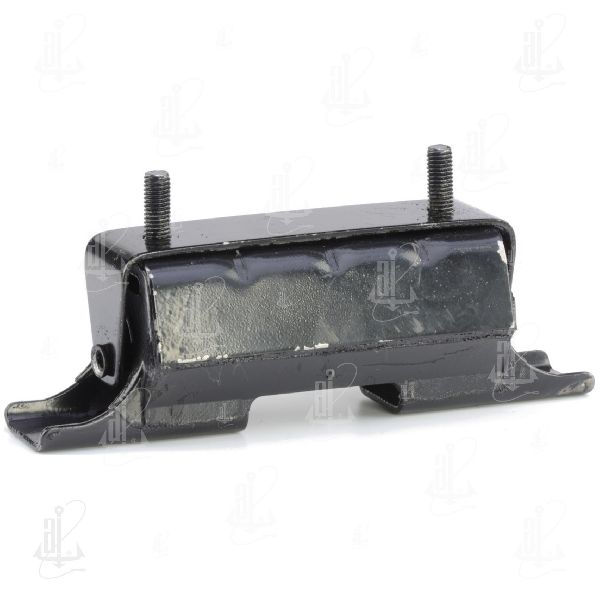


The information in this article is provided for general reference and educational purposes only. Vehicle specifications, procedures, and part compatibility can vary by production date, trim level, and region. Always consult your vehicle's factory service manual and verify part numbers before purchasing or performing repairs. Safety-critical components such as airbags, seat belts, and braking systems should be installed by a qualified professional.
- Gmc SIERRA DENALI:
- 🧭 Diagnostic Flowchart
- 🎬 Helpful Videos
- 🛍️ Shop This Part
- What's Unique About the 2009-2013 Gmc SIERRA DENALI
- Symptoms You May Notice
- Most Likely Causes
- Rare But Worth Checking
- Diagnosis Steps
- Parts You'll Likely Need
- Related Codes That Often Appear With This One
- Technical Service Bulletins (TSBs) & Recalls
- Platform-Specific Known Issues
- Mechanic-Grade Diagnostic Values
- Hidden / Shadow Codes Worth Checking
- Scan Tool Commands That Help
- Wiring & Ground Locations
- Real Owner Repair Stories
- OEM Part Supersession History
- Model Year Variations Within This Range
- 🎟️ Get 5% Off