

P2797 on 2010-2015 Toyota Prius: Auxiliary Transmission Pump Failure Causes and Fixes
On a 2010-2015 Prius, code P2797 almost always means the internal auxiliary transmission fluid pump has failed. This requires replacing the pump assembly inside the transaxle, a job for a professional. Expect costs to range from $700 to $1,200.
- P2797 on a Gen 3 Prius points to a serious issue with the auxiliary transmission pump, which is critical for the hybrid system.
- The most common cause is the failure of the pump itself, which is located inside the transaxle.
- Diagnosis requires a professional scan tool to command the pump on and verify its operation; this is not a simple DIY diagnosis.
- Do not drive with this code active. Driving with a faulty auxiliary pump can lead to harsh shifting and expensive damage to the transaxle.
- Before replacing the pump, ensure a technician checks the related wiring, connectors, fuses, and for any open recalls on the hybrid inverter to rule out a simpler electrical or control module fault.
What's Unique About the 2010-2015 Toyota Prius
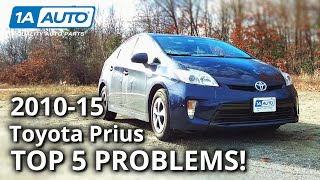
🎬 Watch: Common problems with 3rd Gen Prius modelsThe third-generation Prius relies on its auxiliary transmission pump for seamless operation of the hybrid system. Unlike a conventional car, this pump is critical for the vehicle to move from a stop and to enable the fuel-saving auto-stop feature. A failure isn't just an inconvenience; it directly impacts the core functionality of the hybrid drivetrain, often leading to pronounced shifting issues and potentially leaving the vehicle unable to move.
Symptoms You May Notice
- Check Engine Light is on
- Master Warning Light (red triangle) may be illuminated
- Auto Start/Stop system is disabled (engine runs continuously at stops)
- Harsh shifting or a noticeable 'bump' when accelerating from a stop
- Hesitation or reduced acceleration
- Transmission slipping or delayed gear engagement
- In severe cases, the vehicle may not move in any gear
- Replacing the entire transaxle when only the internal auxiliary pump has failed.
- Assuming the pump is bad without first checking for simple wiring, fuse, or relay issues.
- Replacing the pump when the root cause is a software issue or a failing Power Management Control ECU (Inverter).
Most Likely Causes
- Internal Failure of the Auxiliary Transmission Fluid Pump 🔴 High Probability → Shop Transmission Assembly The electric motor within the pump assembly can wear out or fail over time, which is a common failure point in vehicles that rely on it for frequent start-stop operation. The internal motor can seize or develop an open circuit.
How to confirm: A technician can use a professional scan tool (like Toyota's Techstream) to perform an 'Active Test' on the oil pump, commanding it to run at specific speeds (e.g., 500 RPM, 1000 RPM) and comparing the command to the actual pump revolution data. A significant discrepancy, or a current draw of 0A or over 20A, confirms pump failure.
Typical fix: Replace the 'Pump Assembly, Oil W/Motor' inside the transaxle.
Est. part cost: $450-$700 - Damaged Wiring or Corroded Connectors 🟡 Medium Probability Vibrations and heat can cause wiring harnesses to chafe or connectors to loosen over time, leading to poor electrical contact. This can interrupt the power supply or the control signal to the pump.
How to confirm: Visually inspect the wiring harness leading to the transaxle for any signs of damage, chafing, or corrosion at the connectors. Test for proper voltage (12V ± 0.5V) and ground (0 Ω) at the pump's electrical connector using a multimeter.
Typical fix: Repair the damaged section of the wiring harness or clean/replace the faulty connector.
Est. part cost: $20-$150 - Power Management Control ECU (Inverter) Failure ⚪ Low Probability The control module that commands the pump can fail internally. Toyota issued recalls for 2010-2015 Prius models for inverter issues where high operating temperatures could damage internal transistors, leading to various warnings and reduced power. While not specifically for P2797, a failing inverter can disrupt pump control.
How to confirm: This is typically diagnosed by exclusion. If the pump and wiring are confirmed to be good but the code persists and the pump does not respond to scan tool commands, the ECU is the likely culprit.
Typical fix: Replace the Power Management Control ECU / Inverter assembly. Dealers may also need to perform a software update as part of the recall remedy.
Est. part cost: $1000-$2000
Rare But Worth Checking
- Blown Fuse or Faulty Relay: Always check the simple things first. A blown fuse or a bad relay in the pump's power circuit can mimic a complete pump failure and is an inexpensive fix.
Diagnosis Steps
- Connect a professional OBD-II scanner (like Toyota Techstream) to read the code and check for any other related DTCs. Record the freeze frame data.
- Clear the codes and test drive the vehicle to see if the P2797 code returns immediately.
- Visually inspect the wiring harness and connectors going to the transaxle for any obvious signs of damage, corrosion, or loose connections.
- Using a wiring diagram, check for power (12V ± 0.5V) and ground at the auxiliary pump connector with a multimeter.
- Use a bidirectional scan tool to perform an Active Test on the auxiliary oil pump. Command the pump to run at various speeds and monitor the actual pump RPM data.
- While commanding the pump on, check the current draw with an ammeter. A reading of 0A suggests an open circuit, while a high draw (over 20A) suggests a seized motor.
- If the pump fails to run or its speed does not match the commanded speed, and power/ground are present, the pump assembly is faulty.
- If the pump does not respond and power or ground is missing, trace the wiring back to the control module and relay/fuse box to find the open or short circuit.
- If the pump and wiring test good, the Power Management Control ECU may be at fault. Check for any applicable recalls or TSBs related to the inverter before replacing it.
Parts You'll Likely Need
- Pump Assembly, Oil W/Motor (Auxiliary Transmission Pump)
(OEM #35300-47010)— This is the component that most commonly fails internally, causing the P2797 code.
Trusted brands: Toyota Genuine Parts
OEM price range: $540-$800
Aftermarket price range: $350-$500
Related Codes That Often Appear With This One
- P0C29 — This code for 'Auxiliary Transmission Fluid Pump Driver Circuit Performance' often appears with P2797, pointing more specifically to an electrical circuit issue between the controller and the pump.
- P0C2C — This code for 'Auxiliary Transmission Fluid Pump Control Module Feedback Signal Range/Performance' indicates a problem with the signal being sent back from the pump, which can accompany the general performance fault of P2797.
Platform-Specific Known Issues
- A recall was issued for some 2010-2015 Prius models related to the hybrid system inverter (NHTSA Campaign ID: 14V053000, 18V684000, 20V369000). This component controls the auxiliary pump. An inverter failure can cause the hybrid system to shut down. It is critical to check if a vehicle's VIN is affected, as an inverter issue could be the root cause of P2797.
- A user on PriusChat forums described a scenario where the P2797 code appeared, and the ultimate fix was replacing the auxiliary pump. The user noted the car would have a harsh 'bump' from a stop, a classic symptom. This real-world experience confirms the pump as the primary failure point.
Mechanic-Grade Diagnostic Values
- Auxiliary Pump Speed Deviation — expected: Less than 500 RPM difference between commanded and actual speed.. Failure: A difference greater than 500 RPM for more than a few seconds will trigger the P2797 code.
- Voltage at Auxiliary Pump Connector — expected: 12V ± 0.5V with key on.. Failure: Voltage significantly below 12V indicates a wiring or power supply issue.
Hidden / Shadow Codes Worth Checking
- Information Code 526 / 613 (with P0AA6): While P2797 relates to pump performance, if seen with P0AA6 (Hybrid Battery Voltage Isolation Fault), Toyota's Techstream can show information codes. For Gen 2, info code 613 pointed to a transmission-specific isolation fault, often in the MG2 stator. While the Gen 3 system is different, a similar pattern of using information codes to pinpoint the fault location within the hybrid system exists and requires a dealer-level scan tool to read. (see via Toyota Techstream software)
Scan Tool Commands That Help
- Toyota Techstream: Active Test: "Control the Aux Trans Fluid Pump Speed 🎬 Watch: How to run active tests using Techstream" — This is the primary diagnostic step after checking for codes. It allows a technician to directly command the pump to run at various speeds (e.g., 500 RPM, 1000 RPM, etc.) and monitor the live data PID for "Aux Trans Fluid Pump Speed" to see if it responds correctly. A failure to respond, or a large deviation from the commanded speed, confirms a fault in the pump or its circuit.
Wiring & Ground Locations
- Engine Harness Ground Cluster — On the 2ZR-FXE engine, there is a primary cluster of ground wires that bolt to the engine block near the coolant reservoir.. The Power Management Control ECU (Inverter) and other critical components rely on a solid ground connection. A loose or corroded ground at this location can cause intermittent and difficult-to-diagnose electrical issues, including erratic behavior of components like the auxiliary transmission pump.
- Transaxle Case Connector — The main electrical connector for the internal transaxle components, including the auxiliary pump, is located on the top or side of the transaxle case.. This is the primary connection point to test for power and ground going to the pump. Inspecting this connector for corrosion, pushed-out pins, or harness damage is a critical step before condemning the internal pump.
OEM Part Supersession History
35300-47010→35300-47010 (current)— This part number appears to be stable for the specified vehicle range without major supersessions, indicating a consistent design.
Model Year Variations Within This Range
- 2010-2015: The core design of the P410 transaxle and the 2ZR-FXE engine remained largely consistent throughout the third generation. While there were minor software updates and running changes to other vehicle systems, the diagnosis and primary cause (internal pump failure) for P2797 are the same across this model year range.
Diagnostic Flowchart
Other Known Issues on This Vehicle
Issues unrelated to this code that are worth knowing about as an owner of this generation:
- Excessive Oil Consumption 🔴 High — Common in higher-mileage vehicles (typically over 100,000 miles) due to piston ring design. Can consume over 1 quart per 1,200 miles. (Ref: TSB-0168-16 and TSB-0169-16 detail an inspection and repair procedure involving new pistons and rings.)
- Brake Actuator Assembly Failure 🔴 High — A well-documented issue where the brake actuator, which contains the ABS pump and accumulator, fails. This results in multiple brake-related warning lights and a significant loss of braking assistance. (Ref: Toyota initiated a Customer Support Program (Warranty Enhancement) for this issue, but coverage is time and mileage limited.)
- Clogged EGR System (Valve, Cooler, and Intake Manifold) 🟠 Medium — Carbon buildup clogs the EGR cooler and intake manifold passages, typically becoming problematic around 100,000-150,000 miles. This can lead to engine knocking, rough idle, and misfires. (Ref: No recall, but it is a widely known maintenance item. Cleaning is recommended to prevent potential head gasket failure.)
- Hybrid Inverter Failure 🔴 High — Internal components of the inverter can fail from thermal stress, causing the hybrid system to shut down, potentially while driving. (Ref: Multiple recalls were issued (e.g., NHTSA 14V053000, 18V684000) to update software and, if necessary, replace the inverter assembly.)
- Headlight Bulbs Burning Out Prematurely 🟡 Low — Affects 2010-2012 models. The original wiring harness can cause bulbs to overheat and fail frequently. (Ref: A recall was issued to replace the wiring harness and any affected bulbs.)
Used vs. New Parts: Buying Guide for This Vehicle
When a used part is the smart pick: For the Power Management Control ECU (Inverter), a used part from a reputable salvage yard with a warranty can be a cost-effective alternative to a new OEM unit, especially if the vehicle is older. For the auxiliary pump itself, used is generally not recommended.
Donor-vehicle mileage cap: roughly under 100000 miles for the part to have meaningful remaining life.
What to inspect on the donor part:
- For an Inverter: Verify the donor vehicle's VIN to ensure it wasn't part of a recall or had a history of hybrid system issues.
- Check for any physical damage, corrosion on the connectors, or signs of overheating on the casing.
- Obtain the mileage from the donor vehicle; lower mileage is strongly preferred.
OEM-only on this vehicle (don't cheap out):
- Auxiliary Transmission Fluid Pump: Due to the high labor cost to access and replace this internal transaxle part, installing a used pump is a significant gamble. A new OEM part is strongly recommended to ensure longevity and avoid a repeat repair.
Aftermarket brands forum-validated for this vehicle:
- For the auxiliary pump, aftermarket options are limited and not widely documented. Sticking with a Toyota Genuine Part is the safest choice.
Brands owners have reported issues with on this vehicle:
- Unknown or unverified brands for the auxiliary pump found on online marketplaces should be avoided due to the critical nature of the part and the high cost of labor for replacement.
Real Owner Stories
Aggregated from forums and TSBs cited above. Mileages and costs reflect what owners reported in those sources.
2010-2015 Toyota Prius 1.8L Hybrid
Symptoms: The car would have a harsh 'bump' from a stop, which is a classic symptom of this code.
What fixed it: Replacing the auxiliary pump.
Source hint: PriusChat Forum - "P2797 Auxiliary Transmission Fluid Pump"
2010-2015 Toyota Prius 1.8L Hybrid
Symptoms: Check engine light and master warning light (red triangle) illuminated; users advised against driving to prevent further transmission damage.
What fixed it: Replacing the internal pump assembly.
Source hint: Reddit r/prius - Various threads
Related OBD-II Codes
Frequently Asked Questions
Is there a recall for the 2010-2015 Prius that could cause the P2797 code?
Why does my Prius engine keep running at stoplights now that the Check Engine Light is on?
Can I use a used auxiliary oil pump from a salvage yard to save money?
How can a technician confirm if the pump motor has seized on my 2012 Prius?
Does the Lexus CT200h suffer from this same P2797 auxiliary pump issue?
What are the symptoms of a failing auxiliary pump besides the warning light?
Helpful Videos

We Have This Part in Stock




The information in this article is provided for general reference and educational purposes only. Vehicle specifications, procedures, and part compatibility can vary by production date, trim level, and region. Always consult your vehicle's factory service manual and verify part numbers before purchasing or performing repairs. Safety-critical components such as airbags, seat belts, and braking systems should be installed by a qualified professional.
- Toyota Prius:
- 🧭 Diagnostic Flowchart
- 🎬 Helpful Videos
- 🛍️ Shop This Part
- What's Unique About the 2010-2015 Toyota Prius
- Symptoms You May Notice
- Most Likely Causes
- Rare But Worth Checking
- Diagnosis Steps
- Parts You'll Likely Need
- Related Codes That Often Appear With This One
- Platform-Specific Known Issues
- Mechanic-Grade Diagnostic Values
- Hidden / Shadow Codes Worth Checking
- Scan Tool Commands That Help
- Wiring & Ground Locations
- OEM Part Supersession History
- Model Year Variations Within This Range
- Other Known Issues on This Vehicle
- Used vs. New Parts: Buying Guide for This Vehicle
- Real Owner Stories
- 2010-2015 Toyota Prius 1.8L Hybrid
- 2010-2015 Toyota Prius 1.8L Hybrid
- Related OBD-II Codes
- Frequently Asked Questions
- 🎟️ Get 5% Off