

OBD-II Code P2800: Transmission Range Sensor 'B' Circuit Malfunction
The Ultimate Guide to What P2800 Means, Why It Triggers, and How to Fix It
- P2800 triggers when your vehicle's computer loses the 'B' circuit signal from the Transmission Range Sensor, creating an immediate rollaway or no-start risk.
- Expect severe drivability issues, including a strict no-start condition, the transmission locking into 3rd gear (limp mode), or a blank PRNDL dash display.
- Inspect the sensor's wiring harness and connectors for green corrosion or water damage before buying parts, as electrical shorts cause over 60% of P2800 codes.
- Owners of 2013-2019 Ford Fusions and C-MAXs must check main harness connectors C134 and C146 for water intrusion per TSB SSM 47790 before replacing the sensor.
What Does P2800 Mean?
P2800 means your vehicle's computer lost the signal from the 'B' circuit of the Transmission Range Sensor (TRS). This sensor (also called a Neutral Safety Switch) tells the computer which gear you selected (Park, Reverse, Neutral, Drive). Without this signal, the computer cannot confirm the gear position, causing symptoms ranging from a blank gear indicator to a complete engine no-start.
Technical definition: The SAE/OBD-II definition is 'Transmission Range Sensor “B” Circuit (PRNDL Input)'. This indicates the Powertrain Control Module (PCM) or Transmission Control Module (TCM) detected an electrical malfunction in the secondary 'B' circuit of the TRS. Modern transmissions use dual circuits ('A' and 'B') for redundancy, constantly comparing signals to verify gear position. A fault in the 'B' circuit breaks this safety check.
Can I Drive With P2800?
No — Do Not Drive. Driving is strongly discouraged. A P2800 fault presents a significant safety risk. Your vehicle will likely fail to start, leaving you stranded, or unexpectedly shift into neutral while driving. Most critically, the dash gear display often mismatches the actual engaged gear, creating a severe rollaway risk if you believe the car is in Park. Continuing to drive in 'limp mode' causes accelerated wear on transmission clutches.
Common Causes
- Damaged or Corroded Wiring/Connector (Very Common) — External sensors face moisture, road salt, and exhaust heat. This exposure corrodes connector pins or melts wiring insulation, resulting in a lost signal.
- Water Intrusion into Main Harness Connectors (Ford Specific) (Very Common) — On 2013-2019 Ford Fusion, C-MAX, and Lincoln MKZ models, water leaks into major harness connectors (C134/C146) distant from the sensor. This corrosion triggers P2800 per Ford TSB SSM 47790.
- Failed Transmission Range Sensor (TRS) (Common) — The sensor fails internally from heat, wear, or electrical shorts. If wiring checks pass, a faulty sensor is the culprit.
- Misadjusted or Damaged Shift Linkage (Common) — The physical cable connecting the shifter to the transmission stretches, frays, or misaligns (often after transmission service). This prevents the sensor from rotating to the correct gear position.
- Low Battery Voltage or Charging System Issues (Less Common) — A weak battery or failing alternator causes low system voltage, creating communication errors between modules and triggering a false P2800 code.
- Faulty or Outdated Control Module (PCM/TCM) (Rare) — The computer reading the sensor signal failed or requires a software update. Consider this only after exhaustively ruling out wiring and sensor issues.
Symptoms
- Car Won't Start — The engine will not crank. The computer disables the starter because it cannot confirm the transmission is safely in Park or Neutral.
- Transmission Enters 'Limp Mode' — The transmission defaults to a single gear (usually 2nd or 3rd) to prevent damage, resulting in poor acceleration and limited top speed.
- Incorrect or Blank Gear Display — The PRNDL indicator on the dash shows the wrong gear, flashes continuously, or goes completely blank.
- Check Engine Light Illuminated — The Malfunction Indicator Lamp (MIL) or a transmission-specific warning light (gear icon) turns on immediately.
- Harsh or Delayed Shifting — The transmission shifts roughly or hesitates when engaging a gear due to conflicting gear position data.
- Backup Lights Fail — The computer does not receive a valid Reverse signal, keeping the backup lights off when reversing.
Diagnostic Flowchart
Tap your situation to follow the diagnostic path that matches what you're seeing on this code.
Common Fixes & Costs
- Clean and Secure Corroded Electrical Connectors — Parts: $5-$25, Labor: $100-$150, ~1.0 hr book time (Intermediate)
- Replace Transmission Range Sensor (External) — Parts: $40-$150, Labor: $150-$300, ~1.5 hr book time (Intermediate)
- Repair Damaged Wiring Harness — Parts: $20-$50, Labor: $150-$300, ~2.0 hr book time (Professional)
- Adjust Shift Linkage or Sensor — Parts: $0, Labor: $75-$150, ~0.8 hr book time (DIY)
- Replace Powertrain/Transmission Control Module (PCM/TCM) — Parts: $600-$1500, Labor: $200-$400, ~2.0 hr book time (Professional)
DIY vs Professional
- Clean and Secure Corroded Electrical Connectors 🟢 Beginner
Tools: Socket set, electrical contact cleaner, small wire brush, dielectric grease, safety glasses. - Replace External Transmission Range Sensor 🟢 Beginner
Tools: Socket set, wrenches, torque wrench, new sensor. - Repair Damaged Wiring Harness 🟢 Beginner
Tools: Multimeter, wire strippers, soldering iron, heat shrink tubing. - Adjust Shift Linkage or Sensor 🟢 Beginner
Tools: Wrench/socket set, OBD-II scanner with live data. - Replace Powertrain/Transmission Control Module (PCM/TCM) 🟢 Beginner
Tools: Specialized scan tools for programming.
Used vs. New Parts: Buying Guide
When a used part is worth it: For an external Transmission Range Sensor, a used OEM part from a low-mileage, un-wrecked vehicle is cost-effective if the new OEM part is prohibitively expensive.
Donor-vehicle mileage cap: roughly under 80000 miles for the part to have meaningful remaining life.
Donor quality checklist:
- Verify the donor vehicle was not scrapped due to transmission failure.
- Avoid parts from 'Rust Belt' regions to eliminate pre-existing connector corrosion.
- Match the part number exactly to ensure correct voltage signals.
Decision logic:
- If The vehicle is under 100,000 miles and a new aftermarket part is under $75 → Buy new. Minimal savings from a used part do not justify the risk of premature failure.
- If The part is internal to the transmission (requiring pan removal) → Always buy new. Repeat labor costs far outweigh initial part savings.
- If The vehicle is over 150,000 miles and the budget is tight → A used part is reasonable, but expect a shorter lifespan.
Warranty tradeoff: Salvage yards offer 30-90 day warranties. New aftermarket parts offer 1-year to lifetime warranties. New OEM parts carry a 1-year manufacturer warranty.
Worst-case if a used part fails: $250-$500 (covers repeat labor and a replacement part if a used external sensor fails)
What Happens If You Wait — Timeline
- 0-1 month: Intermittent fault. The Check Engine Light turns on and off. Symptoms like a brief hesitation to start occur but are inconsistent. The code stores as 'pending'. (MPG impact: 0%% · Added cost: $0)
- 1-3 months: Consistent fault. The Check Engine Light remains on. The vehicle occasionally refuses to start without wiggling the shifter. Backup lights fail. Stranding risk increases. (MPG impact: 0-5% (if shifting becomes erratic)% · Added cost: $100-$300 (potential for a tow))
- 3-6 months: Severe symptoms. The transmission frequently enters 'limp mode,' locking in a single gear. No-start events become common. Driving is a significant safety risk. (MPG impact: 10-30% (due to being stuck in a low gear at higher speeds)% · Added cost: $500+ (prolonged driving in limp mode causes excessive heat and wear on transmission clutches))
- 6+ months: Cascading failures. Continued operation with erratic shifting and high temperatures leads to internal transmission damage, requiring significant transmission rebuild work. (MPG impact: N/A (vehicle is undrivable)% · Added cost: $2000-$5000+ (transmission component damage on top of the initial electrical fault))
Cost of Not Fixing It
- Immediate: Stranding risk. The vehicle fails to start because the computer cannot confirm it is in Park or Neutral. (Added cost: $100-$300 (for a tow))
- 0-3 Months: Accelerated transmission wear. Driving in 'limp mode' or with harsh shifting stresses clutches and internal components, shortening transmission life. (Added cost: $500-$2000+ (if internal components sustain damage))
- 3+ Months: Catastrophic transmission failure. Prolonged stress from unpredictable shifting behavior requires a full transmission rebuild or replacement. (Added cost: $3500-$7000+)
Diagnosis Steps
- Check for Technical Service Bulletins (TSBs)
Check for TSBs related to P2800 for your specific vehicle. For example, Ford TSB SSM 47790 points to water intrusion in specific connectors as the primary cause for Fusions, saving hours of misdiagnosis.
Tools: Online TSB Database or Repair Manual (Beginner) - Scan Codes and Analyze Live Data
Use an advanced scanner to confirm P2800 and monitor Live Data for TRS 'A' and 'B'. Slowly move the shifter; both signals must change smoothly. If the 'B' signal is stuck or reads 'Invalid', the fault is confirmed.
Tools: OBD-II Scanner with Live Data (Beginner) - Visually Inspect Connectors and Wiring
Unplug the sensor and related inline connectors. Use a flashlight to check for green/white corrosion, bent pins, or water entry. Trace the harness for melted sections near the exhaust.
Tools: Flashlight, Safety Glasses (Beginner) - Perform a 'Wiggle Test'
With live data active on your scanner, wiggle the wiring harness at the sensor connector and along its path. If the 'B' signal cuts out or becomes erratic, you found an intermittent open or short in the wire.
Tools: OBD-II Scanner with Live Data (Intermediate) - Check Shift Linkage Alignment
Ensure the shift cable is secure at the shifter and transmission lever. Place the shifter in Neutral, loosen the sensor's mounting bolts, and rotate it until live data shows a valid 'Neutral' signal, then tighten.
Tools: Basic Hand Tools (Wrenches, Socket Set) (Intermediate) - Backprobe for Voltage
With the key on (engine off), backprobe the connector. Verify 5V/12V reference voltage and ground. Backprobe the 'Circuit B' signal wire while shifting gears; you should see distinct voltages (e.g., ~0.5V in Park, ~4.5V in Drive).
Tools: Multimeter with Backprobe Pins (Advanced) - Perform a Voltage Drop Test
Test the ground circuit by placing multimeter leads on the negative battery terminal and the sensor ground pin (key on). A reading above 0.1V indicates a bad ground. Repeat for the power side; readings above 0.2V indicate excessive resistance.
Tools: Multimeter (Advanced) - Test Sensor Internal Resistance
Disconnect the sensor. Measure resistance (Ohms) between the 'Circuit B' pins while manually moving the actuator arm. If resistance is infinite (OL) or static, the sensor failed internally.
Tools: Multimeter, Vehicle-Specific Repair Manual (Advanced) - Check for Shorts to Ground
Disconnect the harness from the sensor and control module. Measure resistance between the 'Circuit B' signal wire and chassis ground. A reading under 30 Megaohms indicates a short circuit to ground.
Tools: Multimeter, Vehicle-Specific Repair Manual (Advanced)
When This Code Triggers (Freeze-Frame Conditions)
- Engine Coolant Temp: 170-220°F (77-104°C) (The fault logs frequently when the engine reaches normal operating temperature.)
- RPM: 1000-2500 RPM (Triggers during steady-state driving or precisely when shifting gears.)
- Engine Load: 15-40% (Occurs under light to moderate engine load, rarely requiring heavy acceleration to trigger.)
- Vehicle Speed: Any, including 0 MPH (Detected at any speed, including immediately at startup if the sensor cannot confirm 'Park' or 'Neutral'.)
Related Codes
- P0705 — A general code for a TRS circuit malfunction. Seeing P0705 alongside P2800 strongly suggests the sensor or its direct wiring is the root cause.
- P2805 — Indicates 'Transmission Range Sensor A/B Correlation' (signals do not match). This confirms the 'B' circuit is sending invalid data.
- P2802 — Points to a fault in the 'C' circuit. On Fords, P2802 appears with P2800 when water intrusion disrupts multiple signals simultaneously.
- U0101 — Means 'Lost Communication with TCM'. Appearing with P2800, it points to a bad module ground, a major wiring harness problem, or a faulty TCM.
Climate & Environmental Factors
- Road Salt / De-icing Agents: Saltwater is a powerful electrolyte that dramatically accelerates corrosion on exposed connectors and wiring. Vehicles in 'Rust Belt' regions are significantly more susceptible to P2800.
- High Humidity / Water Exposure: Frequent car washes, high water, or humid climates force moisture into unsealed connectors, causing electrical shorts and corrosion over time.
How to Talk to a Mechanic About This Code
Say this: "I have a P2800 code and my car won't start intermittently. Please check for TSBs, then inspect the transmission range sensor connector and wiring for corrosion before quoting a sensor replacement."
This signals you are an informed customer. It directs the shop to follow a logical diagnostic path, starting with the cheapest fixes (TSBs, wiring) before jumping to an expensive part replacement.
Avoid saying:
- 'My check engine light is on, can you just fix it?'
- 'My car is acting weird, I think it's the transmission.'
- 'Just do whatever you think is best.'
Questions to ask before authorizing the repair:
- Did you find a Technical Service Bulletin for this issue on my vehicle?
- Did you test the sensor's voltage and ground at the connector, and did the signal change when moving the shifter?
- Can you show me the corrosion or damage on the old part or wiring?
- What is the warranty on the parts and labor for this repair?
Where to Take It: Dealer vs Independent vs Chain
- Dealer:
Recommended for specific, documented TSBs or warranty work. Otherwise, an independent shop is more cost-effective.
Best for: Vehicles under warranty., Known, complex manufacturer-specific issues like the Ford TSB for water intrusion or TCM software updates., When an independent shop failed to fix the issue.
Downsides: Highest labor rates and parts costs., Defaults to replacing entire assemblies instead of smaller components. (Typical cost: +50% vs. baseline) - Independent Shop:
Best fit for most P2800 scenarios. A certified independent shop easily handles the most common causes (wiring, connectors, external sensors) at a fair price.
Best for: Out-of-warranty vehicles., Diagnosing common electrical faults, connector corrosion, and external sensor replacements., Getting a second opinion on a high dealer quote.
Downsides: Quality varies greatly; look for ASE certifications., Lacks expensive, dealer-specific tools for programming new modules if required. (Typical cost: +0% vs. baseline) - Chain Shop:
Acceptable for a straightforward external sensor swap if you are certain that is the problem. Avoid for initial diagnosis, as they frequently misdiagnose wiring or TSB-related issues.
Best for: Simple, clear-cut repairs where the diagnosis is already certain.
Downsides: Technician skill varies dramatically., Lacks advanced diagnostic experience for complex electrical issues., High pressure to upsell services. (Typical cost: -10% vs. baseline)
When to Walk Away From the Repair
If a single estimated repair cost exceeds 50% of the car's private-party value, sell or trade in the vehicle.
- Car worth $4000, fix is $600: Fix it. This is a common repair cost for an internal range sensor and is well below the threshold.
- Car worth $3000, fix is $1800: Walk away. The repair cost is over 50% of the car's value. It is not a sound financial decision.
- Car worth $10000, fix is $350: Fix it immediately. This represents a simple wiring or external sensor fix and is a small fraction of the vehicle's value.
What Scan Tool You Need for This Code
Minimum: A scanner that reads manufacturer-specific transmission codes and displays live data PIDs from the Transmission Control Module (TCM).
A basic $20 code reader only shows the 'P2800' code. It cannot show live voltage from the 'A' and 'B' sensor circuits, which is essential to determine if the fault is the sensor, wiring, or an adjustment issue.
Budget: BlueDriver Pro (~$99) — Connects to your phone via Bluetooth, reads enhanced transmission codes, and displays live data streams for the range sensor circuits. This is the minimum required tool for DIY diagnosis.
Mid-range: Foxwell NT604 Elite or Innova 5610 (~$150-350) — Dedicated handheld units providing robust live data, including graphing multiple PIDs at once (e.g., sensor A vs. sensor B). They offer wider vehicle compatibility and basic bidirectional tests.
Professional: Autel MaxiCOM MK808 / Launch CRP919E (~$450-700) — Offers full bidirectional control to command the TCM, access to manufacturer-specific diagnostic procedures, and detailed vehicle topology mapping. Provides the deepest level of insight.
How to Clear the Code After You Fix It
- Use an OBD-II scan tool to erase P2800 and related fault codes.
- Reconnect the battery if disconnected during repair.
- Perform a complete drive cycle to reset vehicle readiness monitors.
Drive cycle (~20 minutes): A generic drive cycle requires a cold start (engine off for 8+ hours), 3 minutes of idling, followed by mixed stop-and-go city driving and 5+ minutes of steady highway driving at 55-60 mph.
Readiness monitors affected: Catalyst Monitor, EVAP System Monitor, O2 Sensor Monitor
Before emissions retest: drive at least 50 miles to fully set monitors.
Watch out for:
- Disconnecting the battery clears the check engine light but resets all readiness monitors to 'Not Ready', causing an automatic emissions test failure.
- The code returns immediately if the underlying electrical fault (corroded wire, bad sensor) remains unfixed.
Will This Fail Emissions / State Inspection?
Yes — this code typically fails an OBD-II emissions inspection.
- California: An illuminated Check Engine Light causes an automatic smog check failure. A full drive cycle must set readiness monitors before re-testing.
- New York: Vehicles fail the NYS emissions inspection if the Check Engine Light is on. Stored codes like P2800 must be resolved and cleared.
- Texas: In emissions-testing counties (e.g., Harris), an active Check Engine Light is an automatic failure. In safety-only counties, erratic shifting still fails the safety inspection.
Most Commonly Affected Vehicles
- Ford Fusion, C-MAX, Lincoln MKZ (2013-2019) — Extremely prone to water intrusion in main harness connectors C134 and C146. This is the primary cause of P2800 on these models per Ford TSB SSM 47790.
- GM (Chevrolet/GMC) Silverado, Sierra, Tahoe, Suburban (2010-2023) — The sensor is an Internal Mode Switch (IMS) located inside the oil pan on the valve body, making replacement highly labor-intensive.
- Toyota Tundra, Camry, Sequoia, Tacoma (2007-2019) — The externally mounted range sensor is highly susceptible to corrosion from road salt, making connector failure a common cause.
- Nissan Titan, Altima, Sentra, Frontier (2005-2019) — Referred to as an 'Inhibitor Switch' in service manuals. Connector corrosion and internal switch failure are frequent causes.
- Dodge/Chrysler/Ram Ram 1500, Grand Caravan, Town & Country (2007-2017) — The range sensor is integrated into the main solenoid pack/valve body assembly, making replacement complex and expensive.
- Honda Pilot, Accord (2016-2022) — Defined as 'Transmission Range Switch ATP RVS Switch'. Diagnosis focuses strictly on electrical circuit failure.
- Hyundai / Kia Sonata, Sorento, Elantra (2011-2020) — Proper alignment of the new neutral safety switch during installation is critical to prevent the code from returning immediately.
- Volkswagen Jetta, Golf, Passat (2012-2021) — Caused by a faulty range sensor on DSG or automatic transmissions, frequently resulting in limp mode and severe fuel economy drops.
Manufacturer-Specific Notes
- Ford: For 2013-2016 Fusions, check Safety Recall 19S16 for a faulty shift cable bushing. For Fusion/C-MAX models, always inspect connectors C134/C146 for water damage per TSB SSM 47790 before replacing parts.
- GM: The sensor is called an Internal Mode Switch (IMS) because it is located inside the transmission oil pan and mounted directly to the valve body.
- Honda: The code is specifically defined in service manuals as 'Transmission Range Switch ATP RVS Switch', but diagnosis and symptoms are identical to a standard P2800.
- Nissan: Nissan service literature frequently refers to the Transmission Range Sensor as the 'Inhibitor Switch'.
Real Owner Stories
2014 Ford Fusion at 110K miles
Check engine light appeared. Car would not start intermittently. PRNDL display on dash was blank.
What they tried:
- Tested battery, which was good.
- Received a shop quote for a new Transmission Range Sensor.
- Researched online and found Ford TSB SSM 47790.
Outcome: Inspected connector C134 and found significant green corrosion from water intrusion. Cleaned the pins with contact cleaner and applied dielectric grease. The code cleared and did not return. Total cost: $20.
Lesson: On affected Ford models, always inspect the main harness connectors for water damage per TSB SSM 47790 before replacing the sensor. It is the most common cause and a much cheaper fix.
2011 Toyota Tundra at 150K miles
Vehicle in a 'Rust Belt' state. Check engine light on, backup lights failed, and transmission shifted harshly. Code P2800 present.
What they tried:
- Wiggled the shifter while starting the car; it started once, suggesting a loose connection or sensor.
Outcome: The external transmission range sensor connector was heavily corroded from road salt. Replaced the sensor (Part #84540-0C010) and the connector pigtail. Total repair cost: $150 for parts, taking two hours.
Lesson: On externally mounted sensors in regions with road salt, corrosion of the sensor and connector is highly likely. Visually inspect the connector first.
2016 Chevy Silverado 1500 at 85K miles
Check engine light came on, transmission went into 'limp mode,' stuck in 3rd gear. Codes P2800 and P0705 stored.
What they tried:
- Transmission shop quoted over $1,200, suspecting a valve body issue.
- Dealer provided a second opinion, diagnosing a faulty Internal Mode Switch (IMS).
Outcome: Replaced the Internal Mode Switch located inside the transmission oil pan. This required draining fluid and dropping the pan. Final repair bill: $600. Problem resolved.
Lesson: On GM trucks, the sensor is internal, making it a labor-intensive job. If P0705 is present with P2800, it strongly points to the sensor itself rather than external wiring.
2017 Honda Pilot at 70K miles
Check engine light on, no other immediate symptoms. Code P2800 found, defined as 'Transmission Range Switch ATP RVS Switch (Open or Short)'.
What they tried:
- Dealership tested the circuit with a diagnostic tool.
- Performed an open wire check and confirmed the wiring harness was good.
Outcome: Diagnostic tests isolated the fault to the internal transmission range switch. The switch was replaced, and the code cleared.
Lesson: Even without severe symptoms, the code indicates a real electrical fault. Manufacturer-specific definitions sound different but point to the exact same component.
How to Prevent This Code From Triggering
- Apply dielectric grease to the sensor connector (Any time the connector is disconnected, or once every 3-5 years) — Dielectric grease seals the connector, preventing moisture and oxygen from reaching metal pins. This dramatically slows the corrosion process.
- Regularly wash the vehicle's undercarriage (Seasonally, especially after winter in 'Rust Belt' regions) — Washing away road salt and brine reduces corrosive materials accumulating on the transmission housing, sensor body, and wiring harness.
- Ensure wiring harnesses are properly secured (During any under-vehicle service (e.g., oil change)) — Ensuring the TRS wiring harness is secured in factory clips prevents physical damage like melting on exhaust pipes or chafing on suspension parts.
- Use the parking brake correctly on hills (Every time you park on an incline) — Engage the parking brake before shifting into Park. This puts vehicle weight on the brake, reducing long-term stress on the shift linkage and maintaining sensor alignment.
Frequently Asked Questions
Is the Transmission Range Sensor the same as the Neutral Safety Switch?
Yes, for most modern vehicles, these terms are interchangeable. The Transmission Range Sensor (TRS) absorbed the function of the older neutral safety switch. It prevents the engine from starting unless the car is in Park or Neutral.
What is the most common mistake when diagnosing P2800?
The most expensive mistake is replacing the Transmission Control Module (TCM) without proper diagnosis. The problem is overwhelmingly more likely to be a corroded connector, a bad ground, or the sensor itself. Always diagnose from the cheapest and most probable cause upwards.
Can a bad battery cause a P2800 code?
Yes. A weak battery or failing alternator causes low voltage across the vehicle's electrical system. This leads to data errors between modules, triggering a false P2800 code even if the sensor is fine.
Will changing my transmission fluid fix a P2800 code?
No. P2800 is a purely electrical circuit fault. Dirty fluid causes mechanical transmission problems, but it will not resolve a bad sensor, damaged wire, or corroded connector.
My car won't start, but the lights come on. Could P2800 be the reason?
Absolutely. If the computer doesn't get a clear signal that the transmission is in Park or Neutral, it disables the starter. This is a safety precaution to prevent the car from lurching on startup.
What does 'limp mode' mean?
Limp mode is a protective feature where the TCM locks the transmission into a single gear (usually 2nd or 3rd). This limits your speed but allows you to drive to a repair shop while preventing further internal transmission damage.
Why does the code specify 'Circuit B'?
Modern transmissions use two separate sensor circuits ('A' and 'B') as a failsafe. The computer constantly compares their signals, and if they don't match, it triggers a code. The 'B' designation tells a technician to focus diagnosis on that specific secondary signal path.
Can I bypass the neutral safety switch to start my car?
While technically possible in older vehicles, it is extremely dangerous and strongly advised against. Bypassing the switch allows the vehicle to start in any gear. This causes the vehicle to lurch forward or backward unexpectedly, risking serious injury.
Key Takeaways
- P2800 triggers when your vehicle's computer loses the 'B' circuit signal from the Transmission Range Sensor, creating an immediate rollaway or no-start risk.
- Expect severe drivability issues, including a strict no-start condition, the transmission locking into 3rd gear (limp mode), or a blank PRNDL dash display.
- Inspect the sensor's wiring harness and connectors for green corrosion or water damage before buying parts, as electrical shorts cause over 60% of P2800 codes.
- Owners of 2013-2019 Ford Fusions and C-MAXs must check main harness connectors C134 and C146 for water intrusion per TSB SSM 47790 before replacing the sensor.
Shop the Parts Behind P2800
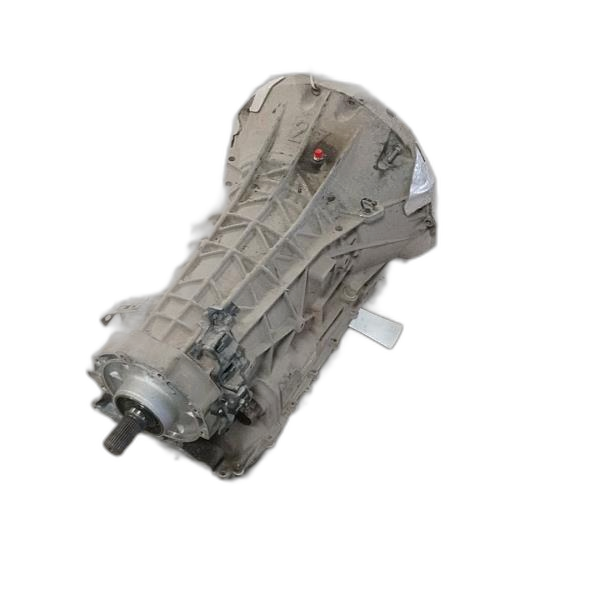
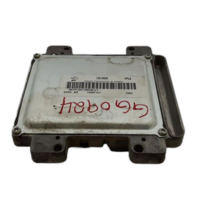
Below are the parts most often responsible for code P2800, ranked by how frequently each one is the actual culprit (per the diagnosis above). Tap any to see what we have for your vehicle.



The information in this article is provided for general reference and educational purposes only. Vehicle specifications, procedures, and part compatibility can vary by production date, trim level, and region. Always consult your vehicle's factory service manual and verify part numbers before purchasing or performing repairs. Safety-critical components such as airbags, seat belts, and braking systems should be installed by a qualified professional.
- 🧭 Diagnostic Flowchart
- 🛍️ Shop This Part
- What Does P2800 Mean?
- Can I Drive With P2800?
- Common Causes
- Symptoms
- Common Fixes & Costs
- DIY vs Professional
- Used vs. New Parts: Buying Guide
- What Happens If You Wait — Timeline
- Cost of Not Fixing It
- Diagnosis Steps
- When This Code Triggers (Freeze-Frame Conditions)
- Related Codes
- Climate & Environmental Factors
- How to Talk to a Mechanic About This Code
- Where to Take It: Dealer vs Independent vs Chain
- When to Walk Away From the Repair
- What Scan Tool You Need for This Code
- How to Clear the Code After You Fix It
- Will This Fail Emissions / State Inspection?
- Most Commonly Affected Vehicles
- Manufacturer-Specific Notes
- Real Owner Stories
- 2014 Ford Fusion at 110K miles
- 2011 Toyota Tundra at 150K miles
- 2016 Chevy Silverado 1500 at 85K miles
- 2017 Honda Pilot at 70K miles
- How to Prevent This Code From Triggering
- Frequently Asked Questions
- Is the Transmission Range Sensor the same as the Neutral Safety Switch?
- What is the most common mistake when diagnosing P2800?
- Can a bad battery cause a P2800 code?
- Will changing my transmission fluid fix a P2800 code?
- My car won't start, but the lights come on. Could P2800 be the reason?
- What does 'limp mode' mean?
- Why does the code specify 'Circuit B'?
- Can I bypass the neutral safety switch to start my car?
- Key Takeaways
- 🎟️ Get 5% Off