

P2800 on 2007-2018 Ford Edge: Transmission Range Sensor Circuit Causes and Fixes
On a 2007-2018 Ford Edge, code P2800 is most often caused by a failed internal Transmission Range Sensor, which is part of the lead frame/valve body assembly. This is a complex repair requiring internal transmission work, with shop costs typically ranging from $1,200 to $1,800.
- P2800 on a Ford Edge indicates a serious transmission issue that should be addressed immediately.
- For 2007-2014 models, the cause is almost certainly a failed internal Transmission Range Sensor (lead frame).
- For 2015-2018 models, always inspect the shifter cable bushing at the transmission first, as it's a common and much cheaper fix.
- Repairing the internal sensor is a complex job not suitable for most DIYers and carries a significant labor cost.
- Do not drive the vehicle with this code, as it can result in a no-start condition or unpredictable transmission behavior.
What's Unique About the 2007-2018 Ford Edge
The Ford Edge from this period uses a 6F50 or 6F55 automatic transmission where the Transmission Range Sensor (TRS) is not a simple, external bolt-on part. Instead, it is integrated into a component called the molded lead frame, which is attached to the valve body inside the transmission. This design makes what would be a simple sensor swap on other vehicles a much more complex and labor-intensive repair. While other issues like wiring or shift bushings can cause this code, the internal lead frame is the most common point of failure, a known issue across many Ford models using this family of transmissions.
Generation note: This guide covers two Ford Edge generations. The primary cause differs slightly: - First Generation (2007-2014): The most common cause is the failure of the internal Transmission Range Sensor, which is part of the lead frame assembly. This is a well-documented failure. - Second Generation (2015-2018): While the internal sensor can still fail, these models are also known to have issues with the shift cable bushing, which can degrade and detach, causing a mismatch between the shifter and the transmission's actual gear. This issue was common enough to be part of Ford's Safety Recall 22S43.
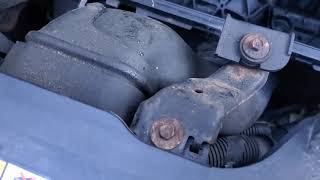
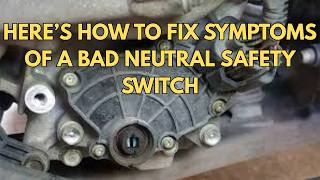
🎬 Watch: How to inspect your shifter cable bushingSymptoms You May Notice
- Check Engine Light is on
- Incorrect gear selection displayed on the dashboard (e.g., shows 'R' when in 'D')
- Vehicle will not crank or start in Park, but may start in Neutral
- Transmission enters 'limp mode,' often getting stuck in 3rd or 5th gear
- Harsh or delayed transmission engagement
- Reverse/backup lights do not work correctly
- Backup camera stays on when shifted into Drive
- Replacing the entire transmission when only the internal lead frame is faulty.
- Replacing the lead frame/range sensor when the actual problem is a simple, inexpensive shift cable bushing (on 2015-2018 models).
- Assuming the sensor is bad without first checking for wiring corrosion at the main transmission connector.
Most Likely Causes
- Internal Transmission Range Sensor (Lead Frame) Failure 🔴 High Probability → Shop Transmission Assembly The sensor is part of a molded plastic lead frame inside the transmission, which is exposed to heat and vibration, leading to internal circuit failure over time. This is a well-documented issue on Ford's 6F50/6F55 transmissions used across many models like the Edge, Explorer, and Taurus.
How to confirm: Follow the diagnostic procedure in Ford TSB 13-5-27, which involves measuring resistance between specific pins on the external transmission connector (C168). With the key off and C168 disconnected, measure resistance between pin 8 and pins 4, 5, 6, and 7. A reading above 5 Ohms confirms a faulty internal Transmission Range Sensor.
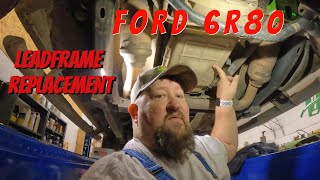
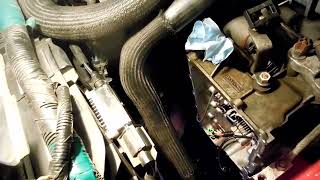
Typical fix: Replace the entire lead frame assembly (also called a conductor plate or valve body control assembly), which is located inside the transmission on the valve body. This requires draining the fluid, dropping the pan, and removing the valve body.
Est. part cost: $150-$400 - Damaged or Detached Shifter Cable Bushing 🟡 Medium Probability Applies mainly to 2015-2018 models. The plastic bushing that connects the shift cable to the transmission lever can degrade, become brittle, and detach. This causes a mismatch between the gear selector's position and the actual gear the transmission is in. Ford issued Safety Recall 22S43 for this issue on some vehicles.
How to confirm: Visually inspect the point where the shift cable connects to the lever on the transmission. If the bushing is broken or has popped off, the cable will be loose and can be moved by hand. The shifter inside the car will move, but the transmission will not change gears.
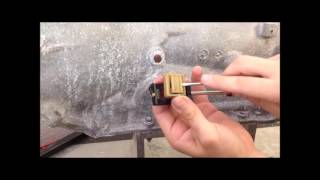
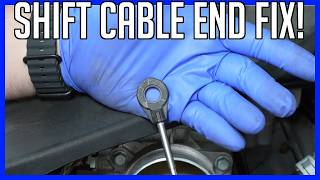
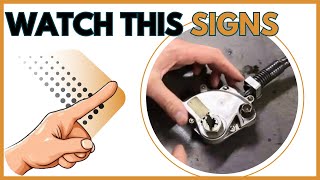
Typical fix: Replace the shifter cable bushing. This is an inexpensive part and a much easier repair than replacing the lead frame. Kits are widely available from companies like BushingFix.com. 🎬 See this easy DIY shift cable bushing replacement
Est. part cost: $10-$30 - Wiring Harness or Connector Damage ⚪ Low Probability The main transmission harness connector (C168) is exposed to the elements and can develop corrosion. Wires can also become chafed or damaged from road debris or improper repairs. A manufacturer service bulletin for other Ford models, TSB Bulletin #SSM 47790, notes that P2800 can be triggered by water entry or corrosion at various electrical connectors, including C168C.
How to confirm: Visually inspect the wiring harness leading to the transmission. Disconnect the C168 connector and check for green or white corrosion, bent pins, or moisture. Check for continuity on the relevant wires if corrosion is not obvious.
Typical fix: Clean the connector terminals with an electrical contact cleaner and apply dielectric grease to prevent future corrosion. Repair any damaged wires.
Est. part cost: $5-$25
Rare But Worth Checking
- Powertrain Control Module (PCM) Failure: → Shop Engine Control Module (ECM) This is rare. Before condemning the PCM, all other possibilities (sensor, wiring, connectors) must be exhaustively ruled out. A PCM failure would typically be accompanied by other, unrelated trouble codes.
Diagnosis Steps
- Read all Diagnostic Trouble Codes (DTCs) with a capable OBD-II scanner.
- (2015-2018 Models First): Visually inspect the shift cable bushing where it attaches to the transmission lever. This is a common and easy-to-check failure point on newer models and was subject to a recall.
- Visually inspect the main transmission wiring harness and the C168 bulk connector for any signs of corrosion, moisture, or physical damage.
- (2007-2014 Models): Perform the resistance test outlined in TSB 13-5-27. With the key off and C168 disconnected, measure resistance between pin 8 and pins 4, 5, 6, and 7. A reading above 5 Ohms confirms a faulty internal Transmission Range Sensor.
- Using a scan tool with live data capability, monitor the Transmission Range Sensor PIDs while moving the shifter. The reading should correspond directly to the gear selected. An 'Invalid' or erratic reading points to a sensor or wiring fault.
- If the sensor, bushing, and external wiring are confirmed to be good, the final step would be to diagnose the PCM, though this is the least likely cause.
Parts You'll Likely Need
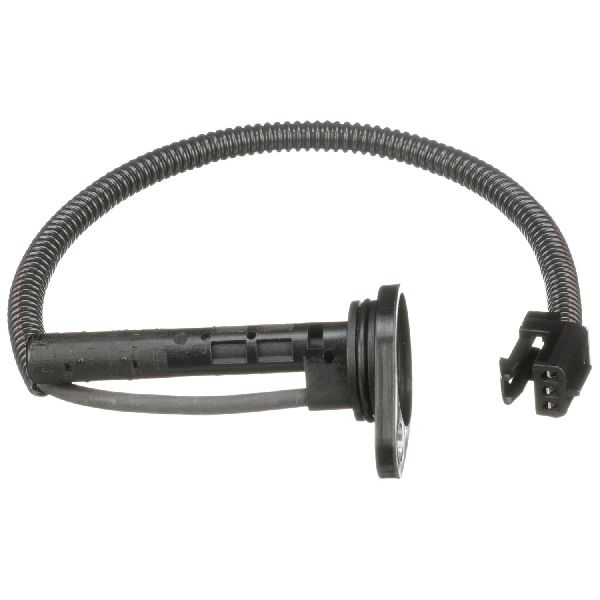
- Transmission Lead Frame / Conductor Plate
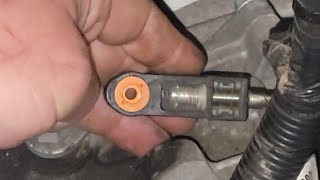
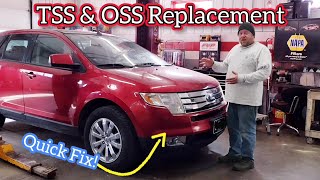
(OEM #BT4Z-7A100-B)— This assembly contains the internal Transmission Range Sensor, which is the most common point of failure for code P2800 on the 6F50/6F55 transmission. This part number replaces previous versions AA5Z-7A100-A and BT4Z-7A100-A. 🎬 Watch: 6F50 transmission sensor replacement lessons learned
Trusted brands: Motorcraft, Dorman
OEM price range: $200-$350
Aftermarket price range: $150-$250 - Shifter Cable Bushing
(OEM #DG9Z-7K340-A (part of recall kit))— On 2015-2018 models, this inexpensive part can fail and cause the symptoms of P2800, making it a crucial and cost-effective first check. Aftermarket kits from brands like BushingFix are popular for DIY repair.
Trusted brands: Dorman, Motorcraft, BushingFix
OEM price range: $15-$30
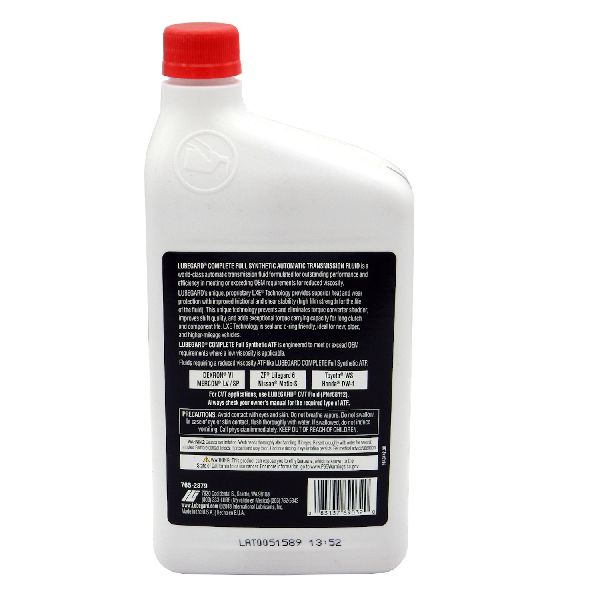
Aftermarket price range: $10-$20 - Transmission Fluid
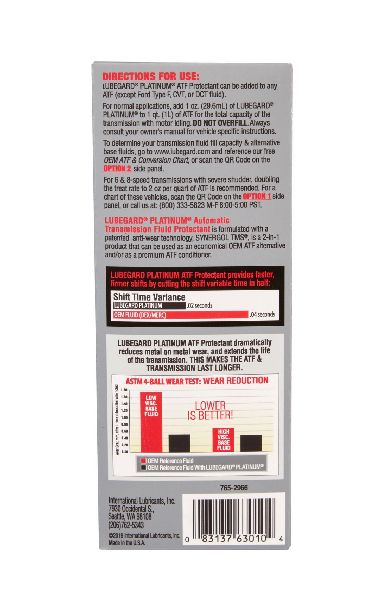
(OEM #Motorcraft MERCON LV)— The transmission fluid must be drained to replace the internal lead frame and should be replaced with new fluid that meets Ford's specifications. A full fluid exchange is recommended.
Trusted brands: Motorcraft, Valvoline, Castrol
OEM price range: $8-$12 per quart
Aftermarket price range: $7-$10 per quart
Related Codes That Often Appear With This One
- P0706 — This code for 'Transmission Range Sensor Circuit Range/Performance' often points to the exact same failure of the internal lead frame sensor. TSB 13-5-27 was written for symptoms that can trigger this code.
- P0707 — This code for 'Transmission Range Sensor 'A' Circuit Low' can appear with P2800, indicating a broader electrical failure affecting multiple sensor circuits, often pointing to a connector or wiring issue.
Technical Service Bulletins (TSBs) & Recalls
- TSB 13-5-27: Addresses symptoms like starting in 5th gear, inoperative cruise control, or backup camera staying on, which are caused by high resistance in the digital transmission range (TR) sensor. It provides the diagnostic resistance test for the internal lead frame.
- TSB Bulletin #SSM 47790: Notes that vehicles may exhibit multiple drivability or electrical concerns with codes including P2800 and P2802, often due to water entry or corrosion in electrical connectors.
Platform-Specific Known Issues
- First generation (2007-2014) models are highly prone to internal Transmission Range Sensor failure as part of the lead frame assembly, as documented in TSB 13-5-27 for similar symptoms.
- Second generation (2015-2018) models have a known issue with the shifter cable bushing degrading and detaching, which can cause this code. This was addressed by Ford Safety Recall 22S43.
Mechanic-Grade Diagnostic Values
- Resistance between pin 8 and pins 4, 5, 6, and 7 of transmission connector C168 — expected: Less than 5 Ohms. Failure: A reading greater than 5 Ohms indicates a faulty internal Transmission Range Sensor (lead frame).
- Valve Body to Transmission Case Bolt Torque — expected: 106 in-lbs (approx. 8.8 ft-lbs). Failure: Incorrect torque can lead to leaks or damage to the valve body.
- Lead Frame to Valve Body Bolt Torque (6R80 transmission family) — expected: 71 in-lbs (approx. 6 ft-lbs). Failure: Incorrect torque can damage the plastic lead frame assembly.
Scan Tool Commands That Help
- Ford IDS (or equivalent professional scan tool): Solenoid Body Strategy and ID Reflash — This is required after installing a new or remanufactured lead frame/solenoid body. The PCM must be programmed with the new part's specific calibration file to ensure proper shifting.
- Ford IDS (or equivalent professional scan tool): Transmission Adaptive Tables Reset (Fast Adapt) — After replacing the lead frame or valve body, the transmission's learned shift strategy must be cleared. A simple battery disconnect is not sufficient. This forces the TCM to relearn the transmission's parameters with the new components.
Wiring & Ground Locations
- C168 — The main 20-pin bulk electrical connector on the side of the 6F50/6F55 transmission case.. This is the primary connection point for all transmission electronics, including the Transmission Range Sensor. It is the connector where diagnostic resistance tests are performed and is a common location for corrosion.
- G104 / G105 (example locations) — Main chassis ground points are typically found on the firewall on the driver's side, near the battery, or on the frame rails behind the front bumper cover.. A poor ground connection for the PCM or TCM can cause a wide range of erratic electronic faults, including incorrect sensor readings that could trigger a P2800 code. Checking, cleaning, and tightening main grounds is a crucial step in any electrical diagnosis.
Real Owner Repair Stories
- Ford F150 Forum user (2012 F-150 with 6R80 transmission (same family as 6F50)) — Lead frame failure.
❌ Tried (didn't work) Getting an OEM part from the dealer, who quoted over $3,000 with a potential 6-month wait.
✅ What actually fixed it The owner purchased a Dorman-brand aftermarket lead frame, a new pan with a drain plug, filter, and fluid. They performed the replacement themselves for under $750 in parts and reported the Dorman unit performed just like the OEM part with no issues. - Ford Edge Forum user (2008 Ford Edge AWD) — Random no-crank, no-start condition. The engine would not turn over.
❌ Tried (didn't work) Taking it to a mechanic and a dealership, both of whom could not find a problem.
✅ What actually fixed it The owner discovered that if they put the car in neutral, pushed it a few feet, and then put it back in park, the car would start. This is a classic symptom of a failing or misaligned Transmission Range Sensor (Neutral Safety Switch) not correctly detecting the 'Park' position. - NHTSA ODI #10845590 — An owner reported that both P2803 and P2800 sensors were defective, noting that the cost to repair the hydraulic control was far above fair pricing.
OEM Part Supersession History
AA5Z-7A100-A, BT4Z-7A100-A→BT4Z-7A100-B— Part revision and improvement by the manufacturer.
Heads up: The newest part number (BT4Z-7A100-B) is the correct replacement for the earlier versions and should be used for all repairs.
Model Year Variations Within This Range
- 2007-2014: These first-generation models are most susceptible to the internal lead frame failure as the primary cause for P2800.
- 2015-2018: These second-generation models are highly susceptible to a failed shifter cable bushing, which was addressed in recall 22S43. While the lead frame can still fail, the bushing should be the first inspection point for these years.
Diagnostic Flowchart
Other Known Issues on This Vehicle
Issues unrelated to this code that are worth knowing about as an owner of this generation:
- Power Transfer Unit (PTU) Overheating and Failure 🔴 High — Common on AWD models, can occur as early as 40,000-60,000 miles. Failure is due to the 'lifetime' fluid being cooked by the nearby exhaust, leading to lubrication breakdown.
- Internal Water Pump Failure (3.5L & 3.7L V6) 🔴 High — The timing-chain-driven water pump is located inside the engine. When its seals fail, coolant leaks directly into the engine oil, which can cause catastrophic engine failure. Failures can occur anywhere from 50,000 to 150,000 miles.
- Faulty Brake Booster 🔴 High — A tear in the booster diaphragm causes a hissing noise and a hard brake pedal. Very common on 2007-2015 models. (Ref: Customer Satisfaction Program 13N02 extended the warranty to 10 years/150,000 miles for this repair.)
- Persistent 'Door Ajar' Light 🟡 Low — Extremely common on first-generation models. A faulty switch inside the door latch causes the 'door ajar' light to stay on, draining the battery and preventing doors from locking.
Used vs. New Parts: Buying Guide for This Vehicle
When a used part is the smart pick: For this specific repair, using a part from a salvage yard is generally not recommended for the lead frame itself, as it is a very high-failure item. However, a used shifter assembly, wiring harness, or transmission computer (PCM/TCM) could be a cost-effective option if those parts are diagnosed as faulty.
Donor-vehicle mileage cap: roughly under 60000 miles for the part to have meaningful remaining life.
What to inspect on the donor part:
- For any used electronic part, inspect connectors for corrosion or bent pins.
- For a wiring harness, check for any signs of chafing, previous repairs (tape, butt connectors), or heat damage.
- If considering a complete used transmission, try to get history on the donor vehicle to see if the lead frame had been previously replaced.
OEM-only on this vehicle (don't cheap out):
- While not strictly 'OEM-only', the Motorcraft lead frame (BT4Z-7A100-B) is the most reliable choice. Aftermarket options exist but have mixed reviews; use them only if the OEM part is unavailable.
Aftermarket brands forum-validated for this vehicle:
- Dorman: Several owners have reported successfully using the Dorman lead frame when the OEM part was on backorder, with no immediate issues.
Brands owners have reported issues with on this vehicle:
- Unbranded/white-box parts from online marketplaces. Some users have reported receiving aftermarket lead frames that were defective out of the box (e.g., a bad speed sensor on a new part).
Real Owner Stories
Aggregated from forums and TSBs cited above. Mileages and costs reflect what owners reported in those sources.
2016 Ford Edge
Symptoms: The shifter inside the car would move, but the transmission would not change gears. The plastic bushing connecting the cable to the transmission lever had become brittle and popped off.
What fixed it: Replaced the shifter cable bushing using a kit from BushingFix.com.
Source hint: Vehicle-specific issues and common causes citing BushingFix.com
2008 Ford Edge — ~120000 miles
Symptoms: Check engine light on, vehicle entering 'limp mode' and getting stuck in 3rd or 5th gear. The dashboard displayed the incorrect gear selection.
What fixed it: Replacement of the internal lead frame assembly (valve body control assembly) after confirming high resistance in the TR sensor.
Source hint: TSB 13-5-27 and common causes
2008 Ford Escape Hybrid
Symptoms: An owner filed a complaint regarding P2803 and P2800 codes, stating both sensors were defective and the repair cost for the hydraulic control was excessive.
Source hint: NHTSA ODI #10845590
Related OBD-II Codes
Frequently Asked Questions
My 2016 Ford Edge shows the wrong gear on the dash and won't start in Park. Is there a recall for this?
My 2013 Edge is stuck in 5th gear and the backup camera stays on in Drive. What does TSB 13-5-27 say about this?
Can I just replace the sensor on my 2011 Edge, or do I need a whole new transmission?
Why does my Edge start in Neutral but not in Park?
How much should I expect to pay for parts to fix the P2800 code on a 2017 Ford Edge?
Helpful Videos
We Have This Part in Stock


The information in this article is provided for general reference and educational purposes only. Vehicle specifications, procedures, and part compatibility can vary by production date, trim level, and region. Always consult your vehicle's factory service manual and verify part numbers before purchasing or performing repairs. Safety-critical components such as airbags, seat belts, and braking systems should be installed by a qualified professional.
- Ford Edge:
- 🧭 Diagnostic Flowchart
- 🎬 Helpful Videos
- 🛍️ Shop This Part
- What's Unique About the 2007-2018 Ford Edge
- Symptoms You May Notice
- Most Likely Causes
- Rare But Worth Checking
- Diagnosis Steps
- Parts You'll Likely Need
- Related Codes That Often Appear With This One
- Technical Service Bulletins (TSBs) & Recalls
- Platform-Specific Known Issues
- Mechanic-Grade Diagnostic Values
- Scan Tool Commands That Help
- Wiring & Ground Locations
- Real Owner Repair Stories
- OEM Part Supersession History
- Model Year Variations Within This Range
- Other Known Issues on This Vehicle
- Used vs. New Parts: Buying Guide for This Vehicle
- Real Owner Stories
- 2016 Ford Edge
- 2008 Ford Edge — ~120000 miles
- 2008 Ford Escape Hybrid
- Related OBD-II Codes
- Frequently Asked Questions
- 🎟️ Get 5% Off